Connect with us

News

Gates Foundation director reveals that AI tools will help detect pregnancy complications early, read how

Published

on

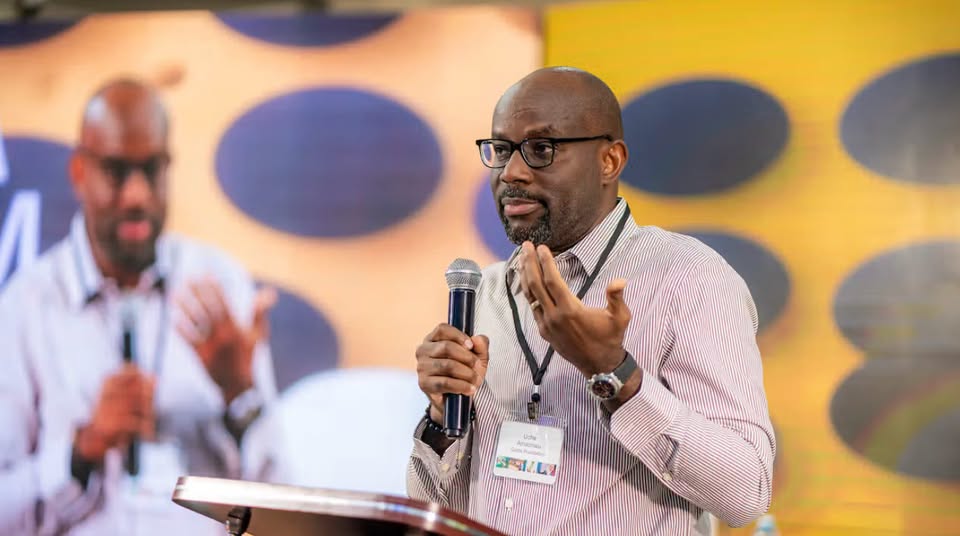
Gates Foundation Nigeria Country Director, Uche Amaonwu, speaks with ANGELA ONWUZOO about how the partnership between the foundation and MTN Group Foundation will use AI and digital tools to benefit 500,000 women, 5,000 health workers and 500 primary healthcare facilities in Nigeria

Nigeria has rolled out several interventions to reduce maternal deaths, yet the burden remains high. What gaps does the Foundation’s investment in AI-enabled tools and digital health seek to close?

It’s about using AI to improve access to care. Preventing maternal deaths is not necessarily complicated because we know what needs to be done. Pregnant women need to attend antenatal clinics, where health workers can identify potential complications. They also need skilled birth attendants to manage deliveries properly. Appropriate treatment is provided when complications are detected early. These interventions are well established. The problem, however, is that pregnant women and health workers themselves may not always have access to the information and tools they need when they need them. The partnership wants to bridge the gap by using digital tools to improve access to timely, reliable health information and support. For instance, many births still take place at home, sometimes without the presence of a skilled birth attendant. A woman with access to a digital device could ask basic questions about symptoms she is experiencing, such as pain or other discomfort, and receive guidance on what to do. This is important at night, when accessing a health facility or speaking to a health worker may be difficult. AI could help bridge that gap by providing trusted information, asking follow-up questions to better understand the symptoms, and helping the woman recognise when she needs urgent medical attention.

For example, if she reports bleeding, the tool could help assess the seriousness of the situation and advise her to seek immediate medical care when necessary. Not every pregnant woman has a health worker readily available at home, but many have access to a mobile phone. Through this partnership, we are also making provisions to ensure that mothers who do not have phones can access affordable devices and data connectivity so that they can use the technology. For healthcare providers, the challenge is sometimes the pressure of managing many patients and the need for additional support when making decisions about a patient’s care. A health worker may attend to a pregnant woman and need guidance on how best to manage her symptoms or determine whether she requires further treatment.

With technology and AI becoming more accessible, the question is how we can harness them to improve communication, provide timely guidance and strengthen the quality of care women receive throughout pregnancy and childbirth.

What does the Gates Foundation partnership with MTN offer that existing maternal and digital health interventions in Nigeria do not?

The partnership focuses on three things, all of which come back to access. First, can we get devices into the hands of people? Second, can we provide connectivity on those devices? Third, can we install an application that allows women to interact with it in their native languages, describing how they feel and receiving relevant responses? That is the level of access and trust we want to establish. MTN’s contribution is particularly important because it has the largest network distribution in Nigeria and across Africa. Even in communities where there may be no health facility, someone may have a device with internet connectivity and be able to access essential health information.

We also need applications that provide accurate and reliable health advice. We are working with other partners who can develop these applications to ensure that women have access to the information they need. We need to create a platform through which women can access reliable maternal health information, particularly in their own languages.

For pregnant women, what will actually change?

Imagine a pregnant woman in a rural area who develops a symptom and goes to a health facility, only to find that it is closed. Instead of travelling to another facility just to get basic guidance, she could access information in her local language by speaking to her phone. The phone could then guide her on what to do immediately while she makes arrangements to get to a hospital. That could make a real difference for her. Without access to reliable information, she might become worried, resort to self-medication, or seek advice from someone else. With the phone, however, she could receive appropriate information to help her understand what to do next.

See also  Police Council confirms Disu as IG

Now, consider the community health worker. Remember that one part of this intervention will serve women directly, while the other will support healthcare workers, including midwives. If a midwife identifies potentially dangerous symptoms in a pregnant woman, she could quickly seek guidance through the AI-enabled tool. With internet connectivity, she could also consult relevant information or contact other healthcare professionals to confirm what she is observing and determine the appropriate next steps.

So, the partnership is designed to support both the mother in her time of need and the healthcare worker who needs timely guidance to make informed decisions. If these interventions work as intended, women will be better supported, and caregivers will have quicker access to the information they need.

How will the platform work, from accessing information to detecting complications and securing timely care?

All the components are designed to work together. Women will be able to access information in their local languages, while frontline health workers will have connected devices to support their decision-making when examining pregnant women. Imagine a situation where a health worker identifies a potential complication. If she has a connected device, and her primary healthcare centre and the referral hospital at the local government headquarters are also connected, information can be shared quickly across the healthcare system.

The health worker could alert the referral hospital about the woman’s condition, communicate her symptoms, and request that the hospital prepare for her arrival. This would allow the receiving facility to get ready to provide the necessary care before the woman arrives. The system will enable health workers to communicate what they observe, engage other healthcare professionals, and coordinate the next steps in a patient’s care. As I said, pregnancy is a situation where early detection and prompt referral can significantly improve a woman’s chances of survival when complications arise.

Ordinarily, a health worker may have to find a way to transport the woman to a hospital, explain her condition to the receiving team, and ensure the necessary arrangements are made. In some cases, an ambulance may need to be contacted. We will also evaluate the pilot to determine whether it delivers the intended results.

We need to establish whether women can access the information, whether health workers can detect complications earlier, whether the intervention improves the time it takes to get women to hospitals, and whether it enables receiving facilities to prepare better for their arrival. We are starting with a pilot because this concerns women’s lives and health. We need to establish that the solution works effectively and safely before taking it to scale. We are very excited to test it and see what the results show.

The initiative comes with a $25m investment from 2026 to 2030. How much is each partner contributing?

The investment is split equally between the two partners. The Gates Foundation is contributing $12.5m, and MTN is contributing the other $12.5m. Beyond the financial contributions, what is important is understanding what the funds will be used for. As I mentioned earlier, MTN will focus on ensuring that women have access to affordable devices and the connectivity needed to use them.

This includes working with partners to make affordable phones available and ensuring that the devices are connected and deployed where they are needed. That is an area in which MTN has significant expertise, given its extensive telecommunications network and reach across Nigeria, including communities where access to healthcare facilities is limited.

See also  FG partnering states to tackle insecurity — Shettima

On our side, we will focus on ensuring that the applications developed for these devices provide accurate, reliable, and responsible medical information. We want to work with competent people in the health sector to ensure that the applications are properly designed and that the advice they provide is medically sound.

We also want to ensure that the applications can communicate effectively in local languages. For example, we need language models that can understand and respond in Nigerian Pidgin, Hausa, Igbo and Yoruba.

These models must be rigorously tested and continuously improved because even within languages such as Igbo and Yoruba, there are different dialects. If an AI tool misunderstands a woman’s description of her symptoms because of differences in pronunciation or dialect, it could have serious consequences.

That is why we must be rigorous in developing and testing these tools. Healthcare professionals will also be involved in assessing the technology to ensure that it works as intended and provides appropriate guidance. It requires considerable time and attention.

MTN is also contributing by covering the connectivity costs, including providing zero-rated data for the application. This means women will be able to use the application without their usage consuming their regular mobile data allowance.

Will women incur any additional costs to use this technology?

No. Under this partnership, we are deliberately making the service free to women. We intend to provide the phones at no cost and ensure that the data connectivity needed to run the platform is also free. We are working to make affordable devices available so that women can access the service without having to bear these costs. However, an important question is what happens after the partnership ends. How do we ensure that the intervention can be sustained? This is why we want to embed the lessons from the initiative into government programmes and broader digital health infrastructure. If you have been following the government’s strategy, you will know that there are efforts to mobilise funding for digital connectivity programmes aimed at expanding broadband access across Nigeria. The idea is to extend connectivity to public facilities, particularly primary healthcare centres in rural areas where maternal healthcare needs are significant. That way, healthcare facilities can have reliable internet access and use digital health tools more effectively.

This partnership provides an opportunity to demonstrate what is possible and generate practical lessons that can inform these wider programmes. As the government develops its digital connectivity plans, we can share evidence from the pilot on what works, what needs improvement and what should be prioritised when extending broadband access to healthcare facilities.

We must also consider the availability of devices. There are efforts to expand access to digital devices, including through initiatives involving the Nigerian Communications Commission. If these programmes are implemented, they could help make devices available to more healthcare facilities.

Ultimately, the pilot will help demonstrate what is needed to make digital maternal healthcare work in Nigeria. The intention is not for the Gates Foundation and MTN to sustain the intervention indefinitely, but to test the approach, generate evidence and inform programmes that the government and private sector can adopt and expand.

The partnership aims to reach 500,000 women, 5,000 health workers, and 500 healthcare facilities by 2030. How confident are you that these targets are achievable?

I am fairly confident. This is just the beginning. Nigeria has about 40,000 primary healthcare centres, so reaching 500 facilities represents a relatively small proportion of the total. We are not trying to tackle the entire system at once. If we remain disciplined and focused, I believe we can reach our target. Another reason for our confidence is that the Federal Ministry of Health and Social Welfare has a programme, the Maternal Mortality Reduction Innovation Initiative, where they identified 172 local government areas that collectively account for 60 per cent of maternal deaths. It has also identified healthcare facilities in these areas that are strategically located to serve the population.

See also  Sacking Of Service Chiefs: ‘This Is Not A Reaction To Any Rumour Of Coups’ – Presidency Clarifies

How will you ensure that vulnerable women in rural and underserved communities, with limited literacy, poor connectivity, or no smartphones, can use and benefit from the platform?

There are already initiatives aimed at addressing some of these challenges. For instance, the Nigerian Communications Commission is promoting digital literacy and mobile phone literacy, including efforts to encourage mobile phone providers to train users on how to operate their devices. You might be surprised to find that even in my village, almost everyone has a phone. It might be a basic smartphone, but people are finding ways to use their devices. I believe that private-sector providers can play an important role in this initiative. Since expanding device usage is part of their business, they have an incentive to help people understand how their phones work and provide the necessary training. For the women participating in this initiative, the aim is to ensure that they receive these benefits without having to pay for the devices or the connectivity. The training and other support they need to use the technology will also be incorporated into the programme, with the costs covered by the $25m investment.

A wrong AI-generated health recommendation could have life-threatening consequences. What safeguards are in place to prevent unsafe or inaccurate advice from reaching pregnant women and health workers?

That is a very important question. The first thing to understand is that under this partnership, as with any other application that uses AI, the technology is intended to serve as an adviser, not as a substitute for clinical judgment. The healthcare worker must remain the person responsible for deciding what should happen.

It is similar to a doctor consulting a textbook for guidance. The doctor still has to interpret the information in the context of the patient’s condition and make a decision based on what they observe. AI should not be placed in a position where it makes clinical decisions on behalf of healthcare professionals. The same principle applies to pregnant women.

Secondly, the application must be developed using reliable clinical guidelines. Qualified medical professionals will be involved in developing and reviewing the application to ensure that the guidance it provides is medically sound and based on established clinical evidence.

Language is another critical issue because it is a potential source of errors. If the underlying information is not communicated accurately in a woman’s language, there could be serious consequences. That is why we need to ensure that the technology can understand and respond appropriately in local languages and their different dialects. Significant progress has been made in developing language models in recent years, but we still need to address gaps in their ability to understand some local dialects. As part of this partnership, we will assess the available language models to determine which perform best and work to improve their accuracy and reliability.

What commitments do you expect from the federal and state governments?

The first thing I want to emphasise is alignment. We need the people implementing this partnership to work with the government, which is responsible for the lives of Nigerians, to make it succeed. We want to work with those implementing the MAMII programme because this partnership can strengthen it. We need to work together. On the digital side, as connectivity infrastructure is rolled out, we must ensure that rural communities, where people stand to benefit most from the technology, are not left behind. We must prioritise equitable access. To me, alignment and equitable distribution are critical.

Source: punchng.com

FOLLOW US ON:

FACEBOOK

TWITTER

PINTEREST

TIKTOK

YOUTUBE

LINKEDIN

INSTAGRAM

Continue Reading
Click to comment

Leave a Reply

Your email address will not be published. Required fields are marked *

News

INEC displays voter register, begins PVC distribution ahead of 2027 elections

Published

on

The Independent National Electoral Commission has commenced the display of the preliminary register of voters and distribution of Permanent Voter Cards across states as part of preparations for the 2027 general elections.

The seven-day exercise, which begins on Friday and runs through October 15, will allow registered voters to verify their details, raise claims and objections, and collect PVCs from the first phase of the Continuous Voter Registration conducted between August and December 2025.

In Plateau and Sokoto states, the respective Resident Electoral Commissioners announced that the exercise would take place at Registration Area centres, with PVC collection continuing at INEC offices at the local government level after the display period.

In a statement by the Plateau REC, Prof. Sam Egwu, made available to journalists in Jos on Thursday, the commission said the exercise was pursuant to Section 19(1) of the Electoral Act 2026, which mandates it to display the voter register not less than 90 days before the general elections.

He said, “The Independent National Electoral Commission, Plateau State, wishes to inform the good people of Plateau State that the commission will commence display of the Preliminary Register of Voters, attend to the hearing of claims and objections as well as collection of Permanent Voters Cards (PVCs) simultaneously in all the 207 Registration Areas in the state, from the 9th to 15th of October 2026 (7 days and weekends inclusive). Time is 9 am -3 pm daily.”

The statement asked all registered voters to take advantage of the opportunity to check their details.

See also  VIDEO: China launches "Justice Mission 2025" war games surrounding Taiwan

“All registered voters are encouraged to take advantage of this opportunity to carefully check information they provided, such as their names, photographs, date of birth, polling units and other relevant registration details to make necessary claims and objections within this stipulated period as an accurate voter register is important for free and credible elections,” the REC said.

He further disclosed that PVCs from the first phase of the CVR exercise conducted from August 18, 2025 to December 10, 2025, would be available for collection during the exercise.

In Sokoto, the REC, Umar Garba, while briefing journalists on the commission’s preparations for the 2027 general elections, said the exercise was part of INEC’s activities ahead of the 2027 elections.

Garba, who was at the Nigeria Union of Journalists Press Centre, said the commission was committed to ensuring that eligible voters were given the opportunity to verify their registration details and collect their PVCs.

“The Independent National Electoral Commission will commence the display of the preliminary register of voters for claims and objections, as well as the distribution of Permanent Voter Cards from the 9th to the 15th of October 2026,” Garba said.

He said PVCs relating to lost or damaged cards, transfers, updates and registrations conducted during the second and third phases of the CVR were not yet ready for collection.

Garba said the commission would announce when the affected PVCs became available.

He added that after the exercise at the Registration Area level ended on October 15, distribution would continue at INEC offices in the 23 local government areas of the state.

See also  NAF kills over 400 bandits in Zamfara air assault

“This will enable eligible voters who could not collect their cards at the Registration Area level to do so,” he said.

On security, Garba said INEC had continued to take the advice of security agencies into consideration throughout the voter registration process.

“Throughout the registration of voters held recently, the commission took the advice of security agencies very seriously. This contributed to a safe process without any casualties,” he said.

He assured eligible voters that INEC would work to ensure that PVCs were distributed across the state.

On internally displaced persons, Garba said the commission was engaging security agencies to establish the number of IDPs in Sokoto and determine how they could participate in the 2027 elections.

“The commission is always talking with security agencies to ascertain the number of IDPs in the state. We are working to ensure that they vote once they are in official and recognised camps,” he said.

The REC also said INEC would release the total number of registered voters in Sokoto State at the appropriate time.

Source: punchng.com

FOLLOW US ON:

FACEBOOK

TWITTER

PINTEREST

TIKTOK

YOUTUBE

LINKEDIN

INSTAGRAM

Continue Reading

News

Dapo Abiodun reveals that Nigeria needs 554,353 personnel for state police, read details

Published

on

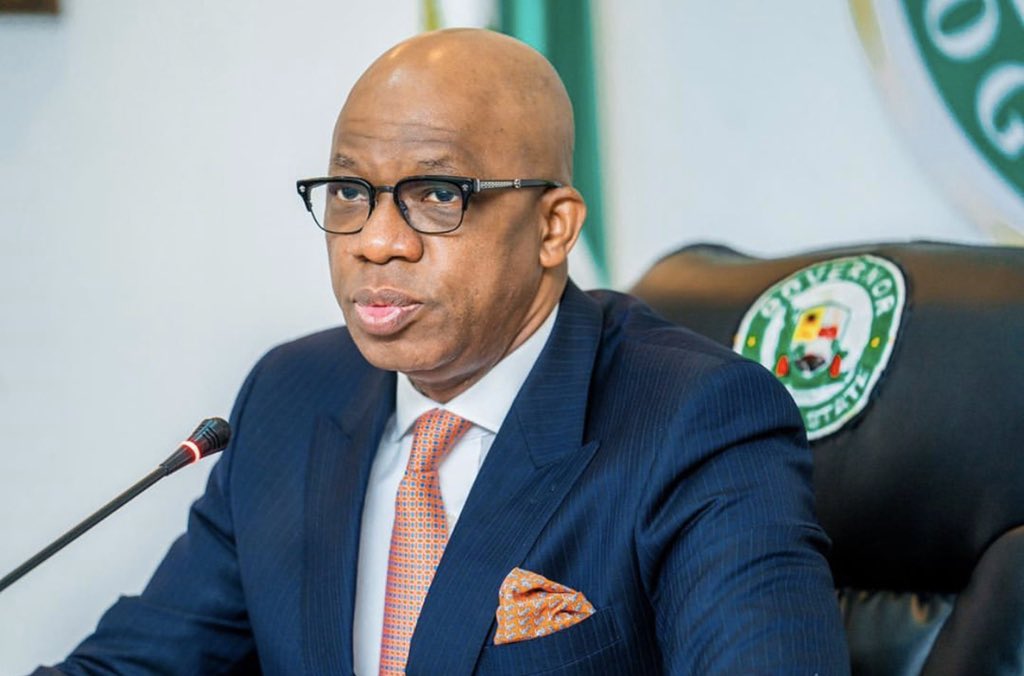
The Chairman of the Southern Governors’ Forum and Ogun State Governor, Dapo Abiodun, on Thursday, said Nigeria needed an additional 554,353 personnel to adequately staff the proposed state police system.

He disclosed this while delivering the keynote address at the posthumous 70th birthday colloquium of the late former Ondo State Governor, Oluwarotimi Akeredolu, held at the International Conference Centre, University of Ibadan, Ibadan, in Oyo State.

The governor explained that the state police had moved beyond advocacy to a national imperative, warning that the success of the reform would depend on a sustainable financing arrangement that would not leave poorer states behind.

The colloquium, organised in honour of Akeredolu under the theme, “Fundamentals and Governance of State Policing: Towards a New Architecture for National Security in Nigeria,” brought together governors, former governors, lawmakers, security chiefs, traditional rulers, academics, civil society actors, family members, friends and professional associates of the late governor.

Abiodun said empirical data from the Nigeria Governors’ Forum showed that, based on the United Nations ratio of one police officer to 414 citizens, the country would need 554,353 additional state police personnel, translating to about 184,784 recruits annually over three years.

He said, “The debate is no longer whether Nigeria needs state police, but how swiftly and sustainably we establish it,” insisting that the country could no longer sustain a security architecture in which every policing responsibility was effectively centralised in Abuja.

“Security is intrinsically local. You cannot police a community whose language you do not speak, whose terrain you do not know. State policing is not a threat to unity; it is the bedrock of stability and prosperity.

“Only five states, Lagos, Rivers, the Federal Capital Territory, Ogun and Enugu, accounted for 61.6 per cent of Internally Generated Revenue, while 76 per cent of the states generated below the national average of N13,600 per capita, with half earning less than N6,334 per capita,” he added.

See also  Sacking Of Service Chiefs: ‘This Is Not A Reaction To Any Rumour Of Coups’ – Presidency Clarifies

The governor stressed that such disparities could undermine the proposed reform if the Federal Government and states failed to establish a financing mechanism that guaranteed minimum policing capacity across the federation.

“Insecurity in low-revenue states spills over nationally. Underfunding one state’s police becomes everyone’s crisis,” he said.

Abiodun, therefore, advocated for the establishment of a constitutional state police take-off fund, built around equal access grants, need-based top-ups and standards-linked disbursement.

He added that the Presidential Working Group was already developing operational blueprints, financial models, accountability mechanisms and legislative oversight arrangements for the proposed system, including frameworks for recruitment, training, governance and redress for abuses.

The governor said recruitment must be transparent, properly vetted and representative, while officers must be trained in investigation, evidence handling, lawful arrest, conflict management, proportionate use of force and protection of vulnerable persons.

He said political affiliation must never determine access to police protection, adding, “Political opponents, journalists, peaceful protesters and minority communities deserve equal protection.

“Disagreement with a government cannot diminish a citizen’s rights. We must earn public confidence through safeguards that work.

“Let me use this occasion to call for adequate welfare for personnel, including regular remuneration, proper equipment, medical care, insurance and dependable support for their families.

“Welfare, discipline and accountability should develop together,” he said, adding that funding arrangements must be transparent and sustainable enough to cover salaries, training, maintenance, communications, investigations and equipment replacement.

He also warned against allowing private interests to dictate police operations, adding that security trust funds could supplement public financing only under clear rules and public accountability.

“Private contributions must follow clear rules and public accountability; they must never purchase influence over investigations or preferential treatment.

“National security today is not just physical protection; it is economic security, food security, health security, financial security and freedom of worship. None survives in lawlessness.

“We cannot build a $1 trillion economy on fragile security. FDI will not flow where investors fear. Agriculture cannot thrive when farmers cannot access farms.

See also  ₦2.2bn fraud: Court fixes December 18 for Ngige’s bail ruling

“Infrastructure cannot yield returns when corridors are unsafe. Securing states through state police is not merely a security strategy; it is our primary economic strategy,” he declared.

Abiodun credited Akeredolu with helping to move the debate from theory to practical regional action, recalling that the late governor played a leading role in the establishment of the Western Nigeria Security Network, popularly known as Amotekun, on January 9, 2020.

In his remarks, the Ondo State Governor, Lucky Aiyedatiwa, said Akeredolu’s advocacy for state police had now moved from a regional campaign to the centre of Nigeria’s national policy and constitutional conversation.

Aiyedatiwa, who was Akeredolu’s deputy before succeeding him as governor, said the late governor had regarded public office as an instrument of service rather than an ornament of status.

“The theme of the colloquium was particularly fitting because Akeredolu had demonstrated through Amotekun that communities closest to security challenges must have a meaningful role in protecting themselves.

“The establishment of the Southwest Security Network, the Amotekun Corps, represented a bold assertion that those closest to the people must have a meaningful role in protecting them.

“What Akeredolu and other progressive voices once advanced as a necessary response to the realities of our federal structure has now entered the very centre of Nigeria’s national policy and constitutional conversation,” he said.

Aiyedatiwa said the challenge before the country was now to develop a state police system that would be responsive, professional and accountable while protecting citizens against abuse.

“The Nigerian federation must find the balance between national cohesion and local responsiveness; between federal authority and subnational capacity; between operational effectiveness and fundamental rights,” he said.

Also speaking in his goodwill message, former Ekiti State Governor, Dr Kayode Fayemi, paid tribute to Akeredolu, recalling the late governor’s courage, commitment to justice and advocacy for a more decentralised security architecture.

See also  PHOTOS: Igbo Community in Osun Storms Streets for Egungun Festival

Fayemi, who worked closely with Akeredolu during their years in the Southwest Governors’ Forum, described his late colleague as a leader whose convictions were stronger than political convenience and whose contribution to the debate on multi-level policing had outlived his tenure in office.

He said Akeredolu’s contribution to the Southwest went beyond the creation of a security outfit, stressing that the late governor demonstrated how regional cooperation could provide practical solutions to challenges confronting individual states.

Fayemi said Akeredolu’s legacy should therefore be measured not only by the offices he occupied but by the institutions and ideas he helped to establish and advance.

Also in another goodwill message, the Director-General of the DAWN Commission, Dr Seye Oyeleye, said the colloquium represented an opportunity to move the conversation on state police from commemoration to implementation.

He said the security debate was no longer about whether Nigeria should establish state police but about how such a system could be funded, trained, equipped, regulated and protected against political abuse.

“The debate on state policing is no longer about whether. It is about how. How do we fund it? How do we train and equip it? How do we guard against abuse? How do we keep it accountable to the people, not to politicians?” he said.

The DAWN Commission DG said the issue was not a regional or ethnic agenda but a national imperative arising from Nigeria’s federal structure and security realities.

“This is not a regional agenda. It is not a Yoruba agenda. It is a national agenda. State Policing goes to the heart of our nationhood,” he added.

Source: punchng.com

FOLLOW US ON:

FACEBOOK

TWITTER

PINTEREST

TIKTOK

YOUTUBE

LINKEDIN

INSTAGRAM

Continue Reading

News

20 rescued prospective NYSC members reunite with families

Published

on

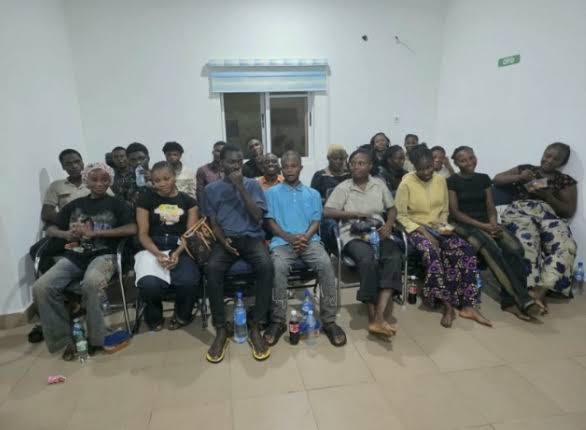
The 20 prospective National Youth Service Corps members who were rescued in Owerri, Imo State capital, on Wednesday, have been reunited with their families in Ibadan, the Oyo State capital, after over three hours of engagement with the Department of State Services officials.

A check by The PUNCH revealed that the victims and some parents were given access to the DSS office, while others stayed outside.

One of the victims’ parents, Mrs Faith Felicia Abiala, who spoke with our correspondent shortly after reuniting with her child, said the incident had exposed the dangers faced by young graduates travelling long distances by road to fulfil their national service obligations.

The PUNCH reports that 20 out of 30 prospective corps members were kidnapped while travelling from Oyo to orientation camps in Abia State, as the remaining 10 escaped through the bush.

They regained their freedom seven days after abduction along the Owerri-Onitsha road in Umunoha, Imo State.

Abiala, speaking in Ibadan on Thursday, described her daughter’s safe return as a moment of overwhelming relief, admonishing the Federal Government to provide stronger security arrangements for corps members travelling to their states of deployment or consider transporting them by air.

She said, “My advice to the government is that when corps members are posted to states for their service, the government should ensure proper security arrangements, or allow them to travel by air to avoid these kinds of dangerous road journeys.

“I cannot recount all the tears and sorrow, but I give thanks to God that I am seeing her alive today. On the day she was taken, I was so devastated I couldn’t even eat, but today my heart is filled with joy.

See also  NAF kills over 400 bandits in Zamfara air assault

“I thank God, and I thank the DSS officials—they really tried! The team from Oyo State and the team from Imo State, they really tried and stood by us until our children came out safe and sound,” she stressed.

One of the victims, who did not want her name in print, started crying immediately when she sighted her parents, saying, “It was a horrible experience.”

Another mother of one of the victims, Alhaja Alimot Akande, described their release as a major relief after days of uncertainty.

“It is good news! Good news! Good news!” she said.

She said the confirmation of the victims’ release finally enabled their families to sleep peacefully after days of anguish.

“Ah! Immediately I heard they were released yesterday, I slept soundly!” Akande said.

The abductors demanded N50m each for the victim, amounting to N1bn, before they later reduced the ransom to N5m per person, totalling N100m.

The Managing Director of Uko Akwa Ibom Motors Nigeria Limited, Isiah Akpan, had confirmed this to The PUNCH on Friday.

On Thursday, some of the parents disclosed that they paid ransom in dollars to the abductors before the release of their wards.

The Imo State Commissioner of Police, Audu Bosso, however, said the kidnappers succumbed to pressure from security agencies, who combed the forest during a rescue operation, adding that he was not aware that any ransom had been paid.

Recall that the victims’ parents had, on Saturday, besieged the private residence of Olubadan of Ibadanland, Oba Rashidi Ladoja, in Ibadan, alongside the state Commissioner of Police, Olugbenga Abimbola and the Aseyin of Iseyinland, Oba Sefiu Adeyeri, to come to their aid.

See also  FG partnering states to tackle insecurity — Shettima

Speaking after the announcement of their release on Wednesday, the Olubadan, in a statement issued by his media aide, Adeola Oloko, said, “The kidnapped graduates have been released. The Imo State Governor, Hope Uzodinma, confirmed this in a telephone conversation at about 5.00 pm.”

Source: punchng.com

FOLLOW US ON:

FACEBOOK

TWITTER

PINTEREST

TIKTOK

YOUTUBE

LINKEDIN

INSTAGRAM

Continue Reading

Trending