Connect with us

News

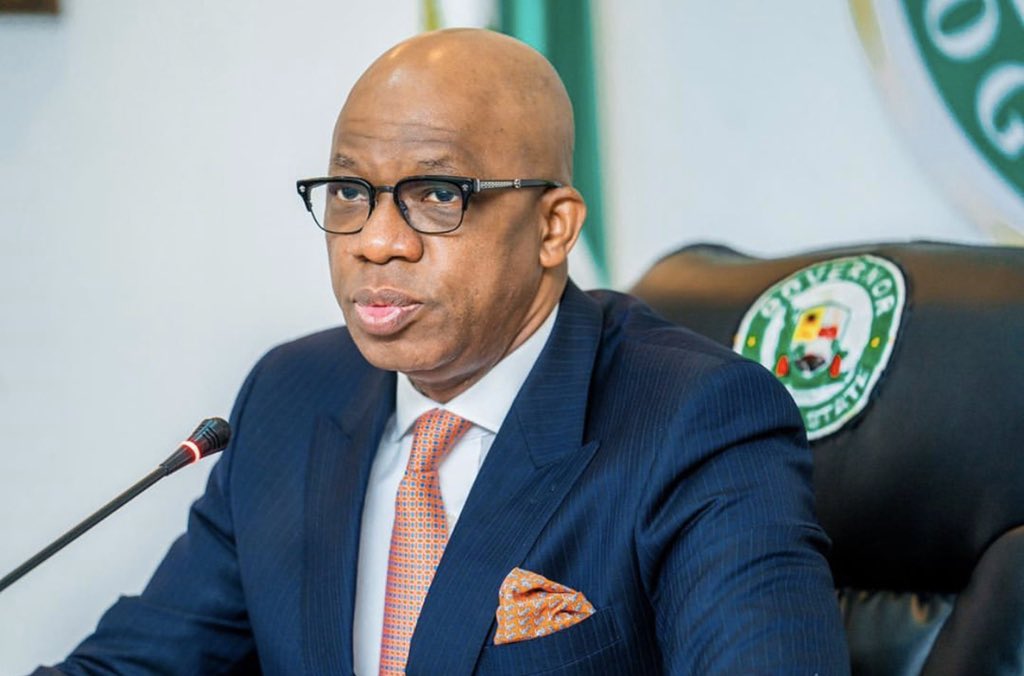
Dapo Abiodun reveals that Nigeria needs 554,353 personnel for state police, read details

Published

on

The Chairman of the Southern Governors’ Forum and Ogun State Governor, Dapo Abiodun, on Thursday, said Nigeria needed an additional 554,353 personnel to adequately staff the proposed state police system.

He disclosed this while delivering the keynote address at the posthumous 70th birthday colloquium of the late former Ondo State Governor, Oluwarotimi Akeredolu, held at the International Conference Centre, University of Ibadan, Ibadan, in Oyo State.

The governor explained that the state police had moved beyond advocacy to a national imperative, warning that the success of the reform would depend on a sustainable financing arrangement that would not leave poorer states behind.

The colloquium, organised in honour of Akeredolu under the theme, “Fundamentals and Governance of State Policing: Towards a New Architecture for National Security in Nigeria,” brought together governors, former governors, lawmakers, security chiefs, traditional rulers, academics, civil society actors, family members, friends and professional associates of the late governor.

Abiodun said empirical data from the Nigeria Governors’ Forum showed that, based on the United Nations ratio of one police officer to 414 citizens, the country would need 554,353 additional state police personnel, translating to about 184,784 recruits annually over three years.

He said, “The debate is no longer whether Nigeria needs state police, but how swiftly and sustainably we establish it,” insisting that the country could no longer sustain a security architecture in which every policing responsibility was effectively centralised in Abuja.

“Security is intrinsically local. You cannot police a community whose language you do not speak, whose terrain you do not know. State policing is not a threat to unity; it is the bedrock of stability and prosperity.

“Only five states, Lagos, Rivers, the Federal Capital Territory, Ogun and Enugu, accounted for 61.6 per cent of Internally Generated Revenue, while 76 per cent of the states generated below the national average of N13,600 per capita, with half earning less than N6,334 per capita,” he added.

See also  Abuja flooding: Mass demolition begins after Wike’s order

The governor stressed that such disparities could undermine the proposed reform if the Federal Government and states failed to establish a financing mechanism that guaranteed minimum policing capacity across the federation.

“Insecurity in low-revenue states spills over nationally. Underfunding one state’s police becomes everyone’s crisis,” he said.

Abiodun, therefore, advocated for the establishment of a constitutional state police take-off fund, built around equal access grants, need-based top-ups and standards-linked disbursement.

He added that the Presidential Working Group was already developing operational blueprints, financial models, accountability mechanisms and legislative oversight arrangements for the proposed system, including frameworks for recruitment, training, governance and redress for abuses.

The governor said recruitment must be transparent, properly vetted and representative, while officers must be trained in investigation, evidence handling, lawful arrest, conflict management, proportionate use of force and protection of vulnerable persons.

He said political affiliation must never determine access to police protection, adding, “Political opponents, journalists, peaceful protesters and minority communities deserve equal protection.

“Disagreement with a government cannot diminish a citizen’s rights. We must earn public confidence through safeguards that work.

“Let me use this occasion to call for adequate welfare for personnel, including regular remuneration, proper equipment, medical care, insurance and dependable support for their families.

“Welfare, discipline and accountability should develop together,” he said, adding that funding arrangements must be transparent and sustainable enough to cover salaries, training, maintenance, communications, investigations and equipment replacement.

He also warned against allowing private interests to dictate police operations, adding that security trust funds could supplement public financing only under clear rules and public accountability.

“Private contributions must follow clear rules and public accountability; they must never purchase influence over investigations or preferential treatment.

“National security today is not just physical protection; it is economic security, food security, health security, financial security and freedom of worship. None survives in lawlessness.

“We cannot build a $1 trillion economy on fragile security. FDI will not flow where investors fear. Agriculture cannot thrive when farmers cannot access farms.

See also  No mercy for Messi as Spain seal second world cup title

“Infrastructure cannot yield returns when corridors are unsafe. Securing states through state police is not merely a security strategy; it is our primary economic strategy,” he declared.

Abiodun credited Akeredolu with helping to move the debate from theory to practical regional action, recalling that the late governor played a leading role in the establishment of the Western Nigeria Security Network, popularly known as Amotekun, on January 9, 2020.

In his remarks, the Ondo State Governor, Lucky Aiyedatiwa, said Akeredolu’s advocacy for state police had now moved from a regional campaign to the centre of Nigeria’s national policy and constitutional conversation.

Aiyedatiwa, who was Akeredolu’s deputy before succeeding him as governor, said the late governor had regarded public office as an instrument of service rather than an ornament of status.

“The theme of the colloquium was particularly fitting because Akeredolu had demonstrated through Amotekun that communities closest to security challenges must have a meaningful role in protecting themselves.

“The establishment of the Southwest Security Network, the Amotekun Corps, represented a bold assertion that those closest to the people must have a meaningful role in protecting them.

“What Akeredolu and other progressive voices once advanced as a necessary response to the realities of our federal structure has now entered the very centre of Nigeria’s national policy and constitutional conversation,” he said.

Aiyedatiwa said the challenge before the country was now to develop a state police system that would be responsive, professional and accountable while protecting citizens against abuse.

“The Nigerian federation must find the balance between national cohesion and local responsiveness; between federal authority and subnational capacity; between operational effectiveness and fundamental rights,” he said.

Also speaking in his goodwill message, former Ekiti State Governor, Dr Kayode Fayemi, paid tribute to Akeredolu, recalling the late governor’s courage, commitment to justice and advocacy for a more decentralised security architecture.

See also  Emir of Zuru, Muhammadu Sani Sami, D!es In London Hospital

Fayemi, who worked closely with Akeredolu during their years in the Southwest Governors’ Forum, described his late colleague as a leader whose convictions were stronger than political convenience and whose contribution to the debate on multi-level policing had outlived his tenure in office.

He said Akeredolu’s contribution to the Southwest went beyond the creation of a security outfit, stressing that the late governor demonstrated how regional cooperation could provide practical solutions to challenges confronting individual states.

Fayemi said Akeredolu’s legacy should therefore be measured not only by the offices he occupied but by the institutions and ideas he helped to establish and advance.

Also in another goodwill message, the Director-General of the DAWN Commission, Dr Seye Oyeleye, said the colloquium represented an opportunity to move the conversation on state police from commemoration to implementation.

He said the security debate was no longer about whether Nigeria should establish state police but about how such a system could be funded, trained, equipped, regulated and protected against political abuse.

“The debate on state policing is no longer about whether. It is about how. How do we fund it? How do we train and equip it? How do we guard against abuse? How do we keep it accountable to the people, not to politicians?” he said.

The DAWN Commission DG said the issue was not a regional or ethnic agenda but a national imperative arising from Nigeria’s federal structure and security realities.

“This is not a regional agenda. It is not a Yoruba agenda. It is a national agenda. State Policing goes to the heart of our nationhood,” he added.

Source: punchng.com

FOLLOW US ON:

FACEBOOK

TWITTER

PINTEREST

TIKTOK

YOUTUBE

LINKEDIN

INSTAGRAM

News

See full list of fake documents that could earn applicants five-year Canada ban

Published

on

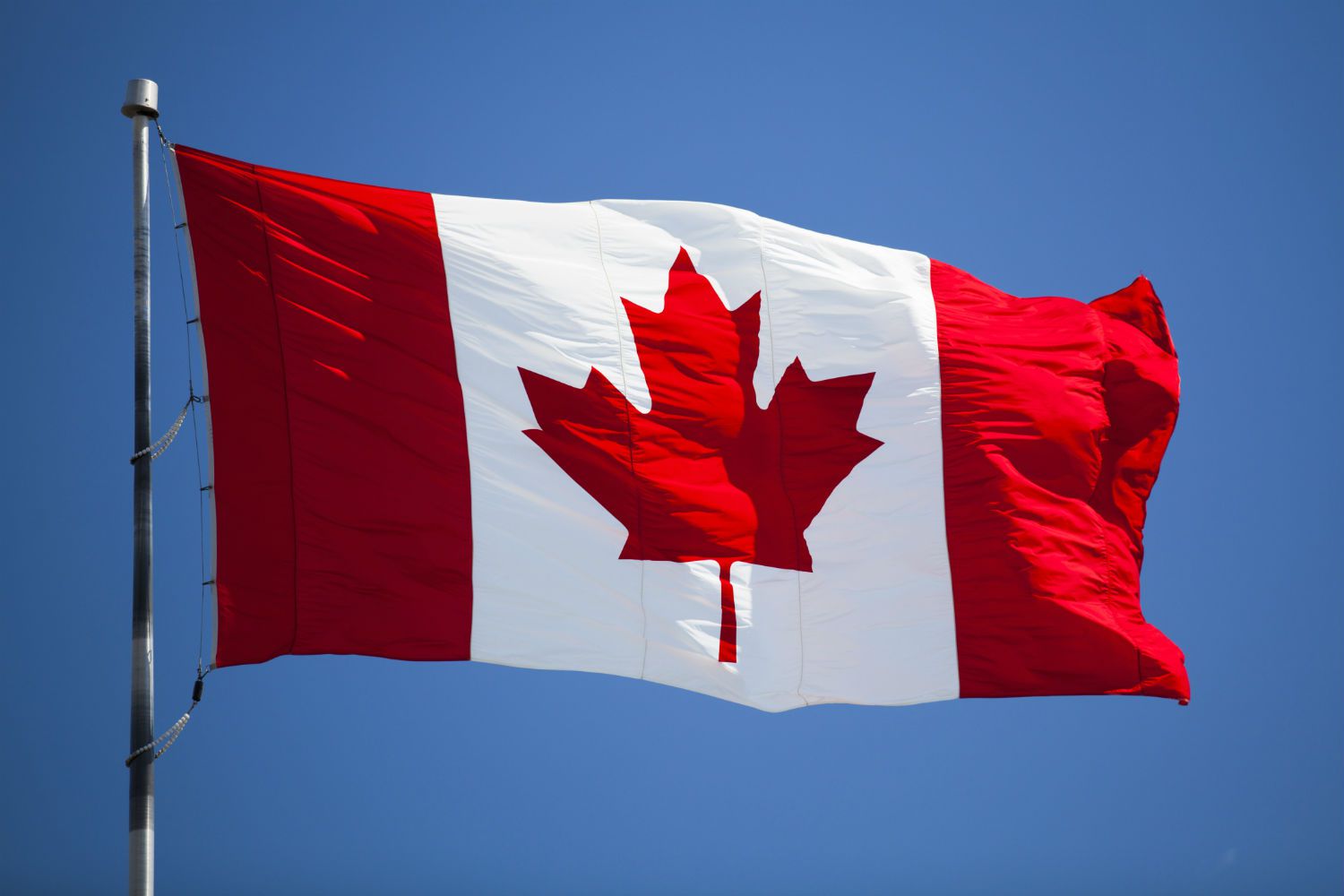
Canadian authorities have warned prospective visa applicants against the falsification of required documents to gain entry into the country.

According to a tweet via the X handle of the Immigration, Refugees and Citizenship Canada on Thursday, it noted that submitting falsified or altered documents during visa applications can stop an applicant from entering Canada for a minimum of five years.

Such documents range from marriage certificates to language results, entry and exit stamps, visas, transcripts and divorce documents, among others.

The IRCC also warned that one could face legal consequences in their home country if found guilty of any related criminal activity.

Information obtained from the IRCC website noted that providing false information about one’s medical conditions to the panel physician during a person’s medical exam is also considered fraud.

Below is the full list of documents whose falsification is considered fraud in Canada:

1. Passports and travel documents

2. Visas, exit and entry stamps

3. Language results

4. Proof of employment or job offers

5. Letters of acceptance from learning institutions, tuition receipts and transcripts

6. Diplomas, degrees and apprenticeship or trade papers

7. Proof of relationship, including certificates of birth, adoption, marriage, final divorce, annulment, separation, death or custodianship

8. Police certificates or court documents

9. DNA testing

The IRCC noted that while it’s not bent on punishing people affected by fraud, it’s determined to identify “those who are responsible for fraud.”

“Lying about how long you or someone else has been physically present in Canada while applying for a permanent residency (PR) renewal or citizenship is also considered fraud. Learn more about PR card residency obligations and physical presence,” the information added.

See also  FG begins Primary Health Care rehab rollout to boost community care

It highlighted consequences of immigration and citizenship fraud to include application refusal, a minimum of a five-year ban from Canada, a permanent fraud record with the IRCC, and the removal of one’s temporary or permanent residency status, or Canadian citizenship.

Others include a five-year ban from citizenship application and an outright expulsion from Canada.

The IRCC further warned that Canadian citizens or permanent residents who are in a relationship of convenience for immigration reasons may be charged with a crime.

A relationship of convenience is a marriage, a common-law or conjugal relationship whose main goal is to immigrate to another country.

The IRCC warned that its officers are well-trained to detect false marriages and common-law or conjugal relationships, via document checks, visits to people’s homes, and interviews with both sponsors and applicants.

“Our officers are trained to recognise genuine immigration applications. They know how to detect false marriages and common-law or conjugal relationships.

“They have many ways to spot marriage fraud, including document checks, visits to people’s homes and interviews with both sponsors and applicants,” the information read partly.

Authorities also warned that in the case of credit card payment reversals, it could cause one’s visa application to be cancelled or delayed.

This, it said, could also attract a 10-year entry ban.

“If the fee paid with a credit card is reversed, your visa application could be cancelled or delayed. Your visa application could also be denied and you could potentially be banned from travelling to Canada for up to 10 years. Applications you submit in the future can also be impacted,” it added.

See also  Insecurity: Northern govs get N56bn security votes

Source: punchng.com

FOLLOW US ON:

FACEBOOK

WHATSAPP CHANNEL

TWITTER

PINTEREST

TIKTOK

YOUTUBE

LINKEDIN

INSTAGRAM

Continue Reading

News

I would rejoin British Army to fight Russia if needed – Prince Harry reveals

Published

on

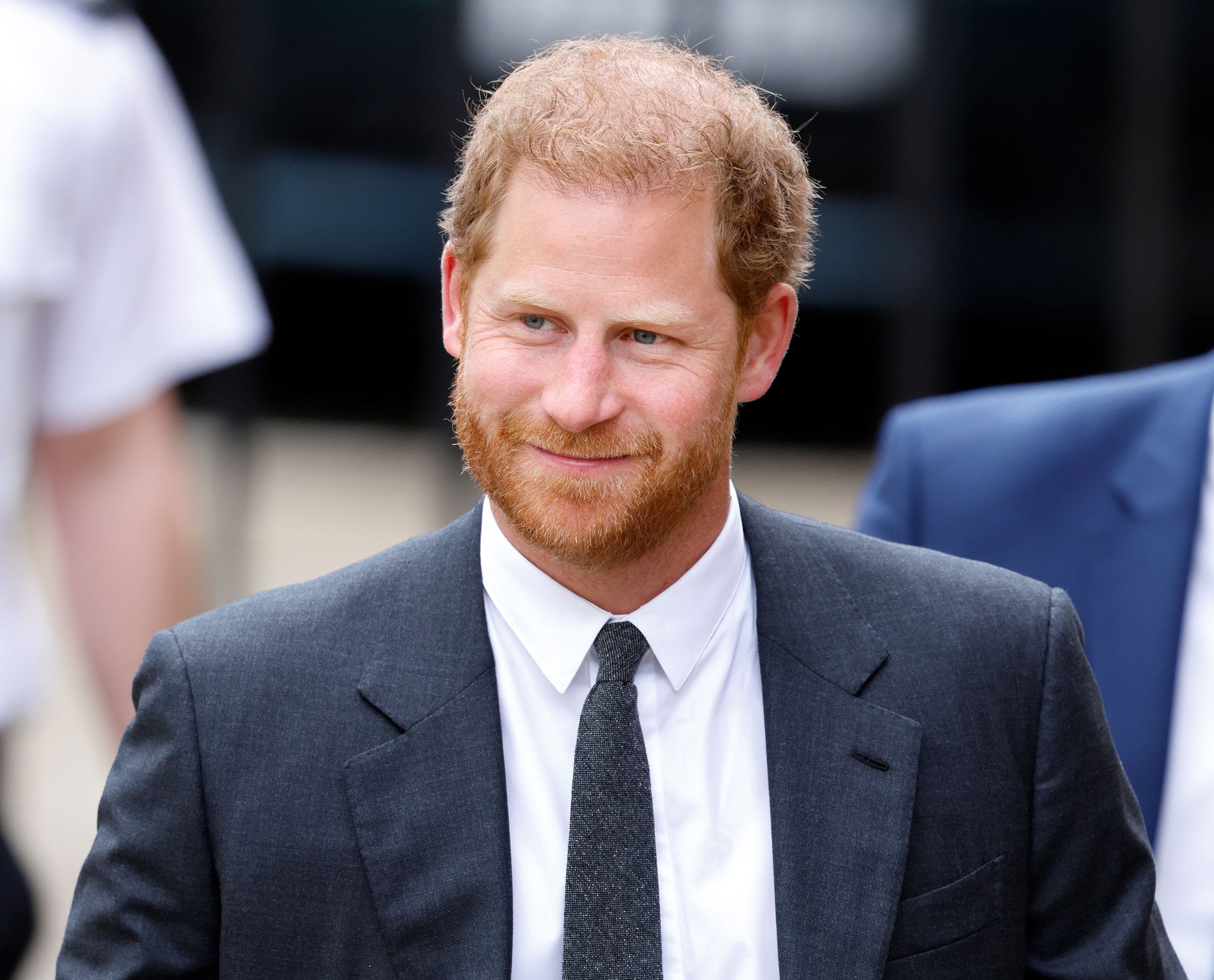
Prince Harry, the Duke of Sussex, has said he would return to the British Army to fight Russia if called upon, declaring his readiness to serve alongside other veterans and military personnel amid the ongoing war in Ukraine.

The former British Army officer made the remarks during a visit to Lviv, western Ukraine, where he said Europe had become more aware of the threat posed by Russian President Vladimir Putin. He also argued that the United Kingdom and Russia had effectively been in conflict for the past decade, despite the absence of direct military attacks on British soil.

“Just because there’s not drones, bullets and rockets flying at us, it doesn’t mean that we’re not at war,” he said.

Harry stressed that countries should draw lessons from Ukraine’s resistance to Russian aggression, saying the experience had valuable lessons for the international community.

“If asked to sign up again, if the need is there, then I will 100 per cent be there to serve my country alongside my fellow veterans and service personnel.”

“There is a lot that we can learn from Ukraine. I think there’s a lot that the whole world can learn from Ukraine,” he told The Telegraph.

He also expressed concern about the current international security situation, urging people who had previously served in the military to remain prepared for another call to duty.

“I think we should all be nervous, absolutely. And I think we should be prepared, and I think that those of us that have served should be ready to serve again.”

See also  Abuja flooding: Mass demolition begins after Wike’s order

The Duke’s comments come against the backdrop of his military background, having completed two operational tours in Afghanistan as an Apache helicopter pilot with the British Army. His first deployment lasted from December 2007 to February 2008, while the second ran from September 2012 to January 2013. He ended his military career in 2015.

During the visit, Harry also criticised the approach of US President Donald Trump’s administration towards the war, suggesting that its position did not reflect the level of support for Ukraine among Americans.

“I think there’s been a big separation between what American society feels regarding support for Ukraine, which I think is incredibly high and always has been, compared to a certain group – or in this case an administration that was perhaps thinking about it differently,” he told the podcast.

He expressed optimism about the expected political changes in the United States following the midterm elections, particularly the Democrats’ forthcoming takeover of the House of Representatives and the Senate.

“As of January, things are going to change, so I think we should all be looking forward to that.

“Europe has a united front, and it would be fantastic to have more American support for that as well.”

Harry, who has developed a professional relationship with Ukrainian President Volodymyr Zelensky, said he believed Ukraine was gaining ground against Russia. He based his assessment on four visits to the country and regular briefings from political and military officials.

However, he argued that the conflict would require a possible way out for Moscow, adding: “There needs to be some form of exit strategy for Russia.”

See also  Taraba sanitation chair defends salary cut for street sweepers

He described the number of Russian soldiers being killed by Ukrainian forces as “insane” and warned against reducing military and humanitarian assistance to Kyiv at a critical stage of the conflict.

According to Harry, Ukraine’s battlefield position suggested that Russia was struggling to make further advances, while its continued attacks on civilian facilities reflected growing desperation.

“There is no version of where Russia is making any more advances.

“It’s quite the opposite. What I’m told is the more strikes from rockets from Russia and and drone strikes into civilian infrastructure is just a sign of desperation, a sign that they are losing.”

He further described the reported monthly losses of 30,000 or more Russian and North Korean soldiers as unsustainable, arguing that international support for Ukraine should increase rather than diminish.

Harry also condemned attacks on medical facilities and humanitarian centres, calling for stronger international action to protect civilians and uphold international law.

“I think it’s appalling that civilian infrastructure, especially hospitals and medical centres, are being targeted. Humanitarian aid centres are being targeted as well.

“International law must mean something. So I think the rest of the world could and should do more in that regard.”

He described the conflict as a psychological campaign aimed at exhausting Ukrainians through repeated overnight attacks and constant bombardment.

Drawing a connection between Ukraine’s resilience and his work supporting injured military personnel through the Invictus Games, Harry praised the determination of the people he had encountered during his visits.

“The Invictus spirit lives in every single Ukrainian person, not just veterans, that I’ve met.”

See also  Remi Tinubu donates ₦110m to families of 22 deceased Kano athletes

Harry and his wife, Meghan, returned to the UK in August with their two children after spending six years in the United States. The couple stepped down as senior members of the British royal family in 2020.

(The Independent)

Source: tribuneonlineng.com

FOLLOW US ON:

FACEBOOK

WHATSAPP CHANNEL

TWITTER

PINTEREST

TIKTOK

YOUTUBE

LINKEDIN

INSTAGRAM

Continue Reading

News

IG urged to curb election-related violence, read details

Published

on

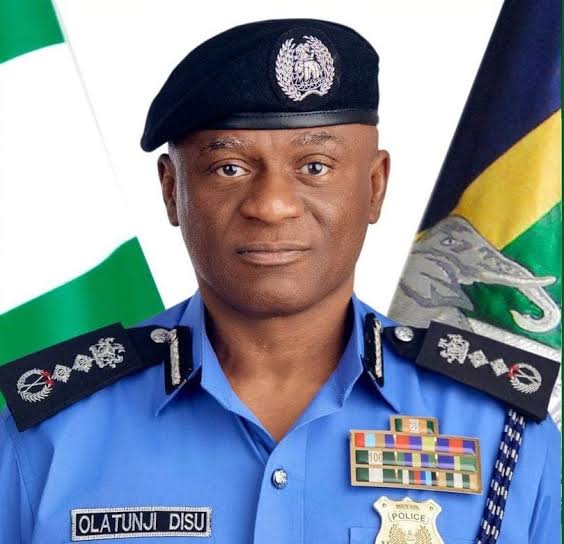
A Lagos-based lawyer, Emmanuel Umohinyang, has urged the Inspector-General of Police, Olatunji Disu, to strengthen security measures and prevent political violence ahead of the forthcoming general election.

Umohinyang, in a letter dated November 16, 2026, addressed to the IG at the Force Headquarters, Abuja, and obtained by The PUNCH on Wednesday, expressed concern over reported attacks on political campaign convoys, rallies, supporters and other legitimate political activities across the country.

He warned that the growing tendency for political disagreements to degenerate into physical attacks, intimidation and destruction of property posed a serious threat to Nigeria’s democratic process.

The lawyer urged the police not to wait until violence erupted before responding, but to identify potential flashpoints, assess security threats and take preventive measures.

He described the forthcoming election as an opportunity for Disu to demonstrate purposeful leadership and the capacity of the police to protect Nigerians irrespective of their political affiliations.

Umohinyang noted that it would be the first general election to be conducted under Disu’s leadership as IGP, adding that the police’s handling of election-related security would shape public confidence in the Force.

He said, “The security of lives and property and the protection of citizens’ constitutional rights must not be compromised by the desperation and intolerance that appears to accompany the struggle for political power.

“The responsibility of the police, therefore, is not merely to restore order after violence has occurred but, more importantly, to anticipate threats, identify potential flashpoints and prevent foreseeable violence.”

The lawyer called for professional reorientation, institutional sanitisation and operational mobilisation of police personnel across the country.

He also cautioned the police against allowing themselves to be used as instruments of political intimidation or manipulated into compromising citizens’ rights.

See also  How Awujale Made APC, Buhari President – Bakare

Umohinyang stressed the need for equal protection for supporters of the ruling and opposition parties, insisting that police protection should not be determined by political affiliation, ethnicity, religion or other considerations.

He urged the IGP to issue clear directives to commissioners of police in the 36 states and the Federal Capital Territory to strengthen security arrangements and adopt intelligence-driven policing.

He said, “They must not adopt a complacent or reactive posture while political tensions build up around them. Rather, they must be proactive and intelligence-driven. They must identify emerging threats, monitor potential flashpoints, assess credible security information and take timely preventive measures.”

The lawyer further called for prompt investigation of attacks on political activities and the prosecution of perpetrators, sponsors and accomplices where credible evidence established their involvement.

He also urged the police chief to ensure that officers found guilty of negligence, dereliction of duty or complicity in political violence faced appropriate disciplinary and legal consequences.

Umohinyang said the President’s position against political violence should be reflected in police operations, stressing that those responsible for sponsoring or perpetrating attacks should not escape justice because of their political influence.

He said, “The forthcoming election should be an opportunity for Nigerians to exercise their democratic rights peacefully, not a period of apprehension in which citizens fear attending rallies, joining campaign processions or expressing their political preferences.

“The safety of Nigerians must never be negotiable, and no political ambition is worth the loss of a single innocent life.”

Source: punchng.com

FOLLOW US ON:

FACEBOOK

WHATSAPP CHANNEL

TWITTER

PINTEREST

TIKTOK

YOUTUBE

LINKEDIN

INSTAGRAM

Continue Reading

Trending