Connect with us

News

Canada makes rural immigration programme permanent to attract skilled workers

Published

on

Canada has made its Rural Community Immigration Pilot a permanent programme, creating a continuing pathway to attract and retain skilled foreign workers in smaller communities facing persistent labour shortages.

The Minister of Immigration, Refugees and Citizenship, Lena Metlege Diab, announced the decision on Monday, November 9, 2026, in Pictou County, Nova Scotia.

According to a release on Immigration, Refugees and Citizenship Canada (IRCC) website, the programme will initially continue with the 14 communities currently participating in the pilot, with plans to expand to additional communities in the future.

The employer- and community-led initiative is designed to address the distinct workforce needs of rural Canada by connecting newcomers and their families with local employers and community support systems to encourage long-term settlement.

Announcing the decision, Diab said the government recognised the importance of rural communities to the country’s economy and the challenges they face in finding workers.

“Our government understands that rural communities play a critical role in powering Canada’s economy. At the same time, many face real challenges finding the workers they need.

“That’s why we’re transitioning our successful rural immigration pilot into a permanent program—helping smaller communities attract and retain essential workers who deliver services and drive economic growth.

“We appreciate that a one-size-fits-all approach to immigration doesn’t work for rural Canada, and this permanent pathway is one part of our work to ensure that communities of all sizes can share in the benefits of responsible, sustainable immigration,” she said.

Under Canada’s 2027–2029 Immigration Levels Plan, 5,500 admission spaces have been allocated to the permanent Rural Community Immigration Program.

See also  Alleged kidney harvesting: Noah Kekere breaks silence after court victory

The government said the programme would complement its efforts to stabilise immigration admissions, reduce the temporary resident population and retain skilled workers already living and contributing to communities across the country.

What the programme has achieved

IRCC said the permanent programme builds on the Rural and Northern Immigration Pilot, which ran from 2019 to 2024, and the Rural Community Immigration Pilot, introduced in 2025.

More than 2,800 employers participated in the earlier Rural and Northern Immigration Pilot, resulting in over 12,500 candidates and their family members being admitted to smaller and rural communities across Canada.

The department said early results from the current programme showed that newcomers had helped address labour shortages in key sectors, including healthcare, education, sales and services, in 2025 and 2026.

Between January 2025 and August 2026, participating communities vetted and designated more than 1,950 trusted employers facing persistent labour shortages that could not be filled locally.

The employers subsequently issued more than 4,700 job offers and community recommendations.

The Minister of Justice and Attorney General of Canada, Sean Fraser, said the programme had helped businesses in Pictou County retain workers and encouraged newcomers to establish permanent roots in the community.

“We’ve seen the difference this program makes here in Pictou County. It’s helping local businesses keep workers they need, people who’ve become our neighbours and friends, and want to build their lives here.

“We’re one of 14 communities that have helped make this pilot work.

“Now we’re making it permanent, so businesses can count on it when they can’t fill jobs locally, and these families can keep calling our community home,” Fraser said.

See also  Security crisis: Tinubu, Macron hold talks as US fact-finders arrive

Similarly, the Secretary of State for Rural Development, Buckley Belanger, said the programme recognised the different labour needs of rural, northern and remote communities.

He said strategic immigration pathways could help address workforce shortages where locally available Canadian workers could not fill vacancies.

The Chief Executive Officer of Pictou County Partnership, Jason Guidry, also said the programme had strengthened the local workforce, supported business growth and helped welcome new residents.

Meanwhile, IRCC said eligibility criteria for additional communities that may join the programme in future would be communicated through a separate announcement.

The department also identified the Provincial Nominee Program and federal economic immigration programmes managed through Express Entry as other pathways available to skilled workers seeking permanent residence in Canada.

Source: punchng.com

FOLLOW US ON:

FACEBOOK

WHATSAPP CHANNEL

TWITTER

PINTEREST

TIKTOK

YOUTUBE

LINKEDIN

INSTAGRAM

Continue Reading
Click to comment

Leave a Reply

Your email address will not be published. Required fields are marked *

News

I sold arms to anyone with money — Orji Kalu makes shocking revelation

Published

on

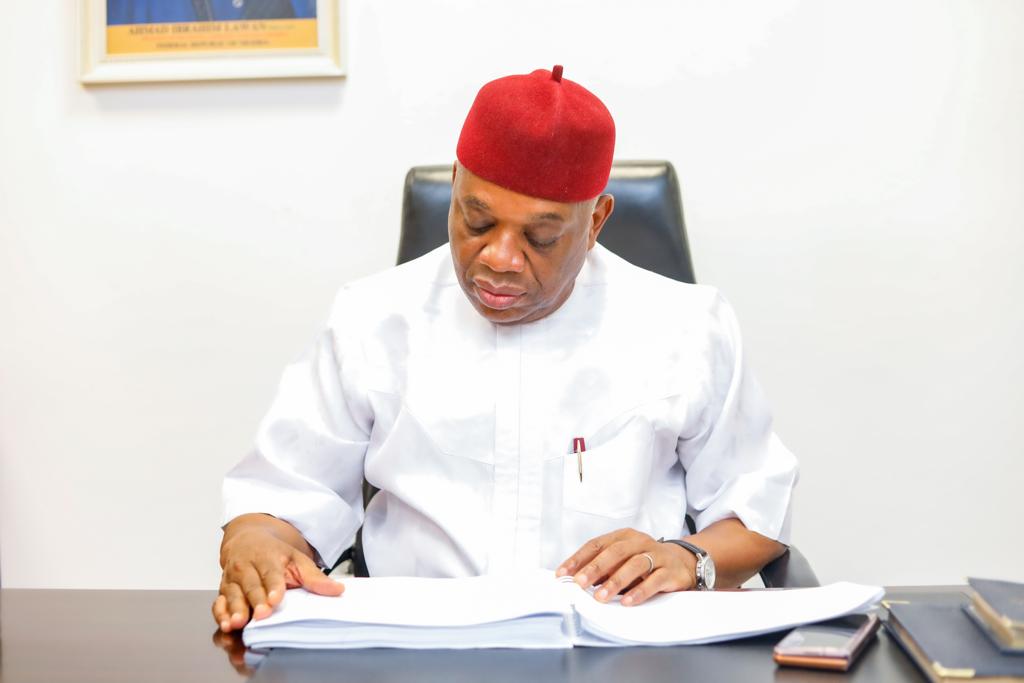
The Senator representing Abia North, Orji Kalu, has disclosed that he previously traded in heavy weapons internationally, saying he sold arms to buyers who could afford them before abandoning the business at his parents’ insistence.

Kalu made the disclosure during an interview on Arise Television on Monday, while discussing his longstanding relationships with former and current South African leaders.

The former Abia State governor said his business interests previously extended beyond Nigeria, adding that he dealt in heavy weapons sold from one country to another.

When asked by the interviewer whether he was an arms dealer, Kalu responded, “Yes, so I stopped because my…”

Explaining why he abandoned the business, he said his parents asked him to quit.

“But my parents, my mother, my father came and said I must stop, and I stopped,” he said.

Asked whether he sold weapons to people who intended to use them to kill others, Kalu dismissed the suggestion, insisting that his interest was making money.

“No, no, no, no, no, no. I was selling guns to make money, whether they blow up it’s not my business,” he said.

The interviewer subsequently asked whether he supplied weapons to the African National Congress during the struggle against apartheid in South Africa.

Kalu denied selling exclusively to the ANC, saying his customers included anyone willing to pay for the weapons.

“No, I was selling to anybody who wants to buy. If you have the money, you want to buy in D.R.C, I sell to you, you want to buy in Namibia, you want to buy…” he said.

When asked where he sourced the weapons, the senator declined to disclose the details, responding, “It’s only my business.”

See also  Alleged kidney harvesting: Noah Kekere breaks silence after court victory

The interviewer also raised concerns about the proliferation of small arms in Nigeria, questioning how Kalu’s description of his former business fitted into the country’s security challenges.

However, Kalu maintained that the weapons he dealt in were not small arms, explaining that they were heavy weapons traded between countries.

“No, no, these are heavy arms that were sold country to country,” he said.

Asked specifically whether he sold weapons to Libya under its late leader, Muammar Gaddafi, Kalu responded, “To anybody that had money to buy.”

When the interviewer suggested that this meant he had sold arms to Gaddafi, the senator replied, “May his soul rest in peace. He was a good man. If you have money to buy, when I was selling, I would sell to you.”

During the interview, Kalu also spoke about his relationships with successive South African leaders, tracing them to his friendship with the country’s former President, Nelson Mandela.

He said Mandela introduced him to several South African presidents, including Thabo Mbeki and current President Cyril Ramaphosa.

According to Kalu, Mandela once explained that Mbeki’s father had contributed more to the anti-apartheid struggle than Ramaphosa’s father, a factor he said influenced the African National Congress’s decision to choose Mbeki over Ramaphosa as his running mate.

Kalu said Mbeki subsequently introduced him to former President Jacob Zuma, with the relationships continuing through successive administrations.

Source: punchng.com

FOLLOW US ON:

FACEBOOK

WHATSAPP CHANNEL

TWITTER

PINTEREST

TIKTOK

YOUTUBE

LINKEDIN

INSTAGRAM

Continue Reading

News

NGF unveils 10-year plan to establish leadership academy

Published

on

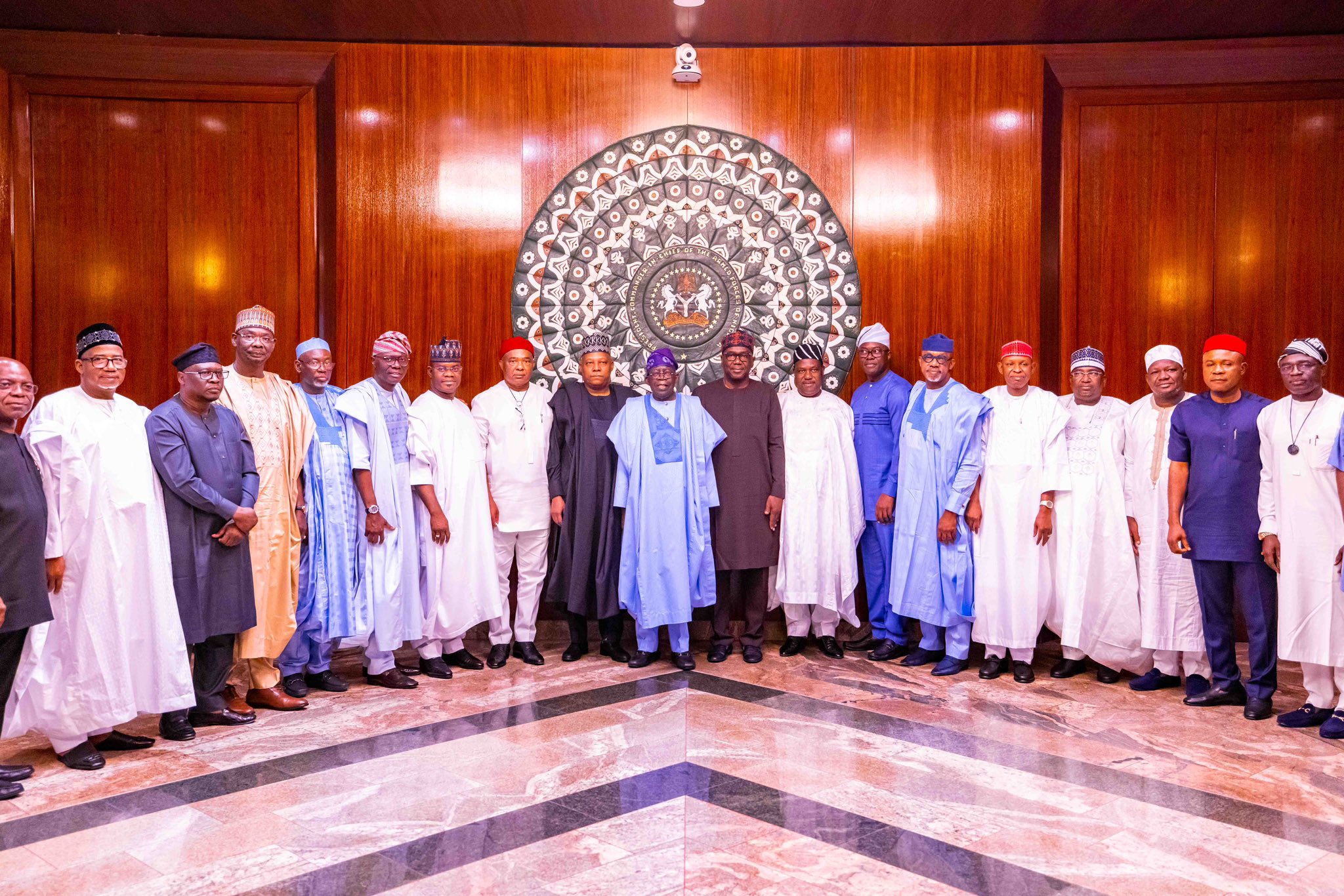
The Nigeria Governors’ Forum (NGF) has approved a 10-year plan, spanning 2026 to 2036, to establish a leadership academy as a flagship directorate within its secretariat, offering training, research and advisory services to improve governance and policy delivery across the 36 states.

NGF, in a statement on Monday, signed by its Director-General, Abdullateef Shittu, explained that the initiative was designed to provide executive capacity development, applied research, governance advisory services, digital innovation and peer-learning opportunities for state-level political and administrative leaders.

It stated, “The Nigeria Governors’ Forum (NGF) has approved the establishment of the NGF Academy & Leadership Centre as a flagship Directorate within its secretariat, delivering executive capacity development, applied research, governance advisory services, digital innovation and structured peer learning within a unified, non-partisan institutional framework tailored to the governance realities of all 36 states.

“According to the concept note prepared by the NGF Secretariat, the NGF Academy is designed to build competent, reform-minded and future-ready leaders able to address emerging governance and development challenges at the subnational level.

“It approaches leadership capability as the route to institutional performance, rather than as a stand-alone activity, and is positioned as the subnational capacity development centre of excellence of the forum, and as a think-tank and global interface for leadership and innovation.

“The NGF Academy serves three tiers of state leadership. Executive and Strategic Leadership covers governors and their deputies, who are addressed together across a single leadership pathway; cabinet leadership covers Secretaries to the State Government, chiefs of staff, commissioners, special advisers and senior special assistants, local government chairmen and holders of specialised offices; and institutional leadership covers heads of service, permanent secretaries, directors-general, heads of agencies and departments, board chairs and senior technical officers, including those serving in acting capacities.”

See also  Nigeria killings: US officials prepare high-level briefing for Trump

NGF said the academy would introduce specialised leadership programmes for serving, incoming and outgoing governors and their deputies, featuring executive training, policy retreats and structured induction to strengthen governance, ensure smooth transitions and promote sustainable institutional legacies.

It continued, “The cabinet leadership programme strengthens the state executive council as the engine of policy design and delivery.

“The institutional governance and sustainability programme supports heads of service, permanent secretaries and senior officials in sustaining institutional continuity, integrity and administrative excellence, and in strengthening the ability of ministries, departments and agencies to translate government policies into measurable development outcomes.

“The NGF Academy’s provision covers strategic leadership, public-sector ethics, negotiation strategy, adaptive management, change implementation and sector-specific governance challenges, delivered across twelve sector hubs that range from public finance, health and agriculture to infrastructure, trade and investment, security, digital and climate.

“Its faculty and resource persons are drawn from across Nigeria and around the world, bringing practical, lived and comparative governance experience into every programme.

“Each programme rests on a shared competency framework, with progress measured through a personal action plan reviewed under the Academy’s Monitoring, Evaluation, Accountability, Learning and Feedback (MEAL-F) framework.

“The NGF Academy establishes innovation and foresight labs to co-create practical governance solutions through applied research, data analysis, case studies, policy briefs and design thinking, positioning it as a subnational think-tank.”

NGF Director-General said the academy would support state governments in institutional reforms, fiscal sustainability, investment promotion and performance management, while providing platforms for sharing governance innovations.

He added that its programmes would combine online courses with physical training sessions, incorporating gender inclusion, digital innovation and sustainability.

See also  Alleged kidney harvesting: Noah Kekere breaks silence after court victory

The NGF stated, “The Secretariat deploys the eLMS to provide virtual classrooms, mobile and offline access, artificial-intelligence-enabled learning tools, data analytics, role-based programmes, performance-tracking dashboards and digital certification across the 36 states, and it integrates with the NGF Repository, the NGF e-Library and the NGF website.

“The NGF Academy operates under a two-tier governance arrangement comprising a Governing Council and the NGF Academy and Leadership Directorate.

“The governing council, drawn from NGF Secretariat leadership, development partners and sectoral experts, oversees programme quality, approves work plans and budgets, and provides institutional accountability. The directorate coordinates programme implementation, stakeholder engagement, and monitoring and evaluation.

“The implementation framework covers 2026 to 2036 across four phases. The first phase, from April 2026 to September 2026, establishes strategic planning, institutional arrangements, curriculum development, pilot programmes, and collaborations and partnerships.

“The second phase, from October 2026 to June 2027, strengthens operational structures, develops the digital learning platform, engages faculty and technical personnel, and formalises strategic partnerships.”

Shittu said the academy would expand its leadership training, research and governance advisory programmes between 2027 and 2030, before extending nationwide operations and establishing regional learning hubs and an endowment fund by 2036.

He added that the initiative would partner with national, continental and international institutions, including NIPSS, the Mo Ibrahim Foundation, the World Bank Institute, UNDP and UNICEF, to strengthen research, training and governance capacity.

The statement read in part, “Over the long term, the NGF Academy aspires to extend its reach beyond Nigeria, across West Africa, sub-Saharan Africa and the wider continent, with the ambition to serve as a flagship institution for subnational governance in Africa, open to any subnational government that shares this governance structure.

See also  Sheikh Gumi criticises US airstrikes in Nigeria, calls for alternative partners

“This aspiration is aligned with the vision of the Nigeria Governors’ Forum. In the immediate term, the NGF Academy operates through the Forum’s existing institutional structures, with a view to becoming a full-fledged subsidiary of the Forum over the long term.

“This initiative is expected to provide a common institutional platform for strengthening public-sector leadership, improving policy implementation and promoting more effective governance across Nigeria’s subnational governments.”

Source: punchng.com

FOLLOW US ON:

FACEBOOK

WHATSAPP CHANNEL

TWITTER

PINTEREST

TIKTOK

YOUTUBE

LINKEDIN

INSTAGRAM

Continue Reading

News

Southern, Middle Belt leaders seek voters’ register audit on AI photos

Published

on

The Southern and Middle Belt Leaders Forum has urged the Independent National Electoral Commission to conduct an urgent, independent forensic audit of the preliminary voters’ register ahead of the 2027 general elections, following allegations of AI-generated photographs, duplicate entries, and suspicious voter records.

The forum also condemned reported attacks on presidential candidates and political figures, including Nigeria Democratic Congress presidential candidate Peter Obi and African Action Congress presidential candidate Omoyele Sowore, warning that political violence could undermine the credibility of the forthcoming elections.

The SMBLF, in a statement issued on Monday in Kaduna and jointly signed by its leaders, expressed concern over what it described as an increasingly tense political atmosphere as the country approaches the January 16, 2027 presidential and National Assembly elections.

The statement was signed by the Chairman of the SMBLF and Afenifere leader, Oba Oladipo Olaitan; President of the Middle Belt Forum, Dr Bitrus Pogu; President-General of Ohanaeze Ndigbo Worldwide, John Azuta-Mbata; and National Chairman of the Pan Niger Delta Forum, Amb Godknows Igali.

The leaders said the alleged irregularities in the preliminary voters’ register had raised serious questions about the preparedness of INEC and the credibility of the electoral process.

“Our most urgent concern is the disturbing discovery of suspected Artificial Intelligence-generated photographs, duplicate entries and records reportedly belonging to unknown persons in the preliminary voters’ register published by the Independent National Electoral Commission,” the statement said.

The forum said the revelations had generated widespread anxiety among Nigerians, insisting that the credibility of the voters’ register was fundamental to conducting free, fair and transparent elections.

See also  Security crisis: Tinubu, Macron hold talks as US fact-finders arrive

It, therefore, demanded an independent forensic examination of the register by electoral technology experts, civil society organisations and other qualified stakeholders.

Beyond the voters’ register, the SMBLF urged INEC to demonstrate its preparedness to deploy the Bimodal Voter Accreditation System effectively, protect election infrastructure, adequately train electoral personnel and ensure transparent collation and prompt publication of polling-unit results.

The statement added, “INEC must learn from previous controversies over its use of technology in result transmission and restore public trust.”

On political violence, the forum expressed alarm over reports and video footage of attacks on political figures, including Obi in Makurdi and Calabar, as well as Sowore in Ekiti State.

It insisted that no politician or supporter should be attacked or intimidated because of political affiliation or participation in democratic activities.

“Whatever their political affiliations, no candidate or supporter should face violence for participating in democratic activities,” the leaders declared.

They called on security agencies to investigate the reported attacks impartially, identify those responsible and prosecute perpetrators and their sponsors wherever sufficient evidence was established.

The forum also condemned the destruction of campaign billboards, posters and other political materials, describing such actions as unacceptable and capable of escalating political tensions.

According to the statement, “Such conduct violates the spirit of political competition and could escalate into avoidable violence.”

The SMBLF further urged the judiciary and other electoral institutions to discharge their responsibilities independently and without unnecessary delay, particularly on disputes involving party leadership and candidates’ eligibility.

It warned that prolonged uncertainty over such matters close to election day could deny voters meaningful choices and weaken public confidence in the democratic system.

See also  Kidnapped Anglican priest, Ven Edwin Achi dies in captivity

The leaders, however, clarified that the forum had not endorsed any presidential candidate or political party ahead of the 2027 elections.

“For the avoidance of doubt, the SMBLF has not adopted any presidential candidate or political party as the collective choice of the forum,” the statement said.

They reaffirmed their commitment to a peaceful, credible and inclusive electoral process, stressing that every eligible Nigerian must be allowed to exercise their voting rights freely without coercion, inducement or fear.

Source: punchng.com

FOLLOW US ON:

FACEBOOK

WHATSAPP CHANNEL

TWITTER

PINTEREST

TIKTOK

YOUTUBE

LINKEDIN

INSTAGRAM

Continue Reading

Trending