Connect with us

News

FG raises health insurance payout, targets 44m Nigerians by 2030

Published

on

The Federal Government has announced the doubling of the National Health Insurance capitation fee from ₦750 to ₦1,450 per person as part of reforms aimed at expanding access to affordable healthcare and achieving coverage for 44 million Nigerians by 2030.

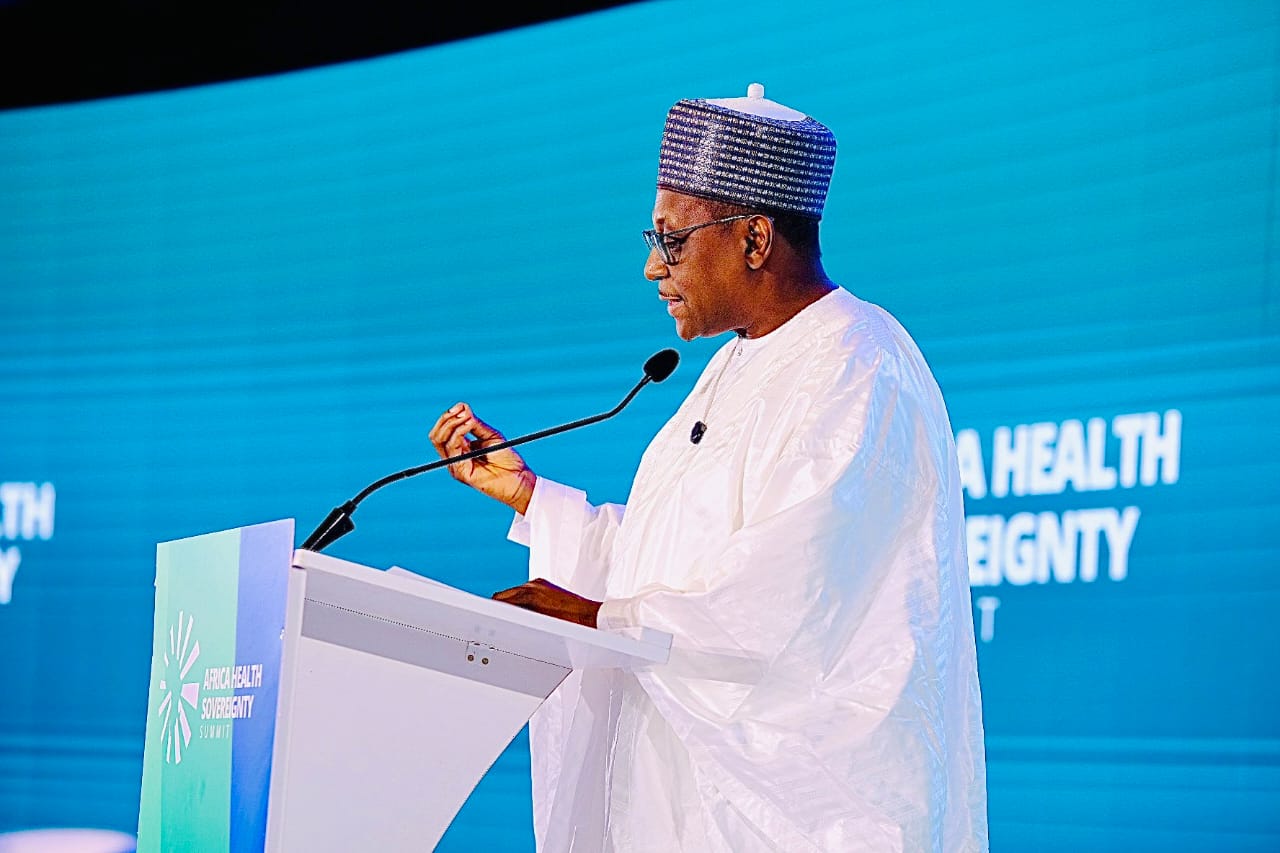
Coordinating Minister of Health and Social Welfare, Muhammad Pate, disclosed this in a post on X (formerly Twitter) on Saturday, noting that the development reflects President Bola Tinubu’s Renewed Hope Agenda and the country’s steady progress toward universal health coverage.

According to the minister, Nigeria recorded a historic 2.4 million new health insurance enrollees in 2024, bringing the total number of insured Nigerians to about 20 million.

“In 2024, Nigeria broke its enrollment record with more than 2.4m new people insured, bringing total coverage to about 20m Nigerians. With new policy tools in motion, we are on course to reach 44m by 2030,” Pate stated.

He explained that the increase in the capitation fee will enable health providers to deliver higher-quality and consistent care, while the fee-for-service rates have also been increased by 380 per cent based on actuarial evidence that aligns costs with service quality.

“A major constraint in care quality has been the low capitation fee for enrollees. For years, the capitation stood at ₦750 per person.

“We have doubled it to ₦1,450 to ensure providers are properly equipped to deliver consistent, high-quality care,” the minister said.

Highlighting efforts to strengthen Nigeria’s health system, Pate revealed that nearly 120,000 health workers have been trained since 2023, while 2,500 doctors, nurses, midwives and community health extension workers have been recruited to boost frontline services.

See also  N30,000 car racing bet leaves five dead in Ogun

In addition, 4,000 new health personnel have been deployed to federal tertiary hospitals to close workforce gaps.

He also announced the introduction of a One Hour Referral Authorisation Code, designed to speed up patient movement between primary and specialist facilities and eliminate unnecessary delays in care.

“By shortening this process to one hour, we are ensuring that patients move quickly from primary to specialist care,” he said, adding that the National Health Insurance Authority had been directed to commence covert monitoring of health facilities to prevent denial of treatment to enrollees.

Pate noted that reforms in the Basic Health Care Provision Fund and the NHIA are already yielding measurable results, as hospital visits rose from fewer than 10 million in 2023 to over 46 million by mid-2025.

He added that the achievements so far reflect President Tinubu’s vision of a people-centred health system that delivers affordable, quality care to all Nigerians regardless of income or status.

“We will continue to modernise infrastructure, strengthen the workforce, and sustain reforms until every Nigerian is covered and cared for,” Pate affirmed.

Continue Reading
Click to comment

Leave a Reply

Your email address will not be published. Required fields are marked *

News

‘Revenue doubled, debt hit N200tn’ — Peter Obi demands answers from Tinubu govt

Published

on

Mr Peter Obi, presidential candidate of the Nigeria Democratic Congress, NDC, and former governor of Anambra State, has questioned the Federal Government’s borrowing pattern, arguing that the sharp increase in national revenue under President Bola Tinubu’s administration has not translated into improved living conditions for Nigerians.

The remarks were contained in a statement posted on Obi’s official page while reacting to the President’s recent account of his administration’s performance after three years in office.

According to Obi, President Tinubu listed the increase in government revenue from N16.8 trillion in 2022 to N35 trillion in 2025 as one of the administration’s major achievements.

Obi argued that despite the reported increase in revenue, the country’s debt profile had continued to rise.

“Shockingly, while Nigerians expected a reduction in borrowing with the exponential increase in revenue, the opposite is the case,” Obi stated.

According to him, Nigeria’s total public debt has risen to about N200 trillion, representing an increase of over N100 trillion within the last three years.

Obi also argued that the country earned more than projected budget revenues during the period due to global and regional economic developments that affected commodity prices and government earnings.

Obi also alleged that key socio-economic indicators had worsened during the same period.

“Alarmingly, even with the astronomical increase in both revenue and debt, almost all key socio-economic and governance indicators are worse than in 2023,” he said.

Obi cited rising multidimensional poverty, unemployment and a decline in gross domestic product, GDP, per capita as areas of concern.

See also  N30,000 car racing bet leaves five dead in Ogun

According to him, multidimensional poverty increased from about 87 million people in 2023 to more than 140 million people in 2025.

“The question Nigerians and even the international community are asking is, ‘Where did all the money go?’” Obi stated.

He called for greater transparency and accountability in the management of public resources, urging the government to provide Nigerians with a detailed explanation of how revenues and borrowed funds have been utilised since 2023.

FOLLOW US ON:

FACEBOOK

TWITTER

PINTEREST

TIKTOK

YOUTUBE

LINKEDIN

INSTAGRAM

Continue Reading

News

Tinubu approves N10bn funding for emergency response to Ebola

Published

on

President Bola Tinubu has established a Presidential Task Force on Ebola Virus Disease Preparedness and approved the immediate release of N10bn in emergency intervention funding.

This follows the rapidly expanding outbreak that has already killed at least 349 people across the Democratic Republic of Congo and Uganda, with the World Health Organisation declaring it a Public Health Emergency of International Concern.

A statement by the Special Adviser to the President on Information and Strategy, Bayo Onanuga, said the task force would be chaired by the Chief of Staff to the President, Femi Gbajabiamila, with membership drawn from relevant ministries, departments and agencies and state representatives.

The N10bn, Onanuga said, will strengthen the operational preparedness of the Nigeria Centre for Disease Control and Prevention and support critical national public health emergency response activities.

The task force was constituted following a stakeholder meeting convened by Gbajabiamila to review Nigeria’s preparedness.

It was attended by representatives from the Ministry of Interior, the Federal Airports Authority of Nigeria, the Nigeria Immigration Service, the Nigerian Civil Aviation Authority and the Lagos State Government, among others.

According to Onanuga, Tinubu directed the “intensification of passenger screening at all international airports, including enhanced temperature checks and crowd-control protocols, and enhanced monitoring of passengers arriving on high-risk airline routes, including Air Uganda, RwandAir, Air Tanzania, Air Angola, Kenya Airways and Ethiopian Airlines, all carriers with direct or connecting services from the affected region.”

He ordered the immediate activation of referral and isolation centres at Lagos and Abuja international airports, with other airports to follow, and the mandatory activation of QR code-based pre-arrival health declaration systems for passengers originating from or transiting through designated high-risk countries.

See also  Christmas: Travellers decry highway extortion by fake council officials

The President also directed the disinfection of departure halls, cargo areas, baggage sections and airport facilities as precautionary environmental measures.

Tinubu directed the task force to designate specific airports or terminals for high-risk flights to enable controlled screening and isolation procedures, and to consider adjusting flight timings to minimise interaction between high-risk passengers and other travellers.

He also mandated the group to consult with security, diplomatic and aviation bodies on the possibility of regulating flights from affected and high-risk countries.

The President directed all states hosting international airports and international border corridors, as well as relevant MDAs, to immediately submit their plans, funding requirements and intervention needs for coordinated implementation.

The current outbreak, caused by the Bundibugyo virus, a species of Ebola, was first confirmed in DRC’s Ituri Province on May 15, 2026, and rapidly spread to Uganda after a case was confirmed in Kampala.

As of June 7, the European Centre for Disease Prevention and Control reported 515 confirmed cases and 91 confirmed deaths, with 283 individuals in isolation.

By May 29, the total suspected case count had risen to 1,037 with 349 deaths.

Unlike earlier-known Ebola strains, there is no licensed vaccine or specific therapeutic agent against the Bundibugyo virus, though early supportive care has been shown to be lifesaving.

Case fatality rates in previous Bundibugyo outbreaks ranged from 30 to 50 per cent.

In 2014, during the West African Ebola epidemic, Nigeria recorded 20 confirmed cases and eight deaths after a Liberian-American diplomat, Patrick Sawyer, arrived at Lagos’s Murtala Muhammed International Airport infected.

See also  Update: Court adjourns Sowore’s arraignment on Cybercrime charges to October 27

punch.ng

FOLLOW US ON:

FACEBOOK

TWITTER

PINTEREST

TIKTOK

YOUTUBE

LINKEDIN

INSTAGRAM

Continue Reading

News

June 12: Atiku backed rotational presidency deal, insists Akume

Published

on

The Secretary to the Government of the Federation, George Akume, has said former Vice President Atiku Abubakar was among political leaders who supported the adoption of rotational presidency in Nigeria following the annulment of the June 12, 1993, presidential election.

Atiku Abubakar
Former Vice President Atiku Abubakar

According to the SGF, the annulment of the June 12 election, won by the late Chief MKO Abiola, prompted political leaders to take difficult decisions aimed at preserving national unity and strengthening democracy.

A statement by his Media Aide, Yomi Odunuga, said Akume made the clarification on Tuesday while responding to questions at a World Press Conference in Abuja, as part of activities marking Nigeria’s 27th Democracy Day anniversary.

He recalled that leaders of the Peoples Democratic Party met in Kaduna under the leadership of the late Chief Solomon Lar and Alhaji Adamu Ciroma to deliberate on the country’s political future, with the issue of power rotation featuring prominently.

“It was a tough argument before the issue of rotational presidency was agreed on. At the end, we had to concede. We must do this.

“June 12 annulment had complicated the whole thing. It was finally agreed that we’ll be alternating between North and South.

“Atiku was one of the leaders at that meeting, which was convened by Chief Solomon Lar. He was part of that agreement,” Akume was quoted as saying.

The SGF explained that the decision to alternate presidential power between the North and South was designed to address the political consequences of the annulled election and promote inclusiveness and national cohesion.

See also  Iran Army Chief vows response to threats from Trump and Netanyahu

Akume’s remarks come amid ongoing political debates over power rotation ahead of the 2027 general election.

Atiku, a northerner and the presidential candidate of the African Democratic Congress for the 2027 election, is expected to challenge incumbent President Bola Tinubu, who is seeking a second term in office.

Tinubu, a southerner, was elected President in 2023 following the completion of the constitutionally permitted two-term tenure of the late President Muhammadu Buhari, a northerner.

Atiku has been criticised by political rivals and the Presidency for running for the highest office and maintaining future presidential ambitions during election cycles when political consensus favours power rotation to the South.

Reflecting on the significance of June 12, the SGF described the annulment as a painful setback to the democratic aspirations of Nigerians.

“Abiola won that election round and square. That election was annulled by the military government. It was very painful because the people spoke, and they spoke freely. They made their own choice,” he said.

According to him, one of the major lessons from the June 12 experience is the supremacy of the people’s will in a democratic system.

“The first lesson is that the voice of the people must always be supreme; it must be sacrosanct. That’s the beauty of democracy. We prefer the ballot to bullets,” he stated.

Akume expressed confidence in Nigeria’s democratic institutions, particularly the Independent National Electoral Commission, saying the country had learned from the events of 1993 and would never allow a repeat of such an annulment.

“If an election is conducted very fairly, and one wins, no problem. The actors at the Independent National Electoral Commission are not young people; they were adults when this thing happened.

See also  Court voids N110bn National Assembly vehicles, allowances vote

“If we were to take a poll at that time, over two-thirds of Nigerians would have condemned that act of annulment,” he said.

The SGF further commended INEC officials, describing them as men and women of integrity committed to protecting the nation’s democratic process.

“Fortunately for us, those at INEC are men of honour and integrity. They are well-read, patriotic Nigerians, and they are determined to make a difference. Never again would such happen in this country.

“You win, you win. When you lose, go back and prepare for another election. Look at the American example. President Trump lost to Joe Biden. He didn’t bring America down. He went back, prepared and came back and won. That’s the beauty of democracy,” Akume said.

He noted that Nigeria’s 27 years of uninterrupted democratic rule reflected the country’s commitment to democratic governance and freedom.

“We have decided to embrace democracy. That is why, for 27 unbroken years, we have been enjoying this freedom in a democratic setting. We love the values and the morals of democracy, and there is no system that is as beautiful as democracy,” he said.

Akume also highlighted freedom of expression as one of the key benefits of democratic rule.

“It is under a democratic system that you can insult your president and insult anybody and still go to bed, and you don’t receive a midnight knock on your door. Try it under a totalitarian regime,” he stated.

The SGF urged political actors to embrace democratic principles, respect electoral outcomes and continue to strengthen the nation’s democratic culture.

See also  Update: Court adjourns Sowore’s arraignment on Cybercrime charges to October 27

He added that Nigeria’s 27 years of uninterrupted democracy underscored its commitment to the rule of law, freedom of expression and peaceful political participation.

Continue Reading

Trending