

Connect with us

Business

Confiscated undeclared cash at airports hits $2.2m – Report

Published

on

The Nigeria Customs Service has made significant seizures of undeclared cash at various airports across the country between January and July 2025, totalling $2.209m.

The interceptions were made at the Murtala Muhammed International Airport in Lagos, Nnamdi Azikiwe International Airport in Abuja, and Mallam Aminu Kano International Airport in Kano.

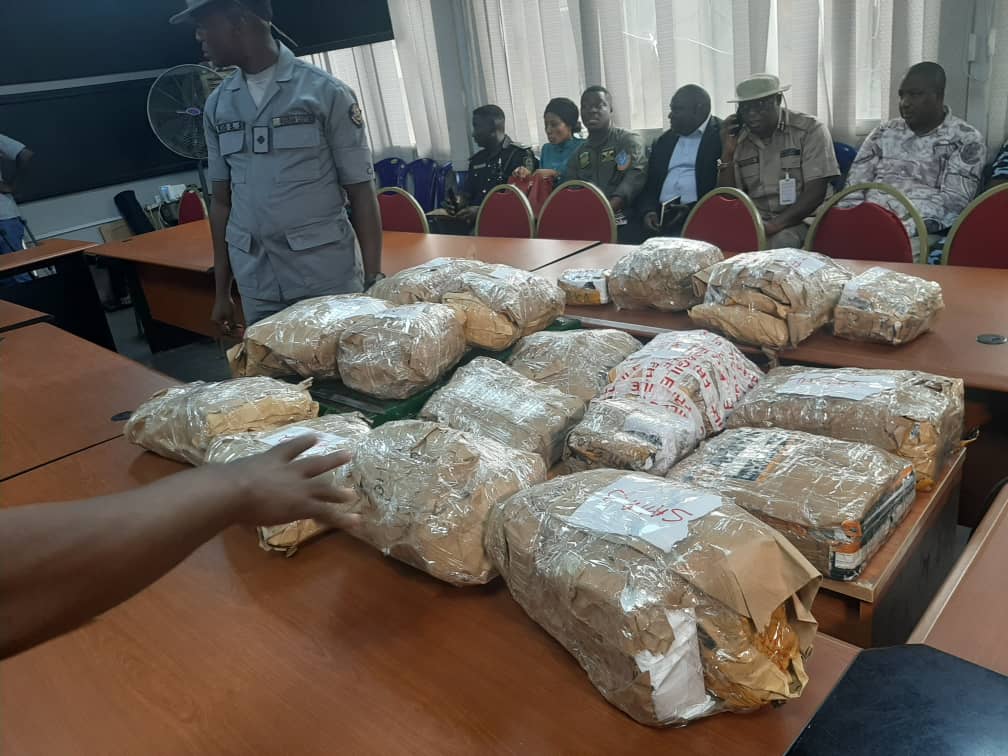
An analysis of various reports obtained from the service showed that in March, the NCS intercepted $1,154,900 and SR135,900 in Saudi Riyals at the Kano airport from a passenger arriving from Saudi Arabia.

The undeclared funds were concealed in packs of palm dates. The suspect was arrested, and the funds were handed over to the Economic and Financial Crimes Commission, resulting in a court conviction and forfeiture to the Federal Government.

Other notable interceptions include the one in Abuja Airport, which was $193,000 in undeclared cash hidden in a carton of yoghurt from an inbound passenger arriving from Jeddah in March.

At the Lagos airport, $578,000 in falsely declared cash was intercepted from an inbound passenger arriving from South Africa in March. The passenger declared $279,000 but had an additional $299,000 concealed in multiple packages.

At the Kano airport, foreign currencies totaling approximately N653.99m, including $420,900, 3,946,500 West African CFA francs, 224,000 Central African CFA francs, and €5,825, were intercepted from a suspect arriving from Saudi Arabia in July. Also at the Lagos Airport, an outbound passenger was intercepted with $29,000, but only declared $6,000, violating currency declaration requirements.

Reacting to the development, a chieftain of the Association of Nigerian Licensed Customs Agents, Mr Pius Ujubuonu, attributed the surge in undeclared cash seizures to fiscal policy issues.

See also  Rivers oil tragedy: 37 die from toxic fumes

“It’s a fiscal policy issue. Anywhere you have high rates of circumvention, there is something that does not add up there,” he said. Ujubuonu advised the government to review its fiscal policy to encourage people to declare their cash.

Deputy National President of the National Association of Government Approved Freight Forwarders, Dr. Segun Musa, expressed concern that the campaign against undeclared cash is not enough.

“We need to do more rigorous campaigns to make the general public aware of the rules,” he said. Musa urged the government to conduct thorough investigations into the funds to determine appropriate punishments.

The Nigeria Customs Service has reiterated the importance of declaring cash when traveling. Travelers are required to declare any cash exceeding $10,000 or equivalent in other currencies. The service has also provided forms at airline counters for passengers to make lawful declarations.

FOLLOW US ON:

FACEBOOK

TWITTER

PINTEREST

TIKTOK

YOUTUBE

LINKEDIN

TUMBLR

INSTAGRAM

Continue Reading
Click to comment

Leave a Reply

Your email address will not be published. Required fields are marked *

Business

NUPRC reveals Nigeria lost 3.3m barrels to oil thieves in 2025, read details

Published

on

Nigeria lost 3.33 million barrels of crude oil to theft in 2025, with nearly two-thirds of the reported losses occurring in the final three months, as the Nigerian Upstream Petroleum Regulatory Commission’s revenue collection declined by N2.14tn, The PUNCH reports.

The commission’s 2025 annual report, released on Thursday, showed that crude oil and gas revenue collections fell from N12.56tn in 2024 to N10.42tn in 2025, representing a 17.03 per cent decline, despite increases in receipts from gas flare penalties, signature bonuses and concession rentals.

Data from the commission’s 2025 report showed that crude theft rose sharply in the fourth quarter, when 2.19 million barrels were recorded. This represented 65.8 per cent of the total volume reported for the year and was almost five times the 440,434 barrels recorded in the third quarter.

The commission recorded 896,471 barrels of crude theft in the first quarter, while its second-quarter report showed a negative figure of 200,400 barrels, which it attributed to excess volumes identified during reconciliation.

The combined quarterly figures brought reported losses for the year to approximately 3.33 million barrels.

The report read, “Nigeria recorded 896,471 barrels of crude oil theft in the first quarter.

The second quarter recorded a negative 200,400 barrels, which the commission described as an excess volume in its reconciliation. Reported theft stood at 440,434 barrels in the third quarter. The fourth quarter recorded 2.19 million barrels, the highest quarterly volume of the year.”

The losses came despite the huge financial burden of securing the country’s petroleum assets. The Nigerian National Petroleum Company Limited reported energy security costs of N8.67tn in 2025, compared with about N3.1tn in 2024.

See also  FG’s N9tn domestic loans surge drains lifeline from businesses

The expenditure reflects the cost of interventions to protect oil and gas infrastructure and support national energy security, although the entire amount cannot be attributed solely to combating crude theft.

The persistence of theft alongside the rising security costs raises questions about the effectiveness of measures to protect production facilities and crude evacuation infrastructure.

The losses also represent crude that could otherwise have contributed to government revenue, export earnings and the supply of feedstock to domestic refineries.

Despite the reported theft, Nigeria produced 541.08 million barrels of crude oil and blended condensate in 2025. Quarterly production stood at 132.70 million barrels in the first quarter, 137.69 million in the second, 137.45 million in the third and 133.23 million in the fourth quarter. The country also produced 48.52 million barrels of unblended condensate during the year.

On revenue, oil and gas royalties, including Project Gazelle and NNPC receivables, remained the largest contributor, generating N8.97tn in 2025, compared with N11.08tn in 2024. The decline of N2.11tn represented a 19.03 per cent reduction.

“The total approved budget for 2025 was N645,462,335,500.80, with total income of  N342,814,462,174.97 and total expenditure was N304,533,385,103. Total revenue generated was N10,424,478,448,682.40, which is 63 per cent of projected revenue of N16,538,206,608,738.00.

“357 oil spill incidents were reported. 49.5 per cent of the spills were a result of sabotage. There was an increase of 64.74 per cent in revenue in 2024 over 2023 and a decrease of 20.53 per cent in 2025 over 2024 revenues,” the report added.

However, receipts from gas flare penalties increased from N391.26bn to N611.42bn, representing a 56.27 per cent rise.

See also  NNPC eyes 20% stake in Dangote refinery

Signature bonuses also increased by 44.2 per cent, from N369.58bn in 2024 to N532.94bn in 2025, while concession rentals rose by 61.1 per cent, from N23.71bn to N38.19bn.

Miscellaneous revenue increased from N35.20bn to N46.44bn. Conversely, royalty by price declined from N313.72bn to N213.41bn, while lease renewal receipts fell sharply from N230.73bn to N8.23bn.

The commission’s total income from cost of revenue collection and internally generated revenue, however, increased by 21.85 per cent to N342.81bn in 2025, compared with N281.34bn in 2024.

The report showed that cost of revenue collection contributed N335.45bn, while internally generated revenue accounted for N7.36bn.

The commission generated N10.42tn against a projected revenue target of N16.54tn, representing 63 per cent performance.

Beyond crude theft, the report documented 357 oil spill incidents during the year, with sabotage accounting for 49.5 per cent of the reported cases.

Source: punchng.com

FOLLOW US ON:

FACEBOOK

WHATSAPP CHANNEL

TWITTER

PINTEREST

TIKTOK

YOUTUBE

LINKEDIN

INSTAGRAM

Continue Reading

Business

How Moniepoint customers can check eligibility for FG’s ₦50,000 relief support

Published

on

Moniepoint Microfinance Bank says eligible customers can now check their status and access the Federal Government’s ₦50,000 emergency relief support through its Unstructured Supplementary Service Data (USSD) channel.

The bank said in a statement issued on Wednesday that “customers could dial *5573*27# from their registered phone numbers and select the option to check their eligibility for the National Emergency Relief and Stabilisation Intervention (NERSI).”

It said customers confirmed as beneficiaries would be guided through the steps to accept the support and receive the funds into their Moniepoint accounts at no additional cost.

The intervention, led by the Federal Ministry of Humanitarian Affairs and Poverty Reduction, is designed to provide direct financial assistance to vulnerable households to help them meet essential needs amid prevailing economic pressures.

On Tuesday, PUNCH Online reported that that FG had begun payment to eligible Nigerians.

Moniepoint said it was “among the payment providers selected by the Federal Government to facilitate the disbursement of the relief funds.”

It explained that beneficiary selection was based on the government’s eligibility criteria and verification processes, which relied on verified national identity records and the National Social Register.

The bank noted that the programme was being implemented in phases across the country, adding that not all customers would qualify or be selected at the same time.

What moniepoint customers should know?

Babatunde Olofin, Managing Director and Chief Executive Officer of Moniepoint Microfinance Bank, said the “bank was pleased to support eligible customers in receiving assistance under the government initiative.”

See also  We’re ready for court cases on fuel imports – Dangote

Olofin said Moniepoint would deploy its technology and financial infrastructure to make the process accessible, seamless and secure.

He urged “customers to use only the bank’s official USSD channel when checking their eligibility or accessing the funds.”

He added that the process required “no additional payment, documentation or third-party intervention.”

The bank also advised customers with enquiries to contact its customer service team or the NERSI helpdesk.

Moniepoint said its nationwide network of financial services infrastructure, including Point-of-Sale terminals across the country’s 774 local government areas, would support efforts to extend access to the intervention.

Source: punchng.com

FOLLOW US ON:

FACEBOOK

WHATSAPP CHANNEL

TWITTER

PINTEREST

TIKTOK

YOUTUBE

LINKEDIN

INSTAGRAM

Continue Reading

Business

$196m NIN funds unspent, FG seeks extension

Published

on

The Federal Government has requested another 12-month extension of Nigeria’s $430 million digital identity project as approximately $196m of its financing remains undisbursed and National Identification Number (NIN) issuance trails the target by 59 million.

This is contained in a World Bank restructuring paper dated 22 October, 2026, obtained by The PUNCH from the bank’s website on Wednesday.

The proposed extension would move the Nigeria Digital Identification for Development Project’s closing date from 31 December, 2026, to 31 December, 2027.

“The proposed Level 2 restructuring seeks to extend the project closing date by 12 months, as requested by the Government on May 8, 2026,” the report stated.

“This would be the third closing date extension under this project since Board Approval in February 2020, for the cumulative period of 42 months (3.5 years).”

The project was originally scheduled to close in June 2024 before receiving a six-month extension and another two-year extension.

An analysis by The PUNCH showed that approximately $196m, representing 45.6 per cent of the financing, remained undisbursed after total disbursements reached about $234m.

“The overall project disbursement rate inclusive of co-financiers stands at approximately $234m or 54.4 per cent,” the bank stated.

The financing comprises $115m from the World Bank’s International Development Association, $100m equivalent from the French Development Agency and $215m equivalent from the European Investment Bank.

The undisbursed balance therefore covers all three financiers. The report’s financing summary separately puts IDA’s undisbursed balance at $18.83m.

Approved in February 2020 and effective from December 2021, the project seeks to expand access to identification and services through a secure, inclusive national identity system.

See also  Tinubu’s Executive Order: FG, states, LGs allocation may increase by N15tn

However, about 121 million people had received NINs by September 30, 2026, against the 180 million target, leaving a shortfall of 59 million.

Although this represents an increase of approximately 84 million from the baseline, NIMC must substantially accelerate enrolment to meet the target.

“NIMC reconfirmed the commitment to reach the target of 180 million noting that this would require an increase in monthly enrollment rates from the current average of 1.5 million to 3.9 million,” the report stated.

This implies a 160 per cent increase in monthly enrolment.

The bank also distinguished enrolment records from successfully generated NINs, noting that more than 140 million enrolments had been recorded by September 14, but only 121 million had completed biometric and demographic validation and duplicate checks.

Women and children remained behind their respective targets. As of June, 40.4 million women and girls had NINs against a target of 79 million, while 26.3 million children under 16 had NINs against 60.83 million.

The report identified unpaid enrolment partners as another constraint, stating that the billing system must produce audited payment reports to enable payments to partners “which have not been paid since January 2026.”

Other priorities include deploying 7,000 procured mobile devices by January 2027, training agents, expanding ward-level enrolment nationwide and beginning school enrolment by December 2026.

The ward campaign had generated 10 million NINs since March, according to the report.

A major reason for the extension is the delayed replacement of NIMC’s existing technology with the National Identity Management System 2.0.

The contract was signed on September 15, 2026, following lengthy procurement. Implementation, normally requiring approximately 18 months, was compressed into 15 months, with full deployment and data migration scheduled for December 15, 2027.

See also  NNPC eyes 20% stake in Dangote refinery

The new platform would replace fragmented proprietary systems with an open-source system designed to improve capacity, interoperability and data protection.

Although NINAuth was launched in May 2025, the project’s digital authentication targets remained unmet pending integration into the new platform.

The bank warned that failure to extend its involvement would also halt implementation by the other financiers.

“If the project is not extended by WBG, all other co-financiers will also close,” it stated.

Source: punchng.com

FOLLOW US ON:

FACEBOOK

WHATSAPP CHANNEL

TWITTER

PINTEREST

TIKTOK

YOUTUBE

LINKEDIN

INSTAGRAM

Continue Reading

Trending