Connect with us

Business

Petrol price drop in doubt after Hormuz disruption

Published

on

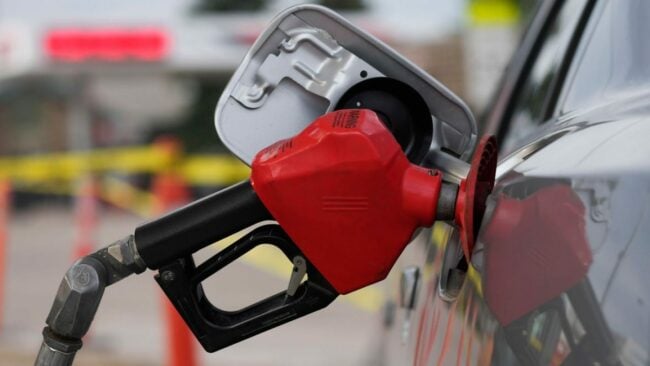
The decision by Iran to reclose the Strait of Hormuz has dampened hopes that fuel prices would crash in Nigeria.

The Strait of Hormuz was opened on Friday following a ceasefire deal between Iran and the United States. But barely 24 hours later, Iran reclosed the strait, calling the decision a response to a continued blockade of its ports by the United States.

The Iranian military on Saturday said control of the strategic waterway, through which 20 per cent of globally traded oil transits, had “returned to its previous state”, with reports saying Iranian gunboats fired at a merchant vessel as it attempted to cross.

Fuel marketers had earlier projected that petrol prices could drop from the current N1,250 to about N900 when the strait was opened on Friday.

The spokesman of the Petroleum Products Retail Outlet Owners Association of Nigeria, Joseph Obele, said on Friday that the prices of crude oil had crashed following the reopening of the strait.

Obele recalled that petrol was around N800 before February 28, when the crisis started, expressing optimism that a sharp reduction should be expected if the development had been sustained.

“With the reopening of the Strait of Hormuz, Nigerians should expect a very significant reduction in petrol prices. Petrol will fall below N1,000 by next week, probably to N900 per litre. Don’t forget that the product was N800+ before the Middle East crisis. Now that the war is over, we should be expecting a return to that price regime,” he said on Friday.

See also  APC, opposition list expectations for next INEC chair ahead of 2027

But on Sunday, Obele told our correspondent that the reclosure of the Hormuz had dashed hopes of a price drop projection. Obele said the status quo would remain at the moment, pending when both Iran and the US agree on a lasting ceasefire.

President Donald Trump said Sunday that Iran had violated the ceasefire agreement with the US by attacking ships in the Strait of Hormuz, and he repeated threats to attack Iranian energy infrastructure unless it accepts a deal to end the war.

Our correspondent observed, however, that there has not been a major oil price surge since Saturday when the strait was reclosed by Iran. According to oilprice.com, Brent traded at $90 per barrel on Sunday, up from $88 before the Hormuz Strait reclosure. Recall that Brent was $95 as of Friday morning.

Meanwhile, US President Donald Trump said Sunday that Iran had violated the ceasefire agreement with the US by attacking ships in the Strait of Hormuz, as he repeated threats to attack Iranian energy infrastructure unless it accepts a deal to end the war.

“Iran decided to fire bullets yesterday in the Strait of Hormuz — a total violation of our ceasefire agreement!” he posted on Truth Social. “That wasn’t nice, was it?”

“We’re offering a very fair and reasonable deal, and I hope they take it because, if they don’t, the United States is going to knock out every single power plant and every single bridge in Iran,” he continued. “No more Mr Nice Guy!” he said.

Trump disclosed that negotiators would arrive on Monday evening in Islamabad, Pakistan, which last weekend hosted direct talks between the two sides, with the current two-week ceasefire set to end on Wednesday.


Continue Reading
Click to comment

Leave a Reply

Your email address will not be published. Required fields are marked *

Business

FG flags safety risks in solar panel installations

Published

on

The Federal Government, through the Nigerian Electricity Management Services Agency, has raised the alarm over the increasing number of fire incidents linked to improperly installed rooftop solar photovoltaic systems across the country.

As Nigeria’s power sector continues to operate below expectations, many Nigerians are turning to solar to escape blackouts. However, cases of fire outbreaks from rooftop solar panels are becoming a source of concern to both the government and citizens.

In a strongly worded public notice, NEMSA expressed serious safety concerns, noting that many of the reported incidents were associated with poor workmanship, the use of substandard materials, the absence of protective devices, and non-compliance with technical standards and regulations.

The public notice, signed by the Chief Electrical Inspector of the Federation, stated, “The Nigerian Electricity Management Services Agency has observed with serious safety concern the increasing number of fire incidents allegedly linked to improperly installed rooftop solar photovoltaic systems across the country.”

“It is important to note that while the adoption of renewable energy is strongly encouraged in line with Nigeria’s energy transition objectives, safety must remain paramount.”

Pursuant to Section 176 (m) and Section 184 (8) of the Electricity Act 2023, NEMSA has now issued comprehensive safety guidelines for the installation of rooftop solar PV systems in Nigeria.

The agency directed members of the public to engage the services of qualified and NEMSA-certified solar PV system installers only. It stressed that these certified professionals possess the necessary skills, experience, and knowledge of technical standards and regulations.

See also  Dangote names N739 as new petrol pump price

In the new guidelines released, NEMSA said, “The installation of the rooftop solar PV system must be carried out only by NEMSA-certified electrical contractors.

“The NEMSA-certified contractor must be in possession of his/her valid NEMSA competency certificate during the installation works.

“A load assessment of the facility or premises must be conducted prior to installation to ensure the system is appropriately sized and can operate safely.

“The roof must be structurally sound and capable of supporting the PV solar system.”

NEMSA warned that “panels should be installed using appropriate mounting structures, as weak roof construction or improper installation can result in roof damage, fire hazards, and significant safety risks.”

The agency further stated that PV modules with cracks, bent frames, air bubbles, hot spots, or loose junction boxes should not be used, as damaged modules can cause electrical faults, reduce system performance, and increase the risk of fire or equipment failure.

On electrical safety, the notice declared, “Maintain a minimum clearance of 0.13m between the roofing material and the PV modules to ensure adequate ventilation and cooling during high temperatures. Insufficient clearance may lead to overheating, reduced system performance, and potential damage to the modules.”

It also mandated installers to install DC and AC isolators to enable emergency shutdown. “Provide appropriately rated circuit breakers and fuses to prevent overloading and install surge protection devices to protect the system against lightning surges. Ensure proper earthing (grounding) of the entire system, with an earth resistance value of 2 ohms or below,” it stated.

NEMSA emphasised the need for proper battery installation, warning that “batteries should be installed in a well-ventilated, secure location away from living areas and heat sources.”

See also  Tinubu seeks time to verify N4tn GENCO debt

For lithium batteries, the agency directed that a battery management system must be provided, and the installation site should be equipped with an appropriate cooling or air-conditioning system to maintain safe operating temperatures.

When installing a solar system on the rooftop of an existing house, it was directed that if the system capacity cannot support the entire household load, the installer must ensure proper load separation at the distribution board, stressing that all solar cables should be neatly routed through conduits or trunking to maintain safety and organisation.

Operators were told to ensure that communication cables and power cables are routed separately and never run together in the same conduit, as combining them can lead to signal interference, degraded system performance, and a higher risk of electrical faults or fire.

NEMSA also advised installers and owners to perform regular checks and maintenance of the rooftop PV system by cleaning the solar panels to prevent dust accumulation and overheating, periodically inspecting cables, connectors, and the inverter, and promptly replacing any damaged components.

The agency warned installers and the public, saying, “Solar PV system installers and members of the public must take note of the guidelines outlined above and ensure strict compliance. Adhering to these standards is essential for safety, system performance, and regulatory compliance.”

Continue Reading

Business

TCN declares force majeure as rainstorm collapses Lagos-Osun power line

Published

on

The Transmission Company of Nigeria (TCN) has declared a force majeure on the Ikeja West–Osogbo 330kV transmission line after a severe rainstorm knocked down a critical tower, raising fresh concerns about the vulnerability of Nigeria’s power infrastructure to extreme weather.

Force majeure refers to an unforeseen event beyond one’s control, such as a storm or disaster, that prevents someone from fulfilling their obligations.

The development, which occurred on Thursday, April 16, 2026, affected one of the major transmission corridors responsible for evacuating bulk electricity across parts of the South-West.

The transmission company announced the development in a statement issued on Sunday and signed by its General Manager, Public Affairs, Ndidi Mbah.

The company said the transmission line tripped during the storm due to a fault traced to a specific section of the network.

“The Transmission Company of Nigeria wishes to inform the public that a force majeure has occurred on the Ikeja West–Osogbo 330kV transmission line following a severe rainstorm on Thursday, 16 April 2026,” the statement read.

It added, “The line tripped during the storm due to a fault, which was detected at approximately 14.9 kilometres from the Ikeja West (Ayobo) end of the transmission line.”

According to TCN, a detailed inspection by its maintenance team revealed that one of the transmission towers along the route suffered a structural failure.

“Further inspection by TCN maintenance crews revealed that Tower No. 515 had collapsed during the storm, with the structure giving way at its midsection. While TCN is mobilising materials and personnel for the re-erection of the fallen tower, Efforts are currently ongoing by its engineers to dismantle the affected tower,” the company disclosed.

See also  Real reasons Tinubu sacked ex-IG Egbetokun revealed

The Ikeja West–Osogbo 330kV line is a strategic backbone in Nigeria’s national grid, linking Lagos, the country’s commercial hub, to other parts of the South-West and beyond. Any disruption along this route often has ripple effects on power supply, particularly in densely populated urban centres.

TCN said it has activated emergency response measures, including the mobilisation of materials and personnel to the site of the incident, to fast-track repairs and restore full transmission capacity.

“While TCN is mobilising materials and personnel for the re-erection of the fallen tower, efforts are currently ongoing by its engineers to dismantle the affected tower,” the statement added.

The company assured electricity consumers that steps are being taken to minimise the impact of the outage by relying on alternative transmission routes.

“We assure that we will work assiduously to restore flexibility and redundancy in that corridor as alternative line is still in service evacuating bulk power. Updates will be provided as work progresses,” it concluded.

By declaring force majeure, TCN is formally indicating that the disruption was caused by circumstances beyond its control, in this case, extreme weather conditions, making it temporarily unable to fulfil its full transmission obligations on that line.

Such declarations are not uncommon in Nigeria’s power sector, especially during periods of intense rainfall and storms that can weaken ageing infrastructure.

Nigeria’s transmission network has long struggled with capacity constraints, ageing infrastructure, and weather-related disruptions, despite ongoing upgrades.

The national grid, operated by TCN, evacuates power generated by generation companies to distribution companies. However, frequent system disturbances and line trips continue to hamper a stable electricity supply.

See also  Tears, drama, strategies, What you missed on first week of BBNaija S10

In recent years, stakeholders have raised concerns about the resilience of transmission infrastructure, particularly as climate variability increases the frequency of severe weather events.

The Ikeja West substation, one of the largest in the country, serves as a major hub for power distribution in Lagos and surrounding states, making any fault along its connected lines significant for both households and industries.

The latest incident adds to a growing list of grid challenges, highlighting the urgent need for investments in stronger, weather-resilient transmission infrastructure but the transmission company has assured on an alternative line.

Continue Reading

Business

Failure of Ajaokuta Steel caused by corruption, poor leadership — Economist Oyelaran-Oyeyinka

Published

on

A development economist, Banji Oyelaran-Oyeyinka, has blamed the failure of the Ajaokuta Steel Company on poor leadership, corruption and policy inconsistency.

Oyelaran-Oyeyinka made this known while speaking at the Virtual International Conference on Ajaokuta, where he called for the full privatization of the steel complex.

He recommended that majority ownership be handed to a capable Nigerian consortium working in partnership with experienced global operators.

According to him, Nigeria has invested up to $10 billion in the Ajaokuta project over the years without producing steel, while still spending about $4 billion annually on steel imports.

He described the steel plant located in Kogi State and designed to produce 1.3 million tonnes of steel per year as “a monument to unrealized potential” and a reflection of decades of policy failure.

The economist noted that, if operational, the plant could have met a significant share of domestic demand and saved the country billions in foreign exchange.

Drawing comparisons with countries such as China, India, and South Korea, Oyelaran-Oyeyinka emphasized that strategic investment in steel production played a critical role in their industrial growth. He warned that Nigeria risks further economic decline without decisive action.

Reiterating his position, he stressed that reviving Ajaokuta could generate up to $14 billion annually for the economy, save nearly $1 billion in foreign exchange, and create over 70,000 jobs.

“The time for hesitation has passed,” he said, urging the government to act swiftly to reposition the steel sector as the backbone of Nigeria’s industrial development.

FOLLOW US ON:

FACEBOOK

TWITTER

PINTEREST

TIKTOK

YOUTUBE

LINKEDIN

INSTAGRAM

See also  Borno attack: Army General, terrorists killed, Tinubu mourns
Continue Reading

Trending