
Connect with us

Lifestyle

Crispin Curtis Adeniyi-Jones (1876–1957): Medical Pioneer and Nigerian Nationalist

Published

on

Crispin Curtis Adeniyi-Jones (1876–1957) was a Nigerian physician and early political leader of Sierra Leonean Creole heritage whose career spanned medicine, public health, and the formative years of Nigeria’s nationalist movement. He combined medical expertise with a commitment to greater Nigerian participation in governance during the colonial era.

Early Life and Education

Born in 1876 into a prominent Sierra Leonean Creole family, Adeniyi-Jones received his early education at the Sierra Leone Grammar School, a leading institution for West African elites. He went on to study medicine in Britain, earning qualifications at the University of Durham and Trinity College Dublin.

During his medical training he gained clinical experience at Dublin’s Rotunda Hospital and later apprenticed under noted physician Sir Rubert Boyce, experiences that prepared him for a distinguished career in public health.

(Coleman, 1958; Ajayi & Crowder, History of West Africa, 1974)

Medical Career and Public Service

After qualifying as a doctor, Adeniyi-Jones returned to colonial Nigeria to join the government medical service. He became known for his work in public health and for his association with early psychiatric and medical reforms in Lagos, including service connected to the Yaba Mental Asylum (later Yaba Psychiatric Hospital), which was established in 1907 as the first purpose-built psychiatric facility in Nigeria. His medical practice reflected a broader concern for improving health systems under challenging colonial conditions.

(Ogunlesi, “A History of Psychiatric Practice in Nigeria,” West African Medical Journal, 1967)

Role in Nigerian Nationalism

Adeniyi-Jones emerged as an important figure in Nigeria’s early nationalist politics. He became active in the Nigerian National Democratic Party (NNDP), which was founded in 1923 by Herbert Macaulay as the first political party in Nigeria. After Macaulay’s health declined in the 1930s, Adeniyi-Jones rose to the position of party president. Under his leadership, the NNDP continued to push for increased African representation in the Lagos Legislative Council and for greater participation of Nigerians in colonial governance. His political vision linked social welfare with the quest for self-rule and helped lay the groundwork for the broader nationalist movement that would later lead to independence.

See also  The Arrival of Nigerian Student Nurses in Britain (1946)

(Coleman, Nigeria: Background to Nationalism, 1958)

Legacy and Death

Dr. Crispin Curtis Adeniyi-Jones died in 1957. He left a dual legacy as a respected physician and as a political pioneer who carried forward the nationalist ideals first championed by Herbert Macaulay. His life illustrates the interconnected struggles for social welfare and political autonomy that shaped Nigeria’s path toward nationhood.

Sources
Coleman, James S. Nigeria: Background to Nationalism. University of California Press, 1958.

FOLLOW US ON:

FACEBOOK

TWITTER

PINTEREST

TIKTOK

YOUTUBE

LINKEDIN

TUMBLR

INSTAGRAM

Continue Reading
Click to comment

Leave a Reply

Your email address will not be published. Required fields are marked *

Lifestyle

UNICEF reveals one in five girls still married before 18

Published

on

One in five girls worldwide is still married before the age of 18, according to UNICEF, even as the agency reports that 68 million child marriages have been averted over the past 25 years.

In a post obtained from UNICEF’s website on Monday, the agency attributed the progress to investments in girls’ education, legal reform and social protection. The figures were released in a message marking the International Day of the Girl Child on October 11, 2026, under the theme “End child marriage and invest in girls’ rights!”

“We have the solutions: keeping girls in school; expanding access to health, protection and social services; working with families and communities to challenge harmful norms; investing in girls’ rights and supporting their leadership,” UNICEF said.

“Now we must go further and faster. It is in our power to ensure that every girl, everywhere, can realize her rights and fulfil her potential.

“For when girls are safe, educated and empowered, they don’t just transform their own lives, they help build healthier families, stronger communities and more peaceful, prosperous societies.”

According to UNICEF, “Approximately 650 million women and girls alive today were married in childhood. More than 12 million girls, roughly one every three seconds, are still married before reaching adulthood each year, with the highest prevalence in sub-Saharan Africa at 31 per cent.”

Nearly one in four ever-married or partnered girls aged 15 to 19 have experienced intimate partner violence in their lifetime. Crises, conflict and displacement continue to increase the risks of child marriage, sexual violence and maternal mortality.

See also  SOME AFRICAN MARRIAGES SURVIVED POVERTY IN AFRICA — BUT ARE NOW COLLAPSING OVER MONEY ABROAD?

Girls aged 15 to 19 are twice as likely as boys not to be in education, employment or training. In fragile, conflict and violence-affected contexts, girls are nearly 90 per cent more likely to be out of secondary school than those in stable settings, raising their risk of child marriage.

“We know what works – and investing in girls is one of the most effective ways to accelerate progress,” UNICEF stated.

“Every girl deserves a childhood. Every girl deserves the freedom to learn, to grow, to make her own choices and to define her own future. Yet millions of girls are still denied that freedom.

“Child marriage remains one of the most widespread violations of girls’ rights, denying millions of girls the chance to stay in school, protect their health, live free from violence, and fulfil their potential.

“It can have severe and lasting consequences for girls’ physical and mental health, increasing risks of social isolation, anxiety, and emotional distress at a time when self-harm remains one of the leading causes of death among adolescent girls aged 15-19 globally.”

Source: punchng.com

FOLLOW US ON:

FACEBOOK

TWITTER

PINTEREST

TIKTOK

YOUTUBE

LINKEDIN

INSTAGRAM

Continue Reading

Lifestyle

FRSC mourns ex-corps marshal Biu

Published

on

The Federal Road Safety Corps has expressed sorrow over the death of a former Corps Marshal Dauda Biu, describing his death as a painful loss to the Corps, the road safety community and Nigeria.

In a condolence message on its X handle on Monday, the Corps Marshal, Shehu Mohammed, said late Biu was a distinguished officer whose career reflected dedication, discipline and commitment to public service.

Biu served as the seventh substantive Corps Marshal of the FRSC from July 2022 to May 2024.

During his tenure, he contributed to road safety administration, operational effectiveness, and institutional development.

Mohammed noted that the deceased’s contributions remained part of the Corps’ legacy, describing him as a seasoned professional who devoted a significant part of his life to serving humanity and promoting road safety in Nigeria.

On behalf of the FRSC management and workforce, Mohammed extended condolences to the deceased’s family, friends, associates, and others affected by his passing.

“On behalf of the Management and the entire workforce of the Federal Road Safety Corps, I extend my deepest condolences to his immediate family, friends, associates and all those whose lives he touched. We share in their grief at this difficult moment and pray that Almighty God grants them the strength to bear this irreparable loss.

“May Allah forgive his Shortcomings and grant him Paradise (Aljannah)

“Rest in peace, Dauda Ali Biu. Your service to the nation will not be forgotten,” the corps marshal said.

Source: punchng.com

FOLLOW US ON:

FACEBOOK

TWITTER

PINTEREST

TIKTOK

YOUTUBE

LINKEDIN

INSTAGRAM

See also  SOME AFRICAN MARRIAGES SURVIVED POVERTY IN AFRICA — BUT ARE NOW COLLAPSING OVER MONEY ABROAD?
Continue Reading

Lifestyle

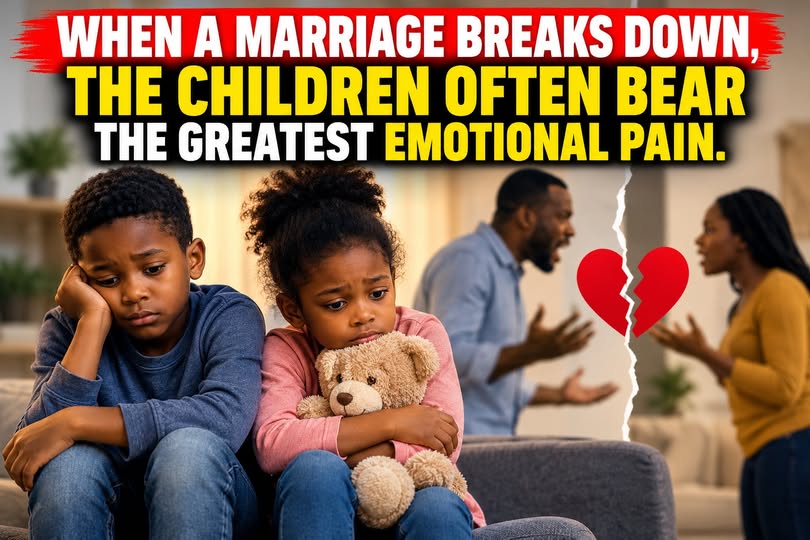
WHEN A MARRIAGE BREAKS DOWN, CHILDREN OFTEN BEAR THE GREATEST EMOTIONAL PAIN

Published

on

NewsBreak365 | Family, Relationships & Society

A broken marriage is not just the end of a relationship between two adults. For children, it can mean a home divided, family routines disrupted, and the painful experience of watching the two people they love most go their separate ways.

When a marriage becomes troubled, the husband and wife may be consumed by anger, disappointment, betrayal, or unresolved differences. But amid these struggles, one important question is often overlooked: How are the children coping emotionally?

The Silent Victims of Marital Conflict

Children may not fully understand why their parents are fighting or separating, but they can feel the tension in the home. Constant arguments, insults, hostility, and being forced to choose sides can leave them feeling confused, insecure, anxious, or emotionally overwhelmed.

Some children may become withdrawn, struggle at school, or find it difficult to trust others. Others may hide their sadness because they do not want to upset either parent.

Not every child experiences separation in the same way. In some situations, separation may provide a safer and healthier environment, particularly where there is abuse or persistent conflict. However, the way parents handle the process can make a significant difference to their children’s well-being.

Marriage May End, but Parenthood Continues

One of the biggest mistakes separated parents can make is turning their children into weapons in their disputes.

Using children to deliver hostile messages, speaking badly about the other parent in front of them, withholding access as punishment, or demanding that they choose sides can place an unfair emotional burden on young minds.

See also  SOME AFRICAN MARRIAGES SURVIVED POVERTY IN AFRICA — BUT ARE NOW COLLAPSING OVER MONEY ABROAD?

Children need reassurance that their parents’ relationship problems are not their fault. They also need to know that they are loved and that their basic needs, routines, and emotional security will remain a priority.

Where it is safe and appropriate, parents should encourage healthy relationships with both parents, even when they can no longer live together.

Should Parents Stay Together for the Children?

This is a difficult question with no single answer.

Some people believe parents should do everything possible to save their marriages for the sake of their children. Others argue that children may be better off when parents separate rather than remain in a home filled with hostility and constant fighting.

The truth is that a peaceful separation can be healthier than a home filled with fear, hostility, and emotional conflict. Equally, a struggling marriage may sometimes improve through honest communication, counselling, and a genuine willingness to change.

The priority should not simply be whether parents remain married. It should also be whether children grow up in an environment where they feel safe, loved, respected, and emotionally supported.

Where violence or abuse is present, safety must come first.

A Message to Every Parent

Before allowing anger to determine how you treat your former partner, remember the children who are watching and listening.

Do not make them carry the weight of adult disagreements. Do not force them to become messengers, judges, or emotional support systems for their parents.

If your marriage cannot be saved, make every reasonable effort to protect your children from unnecessary conflict. Seek professional support when needed, communicate respectfully where possible, and remind your children that they are not responsible for the breakdown of the relationship.

See also  The Arrival of Nigerian Student Nurses in Britain (1946)

A marriage may break, but the duty to raise emotionally healthy children remains.

Join the Conversation

NewsBreak365 invites readers to share their views on this important family issue.

Should parents remain together for the sake of their children, even when the marriage is unhappy, or is a peaceful separation sometimes the better choice?

Can separated parents successfully raise happy, emotionally secure children without turning them against each other?

Share your opinion in the comments. Your experience or perspective may help another family facing a difficult decision.

NewsBreak365 — Bringing important conversations about family, society, and everyday life to the forefront.

#NewsBreak365 #Marriage #Parenting #FamilyRelationships #ChildrensWellbeing #Divorce #CoParenting

FOLLOW US ON:

FACEBOOK

TWITTER

PINTEREST

TIKTOK

YOUTUBE

LINKEDIN

INSTAGRAM

Continue Reading

Trending