Connect with us

News

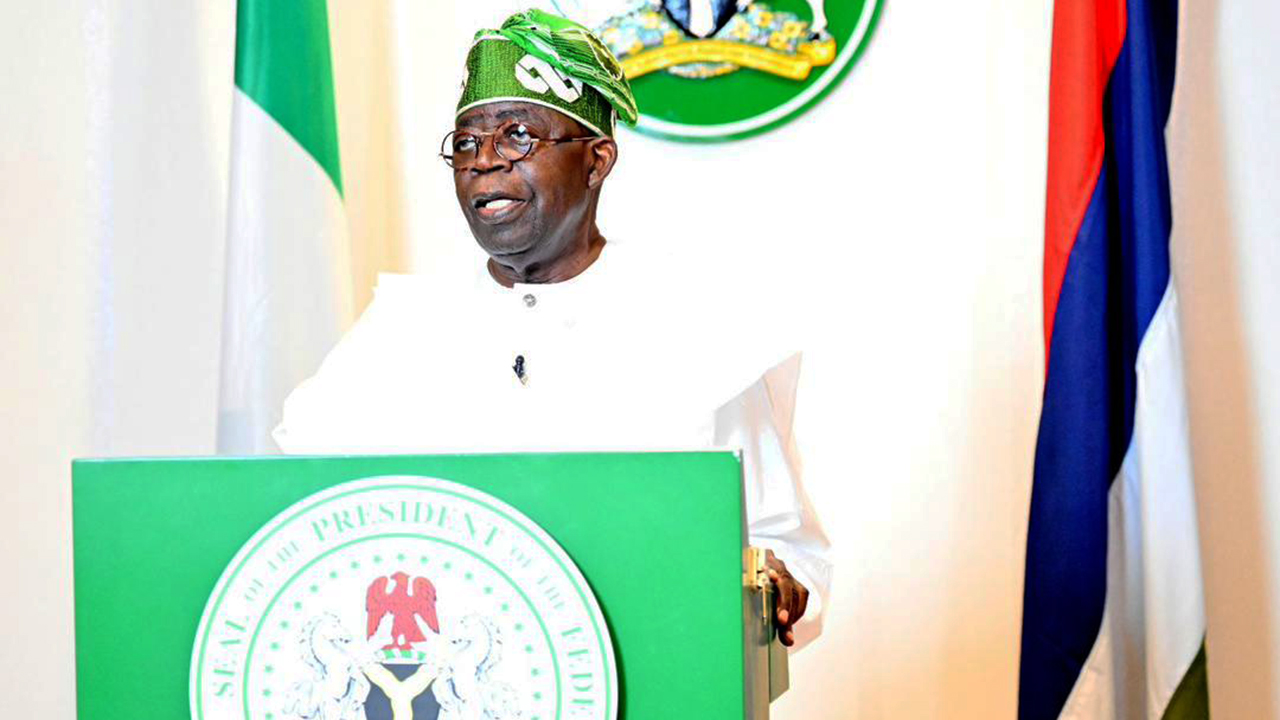
FULL TEXT – Tinubu’s 65th Independence Day address to Nigerians

Published

on

Fellow Nigerians,

Today marks the 65th anniversary of our great nation’s Independence. As we reflect on the significance of this day and our journey of nationhood since October 1, 1960, when our founding fathers accepted the instruments of self-government from colonial rule, let us remember their sacrifice, devotion, and grand dream of a strong, prosperous, and united Nigeria that will lead Africa and be the beacon of light to the rest of the world.

Our founding heroes and heroines—Herbert Macaulay, Dr Nnamdi Azikiwe, Sir Abubakar Tafawa Balewa, Chief Obafemi Awolowo, Sir Ahmadu Bello, Margaret Ekpo, Anthony Enahoro, Ladoke Akintola, Michael Okpara, Aminu Kano, Funmilayo Ransome-Kuti, and other nationalists—believed it was Nigeria’s manifest destiny to lead the entire black race as the largest black nation on earth.

For decades, the promise of our Independence has been tested by profound social, economic, and political challenges, and we have survived. While we may not have achieved all the lofty dreams of our forebearers, we have not strayed too far from them. In 65 years since our Independence, we have made tremendous progress in economic growth, social cohesion, and physical development. Our economy has experienced significant growth since 1960.

Although it is much easier for those whose vocation is to focus solely on what ought to be, we must recognise and celebrate our significant progress. Nigerians today have access to better education and healthcare than iin 1960. At Independence, Nigeria had 120 secondary schools with a student population of about 130,000. Available data indicate that, as of year 2024, there were more than 23,000 secondary schools in our country. At Independence, we had only the University of Ibadan and Yaba College of Technology as the two tertiary institutions in Nigeria. By the end of last year, there were 274 universities, 183 Polytechnics, and 236 Colleges of Education in Nigeria, comprising Federal, State, and private institutions. We have experienced a significant surge in growth across every sector of our national life since Independence – in healthcare, infrastructure, financial services, manufacturing, telecommunications, information technology, aviation and defence, among others.

Our country has experienced both the good and the bad times in its 65 years of nationhood, as is normal for every nation and its people. We fought a bitter and avoidable civil war, experienced military dictatorships, and lived through major political crises. In all these, we weathered every storm and overcame every challenge with courage, grit, and uncommon determination. While our system and ties that bind us are sometimes stretched by insidious forces opposed to our values and ways of life, we continue to strive to build a more perfect union where every Nigerian can find better accommodation and find purpose and fulfilment.

Fellow Compatriots, this is the third time I will address you on our independence anniversary since I assumed office as your President on May 29, 2023. In the last 28 months of my administration, like our founding fathers and leaders who came before me, I have committed myself irrevocably to the unfinished nation-building business.

Upon assuming office, our administration inherited a near-collapsed economy caused by decades of fiscal policy distortions and misalignment that had impaired real growth. As a new administration, we faced a simple choice: continue business as usual and watch our nation drift, or embark on a courageous, fundamental reform path. We chose the path of reform. We chose the path of tomorrow over the comfort of today. Less than three years later, the seeds of those difficult but necessary decisions are bearing fruit.

In resetting our country for sustainable growth, we ended the corrupt fuel subsidies and multiple foreign exchange rates that created massive incentives for a rentier economy, benefiting only a tiny minority. At the same time, the masses received little or nothing from our Commonwealth. Our administration has redirected the economy towards a more inclusive path, channelling money to fund education, healthcare, national security, agriculture, and critical economic infrastructure, such as roads, power, broadband, and social investment programmes. These initiatives will generally improve Nigerians’ quality of life. As a result of the tough decisions we made, the Federal and State governments, including Local Governments, now have more resources to take care of the people at the lower level of the ladder, to address our development challenges.

See also  MC Oluomo denies owing Nollywood actors

Fellow Nigerians, we are racing against time. We must build the roads we need, repair the ones that have become decrepit, and construct the schools our children will attend and the hospitals that will care for our people. We have to plan for the generations that will come after us. We do not have enough electricity to power our industries and homes today, or the resources to repair our deteriorating roads, build seaports, railroads, and international airports comparable to the best in the world, because we failed to make the necessary investments decades ago. Our administration is setting things right.

I am pleased to report that we have finally turned the corner. The worst is over, I say. Yesterday’s pains are giving way to relief. I salute your endurance, support, and understanding. I will continue to work for you and justify the confidence you reposed in me to steer the ship of our nation to a safe harbour.

Under our leadership, our economy is recovering fast, and the reforms we started over two years ago are delivering tangible results. The second quarter 2025 Gross Domestic Product grew by 4.23%—Nigeria’s fastest pace in four years—and outpaced the 3.4 per cent projected by the International Monetary Fund. Inflation declined to 20.12% in August 2025, the lowest level in three years. The administration is working diligently to boost agricultural production and ensure food security, reducing food costs.

In the last two years of our administration, we have achieved 12 remarkable economic milestones as a result of the implementation of our sound fiscal and monetary policies:

We have attained a record-breaking increase in non-oil revenue, achieving the 2025 target by August with over N20 trillion. In September 2025 alone, we raised N3.65 trillion, 411% higher than the amount raised in May 2023.

We have restored Fiscal Health: Our debt service-to-revenue ratio has been significantly reduced from 97% to below 50%. We have paid down the infamous “Ways and Means” advances that threatened our economic stability and triggered inflation. Following the removal of the corrupt petroleum subsidy, we have freed up trillions of Naira for targeted investment in the real economy and social programmes for the most vulnerable, as well as all tiers of government.

We have a stronger foreign Reserve position than three years ago. Our external reserves increased to $42.03 billion this September—the highest since 2019.

Our tax-to-GDP ratio has risen to 13.5 per cent from less than 10 per cent. The ratio is expected to increase further when the new tax law takes effect in January. The tax law is not about increasing the burden on existing taxpayers but about expanding the base to build the Nigeria we deserve and providing tax relief to low-income earners.

We are now a Net Exporter: Nigeria has recorded a trade surplus for five consecutive quarters. We are now selling more to the world than we are buying, a fundamental shift that strengthens our currency and creates jobs at home. Nigeria’s trade surplus increased by 44.3% in Q2 2025 to ₦7.46 trillion ($4.74 billion), the largest in about three years. Goods manufactured in Nigeria and exported jumped by 173%. Non-oil exports, as a component of our export trade, now represent 48 per cent, compared to oil exports, which account for 52 per cent. This signals that we are diversifying our economy and foreign exchange sources outside oil and gas.

See also  Bisi Akande reveals what can end insecurity

Oil production rebounded to 1.68 million barrels per day from barely one million in May 2023. The increase occurred due to improved security, new investments, and better stakeholder management in the Niger Delta. Furthermore, the country has made notable advancements by refining PMS domestically for the first time in four decades. It has also established itself as the continent’s leading exporter of aviation fuel.

The Naira has stabilised from the turbulence and volatility witnessed in 2023 and 2024. The gap between the official rate and the unofficial market has reduced substantially, following FX reforms and fresh capital and remittance inflows. The multiple exchange rates, which fostered corruption and arbitrage, are now part of history. Additionally, our currency rate against the dollar is no longer determined by fluctuations in crude oil prices.

Under the social investment programme to support poor households and vulnerable Nigerians, N330 billion has been disbursed to eight million households, many of whom have received either one or two out of the three tranches of the N25,000 each.

Coal mining recovered dramatically from a 22% decline in Q1 to 57.5% growth in Q2, becoming one of Nigeria’s fastest-growing sectors. The solid mineral sector is now pivotal in our economy, encouraging value-added production of minerals extracted from our soil.

The administration is expanding transport infrastructure across the country, covering rail, roads, airports, and seaports. Rail and water transport grew by over 40% and 27%, respectively. The 284-kilometre Kano-Kastina-Maradi Standard Gauge rail project and the Kaduna-Kano rail line are nearing completion. Work is progressing well on the legacy Lagos-Calabar Coastal Highway and Sokoto-Badagry Highway. The Federal Executive Council recently approved $3 billion to complete the Eastern Rail Project.

The world is taking notice of our efforts. Sovereign credit rating agencies have upgraded their outlook for Nigeria, recognising our improved economic fundamentals. Our stock market is experiencing an unprecedented boom, rising from an all-share index of 55,000 points in May 2003 to 142,000 points as of September 26, 2025.

At its last MPC meeting, the Central Bank slashed interest rates for the first time in five years, expressing confidence in our country’s macroeconomic stability.

SECURITY:

We are working diligently to enhance national security, ensuring our economy experiences improved growth and performance. The officers and men of our armed forces and other security agencies are working tirelessly and making significant sacrifices to keep us safe. They are winning the war against terrorism, banditry and other violent crimes. We see their victories in their blood and sweat to stamp out Boko Haram Terror in North-East, IPOB/ESN terror in South East and banditry and kidnapping. We must continue to celebrate their gallantry and salute their courage on behalf of a grateful nation. Peace has returned to hundreds of our liberated communities in North-West and North-East, and thousands of our people have returned safely to their homes.

YOUTH:

I have a message for our young people. You are the future and the greatest assets of this blessed country. You must continue to dream big, innovate, and conquer more territories in your various fields of science, technology, sports, and the art and creative sector. Our administration, through policies and funding, will continue to give you wings to fly sky-high. We created NELFUND to support students with loans for their educational pursuits. Approximately 510,000 students across 36 states and the FCT have benefited from this initiative, covering 228 higher institutions. As of September 10, the total loan disbursed was N99.5 billion, while the upkeep allowance stood at N44.7 billion.

See also  Failed peace talks: You can’t dictate terms to Iran – Javad Zarif to US

Credicorp, another initiative of our administration, has granted 153,000 Nigerians N30 billion affordable loans for vehicles, solar energy, home upgrades, digital devices, and more.

YouthCred, which I promised last June, is a reality, with tens of thousands of NYSC members now active beneficiaries of consumer credit for resettlement.

Under our Renewed Hope Agenda, we promised to build a Nigeria where every young person, regardless of background, has an equitable opportunity to access a better future—thus, the Investment in Digital and Creative Enterprises (iDICE) programme. The Bank of Industry is driving the programme, in collaboration with the African Development Bank, the French Development Agency, and the Islamic Development Bank. This initiative is at the cusp of implementation. Over the last two years, we have collaborated with our partners to launch the programme, supporting our young builders and dreamers in the technology and creative sectors.

A MESSAGE OF HOPE

Fellow Nigerians, I have always candidly acknowledged that these reforms have come with some temporary pains. The biting effects of inflation and the rising cost of living remain a significant concern to our government. However, the alternative of allowing our country to descend into economic chaos or bankruptcy was not an option. Our macro-economic progress has proven that our sacrifices have not been in vain. Together, we are laying a new foundation cast in concrete, not on quicksand.

The accurate measure of our success will not be limited to economic statistics alone, but rather in the food on our families’ tables, the quality of education our children receive, the electricity in our homes, and the security in our communities. Let me assure you of our administration’s determination to ensure that the resources we have saved and the stability we have built are channelled into these critical areas. Today, the governors at the state level, and the local government autonomy are yielding more developments.

Therefore, on this 65th Anniversary of Our Independence, my message is hope and a call to action. The federal government will continue to do its part to fix the plumbing in our economy. Now, we must all turn on the taps of productivity, innovation, and enterprise, just like the Ministry of Interior has done with our travel passports, by quickening the processing. In this regard, I urge the sub-national entities to join us in nation-building. Let us be a nation of producers, not just consumers. Let us farm our land and build factories to process our produce. Let us patronise ‘Made-in-Nigeria’ goods. I say Nigeria first. Let us pay our taxes.

Finally, let all hands be on deck. Let us believe, once more, in the boundless potential of our great nation.

With Almighty God on our side, I can assure you that the dawn of a new, prosperous, self-reliant Nigeria is here.

Happy 65th Independence Anniversary, and may God continue to bless the Federal Republic of Nigeria.

Amen.

punch.ng

FOLLOW US ON:

FACEBOOK

TWITTER

PINTEREST

TIKTOK

YOUTUBE

LINKEDIN

TUMBLR

INSTAGRAM

Continue Reading
Click to comment

Leave a Reply

Your email address will not be published. Required fields are marked *

News

Germany deports 137 Nigerians in five chartered flights

Published

on

Germany deported at least 137 Nigerian citizens in five documented chartered operations between February and June 2026, according to reports sighted by The PUNCH.

The documented arrivals comprised 27 Nigerians deported in February, 37 deported directly by Germany as part of a 50-person joint European Union operation in March, and 24, 23 and 26 Nigerians deported in April, May and June, respectively, according to figures contained in reports monitored by the DERS Team and Refugees4refugees.org.

The figures indicate an increase in the use of chartered flights to return Nigerians from Germany and other European countries, with several of the operations involving cooperation among European states.

On February 18, 2026, a batch of 27 Nigerians arrived at the Lagos Cargo Airport following a deportation operation from Germany.

According to Refugees4refugees.org, the flight was operated by World2fly and departed Stuttgart before arriving in Lagos shortly before 2 pm.

The report said the operation was primarily enforced by Germany, although one person, described as severely ill and mentally unfit, was transferred from Slovakia to join the 26 people deported from Germany.

It also identified Baden-Württemberg as a major participant in the operation and said Stuttgart had hosted both the December 2025 and February 2026 deportation operations to Nigeria.

The report further alleged that while some of those deported had serious health conditions, others had lived and worked in Germany for several years.

It cited the case of a single mother and her three children who were deported from the Sindelfingen district in Stuttgart despite reportedly having documentation relating to their residence status.

See also  ‘If I don’t give you electricity, don’t vote for me again’ – ADC reminds Tinubu of failed promise

According to the report, the family subsequently returned to Germany after intervention by a volunteer and confirmation from local foreign authorities that the deportation had been made in error.

Furthermore, the February deportation also coincided with Nigeria’s participation in preparations for the Voluntary National Review of the Global Compact for Migration ahead of the 2026 International Migration Review Forum in New York.

The DERS Team said that Nigerian government agencies did not send representatives to receive the deportees at the airport, adding that the returning Nigerians were subsequently transported away from the airport without adequate assistance.

On March 10, another 50 people were deported to Nigeria in a joint EU operation hosted by Germany in cooperation with Spain, Austria and Belgium.

Germany accounted directly for 37 of the deportations, according to the figures provided.

The operation was described as the largest single deportation involving Nigerians in the three years referenced in the report.

A further 24 Nigerians, including women and a minor, were deported on April 9 on a chartered flight from Frankfurt organised through Frontex and German authorities, according to the supplied data.

In May 2026, another batch of 23 deportees was returned to Nigeria, while 26 Nigerians arrived in Lagos on June 17 following another routine chartered deportation flight.

Taken together, the five documented batches amounted to 137 Nigerians returned to the country between February and June 2026.

The figures highlight the continued use of organised charter flights in the enforcement of migration decisions involving Nigerians in Europe.

Migration rights advocates have, however, continued to argue that deportation policies should be accompanied by adequate safeguards for vulnerable people and proper procedures to prevent wrongful removal.

See also  Lagos begins crackdown on illegal land reclamation Wednesday

While migration is as old as time itself, identified underlying factors driving irregular migration include conflict, exploitation, climate-related pressures and economic inequality.

Migration is the permanent or temporary movement of people from one place to another, changing their home. It can happen within a country or across borders, shaping populations, cultures, and job markets.

Source: punchng.com

FOLLOW US ON:

FACEBOOK

TWITTER

PINTEREST

TIKTOK

YOUTUBE

LINKEDIN

INSTAGRAM

Continue Reading

News

Adeyemi demands media, lawyers’ presence before Reps probe on PFIPC scandal

Published

on

The House of Representatives Ad Hoc Committee investigating the controversy surrounding the Presidential Foreign Investment Promotion Council is yet to decide where it will question the council’s self-appointed Director-General, Adeniyi Adeyemi, a source familiar with the committee’s proceedings has disclosed.

The development comes as Adeyemi insisted that his lawyers and journalists must be present before he submits to questioning by the House committee.

The committee, chaired by the lawmaker representing Kanke/Kanam/Pankshin Federal Constituency of Plateau State, Yusuf Gagdi, is probing how the PFIPC secured official office accommodation within the Federal Secretariat Complex in Abuja and received a budgetary allocation of more than N1.32bn in the 2026 Appropriation Act despite allegedly having no legal existence.

The investigation has attracted significant public attention following allegations that the council operated within government structures despite lacking legal recognition, raising concerns about possible lapses in public financial management and institutional oversight.

Adeyemi, who has been in police custody over the controversy surrounding the council, is expected to appear before the committee this week, following testimonies from several senior government officials.

However, as of Sunday, the venue for the much-anticipated session remained unsettled.

The source, who spoke on condition of anonymity because he was not authorised to discuss the committee’s proceedings with the media, confirmed the development in response to an inquiry by The PUNCH.

Asked whether the committee had chosen a venue for Adeyemi’s appearance, the source simply replied, “No decision yet.”

The development followed the committee’s hearings with key government officials, including the Head of the Civil Service of the Federation, Didi Walson-Jack; the Director-General of the Budget Office of the Federation, Tanimu Yakubu; the Director of Banking Services at the Central Bank of Nigeria, Hamisu Abdullahi; and representatives of the Inspector-General of Police.

The officials’ testimonies reportedly raised questions about how Adeyemi allegedly presented himself as the head of the PFIPC and secured recognition and access within government circles.

Adeyemi had, through his lawyers, indicated his willingness to appear before the committee publicly and respond to questions concerning the allegations.

However, Gagdi said the committee would determine the venue for the session at a later date.

Meanwhile, the Coalition of United Political Parties has rejected the findings of the Independent Corrupt Practices and Other Related Offences Commission on the PFIPC controversy, describing the investigation as inadequate and calling for a broader and transparent inquiry.

In an interview with our correspondent, CUPP spokesperson, Agu Bryan, said the ICPC’s report, which reportedly cleared the Presidency of wrongdoing while indicting Adeniyi Adeyemi, failed to answer critical questions about how an allegedly non-existent government agency was able to operate at such a high level.

“The ICPC probe of the Presidential Foreign Investment Promotion Council which exonerated the Presidency and indicted Adeniyi Adeyemi is nothing short of a charade,” Bryan said.

He argued that the report appeared to portray Adeyemi as having operated almost entirely alone, despite the scale of activities attributed to him.

See also  Owo church massacre: Court sentences four to death for terrorism; read details

According to Bryan, such an operation could not have continued without assistance or enabling actions by officials within government institutions.

“As Nigerians, we know that someone could not have operated an alleged high-profile agency of such magnitude without enablers, either within the Presidency or across the government agencies involved,” he said.

Bryan called for a broader examination of the roles allegedly played by government institutions referenced in Adeyemi’s correspondence, including the Office of the Secretary to the Government of the Federation, the Central Bank of Nigeria and the Office of the Head of the Civil Service of the Federation.

He particularly cited the testimony of the Head of the Civil Service of the Federation, Didi Walson-Jack, that her office failed to conduct due diligence on some of the documents associated with the controversial council.

The coalition also questioned how the PFIPC allegedly found its way into the national budget if, as reported by the ICPC, it had no legal foundation.

CUPP said the National Assembly and relevant government ministries owed Nigerians an explanation over how funds were appropriated to an organisation whose legal status had allegedly not been established.

“The National Assembly, particularly the House of Representatives, which appropriated funds to an agency that, according to the investigation, never existed as a creation of law, also owes Nigerians an explanation,” Bryan said.

He asked who within the Ministry of Budget and National Planning processed the budget line attributed to the PFIPC and what verification mechanisms were applied before public funds were appropriated.

CUPP also raised questions about the alleged recruitment of hundreds of staff and the extent to which Adeyemi was granted access to official government activities.

Bryan said the issues went beyond determining whether Adeyemi forged documents, arguing that investigators should establish how he allegedly gained access to government processes and institutions.

The controversy escalated after investigators reportedly established that a signature attributed to the Chief of Staff to the President, Femi Gbajabiamila, was forged.

CUPP said the finding should prompt investigators to examine other official documents and correspondence allegedly used by Adeyemi.

“It is commendable that the House and the Police have established that the signature of the Chief of Staff to the President was allegedly forged. But that raises another critical question: how many other documents, official correspondences and signatures allegedly used by Adeyemi were also forged?” Bryan asked.

He said Nigerians deserved to know the full extent of the alleged deception and whether officials responsible for verifying the credentials of individuals dealing with public institutions failed in their duties.

The coalition further questioned how the PFIPC allegedly acquired sufficient official recognition to participate in government processes and appear in the national budget.

“How did a supposedly non-existent agency attain such a level of official recognition and attention that it found its way into the national budget?” he asked.

CUPP also called for Adeyemi to be given a fair opportunity to defend himself before the House committee, arguing that a transparent confrontation with the evidence could help determine whether other individuals or institutions were involved.

See also  Failed peace talks: You can’t dictate terms to Iran – Javad Zarif to US

“Was Adeyemi given fair hearing thus far? Has he been given the privilege to appear before the Yusuf Gagdi-led Ad hoc Committee of the House of Representatives probing the matter to be interrogated and directly answer questions?” Bryan said.

He invoked the legal principle nemo judex in causa sua—that no person should be a judge in his own cause—in arguing that the investigation should be conducted independently and transparently.

Bryan said anything short of an open and impartial investigation would fail to satisfy public expectations.

He also criticised the ICPC’s handling of the matter and called for independent professional bodies to be considered if the Federal Government was genuinely interested in establishing the facts.

“If President Tinubu is determined to unravel the truth, independent organisations or bodies like the NBA, West African Bar Association or international or private investigators should be allowed to come in and take over the investigation,” Bryan said.

He accused federal security and anti-corruption agencies of lacking sufficient independence to investigate the controversy objectively, a claim the agencies have not accepted.

The House committee’s inquiry follows mounting concerns over how Adeyemi allegedly operated the PFIPC, secured government recognition and participated in official engagements despite questions over the organisation’s legal status.

The controversy has also drawn attention to the roles of several government institutions whose officials allegedly interacted with Adeyemi or processed documents connected to the council.

The committee is expected to hear directly from Adeyemi as it seeks to establish how the PFIPC was created, how it operated, who recognised it and whether public funds were allocated or expended in connection with its activities.


His appearance before the committee could therefore prove significant in determining whether the alleged scheme was the work of an individual or involved officials and institutions within government.

Adeyemi demands media

Adeyemi, through his lawyer, Ademola Oyedokun, had on Wednesday rejected the House committee’s decision to question him at an undisclosed location while he remains in police custody.

The committee subsequently attempted to question him on Thursday, but Adeyemi declined to respond to its questions, prompting the lawmakers to reschedule the interrogation for Monday.

However, a family source said Adeyemi had informed the committee that he would only submit to questioning if journalists and his legal representatives were allowed to be present.

“They eventually rescheduled to Monday and my brother told them that when they are coming, they should come with the media, otherwise he will not grant them audience.

“Initially, they agreed to come with the media, but later they said they would not be coming with any media. They said if he refuses to grant them audience, they will go ahead and conclude their investigation and it will be said that he was the one who failed to grant them audience,” the source said.

The development came a day after Adeyemi’s family raised concerns over an attempt by members of the House committee to question him in police custody without his lawyers present.

Adeyemi’s brother, Peter, alleged that the detained promoter declined to answer questions because his legal representatives were absent.

“The Reps committee came and wanted to interrogate him, but he refused. They are still there trying to make him talk without any of his lawyers being present. We are crying out loud so that the right thing would be done.

“He has stated that he wants to be quizzed the same way others who have accused him have spoken. It’s not that he is not willing to state his side of the story,” he said.

When contacted on whether the police were aware of the committee’s proposed visit and whether the lawmakers would be granted access to Adeyemi, the police spokesperson, Ani Ineidu, said visitors would be allowed provided they met the necessary requirements.

“Yes, if they have necessary documents. I’m not aware if they have relevant documents or authorisation, but if they fulfil the conditions, everybody who is under police custody has a right to visitors.

“So, in a case like this, if they have that right, they will be granted access,” Ineidu said.

In a statement issued on Wednesday, Oyedokun said his client welcomed the House investigation into the alleged establishment and operations of the PFIPC but opposed what he described as a closed-door interrogation.

“We have read that the committee intends to interview our client at an undisclosed date and place. We ask it, respectfully, to think again.

“Everyone else in this matter has been heard in public, and what has been said about our client was said in public. He should be allowed to answer in the same place it was said,” the lawyer stated.

The committee had on Tuesday announced that it would question Adeyemi at an undisclosed location while he remains in police custody.

The Chairman of the committee, Yusuf Gagdi, said the arrangement was necessary to avoid interfering with ongoing investigations by the Nigeria Police Force, the Economic and Financial Crimes Commission and the Independent Corrupt Practices and Other Related Offences Commission.

Gagdi said the committee had invited Adeyemi but was informed by the police that he remained in custody pursuant to a court order.

He added that the National Assembly would not act in a manner that undermined the judiciary or violated the principle of separation of powers, stressing that lawmakers lacked the authority to override an existing court order directing Adeyemi’s detention.


The committee is investigating allegations surrounding the creation and operations of the PFIPC, including claims of impersonation, forgery, financial impropriety and the unlawful use of government facilities and official insignia.

Source: punchng.com

FOLLOW US ON:

FACEBOOK

TWITTER

PINTEREST

TIKTOK

YOUTUBE

LINKEDIN

INSTAGRAM

Continue Reading

News

PHOTOS: Osun-Osogbo: Priestess defends 10-year-old Arugba, dismisses child abuse claims

Published

on

The Araba of Osogbo, Ifáyemí Elébuibón, has defended the tradition of selecting a young maiden as the Arugba of the Osun-Osogbo Festival, describing the role as a privilege rather than child abuse.

This is as a priestess and custodian of Osun Osogbo also defended the practice, saying the Arugba was selected through Ifa divination from the royal lineage.


Osun-Osogbo: Priestess

Elébuibón spoke in a video interview posted on Sunday by Yoruba cultural content creator, Wàá Ṣeré, amid discussions surrounding the age and responsibilities of the 10-year-old Arugba, Princess Alimot Osunbunmi.

Arugba is the young maiden chosen to carry the sacred calabash during the annual Osun-Osogbo Festival procession to the Osun Sacred Grove.

Alimot, a member of the royal family of the Ataoja of Osogbo, was selected through traditional Ifa divination in March 2025.

She carried the sacred calabash for the first time during this year’s procession to the Osun Sacred Grove on Friday, after she was unable to do so during the 2025 festival because of her young age.


10-year-old Arugba of the Osun-Osogbo Festival, Princess Alimot Osunbunmi carries the sacred calabash at Osun Osogbo festival…Photo Credit: Dewunmi Lagos

Explaining the role and its benefit, Elébuibón said the Arugba served as a spiritual intermediary between the Osun deity and the people.

He added that the responsibility was not determined by biological age.

“You see those people saying all that? They lack understanding. They don’t know. Whoever says the Arugba is too young—this one is ten years old, but some started at five!

See also  Slain husband’s family slams Tinubu’s pardon for Maryam Sanda

“The role the Arugba plays is a role of spiritual maturity, not about physical age. What the Arugba does for the town and the community is what the white man calls a ‘medium’—an intermediary between the Orisa and the people,” he said.

Elébuibón said the young maiden could communicate the wishes of the deity to the people because of the spiritual significance attached to the position.

“As young as she is, provided she remains pure and undefiled by any man, she can wake up one morning and say, ‘Mother Osun said this and that, do this, do that, don’t do this.’”

He added that the Arugba’s spiritual development was not necessarily tied to her physical age.

“Very soon, she will mature spiritually far beyond her biological age because the Orisa themselves nourish and care for them. Her role is not about age; what she does is not about age.”


FILE: Ifayemi Elebuibon

A female priestess and culture custodian, in another video posted by culture content creator Olamide Oseyifunmii, also defended the practice, saying the Arugba was selected through Ifa divination from the royal lineage.

According to her, the chosen maiden must be a virgin and is expected to observe certain taboos associated with the role.

“Whomever Ifa chooses becomes the Arugba. The Arugba must be a girl who remains untouched, pure, and a virgin. That is strictly what the Arugba must be,” she said.

She rejected the description of the practice as child abuse, saying the young girls selected for the role were traditionally protected and treated with care.

See also  Actress Eniola Badmus threatens lawsuit over prostitution allegation, see details

“Being selected as the Arugba carries taboos and honours; it is not what Westerners label as ‘child abuse’.”

The priestess said the Arugba was not expected to carry heavy loads apart from the sacred calabash during the annual procession.

She also explained the spiritual significance attached to the young maiden, saying devotees who bow before the Arugba were not worshipping the child but honouring the Osun deity believed to be represented through her.

“They were bowing to the divine spirit of Osun Ewuji inside her and upon her head,” she said.

The 2026 Osun-Osogbo Festival, which began on August 7, is being held at the Osun Sacred Grove in Osogbo, Osun State, and will run until August 19.

The annual festival, centred on the Osun deity, is one of Nigeria’s major traditional and cultural festivals and attracts worshippers, tourists and cultural enthusiasts from Nigeria and beyond.

Source: punchng.com

FOLLOW US ON:

FACEBOOK

TWITTER

PINTEREST

TIKTOK

YOUTUBE

LINKEDIN

INSTAGRAM

Continue Reading

Trending