Connect with us

News

Tinubu sends state police bill to AGF, read details

Published

on

President Bola Tinubu has received the Constitution (Sixth Alteration) Bill establishing state police after all 36 state Houses of Assembly approved the proposed amendment, paving the way for its presidential assent.

The Chief of Staff to the President, Femi Gbajabiamila, announced the development in a statement on Wednesday, saying Tinubu would assent to the bill at a formal signing ceremony.

The bill was transmitted to the President by his Special Advisers on Senate and House of Representatives Matters, Senator Basheer Lado and Dr Wasiu Olanrewaju-Smart, Gbajabiamila disclosed.

He said all 36 state Houses of Assembly had approved the bill, exceeding the constitutional requirement of at least 24 states, representing two-thirds of the 36 states, under Section 9(2) of the 1999 Constitution.

“President Tinubu will review the Constitution Alteration Bill in consultation with the Attorney-General of the Federation. He will assent to the Bill at a formal signing ceremony,” Gbajabiamila affirmed.

The development followed the Senate’s declaration that the constitutional amendment process for establishing state police had been completed, following the approval of the proposed legislation by all 36 state Houses of Assembly.

The Senate reached the resolution after considering a motion sponsored by its Leader, Opeyemi Bamidele, who told the chamber on Wednesday that the bill had fulfilled all constitutional requirements for amending the 1999 Constitution.

The proposed legislation, known as the Constitution of the Federal Republic of Nigeria (Sixth Alteration) Bill, 2026, seeks to establish State Police Services as part of the country’s national policing structure.

Bamidele recalled that the Senate and the House of Representatives had overwhelmingly passed the bill on June 24 and July 23, 2026, respectively, with more than the constitutionally required two-thirds majority.

See also  FG defends passport price hike to N100,000, N200,000

He said the bill was subsequently transmitted to the 36 state Houses of Assembly for approval in accordance with Section 9(2) of the 1999 Constitution.

The senator representing Ekiti Central listed all 36 states as having transmitted their resolutions on the amendment to the National Assembly, describing the development as the fulfilment of the constitutional conditions required for the bill’s passage.

In his motion, Bamidele said, “The Bill has fulfilled the conditions set out in Sections 9(1) and (2) of the Constitution for a Constitutional amendment of this nature to be passed.”

He consequently urged the Senate to authorise the Clerk to the National Assembly to transmit the bill to Tinubu for assent in line with the Acts Authentication Act, 2004.

The Senate adopted the recommendation, marking the completion of the legislative process for the proposed constitutional amendment and paving the way for the President to consider it.


The motion also commended Tinubu for his support for the initiative, acknowledging his role in advancing the proposal throughout the legislative process.

It stated, “We thank Mr President for taking ownership and boldly supporting the Bill throughout the process.”

However, the Senate said constitutional approval alone would not provide the operational framework for the proposed policing arrangement. It urged the President to forward a National Policing Bill to the National Assembly for “legislative scrutiny and expeditious passage” to enable the operationalisation of subnational policing.

Gbajabiamila, who also chairs the Presidential Working Group on State Police, disclosed that a parallel legislative process was underway to develop the operational framework for the proposed system.

See also  PHOTOS: Oscar-winning actress Diane Keaton di£s aged 79

He said the working group had concluded extensive nationwide consultations and stakeholder engagements towards developing a draft National Policing Bill, which had been submitted to the Federal Ministry of Justice for legislative drafting validation.

“Upon receipt of the validated version, the Working Group will review it and present it, alongside its report, to Mr President for consideration,” he said.

The National Policing Bill is expected to provide the legislative framework for implementing the proposed state police system, including the modalities for its operation.

Tinubu expressed appreciation to the President of the Senate, the Speaker of the House of Representatives, members of the National Assembly, the Clerk to the National Assembly, the 36 state governors, state Houses of Assembly and all Nigerians for their “shared commitment to addressing the nation’s security challenges.”

The move represents a major step towards decentralising Nigeria’s policing structure, which has remained largely under the control of the Federal Government amid growing calls for state-level security arrangements to address worsening insecurity.

The push for state police dates to the return of democratic governance in 1999, when the Constitution established a centralised federal police force, the Nigeria Police Force, as the country’s sole constitutional policing authority.

For over two decades, state governors, security experts and civil society groups have argued that a single federal force of roughly 400,000 officers was structurally incapable of policing a country of over 200 million people spread across 36 states and 774 local government areas.

The concerns intensified as bandits, kidnappers and insurgents operated across vast rural areas with limited federal police presence.

See also  Bauchi gov swears in new education commissioner, five advisers

States such as Ondo, under former Governor Rotimi Akeredolu, responded by creating quasi-security outfits such as Amotekun South-West, launched in January 2020.

The push for state police under the Tinubu administration gained more momentum in early 2026 during the Ramadan Iftar dinners the President hosted for governors and National Assembly leaders.


In May 2024, the National Assembly passed the Constitution (Fifth Alteration) Bill on state police, but the process stalled at the state assemblies, requiring it to be re-transmitted and re-ratified.

The bill returned to the front burner in 2025 when worsening insecurity, particularly banditry in the North-West and kidnappings in the South-East, intensified pressure on the Tinubu-led government.

Source: punchng.com

FOLLOW US ON:

FACEBOOK

WHATSAPP CHANNEL

TWITTER

PINTEREST

TIKTOK

YOUTUBE

LINKEDIN

INSTAGRAM

Continue Reading
Click to comment

Leave a Reply

Your email address will not be published. Required fields are marked *

News

Police seek family of Nigerian-Canadian killed in Lagos crash, read details

Published

on

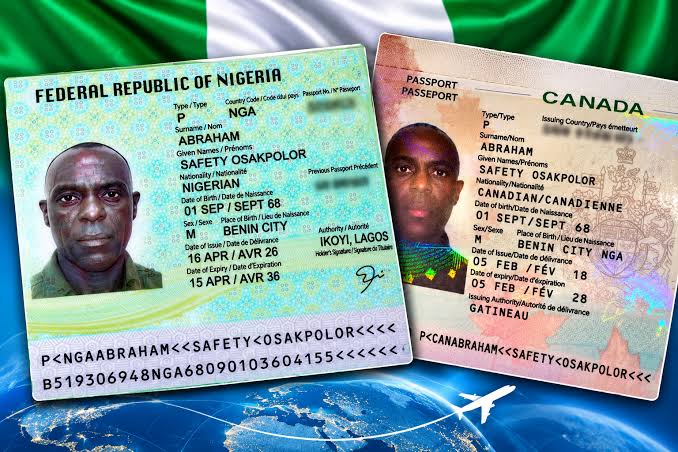
The Airport Police Command has appealed to the public to help locate the family of a man with dual Nigerian-Canadian passports, Abraham Safety Osakpolor, who died after being hit by a vehicle along the Murtala Muhammed International Airport access road in Lagos.

The command noted that the 58-year-old, who was born in Benin City, Edo State, on September 1, 1968, died following the accident on Friday.

The command’s Public Relations Officer, Adeola Mohammed, disclosed this in a statement on Wednesday, saying the victim was struck by a moving vehicle while walking along the expressway leading from the airport towards the Oshodi axis.

Mohammed stated that Osakpolor was rushed to a hospital, where he was pronounced dead, adding that his remains had been deposited in the morgue.

He stated, “The victim, identified as Abraham Safety Osakpolor, born in Benin City, Edo State, on 1st September, 1968, was hit by a moving vehicle and subsequently rushed to a hospital, where he was pronounced dead.

“His remains have been deposited in the hospital morgue. The motorist involved in the accident was immediately apprehended by the Airport Police Command and will be charged in court.”

The PPRO added that officers recovered a Nigerian passport and a mobile phone without a SIM card from the deceased’s belongings during an initial search.

He added that mortuary attendants later discovered a Canadian passport among the victim’s possessions.

He added, “During an initial search of the deceased’s belongings, a Nigerian passport with passport number B51930694 and a mobile device without a SIM card were recovered.

“The mortuary attendants subsequently informed the Command that a Canadian passport with passport number AE763025 had also been discovered among his belongings during a further search.

See also  US moves to revoke citizenship of two Nigerians and 38 others

“Despite concerted efforts by the police to establish contact with his family or persons who may know him, these efforts have so far proved unsuccessful.”

The command urged members of the public, particularly those who knew Osakpolor or his relatives and associates, to help notify his family of the incident.

Adeola appealed to anyone with useful information to contact the Airport Police Command through its X account, @airportcommand, or Facebook page, Airport Command.

He also provided the following contact details for the command’s spokesperson: 08058342093, X: @Moh_Adeola and Instagram: @moh_adeola.

Source: punchng.com

FOLLOW US ON:

FACEBOOK

WHATSAPP CHANNEL

TWITTER

PINTEREST

TIKTOK

YOUTUBE

LINKEDIN

INSTAGRAM

Continue Reading

News

INEC dispatches 186,277 BVAS to states ahead of 2027 elections, read details

Published

on

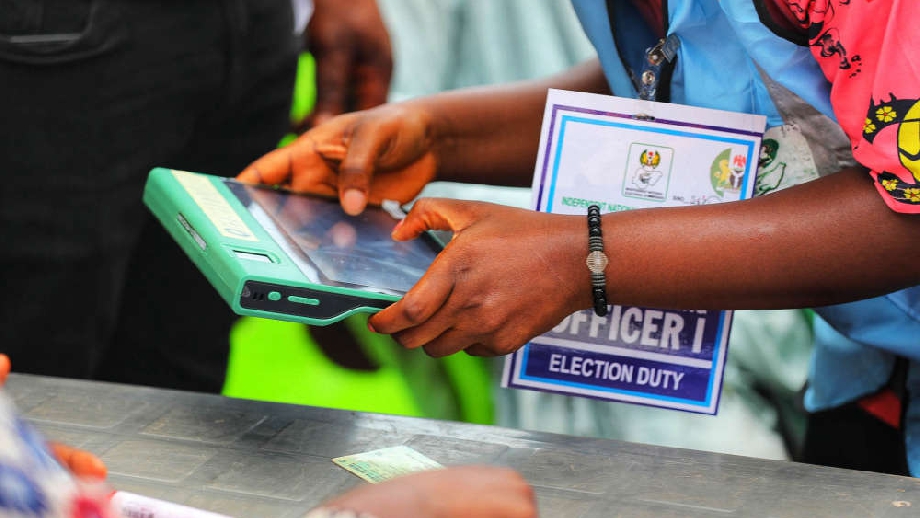
The Independent National Electoral Commission (INEC) has said that about 75 to 80 per cent of its Bimodal Voter Accreditation Systems, which amounts to186,277 devices, has already been deployed to states ahead of the 2027 general elections.

INEC National Commissioner, Mohammed Haruna, disclosed this in an exclusive chat with The PUNCH in Abuja, explaining that although most states had received their materials, some were yet to collect their full allocations.

He added that all outstanding equipment and non-sensitive materials will be delivered before the end of November.

Haruna said, “About 75 to 80 per cent of the BVAs have been deployed to states. Most states have received them, though not the full complement. Some have received the full complement of the materials, but some have a few numbers left to collect”.

He, however, identified Kano, the Federal Capital Territory and Kaduna as among the states that have received full deployment of non-sensitive election materials.

“Almost all the states have received their materials. But the ones that are complete, I know FCT, for instance, Kano and Kaduna too.”

INEC had disclosed Thursday last week that it had begun the distribution of non-sensitive materials to some states ahead of the 2027 general elections.

The commission, while hosting a delegation from Kenya’s Independent Electoral and Boundaries Commission, further disclosed that it has completed nine scheduled activities and was stepping up preparations following an assessment of its readiness across the six geopolitical zones.

The Commission said, “We have six zones in Nigeria. The purpose is to go around the zones to see how prepared we are, assess what the zones have put in place, the challenges and what to do.

See also  Military rolls out anti-attack measures for Christmas

“Right now, all non-sensitive materials are almost ready. In fact, today as we speak here, the non-sensitive materials have been lifted to some zones now.”

In 2023, INEC deployed a total of 175,856 BVAs machines to 176,846 polling units nationwide. However, in October, the INEC chairman, Professor Joash Amupitan (SAN), announced that INEC has procured an additional 57,000 BVAs devices in addition to its existing inventory to strengthen its technological capacity ahead of the 2027 polls.

With its additional procurement, The PUNCH projected a total of 232,846 BVAs devices for the 2027 elections, representing an increase of approximately 32.4 per cent over the 2023 deployment.

Amupitan also said that the maximum number of registered voters assigned to one BVAs has been reduced from 1,250 to 850.

He added that polling units with more than 850 registered voters will receive multiple BVAs. Meanwhile, in 2023, the standard operational arrangement was one BVAS device per polling unit.

Additionally, INEC has created 453 additional polling units, which brings the total number of polling units nationwide for the 2027 elections to 177,299.

Speaking further with our correspondent, Haruna stressed that the commission expects all states to receive their outstanding materials before the end of November.

“So, I’m sure by the end of the month, before the end of the month, all the states will receive the full complement,” he said.

On the distribution of sensitive election materials, the national commissioner explained that the commission had adopted a centralised arrangement involving the Central Bank of Nigeria to safeguard the materials until the week of the elections.

He said the sensitive materials had already been delivered to CBN offices across the country, where they would remain in custody until they were due for distribution.

See also  FG defends passport price hike to N100,000, N200,000

“Of course, sensitive materials, those, we won’t start distributing them now. We take them straight to the CBN for custody until the week of the election,” he said.

Haruna added that the distribution would be conducted at the CBN premises in the presence of political party agents, the media and civil society organisations to ensure transparency.

“And, you know, we distribute them from CBN. All the agents from political parties will be there. The media is there, civil society organisations are there at the CBN premises.

“That’s where we are going to distribute them. But they have been delivered already to CBN offices around the country,” he stated.

On the deployment and configuration of the BVAS, the INEC commission explained that the commission would undertake the configuration exercise close to the elections rather than at this stage of preparation for the Mock accreditation fixed for November 28.

He pointed out that each device was customised to a particular polling unit to ensure accountability and prevent misuse.

“The BVAs, we’ll configure them close to the election. We’ll not configure them now. You know, each one is customised to each polling unit. Each BVA is for its own area, so that at least you can hold somebody responsible,” he said.

On measures being introduced to strengthen electoral transparency and improve the credibility of the voting process, the commissioner disclosed that INEC had strengthened its electronic transmission and verification procedures through the electronic version of Form EC8A.

He explained that the electronic form would provide an additional layer of verification by ensuring that results uploaded by presiding officers corresponded with the results agreed upon and signed by polling officials, party agents and security personnel.

See also  Lagos Tenancy Bill mandates court orders for tenant evictions

According to him, the system would reject results where discrepancies existed between the electronically entered figures and the agreed polling unit results.

He said, “But the main thing we have done is this EC8A. There’s an e-version of it. So once the presiding officer, once they agree, they have updated, they have looked at the results, they have agreed that that is the accurate result, the polling agent signs, security signs.

“He tries to upload it onto the app. Suppose he doesn’t agree, because the one that has been entered before, you know, if there’s a discrepancy, it will not be uploaded. It will not be the same content.”

Haruna, however, said the commission was introducing additional measures to strengthen the electoral process but would not disclose all the details publicly, citing security considerations.

“There are so many things that we’re doing. But there are certain things, of course, we cannot reveal. Because if you do, it’s actually harmful for security reasons,” he said.

He added that while INEC remained committed to improving the transparency and integrity of elections, some of its operational safeguards would remain undisclosed to prevent possible exploitation.

Following the enactment of the Electoral Act 2026, the Independent National Electoral Commission has revised the timetable for the 2027 general elections, fixing January 16, 2027, for the presidential and National Assembly elections.

The commission also scheduled the governorship and State Houses of Assembly elections for February 6, 2027.

Source: punchng.com

FOLLOW US ON:

FACEBOOK

WHATSAPP CHANNEL

TWITTER

PINTEREST

TIKTOK

YOUTUBE

LINKEDIN

INSTAGRAM

Continue Reading

News

South Africa summons Fani-Kayode over diplomatic protocol, read details

Published

on

South Africa has summoned Nigeria’s High Commissioner to the country, Femi Fani-Kayode, over concerns about events surrounding the presentation of his Letters of Credence to President Cyril Ramaphosa and subsequent comments he made on social media.

The Director-General of South Africa’s Department of International Relations and Cooperation (DIRCO), Zane Dangor, met with the Nigerian envoy on Tuesday, November 17, 2026, to convey the South African government’s concerns.

The statement, which was issued on Tuesday by South Africa’s Department of International Relations and Cooperation, stated that during the meeting, Dangor expressed concern over developments following the presentation of Fani-Kayode’s Letters of Credence to Ramaphosa, as well as remarks subsequently made by the Nigerian diplomat on social media.

The South African official also reminded the Nigerian High Commissioner of the provisions of Article 41 of the Vienna Convention on Diplomatic Relations (1961), which requires diplomatic agents to conduct official business with the receiving country through its Ministry of Foreign Affairs.

He stressed the need for all official communications to follow established diplomatic channels, including DIRCO.

Dangor, however, reaffirmed South Africa’s commitment to preserving its longstanding bilateral relationship with Nigeria, founded on mutual respect, friendship and cooperation.

The department said South Africa remained committed to strengthening its strategic partnership with Nigeria and sustaining constructive diplomatic engagement in the spirit of African solidarity and mutual respect.

Source: tribuneonlineng.com

FOLLOW US ON:

FACEBOOK

WHATSAPP CHANNEL

TWITTER

PINTEREST

TIKTOK

YOUTUBE

LINKEDIN

INSTAGRAM

See also  PHOTOS: Oscar-winning actress Diane Keaton di£s aged 79
Continue Reading

Trending