Connect with us

Lifestyle

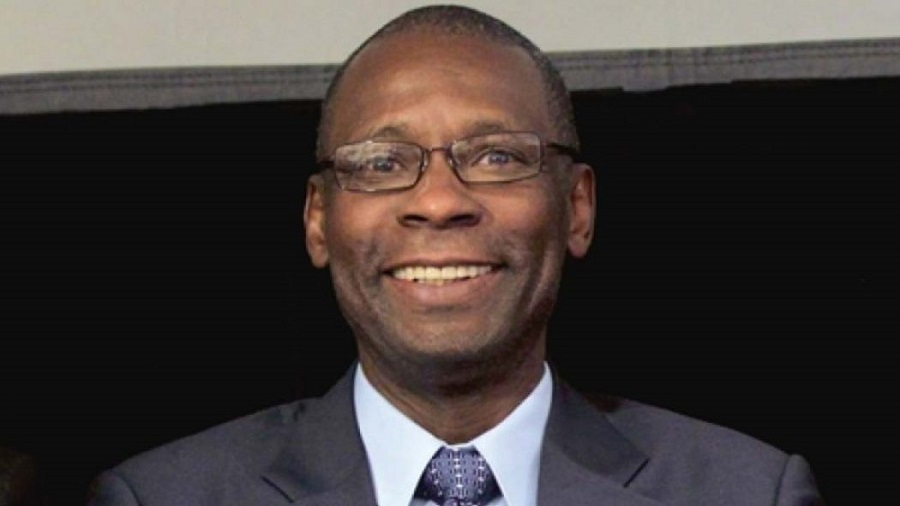
Professor Chike Obi: Nigeria’s First PhD Mathematician and Pioneer of Modern Scientific Thought

Published

on

The life and legacy of Chike Obi, the brilliant scholar who merged mathematics, politics, and national service in shaping Nigeria’s intellectual history.

A Mathematical Genius from Anambra

Professor Chike Obi was one of Nigeria’s most remarkable intellectuals—a man whose genius extended beyond mathematics into politics and national development. Born in Anambra State, Nigeria, in 1921, Obi’s brilliance became evident early in life. He would go on to become the first Nigerian to earn a Doctor of Philosophy (PhD) in Mathematics, a landmark achievement that placed him among Africa’s foremost academic pioneers.

His early education began at Christ the King College, Onitsha, after which he attended Yaba Higher College and later studied at Achimota College in the Gold Coast (now Ghana). His exceptional performance earned him a government scholarship to study mathematics abroad, leading to one of the most significant academic milestones in Nigeria’s history.

Breaking Academic Barriers

In 1950, Chike Obi earned his PhD in Mathematics from the Massachusetts Institute of Technology (MIT) in the United States, making him the first Nigerian and one of the first Africans to attain this distinction. His doctoral research focused on the existence of periodic solutions of nonlinear ordinary differential equations—a topic that had global relevance and continues to be cited in mathematical research today.

His work contributed significantly to the field of nonlinear analysis, helping to expand understanding of mathematical models that describe real-world systems such as population growth, oscillations, and wave phenomena. This pioneering achievement placed him on the world stage as a mathematician of rare depth and creativity.

See also  Professor Patrick Okedinachi Utomi is a renowned Nigerian political economist, management expert, academic, author, and entrepreneur.

Championing Mathematics in Nigeria

On his return to Nigeria, Obi joined the University College, Ibadan (now the University of Ibadan) as a lecturer in mathematics. His dynamic teaching style and intellectual brilliance inspired a generation of Nigerian scientists and academics. He later moved to the University of Lagos, where he continued to teach, research, and mentor young mathematicians.

In his bid to promote scientific thinking and research independence in Nigeria, Professor Obi founded the Nanna Institute for Scientific Studies, an organisation dedicated to advancing mathematics and the sciences in Africa. The institute became a hub for intellectual exchange and scientific inquiry during his time.

A Political Voice for Independence and Justice

Beyond mathematics, Professor Chike Obi was deeply involved in Nigeria’s political evolution. He believed that intellectuals had a moral duty to guide their nation’s future. In the 1950s, he helped to form the Dynamic Party of Nigeria, which advocated for rapid self-governance, social justice, and educational development.

He was also a member of the Nigerian delegation to the constitutional conferences in London that negotiated Nigeria’s independence. Obi’s political philosophy was rooted in the belief that scientific reasoning and education were vital to building a strong, self-reliant nation.

Throughout his career, he used his voice to call for reforms in governance, equitable distribution of resources, and the empowerment of Nigerian youth through quality education. His blend of intellectual rigour and patriotic activism earned him national and international respect.

A Lifelong Commitment to Knowledge

Professor Obi remained active in mathematics and public life until his later years. His writings and lectures covered not only scientific subjects but also philosophical reflections on education, politics, and the African identity.

See also  Go and sin no more, CAC tells Pastor Fatoyinbo after gaffe

He was particularly passionate about creating a culture of critical and analytical thinking among Nigerians—a legacy that continues through the many students and scholars he influenced.

Professor Chike Obi passed away in 2008, leaving behind a towering legacy as both a scientist and a patriot.

Legacy and Impact

Today, Chike Obi is remembered not only as Nigeria’s first PhD mathematician but also as a visionary leader who bridged the gap between science and society. His work demonstrated that mathematics could serve both intellectual and national purposes, and that scholars had a duty to contribute to the moral and political advancement of their country.

Through his life’s work, Obi inspired countless Nigerians to pursue excellence in mathematics, science, and leadership. His name continues to symbolise the union of intellect, integrity, and national service.

References

Massachusetts Institute of Technology Archives – Chike Obi’s doctoral thesis records (1950)

University of Ibadan Historical Archives

Daily Times Nigeria, August 1959 Edition – “Chike Obi and Nigeria’s Scientific Future”

The Guardian Nigeria (2008) – “Remembering Professor Chike Obi”

Nigerian Mathematical Society Publications

FOLLOW US ON:

FACEBOOK

TWITTER

PINTEREST

TIKTOK

YOUTUBE

LINKEDIN

TUMBLR

INSTAGRAM

Continue Reading
Click to comment

Leave a Reply

Your email address will not be published. Required fields are marked *

Lifestyle

Plateau gov apologises to Igbo over civil war role

Published

on

Plateau State Governor, Caleb Mutfwang, has apologised to the Igbo community for the role the state played during the Nigerian Civil War, saying the people of Plateau were “deceived” into participating in the conflict.

Speaking during an interactive session with Igbo leaders from the 17 local government areas of the state at the Government House, Little Rayfield, Jos, Mutfwang urged both sides to put the painful chapter behind them and strengthen the bonds of unity.

According to a report by The Guardian on Monday, the governor commended the Igbo community for its contributions to Plateau State’s socio-economic development, describing them as an integral part of the state’s growth and prosperity.

He noted that Plateau had remained one of the most accommodating states for the Igbo people since the end of the civil war and recalled that compensation had been paid for some of the losses suffered during the conflict.

“I apologise to the Igbos so that we can put the past behind us and continue to foster unity. We have become one family because our people were deceived into going to war, and we regret it. We must close that chapter and move forward.

“We must unite. We want the Igbos to regard us as their brothers and sisters, and together we must create an enabling environment where everyone can prosper,” Mutfwang said.

The governor also appealed to Igbo entrepreneurs in Plateau State to support indigenous businesses by creating opportunities for young people through mentorship and investment.

See also  I’m the highest-ranked Christian in govt – Akpabio boasts

“Nigeria is a great country, and no ethnic group has demonstrated the entrepreneurial spirit more than the Igbo. I encourage you to replicate that same spirit in Plateau. I also appeal to Igbo business owners to employ and train young Plateau indigenes,” he said.

During the meeting, leaders of the Igbo community endorsed Mutfwang for a second term ahead of the 2027 governorship election, citing what they described as his inclusive leadership, prudent management of resources and commitment to peaceful coexistence.

The endorsement was announced by the President-General of the Igbo Community in Plateau State, Chief Chidi Onah, who described the governor as a leader committed to equity and development.

“We hereby endorse Governor Caleb Mutfwang as the consensus candidate of the Igbo community for the 2027 governorship election. This endorsement is based on his competence, integrity, proven leadership and commitment to equity.

“He has promoted peaceful coexistence and created a business-friendly environment. He stood by us during the demise of our traditional ruler and has consistently engaged stakeholders to promote unity among the diverse ethnic groups in Plateau State,” Onah said.

Onah also praised the governor’s developmental efforts, saying the state had become more conducive for business and investment.

“Igbo people have lived in Plateau since before Nigeria’s independence. We appreciate the governor for compensating some of our members over disputed properties and urge Nigerians across ethnic and religious divides to support his administration,” he added.

Also speaking, former President-General of the Igbo Community Association, Mike Okunonke, described the Igbo as peace-loving people committed to the economic development of Plateau State.

See also  Osun-Osogbo shrine worshippers shocked we did not die after touching deity — Cleric

He said the community’s support for Mutfwang was based on his performance rather than political affiliation.

“We will vote for personalities, not political parties. Governor Mutfwang has demonstrated capacity by creating opportunities and reducing unemployment. We will mobilise our members across the 17 local government areas to support him,” Okunonke said.

He added that the endorsement reflected the cordial relationship the governor had built with the Igbo community through genuine partnership and inclusiveness.

The governor’s Special Adviser on Igbo Affairs, Barr. Jonah Okechukwu Ezekweme, commended Mutfwang for creating an enabling environment for the Igbo community to thrive in the state.

He urged members of the community to support the governor’s second-term bid while continuing to partner with the state government in creating employment and business opportunities for young people.

Earlier, High Chief Felix O. Akpunku welcomed members of the Igbo community on behalf of the governor and praised Mutfwang’s developmental projects across the state, describing his administration as one committed to inclusive governance and sustainable development.

The meeting also featured the formal presentation of the new President-General of the Igbo Community Association, Chief Chidi Onah, by the immediate past President-General, Chief Mike Ifeanyi Okunonke.

Other speakers, including Chief Dr. Nelson Mkparu and Hon. Maureen Odilimuo, also lauded the governor for his inclusive leadership and support for the Igbo community, pledging continued cooperation with his administration.

The meeting ended with both the Plateau State Government and the Igbo community reaffirming their commitment to peaceful coexistence, deeper collaboration and sustainable development across the state.

See also  Video - Sunday Igboho Arrival | Massive Welcome for Yoruba Nation Activist

punch.ng

FOLLOW US ON:

FACEBOOK

TWITTER

PINTEREST

TIKTOK

YOUTUBE

LINKEDIN

Continue Reading

Lifestyle

Eight die, nine missing in Jigawa boat tragedy

Published

on

Twenty-three persons have been rescued, while eight bodies have been recovered from Sunday’s boat accident that claimed 40 passengers in Jigawa State.

The incident occurred at Malamawar-Yan Dutse in Ringim Local Government Area, where a wooden boat conveying about 40 passengers, mostly female farmers and labourers, capsized while crossing a waterway.

Boat accidents have remained a recurring tragedy in riverine communities across northern Nigeria, particularly during the rainy season, often attributed to overloading, failure to use life jackets and strong water currents.

The Police Public Relations Officer of the Jigawa State Police Command, SP Shi’isu Adam, confirmed the latest casualty figure to The PUNCH on Monday.

He said search and rescue operations continued for the remaining nine passengers.

“At the moment, we have successfully rescued 23 victims alive. Unfortunately, we have also recovered eight corpses from the river,” Adam said.

He explained that local divers, emergency responders and security personnel had been at the scene since the incident occurred to rescue survivors and recover bodies.

According to him, all the rescued victims received medical attention and were subsequently discharged.

“Those rescued are now safe at their homes as they were discharged to reunite with their families,” he said.

Adam added that the search for the remaining nine passengers would continue on Tuesday.

“We are not relenting. Our teams are combing the river and adjoining communities to ensure we find the remaining nine persons,” he said.

He appealed to residents of riverine communities to assist security agencies with useful information that could aid the rescue operation.

See also  Video - Sunday Igboho Arrival | Massive Welcome for Yoruba Nation Activist

The police spokesman also urged boat operators to avoid overloading and ensure that all passengers wear life jackets before embarking on any journey.

punch.ng

FOLLOW US ON:

FACEBOOK

TWITTER

PINTEREST

TIKTOK

YOUTUBE

LINKEDIN

Continue Reading

Lifestyle

Northern Christians query N1.9bn church share in N8bn religious budget

Published

on

The Northern Christian Association has asked the Federal Government to explain what it described as a wide disparity in the allocation of about N8.05bn for church and mosque projects in the 2026 Appropriation Bill, warning that the imbalance raises concerns over equity and equal treatment of citizens.

The association said it was not opposed to government support for religious projects but insisted that such interventions must be guided by the constitutional principles of fairness, transparency and justice.

In a statement issued on Monday by its Chairman, Rev Joseph Hayab, the NCA said reports indicated that about N1.91bn was earmarked for seven church-related projects, while approximately N6.14bn was allocated to 52 mosque-related projects in the 2026 budget.

According to the association, the disparity had reinforced concerns among many Christians over what it described as a persistent pattern of unequal treatment and selective implementation of government policies.

Hayab said, “How long will Nigerians continue to read stories that expose the hypocrisy of our leaders?

“The partiality, lack of equity and unequal treatment of citizens by government and political leaders are among the major factors responsible for division, distrust, segregation and the absence of genuine unity and love among Nigerians.”

He added that while Christians had continued to exercise restraint in the interest of national peace and unity, successive governments had often mistaken such patience for weakness.

The NCA argued that Nigerians had repeatedly witnessed actions exposing inconsistencies in governance, warning that perceived discrimination and double standards were eroding public trust and national cohesion.

“Our constitution recognises every Nigerian as equal before the law, while the teachings of all religions discourage unfair treatment of children, women, family members and fellow human beings.

See also  Professor Patrick Okedinachi Utomi is a renowned Nigerian political economist, management expert, academic, author, and entrepreneur.

“Government should, therefore, not be seen to promote policies that suggest preferential treatment for one religious group over another,” Hayab said.

The association stressed that its position should not be interpreted as opposition to Islam, Christianity or government collaboration with faith-based organisations, but rather as a call for fairness in the distribution of public resources.

It maintained that if public funds were to be allocated for religious projects, such allocations should be transparent, balanced and devoid of any perception that one faith enjoyed greater recognition than another.

“NCA is challenging the Federal Government to explain these abnormalities. Government should not establish a system that creates division among citizens or gives the impression that one religious community is more important than another.

“Instead, it should initiate programmes and policies that unite Nigerians and strengthen our collective national identity,” the statement added.

The association further urged the Federal Government to review the allocations in line with the constitutional principles of fairness, equity and equal treatment, insisting that budgetary decisions should promote national unity and strengthen public confidence in the impartiality of government.

punch.ng

FOLLOW US ON:

FACEBOOK

TWITTER

PINTEREST

TIKTOK

YOUTUBE

LINKEDIN

Continue Reading

Trending