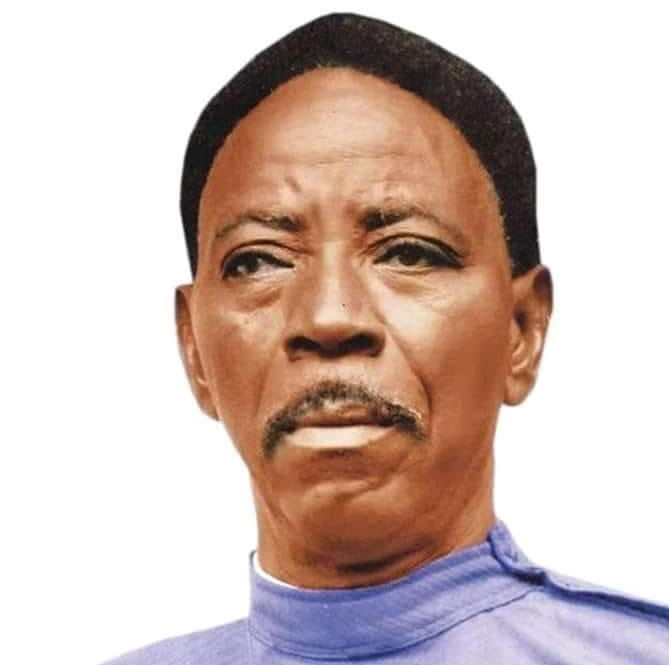
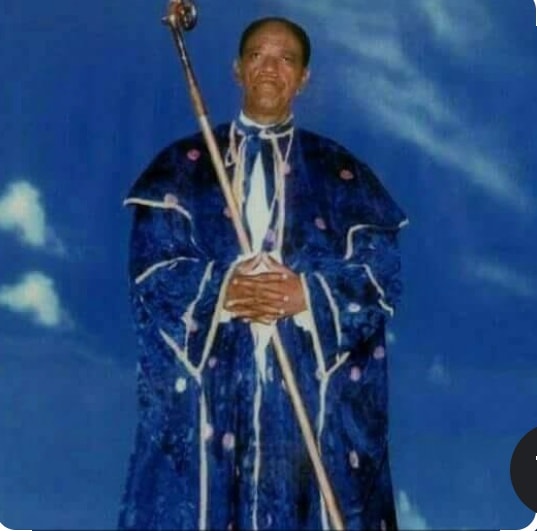

Reverend Pastor Prophet Samuel Bilewu Joseph Oshoffa
Birth and Early Life
Date of Birth: May 18, 1909
Place of Birth: Porto-Novo, French Dahomey (now Benin Republic)
Parents:
Father: Oshoffa (a carpenter and a devout Methodist Christian of Egba origin from Abeokuta, Nigeria)
Mother: Alake Iyafo, who was from Imeko- afon, Ogun State.
Samuel Bilewu Oshoffa was born into a Christian home and was raised in the Methodist faith. His father, who longed for a male child after many years of waiting, dedicated him to the service of God even before his birth — a promise that would later influence his spiritual destiny.
Education and Early Career
Oshoffa had formal education in French and English, and he initially worked as a carpenter and trader. He lived a quiet and industrious life in Dahomey, known for his honesty and craftsmanship.
The Founding Vision (1947)
The defining moment of Oshoffa’s life occurred on 23 May 1947, after an extraordinary spiritual experience during an eclipse of the sun while he was in the forest near Porto-Novo.
He had gone there to look for ebony wood but reportedly became lost in the wilderness for three months. During that period of isolation, he claimed to have received a divine revelation and spiritual anointing directly from God.
According to his testimony:
He heard a heavenly voice commissioning him to preach repentance and salvation.
He received gifts of healing, prophecy, and spiritual discernment.
He was instructed to found a new church, which would later become the Celestial Church of Christ (Église du Christianisme Céleste).
When he eventually returned to civilization, many were astonished by his survival and the spiritual power that began to manifest in him — including miraculous healings and prophecies.
Establishment of the Celestial Church of Christ (CCC)
Date of Founding: September 29, 1947
Place: Porto-Novo, Benin Republic
Oshoffa began preaching, and people from different Christian and traditional backgrounds began to follow him after witnessing healings, visions, and deliverances.
In 1951, the church was officially named “Celestial Church of Christ.”
The church expanded rapidly in Dahomey and neighboring countries, especially Nigeria, where Oshoffa relocated permanently in 1976 after facing religious persecution in Benin.
Growth and Spread in Nigeria
Upon arrival in Nigeria, the church gained thousands of followers almost immediately. The movement resonated with Nigerians because it combined:
Christian teachings,
African spirituality, and
Prophetic worship patterns.
The church emphasized holiness, divine healing, visions, angelic worship, and strict moral codes.
Key milestones:
First Nigerian Parish: Makoko, Lagos (founded by Sup. Evang. Alexander Bada in 1951; recognized by Oshoffa in 1976).
Headquarters in Nigeria: Imeko, Ogun State — now the international headquarters and site of the church’s annual pilgrimage.
Doctrines and Practices Introduced by Oshoffa
Oshoffa received spiritual revelations that shaped the church’s doctrines, such as:
Wearing white garments (Sutana) symbolizing purity.
Worship on Sundays, but also with strong emphasis on spiritual consultation and visions.
Use of holy water, incense, candles, and biblical symbolism in prayer.
Barefoot worship, following the biblical example of Moses on holy ground.
Strong belief in angelic communication, prophetic visions, and miracles.
Leadership Style and Personality
Oshoffa was known as a humble, spiritual, and deeply charismatic leader.
He emphasized love, peace, and purity among members.
He was regarded as a Prophet, Healer, and Teacher, and was often called Papa Oshoffa or Papa CCC.
He lived simply despite the large following he commanded.
Death
Date of Death: September 10, 1985
Place: Lagos, Nigeria
Cause: Injuries sustained in a car accident on the Lagos–Ibadan Expressway.
Burial: Imeko, Ogun State, Nigeria — now the church’s international holy city.
After his death, leadership succession led to internal divisions within the church, but his spiritual legacy endures across continents.
Legacy
Today, the Celestial Church of Christ (CCC) has millions of members worldwide — in Africa, Europe, the Americas, and Asia.
Oshoffa is revered by members as the divinely chosen founder, and his birthday and the church’s founding day are marked with major celebrations annually.
His vision created one of the most significant African Independent Churches, blending Christian theology with African spirituality and prophetic ministry.
—
Summary
Aspect Details
Full Name Samuel Bilewu Joseph Oshoffa
Born May 18, 1909 – Porto-Novo, Benin Republic
Died September 10, 1985 – Lagos, Nigeria
Profession Carpenter, Prophet, Founder of CCC
Founded Church September 29, 1947
Headquarters Imeko, Ogun State, Nigeria
Key Traits Visionary, Prophetic, Healer, Charismatic
Legacy Founder of one of Africa’s largest independent Christian churches
But respect does not give a parent permission to humiliate, bully, insult, reject, emotionally abuse, or constantly tear down a child.
Some children are called “rebellious” today when, deep down, they are carrying years of pain they have never been allowed to express.
A child who was constantly told:
❌ “You are useless.”
❌ “You will never amount to anything.”
❌ “Look at your brother; you are a disappointment.”
❌ “I wish I never gave birth to you.”
may eventually grow up asking:
“Why should I love someone who spent my childhood making me feel worthless?”
The Bible does not give parents a free pass to crush their children’s spirits.
📖 “And, ye fathers, provoke not your children to wrath: but bring them up in the nurture and admonition of the Lord.” — Ephesians 6:4 (KJV)
And Scripture says:
📖 “Fathers, provoke not your children to anger, lest they be discouraged.” — Colossians 3:21 (KJV)
Yes, children are commanded to honour their parents.
📖 “Honour thy father and thy mother…” — Exodus 20:12 (KJV)
But parents also have a responsibility before God for how they treat their children.
And here is the uncomfortable truth:
A child can forgive you and still remember the pain.
Forgiveness does not mean the abuse was acceptable.
Forgiveness does not erase the consequences.
Forgiveness does not mean allowing someone to continue hurting you.
📖 “And be ye kind one to another, tenderhearted, forgiving one another…” — Ephesians 4:32 (KJV)
Parents, before you demand respect from your children, ask yourself:
Not every child who runs away from home is a bad child.
Some children leave because they are exhausted from constant insults, rejection, bullying, comparison, humiliation, neglect, hatred, and harsh treatment from the very people they expect to love them.
Yes, children must obey their parents.
📖 “Children, obey your parents in the Lord: for this is right.” — Ephesians 6:1 (KJV)
But parents also have responsibilities toward their children.
📖 “And, ye fathers, provoke not your children to wrath: but bring them up in the nurture and admonition of the Lord.” — Ephesians 6:4 (KJV)
And again:
📖 “Fathers, provoke not your children to anger, lest they be discouraged.” — Colossians 3:21 (KJV)
⚠️ READ THAT AGAIN: “LEST THEY BE DISCOURAGED.”
A child can live under the same roof with their parents and still feel completely unloved, unwanted, and emotionally abandoned.
Some parents believe that because they provide food, clothing, and school fees, they have done everything necessary.
But children also need love, encouragement, attention, patience, correction, and a safe environment where they can speak without being constantly insulted or humiliated.
The Bible says:
📖 “Death and life are in the power of the tongue.” — Proverbs 18:21 (KJV)
Our words matter.
A parent may say, “I was only joking.”
But what if that “joke” is slowly destroying your child’s confidence?
A parent may say, “I am disciplining my child.”
But is it really discipline—or are you simply releasing your anger on someone who is smaller and has less power than you?
One of the biggest mistakes a person can make is choosing a life partner simply because they are afraid of being alone.
Marriage is not something to rush into because of pressure, age, loneliness, or the fear that nobody else will love you. The person you marry can either become a great source of peace and support—or make your life incredibly difficult.
The Bible says:
“Whoso findeth a wife findeth a good thing, and obtaineth favour of the LORD.” — Proverbs 18:22 (KJV)
Notice that the Bible calls a good wife “a good thing.” It does not say every relationship automatically brings favour. The choice matters.
The same Bible warns:
“Be not deceived: evil communications corrupt good manners.” — 1 Corinthians 15:33 (KJV)
The wrong person can influence your character, your decisions, your finances, your peace, your relationship with God, and even your future.
That is why you should never beg someone to love you, manipulate someone into marrying you, or ignore obvious warning signs simply because you desperately want a relationship.
Jesus said:
“For what shall it profit a man, if he shall gain the whole world, and lose his own soul?” — Mark 8:36 (KJV)
What is the point of getting married if, in the process, you lose your peace, your purpose, your dignity, and your relationship with God?
Wait. Pray. Observe. Seek wisdom. 🙏
The Bible says:
“In all thy ways acknowledge him, and he shall direct thy paths.” — Proverbs 3:6 (KJV)
Don’t allow loneliness to make your decision for you.
Don’t allow social media to pressure you.
Don’t marry because everyone around you is getting married.
And don’t stay in a destructive relationship simply because you are afraid you will never find another person.