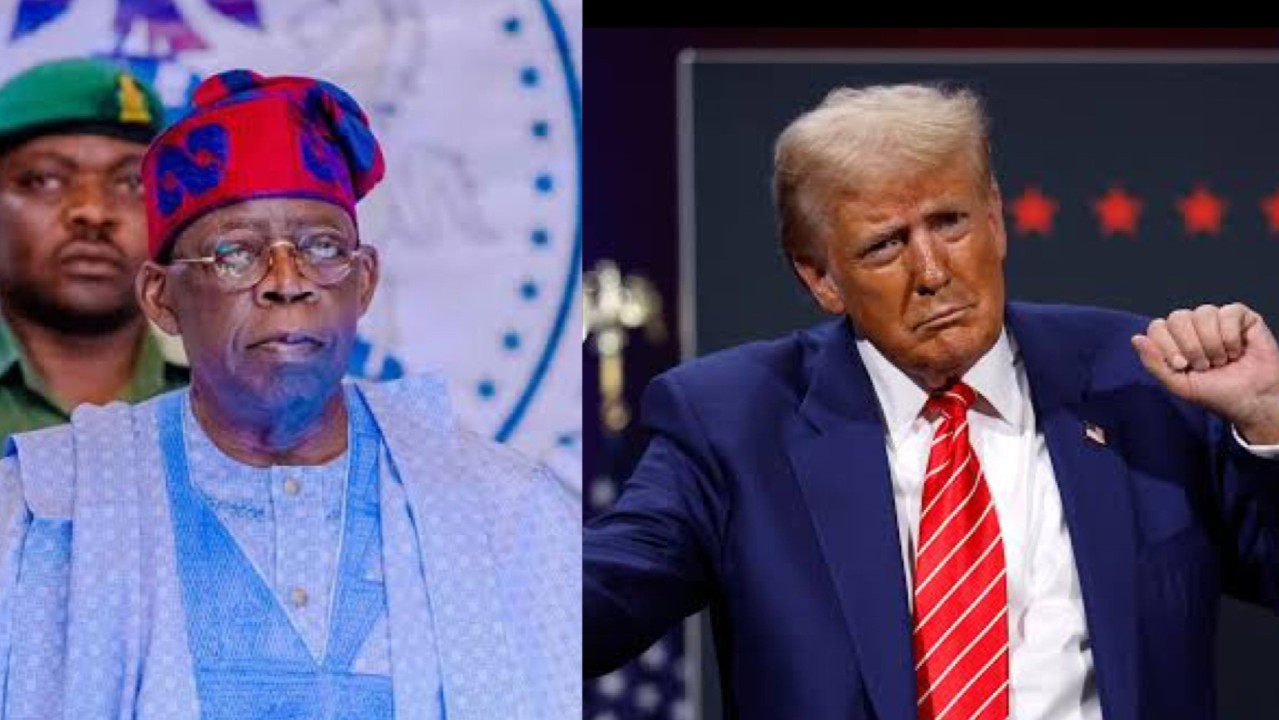
Twelve northern governors, prominent traditional rulers, and senior judges are at the centre of a looming diplomatic storm as the United States Congress considers a bill that could impose far-reaching sanctions on them over alleged complicity in what American lawmakers describe as a “Christian genocide” and systemic persecution under Nigeria’s sharia and blasphemy laws.
This follows the designation of Nigeria as a Country of Particular Concern by President Donald Trump and his instruction to the Secretary of State, Marco Rubio, to act without delay.
On Friday, Trump, in a post on Truth, lamented that thousands of Christians were being killed in Nigeria and asked Congressman Riley Moore, together with Chairman Tom Cole and the House Appropriations Committee, to immediately look into the matter and report back to him.
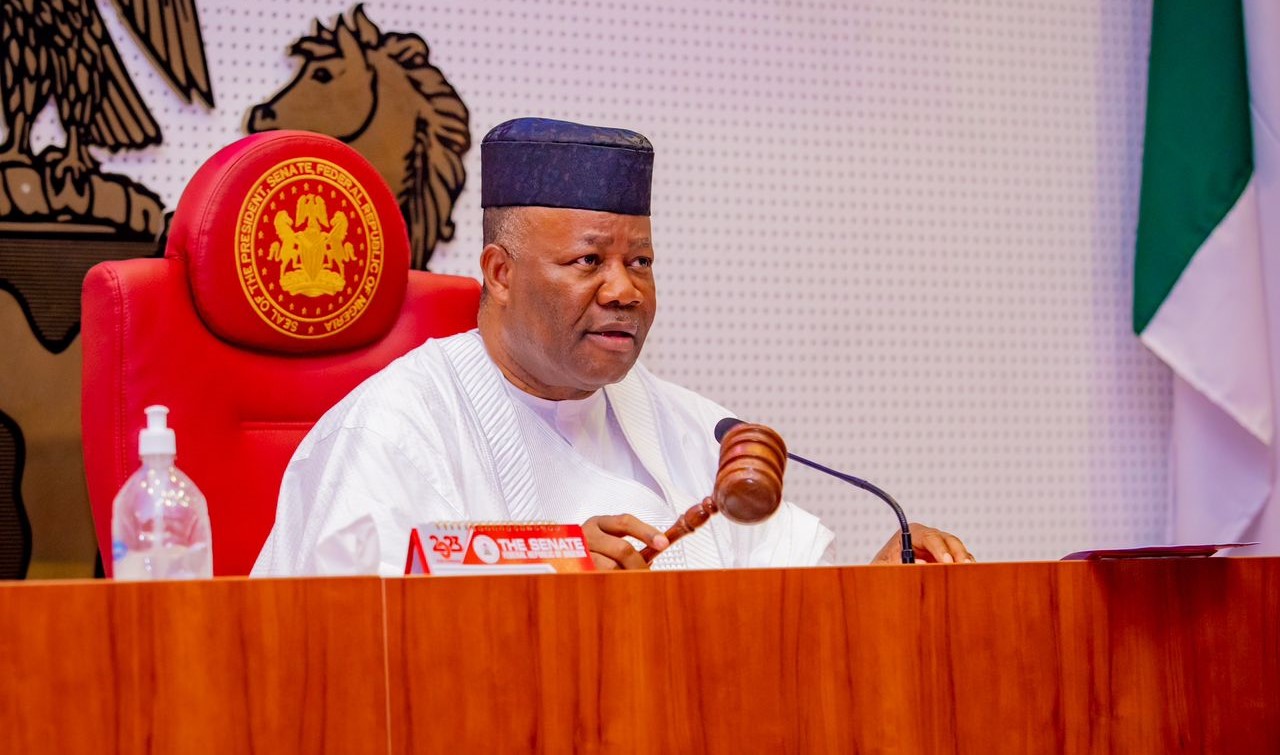
The Nigeria Religious Freedom Accountability Act of 2025, sponsored by Republican Senator Ted Cruz, designates Nigeria as a “Country of Particular Concern” for religious persecution.
The bill proposes direct sanctions against public officials and religious authorities accused of promoting or tolerating violence against Christians and other religious minorities.
In December 2020, the US Department of State designated Nigeria as a Country of Particular Concern for the first time ever due to what it termed systematic, ongoing, and egregious violations of religious freedom, violent Boko Haram attacks, and frequent ethno-religious conflicts exacerbated by the judiciary system.
Under the bill, introduced on September 9, 2025, the US Secretary of State will, within 90 days of its passage, submit a report to Congress listing Nigerian officials, including governors, judges, and monarchs who have “promoted, enacted, or maintained blasphemy laws” or “tolerated violence by non-state actors invoking religious justification.”
The sanctions, to be implemented under Executive Order 13818, the US government’s Global Magnitsky Human Rights Accountability framework, could result in visa bans, asset freezes, and financial restrictions for those found culpable.
One of the highlights of the bill is the implementation of Sharia law in northern Nigeria, which it termed the blasphemy law, and believed to be against the Christian population.
Sharia, derived from Islamic jurisprudence, has long existed as a system of personal, moral, and communal regulation among Muslim communities in northern Nigeria.
The major turning point came between 1999 and 2000, shortly after Nigeria’s return to civilian rule, when several northern states, beginning with Zamfara under Governor Ahmad Sani Yerima, expanded Sharia’s jurisdiction to include criminal law and public morality.
Within two years, about 12 northern states had adopted similar Sharia-based penal codes and established parallel Sharia courts alongside existing secular courts.
The affected states include Zamfara, Kano, Sokoto, Katsina, Bauchi, Borno, Jigawa, Kebbi, Yobe, Kaduna, Niger, and Gombe.
However, Kwara, Kogi, Plateau, Benue, Nasarawa, Taraba, and Adamawa, though with significant Muslim populations, still operate under the conventional secular legal system, with Sharia limited only to personal status matters such as marriage, inheritance, and family issues for Muslims, rather than criminal or public law.
Recently, the Sharia Council announced moves to establish its presence in parts of the South, beginning with Oyo and Ogun states.
The development sparked tension as both Christian and Muslim groups clashed over the perceived introduction of Sharia in the two states.
The tension, however, eased after the council clarified that it was not setting up a court of law but rather arbitration panels to mediate Muslim-related disputes and offer non-binding advice.
Cruz, while defending the bill, said Nigeria’s leadership had “institutionalised sharia law and enabled jihadist violence.”
“Religious persecution and violence against Christians and other religious minorities in Nigeria is endemic.
“Since 2009, over 52,000 Christians have been murdered, 20,000 churches and faith institutions destroyed, and dozens of villages wiped out. The federal and state governments have failed to act, and in many cases, they are complicit.”
The bill underscores that since the adoption of sharia law in Zamfara State in 2000, during the administration of former President Olusegun Obasanjo, nearly all 19 northern states had adopted blasphemy provisions in their legal codes.
States such as Kano, Bauchi, Sokoto, and Katsina have drawn global outrage for death sentences imposed over alleged blasphemy, while even southern states like Oyo and Ogun, both with Sharia panels, may now come under investigation.
FG defends Sharia
The Federal Government has, however, defended the country’s constitutional and legal framework on religious freedom, insisting that Nigeria neither enforces nationwide blasphemy laws nor persecutes Christians as claimed in the pending US draft legislation.
In an official policy note titled “Nigeria’s Constitutional Commitment to Religious Freedom and Rule of Law,” published by the Ministry of Foreign Affairs, the government maintained that the country’s constitutional and judicial systems fully protected freedom of religion and conscience while subjecting all state and local laws, including Sharia statutes, to constitutional safeguards and secular appellate review.
According to the statement, Nigeria remains a constitutional, multi-religious democracy” whose 1999 Constitution, as amended, forbids adoption of a state religion (Section 10), guarantees freedom of thought, conscience and religion (Section 38), and prohibits discrimination on grounds including religion (Section 42).
“Sharia in Nigeria is not a nationwide, compulsory system,” the document clarified.
“Certain northern states have enacted Sharia-based criminal provisions that apply only to persons who profess Islam; non-Muslims are not subject to those provisions.
“In civil or personal matters, such as marriage or inheritance, recourse to Sharia is elective, just as parties may choose customary or statutory regimes,” it added.
The Federal Government further emphasised that there was no federal offence of blasphemy in Nigerian law.
It added that national criminal statutes only addressed public-order breaches or acts likely to provoke violence, which are “religion-neutral” and apply equally to all faiths.
“The government of Nigeria does not persecute Christians, in law or policy.
“Nigeria’s legal order protects all faiths equally; Christians freely build and register churches, run schools and charities, and hold public office across the Federation,” the statement read.
It reiterated that Sharia’s scope was constitutionally limited and optional.
“In civil matters, Sharia Courts of Appeal at the state and federal levels have jurisdiction only over Islamic personal law, and parties voluntarily elect this system through their marital or contractual choices.
“In criminal matters, only a handful of northern states have adopted Sharia-based codes, and jurisdiction remains confined strictly to Muslims. Non-Muslims cannot be tried under those laws.
“Even where a first-instance Sharia court enters a conviction, constitutional due-process standards, such as fair hearing, legal representation, and proof standards, apply.
“Secular appellate courts have repeatedly set aside or remitted convictions where procedures or rights were deficient. Sharia adjudication is bounded by the constitution, not above it,” the government explained.
The statement dismissed as inaccurate any claim that Nigeria’s laws or policies tolerated religious discrimination.
“Nothing in Nigeria’s Constitution, Criminal Code, or Penal Code authorises persecution of Christians or adherents of any religion,” it said.
The statement added that public-order offences sometimes described abroad as “blasphemy laws” were in fact content-neutral provisions designed to prevent inter-communal violence.
The note also pointed out that Christian denominations and non-governmental organisations operated freely across the country, while Christians served at all levels of government and the judiciary, demonstrating equal civic participation.
Responding to allegations that Nigeria “tolerates” religiously motivated violence by non-state actors, the government underscored its aggressive counter-terrorism stance.
“Boko Haram and ISWAP remain proscribed under the Terrorism (Prevention) Act, with thousands of arrests, prosecutions, and deradicalisation programmes underway,” it added.
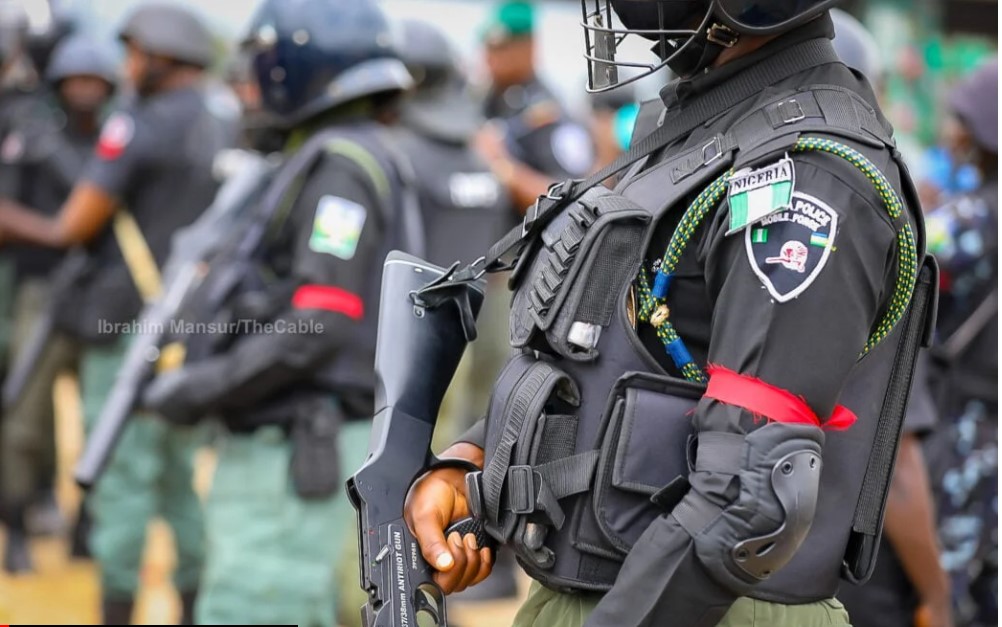
The government said many attacks often framed internationally as “religious” were instead rooted in terrorism, organised crime, resource conflict, and climate stress, adding that federal and state authorities deployed joint operations without bias to faith identity.
“Nigerian authorities consistently condemn sectarian violence, open investigations, and prosecute offenders where evidence meets the legal threshold,” the document stressed.
Nigeria reaffirmed its adherence to international human rights obligations, including the International Covenant on Civil and Political Rights and the African Charter on Human and Peoples’ Rights, domesticated and enforceable in Nigerian courts.
The government emphasised that all domestic laws, federal or state, must conform to these superior guarantees, and Nigerian courts have consistently upheld that principle in their judgments.
The government criticised the US draft legislation proposing a CPC designation for Nigeria, describing it as “legally and factually flawed.”
It argued that the draft “collapses distinct legal regimes —federal, state statutory, and Sharia — into a single, inaccurate frame,” and wrongly equated neutral public-order provisions with theological blasphemy.
Concerns raised
However, the implementation of Shari’a law has raised concerns about human rights and religious freedom following the reported suppression of non-Muslims through restrictions on public worship, construction of churches, and celebration of religious festivals for traditional religionists.
Also, converts from Islam to Christianity and other religions have alleged persecution, harassment, and even violence, while blasphemy laws are often vaguely worded, allowing for arbitrary interpretation and enforcement. This has enabled mobs to take the law into their own hands, resulting in violent and deadly consequences.
There was national outrage in May 2022 after Deborah Samuel, a second-year student of Home Economics at the Shehu Shagari College of Education, Sokoto, was killed after being accused of blasphemy against Islam. She was stoned and set ablaze by a mob of her fellow students. The perpetrators were not brought to justice.
Usman Buda, a butcher in Sokoto, was lynched by a mob after being accused of blasphemy, sparking widespread outrage. In 2021, a water seller in Bauchi State was beaten and burned to death for alleged blasphemy.
A similar fate befell Bridget Agbahime, 74, who was beaten to death in Kano in 2016, after she was accused of blasphemy against Prophet Muhammad.
In designating Nigeria as a “Country of Particular Concern,” Trump cited alleged severe violations of religious freedom, particularly the persecution of Christians. He claimed that Christianity is facing an existential threat in Nigeria, with thousands of Christians being killed by radical Islamists.
Trump warned that the US would take action, including potential military intervention, if Nigeria didn’t address the issue.
The US President also threatened to halt all aid and assistance to Nigeria should the Tinubu administration fail to end the alleged persecution and killing of Christians.
“If the Nigerian Government continues to allow the killing of Christians, the USA will immediately stop all aid and assistance to Nigeria, and may very well go into that now disgraced country, ‘guns-a-blazing,’ to completely wipe out the Islamic terrorists who are committing these horrible atrocities.
“I am hereby instructing our Department of War to prepare for possible action. If we attack, it will be fast, vicious, and sweet, just like the terrorist thugs attack our CHERISHED Christians,” he said.
If passed, the Act would compel the US to impose targeted sanctions on officials enforcing Sharia or blasphemy laws; blacklist Nigerian actors complicit in religiously motivated violence, and maintain terror designations for Boko Haram and ISIS-West Africa as Entities of Particular Concern.
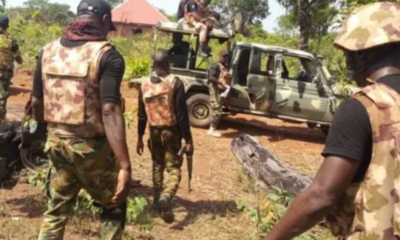
Echoing Trump’s threat to invade Nigeria, the US Secretary of War, Pete Hegseth, signalled readiness to take military action over alleged killings of Christians in the country.
In an X post on Sunday, the top official said the US Department of War is preparing for action if Nigeria fails to protect Christians.
“The killing of innocent Christians in Nigeria — and anywhere — must end immediately. The Department of War is preparing for action. Either the Nigerian Government protects Christians, or we will kill the Islamic Terrorists who are committing these horrible atrocities,” Hegseth wrote.
Under section 3, titled, ‘Designations and amendments related to the International Religious Freedom Act,’ the draft bill says the US Secretary of State shall ‘’Designate, for engaging in or tolerating systematic, ongoing, and egregious violations of religious freedom— (1) the Federal Republic of Nigeria as a Country of Particular Concern; and (2) Boko Haram and ISIS-West Africa as Entities of Particular Concern.’’
The designation was based on a report hinged on section 402(b)(1)(A) of the International Religious Freedom Act of 1998 and section 301(a) of the Frank R. Wolf International Religious Freedom Act of 2016.
Tinubu US visit
Reacting to the development, the Presidency assured that Tinubu would meet with his American counterpart in the coming days to discuss allegations of Christian genocide in Nigeria. Daniel Bwala, Special Adviser to the President on Policy Communication, disclosed this in a post on X on Saturday.
Bwala said the planned meeting would focus on counterterrorism cooperation and clarifying misconceptions about the nature of terrorist attacks in Nigeria.
“Both President @officialABAT and President @realDonaldTrump have shared interests in the fight against insurgency and all forms of terrorism against humanity,” Bwala wrote.
“President Trump has assisted Nigeria a lot by authorising the sale of arms, and President Tinubu has adequately utilised that opportunity in the fight against terrorism, with massive results to show for it.
“As for the differences as to whether terrorists in Nigeria target only Christians or all faiths, those would be discussed and resolved by the two leaders when they meet in the coming days, either in the State House or White House.”
Weighing on the controversy, the Special Adviser to the President on Information and Strategy, Bayo Onanuga, said the Nigerian leader had anticipated and responded to what he described as “orchestrated moves” against Nigeria’s image abroad, particularly in the United States, by firmly reaffirming his government’s commitment to national security. However, he did not name specific actors behind the issue in a post on his official X handle.
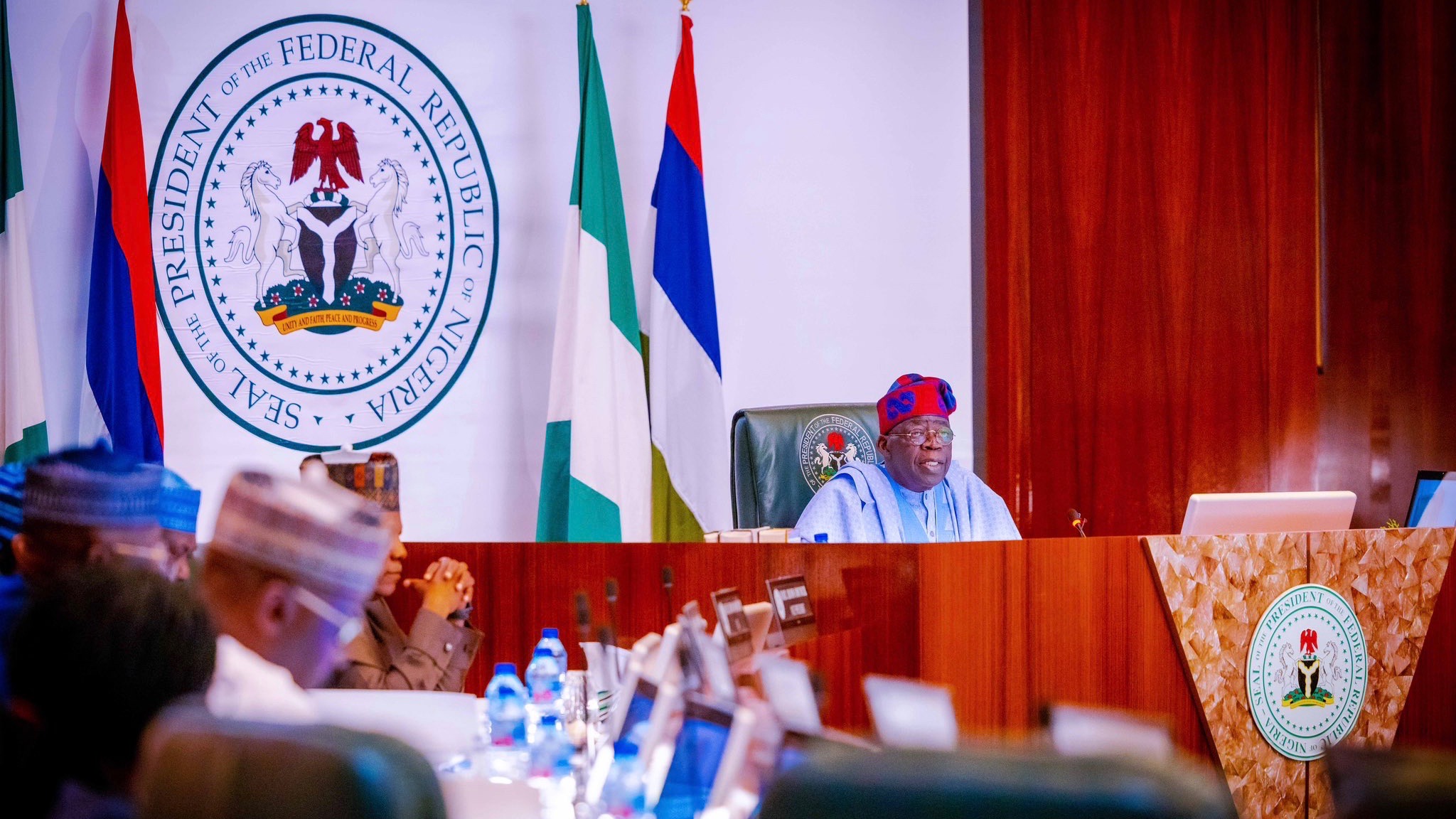
“President Bola Tinubu was well ahead of the orchestrated game unfolding in America as he told the new service chiefs on Thursday what Nigerians expect of them. No more excuses, he said. Nigerians want results.”
The aide quoted Tinubu’s speech to the newly appointed service chiefs at the State House, Abuja, where he acknowledged the evolving nature of insecurity across Nigeria, expressing concern about “the recent emergence of new armed groups” in the North-Central, North-West, and some parts of the South.
“We must not allow these new threats to fester. We must be decisive and proactive. Let us smash the new snakes right in the head,” Tinubu charged the military chiefs.
He stressed that citizens were no longer interested in excuses or blame-shifting, but in tangible results.
“Nigerians expect results, not excuses,” he said, calling for a new culture of innovation, patriotism, and pre-emptive strategy among the armed forces.
“Security threats are constantly evolving, constantly mutating. We cannot allow the crisis that began in 2009 to persist any longer,” the President said, referencing the Boko Haram insurgency and other forms of violent extremism.
He defended Nigeria’s constitutional commitment to freedom of belief, emphasising ongoing engagements with Christian and Muslim leaders.
The President also pledged Nigeria’s willingness to work with Washington and other global partners to deepen understanding and protect all faith communities.
Meanwhile, SaharaReporters reported on Sunday that Trump had “delegated his Vice, James David Vance, to meet with Tinubu during the visit,” barring any last minute changes.
According to the report, Tinubu is scheduled to visit the United States on Tuesday for top level diplomatic engagements with the US government.
Envoys react
Concerned by the CPC designation, retired diplomats and foreign policy experts warned that the development could have far-reaching implications for diplomatic relations, security cooperation, and socio-economic development.
A former Nigerian ambassador to Algeria and Portugal, Mohammed Mabdul, warned that the designation would have “broader implications,” including a reduction in US aid for socio-economic development.
“It will certainly minimise US aid to tackle socio-economic issues affecting the most vulnerable population in Nigeria, particularly in health care, educational support, microfinance schemes, and gender advocacy,” he said.
He added that visa restrictions were already being enforced. According to him, the decision would also affect security cooperation.
“Nigeria acquires most of its sophisticated weapons, drones, and other military equipment from the US in its fight against terrorists. With the policy of CPC, this cooperation, collaboration, and intelligence sharing between the two countries will be significantly reduced,” he pointed out.
Mabdul further observed that under the Tinubu administration, US-Nigeria relations had declined.
“Besides the regular UN activities in the US, President Tinubu’s foreign engagements were mostly directed to European countries such as the UK, France, and Italy, as well as countries of the Middle East such as Saudi Arabia, Qatar, and the UAE,” he said.
“The implication is clear—there’s a lack of regular engagements at the highest level of leadership between Nigeria and the US, hence the mistrust and misrepresentation of events by Washington about Nigeria,” he added, urging the government to urgently post ambassadors and consuls to key missions abroad.
Former spokesman of the Ministry of Foreign Affairs, Ogbole Amedu-Ode, stressed that, regardless of the motive, the development should serve as a wake-up call for the government to prioritise the protection of lives and property.
“For far too long, we have had a good serving of platitudes,” the former envoy to Mexico declared.
Amedu-Ode also warned of possible economic and political repercussions, including a decline in foreign investment from Western nations and potential isolation in international organisations.
He further noted that emerging economies could fill any economic vacuum created by reduced Western engagement.
“The economic implications for us are that foreign investment from the West may taper off! However, in the circumstance of the ‘Neo-scramble’, other emerging economies will certainly fill the lacuna. Politically, and in the international arena, we should expect some form of isolation, especially within international organisations. Internally and within the national space, we may experience some more political tensions,” he cautioned.
He added, “Nigerians should be extra vigilant, and political office holders must begin to take their constitutional responsibilities seriously.”
Retired Ambassador Godknows Igali emphasised the importance of diplomacy in handling such issues. He warned that major powers often impose their own interests in international relations.
“They tend to breathe down on you in terms of size, economic, political, and military weight. So, in a case like this, they tend to pursue their own objectives,” he stated.
Igali suggested that Nigeria could use friendly third countries to mediate the dispute. “There must be some third countries which are close to the two sides. You know, some countries are friendly to them and friendly to us. And we can use their good offices to try to come in and help us to talk to the other side,” he advised.
He also urged caution in dealing with the US administration, saying, “Trump is somebody who has his own views, very strong views on issues.”
Foreign affairs analyst Charles Onunaiju described the move as “not new,” saying it reflects a long-standing hostile posture by the Trump administration.
“Well, the United States is Nigeria’s traditional partner. But I mean, what we are witnessing now is not just new. Over time, there has been a whole lot of hostile attitude from the Trump administration,” he said.
The analyst likened the US stance on Nigeria to its criticisms of China over human rights. According to Onunaiju, the designation could have significant economic consequences.
“The implication is very clear. It reduces our engagement with the United States officially. It has implications for investments. If you have designated a country of particular concern on account of genocide against a religious group, you send the wrong signal to investors,” he warned.
He urged FG not to respond with hostility but to focus on internal reforms. “The way to go is not to reply bombast with bombast. We should also put out the facts very clearly. And, of course, do things that endear us as a very serious country,” the Director, Centre for China Studies, urged.
Onunaiju stated that the issue served as a “wake-up call.” He added, “It has absolutely broad implications. So, for me, it shouldn’t be taken lightly. We should do more to push back on some of these narratives.”
Kwankwaso urges assistance
Former Kano Governor and 2023 New Nigeria Peoples Party presidential candidate, Senator Rabi’u Kwankwaso, called for American support through advanced technology to fight nationwide threats, rather than divisive designations that could further divide the nation.
The former presidential candidate made the call in a statement posted on his X and Facebook accounts on Sunday amid heated online debates on the development.
Kwankwaso stressed Nigeria’s sovereignty in facing these challenges, noting that insecurity hits everyone equally, without bias toward religion, tribe, or politics.
He urged the United States to pivot from threats to partnership, offering cutting-edge tech to help Nigerian forces crush criminal networks preying on communities across the country.
“Instead of posing threats that could polarise our nation, the US should assist with better technology to tackle these problems,” Kwankwaso stated, emphasising collaborative solutions over confrontation.
Turning to the Federal Government, the former senator advised Abuja to deploy top diplomats as special envoys for direct talks with Washington on security and bilateral ties. Such moves, he argued, would clarify Nigeria’s stance and build bridges amid global scrutiny.
Kwankwaso also pushed for swift appointments of permanent ambassadors to safeguard Nigerian interests abroad and ensure a steady diplomatic presence.
“Appointing distinguished diplomats and permanent ambassadors is necessary to represent our interests on the international stage,” he declared in the post.
To Nigerians at home, Kwankwaso framed this as a pivotal time for solidarity, putting national unity above any lines of division.
“This is an important moment where we should emphasise unity of belonging over division,” the 2023 NNPP flagbearer urged his followers. He wrapped up with a patriotic plea, invoking blessings for the country as debates rage on.
A group of youths under the auspices of the National Youth Council of Nigeria condemned the threat of war by the US President. The NYCN, in a statement issued on Sunday by its Vice President, Ojo Eniafe, described the threat as an abomination.
CAN blames leaders
The Christian Association of Nigeria has blamed the lack of courage by the nation’s leaders in addressing killings and violations of human rights as a reason for the threats of intervention by President Donald Trump over alleged Christians’ genocide in the country.
Chairman, Northern CAN, Rev John Hayab, who spoke with The PUNCH on Sunday, said Trump’s warning was another opportunity for the Federal Government to correct the wrongs in governance and deal with all those perpetrating violence across the country under the guise of religion.
Hayab, who affirmed that members of the Christian community in the North were victims of the killings, said Trump’s call was for President Bola Tinubu’s government to show courage and take responsible action to stop killings in the country.
Hayab said, “The reason why we are where we are today is the lack of courage by leaders to take decisive action and stop those who violate the rights of fellow citizens, hiding under religion or whatever identity.
“The Nigerian government should just take advantage of this opportunity and stamp its foot to correct where there is wrong; stamp its foot to speak the language of unity, stamp its foot to tell those who have been hiding under religion to torment fellow citizens that they no longer have a space in Nigeria.
“Trump is simply saying there are killings in Nigeria, which is true. Stop it, and that ends it. Take action, and that ends it. It is a matter that requires attention. And I think someone should act responsibly, correct it, and you will see that the rhetoric will change.”
He expressed belief that Trump would not suddenly deploy US troops to invade Nigeria, adding, “It’s a call for correction. It is a call to do what is right. Trump will not just ask the army to come and start fighting Nigeria. We are being killed. We are being denied certain rights and privileges. We are not treated well as citizens. We are not given the respect we’re supposed to get as citizens of our country. And we have to speak out. We were speaking out to our government.
“As a Christian community, when this matter came up, we spoke our minds. All we wanted the world to know is that we truly are suffering.
“And it is published in newspapers, which can be read all over the world. Thank God, agencies that are involved in promoting human rights and religious freedom across the globe read our complaint and took up action and possibly got the attention of some people in America, and what has happened is happening.”
‘Target Boko Haram’
The Muslim Rights Concern urged Nigerians to interpret Trump’s threat to attack as a warning aimed at terrorist organisations, not the country or its Muslim population.
MURIC, in a statement on Sunday by its Executive Director, Prof. Ishaq Akintola, insisted that any US strike would only be justified if targeted at terrorist groups.
Akintola warned that innocent Muslims and worship centres must not be harmed under the guise of fighting terrorism, adding that such action would amount to religious aggression.
He said, “Taken contextually, Trump’s threat should be seen as directed at terrorist groups. If that is so, our response to the threat is simple and straightforward.
“Terrorists are not part of us. Their methods stand in contradistinction to the tenets of Islam. We condemn terrorism, and we will not associate with those who kill and maim.
We reject ideologies of kidnapping and extortion. They are alien to Islam.
“US strikes will make sense if they are directed at terrorist groups like Boko Haram, ISIS and ISWAP, who have been killing both Muslims and Christians. Bandits who have been kidnapping both Muslims and Christians should also be on Trump’s hit list. Trump and the US will be hailed if this is the objective.”
Akintola appealed for calm, as he noted that peace-loving and law-abiding Nigerians had nothing to fear.
He said, “Regarding President Trump’s threat, Nigerians should remain calm. There is no cause for alarm, particularly for peace-loving and law-abiding Muslims and other Nigerians.”
“The truth is that the Nigerian government has been fighting these criminals. Our gallant soldiers have been in the trenches all along against these enemies of humanity. Both our government and the good people of Nigeria will be glad if America would confront them. We need such help, and it will be good riddance to bad rubbish if every Boko Haram, ISIS and ISWAP element in this country can be eliminated.”
Akintola cautioned that any strike on civilians or religious sites would be considered hostile and religiously motivated.
“Such strikes would be considered aggression and a resumption of the Christian crusade of the 19th century if innocent Muslims and mosques are targeted or if Muslim leaders are attacked or become victims of rendition and the attendant waterboarding,” he said.
MURIC warned Muslim youths against public protests or forming militant groups in response to Trump’s comments, noting that such actions could endanger innocent citizens.
“We urge law-abiding Muslims and other Nigerians to eschew thoughts of anti-Trump or anti-American actions over this threat. Nigerians should go about their lawful duties without entertaining any fear. The world is watching.
“In particular, we warn against the formation of any militant group by any Islamic organisation in response to Trump’s threat. Such groups are most likely to end up harassing innocent Nigerians, including Muslims.
“Muslim youths, North and South of the country, are advised to avoid public protests over Trump’s threat. We should allow the Nigerian government to handle the matter through diplomatic channels.
“To the Nigerian government, we advise persuasion and robust diplomacy. Threats should not be met with counter-threats.”
Sultan under fire
Meanwhile, a former US Mayor, Mike Arnold, publicly challenged the Sultan of Sokoto, Alhaji Sa’ad Abubakar, accusing him of failing to use his influence to halt jihadist violence in northern Nigeria.
In an open letter circulated on X, Arnold questioned the Sultan’s past role as Nigeria’s Defence Attaché in Pakistan, drawing a link between his service years and the later spread of jihadist tactics in northern Nigeria.
The Sultan had served as Nigeria’s Defence Attaché to Pakistan from 2003 until his ascension to the throne in 2006. During this time, he was also accredited to Iraq, Saudi Arabia, and Afghanistan.
In his post, Arnold queried, “How do you explain that the tactics of global jihadist groups, previously unseen in Nigeria, began in your caliphate after your return from Pakistan? Where are the fatwas against these killings? What have you done to protect your citizens and subjects?”
He further alleged that over $9bn worth of minerals were looted yearly from territories under the Sokoto Caliphate’s influence, warning that the Sultan could face international criminal scrutiny if he failed to address the allegations.
When contacted, the Sultanate Council of Sokoto, reacting through its secretary, Alhaji Saidu Maccido, said, “The Sultan will not bring himself down to respond to such allegations again. The Federal Government has responded to the allegations, and I even recall that the Nigerian Senate also passed a resolution on it. Responding again will only make them feel important.
“The Sultanate Council remains focused on promoting peaceful coexistence, mutual respect, and truth. We will not be distracted by baseless accusations.”
Maccido reaffirmed the Sultanate Council’s commitment to peace, unity, and national stability, urging Nigerians to ignore divisive and inflammatory narratives.
PDP chieftain warns
A chieftain of the Peoples Democratic Party, Segun Showunmi, urged the Nigerian government to take urgent diplomatic and policy steps to prevent the US from invoking both the Country of Particular Concern designation and the Global Magnitsky Act, warning that their combined effect could cripple Nigeria’s image and elite influence globally.
“The @NigeriaGov must do everything humanly possible to avoid the invocation of a Global Magnitsky Act,” Showunmi said in a statement titled ‘The Alternative’ on X.
“The combined effect of a CPC designation under the International Religious Freedom Act and the Global Magnitsky Act would create significant consequences both for the Nigerian state and for specific individuals responsible for violations.
“The CPC targets the entire government — the Magnitsky Act goes after the individuals. One says ‘your state is guilty,’ the other says ‘you personally will pay.’”
Showunmi added that many who claimed expertise in international sanctions “are uninformed pretenders,” warning that France and the United Kingdom were unlikely to shield Nigeria if the US proceeded with punitive measures.
“When these two instruments operate together, the pressure becomes dual and comprehensive. The CPC designation declares that your government is violating religious freedom; the Magnitsky Act asserts that we know exactly who is responsible, and they will pay personally,” he said.
He further recalled that the Global Magnitsky Act, championed by the late US Senators John McCain and Ben Cardin, was designed to ensure that “human rights abusers and corrupt officials, irrespective of nationality, are held personally accountable through coordinated global action.”