Connect with us

News

Tinubu to review state police bill Sept 3

Published

on

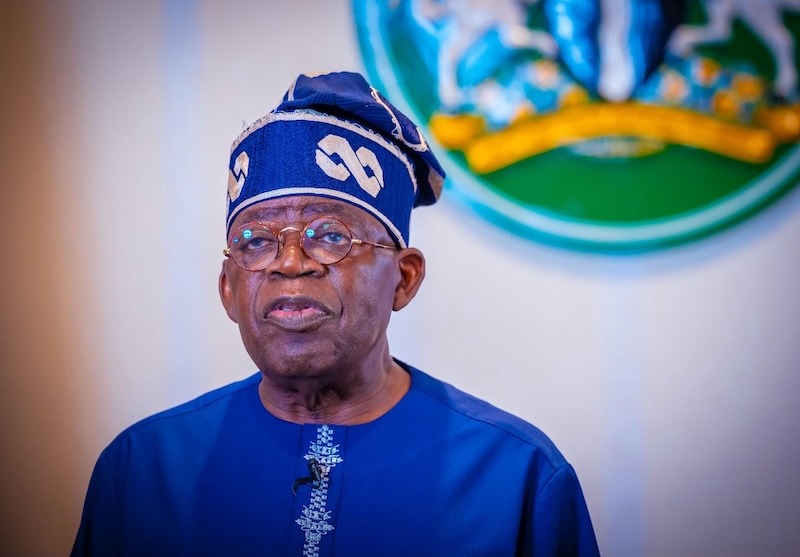
President Bola Tinubu will receive the Executive National Policing Bill for review on September 3, the Presidency revealed on Monday.

This was as it unveiled a public information portal through which Nigerians can submit memoranda and position papers to shape the legislation before it is reviewed by the President and transmitted to the National Assembly.

Chief of Staff to the President and Chairman of the Presidential Working Group on the National Policing Bill, Femi Gbajabiamila, made the disclosures while briefing State House correspondents after convening a meeting of the group at the Aso Rock Presidential Villa, Abuja.

During the briefing, Gbajabiamila disclosed that the approved work programme was a seven-week, milestone-driven exercise running from July 27 to September 14, 2026.

“The resulting Executive Bill package is scheduled for presentation to the President on the 3rd of September.

“Subject to his approval, and I think we have tweaked that so the national consultation will come before the President’s final approval, after which the text and supporting materials will be revised and prepared for formal transmission to the National Assembly,” he said.

He explained that the final package would comprise schedules, an explanatory memorandum, a legal audit and consequential-amendments matrix, a clause-by-clause analysis, a state readiness framework, a fiscal and implementation note, a validation report, a risk register and a controlled digital archive.

According to him, “This is a monumental reform that Nigerians have debated for many years.

“Our central task now is to design a lawful, professional and sustainable federal and state policing system that places greater capability closer to the people while preserving national standards, national security and the rights of every Nigerian.”

The former Speaker of the House of Representatives further distinguished between the constitutional amendment already passed by both chambers of the National Assembly and the operational legislation his group had been tasked with producing.

See also  FULL LIST: US stops Nigerians, others from applying for green card, citizenship

He explained, “The Senate approved the state police constitutional proposal on June 24, 2026, and the House of Representatives passed the executive state police Bill on 23 July 2026.

“The constitutional amendment is, however, not yet in force. It must obtain the approval required from the state Houses of Assembly as prescribed under the Constitution.

“Until that process is concluded, there is no operational state police service anywhere in Nigeria, and the Nigeria Police Force remains the constitutionally recognised police institution.”

On the guiding philosophy of the reform, Gbajabiamila argued that state policing must not become an instrument of political control.

“State Police cannot mean 36 state militias, just as national standards cannot become a disguised method of re-centralising day-to-day state policing.

“No political officeholder should be able to direct the arrest of an opponent, the suppression of lawful political activity or the selective enforcement of the law.

“Federal intervention must remain exceptional, evidence-based, proportionate, time-limited and reviewable.”

Gbajabiamila revealed that the website went live on Monday, and will give Nigerians a direct channel to submit memoranda for roughly two weeks, with a possible extension.

“There will be a website which has gone live already, for members of the public to learn about the stages of what we’re doing, and to actually contribute and send their contributions through that platform.

“So the public is included, no matter your station in life. The website will metamorphose hopefully in the next couple of days,” he said.

Responding to a question on the estimated cost of the new policing system, Gbajabiamila declined to offer a figure, saying, “There is no cost that will be too much to secure lives and property.”

See also  My account of Mohbad’s story, Naira Marley speaks out on Mohbad's Death

He added, “Giving you a cost now will be pulling something out of thin air.

“The cost will be evidence-based, based on thorough research, and on a state-by-state basis, because one state differs from the other in terms of personnel, infrastructure and local needs. It’s a good question, but it’s premature.”

On whether national standards undermine the autonomy state police is meant to provide, he said standards exist purely as a safeguard floor, not a ceiling.

According to him, “National standards are there to ensure safeguards. You can’t just give states carte blanche to do whatever they want; there’s no basic uniformity in that.

“Those standards are just the minimum. States can go beyond if they have the capacity. But no citizen will be shortchanged just because a state cannot meet the minimum.”

On what happens to states unable to demonstrate readiness to implement state police, Gbajabiamila said the federal police would remain the default provider in such states.

“The law abhors a vacuum. We don’t believe there is any state that does not have capacity to establish state police, but if for whatever reason a state truly doesn’t, the federal police remains in place until such a time when the state can come on board,” he explained.

For his part, the Attorney-General of the Federation, Lateef Fagbemi (SAN), warned against state police being weaponised for political persecution.

Fagbemi said, “It is important that we do not make state policing a weapon of political persecution or oppression.

“There must be a minimum threshold to guarantee the continued existence and operation of the society. If you leave the door open, all sorts of situations will come in, and that will not be good enough for society.”

See also  Power outage hits Enugu as EEDC slashes supply

Ogun State Governor Dapo Abiodun, responding to questions about national standards amounting to federal micromanagement of a state responsibility, argued that someone had to translate the constitutional amendment into workable legislation.

Abiodun argued, “This bill has to do with different consequential amendments to other parts of the Constitution that we may not even realise, the Firearms Bill, for instance, which only recognises a unitary policing system.

“Where do the powers of the federal police stop? Where do the powers of the state police start? These are the things we are working on.”

At a consultative meeting on state police convened at the Presidential Villa, Abuja, on June 5, Gbajabiamila said while the constitutional amendment to establish state police had gained considerable ground, the new structure needed an enabling legislation to operationalise it after the amendment.

The consultative meetings were attended by the Deputy Senate President, Jibrin Barau, and the Deputy Speaker, Benjamin Kalu.

The National Policing Bill, he said at the time, will define national minimum standards, certification processes, funding, jurisdiction, firearms control and the consequential amendments required across dozens of existing federal and state laws before states can lawfully begin operating their own police service.

Monday’s briefing was also attended by the President of the Nigerian Bar Association, Afam Osigwe (SAN); the Inspector-General of Police, Mr Olatunji Disu; the Chairman of the Policy Advisory Committee, Justice Mohammed Liman (retd.), and members of the Working Group’s technical secretariat.

punch.ng

FOLLOW US ON:

FACEBOOK

TWITTER

PINTEREST

TIKTOK

YOUTUBE

LINKEDIN

Continue Reading
Click to comment

Leave a Reply

Your email address will not be published. Required fields are marked *

News

NCDC defends N100,000 weekly support for Ebola contacts

Published

on

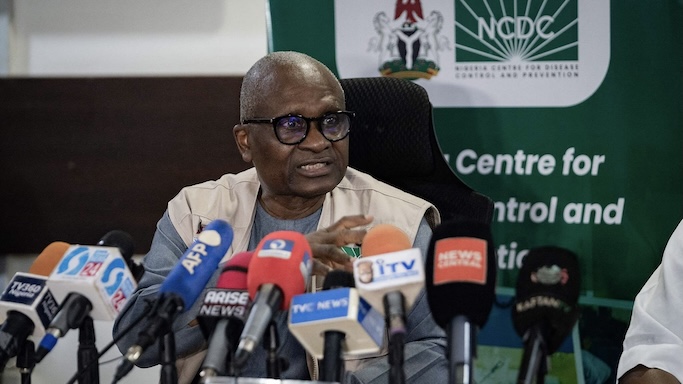
The Director-General of the Nigeria Centre for Disease Control and Prevention, Dr Jide Idris, has said the ₦100,000 weekly support for primary contacts of the recent Ebola case in the country was not originally budgeted for, explaining that the assistance was introduced on compassionate grounds.

The NCDC Chief stated this during an  interview on Channels Television programme, Politics Today, on Monday night.

He said that the individuals placed in quarantine were taken away from their normal lives for public health reasons, making it necessary for authorities to provide for their basic needs.

“That was not budgeted for. Those people who were in the quarantine area were people who never planned to be there. We took them out of their comfort zones; we put them there for public health reasons, so we are responsible for their feeding, accommodation,” Idris said.

He explained that some of the quarantined individuals had complained about being separated from their families and the financial implications of remaining in the facility.

“Some of them said they had families at home they need to take care of. But one or two said they had businesses. By staying here again, you’re going to lose a lot of money again,” he said.

Idris said some of the individuals had threatened to leave the quarantine facility, a development he described as a public health concern because their infection status could not be immediately determined.

“If you allow them to leave the place, it’s a public health issue because you don’t know whether they will turn positive or who is ill,” he said.

See also  Why it appears difficult to tackle insecurity — Defence Minister, Musa

The NCDC chief said the agency subsequently decided to provide temporary assistance to address their concerns and encourage them to remain in quarantine.

“On compassionate grounds, we said, okay, let’s see how best we can support them. It’s a temporary thing because it’s not something we’ve done,” he said.

Idris added that responsibility for providing quarantine facilities and related support ordinarily rested with state governments rather than the NCDC.

“In this kind of thing, the quarantine facility, there are the responsibilities of each state government, not any NCDC. But because this is not forthcoming, to avoid this one, just to temper this thing, we decided to step in,” he said.

PUNCH Online had reported that the NCDC had approved an emergency payment of ₦100,000 per person weekly for people placed in isolation or quarantine following the confirmation of an imported Ebola case in the Federal Capital Territory.

The report said Idris announced the intervention during a press briefing on Sunday, explaining that it followed complaints from contacts about the cost of feeding, accommodation and maintaining their families while undergoing public health monitoring.

“We are paying for their accommodation; we are paying for their feeding. Some of them are asking for a stipend to maintain their families,” he had said.

He added, “We are providing N100,000 per person per week just to maintain their comfort and feeding, because they were complaining.”

The NCDC had said the payment was an emergency measure and would be reviewed as the outbreak response progressed. At the time, 53 primary contacts linked to the confirmed case had been identified for monitoring.

See also  Alleged terrorism: AGF takes over Malami, son’s trial - see why

Source: punchng.com

FOLLOW US ON:

FACEBOOK

WHATSAPP CHANNEL

TWITTER

PINTEREST

TIKTOK

YOUTUBE

LINKEDIN

INSTAGRAM

Continue Reading

News

Tipper dangles off Kara Bridge on Lagos-Ibadan Expressway

Published

on

An empty tipper truck was left hanging on the railings of Kara Bridge, while another truck spilled its contents onto the road in two separate incidents inward Mowe, Ogun State, on Tuesday.

The Lagos State Traffic Management Authority disclosed this in a post on its official X handle, stating that the incidents were reported at about 7am.

“An empty tipper is seen hanging on the railings of the bridge and another flatbed truck spilled its contents on the road,” LASTMA stated.

The agency said a tow truck had arrived at the scene to evacuate the vehicles, while police officers from Adigboluja were also present.

“Tow truck on ground for evacuation and police officers from Adigboluja are also at the scene,” it added.

LASTMA said its officers were managing traffic movement towards Mowe, noting that traffic flow remained smooth at the time of the report.

“Officers are on ground managing the traffic movement inward Mowe as traffic is still good at the moment,” the agency stated.

In a separate incident, the agency reported a broken-down, loaded DAF lorry with mechanical faults at Shasha Roundabout, inward Akowonjo Roundabout.

“There’s a broken-down loaded DAF lorry with mechanical faults occupying about 70 per cent of the road at Shasha Roundabout, inward Akowonjo Roundabout,” LASTMA stated.

The agency said a tow truck had been contacted to evacuate the lorry, while its officers were managing the traffic situation.

“Tow truck has been contacted for evacuation. Officers are on ground managing the traffic situation accordingly,” it added.

Source: punchng.com

FOLLOW US ON:

FACEBOOK

WHATSAPP CHANNEL

TWITTER

PINTEREST

TIKTOK

YOUTUBE

LINKEDIN

INSTAGRAM

See also  Senate reconvenes today as Electoral Act triggers uproar
Continue Reading

News

CJN warns judges against pressure, conflicting orders ahead of 2027 elections

Published

on

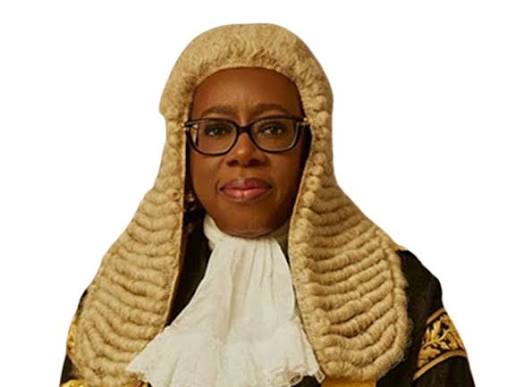
The Chief Justice of Nigeria, Justice Kudirat Kekere-Ekun, has urged judges, particularly heads of courts, to guard against forum shopping, concealment of related proceedings and attempts to obtain conflicting orders ahead of the 2027 general elections.

Kekere-Ekun said election-related disputes often attract intense public interest and considerable pressure on the courts, requiring judicial officers to remain impartial and strictly adhere to the law.

She spoke in Abuja on Monday at the opening of the 2026 Roundtable for Heads of Courts, organised by the National Judicial Institute.

The CJN said the judiciary must be prepared to handle politically sensitive cases without allowing public sentiment or pressure from any quarter to influence judicial decisions.

“The judiciary must be prepared to discharge its constitutional responsibilities with impartiality, courage and fidelity to the law.

“Political sensitivity, public sentiment or the urgency with which a matter is presented must never displace the careful application of the Constitution, the Electoral Act and the applicable rules of court,” she said.

Kekere-Ekun urged heads of courts to establish appropriate administrative arrangements for the timely and orderly handling of election-related cases.

“Judicial officers must be reminded of the need to scrutinise applications carefully, insist on full and frank disclosure of relevant facts, pay due regard to related proceedings and resist any attempt to use urgent applications or ex parte orders to secure an improper advantage.

“The integrity of judicial proceedings must not be compromised by competing political interests or pressure from any quarter,” she added.

The CJN described forum shopping as particularly damaging to the judiciary, warning that the practice undermined consistency, encouraged abuse of court processes, and exposed the institution to avoidable public controversy.

See also  Wike reveals he’ll resign if Tinubu loses FCT, Rivers in 2027, read details

“Your Lordships must therefore ensure that existing procedural safeguards are observed and that appropriate steps are taken whenever attempts to circumvent established judicial processes come to light.

“No litigant should be permitted to manipulate the judicial system in search of a favourable decision. Public confidence in the judiciary will be tested during this period,” she said.

She reminded heads of courts of their responsibility to ensure that election-related cases were handled competently, expeditiously and strictly in accordance with the law.

The CJN also expressed concern over delays in the determination of cases, describing timely justice delivery as one of the most pressing challenges confronting the judiciary.

According to her, delays impose financial and emotional burdens on litigants, diminish the practical value of judicial remedies and weaken public confidence in the justice system.

“While some causes of delay arise from inadequate funding, infrastructure and judicial manpower, others can be addressed through effective administration.

“Inefficient docket management, repeated adjournments, poor scheduling and failure to monitor inactive cases can prolong proceedings unnecessarily,” she said.

Kekere-Ekun urged heads of courts to monitor their caseloads, identify cases that had remained pending for long periods and develop strategies to reduce backlogs.

“Every head of court should have a clear understanding of the condition of the court’s docket, including the number of pending cases, their age, the categories experiencing the greatest delays and the reasons for their continued pendency.

“This information should inform realistic strategies for reducing backlog, improving the allocation of hearing dates and ensuring that concluded matters are promptly removed from the active docket,” she said.

However, she cautioned against measuring judicial efficiency solely by the number of cases disposed of, stressing the need to protect litigants’ rights.

See also  Adamawa ADC gives Atiku ultimatum to pick membership card

“Efficiency, however, must not be measured solely by the number of cases disposed of. It requires cases to be determined fairly, competently and within a reasonable time, with the right to fair hearing fully protected,” the CJN added.

On judicial appointments, Kekere-Ekun called for transparent, fair and merit-based selection processes, urging heads of courts to resist external pressure and prioritise competence, character and suitability.

She said, “Public confidence in the judiciary depends, in part, on the assurance that those entrusted with judicial office have emerged through rigorous and credible processes.”

The CJN also urged heads of courts to promote professional standards, support the development of judicial officers and foster an institutional culture that upholds impartiality and accountability.

She further directed them to establish mechanisms to ensure that judges commenced sittings on time and that litigants and lawyers were promptly informed whenever court sessions were cancelled.

Describing punctuality as a professional responsibility, she said it “must be treated as a professional obligation, not a matter of personal preference.”

Kekere-Ekun said it was unacceptable for lawyers and litigants to travel long distances at considerable expense only to discover upon arrival that their cases would not be heard.

She urged heads of courts to ensure that court registries had reliable procedures for notifying affected parties of changes to sitting schedules.

On courtroom conduct, the CJN said judicial authority should be exercised with fairness, composure and respect.

“Every litigant, regardless of social status, financial means or education, deserves dignity, while lawyers are entitled to courteous treatment. Firmness and courtesy are entirely compatible. A judge can control proceedings without humiliating counsel or a litigant,” she said.

See also  Alleged terrorism: AGF takes over Malami, son’s trial - see why

She also directed heads of courts to ensure that courtrooms remained professional environments free from bullying and harassment.

The CJN called for sustained investment in judicial support staff, including registrars, research officers, administrative personnel and information technology workers.

She also urged judicial authorities to introduce structured mentorship programmes under which newly appointed judges would work with experienced judicial officers for a defined period before sitting independently.

Earlier, the Administrator of the NJI and retired President of the National Industrial Court of Nigeria, Justice Babatunde Adejumo, said the judiciary remained under constant public scrutiny because of its role as custodian of justice and guardian of the rule of law.

He said the responsibility placed on judicial leaders required them to safeguard the institution’s image and shape positive public perceptions.

Adejumo described the annual roundtable as an opportunity for heads of courts to exchange views on common challenges and collectively develop solutions.

He said the programme was deliberately designed to minimise external intervention and allow heads of courts to direct discussions and determine outcomes.

The retired judge also commended Kekere-Ekun for the reforms she had introduced, which he said had strengthened judicial independence and enhanced integrity across all levels of the judiciary.

Source: punchng.com

FOLLOW US ON:
FACEBOOK

WHATSAPP CHANNEL

TWITTER

PINTEREST

TIKTOK

YOUTUBE

LINKEDIN

INSTAGRAM

Continue Reading

Trending