• House of Reps blames contractor blockade, not Trump motion, for closed session
• Dambazau: Trump’s remarks plot to set up military base in Nigeria
• Trump’s threat a cover for America’s interests, says Afenifere
• S’Kaduna backs US action on terrorism, faults FG on insecurity
• Govt blames extremists for genocide claims
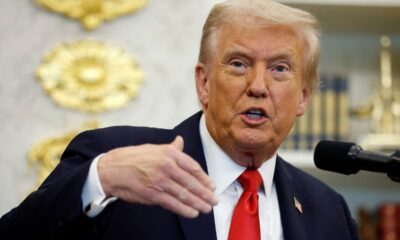
Global powers have rebuffed United States President Donald Trump’s threat to invade Nigeria over alleged Christian persecution, warning that such claims distort the country’s complex security crisis.
In separate statements, the European Union (EU), Economic Community of West African States (ECOWAS), and China cautioned against actions undermining Nigeria’s sovereignty, insisting terrorism in the region targets all faiths alike.
The EU maintained that religion was only one of several factors driving violence in Nigeria and, in some cases, not a determining one.
This came as Senate President Godswill Akpabio yesterday said the Senate would coordinate with the executive on United States President Donald Trump’s military threat, revealing the U.S. position was based on outdated intelligence and insisting Nigeria’s insecurity affects all citizens regardless of faith, not targeted Christian persecution.
The Union’s Spokesperson for Foreign Affairs and Security Policy, Anouar El Anouni, said the EU had taken note of the statements made by the American administration and expressed solidarity with all communities and families affected by violence, including the recent large-scale attacks in southern Nigeria and the North-East.
“The EU reaffirms its commitment to freedom of religion and belief, and to the protection of all communities, especially minorities, and we underline our commitment to the peaceful coexistence of the Nigerian population beyond geographical, ethnic, political, or religious differences. We recognise the many factors behind the violence in Nigeria. Let us note that religion is only one of these factors, and only in certain instances,” he said.
El Anouni added that the European Union was working with Nigerian authorities to prevent violence, consolidate peace, and support victims of attacks and forced displacement.
In a similar position, ECOWAS said terrorist attacks in the sub-region were not targeted at any particular religion but affected people of diverse faiths.
The Commission noted that terrorists had attacked innocent civilians of all religious denominations, including Muslims, Christians, and adherents of other faiths, stressing that terrorist-related violence did not discriminate by gender, religion, ethnicity, or age.
“The Economic Community of West African States (ECOWAS) wishes to draw the attention of partners and the international community as a whole to the growing level of violence that terrorist groups of different colouration have perpetrated in some countries in the West African region, including Nigeria.
“Perpetrators of this violence target innocent civilians of all religious denominations, including Muslims, Christians, and adherents to other religions. As independent reports have confirmed over the years, terrorist-related violence does not discriminate on the basis of gender, religion, ethnicity, or age,” ECOWAS stated.
It called on the United Nations and international partners to support member states in combating terrorism and to disregard claims suggesting that extremist groups target one religion or that genocide was being perpetrated against Christians in the region.
“ECOWAS strongly rejects these false and dangerous claims that seek to deepen insecurity in communities and weaken social cohesion in the region. ECOWAS calls on the whole world to stand by the countries in the region in their fight against terrorism that targets all communities,” the statement added.
Also, the Government of China urged the United States to refrain from interfering in Nigeria’s internal affairs under the pretext of religion or human rights.
Speaking during a regular press conference in Beijing, China’s Foreign Ministry Spokesperson, Mao Ning, said China opposed any threat of sanctions or military action against Nigeria.
“As a comprehensive strategic partner of Nigeria, China firmly supports the Nigerian government in leading its people to a development path that fits Nigeria’s national realities. We oppose any country’s interference in other countries’ internal affairs under the pretext of religion and human rights. We oppose the wanton threat of sanction and use of force,” Mao said.
She was responding to a journalist who referenced Trump’s designation of Nigeria as a “country of particular concern” on October 31 over the alleged persecution of Christians. The journalist also cited Nigeria’s response through the Ministry of Foreign Affairs, which described the U.S. claim as inconsistent with facts and reaffirmed Nigeria’s commitment to combating violent extremism, protecting its citizens, and upholding religious freedom and diversity.
However, U.S. lawmaker Riley Moore, on X yesterday, defended Trump’s threat, saying, “President Trump is absolutely right to defend our brothers and sisters in Christ who are suffering horrific persecution, and even martyrdom, for their faith in our Lord and Saviour Jesus Christ. China will not dictate our foreign policy to us, and we will not be lectured to by a Communist autocracy that recently arrested 30 Christian pastors for their faith and throws ethnic minorities in concentration camps.
Senate to consult presidency as Akpabio faults Trump’s outdated claims
Senate President Godswill Akpabio yesterday clarified that the Senate has “not discussed the issue of President Trump yet in chambers. We shall do so with the executive because we believe it is a matter of foreign policy and diplomatic relations. I have refrained from taking any motion on that yet until we know the direction of the government and what the government intends to do.”
The Senate President explained that Trump’s position was derived from a 2010 report by a U.S. congressional fact-finding team that visited only a few parts of Nigeria.
“The position that President Trump is taking is not based on the current realities,” he said. “The position is based on a purported 2010 report — 15 years ago — that said some people came on fact-finding from the U.S. Congress, and they went to only Plateau and Benue; they did not go to Zamfara and other areas.”
He urged the U.S. to understand the complexity of Nigeria’s security challenges and avoid interpreting them through a religious lens.
“If you go to a predominantly Muslim community, terrorists and bandits cause you to kill people, the majority of those who die there will be Muslims,” he said. “When you enter a predominantly Christian community like Benue and Plateau and then you cause mayhem, the majority of those who will die there will be Christians.”
Akpabio stressed that insecurity in Nigeria should be viewed holistically, noting that citizens of all faiths desire peace and unity.
“Nigeria’s problem needs to be weighed from all sides, and all we are looking for is peace,” he said. “There is no Nigerian that doesn’t want to sleep with his two eyes closed, and there is no Nigerian that does not live with a Muslim or Christian in his house. Nigeria is multi-religious, multi-ethnic, and we live with one another.”
He added that portraying Nigeria as divided along religious lines was misleading and dangerous.
“When people take issues out of Nigeria and misrepresent them to create the impression that Christians and Muslims are fighting, it is totally untrue,” Akpabio said.
A video clip that emerged later showed Deputy Senate President Barau Jibrin, during deliberations, declaring, “I’m not scared of Trump. I can say my mind. I’m Nigerian, Nigeria is a sovereign nation. I am a parliamentarian, and he is telling lies about our country.”
On October 14, the Senate set up a 12-member ad hoc committee to develop a comprehensive position paper in response to growing international concerns over alleged state-backed persecution of Christians in Nigeria.
House blames contractor blockade, not Trump motion, for closed session
ALSO, the House of Representatives said its decision to hold an executive (closed-door) session yesterday had no link with the motion being debated on comments credited to United States President Donald Trump about alleged Christian genocide in Nigeria.
The lower chamber explained that the session became necessary due to protests by indigenous contractors who barricaded the National Assembly complex over unpaid debts.
Deputy Speaker Benjamin Kalu, who presided over plenary, called for the executive session midway through the debate on a motion relating to Trump’s comments, which have stirred controversy nationwide.
Before the closed-door meeting, the House witnessed a rowdy session that led to the suspension of debates on several motions, including one on alleged irregularities in the management of the Lagos International Trade Fair Complex.
When the motion to debate Trump’s recent remarks declaring Nigeria a “country of particular concern” came up, lawmakers rejected it after Mr Kalu asked that it be seconded as a matter of urgent national importance.
It was at this point that the Deputy Speaker directed members to move into an executive session.
Shortly afterwards, the House suspended plenary for one week following the contractors’ blockade, which disrupted proceedings.
The protest, led by local contractors demanding payment for verified projects under the 2024 and 2025 budgets, made it difficult for lawmakers and staff to access the complex. The protesters vowed to continue their demonstration for seven days until their demands were met.
Addressing journalists after plenary, House spokesperson Akin Rotimi said the leadership deemed it necessary to go into a closed session to address growing tension within and outside the National Assembly, particularly unrest caused by unpaid contractors.
He said: “As you know, the plenary today started very well and we’ve been going through the normal proceedings when the leadership today presided over by Deputy Speaker Benjamin Kalu figured out that there had been some restiveness during the session, which he thought, in his wisdom, had to be addressed in an executive session.
“So, at the point in time when he called for the executive session, the substantive motion being debated was on the issue that we know is currently a national discourse: the Trump presidency, making certain statements, which is being debated at this time.
“We know the presidency is making very high-level engagements, and we don’t take it lightly. So the fact that we dissolved into an executive session had no bearing on the substantive case, which was being debated, just to make that clear.
“I believe that the House would perhaps have an opportunity to revisit that issue in due course.”
Rotimi added that discussions during the executive session were bipartisan and focused on resolving delays in the release of funds for capital projects, which have affected communities nationwide.
He commended the press for its professionalism in reporting parliamentary affairs and urged journalists to avoid misinterpretation of yesterday’s events, stressing that there was no conflict between the legislature and the executive.
Dambazau says Trump’s remarks part of plot to justify U.S. military base in Nigeria
MEANWHILE, former Chief of Army Staff and ex-Minister of Interior, Lt.-Gen. Abdulrahman Bello Dambazau (rtd) has described recent comments by U.S. President Donald Trump declaring Nigeria a “country of particular concern” as part of a wider ploy to justify the establishment of an American military base in the country.
Speaking at the 7th Annual Lecture of the Just Friends Club of Nigeria (JFCN) in Abuja, Dambazau said the alleged U.S. concern over the safety of Nigerian Christians was propaganda aimed at shaping public opinion and advancing strategic interests in West Africa.
The retired general, who spoke on the theme “Nigeria’s Security Challenges and the Quest for National Cohesion: A New Paradigm for Internal Security Architecture and Governance,” warned that divisive narratives and foreign-backed misinformation were fuelling ethnic and religious mistrust.
He said the absence of national cohesion had made Nigeria vulnerable to external manipulation for geopolitical advantage.
“The tendency to treat insecurity in the north as a northern problem and in the south as a southern problem exemplifies this lack of cohesion,” he said. “Additionally, religious tensions have been amplified by both domestic and foreign actors, sometimes resulting in the mischaracterisation of security incidents as targeting specific faith groups, despite their widespread impact.
“An example is the recent propaganda, amplified by some U.S. congressmen and supported by some Catholic clergymen in Nigeria, that there is Christian genocide. Donald Trump, the U.S. President, has declared Nigeria a ‘Country of Particular Concern’ and that he has given the U.S. Department of War orders to prepare for possible operations to defend Nigerian Christians.
“Whatever that means, we shall see in the coming weeks or months. The Boko Haram insurgency and terrorism are regional issues that are pervasive in the Sahel and Lake Chad regions due to the affiliations of the various groups operating there. That is why the Multinational Joint Task Force (MNJTF) was formed to contain and decimate their activities. Borno and Yobe are the front lines of the Boko Haram insurgency, and at least 80 per cent of the population is Muslim. Thousands have been killed or wounded, with millions displaced, their children unable to attend school, and their parents kept from their farms.
“Most of these casualties are the aged, women and children, whose lives do not seem to matter if they are not Christians. In the more than ten years of U.S. presence in Niger, where it maintained two military bases, what did the U.S. do to prevent the growth of security challenges?
“It is also on record that at the initial second coming of the Trump administration, U.S. congressmen accused USAID of terrorism financing in Africa. I think the U.S. is looking for an opportunity to establish an alternative base in Nigeria, a country known to protect only its interests by any means possible, including the use of force. Unfortunately, they have willing partners in Nigeria.”
Dambazau also traced the origin of the Boko Haram insurgency to a policing error in 2009, saying the crisis in the North-East began as a failure of law enforcement that spiralled into one of Nigeria’s worst security challenges.
He recalled that a simple enforcement of a crash-helmet law by police officers in Maiduguri in 2009 escalated into the insurgency following poor handling, weak governance, and lack of accountability.
Afenifere faults Trump’s threat, calls it cover for U.S. interests
SIMILARLY, the pan-Yoruba socio-political organisation, Afenifere, described Donald Trump’s recent threat to invade Nigeria as “a deceptive cover for deeper political and economic motives.”
In a statement issued yesterday by its National Publicity Secretary, Jare Ajayi, the group said Trump’s remarks were intended to discredit Nigeria’s leadership and pressure President Bola Ahmed Tinubu into aligning with American interests, particularly on foreign and economic policies.
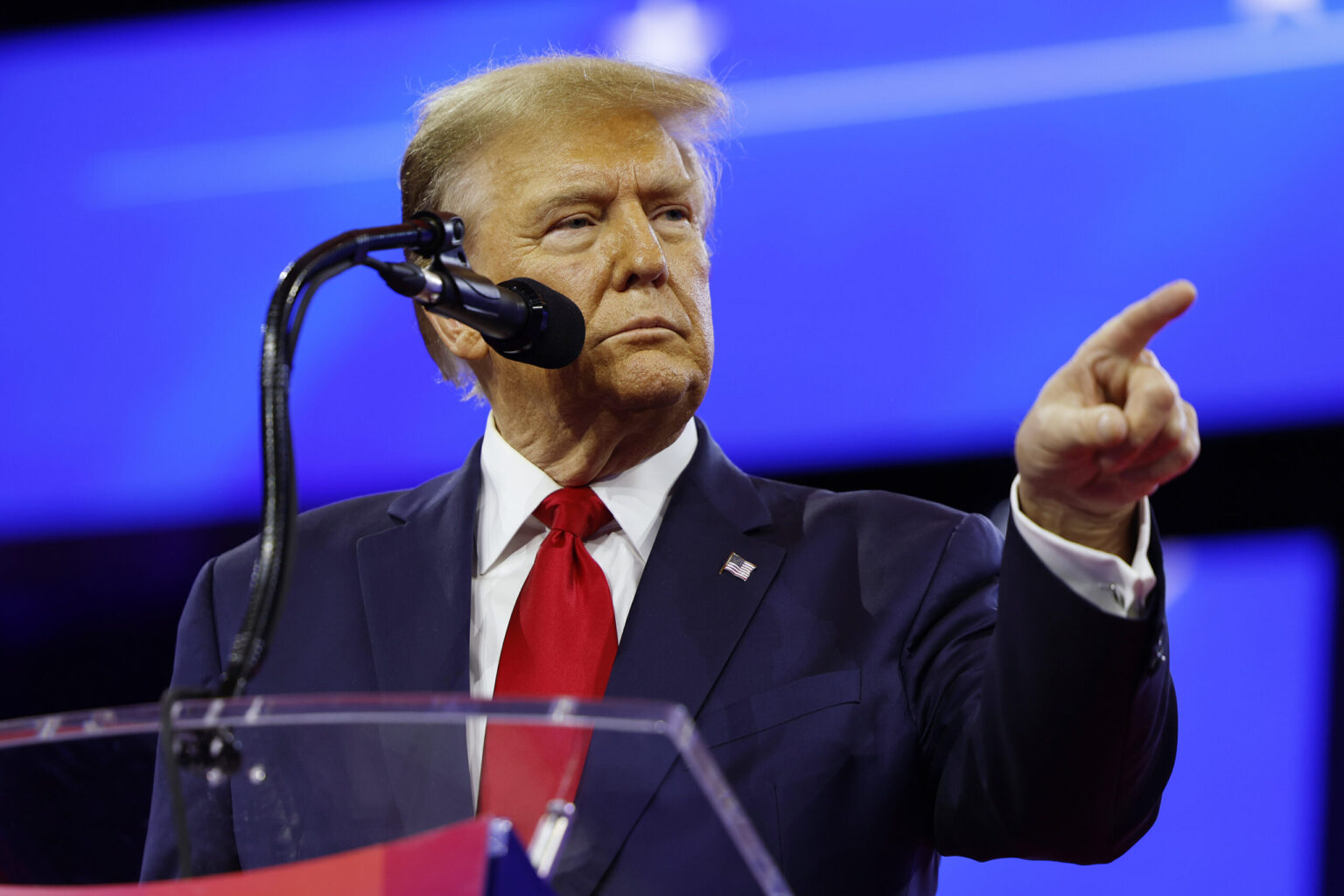
Trump had, last week, claimed he instructed the Pentagon to prepare “a possible plan of attack” on Nigeria over alleged killings of Christians.
Afenifere dismissed the claim as “baseless and inflammatory,” saying it reflected “a familiar strategy of giving a dog a bad name in order to hang it.” The group maintained that such rhetoric was designed to undermine Nigeria’s sovereignty and international standing.
Ajayi said the allegation of a state-backed genocide against Christians was “false and mischievous,” noting that terrorist attacks in the country were indiscriminate and driven mainly by economic motives.
He stated, “The reality is that bandits and terrorists do not discriminate. Their target is the economy. Those funding them are interested in mineral deposits beneath affected areas. Once people are displaced, these actors move in to exploit the resources.”
Afenifere said Trump’s threat should be viewed within the context of Nigeria’s recent assertive foreign policy stance, which may have unsettled Washington.
According to the group, Nigeria’s growing ties with China, Tinubu’s imposition of a 15 per cent tariff on oil imports, and the government’s refusal to accept deportees from the United States had angered the American establishment.
The statement added: “By sounding harsh, Trump hopes to pressure President Tinubu into concessions that would favour U.S. economic and strategic interests, including increased arms purchases and deeper market access.”
Afenifere also recalled Nigeria’s position at the United Nations General Assembly, where Vice President Kashim Shettima reaffirmed the country’s support for a two-state solution in the Israeli-Palestinian conflict, a stance that reportedly displeased Washington.
The group’s statement came amid global backlash against Trump’s remarks. The Vatican Secretary of State, Cardinal Pietro Parolin, and the Catholic Bishop of Maiduguri, John Bakeni, both noted that extremist violence in Nigeria targets all communities, regardless of religion.
Cardinal Parolin, speaking in Rome at the launch of a report on global religious freedom by Aid to the Church in Need (ACN), said: “Extremist groups make no distinction in pursuing their objectives. They use violence against anyone they perceive as an obstacle.”
Similarly, Bishop Bakeni described terrorism in Nigeria as “multifaceted,” linking it to poverty, climate change, and competition for land.
Afenifere urged Nigerians to remain vigilant and united, warning against “reckless amplification” of divisive narratives that could justify foreign interference.
“We must be careful not to hand external actors the moral pretext to create theatres of war in our country. Those circulating exaggerated claims of religious genocide should reflect on the damage they cause to our national image,” Ajayi cautioned.
Citing reports by the U.S.-based Armed Conflict Location and Event Data Project (ACLED), the group said terrorist violence in Nigeria had been “largely indiscriminate” rather than faith-targeted.
Ajayi stressed that while Nigeria continues to grapple with security challenges, threats of war from foreign powers were “neither helpful nor justified.”
He said, “Threatening a sovereign nation with invasion cannot bring peace. It only heightens tension. None of the countries where America has made military incursions has known lasting peace.”
S’Kaduna leaders back Trump’s action on terrorism, fault FG over insecurity
HOWEVER, the Southern Kaduna Christian Leaders Association (SKCLA) commended United States President Donald Trump’s decision to deploy military troops to Nigeria to combat terrorism and restore peace.
The group blamed the Federal Government for failing to protect citizens from terrorists who, it said, had undermined Nigerians’ rights to life and peaceful coexistence.
Chairman of SKCLA, Apostle Emmanuel Nuhu Kure, in a statement issued in Kaduna yesterday, described the U.S. move as “a welcome development and, indeed, a long-overdue moment of truth.”
He said: “At last, someone, somewhere, has taken notice of the plight of Christians in Northern Nigeria, a plight our own government has consistently failed to acknowledge, let alone address.”
Kure, who is also a former National Secretary of the Pentecostal Fellowship of Nigeria (PFN), said Christians in the North had for too long been abandoned by the very government meant to protect them. He accused successive administrations, northern Muslim leaders and some Christian governors of paying lip service to peace and human rights.
He added that “the systematic rewriting of the history of northern minorities continues, with their lands seized, quotas stolen, traditional institutions debased, and political representation denied.”
According to him, the refusal to allow churches in northern institutions such as Bayero and Sokoto universities while mosques are permitted encourages extremist ideologies hostile to Christianity.
“This is not so in the South, which raises the question whether we have a separate government from the South,” he said. “What tradition or otherwise permits one sector to be enslaved by the other at this modern time? These are the realities of the North that the Trump question is raising that the government must answer.”
He further alleged that the sponsorship of jihadists, forced marriages, and denial of equal opportunities formed part of a “sustained pattern of persecution”. He urged the Federal Government to set up a credible, independent inquiry to investigate the allegations.
On killings in Benue and Plateau states, Kure said they revealed “a scorched-earth campaign targeted at persecuted Christian communities.” He lamented the persistent murder of pastors in Southern Kaduna and the neglect of dangerous roads in the region, describing government efforts as “half-hearted”.
He added: “It is high time that churches in Nigeria began to speak out by calling on the government to rise to the occasion of providing a level playing field for all religions to practise freely. The church is not speaking enough, and the government is not properly advised in spite of the many Christians in government.”
Kure, however, commended the Kaduna State Government’s early steps toward reform and peaceful coexistence, saying he hoped the efforts would “grow into a model of fairness and justice for the entire North.”
He noted that Trump’s actions had compelled nations to “look inward”, describing the U.S. leader as “perhaps, a hand of divine correction.”
Kure also said Britain must share in the reflection for its role in Nigeria’s colonial foundation, which he claimed contributed to the country’s divisions.
“Whether one calls it ‘external interference’ in a so-called sovereign nation or not, something must challenge the recklessness of African leaders who continually mortgage the future of their people,” he added.
“Africa still has a chance to rise, and that rebirth must begin with Nigeria. Our leaders must act, whether our plundering politicians are ready or not, for time is running out. The moment of reckoning is now.”
FG blames extremists for genocide claims
RELATEDLY, while dismissing claims of genocide against Christians in Nigeria, the Federal Government yesterday blamed religious extremists for promoting narratives aimed at dividing the nation.
Minister of Information and National Orientation, Mohammed Idris, told State House correspondents after meeting President Bola Tinubu at the Presidential Villa, Abuja, that such allegations were the handiwork of elements seeking to destabilise the country.
He said President Tinubu had remained calm amid threats from United States President Donald Trump and was focused on ensuring that the international community understood Nigeria’s efforts to tackle insecurity.
Idris said the government’s recent appointment of new service chiefs formed part of a wider strategy to strengthen national security.
Responding to questions about dialogue with the U.S., the Minister said the President was engaging with various stakeholders, including religious leaders, who play key roles in fostering unity.
“President Tinubu will continue to engage not only with the U.S. but with regional and continental bodies, as well as all international partners who have a role in supporting Nigeria to overcome criminal elements spreading false narratives that damage the country’s reputation,” he said.
Idris maintained that Nigeria was not a nation marked by religious intolerance. “Our constitution guarantees freedom of religion for Muslims, Christians, and others alike, and the President respects this fully,” he said.
Warning Nigerians against extremist manipulation, he added: “These extremists want to divide Nigeria, but now is the time for unity and nation-building, not division. President Tinubu is calm and committed to resolving these issues responsibly.”
He described his meeting with the President as routine and said discussions also covered U.S. concerns about Nigeria.
“The government is addressing both domestic and international concerns through open communication channels with international organisations to ensure understanding of Nigeria’s ongoing efforts,” he stated, urging Nigerians to reject divisive rhetoric and reflect on shared nationhood.
Source: guardian.ng
FOLLOW US ON:
FACEBOOK
TWITTER
PINTEREST
TIKTOK
YOUTUBE
LINKEDIN
TUMBLR
INSTAGRAM