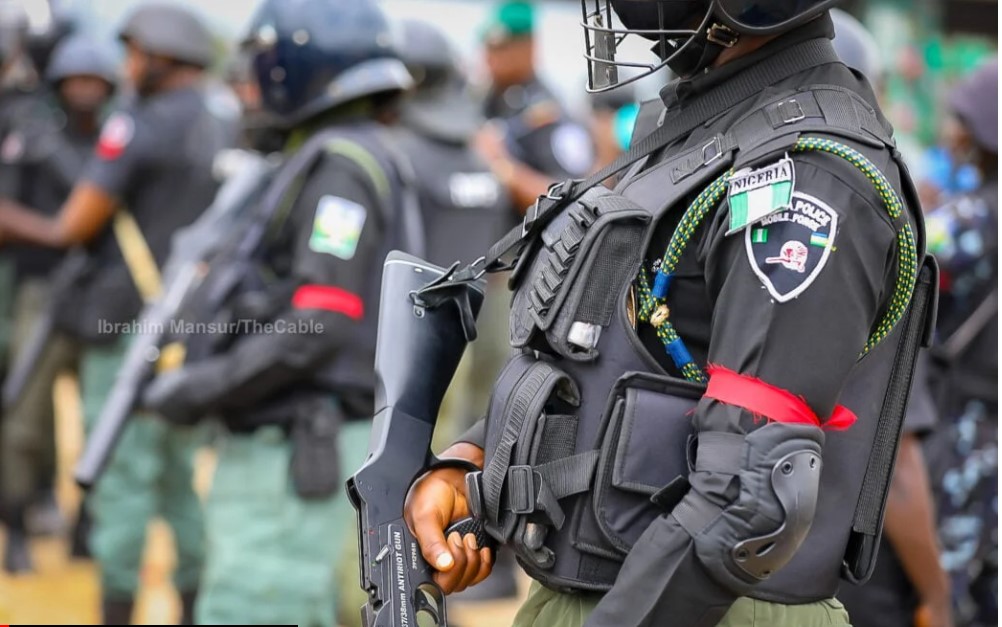
The Federal Government will recruit over 94,000 new personnel into Nigeria’s security services as part of measures to tackle rising insecurity across the country.
Under the plan, the Police Service Commission and the Nigeria Police Force will recruit 50,000 police constables.
The recruitment portal is expected to be open to eligible Nigerians from December 15, 2025, to January 25, 2026.
In a statement on Thursday by the Head of Protocol and Public Affairs, Torty Kalu, the Commission said the recruitment portal would open to eligible Nigerians from December 15, 2025, to January 25, 2026.
The statement partly read, “The PSC, in collaboration with the NPF, is pleased to announce the commencement of recruitment of 50,000 Police Constables into the Nigeria Police Force, as directed by President Bola Tinubu. Following this Presidential directive aimed at strengthening community policing, enhancing internal security and expanding the manpower base of the Nigeria Police Force, the Commission has approved the opening of the recruitment portal for applications from eligible Nigerians.
“For the General Duty cadre, applicants are required to possess GCE Ordinary Level, SSCE/NECO or equivalent qualifications with at least five credits, including English Language and Mathematics, in no more than two sittings.
“Applicants for the Specialists cadre must possess a minimum of four credits, including English and Mathematics, also in no more than two sittings, and must have at least three years of experience and relevant trade test certifications.”
He said eligible applicants must be Nigerian citizens by birth.
An official of the Nigerian Army, speaking off the record because he was not authorised to speak to the press, said the Army may recruit about 14,000 new soldiers following the President’s directive.
“You know the President recently gave an order; based on that we might probably recruit 14,000,” the official said.
The Navy and Nigerian Air Force did not provide exact numbers, but sources said both services will increase their intakes.
In June, the Ministry of Interior announced a nationwide recruitment of 30,000 personnel across the four paramilitary agencies.
Our correspondent, however, gathered from ministry officials that the process was being expedited to inject the recruited personnel into the system.
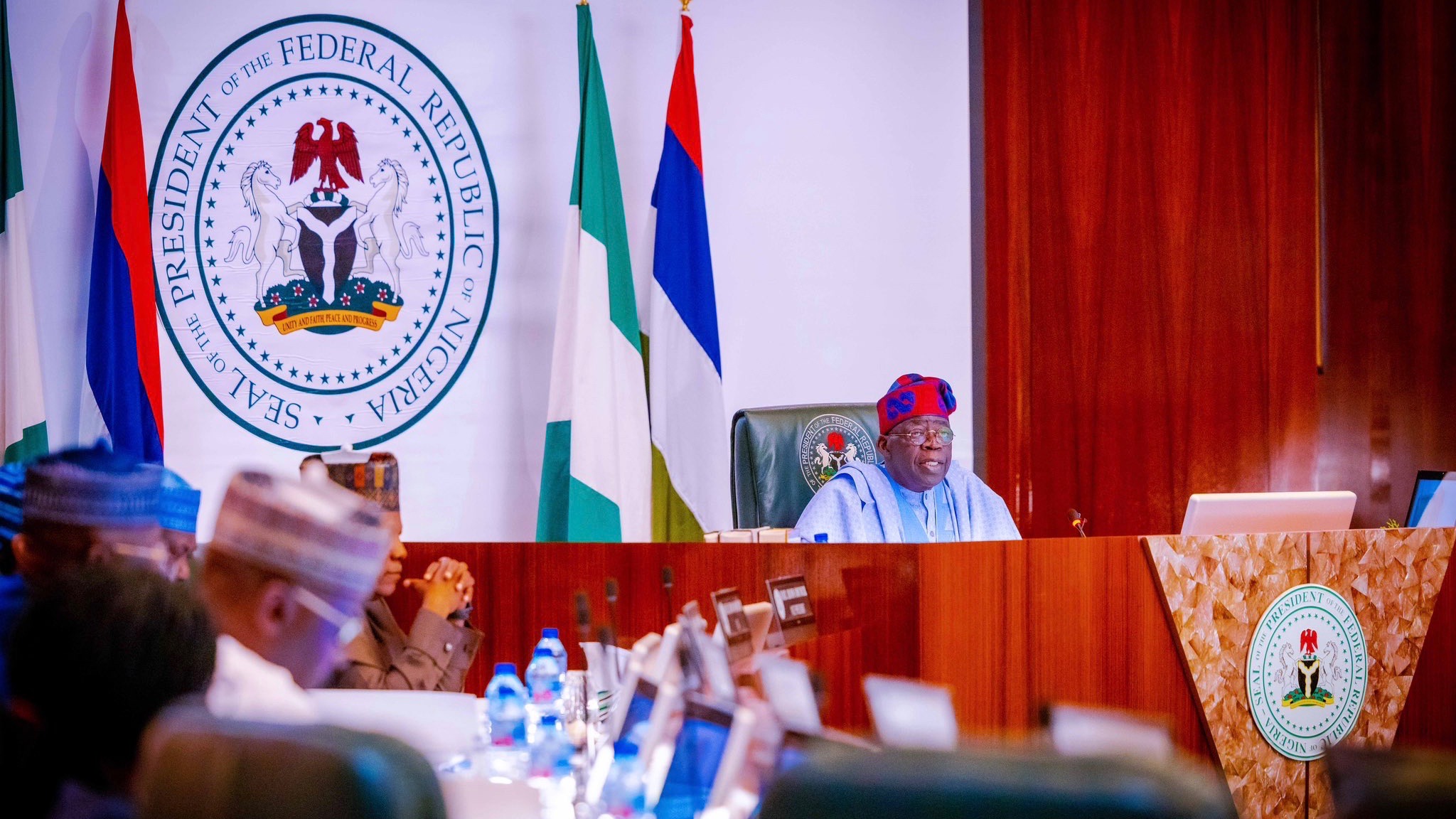
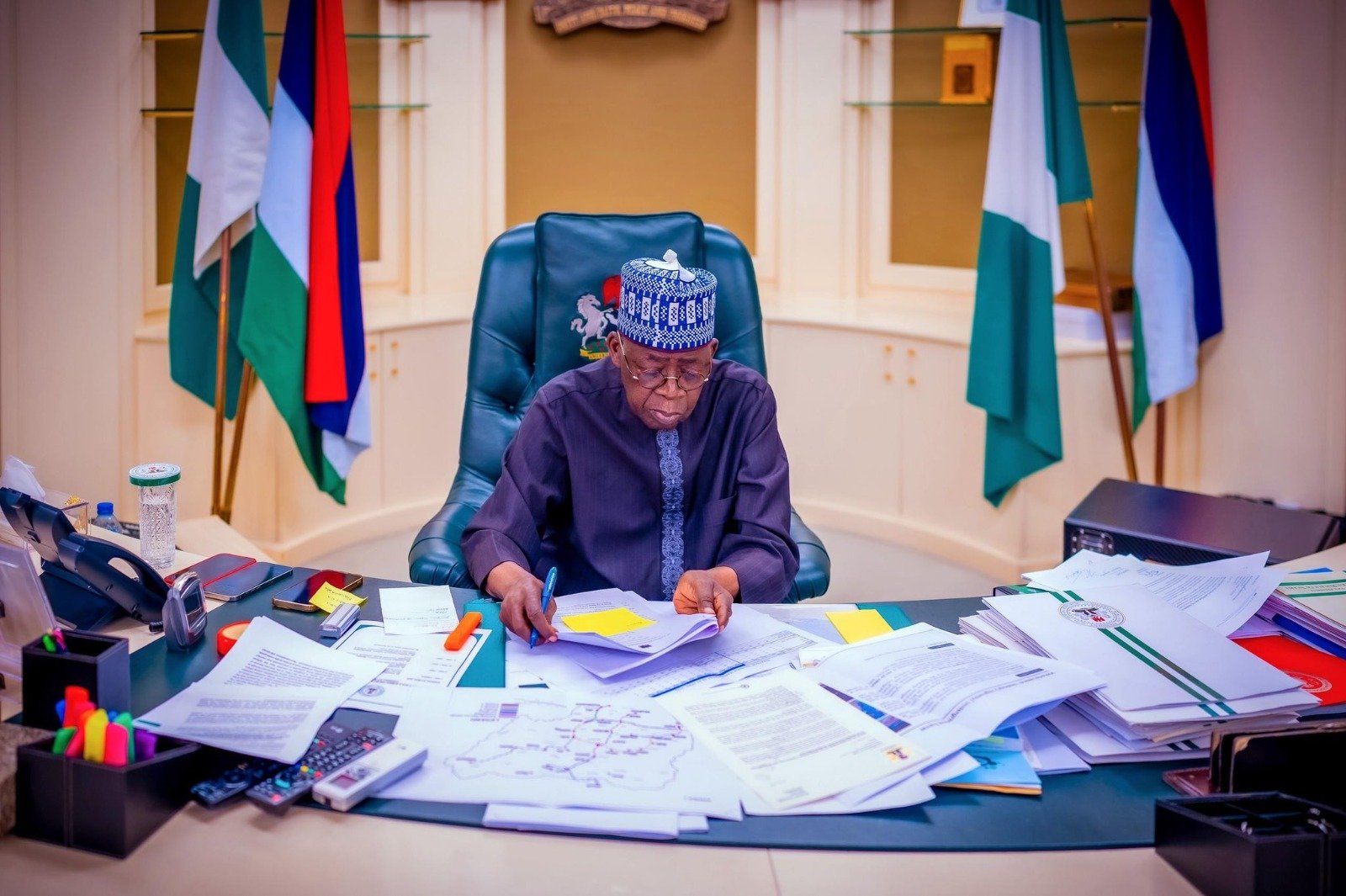
On November 26, 2025, President Bola Tinubu declared a nationwide security emergency and directed the Nigeria Police and Armed Forces to recruit more personnel to confront the escalating insecurity.
The planned recruitments follow a surge in violence across the country, with the expectation that increased manpower will help strengthen security operations.
Plateau State Governor, Caleb Mutfwang, welcomed the Federal Government’s decision to recruit massively, stating that the country was in dire need of more boots on the ground.
He said the intervention came at a time when security concerns were mounting across the country.
He stated this during his visit to the Minister of Defence, Gen. Christopher Musa (retd.) in Abuja to discuss ways to address the lingering insecurity in Plateau State.
Mutfwang expressed delight over Musa’s appointment, describing it as a strategic and timely decision in confronting the country’s intricate and evolving security challenges.
He assured the minister of his total and unwavering support in the collective effort to defeat insecurity in Plateau State and across Nigeria.
This was disclosed by Mutfwang’s Director of Press and Public Affairs, Gyang Bere, in a statement on Thursday.
The governor noted that the minister’s vast experience and proven professionalism would significantly strengthen ongoing national security interventions.
Reiterating his long-standing position, he once again declared his support for the establishment of state police.
Mutfwang noted, “The decision is timely, and I believe that overtaxed security personnel will be having a sigh of relief very soon. One thing that is very important is that states have serious areas that are really threatened and require attention. So, we just need to expand and give more impetus.
‘’For me, if there is a window to get more security personnel, then the Plateau State Government is quite ready to key in. If we have the right manpower, equipment and motivation as some of the basics, the security situation in the country will improve.”
Mutfwang added that Nigeria needed to recruit enough manpower to achieve not only the UN ratio of one police officer to 500 citizens, but also to ensure that every village with over 100 people had at least one police officer—even if that meant the Nigeria Police Force would need more than one million personnel.
“Where we are going is that even if we have 100 people in a village, let at least one policeman be posted there. But to achieve that, we need one million police personnel or more. But at least let us begin with what we have and see what we can do. Once we do that, we can move forward.”
On the state police framework, he noted, “This will require careful planning with workable legislative structures put in place to avoid misuse, but I believe that with a clear operational model, we can make it work perfectly.”
Responding to the recruitment plan, Brig. Gen. Peter Aro (retd.) said the injection of over 94,000 personnel was a welcome recognition of the scale of the country’s security crisis, but warned that numbers alone were insufficient.
Aro said, “The Federal Government’s plan to inject over 94,000 new personnel into the security architecture is a welcome signal. This shows that the country finally recognises the scale of our internal security crisis. But numbers alone do not guarantee security; what matters is who we recruit, how we train them, and the doctrine that guides their deployment.
“For the police, recruiting 50,000, on paper, sounds impressive. In reality, Nigeria is under-policed by almost 120,000 officers when compared to the UN benchmark. So 50,000 is not an excess: if anything, it is simply a first down-payment on what we truly need. But the key is thorough vetting. If we merely pour quantity into a structure already battling corruption, poor discipline and weak community relations, we will only multiply the old problems. What Nigeria needs is fewer bad officers and more good ones, not raw numbers.’’
“For the paramilitary, 30,000 recruits. This can strengthen border protection, immigration control, civil defence and corrections. But again, the logic must be clear: these agencies should not become ‘parking lots’ for political favours. Their usefulness depends entirely on professional training, proper equipment and strict role clarity. Paramilitary forces only add value when they reduce pressure on the Police and Armed Forces, not when they duplicate functions.
“For the Army, this is where the numbers fall short. For a country of Nigeria’s size, population and multi-theatre conflicts, the Army is dangerously understaffed. A modest intake of 14,000 barely covers attrition: retirements, casualties, medical discharges and resignations. If we are sincere about restoring national power and deterrence capability, the Army should be growing by 30,000–40,000 annually for the next 5 years. Nigeria cannot project strength with a force that is smaller than that of countries with half our population.
“The 94,000-personnel boost is a good start, but it only becomes meaningful if recruitment is clean, training is modern, and the Armed Forces—especially the Army—receive the scale, structure and tools worthy of a nation of 220 million people. We must, however, recruit, but vet rigorously; train for the threats we actually face; modernise equipment and doctrine; and expand the Army more aggressively: it is the backbone of Nigeria’s hard power; without it, every other security agency fights with limitations.”
Brig. Gen. Bashir Adewinbi (retd.) described the increase in manpower as necessary given Nigeria’s population and ungoverned spaces, but stressed the need for rigorous recruitment to ensure committed personnel are employed rather than political appointees.
“The increase in manpower is a welcome development given the size of the population and the number of ungoverned spaces. I think it is a decision taken to address the shortage of security personnel.
‘’But most importantly, they must ensure they employ the right people—those who are committed, not politically selected. They should look for individuals who are genuinely dedicated and whose aim is to serve the nation. The recruitment must be very thorough. If we get it right at this stage, everything else will follow.”
Commenting on the development, the Chairman of the Committee of Chairmen of the Nigerian Bar Association, Benin Zone, Adebanjo Ebhoade, said politicians must not be allowed to use the increase in manpower to settle political IOUs.
He noted that only those who deserved the job through merit should be recruited.
Ebhoade added, “The recruitment process should be carried out by an independent committee drawn from retired men of the armed forces and other relevant agencies. There should not be political influence. Let the best candidates be recruited. We need to have the best hands recruited so that we can have a sufficient workforce to deal with the issues affecting this country.”
A member of the Oyo State Community Policing Advisory Committee, Segun Ebenezer, urged the Federal Government to ensure the massive recruitment did not replicate past practices in which some security agencies were flooded with unvetted personnel.
Ebenezer said, “It is a great initiative and will help the supply side of personnel deployment in combating insecurity. However, recruitment needs to be on merit, and the quality of personnel taken in should be thoroughly gauged.
“When recruitment is massive, the temptation for nepotism and political compensation is high. The process must be transparent and fair. After recruitment, what becomes important is training. It should not only be a normal onboarding programme, but a real and thorough training exercise that equips them mentally, physically and psychologically.”
State police are now a national necessity
The Attorney-General and Commissioner for Justice in Ondo State, Mr Kayode Ajulo (SAN), declared that the country needs state police to effectively tackle the security challenges facing it.
Ajulo, who countered critics of state police creation, said the current central policing system was no longer effective in addressing criminal activities across the states of the federation.
In a statement on Thursday, Ajulo noted that Nigeria’s security challenges differed across regions — herder–farmer conflicts in the North, cultism in the South, kidnapping in the Middle Belt and oil theft in the Niger Delta, saying “a centralised police force could not effectively tailor solutions to all, but the state police can.”
The attorney-general said, “President Tinubu’s ‘innocuous insertion’ inviting National Assembly review of state police laws is no artifice, it is an overdue gauntlet thrown to lawmakers to codify Amotekun’s virtues nationwide.
“It is pragmatic. It is constitutional, and it is a call to respond to a nation in distress.”
Okpebholo charges the military with Edo security
Edo State Governor, Monday Okpebholo, urged the new Commander of the 4 Brigade, Nigerian Army, General Ahmed Balogun, to help free Edo from insecurity.
The governor, who stated this in Benin while receiving Balogun on Thursday, assured the Nigerian Army of the state government’s cooperation and support in the fight against insecurity and other crimes.
Okpebholo, in a statement by his Chief Press Secretary, Patrick Ebojele, reaffirmed his administration’s strong commitment to securing the lives and property of citizens.
The governor said, “Let me welcome you to Edo. In truth, we had a very good relationship with the outgoing commander, and I believe we will continue from where he stopped.
“The security and protection of the people and properties of Edo State are very important to us. I want you to know that we are going to work with you wholeheartedly to ensure Edo remains secure.
“In the area of drones, we are procuring multifunctional ones with good capabilities. Very soon, we will deliver on that. I want you to help us secure a new Edo, free from insecurity,” he added.
The governor also encouraged the new commander to communicate any operational challenges requiring the state’s intervention.
He said, “You talked about school, hospital, and road. These are areas we are already working on. In the next few days, you will see improvements around the office.
“At the Ekenwa Barracks, we are taking the road project to Gele-Gele, spanning about 36km. In that vicinity, you can see the good work already ongoing,”
Balogun said he considered it necessary to visit the governor shortly after assuming command.
“I took over 4 Brigade barely a week ago, and I deemed it fit to pay this courtesy visit to inform His Excellency of the change in command.
“Permit me to sincerely appreciate you for the work you have been doing for the brigade. I see the passion and drive His Excellency has for security, it is top-notch, and I must commend you.”
He pledged to consolidate the existing cooperation between the military and the state government.
“My passion is to work towards making Edo State safer, ensuring citizens sleep with both eyes closed and go about their businesses without fear,” he said.
The commander also highlighted areas needing prompt attention, including the completion of the Ekenwa Barracks Road, the stalled renovation of the brigade school, and the need for drones to enhance technology-driven operations.
Lawyers ask Makinde to rebuild Oyo security
The Chairman of Ibadan Branch of the Nigerian Bar Association, Oyo State, Ibrahim Lawal, on Thursday, called on Governor Seyi Makinde and security agencies in the state to urgently rebuild the state’s security system before matters escalate further.
He advised a press conference, held at the Afe Babalola NBA House, Ibadan, the state capital, ahead of the 2025 NBA Ibadan Law Week scheduled to run from December 12 to 17.
Lawal said, “Oyo used to be the most secure state in Nigeria. The security architecture was very tight, but I think the present administration has relaxed, and that’s the effect we are seeing. We can only urge the government to come together, look at the security architecture, and return it to where it was so we can build on it.”
The PUNCH reports that suspected gunmen recently kidnapped Wale Oriade, a chieftain of the All Progressives Congress in the state, in his office around 7:06pm in Ibadan. The attackers arrived in a blue Micra car with two occupants — a driver and an armed gunman — who forcibly seized Oriade and whisked him away.
However, the state government during its Expanded Security Council Meeting presided over by Governor Makinde on Wednesday, assured residents of maximum security of lives and property.
The meeting had service commanders, local government chairmen and traditional rulers in attendance.
Lawal said, “We know the security situation is bad. The Federal Government and the military are doing their best, but the State Government must sit down and look for the best solutions. It is getting very close to us. The kidnapping of the lady shows that nobody is safe.”
The chairman also appealed to the state Commissioner of Police to urgently overhaul the state’s security framework.