
Connect with us

News

Nationwide alert: FG warns of five-day flooding in 19 states

Published

on

The Federal Government has forecasted heavy rainfall over a five-day period that may trigger flooding across 19 states and 76 locations.

The warning, issued on Tuesday by the National Flood Early Warning Systems Centre of the Federal Ministry of Environment, called on stakeholders and residents to take urgent precautionary measures.

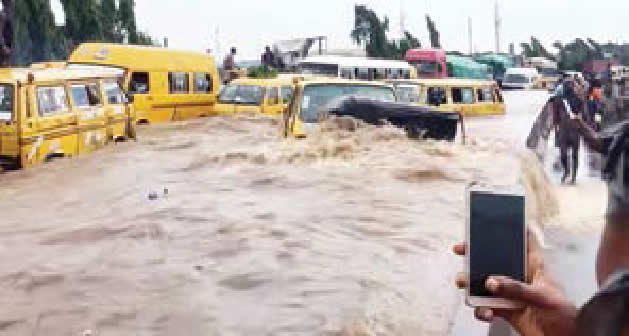
This comes as devastating floods struck Ogun and Gombe states on Tuesday, with other states — including Lagos, Plateau, Anambra, and Delta — also affected by the disaster.

According to the centre’s flood prediction obtained by our correspondent, the affected areas are expected to experience rainfall likely to cause flooding from August 5 to August 9, 2025.

The predicted states and locations are Akwa-Ibom (Edor, Eket, Ikom, Oron, Upenekang); Bauchi (Tafawa-Balewa, Azare, Jama’are, Kari, Misau, Jama’a); Ebonyi (Abakaliki, Echara, Ezilo); Cross-River (Ogoja Edor, Obubra); Nasarawa (Keana, Keffi, Wamba); Benue (Agaku, Buruku, Gboko, Igumale, Ito, Katsina-Ala, Ugba, Vande-Ikya); Kaduna (Jaji, Kafancha, Birnin-Gwari, Zaria) and Katsina (Bindawa, Bakori, Daura, Funtua).

Others are Kebbi (Bagudo, Birnin-Kebbi, Bunza, Gwandu, Jega, Kalgo, Kamba, Kangiwa, Shanga, Ribah, Sakaba, Saminaka, Yelwa, Gauri-Banza); Kano (Bebeji, Gezawa, Gwarzo, Kano, Karaye, Tundun-wada, Wudil, Kunchi); Niger (Kontagora, Rijau, Ringim); Plateau (Mangu); Taraba (Donga, Takum); Jigawa (Diginsa, Gumel, Dutse, Gwaram, Hadejia, Miga); Yobe (Machina, Potiskum); Zamfara (Anka); Sokoto (Sokoto, Wamakko); Borno (Biu); and Gombe (Bajoga).

Flooding in Nigeria has become a yearly occurrence that claims lives and destroys many properties. Last year, 31 states were reportedly affected by flooding, causing hundreds of deaths, injuring thousands of others and affecting 1.2 million.

On September 10, 2024 the Alau Dam collapsed, causing floods in Borno State, killing at least 150 people, displacing 419,000 others and causing the community to submerge 70 per cent.

The country has experienced a series of flooding events that caused property damage, fatalities, injuries and displacement this year. The deadliest flood so far this year was in May that reportedly killed at least 200 people with thousands displaced in Mokwa, Niger State.

The floods, triggered by intense rainfall and exacerbated by a dam collapse, caused widespread destruction and severely impacted the community’s access to essential services.

While Mokwa was the most severely affected area, other parts of Nigeria also experienced flooding in 2025. The flooding affected multiple states, including Rivers State – where torrential rains caused floods and landslides that buried homes and swept people away in the city of Okrika, killing at least 25 people – and put millions of people at risk.

In April, at least 13 people were killed in Kwara State and Mokwa, including three people on a canoe that capsized on a flooded river, and rice fields were destroyed after flooding triggered by the routine water release from the Jebba Hydroelectric Power Station dam affected 30 communities.

Recently, the National Economic Council approved the release of intervention funds to support nationwide flood mitigation and response efforts.

NEC approved the disbursements of N3bn each to the 36 states and the Federal Capital Territory; N1.5bn to the Federal Ministry of Budget and National Planning; N1.5bn to the Federal Ministry of Environment; N1.5bn to the Federal Ministry of Water Resources and Sanitation; and N10bn to the National Emergency Management Agency.

In a dashboard released last Friday by NEMA, it showed that no fewer than 165 persons have died, 82 missing and 119,791 persons have been affected by this year’s flooding.

The agency also stated that 138 persons sustained various degrees of injuries, 43,936 displaced, 8,594 houses affected and 8,278 farmlands destroyed across 43 Local Government Areas in 19 States.

According to the agency, children and women were mostly affected.

191 dead – NEMA

Meanwhile, a new report from the National Emergency Management Agency has revealed that in 2025, no fewer than 191 lives have been lost to the floods that have ravaged parts of the country, while 94 people remain missing.

The report obtained by our correspondent on Tuesday showed that Niger State recorded the highest number of fatalities, with 163 deaths, followed by Adamawa State, where 26 people lost their lives. One death each was reported in Borno and Gombe states.

The data further indicated that, so far this year, the floods have affected 134,435 people across 20 states and 47 local government areas.

The affected states include Abia, the Federal Capital Territory (Abuja), Adamawa, Akwa Ibom, Anambra, Bayelsa, Borno, Delta, Edo, Gombe, Imo, Jigawa, and Kaduna. Others are Kano, Kogi, Kwara, Niger, Ondo, Rivers, and Sokoto.

See also  Sylva, five others arraigned, officers’ wives seek justice over alleged coup plot

Additionally, 48,056 people have been displaced, while 239 injuries have been reported. The floods have also damaged 9,499 houses and affected 9,450 farmlands.

NEMA’s dashboard also revealed that among those affected are 27,121 men, 41,539 women, 60,071 children, 5,704 elderly persons, and 1,874 persons with disabilities.

In 2024, the floods affected 5,264,097 individuals, displacing 1,243,638 people across 35 states and 401 local government areas. The disaster resulted in 1,237 deaths and left 16,469 individuals injured.

Also, 116,172 houses were destroyed, and 1,439,296 hectares of farmlands were affected, further worsening the economic and humanitarian impact of the flooding across the country.

Ogun, Gombe ravaged

Parts of Ogun and Gombe states were ravaged by floods on Tuesday following heavy rainfall that began Monday night and lasted into the early hours of Tuesday.

At Redemption City, along the Lagos-Ibadan Expressway in Mowe, Ogun State, The PUNCH observed that residents, schoolchildren, and visiting church members attending the Redeemed Christian Church of God annual convention were trapped for hours as floodwaters submerged parts of the area.

One of the worst-hit areas was Estate 15, where some vehicles were completely submerged. Stranded residents had to abandon their cars and resorted to using canoes as a temporary means of transportation.

In response, RCCG officials deployed Type D school buses to help ferry people in and out of the premises.

“I was trapped inside the RCCG camp this (Tuesday) morning and couldn’t leave for work until a special luxurious bus provided by the church came to pick me and others,” a resident, Tunde, told The PUNCH.

It was same scenario at the OPIC area of the state, where the floods disrupted activities and destroyed properties.

In Gombe, the sExecutive Secretary, State Emergency Management Agency, Haruna Abdullahi, says no fewer than four persons died from flood, windstorms and rainfall.

He disclosed that about 278 households comprising individuals and farmlands were affected.

Abdullahi said, “The last incident was in Kwami, Dukku, Billiri, Gombe, Yalmatu-Deba, Akko Local Government Areas.

“We received report of four dead persons, two from Gombe Local Government Area, one from Dukku and another in Kwami LG. About 278 households were affected mostly windstorm and flooding of farmlands, and some houses. Mostly the deaths were caused by cracked walls.”

Other states

A night of relentless rainfall plunged parts of Lagos into crisis on Monday, as flash floods swept through residential and commercial areas, stranding thousands and crippling economic activity in Nigeria’s largest city.

The rain, which began late Sunday and intensified through the early hours of Monday, overwhelmed drainage systems and turned streets into rivers across both Lagos Mainland and Island.

By dawn, neighbourhoods such as Ijede in Ikorodu, Lekki, Surulere, Agege, Ajegunle, Alimosho, and Eti-Osa were inundated. Viral videos from Ijede showed families waist-deep in floodwater, wading through what were once roads. In one emotionally charged clip, a barefoot woman in Oko Ope cried out in Yoruba for government intervention, describing how her home had been overrun, “The water is everywhere. We can’t even go inside. We’ve lost everything.”

Traders at major markets were forced to abandon shops as floodwaters invaded stalls, damaging goods. Commuters were left stranded for hours, with major roads waterlogged and transport systems disrupted across the metropolis.

On social media, the hashtags #LagosFlood and #IjedeTragedy trended as residents posted photos of submerged vehicles, flooded living rooms, and schools under water, renewing calls for a long-term solution to Lagos’s perennial flooding crisis.

Despite repeated promises from state officials over the years, the combination of poor urban planning, blocked drainage systems, and unregulated construction in water-prone zones continues to leave Lagos vulnerable to seasonal flooding.

In Delta State, residents of Sapele and Oko communities began experiencing heavy flooding as of Monday. Some residents have already started relocating after parts of their communities were submerged.

Victims of the flood lamented the damage to property and disruption of their daily lives, appealing for immediate intervention from the government.

The Delta State Commissioner for Environment, Mr. Jamani Ejiro, visited Sapele for an on-the-spot assessment and expressed sympathy for the affected residents. He assured them of the state government’s readiness to respond promptly to alleviate their suffering.

See also  Christmas: Travellers decry highway extortion by fake council officials

In Oko community, located in Oshimili South LGA, residents described the annual flooding as a recurring menace and called for a lasting solution.

“We are tired of this yearly trauma. We need drainage systems, not just empty promises,” one resident said.

In a related development, the Delta State Government has established six fully-equipped IDP camps in anticipation of widespread flooding, Ejiro announced on Tuesday.

Speaking to journalists, Ejiro said the proactive measure was in response to the Nigerian Meteorological Agency’s prediction of heavy rainfall and possible flooding in several parts of the state.

According to him, the IDP camps — located in Kwale, Ozoro, Patani, Bomadi, Uto-Jeremi, and Asaba — have been strategically sited in high-risk flood-prone areas to provide timely shelter and support for affected residents.

“These camps are fully equipped with modern facilities, including sick bays, security units, kitchens, and other essential amenities to ensure the safety and comfort of displaced persons,” the commissioner stated.

Ejiro further disclosed that the state government has constituted a Flood Disaster Management Committee led by the Secretary to the State Government, Dr. Kingsley Emu. The committee, he said, is tasked with working closely with community leaders to sensitise residents in flood-prone communities on the need to relocate when necessary.

“Our goal is to ensure that lives are not lost due to preventable causes. When the need arises, we will evacuate affected residents to these designated camps,” Ejiro assured.

The announcement comes as several communities across Nigeria, including in Delta State, continue to suffer the devastating impact of seasonal flooding.

In Diggi town, Bunza Local Government Area of Kebbi State, a three-hour downpour displaced dozens of residents and left several homes underwater.

Eyewitnesses say the flood surged in from nearby unregulated waterways. “It came like a monster,” a resident said. “People lost everything within minutes.”

The Kebbi State Government directed its emergency agency and local authorities to provide immediate relief. Items including food, bedding, and medical supplies are already being mobilised, according to Ahmed Idris, Chief Press Secretary to the Governor.

Community leaders have urged citizens to keep drainages and waterways clear and are calling on NGOs, wealthy individuals, and corporate bodies to assist in recovery efforts.

In Bauchi State, the Bagel community in Dass Local Government Area suffered severe flooding, leaving many residents homeless. At least 13 houses were destroyed by the flood.

The Special Assistant on Media to the Chairman of Dass LGA, Yusuf Makama, confirmed the incident. He noted that Chairman Mohammad Jibo had visited the community, assessed the extent of the damage, and promised to provide relief materials.

“He appealed to the state and federal governments, as well as NGOs, to come to the aid of the victims,” Makama said.

In Shimankar District, Shendam LGA of Plateau State, a violent rainstorm on Sunday left a trail of destruction, affecting at least 50 homes, two primary schools, and a worship centre in Menkaat community.

Affected residents who spoke to The PUNCH in Jos on Tuesday described the extent of the destruction as “overwhelming.”

“We’ve been hit seriously. Our homes, schools, and places of worship were all destroyed,” said Lawrence Longwalk, a local resident. Another victim, Mrs. Akwe Hannatu, added, “We lost everything. Our home was destroyed, and we have nowhere to go.”

Though the State Emergency Management Agency has reportedly been alerted and plans to visit the area, residents say they are yet to receive tangible relief.

In Imo State, the National Emergency Management Agency confirmed that 27 villages in Oguta Local Government Area had been submerged by floodwaters. Seven villages in Ohaji/Egbema LGA, including Olokwu, were also affected, along with flash floods reported in parts of Owerri West LGA, such as Oforola, Avu, New Owerri, and the Akachi area.

A farmer, Amanze Okoro, told The PUNCH that he and his family had to relocate temporarily to their in-laws’ home in Owerri. “We had no choice. Our farm and house were completely taken over by water,” he said.

In Rivers State, continuous rainfall has led to flash flooding in parts of Port Harcourt and Obio/Akpor LGAs. Areas affected include Amaechi Drive in GRA, Odili Road, and the Obi Wali axis of Rumuigbo.

Environmental rights activist and Executive Director of Youths and Environmental Advocacy Centre, Dr. Fyneface Dumnamene, urged the government to declare a state of emergency in the flood-prone areas.

See also  Rivers Assembly attacks Fubara over infrastructure collapse, N600bn savings

“Flash floods are now a regular occurrence. What we need is emergency drainage clearing, community sensitisation, and immediate government action. We can’t stop the rain, but we can prevent the suffering,” Dumnamene told The PUNCH in a phone interview.

With more rain predicted in the coming weeks by the Nigerian Meteorological Agency, residents across the country are bracing for further hardship. Environmental experts warn that without proactive infrastructure investment, emergency preparedness, and community education, Nigeria will continue to suffer the devastating consequences of seasonal flooding.

States prepare

In Katsina State, following NiMet’s prediction of possible floods in Daura, Jibia, Funtua, and Bakori LGAs, the state government has designated primary and secondary schools as temporary shelters.

Binta Hussaini Dangane, Executive Secretary of the State Emergency Management Agency, said local emergency committees have been trained across the 34 LGAs to respond promptly to any flood emergencies.

“The government has procured food and non-food items, while awareness campaigns are ongoing,” she said, urging residents to avoid dumping refuse in waterways and to clear blocked drainages.

Despite heavy and sustained rainfall in Bayelsa State, flood control efforts — especially in Yenagoa — have so far prevented severe flooding.

Officials credit ongoing desilting of natural drainage channels and reconstruction projects like the culvert at Osiri Road in Ekeki. Head of the Bayelsa Flood and Erosion Control Directorate, Chief Walson Omusu, said the state remains “ready and proactive.”

The Sokoto State Emergency Management Agency and the National Emergency Management Agency have commenced a joint flood damage assessment across multiple communities in the state following days of torrential rainfall that caused widespread destruction.

Assessment teams visited the most affected local government areas — Yabo, Shagari, and Tureta — where hundreds of residents have been displaced, homes washed away, and farmlands submerged.

In Yabo LG, floodwaters ravaged entire communities such as Shiyar Hegin-Rafi, Shiyar Sarkin Fawa, Shiyar Ubandoma, Shiyar Ubandawaki (Garkar Audu), and Kofar-Bai. Six rooms belonging to one Muhammadu Dan Nanuwa were completely destroyed, while 89-year-old Malam Bango Altine lost five rooms. The palace of the Sarkin Kabin Yabo also suffered significant damage.

In Shagari LG, more than 10 communities, including Lambara, Kambama, Jaredi, Kajiji, and Lokoko, were affected. Vast farmland in Illela-Chofal was submerged, raising fears of food insecurity. Local officials, led by disaster desk officer Ibrahim Abubakar, reported extensive destruction of crops and homes.

In Tureta LG, floods on July 23 and 25 displaced over 250 people across Inwala, Shiyar DanDile, and Lambar-Tureta. Two women were injured in a building collapse, while the home of a Federal Road Safety Corps official, Salisu Muhammad, was among those damaged. Tureta LGA Chairman, Hon. Aliyu Abubakar, blamed poor drainage systems for the disaster.

SEMA and NEMA say the data collected will guide relief distribution and long-term flood mitigation efforts. Temporary shelters have already been set up for displaced families, and officials pledged continued collaboration to strengthen infrastructure and drainage.

Despite flood warnings by NiMet and NIHSA, Kano State has not recorded any significant flooding as of early August. Authorities have, however, cautioned residents in flood-prone communities downstream of the Tiga, Challawa, and Bagauda dams to stay alert.

Similarly, the Nasarawa State Emergency Management Agency (NASEMA) confirmed that no part of the state has yet been flooded. Officials said they had launched sensitisation campaigns and prepared temporary shelters in Doma, Lafia, Toto, Awe, and Obi LGAs.

In Kaduna, there have been no reports of flooding despite consistent rainfall. The state emergency agency remains on alert as August and September typically see peak flooding. Authorities are monitoring dam levels and weather forecasts to ensure swift response.

The Benue State Emergency Management Agency also confirmed that no flooding has been reported. Officials are, however, prepared to respond if necessary.

While Edo State has yet to record major flooding this year, communities near the River Niger — including Udaba Odemokpa — remain on the edge as heavy rains are expected in September.

In Benin City, areas like Tomline along Lagos Road frequently flood after rainfall. Traders say blocked drainages continue to disrupt businesses.

FOLLOW US ON:

FACEBOOK

TWITTER

PINTEREST

TIKTOK

YOUTUBE

LINKEDIN

TUMBLR

INSTAGRAM

Continue Reading
Click to comment

Leave a Reply

Your email address will not be published. Required fields are marked *

News

Senate names new minority whip as two more senators defect to APC

Published

on

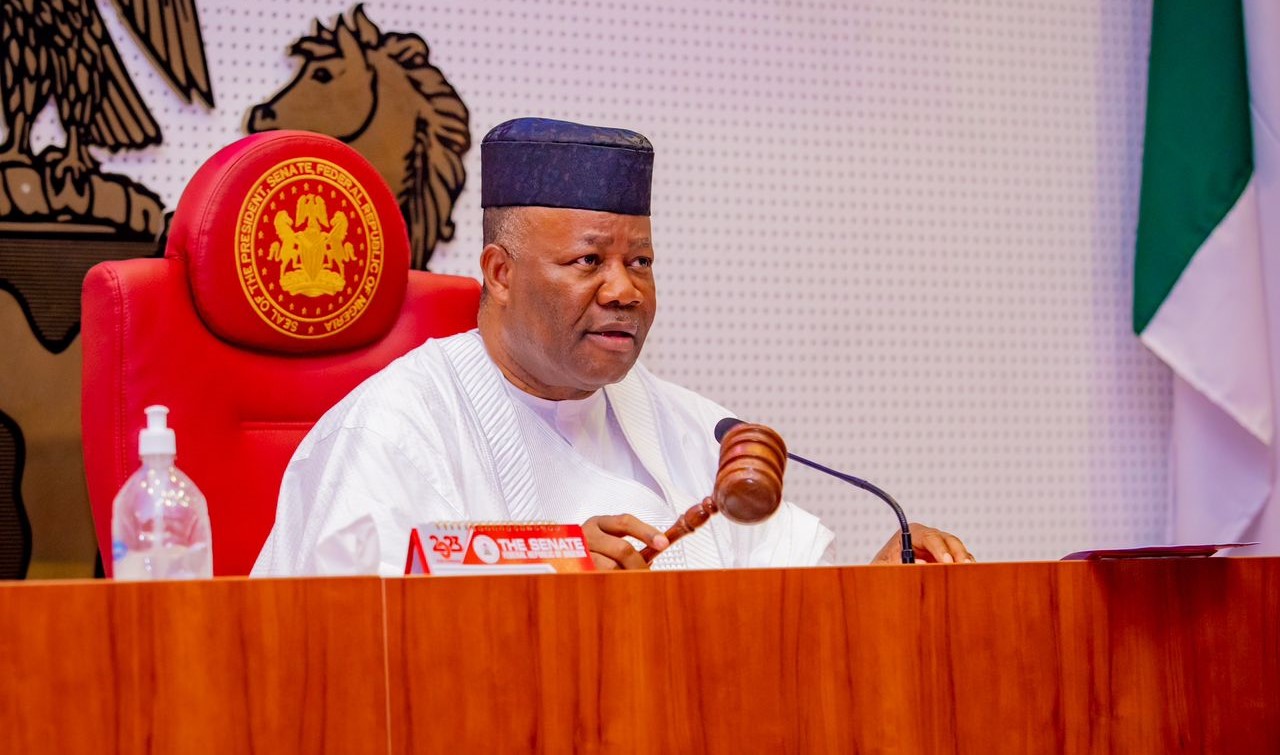
The Senate on Wednesday appointed Senator Tony Nwoye as the new Minority Whip, following a fresh wave of defections that has further boosted the numerical strength of the All Progressives Congress in the upper chamber.

Nwoye, who represents Anambra North Senatorial District, was unanimously selected by the Senate minority caucus to fill the vacancy created by the exit of his predecessor.

His emergence comes on the heels of the defection of former Minority Whip, Senator Osita Ngwu, from the Peoples Democratic Party to the APC on Wednesday, one of several high-profile crossovers that altered the balance within the opposition ranks.

In a letter read on the floor by Senate President Godswill Akpabio, Ngwu said his decision was driven by the need to align with Enugu State Governor, Peter Mbah and President Bola Tinubu.

He also described the APC as the most stable political platform in the country.

Nwoye was elected into the Senate in 2023 on the platform of the Labour Party before defecting to the African Democratic Congress in late 2025, positioning him within the opposition bloc prior to his new leadership role.

The reshuffle in minority leadership came amid a broader pattern of defections that has steadily eroded the strength of opposition parties in the Senate since the inauguration of the 10th National Assembly.

In a related development, Senator Anthony Siyako Yaro, representing Gombe South, also announced his defection from the PDP to the APC, citing internal crises within the opposition party.

Similarly, the Chairman of the Senate Committee on Public Accounts, Senator Aliyu Wadada, formally announced his defection from the Social Democratic Party to the APC.

See also  PHOTOS - Tinubu begins 10-day vacation, departs Abuja for Europe

Wadada, who has also been endorsed as the APC consensus governorship candidate for Nasarawa State ahead of the 2027 elections, said he had previously aligned with the ruling party but completed the formal procedures of his defection on Wednesday.

Reacting to the developments, Senator Adams Oshiomhole commended the lawmakers, describing their defections as voluntary and consistent with constitutional provisions.

He said the increasing movement of legislators into the APC reflects growing confidence in the party’s leadership and the administration of President Tinubu.

With the latest defections, the APC’s strength in the Senate has risen to 91 lawmakers—further consolidating its dominance and tightening its grip on legislative proceedings as political realignments gather pace ahead of the 2027 general elections.

Continue Reading

News

Lagos clarifies sanitation modalities, warns defaulters ahead of April 25

Published

on

The Lagos State Government has provided further details on the reintroduced monthly environmental sanitation exercise, set to resume on Saturday, April 25, 2026, with movement restrictions and enforcement measures in place.

In a statement on Wednesday, the Commissioner for Environment and Water Resources, Tokunbo Wahab, said, “The exercise will hold every last Saturday of the month between the hours of 6:30 am and 8:30 am.

During this period, there will be controlled movement across the state to allow residents to carry out thorough cleaning of their homes, surroundings and drainage frontages.”

He stated that enforcement teams comprising officials of the ministry, Lagos State Environmental Protection Agency, Kick Against Indiscipline, Lagos Waste Management Authority, and local government sanitation inspectors would “conduct physical inspections during and after the sanitation window to ensure compliance,” warning that “defaulters will be sanctioned in accordance with the Lagos State Environmental Management and Protection Law of 2017.”

Wahab also stated, “LAWMA intervention trucks will go around to cart away bagged wastes generated during the exercise,” noting that “there will be rewards for the cleanest Local Government Area, Local Council Development Area, and the cleanest street as part of efforts to encourage healthy competition and community participation.”

He urged residents to cooperate with the initiative, saying, “We urge all residents to take ownership of this exercise and join hands with the government in building a cleaner, safer and more sustainable Lagos.”

The clarification follows the symbolic flag-off of the exercise along the Mushin–Agege Motor Road corridor on March 14, ahead of its full implementation later this month.

See also  Kwankwaso, others may face US visa ban over religious freedom violations

The state government had earlier announced in March that the sanitation exercise would resume nearly a decade after it was suspended in November 2016 following a legal pronouncement restricting movement during the programme.

While some residents have welcomed the move, saying it could curb indiscriminate waste disposal and reduce flooding, others have raised concerns about enforcement, warning that movement restrictions could be abused and calling for sustained public education on proper waste management.

punch.ng

FOLLOW US ON:

FACEBOOK

TWITTER

PINTEREST

TIKTOK

YOUTUBE

LINKEDIN

INSTAGRAM

Continue Reading

News

Court remands suspected coup plotters in DSS custody

Published

on

The Federal High Court in Abuja on Wednesday ordered the remand of six defendants in the custody of the Department of State Services after they were arraigned on a 13-count charge bordering on alleged terrorism.

At the sitting, which commenced at about 1:46pm, the Attorney-General of the Federation, Lateef Fagbemi (SAN), informed the court that the charge was ready and sought leave to have it read to the defendants.

Proceedings were briefly stalled after the third defendant informed the court that his counsel was indisposed, while counsel to the sixth defendant said his client understood only Arabic and Hausa, prompting the court to stand down the matter to secure an interpreter.

When the court reconvened at about 2:18 pm, all six defendants took their pleas and denied the allegations, pleading not guilty to the 13 counts.

Following the arraignment, the prosecution applied for their remand in DSS custody and urged the court to grant an accelerated hearing of the case, a request that was not opposed by most defence counsel, although the first defendant’s lawyer indicated an intention to file a bail application.

Ruling, the trial judge ordered an accelerated hearing, directed that the defendants be remanded in DSS custody with access to their lawyers, and adjourned the matter till April 27, 2026, for commencement of trial.

See also  Rivers Assembly attacks Fubara over infrastructure collapse, N600bn savings
Continue Reading

Trending