The Association of Local Governments of Nigeria and the National Union of Local Government Employees have thrown their weight behind President Bola Tinubu’s plan to enforce direct deductions of council funds from the Federation Account Allocation Committee, even as state governments continue to retain control over allocations to local governments.
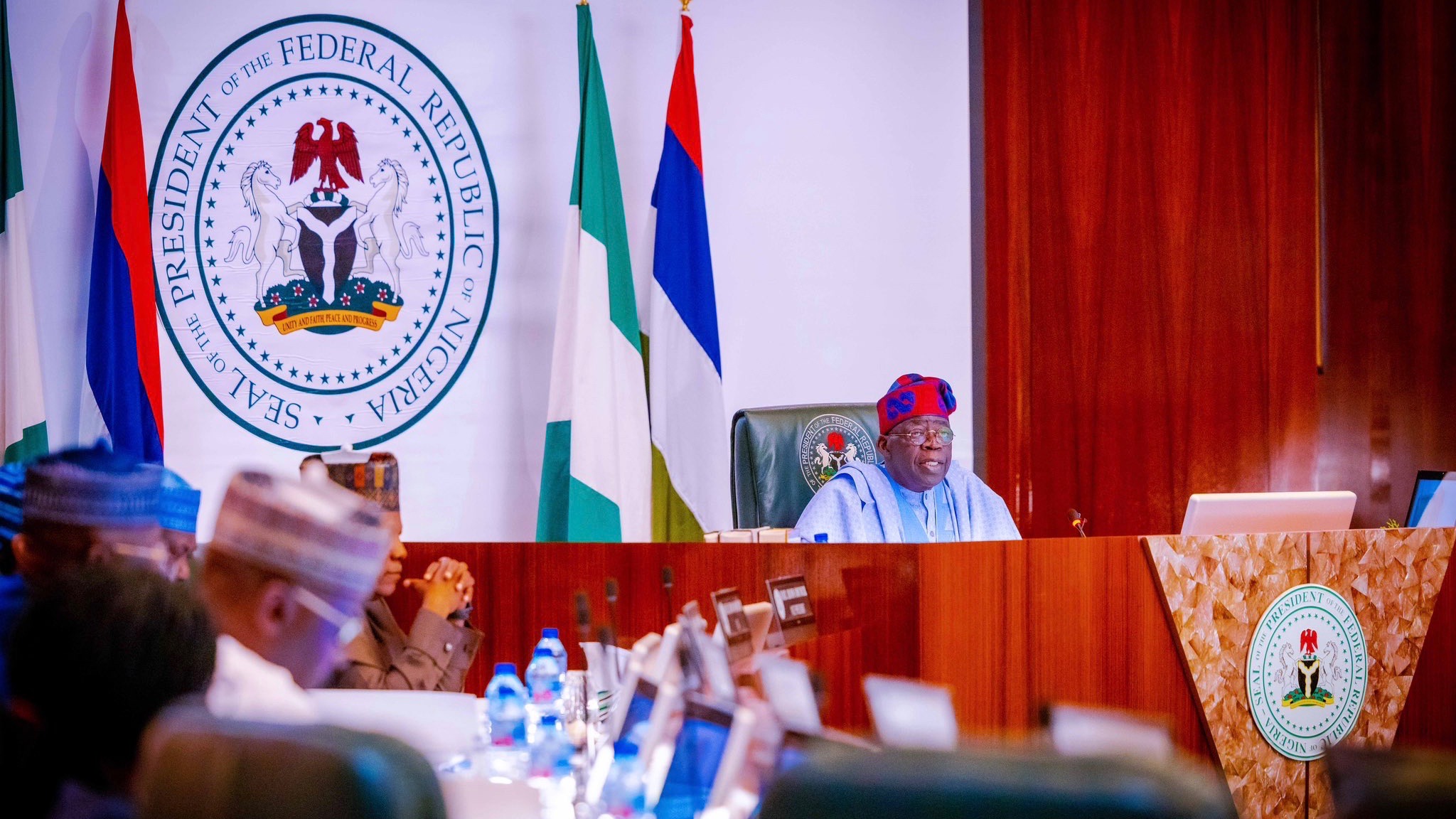
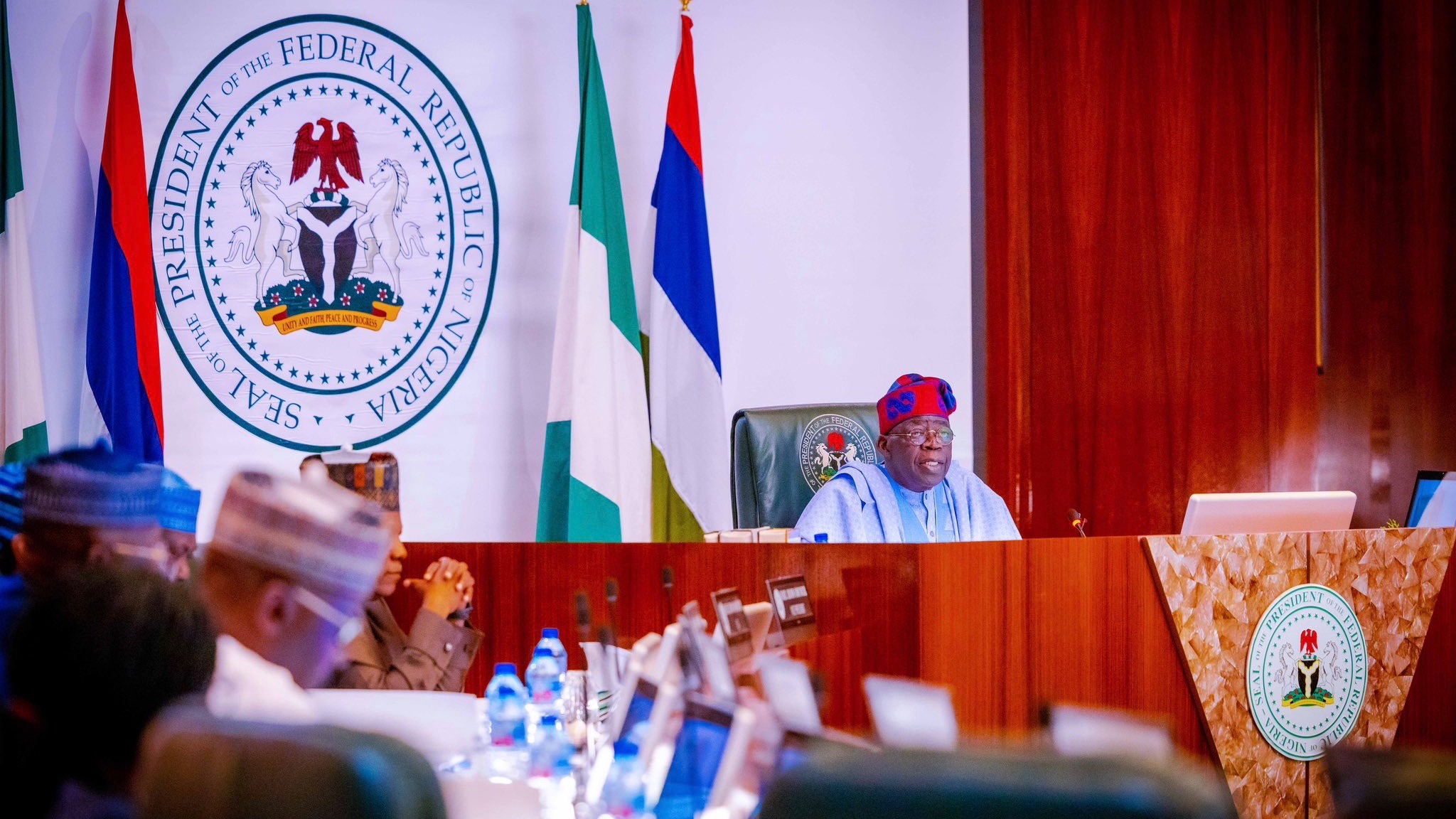
During the 15th National Executive Committee meeting of the All Progressives Congress at the State House Conference Centre, Abuja, Tinubu urged state governors to comply with the Supreme Court ruling granting financial autonomy to local governments.
The President warned that failure by governors to honour the verdict may compel him to issue an Executive Order to ensure direct allocations from the Federation Account to local councils.
Tinubu’s remarks followed the July 11, 2024, judgment by the Supreme Court, which upheld the Federal Government’s suit seeking to enforce financial independence for local governments.
In a unanimous decision, a seven-member panel of the apex court declared that it is unconstitutional for state governments to retain or manage funds meant for local councils.
The judgment held that the use of a caretaker committee amounts to the state government taking control of the local government and is in violation of the 1999 Constitution.
However, 18 months after the judgment, findings by The PUNCH show that the process remains largely unimplemented.
Local government allocations have continued to pass through state governments amid delays and disputes between the Central Bank, state governments, local government authorities, and other relevant agencies.
The PUNCH learnt that state governments received control over at least N7.43tn meant for local government councils between July 2024 and December 2025, despite the landmark Supreme Court ruling mandating direct financial autonomy for councils across the federation.
An analysis of Federation Account Allocation Committee disbursements, based on official press statements issued by the Office of the Accountant General of the Federation after each FAAC meeting, shows that local governments were allocated N7.43tn over the 18-month period, even as the structure for direct access to the funds remained largely unchanged.
The amount was derived from allocations to the 774 local councils from July to December 2024 and the full 12 months of 2025.
In the second half of 2024 alone, councils received N2.08tn, rising sharply to N5.35tn in 2025.
FAAC data show that in July 2024, local governments received N337.02bn as revenue earned in June.
This rose to N343.70bn in August and moderated to N306.53bn in September. Allocations rebounded in the final quarter, climbing from N329.86bn in October to N355.62bn in November, before peaking at N402.55bn in December 2024.
Despite the rising inflows, funds continued to be paid through the long-criticised State Joint Local Government Account framework, allowing governors to retain significant influence over council finances.
The trend accelerated in 2025. Local governments received N361.75bn in January, rising steadily to N434.57bn in February and N410.56bn in March.
By mid-year, monthly allocations crossed N440bn, reaching N444.85bn in July and N485.04bn in August.
The highest monthly allocation to councils during the period was recorded in October 2025, when N529.95bn was shared as revenue earned in September.
This was followed by N505.80bn in November before moderating to N445.27bn in December 2025.
In total, local governments received N5.35tn in 2025, compared with N3.77tn in 2024, representing an increase of N1.58tn or about 42 per cent year on year.
The surge mirrored broader growth in FAAC distributions. Total allocations to the three tiers of government rose from N13.91tn in 2024 to N20.28tn in 2025, while total distributable revenue, including 13 per cent derivation, climbed from N15.26tn to N21.89tn.
Federal Government allocations increased from N4.95tn in 2024 to N7.61tn in 2025, while states’ allocations rose from N5.19tn to N7.31tn over the same period.
However, the continued routing of council funds through state structures has raised concerns that the gains from higher revenues are not translating into improved grassroots governance.
ALGON, NULGE back Tinubu
In an interview with our correspondent in Abuja, the Secretary General of ALGON, Muhammed Abubakar, affirmed support for President Bola Tinubu’s move to mandate the deduction of funds meant for LGs directly from the Federation Account Allocation Committee.
Muhammed said the President had made his warning directly to the governors and anchored it on the Supreme Court judgment, which he described as the highest authority in the land.
“So basically, as you are aware, he said it in their presence, not in their absence. So, my belief is that they will actually carry that out before the president will also do the needful, like he rightly told them in the meeting,” he said.
He expressed confidence that the governors would comply with the ruling without further prompting, noting that Tinubu’s remarks were clear and left no ambiguity about the consequences of continued non-compliance.
“So I guess they will obey the Supreme Court’s order and do the needful. But basically, if that is not carried out, I think we will all be in support of the president to go ahead with whatever threat he has made,” he added.
Also commenting, NULGE Bauchi State chapter has applauded Tinubu’s proposed executive order aimed at stopping state governments from diverting local government funds.
Speaking with The Punch correspondent on Monday, the President of NULGE in the state, Muhammad Yunusa, described the move as a welcome development that would bring relief to local government workers across the country.
Yunusa said, “If the President invokes an executive order to stop governors from diverting local government funds, it is we, the local government workers, that will be honoured.”
He noted that the issue of local government financial autonomy had lingered for years despite legal interventions, including a Supreme Court judgment delivered last year.
“This matter has been on for a long time. Even after the Supreme Court passed its judgment last year, up till today it has not seen the light of the day,” he said.
According to him, full implementation of the executive order would strengthen grassroots governance and improve the welfare of local government workers.
Yunusa further insisted that the directive would enhance accountability and ensure that funds intended for councils are used strictly for grassroots development.
Punch efforts to get the reaction of the Chairman of ALGON Bauchi State chapter, Mahmood Baba-Ma’aji, proved unsuccessful, as calls and messages sent to him were not responded to as of the time of filing this report.
Also speaking, the Chairman of NULGE in Kano, Comrade Ibrahim Muhammad, has expressed cautious optimism about the state administration’s management of local government funds.
He told PUNCH that while there is currently no formal discussion with the state government regarding direct allocation of funds to local government areas, the union is satisfied with how the funds are being handled.
“The governor is not relenting in releasing funds for meaningful projects across the state,” he said. “We also commend the current NNPP-led administration for clearing billions of naira in debts owed to civil servants. That is commendable.”
Muhammad added that he is optimistic that Kano State would comply fully with the president’s directive on local government autonomy.
“The recent orders by the president will be complied with in Kano. The governor was not in town when the president restated the order. I’m sure when he returns, he will address the issue effectively,” he said, noting that any failure by governments to treat LGAs appropriately could justify the president’s intervention.
Efforts to obtain a reaction from the ALGON Chairperson in the state, Hon. Saadatu Salisu, proved unsuccessful as repeated calls to her phone went unanswered.
In a related development, the Kebbi State government has expressed willingness to ensure that local governments in the state enjoy their autonomy in accordance with the Supreme Court rulings.
A top government official in the state who spoke with our correspondent on the condition of anonymity said the state government is working on modalities to ensure the ruling is adhered to the fullest.
According to the source, “as you are aware, our governor is a comrade who was also part of the struggle for the restoration of power to the local governments.
“He is also someone who has a close relationship with Mr President, therefore we should be assured that he will implement the judgment for the benefit of the people at the grassroots.
“There is no cause for alarm over the President directives and I can assure you that it is a done deal here in Kebbi States” he added.
Meanwhile, efforts to get reactions from Sokoto State were not successful as both ALGON and government officials declined to comment on the development.
Also speaking, the Nasarawa State chapter of the NULGE has said it is currently expecting the state government to comply with Tinubu’s directive on the full implementation of the LG Autonomy which was approved by the Supreme Court.
The President of NULGE in the state, Comrade Adamu Sharhabilu, stated this while speaking with our correspondent during an interview in Lafia, the state capital, on Monday.
According to him, despite the Supreme Court’s decision on the matter, Nasarawa State had continued in its old pattern of distributing funds to the 13 Local Government Areas of the state through the state’s Ministry for Local Government and Chieftaincy Affairs.
While lamenting the situation, the NULGE President said that with directives from President Tinubu, the association expects to witness new developments on the matter in the coming days.
He added, “The Nasarawa State government has not started giving us our money yet. We do not know their direction at the moment, because President Bola Tinubu said if they do not give us the money, he will remove our share from the FAAC and send it to the LGAs, so we are waiting for his action.”
Meanwhile, the Nasarawa State government has clarified that it is not interfering with funds accruing to the 13 LGAs of the state.
The state government noted that the LGAs had been enjoying full autonomy since 2019, when Governor Abdullahi Sule took over the leadership of the state.
The Senior Special Assistant to the Governor on Public Affairs, Peter Ahemba, disclosed this while speaking with our correspondent in Lafia on Monday.
“The narrative that Local Government funds are being tampered with in Nasarawa State is not correct. I can tell you very firmly that Governor Sule has never tampered with local government funds.
“In fact, he had been the one supporting the LG Chairmen with funds to meet up with some of their responsibilities, even though they are enjoying the full autonomy.
“The Nasarawa State government is committed to continue to give our LGAs every necessary support to enable them to pay salaries to workers and embark on meaningful projects without any hitches,” he said.
However, Tinubu’s warning to state governors to release Local Government funds or face executive action has sparked mixed reactions in Jigawa State.
The State Chairman of the ALGON, Hon. Sibu Abdullah, who is also the chairman of Dutse LGA, expressed optimism that the state government will comply with the Supreme Court ruling.
“We are guaranteed that the state government have respect for the court’s decision and it’s already releasing the funds to enable local governments to function effectively,” Abdullah said.
However, efforts to reach the leadership of the NULGE in Jigawa State by the PUNCH Correspondent on Monday were unsuccessful, with a senior staff member declining to comment on the issue.
Another senior official at the Jigawa State ALGON secretariat, who spoke on condition of anonymity, hinted that the association is weighing the Supreme Court ruling and Tinubu’s warning before making a decision.
In a similar vein, Attorney-General Abdulkadir Fanini did not respond to inquiries on whether the state government plans to comply with Tinubu’s request.
However, an official who asked not to be mentioned, citing that he is not authorised to speak to the press on the issue, told our Correspondent that the state government is committed to respecting the rule of law and the constitution.
“Jigawa state government has no intention whatsoever to retain or manage funds meant for local councils,” he declared.
The Chairman of Toungo local government and the state chairman of ALGON, Mr Suleiman Toungo, has said that the federal government is playing politics with the local government autonomy Supreme Court judgement.
Toungo, who spoke with The PUNCH by phone on Monday, said Governor Ahmadu Fintiri directed all 21 council chairmen in the state to open accounts with the Central Bank of Nigeria, as requested by the federal government.
“I went to CBN three times to open account, the last time I went the management ask me to go back and that they will communicate to me, as I am talking to you now there is no communication from CBN to and any of my members in Adamawa state, “ he said.
“Fintiri has long ago implemented the local government autonomy, nobody touches our money, if you can tour the 21 local governments, you can see projects unlike before, this means we are in charge of our federal allocation, “ he stated.
Toungo said that the federal government should come clear on the issue of autonomy and stop dancing in the gallery.
“President Bola Tinubu should ask CBN why it refuses to open accounts for some of us, how can autonomy be fully operated without CBN accounts? “he asked.
He said that the issue of local government autonomy has turned into politics, pointing out that the Adamawa state governor had handed over local government funds to council chairmen before the Supreme Court’s judgment.
Also speaking, NULGE Gombe chapter chairman, Saleh Abdullahi, says there is no case diversion in the state.
In a telephone chat with our correspondent in Gombe, he said, “We are not sure of any diversion in the state, so our state may not be affected.”
Texts and calls to the ALGON chairman and the chairman of Gombe LGA, Sani Haruna, were not returned as of the time of filing this report.
Also, attempts by our correspondent to reach the Director General of the Nigeria Governors Forum, Abdullateef Shittu, for a comment on the story were unsuccessful, as his phone was unreachable at the time.
However, the NGF spokesperson, Yunusa Abdullahi, stated that the President has spoken with the Governors, who will provide an update to the public shortly.
He stated, “The President has spoken with the Governors, so they will have a meeting, and then the details will be out. The President spoke with the Governors, and I am sure they will respond appropriately.”
FOLLOW US ON: