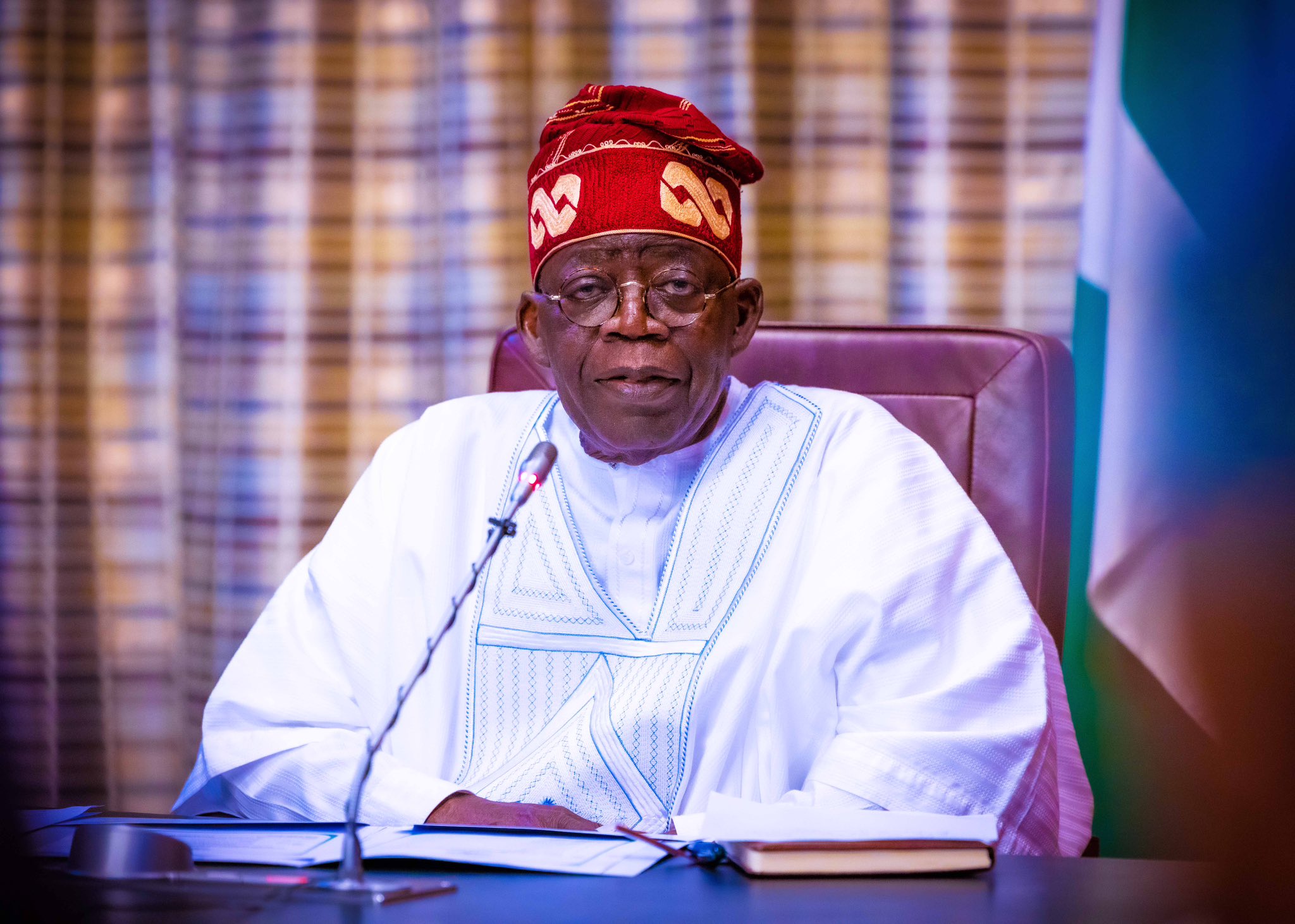
Fresh questions, concerns, and uncertainty have deepened at the oil and gas agencies affected in the wake of President Bola Tinubu’s new executive order directing immediate reallocation of oil and gas revenues to the Federation Account for onward distribution among the three tiers of government.
The PUNCH gathered on Sunday that the directive, which effectively halts the retention of certain internally generated revenues by agencies in the sector, has sparked deep concerns within the Nigerian Upstream Petroleum Regulatory Commission, the Nigerian National Petroleum Company Limited, and the board and management of the Midstream and Downstream Gas Infrastructure Fund.
The uncertainty, according to industry operators and experts, centres on the absence of a clearly defined alternative funding model for the NUPRC to meet its statutory obligations following the reallocation of oil and gas royalties to the Federation Account.
They also rejected a possible solution of conventional budgetary funding and approval through the National Assembly, insisting that such a move would undermine NUPRC’s operational independence and efficiency.
They noted that relying on annual budget approvals and capital releases from the Ministry of Finance could expose the regulator to bureaucratic delays, political pressures, and funding uncertainties that may weaken its ability to carry out core oversight, monitoring, and enforcement functions in the upstream sector.
The sources also noted that questions persist over how the government intends to sustain and improve the country’s Reserve Replacement Ratio, particularly as the financing framework for frontier exploration activities remains unclear.
They added that the recent directive has created fresh ambiguity around the roles and operational scope of the Frontier Exploration Services and the Midstream and Downstream Gas Infrastructure Fund, amidst the country’s aim to increase crude production to about three million barrels per day by 2030 and attract fresh investments estimated at over $12bn annually.
At the NUPRC, two senior officials, who spoke on condition of anonymity because they were not authorised to comment publicly, argued that the statutory funding framework provided under the Petroleum Industry Act was deliberately designed to shield the commission from such constraints and ensure timely decision-making in a highly technical and sensitive industry.
Section 12 of the PIA 2021 empowers the commission to appoint staff and determine their terms and conditions of service, including remuneration, allowances, and benefits.
The Act mandates that these packages be designed to ensure the commission can recruit and retain highly skilled professional personnel, “and remuneration and allowances paid in the private sector in upstream petroleum operations to individuals with equivalent responsibilities, expertise, and skills.”
They lamented that the order may negatively impact the ability of the commission to perform these functions of matching salary payments to be competitive with international oil companies.
The PUNCH recalls that the commission paid about N88bn as salaries and allowances to its staff in 2024, while it also generated approximately N322.8bn in 2025 from the four per cent cost of collection, which serves as a major funding source for operations and welfare.
One top official said, “We are a government agency, and we have commenced implementation. But implementation does not remove the questions. An Act is an Act. The Petroleum Industry Act clearly provides for how the commission is funded, including the four per cent cost of collection. Can an Executive Order override an Act of the National Assembly?”
He continued, “The four per cent cost of collection is not a privilege; it is our statutory funding mechanism. That is what funds our operations, salaries, monitoring activities, field inspections, security logistics, and even staff welfare. Now that this has been directed to be paid straight into the Federation Account, what is the alternative source of funding for the commission?”
According to the official, the commission’s salary structure and welfare package were deliberately designed under the Petroleum Industry Act to be competitive with international oil companies in order to attract and retain top technical talent.
“Our Act says our remuneration should be competitive with the industry. If you take away the funding source and return us to envelope budgeting like conventional ministries and agencies, how do we maintain that standard? Are we now going to queue before the National Assembly every fiscal year to defend basic operational funds? That process is not only stressful, but it exposes a technical regulator to bureaucratic delays that can cripple efficiency,” the source stated.
Another senior source warned that funding uncertainty could have broader consequences beyond administrative inconvenience.
“When you weaken a regulator in a sector as sensitive as upstream oil and gas, you create room for compromise. If salaries are delayed or welfare is threatened, you increase the risk of sabotage. This sector is already exposed to oil theft and pipeline vandalism. Funding instability can translate into security implications. That is not something the country should take lightly,” the official said.
The source added, “We don’t even understand this executive order. It is a double-edged sword with two tails. On one hand, the frontier exploration fund is meant to de-risk the frontier to increase the reserves of the country. But since the beginning of the fund, it hasn’t been established 100 per cent and not fully executed.
“Now, it has been suspended, which brings us to those questions: what direction are we taking? How do we talk about additional reserves and derisk the frontier? So many questions to be answered.
“In terms of our operational funding, the NUPRC is the government regulator in the oil and gas industry, so whether the funding is there from its internally generated revenue or not, the government would have to find a way to fund it. That is one thing I know for sure. Your regulator is your eye in the industry, and without them, these little funds, what you are expecting, won’t be gotten. Everything will not go well. So the government will have to find an alternative, but what it is, we don’t know. Another question is how the government will derisk the frontier now, going forward,” the official queried.
NNPC shakes
It was further gathered that there are also concerns about how the directive could affect the long-term reform trajectory of the NNPC, especially as conversations around its potential listing on the stock exchange continue.
Questions have also arisen over the mechanics of the revenue reallocation, particularly regarding royalties, fees, and production-based payments, which often vary depending on crude type, production levels, and contractual terms.
Two NNPC senior officials warned that the new directive could significantly disrupt ongoing production sharing contract operations, affect staff deployment, and send negative signals to investors, particularly in the deepwater segment of Nigeria’s oil and gas industry.
One of the officials, who spoke on condition of anonymity because he was not authorised to speak publicly, said the order could weaken the company’s operational oversight over production sharing contracts and affect hundreds of personnel dedicated to such activities.
According to him, no fewer than 400 to 500 staff are dedicated on a daily basis to overseeing and managing PSC operations, including monitoring production, reviewing costs, and ensuring compliance across various deepwater assets.
He said, “It would affect us to a great extent because we have staff who are dedicated to these lines of activity. We have no fewer than 400 to 500 staff whose daily work is focused on production sharing contracts. These are professionals working on rigs, platforms, seismic operations, and cost monitoring. We are talking about personnel across 39 PSC sites, out of which 14 are producing, and about five major sites contribute nearly 80 per cent of output under these arrangements.”
According to him, the directive could disrupt the monitoring framework that ensures cost efficiency and transparency in deepwater operations.
“It would impact us negatively. That is the truth. It is an extremely bad situation and not well thought out. I personally believe that the President was wrongly advised. The Petroleum Industry Act was crafted with deepwater assets development in mind. The idea was to create enabling laws that would attract investors. But this order is already sending a wrong signal to prospective investors. It shows that with just an executive order, a law can be changed overnight without a single debate.
“The new order says royalties and taxes should be remitted to the Federation Account Allocation Committee. But that is a wrong impression that has to be corrected. These monies have already been remitted to FAAC. But the point is that royalties are lifted as barrels and not given to you as cash. That is the way commercial contracts governing this arrangement are designed.
“Deep waters are governed by production sharing contracts. And that means we are sharing production, not cash; barrels of oil, cubic feet of gas. Each party is now expected to sell its barrels and get cash. So, the crude oil that represents royalties and taxes, the agreement signed between NNPC and international oil companies gives the right to take the barrels, sell them, and remit the money to FAAC. That is the clear situation of things, and it is what has been happening since 2022, after the PIA was signed in August 2021,” the source asserted.
The official explained that under existing commercial arrangements, royalties and taxes from PSC operations are remitted to the Federation Account through crude oil lifting rather than direct cash payments.
He warned that any attempt to change the process could create confusion and operational gaps.
“By the language used in the order, it appears there is an assumption that royalties and taxes are paid in cash. They are not. If this is changed, it means international oil companies would sell government crude and remit directly. That is practically impossible. NNPC represents the government as a concessionaire because a sovereign nation cannot enter commercial agreements directly. Our role is to midwife the process from seismic to production and ensure that costs are properly verified,” he said.
The source further expressed concerns about the implications for financing and existing obligations tied to crude-backed loans.
“Some of the production barrels are already tied to loan repayments. The current administration secured about $3.175bn in 2023 with crude as collateral. There are monthly remittance schedules to lenders covering both principal and interest. If all revenues are redirected without clarity, who will meet those obligations? This raises questions for lenders and could affect our ability to raise future capital for major projects,” he said.
He added that the directive could weaken investor confidence in Nigeria’s regulatory and fiscal stability.
“If investors see that agreements can be disrupted by policy shifts, they will hesitate. We are currently pursuing at least three deepwater developments. Some investors are already asking whether this signals instability in policy. This order could send the wrong message to the international community,” he stated.
The official called for broad stakeholder engagement, noting that industry players could help the government identify alternative revenue sources.
“The way forward is that the government should quickly call for a proper stakeholders engagement, whatever they have in mind, we can advise them well because I believe if the President understands this issue, he won’t sign. There should be a proper stakeholder engagement wherein we would explain these things. And if they feel we are not remitting all, the balances can be checked.
“We can even suggest how to increase revenue. If the government is in need of money, it can take from the exploration fund and use it. But the management fee should be coming to NNPC. That one should be left for the company to run its operations and the industry very well.
“As we speak, there are three deepwater developments that are being pursued aggressively. Some of those investors are already concerned, saying that the policies have changed. This order is only sending the wrong signal to the international community. It shows that with an order, the tax rate can be changed. Things are not done like that in this industry,” the source said.
However, another senior official of the company struck a more cautious and optimistic tone, saying the organisation remained stable and would adjust to the new fiscal framework.
The official added that the company was already reviewing its investment portfolio and project priorities in response to the new fiscal landscape, noting that capital allocation would be reassessed to align with evolving policy directives, operational efficiency, and long-term value optimisation.
“Our technical teams are currently assessing the fiscal implications, which is standard practice after any policy change. We do not anticipate any adverse impact on our operations or going concern status. NNPC remains a profitable and viable enterprise with diversified revenue streams and strong operational assets,” the second source said.
He added that production, gas processing, and ongoing projects would continue without disruption. “Operations are ongoing across the value chain. The directive affects remittance channels, but it does not halt production, suspend pipelines, or stop gas processing. Our teams remain focused on delivering the energy Nigeria needs,” the official said.
The official also noted that the company would review its capital allocation strategy and align its operations with the new policy direction. “Capital allocation follows established governance frameworks. Management will review our portfolio in light of the new fiscal landscape. Our strategic focus on cost efficiency, gas monetisation and portfolio optimisation remains intact,” the source said.
The source stressed that frontier exploration and gas development would remain central to Nigeria’s long-term energy security. “Frontier basins are still important. The funding mechanism may change, but NNPC will continue to provide technical expertise. Oil and gas remain central to our strategy, with gas monetisation as a priority,” the official added.
Beyond the oil sector regulators, the MDGIF is also expected to be significantly impacted, as it was created to support the development of critical gas infrastructure across the midstream and downstream segments of the value chain, with sources saying the fund is currently reviewing the implications of the directive on its revenue collection and remittance frameworks, although it has yet to issue an official position. The fund is led by its executive director, Oluwole Adama.
Marketers back Tinubu
Nevertheless, the Petroleum Products Retail Outlets Owners Association of Nigeria has commended the President for signing Executive Order No. 9 of 2026 on February 13, aimed at strengthening fiscal discipline and promoting transparency in the management of Nigeria’s oil and gas revenues.
In a statement signed by its National Public Relations Officer, Joseph Obele, PETROAN described the directive as a decisive and bold step toward enhancing accountability, eliminating revenue leakages, and reinforcing public confidence in the country’s petroleum sector.
Speaking further, the National President of PETROAN, Dr Billy Gillis-Harry, outlined the benefits of the order, emphasising its far-reaching impact on both governance and operational efficiency in the oil industry.
He said, “This Executive Order introduces enhanced revenue transparency. Centralised remittance of oil and gas revenues strengthens accountability and public oversight, ensuring that resources are properly managed. It will also improve fiscal stability by increasing predictable inflows to the Federation Account, thereby enhancing budget implementation and macroeconomic management.”
On the implications for the NNPC, Gillis-Harry noted, “The directive is expected to reposition NNPC as a truly commercial entity, focused on efficiency, profitability, and operational discipline. It is a courageous, reform-driven decision that aligns with global best practices in fiscal governance. By compelling NNPCL to remit revenues directly, the order reinforces the company’s transformation into a commercially disciplined national energy company.”
Gillis-Harry also commended the Group Chief Executive Officer of NNPC, Bayo Ojulari, for his proactive efforts to revive the Port Harcourt Refining Company, particularly during recent engagement with a Chinese technical firm. He endorsed the proposal to adopt the Nigeria LNG Limited Bonny model for the refinery, stating:
“Adopting a commercially driven governance model similar to NLNG will enhance operational efficiency, transparency, and private-sector discipline. This approach will ensure the long-term productivity and viability of Nigeria’s refineries, strengthen energy security, and reduce dependence on imported fuel. Such reforms are essential for making the refineries globally competitive.”
Beyond fiscal and operational reform, PETROAN affirmed its readiness to collaborate with the Federal Government and regulatory institutions to protect jobs, ensure energy security, and promote long-term stability in the petroleum sector.
The Nigeria Union of Petroleum and Natural Gas Workers has called on President Bola Tinubu to urgently convene a broad-based stakeholders’ meeting to clarify the details of the Executive Order he signed on Wednesday concerning the nation’s oil and gas industry.
The union said the directive has generated tension and uncertainty across the sector, with workers in upstream, midstream, and downstream operations concerned about potential effects on job security, labour agreements, and the implementation of the Petroleum Industry Act.
In a statement, NUPENG President Williams Akporeha said, “NUPENG wishes to call on President Bola Tinubu to urgently convene a stakeholders’ meeting to provide comprehensive clarification on the Executive Order. Petroleum workers across upstream, midstream, and downstream operations have expressed deep concern and anxiety over the content, intent, and implications of the directive.
“The absence of detailed public engagement has naturally generated tension within the sector and heightened restiveness among workers who want to understand how the new directive may affect their employment, welfare, and job security.”
The union stressed that Nigeria’s oil and gas industry is the backbone of the economy, contributing significantly to national revenue, foreign exchange earnings, and employment.
Akporeha highlighted the urgent need for clarity on the scope and objectives of the Executive Order, its implications for the PIA, and its impact on workers, labour agreements, and indigenous participation.
“Without proper consultation and explanation, misinterpretations of the Executive Order may spread across the industry, potentially destabilising operations and undermining industrial harmony that stakeholders have worked hard to sustain,” he warned.
NUPENG said a timely stakeholders’ meeting involving organised labour, regulatory agencies, operators, host community representatives, and other key actors would help address misconceptions, foster transparency, and restore confidence in government policy.
PENGASSAN rejects order
However, the union representing senior staff in the petroleum sector has violently rejected the order, with the President of the Petroleum and Natural Gas Senior Staff Association of Nigeria, Festus Osifo, leading the opposition.
The union argues that the directive threatens staff welfare, operational autonomy, and the financial stability of key institutions, and has called for urgent consultations with the government to reconsider its implementation.
Reiterating its stance on Sunday, the acting General Secretary of PENGASSAN, Jerry Amah, reiterated the union’s commitment to sustained advocacy on sectoral issues. He said, “We will sustain our advocacy and also consult with other stakeholders and sister unions.”
The union has also called for an emergency National Executive Council meeting scheduled for Tuesday, purportedly to discuss the Executive Order and chart the next line of action.
Despite the concerns, sources confirmed that implementation has already begun, with revenues reportedly being channelled into designated Federation Account structures, including accounts monitored in collaboration with international financial institutions.
The Federal Government has warned that any breach of the directive would be considered a violation of a lawful Executive Order as well as constitutional fiscal provisions, underscoring the legal weight and binding nature of the policy.
According to a document signed by the Minister of State for Finance and Chairman of the Federation Account Allocation Committee, Dr. Doris Uzoka-Anite, the minister reminded the agencies of the federal government’s directive to cease deductions and off-budget retentions from petroleum revenues immediately.
Uzoka-Anite’s letter to the concerned agencies was titled: “Implementation of Presidential Executive Order on Safeguarding Federation Oil and Gas Revenues and Providing Regulatory Clarity- Immediate Remittance Directive and Retrospective Audit.”
The executive order reinforced Section 162 of the Constitution, requiring that all revenues accruing to the Federation be paid into the Federation Account without deduction. For state governments, the directive is seen as potentially beneficial, as it could increase allocations from the Federation Account Allocation Committee. However, at the agency level, apprehension remains palpable.
The PUNCH earlier reported that the federal, state, and local governments might receive additional revenue allocations of about N14.57tn following the recent Executive Order signed by President Bola Tinubu, directing that royalty oil, tax oil, profit oil, profit gas, and other revenues due to the federation under production sharing, profit sharing, and risk service contracts be paid directly into the Federation Account.
This was based on an analysis of revenue inflows in 2025, drawing on monthly earnings submitted to the Federation Account Allocation Committee and obtained by our correspondent.
As the implementation begins, attention is now shifting to the National Assembly, where the NUPRC and possibly other agencies are expected to make their case, in what could become a defining test of the balance between executive authority and statutory independence in Nigeria’s oil and gas sector.
Experts call for caution
The Chief Executive Officer of the Centre for the Promotion of Private Enterprise, Muda Yusuf, lamented the impact of the order on both NNPC and NUPRC cash flow.
He raised concerns over the potential impact of the directive on the cash flow and operational stability of key institutions in the oil and gas sector, warning that the funding structure of both the NNPC and NUPRC must be handled carefully to avoid disruption.
Yusuf, speaking during a telephone conversation on Sunday, said the removal or reallocation of some revenue streams poses a major challenge, stressing that both agencies rely on predictable and independent funding to discharge their statutory responsibilities.
According to him, forcing the institutions to depend on the traditional federal budgetary process could weaken their efficiency and responsiveness.
He said, “This is another major issue. That’s why I was talking about the cash flow for NNPC and NUPRC. Because if you take away this revenue, how will they fund their operations, unless there are elements that have been left for them to utilise? Otherwise, if they have to go through the budget envelope system and for them to queue at the Ministry of Finance, it will just paralyse those institutions. That model cannot work for them. So we have to be careful how we manage this process, so that we don’t cripple the activities of both NUPRC and NNPC.”
He noted that if they are compelled to rely on the envelope system and bureaucratic approvals from the Ministry of Finance for routine and capital expenditure, it could significantly slow decision-making and paralyse critical operations in the sector.
He added that the transition must be managed in a seamless and structured manner to protect ongoing contractual obligations, vendor commitments, and regulatory activities.
Yusuf warned that both institutions are strategic to the economy and require credible, stable, and flexible funding mechanisms, arguing that they are not designed to operate within rigid public sector funding frameworks that many government agencies are already trying to move away from.
“Then a lot of them have ongoing contractual obligations. There must be a way to manage those things within a seamless transition framework. These institutions are critical to the economy. Their funding must be credible. They are not the kind of institutions that you would throw into the envelope system. That many institutions are trying to run away from,” he noted.
On the legal debate surrounding the directive, the economist said there are constitutional arguments supporting the President’s powers, noting that the Constitution supersedes any Act of the National Assembly where conflicts arise. He expressed confidence that the executive and legislature could work together to amend relevant provisions of the Petroleum Industry Act to reflect the new policy direction if necessary.
He, however, emphasised that the most critical issue is ensuring uninterrupted operations and investor confidence in the oil and gas sector. Yusuf noted that beyond legal considerations, stakeholders are concerned about the signalling effect of the policy, particularly as the Petroleum Industry Act had previously been widely celebrated for improving transparency and stability.
He said the government must therefore balance reform with policy consistency to avoid creating uncertainty among investors and industry operators.
“Some people have also quoted the constitution that it empowers the president to make changes, and you know the constitution is superior to any act. If there is a conflict between the Constitution and any act. The constitution overrides it and takes precedence. There is also a cordial relationship between the national assembly and the executive. So I don’t think it would take them time to amend the act and let the PIA reflect this executive order. This issue can be easily managed,” he concluded.
Also speaking on the matter, Professor of Energy Law at the University of Lagos, Ayo Ayoade, cautioned the Federal Government against enforcing direct remittance policies in the petroleum sector through executive orders, warning that such moves could conflict with existing legislation, particularly the Petroleum Industry Act.
Ayoade said mandating non-statutory direct remittance of oil revenues raises legal and constitutional concerns because an executive order cannot override an Act of the National Assembly.
“Non-mandate direct remittance is a difficult one because it affects the Petroleum Industry Act,” he told The PUNCH. “As a lawyer, I would not want an executive order to override, amend, or modify an Act of national assent, because an Act created by national assent is superior to an executive order.”
He explained that under Nigeria’s constitutional framework, the executive arm is responsible for implementing laws rather than altering them. “If the executive executes, it does not make the law in general interpretable,” he said.
The energy law expert also addressed concerns about the potential impact of direct remittance rules on the Nigerian National Petroleum Company Limited, noting that the state oil firm has historically functioned more as a cost centre than a wealth-generating entity.
“I can see why NNPC might be upset because it has always been, even after the PIA, a cost centre,” he said. “They are less busy generating wealth than trying to manage what already exists.”
He argued that most upstream oil production activities are handled by international oil companies, while NNPC primarily manages proceeds and financial obligations. “Everything is done by the international oil companies, and they come in to hold funds and manage them,” he said, adding that reforms could force the company to become more financially independent.
According to him, limiting NNPC’s access to discretionary funds could help end the practice of sustaining loss-making assets, including state-owned refineries. “It is through this money that you see it keeps alive refineries that are effectively dead, spending billions of dollars on things that have no future,” he said. “If they didn’t have access to this money, would they be able to do this?”
However, Ayoade said implementing direct remittance is administratively complex because oil revenues are often received in kind rather than cash. “When you say all taxes should go directly to the treasury account, it is not that simple because the money is not actually cash,” he argued. “In production sharing contracts, what you have is oil, royalty oil, and profit oil, so someone still has to sell that oil.”
He noted that NNPC plays a key role as the concessionaire responsible for selling crude and remitting proceeds, making it difficult to bypass the company entirely. “Somebody must sell the oil, and NNPC is the concessionaire under the contract,” he stated.
The professor also warned that the company’s existing debt obligations further complicate any direct remittance arrangement. “NNPC borrows a lot of money on behalf of the government and pledges some of these barrels of oil to repay loans,” he said. “Who is going to pay back all these loans?”
He urged policymakers to proceed cautiously before implementing sweeping executive directives in the sector. “It is a complex issue, and the government should be very careful before rushing into putting these executive orders in place,” he said.
NRS position
The Executive Chairman of the Nigeria Revenue Service, Zacch Adedeji, has defended the Federal Government’s new tax framework, saying recent reforms were designed to eliminate “cost of collection” practices and strengthen transparency by routing all revenues through the national budget process.
Adedeji spoke while clarifying the rationale behind provisions in the new tax regime, particularly changes affecting regulatory agencies in the oil and gas sector.
He explained that the reforms became necessary after provisions in the law establishing the Nigerian Upstream Petroleum Regulatory Commission allowed the agency to collect certain taxes and retain a portion as collection costs.
“If you remember, at the beginning, one of the reasons we consolidated the law was because when the NUPRC law was put together, they included a provision that they should be collecting taxes; therefore, the royalty and the charge of four per cent,” he said.
According to him, the government moved to eliminate that model when harmonising tax laws, replacing it with a system that ensures agencies are funded through formal budgetary allocations rather than deductions from the revenues they collect.
“When we consolidated that, those costs of collection were removed,” Adedeji said. “What we were saying during the defence was that everything should go through the budget process. So instead of the cost of collection, what we now have is the cost of operation.”
He stressed that funding regulatory bodies is the responsibility of the government and should not depend on how much revenue they collect.
“It is the duty of the government to fund its agencies,” he said, drawing a comparison with law enforcement institutions. “What about the police that don’t collect anything? They are law enforcement agents. Should we now say their funding should depend on the number of criminals they arrest?”
Adedeji noted that the policy shift is intended to ensure regulators focus on their core mandates rather than revenue retention. “That is what we are trying to do, to make sure regulatory bodies focus on their agencies. So there is no cost of collection,” he said.
He also sought to clarify what he described as a widespread misconception about the role of the revenue service, stressing that it does not generate income for the government but merely collects what is due.
“I correct people when they say we are a revenue-generating agency,” he said. “I don’t generate any revenue in the Nigeria Revenue Service. I only collect revenue. I’m a revenue-collecting agency, not a revenue generator.”
Adedeji added that revenue creation lies with economic actors and productive sectors, not tax authorities. “I’m not the NNPC, I’m not the Central Bank. I don’t produce anything. My job is to ensure that those who do business pay what they owe,” he said.
The reforms are part of broader efforts by the Federal Government to streamline tax administration, reduce duplication across agencies, and improve accountability in public revenue management.