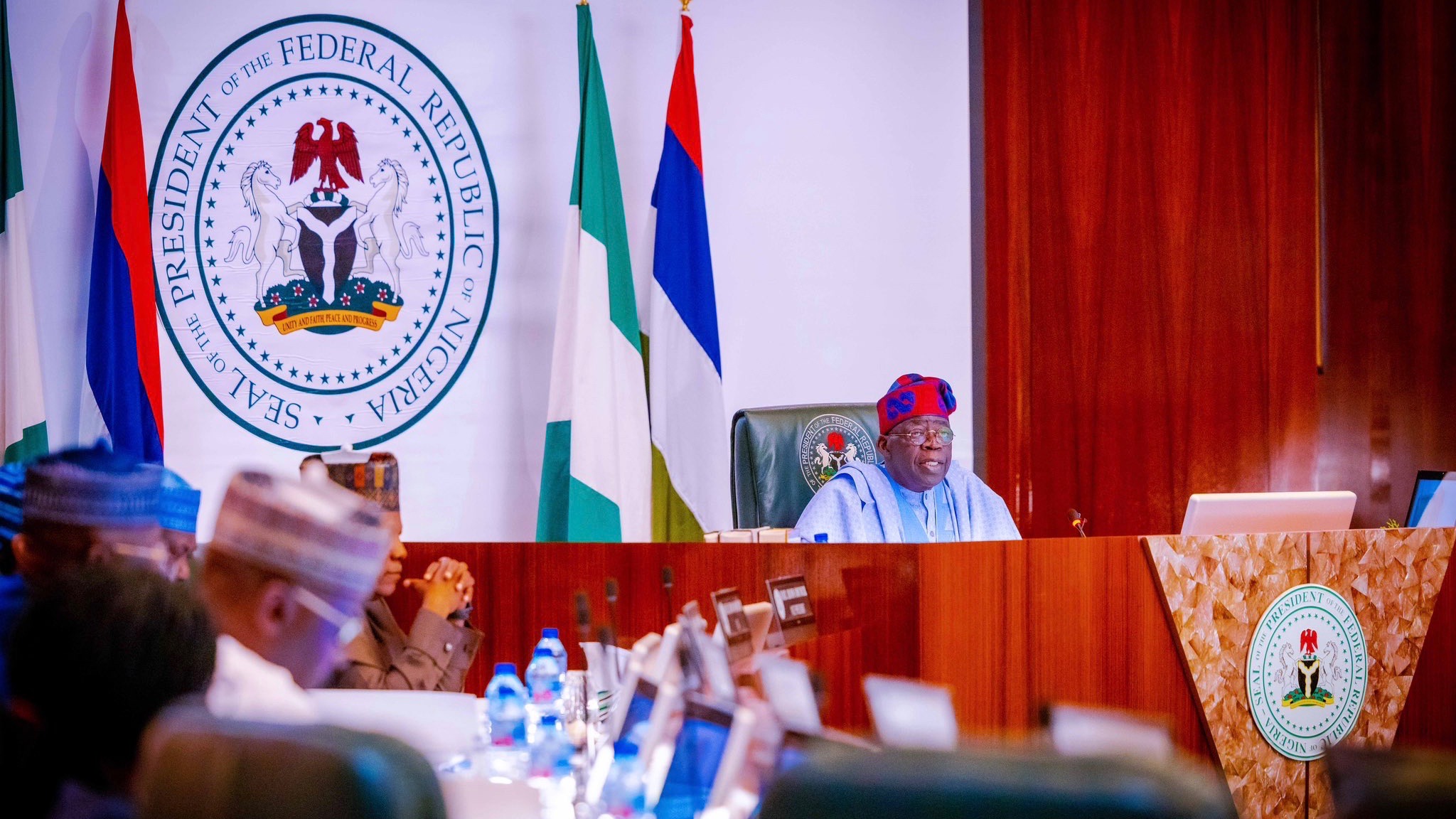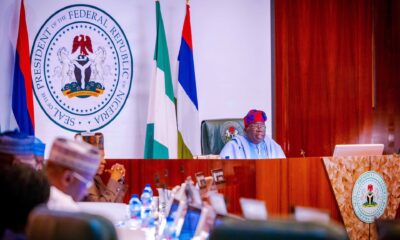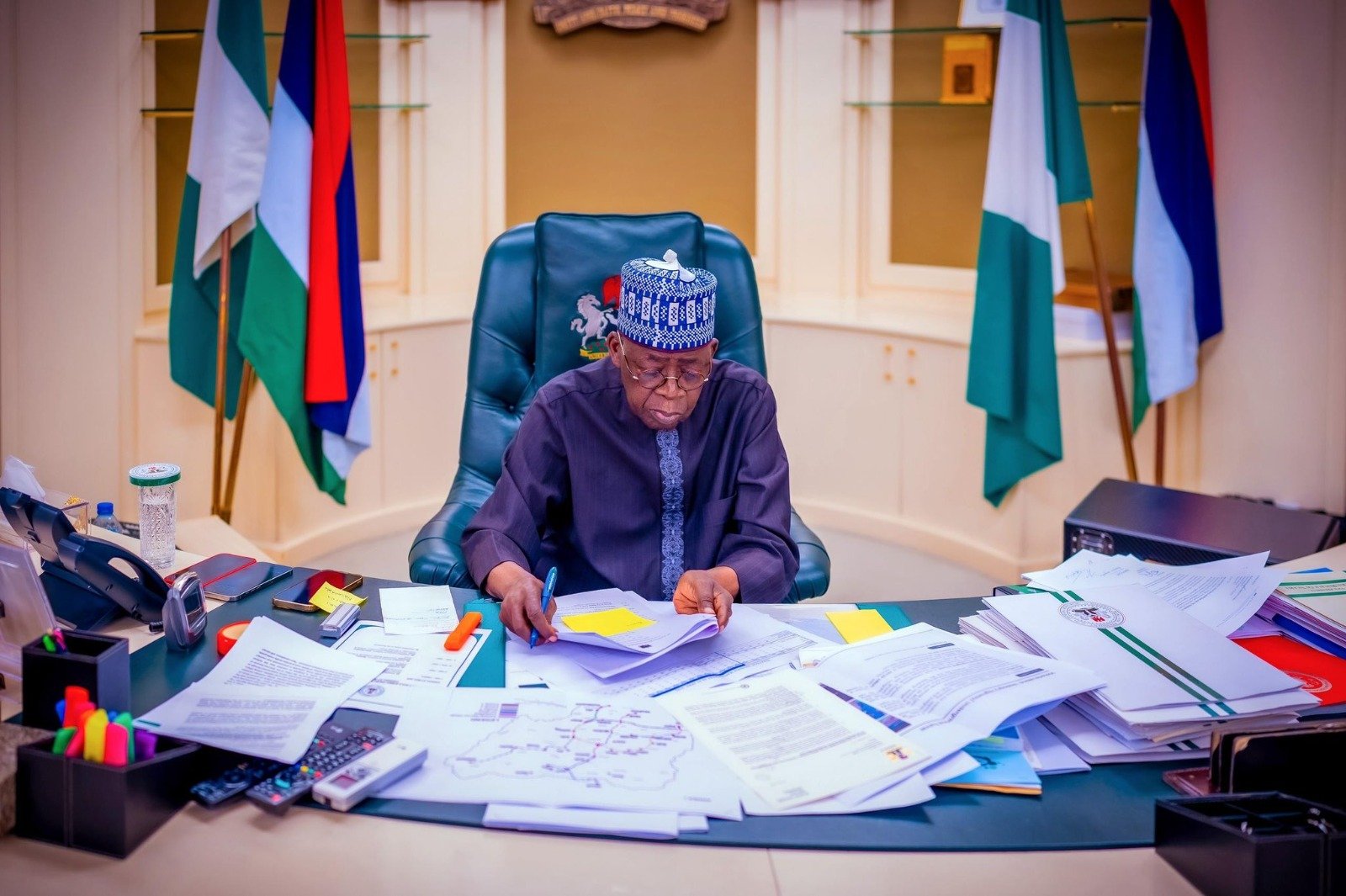
President Bola Tinubu has insisted that the new tax laws will take effect on January 1, 2026, as planned. This was disclosed in a statement that he personally signed on Tuesday and issued by the State House.
This came as former Vice President Atiku Abubakar and the Peoples Democratic Party slammed the President, describing the move as hasty and insensitive amid ongoing controversies surrounding the alleged alterations to the legislation.
The PUNCH reports that Tinubu, on June 26, 2025, signed the four Tax Reform Bills into law. These laws include the Nigeria Tax Act, the Nigeria Tax Administration Act, the Nigeria Revenue Service Act, and the Joint Revenue Board Act.
The Acts comprehensively overhaul the Nigerian tax landscape to drive economic growth, increase revenue generation, improve the business environment, and enhance effective tax administration across the different levels of government. While some of the laws have gone into effect, others are set to go into effect on January 1.
Tinubu said, “The new tax laws, including those that took effect on June 26, 2025, and the remaining Acts scheduled to commence on January 1, 2026, will continue as planned. These reforms are a once-in-a-generation opportunity to build a fair, competitive, and robust fiscal foundation for our country.
“The tax laws are not designed to raise taxes, but rather to support a structural reset, drive harmonisation, and protect dignity while strengthening the social contract. I urge all stakeholders to support the implementation phase, which is now firmly in the delivery stage.
“Our administration is aware of the public discourse surrounding alleged changes to some provisions of the recently enacted tax laws. No substantial issue has been established that warrants a disruption of the reform process. Absolute trust is built over time through making the right decisions, not through premature, reactive measures.”
The President went on to emphasise his administration’s unwavering commitment to due process and the integrity of enacted laws.
“The Presidency pledges to work with the National Assembly to ensure the swift resolution of any issue identified. I assure all Nigerians that the Federal Government will continue to act in the overriding public interest to ensure a tax system that supports prosperity and shared responsibility,” he asserted.
The PUNCH reported that in recent weeks, there had been allegations of alteration to the gazetted tax reforms. A member of the House of Representatives from Sokoto State, Abdulsamad Dasuki, alleged that the versions of the tax laws gazetted and made public contained provisions never debated or approved by lawmakers. This had sparked calls for the suspension of the implementation of the laws.
Atiku, PDP slam Tinubu
Former Vice President Atiku Abubakar and the Peoples Democratic Party have knocked President Tinubu over his decision to proceed with the enforcement of the amended tax laws from January 1, describing the move as hasty and insensitive amid ongoing controversies surrounding alleged alterations to the legislation.
Atiku, in an exclusive interview with The PUNCH through his media adviser, Paul Ibe, described Tinubu’s insistence on proceeding with the plan despite the alleged alterations as irresponsible.
Similarly, the Tanimu Turaki–led PDP, in a statement issued on Tuesday by its National Publicity Secretary, Ini Ememobong, said the President’s stance demonstrated that he prioritised revenue generation over the welfare of Nigerians.
The President’s stance comes barely four days after the National Assembly directed the re-gazetting of the four tax reform laws following allegations that provisions in the published Official Gazette differ from what lawmakers actually passed.
Atiku said it would be irresponsible for President Tinubu to go ahead with the plan in spite of the public outcry over the alleged alterations.
He stated, “How do we know that nothing substantial was altered? Was there an investigation by the Federal Government or the Presidency? We are only aware that there was an ad hoc committee that had not completed its work. So why would the President go ahead? The President should remember that his mandate is derived from Nigerians. Nigerians have spoken, and they have spoken clearly about how they feel concerning these tax laws.
“As you know, tax laws have a huge impact on people’s lives, and it is only proper that all the processes that have been initiated are exhausted to be sure that this law was duly passed by the National Assembly and assented to by the President without discrepancies. Otherwise, it amounts to forgery. And that, by the way, is the character of this administration. It appears that forgery has become a state policy, to the extent that even a tax law— a so-called reform meant to improve tax administration in Nigeria—already has serious issues even before implementation.
“Sadly, it appears that the Senate President and the President are working in concert to ensure that Nigerians do not even have the benefit of this particular document. What was signed and gazetted? There are supposed to be three copies: one with the Presidency, one with the Supreme Court, and one with the National Assembly. Why is it difficult to produce any of these documents so that Nigerians can independently determine what happened and whether the allegations are true? It is not the responsibility of the Presidency to dismiss these concerns. Doing so represents the height of irresponsibility, to say the least.
“If the President goes ahead with its implementation, I want to say clearly that this is an act of irresponsibility. It reflects elements of dictatorship and follows the same pattern of state capture. I do not know what this administration is trying to achieve, but I do not think it is the right thing to do. He must understand that there are consequences for actions and inactions.”
On its part, the PDP reiterated that Nigerians are calling for a comprehensive probe into the irregularity, insisting on clarity about who carried out the alleged illegal insertion and the process through which it occurred.
It also decried what he described as the Tinubu administration’s tendency, since assuming office in 2023, to place revenue considerations above the welfare and well-being of Nigerians.
PDP stated, “Rather than address these issues comprehensively, the Presidency has consciously minimised them and instead vehemently insisted that the commencement date must stand, despite the discrepancies. This disposition clearly shows where the priority of the government lies, between Nigerians and money.
“This Tinubu Presidency has always prioritised finance over the welfare and well-being of Nigerians from its inception in 2023, as evidenced by the reckless way it announced and implemented the removal of subsidy, which immediately impacted the economy of the country and caused ordinary Nigerians to suffer irreparable economic damage.
“In this instance, the President should remember that he is an employee of the people and, therefore, should listen to his employers. He should also remember that he won with less than 40 per cent of the votes in the elections that gave him the job, and should therefore recognise that listening to Nigerians must be a primary duty of his administration, rather than serving the narrow interests of people around him.
“Mr President is reminded that a responsible PDP administration in 2012 listened to the cries of Nigerians and civil society organisations (where he played a prominent role during the protests) against the removal of fuel subsidy, in deference to the voices of Nigerians.”
PDP emphasised that the interests of Nigerians should be the top priority for the President and the Federal Government. It continued, “Consequently, we reiterate our earlier call for the suspension of the commencement date of the Tax Act, pending the conclusion of a thorough investigation. Obedience to laws in a democracy is directly linked to the belief that elected legislators have deliberated upon and approved them.
“A mere suspicion, let alone a confirmed fact, that unapproved sections have been smuggled into a law with the capacity to affect all Nigerians, is sufficient reason to suspend its commencement. The President must act in favour of the people of this country; to do otherwise is a clear confirmation that money, not the people, is the priority.”
The controversy erupted on December 17, 2025, when a House of Representatives member, Abdussamad Dasuki, raised a matter of privilege in the House, alleging that gazetted tax laws available to the public “differed materially” from versions debated, harmonized, and approved by the National Assembly.
Dasuki warned that the alleged alterations posed “serious legal and constitutional risks,” noting they were “not backed by any constitutional framework and could threaten Nigeria’s democratic order.”
Specific concerns included alien provisions such as coercive and fiscal powers, including arrest powers, power to garnish without court order, compulsory USD computation, and appeal security deposits, that allegedly appeared in gazetted copies without legislative approval.
On December 26, the National Assembly leadership jointly directed the Clerk to the National Assembly to re-gazette the Acts and issue Certified True Copies of versions “duly passed by both chambers.”
House spokesman Akin Rotimi described the directive as “an administrative step intended solely to authenticate and accurately reflect the legislative decisions of the National Assembly.”
“This review is strictly confined to institutional processes and procedures. It does not constitute, imply, or concede any defect in the exercise of legislative authority by the House of Representatives or the Senate,” Rotimi stated.
An Ad Hoc Committee chaired by Muktar Betara (APC, Borno) was established to investigate the allegations and reconstruct “the sequence of events” around passage, presidential assent, and gazetting.
Several opposition figures and bodies have called for the suspension of the January 1 implementation pending the resolution of the controversy.
Atiku had described any alteration as “an act of treason against the Nigerian people,” while former Senate Leader Ali Ndume urged President Tinubu on December 25 to suspend implementation “amid claims and counterclaims.”
The Nigeria Labour Congress, Nigerian Bar Association, and 2023 Labour Party presidential candidate Peter Obi have all demanded a halt to the commencement date until the matter is resolved.
Presidential Fiscal Policy and Tax Reforms Committee Chairman Taiwo Oyedele had briefed the President in Lagos, assuring him that implementation would proceed as planned.
“The plan to commence the new law, the two remaining new laws on the first of January 2026, will go ahead as planned, on schedule, because these reforms are designed to provide relief to the Nigerian people,” Oyedele told journalists on Friday.
He emphasised that “the bottom 98 per cent of workers will see either no pay tax or lower taxes to be paid. Small businesses, 97 per cent of them, will be exempted from corporate income tax, VAT, withholding tax, and large businesses will see a drop in the taxes that they paid.”
NBA, ACF react
The President of the Nigerian Bar Association, Afam Osigwe (SAN), and the Arewa Consultative Forum also raised concerns over Tinubu’s insistence on implementing the new tax laws from January 1, 2026, citing unresolved controversies surrounding the authenticity of the legislation.
Reacting, Osigwe said there were critical distinctions that must be made regarding the implementation of the tax laws. According to him, if the President’s decision is to implement “the authentic law as passed by the National Assembly, which has no controversy of having been doctored or tampered with,” then the President would be right.
He explained that the NBA’s call was not for the suspension of the tax laws in general, but specifically for any version alleged to have been altered after passage by the National Assembly. “It is a suspension of the tax law that is alleged to be tainted with additions, modifications, and deletions of some provisions, which in our opinion would be a subversion of the will of the people as expressed by the legislature,” he said.
Osigwe added that if the President intended to implement the actual tax laws passed by the National Assembly, which its leadership had directed the Clerk to certify in line with the provisions of the Tax Authentication Act, then the basis for the NBA’s call for suspension would no longer exist. “If that is the law to be implemented effective January 1st, then we would not ask that the implementation be suspended,” he said.
However, he warned that implementing a version different from what was passed by the National Assembly would justify calls for suspension. “So it depends on what version of the law is being sought to be implemented,” Osigwe stated.
Similarly, the ACF faulted the January 2026 implementation timeline. Speaking in Kaduna on Tuesday, the ACF National Publicity Secretary, Prof Tukur Muhammad-Baba, described the President’s stance as unfortunate, noting that the controversies surrounding the Tax Reform Bills had yet to be resolved.
“The development is unfortunate, as the President ought to respond to the various controversies that the Tax Reform Bills have thrown up. The complaints being raised are critical and legitimate,” Muhammad-Baba said.
He noted that Nigerians were particularly worried about discrepancies between what the National Assembly passed and the version of the laws that was eventually gazetted. “What the citizens want to know is exactly what the National Assembly passed and why there is a difference with the gazetted version. It is a fundamental credibility and integrity issue that must be addressed and resolved,” he added.
Muhammad-Baba said there were indications that the National Assembly had begun looking into the matter and stressed that due process should be allowed to run its course. “The process must be allowed to go through in the interest of the nation as a whole, as it affects all citizens who are critical stakeholders in the Nigerian project,” he said.
He further disclosed that the ACF leadership was reviewing the situation and would announce its official position in the coming days. Recalling earlier debates on the tax laws, he said the ACF had made critical recommendations that were incorporated into the versions passed by the National Assembly.
“It is disappointing to see those efforts being wasted, as it now appears. This is not the way to run a democracy,” he concluded.