





Connect with us

News

Electricity Act (Amendment) Bill: FG may sell 11 Discos to new investors

Published

on

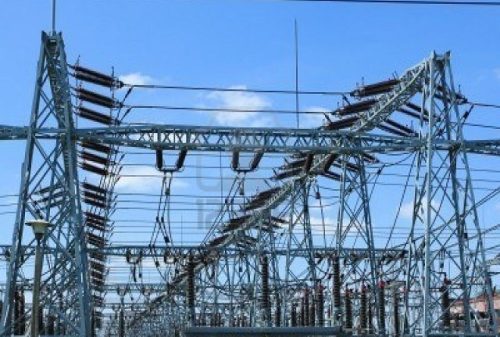
The Federal Government may sell the 11 power distribution companies through a re-privatisation process if the Electricity Act (Amendment) Bill, 2025, currently before the National Assembly, becomes law.

The National Assembly has already initiated a legislative process to enforce sweeping reforms that could see core investors in electricity distribution companies lose their stakes if they fail to improve their investment.

The amendment bill, sponsored by Senator Enyinnaya Abaribe (Abia South), seeks to overhaul the 2023 Electricity Act by addressing regulatory gaps, as it warned that investors risk losing their stakes through share dilution, receivership, or outright re-privatisation if fresh capital is not injected into the sector within 12 months, following years of poor performance and a worsening debt crisis.

This clause comes into effect immediately after an assent is granted to the ongoing amendment of the Electricity Act 2023. The bill has passed its second reading and is currently undergoing further legislative action and discussions.

If passed into an Act, it will empower the Nigerian Electricity Regulatory Commission to compel core investors in the 11 successor Discos to inject fresh capital or face stiff regulatory action, including share dilution, receivership, or outright re-privatisation.

This was disclosed in the draft amendment to the Principal Act, seen by The PUNCH, on Monday. The proposed Electricity Act (Amendment) Bill, 2025, has already attracted condemnation from the Forum of Commissioners of Power and Energy, warning that the bill poses a serious threat to the country’s newly decentralised electricity market and could reverse key reforms achieved under the landmark Electricity Act of 2023.

The bill also gives the commission powers to impose sanctions, including dilution of shares or re-privatisation, on defaulting Discos, particularly those under receivership or financial distress.

The PUNCH reports that there are 11 Discos in Nigeria that service different regions across the country. They include Abuja Electricity Distribution Company, Benin Electricity Distribution Company, Eko Electricity Distribution Company, Enugu Electricity Distribution Company, and Ibadan Electricity Distribution Company.

Others are Ikeja Electricity Distribution Company, Jos Electricity Distribution Company, Kaduna Electricity Distribution Company, Kano Electricity Distribution Company, Port Harcourt Electricity Distribution Company, and Yola Electricity Distribution Company.

Under the new law, a comprehensive framework must be developed within 12 months to overhaul the financial structure of the Nigerian Electricity Supply Industry, with a strong focus on attracting long-term local currency investments and phasing out what the bill describes as “unstructured and regressive subsidies.”

According to Sections 228J and 228K of the amended Act, the Minister of Power, in consultation with NERC, is required to develop and implement a robust financing framework aimed at de-risking investments across the power value chain and resolving the sector’s chronic debt overhang, estimated at over N4tn.

However, power sector experts and consumer advocacy groups have argued that the proposed law, if passed, can only be effectively implemented if the long-standing subsidy debts crippling the sector are first cleared.

They also recommend extending the recapitalisation deadline to 24 months, similar to the approach adopted during the banking sector recapitalisation, to allow for a more realistic and structured transition.

See also  ICPC arraigns El-Rufai, court hears bail application March 31

A copy of the amended act read, “Financing of Projects in the NESI: The Federal Government shall, through the minister and in consultation with the Nigerian Electricity Regulatory Commission, establish a comprehensive framework for financing of projects in the NESI within 12 months from the commencement of this Bill.

“The framework referred to under subsection(1) of this section shall give regard to the extant National Electricity Policy and Strategic Implementation Plan and aim to attract and de-risk investments across the power value chain from generation, transmission, distribution, reduce diesel and petrol-based self-generation and address crippling financial crisis and debt overhang in the Nigerian power sector.”

The proposed Act stipulates that the new financing framework must prioritise long-term local currency financing for gas-to-power and distributed energy projects, a transparent and predictable tariff regime that guarantees cost recovery, the recapitalisation of Discos under NERC’s supervision, a clear determination of federal and state equity stakes in the Discos, and the provision of fiscal and tax incentives to attract investment and avert a sector collapse.

It noted, “The framework established under section 228I of this Bill shall include, but not limited to the following: long-term local currency capital financing for gas-to-power optimisation projects; distributed energy projects, etc, to mitigate foreign exchange risks for investors;

“Commitment to a transparent and predictable tariff regime that allows for cost recovery for efficient operators, progressively phasing out regressive and unstructured subsidies.

“Concession of certain power plants under the portfolio of the Niger Delta Power Holding, as well as commencement and completion of successor Discos’ recapitalisation to be implemented through the directive and supervision of the Nigerian Electricity Regulatory Commission.”

It further stated that the regulatory commission shall have the power to direct the core investors in the 11 successor distribution companies, including those under receivership, to recapitalise their respective equity holdings within such a time frame not exceeding 12 months from the commencement of this bill, and in deserving circumstances impose appropriate sanctions for non-compliance with its directive under this subsection, including an order for dilution of such shares held by core investors or re-privatisation.

It added, “A determination of Federal Government equity stakes in the 11 successor distribution companies with a clear timeframe of not later than 12 months from the commencement of this bill, for both the federal and state governments to make their respective contributions reflective of their equity holdings in the 11 successor distribution companies; and

“Such other mechanisms, such as fiscal and tax incentives to prevent the collapse of the NESI. Without prejudice to the provisions of subsection (2)(c) of this Section, the commission shall have the power to direct the core investors in the 11 successor distribution companies, including those under receivership, to recapitalise their respective equity holdings within such a time frame not exceeding 12 months from the commencement of this bill, and in deserving circumstances impose appropriate sanctions for non-compliance with its directive under this subsection, including an order for dilution of such shares held by core investors or re-privatisation.

See also  Kwara Residents Flee As ‘Terror Group’ Reportedly Issues Threat Letter

“The commission shall consult widely and take such measures as are necessary to ensure that the implementation of any order or directive on recapitalisation under sub-section (3) of this section neither disrupts continuity of service nor undermines investor confidence in the NESI.”

The government’s tough stance follows years of poor performance by the Discos, which continue to deliver erratic power supply despite multiple interventions, including debt forgiveness, financial bailouts, and tariff adjustments.

In May, the Federal Government openly expressed disappointment in the Discos, accusing them of frustrating ongoing reforms. At a media briefing in Abuja, the Minister of Power, Adebayo Adelabu, lamented that despite trillions of naira sunk into the sector, many Nigerians remain in darkness.

“The performance of the Discos has been grossly underwhelming,” Adelabu declared. “We can no longer tolerate excuses. If you can’t invest, give way to those who can.”

“We need to get tough with the Discos, as they can easily frustrate all the gains we have made. They have disappointed us in performance expectations. Whatever we do in generation does not mean anything to consumers if it is frustrated at the distribution points”.

A May 2025 report by the Bureau of Public Enterprises showed that more than 70 per cent of Discos have failed to meet key performance benchmarks set at the time of privatisation in 2013.

Reacting to the proposed timeline and pending directive, an official of power distribution companies dismissed concerns over the impact of the recently amended Electricity Act on Discos, saying the law is binding when assented to, and must be implemented by all stakeholders.

Reacting to industry debates surrounding the new legal provisions, the official, who spoke on condition of anonymity due to the lack of authorisation to speak on the matter, told The PUNCH that the focus should be on compliance and collaboration rather than resistance.

“It is totally irrelevant to say the law affects Discos. When the National Assembly makes laws, it is binding on all of us. What we should all do is to collectively implement and follow the law,” the official said.

The source noted that the amendments strengthen the powers of the Nigerian Electricity Regulatory Commission, a move the Discos are prepared to support.

“The regulatory commission has its powers, and when there is an amendment that further enhances that power, we are all for it. We believe in the wisdom of the National Assembly to amend the law, and we are ready to work with all stakeholders to ensure that the laws are implemented,” he added.

An electricity market expert, Chinedu Amah, says that the electricity sector challenges are not due to a lack of policies, but rather a failure to implement existing frameworks effectively.

See also  Any police officer escorting VIP is on illegal duty and will be arrested- Force Spokesman

The expert noted in an interview on Tuesday that Nigeria is already saturated with policies and proposals, stressing that “policy overload” has become a recurring problem in the sector.

“We have policies on everything in Nigeria. So I don’t think it is a policy problem. Yes, there are policy gaps, but maybe we should just remove all the subsidies, flatten the tariff regime, and allow the market to drive investments,” the source said.

He added that while distribution companies have a responsibility to expand the grid and invest in infrastructure, the conversation must go beyond mere obligations.

“I don’t think it’s enough to say Discos need to make investments. You can’t force them to grow their business. But if there’s a critical infrastructure gap, it must be solved, whether by government, the private sector or through partnerships,” the official said.

However, another Power sector analyst, Habu Sadiek, called for key preconditions to ensure the initiative’s success. Reacting to provisions in the recently amended Electricity Act, Sadiek welcomed the plan but stressed the need for the government to first address pending financial issues within the sector.

“I think it’s a good thing,” he said. “But the government needs to do two things before initiating a recapitalisation programme: settle all outstanding subsidy payments and allow cost-reflective tariffs to prevail.” According to him, without resolving these issues, recapitalisation may not achieve its intended objectives.

He also criticised the 12-month window proposed for Discos to recapitalise, suggesting it was too short and unrealistic given current economic pressures. “Giving the current Disco owners 24 months, rather than 12, would have been better, similar to the Central Bank of Nigeria’s recapitalisation programme,” Sadiek added.

Additional efforts to get comments from the NERC on the issue proved abortive as the phone number of the Director, Public Affairs, Usman Arabi, was unreachable.

Meanwhile, the Minister of Power, Adebayo Adelabu, confirmed ongoing efforts to deploy special teams to underperforming power distribution companies as part of a broader restructuring programme.

Recall that in May 2025, the ministry announced a major overhaul of the power distribution sector, beginning with a pilot reform programme targeting two underperforming electricity distribution companies.

The pilot, scheduled to commence between May and August 2025, will involve one Disco each from the Northern and Southern parts of the country. The plan to restructure the companies came after a meeting with the Japanese International Cooperation Agency, which presented a roadmap titled “Revamping of the Distribution Sector in Nigeria”.

But giving an update on the process which is scheduled to end next month, the Special Adviser, Strategic Communications and Media Relations to the minister, Bolaji Tunji, on Monday, said the process is still ongoing. “It is an ongoing thing and we will brief you at the appropriate time,” he simply stated.

FOLLOW US ON:

FACEBOOK

TWITTER

PINTEREST

TIKTOK

YOUTUBE

LINKEDIN

TUMBLR

INSTAGRAM

Continue Reading
Click to comment

Leave a Reply

Your email address will not be published. Required fields are marked *

News

‘If You’ve Removed Subsidy, Why Still Borrowing?’, Emir Sanusi II Queries Federal Govt’s Fiscal Strategy

Published

on

The 16th Emir of Kano, Muhammadu Sanusi II, has questioned the Federal Government’s continued reliance on borrowing despite the removal of petrol subsidy, warning that poor fiscal discipline could erode the gains of recent reforms.

Speaking in an interview with News Central TV on Friday, the former Governor of the Central Bank of Nigeria (CBN) said while the removal of fuel subsidy and the liberalisation of the exchange rate were necessary, their timing and implementation remained problematic.

“If you’re not paying the subsidy and you’ve got the money, why are we still borrowing and borrowing? What are we borrowing for?

“I have always said the subsidy regime was unsustainable. We cannot continue supporting foreign refineries. We’re an oil-producing country. Keeping refineries open abroad while we’re not doing our own,” Emir Sanusi II said.

He, however, expressed optimism over Nigeria’s shift toward domestic refining, noting that the country has moved from being a major importer of petroleum products to an exporter.

“Today, we have a situation where we have our own domestic refinery. We’re not importing petroleum products. We’re even exporting to Europe, and this is very good for the economy,” he added.

Despite supporting the reforms, Sanusi II raised concerns about sequencing, arguing that policy execution without proper monetary tightening contributed to the naira’s sharp depreciation.

“Artificial exchange rates, especially when you’re printing money, cannot work. There was going to be a devaluation,” he said.

“For me, removing subsidy or liberalising exchange rates, these are good interventions. Were they done at the right time? Those are certain questions.”

See also  PDP factions open peace talks as Wike denies split

He explained that implementing exchange rate liberalisation in a “loose monetary environment” worsened currency instability.

“If you decide to remove subsidy and liberalise exchange rates… before you have tightened money supply, the naira drops to a bottomless pit. That was a timing issue,” he said.

The monarch further challenged the government’s fiscal direction, questioning the rationale behind continued borrowing.

“We’ve removed the subsidy… what we should now see is fiscal consolidation. You cannot remove wastages and continue borrowing,” he said.

His remarks came amid concerns over Nigeria’s rising debt profile. Reports indicated that the Federal Government has increased its 2026 borrowing plan by ₦11.31 trillion, bringing the total to ₦29.20 trillion.

President Bola Tinubu also recently sought Senate’s approval for a fresh $516 million loan to fund the Sokoto–Badagry Superhighway project, further fuelling debate over the country’s fiscal direction.

FOLLOW US ON:

FACEBOOK

TWITTER

PINTEREST

TIKTOK

YOUTUBE

LINKEDIN

INSTAGRAM

Continue Reading

News

FG raises allowances, boosts welfare for civil servants

Published

on

The Federal Government of Nigeria has approved a sweeping increase in peculiar allowances and other welfare benefits for civil servants, in a move aimed at improving take-home pay and boosting morale across the public service.

The announcement was made on Friday by the Head of the Civil Service of the Federation, Didi Walson-Jack, during a press briefing in Abuja, where she outlined key reforms endorsed by the Federal Executive Council.

According to Walson-Jack, the review affects workers under both the Consolidated Public Service Salary Structure (CONPSS) and the Consolidated Research and Allied Institutions Salary Structure (CONRAISS), ensuring a broad-based impact across all cadres.

She said the revised peculiar allowances have been structured to reflect across all grade levels, resulting in a meaningful increase in earnings for both junior and senior officers.

In addition, the government approved an upward review of several key allowances, including duty tour allowance (DTA), estacode, and book allowance. Walson-Jack noted that virtually all allowances listed under the Public Service Rules have now been revised.

A major highlight of the reform is the approval of 100 percent Duty Tour Allowance for civil servants attending approved training programmes, regardless of whether travel is involved.

“Even if you are based in Abuja and attend training within Abuja, you are entitled to full DTA,” she said.

Beyond salary-related adjustments, the government also introduced a new exit benefit scheme for retiring civil servants under the Contributory Pension Scheme. The scheme provides 100 percent of a retiree’s total annual emoluments as an exit package, in addition to their pension, effective January 1, 2026.

See also  BREAKING: WAEC releases 2025 WASSCE results

Walson-Jack described the move as a step toward ensuring dignity in retirement, stressing that no public servant should leave service without adequate financial support.

The government also confirmed the operationalisation of the Employee Compensation Scheme, designed to provide financial protection for workers who suffer job-related injuries or death.

The reforms come amid growing calls from labour unions for improved welfare, as rising living costs continue to put pressure on workers. Analysts say the combined measures could significantly enhance financial stability for civil servants and improve overall productivity in the public sector.

punch.ng

FOLLOW US ON:

FACEBOOK

TWITTER

PINTEREST

TIKTOK

YOUTUBE

LINKEDIN

INSTAGRAM

Continue Reading

News

Wiretapping: El-Rufai pleads not guilty, faces fresh charges

Published

on

The Federal Government, on Thursday, expanded the criminal case against former Kaduna State Governor, Nasir El-Rufai, introducing fresh allegations bordering on interference with critical national infrastructure and unauthorised access to classified information.

The new counts are contained in a further amended five-count charge filed on April 13, 2026, before the Federal High Court in Abuja, replacing an earlier three-count charge instituted on February 16, 2026.

At his arraignment on Thursday before Justice Joyce Abdulmalik, El-Rufai, however, pleaded not guilty to all counts after the court granted the prosecution’s request to substitute the initial charge.

The Department of State Services, through its counsel, Oluwole Aladedoye (SAN), told the court that the amended charge significantly revised the allegations against the former governor, urging the court to adopt the new processes.

Unlike the earlier charge, which focused mainly on alleged unlawful interception of communications, the fresh counts introduce a broader national security dimension.

In count one of the amended charge, the prosecution accused El-Rufai of “intentionally and unlawfully interfer[ing] with the communication” of the National Security Adviser, Nuhu Ribadu, describing the communication channel as part of Nigeria’s critical national information infrastructure.

The charge states that the alleged act contravenes provisions of the Designation and Protection of Critical National Information Infrastructure Order, 2024, and is punishable under the Cybercrimes (Prohibition, Prevention, etc) Amendment Act, 2024.

In a separate and newly introduced count, the prosecution alleged that El-Rufai, “without authorisation, intentionally secured access to classified information” relating to Ribadu, including details of his arrest and detention order issued on February 12, 2026.

This count marks a shift from the earlier framing of the case, which was limited to claims of intercepted communications, to a more serious allegation involving breach of classified state information.

The amended charge also retains and restructures earlier allegations. Count four accuses the defendant of unlawfully intercepting the NSA’s communications, while count five alleges that he and others still at large used technical systems that compromised public safety and national security, thereby instilling fear among Nigerians.

See also  Marketers blame depots as petrol nears N1,000/litre

Part of count four reads, “That you, Mallam Nasir El-Rufai, adult, male, intentionally and without authorisation, intercepted the communications of the National Security Adviser, Nuhu Ribadu, as admitted by you on 13th February, 2026, while appearing as a guest on Arise TV Station’s Prime Time Programme in Abuja… and thereby committed an offence contrary to and punishable under Section 12(1) of the Cybercrimes Act.”

Count five further states, “That you… did use technical equipment or systems which compromised public safety, national security and instilling reasonable apprehension of insecurity among Nigerians… and thereby committed an offence contrary to and punishable under Section 131(2) of the Nigerian Communications Act, 2003.”

The February charge had contained only three counts, focusing on alleged admission of unlawful interception, failure to report individuals involved, and actions capable of undermining public safety.

However, the amended charge introduces two additional counts and separates previously combined allegations into distinct offences, effectively broadening the scope of criminal liability.

Defence counsel, Oluwole Iyamu (SAN), confirmed receipt of the amended charge and did not oppose its substitution.

Following this, the court struck out the earlier charge and proceeded with the fresh arraignment.

After the plea was taken, the prosecution applied for an accelerated hearing, seeking three consecutive trial dates.

The defence objected, arguing that El-Rufai’s access to legal counsel could be affected due to his custody under the Independent Corrupt Practices and Other Related Offences Commission.

The defence also drew the court’s attention to a pending bail application filed on February 17, noting that an earlier missing affidavit had been located.

The DSS informed the court that it was not opposing the bail request.

In another application, the prosecution sought to shield the identities of two witnesses, requesting that their names be replaced with pseudonyms in court records, citing security concerns.

See also  Any police officer escorting VIP is on illegal duty and will be arrested- Force Spokesman

The defence opposed the request, insisting that it violated the defendant’s constitutional right to know his accusers and that no concrete threat had been demonstrated.

Further arguments arose over access to proof of evidence, with the defence urging the court to compel disclosure to enable proper preparation for trial.

The prosecution opposed the application, describing it as procedurally misplaced.

The defence also filed a motion seeking to quash the amended charge, while the prosecution asked the court to dismiss it as lacking merit.

After listening to both sides, Justice Abdulmalik adjourned the matter to May 18, 19 and 20, 2026, for hearing.

Bail bid fails

The PUNCH gathered that the Kaduna State High Court refused El-Rufai’s bail application on the grounds that the seriousness of the allegations against him, as well as concerns over possible interference with investigations, outweighed the arguments advanced for his release.

The ruling was delivered on 21 April 2026 by Justice D.H. Khobo of the Kaduna Judicial Division in Charge No: KDH/KAD/ICPC/01/2026, filed by the Federal Republic of Nigeria through the ICPC.

El-Rufai had approached the court via a motion dated 25 March 2026, seeking bail “either on self-recognisance or upon such liberal terms as the court may deem fit.”

His application, brought under Sections 35(4) and 36(5) of the 1999 Constitution (as amended) and provisions of the Kaduna State ACJL 2017, argued that the offences were not capital in nature and, therefore, carried a presumption in favour of bail.

He further contended that he had strong community ties, fixed addresses, and substantial assets, which, according to him, eliminated any risk of flight.

El-Rufai also told the court he voluntarily returned from Egypt on 16 February 2026 to honour an EFCC invitation, and argued that the amended charge was “fundamentally defective” and “unintelligible.”

He also raised health concerns, claiming he required specialist medical attention.

See also  Christian Genocide: Tinubu has been generous to Christians, why the betrayal to Trump? — MURIC to CAN

The ICPC opposed the application through a nine-paragraph counter-affidavit deposed to by Idris Abubakar, insisting that the offences were serious and “economically sabotaging.”

The anti-graft agency argued that the former governor posed a flight risk, adding that there was a likelihood he could interfere with witnesses and ongoing investigations involving other suspects.

It also alleged an incident at the Nnamdi Azikiwe International Airport, Abuja, on 12 February 2026, where El-Rufai allegedly obstructed law enforcement officers.

The ICPC further dismissed his medical claims, stating that no supporting medical report was provided.

In his ruling, Justice Khobo held that the gravity of the nine-count charge, coupled with allegations of interference and obstruction, made bail inappropriate at this stage.

The court stated, “In the instant application, given the gravity of the nine-count charge against the defendant/applicant, the respondent’s credible apprehension regarding the interference with the ongoing investigations linked to other persons still at large… the interest of justice is best served by ensuring the applicant remains available for an accelerated trial.”

The judge also faulted the defence on health grounds, noting, “The applicant in my view has failed to provide sufficient medical evidence to justify the grant of bail on health grounds.”

Consequently, the court held, “Accordingly, the defendant/applicant’s application for bail pending trial fails and is hereby refused.”

Justice Khobo ordered that El-Rufai “shall remain in the custody of the respondent (ICPC) pending the commencement of the trial,” while directing that proceedings be conducted on an accelerated basis.

The court also fixed June 1, 2, 3 and 4, 2026, for day-to-day hearing, following what it described as a consensus between prosecution and defence counsel.

For now, the former governor remains in ICPC custody as the substantive trial awaits commencement.

punch.ng

FOLLOW US ON:

FACEBOOK

TWITTER

PINTEREST

TIKTOK

YOUTUBE

LINKEDIN

INSTAGRAM

Continue Reading

Trending