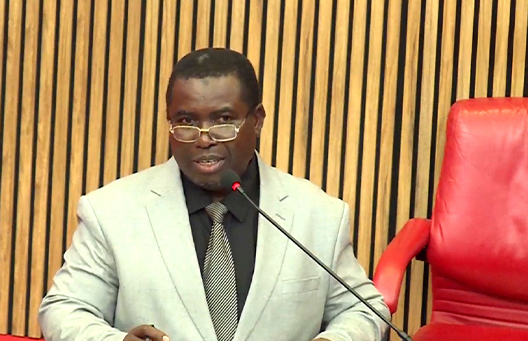
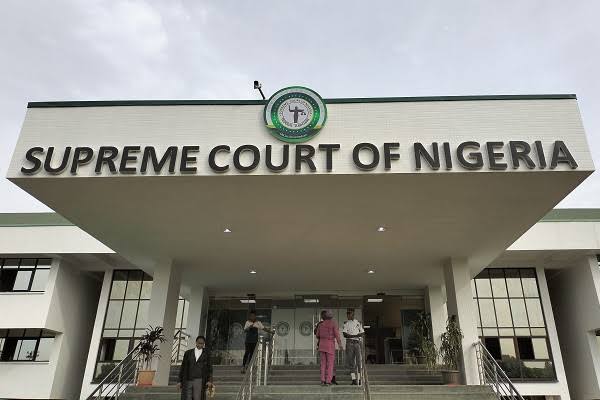
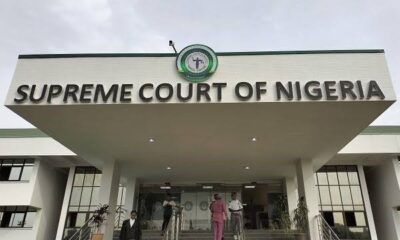
ONCE again, the Supreme Court of Nigeria is under an uncomfortable spotlight. This time, the trigger is an extraordinary revelation by retiring Justice Uwani Abba-Aji at her recent valedictory session. She lamented that the United States imposed visa restrictions on members of a Supreme Court panel over a controversial judgement.
This is no trivial diplomatic gesture. Visa restrictions against serving justices of a country’s highest court carry grave implications for the reputation of the institution and the credibility of its decisions. US authorities would hardly take such a step without serious grounds for concern. More troubling, the sanctions have apparently endured.
Recounting her experience, Abba-Aji said: “My time on the Supreme Court bench was filled with challenges, some of which have served as additional opportunities to stand firm on the side of justice, regardless of the consequences. One of such challenging judgements was widely misinterpreted and led to a travel ban to the United States of America being imposed on all members of the panel; a ban which still holds till today.”
For Abba-Aji, the judgement was merely “widely misinterpreted.” But that is hardly a sufficient explanation for a decision that has continued to cast a shadow over the country’s highest judicial institution. The public, and apparently the US authorities, are entitled to a different assessment. More importantly, the controversy demands introspection rather than defensiveness.
The Supreme Court and the judiciary should recognise that their proceedings and decisions are subject to increasingly intense domestic and international scrutiny. Judicial authority does not confer immunity from criticism. Neither does the sanctity of the bench excuse decisions that raise troubling questions about fairness, consistency and the integrity of the electoral process.
The controversies surrounding the 2023 senatorial elections involving Godswill Akpabio and Ahmad Lawan are cases in point. Both had contested the All Progressives Congress presidential primaries in 2022 before subsequently seeking senatorial tickets in Akwa Ibom North-West and Yobe North, respectively. The Electoral Act 2022 prohibits a candidate from participating in more than one primary election within the same electoral cycle.
Yet, relying on jurisdictional and procedural grounds, the Supreme Court overturned earlier decisions and cleared the way for both men to secure their respective senatorial tickets. Whatever the technical legal reasoning, the outcome reinforced public suspicion that political heavyweights enjoy judicial accommodation unavailable to ordinary Nigerians.
More troubling was the January 14, 2020, Imo State governorship judgement. A seven-member panel of the Supreme Court, including the present Chief Justice of Nigeria, Kudirat Kekere-Ekun, and Abba-Aji, overturned the election of Emeka Ihedioha of the Peoples Democratic Party and declared Hope Uzodimma of the APC governor. Uzodimma had initially placed fourth in the election.
The court arrived at its conclusion after adding 213,295 votes from 388 polling units, based on documents tendered by a police witness but reportedly disowned by the Independent National Electoral Commission. In effect, the Supreme Court’s intervention overturned the decisions of both the election tribunal and the Court of Appeal.
The judgement raised fundamental questions that have never been satisfactorily laid to rest. Should the Supreme Court assume the responsibility of sorting, counting and declaring election results? Is it an electoral umpire? Where discrepancies in results arise, should the court not direct the appropriate electoral authority to establish the authentic figures in accordance with the law?
When Ihedioha subsequently sought a review of the judgement, the application was dismissed. In a dissenting opinion, the late Justice Centus Nweze warned that “this decision of the Supreme Court will continue to haunt our electoral jurisprudence for a long time to come.”
His words have proved difficult to dismiss. Indeed, such controversial judgements have helped institutionalise the cynical belief that elections are merely preliminary battles, with the real contest taking place in court. Politicians have consequently made “go to court” a familiar refrain, undermining confidence in the ballot and weakening the foundations of electoral democracy.
The Orji Kalu case is another troubling example of judicial controversy. On May 8, 2020, the Supreme Court set aside the 12-year prison sentence imposed on the former Abia State governor by a High Court and upheld by the Court of Appeal over a N7.1 billion money-laundering charge.
The Court held that the trial judge, Mohammed Idris, lacked jurisdiction because he had been elevated to the Court of Appeal when the proceedings were concluded. It ordered a retrial.
Before it was voided in Udeogu v. Federal Republic of Nigeria, Section 396(7) of the Administration of Criminal Justice Act 2015 provided that a High Court judge elevated to the Court of Appeal may continue sitting as a High Court judge to conclude part-heard criminal matters. This provision was designed precisely to prevent the kind of disruption that could arise from judicial elevation.
More fundamentally, setting aside a conviction on procedural grounds does not extinguish the underlying allegations of financial wrongdoing. The public was entitled to expect that the substantive case would be resolved without further unnecessary delay.
Beyond controversial judgements, the judiciary’s growing proximity to the political establishment has also become a source of concern. Judges are expected to maintain a degree of restraint and distance from the executive, particularly when politically sensitive cases are before them. Yet, the spectacle of judicial officers fraternising with political power has repeatedly undermined that expectation.
Lawyers, for instance, criticised the then Acting Chief Justice of Nigeria, Tanko Muhammad, and other judicial officers for attending an Iftar dinner hosted by President Muhammadu Buhari at the Presidential Villa while presidential election petitions were still pending. Even if no impropriety was established, the optics were damaging. Justice must not only be done; it must be seen to be done.
The late Justice Kayode Eso, one of Nigeria’s most respected jurists, had sounded the alarm years earlier. Following the disputed 2007 elections, he lamented the emergence of “billionaire judges” and described a legal profession increasingly divided between “those who know the law and those who have contacts”. That indictment remains painfully relevant.
The era of courageous, intellectually rigorous and landmark judgements associated with Justices Chukwudifu Oputa, Eso and Niki Tobi appears to be receding. Their legacy was not built on proximity to political power but on judicial independence, moral courage and fidelity to the law. The present generation must demonstrate that the judiciary is still capable of producing such men and women.
Unfortunately, the rot is not confined to the Court. It has filtered through the lower judiciary, as reflected in disciplinary actions by the National Judicial Council.
At its 112th meeting, the council suspended three judicial officers — Hannatu Mohammed of the Nasarawa State High Court, Mohammed Sani Salihu of the Jigawa State Sharia Court of Appeal and Sobere Biambo of the Rivers State High Court — for one year without pay over various acts of misconduct. Eight others were cautioned, while warning letters were approved for three judges following investigations into their handling of cases.
These sanctions are necessary, but they also expose the scale of the institutional challenge.
Judicial misconduct cannot be treated as an occasional embarrassment to be managed through discreet disciplinary measures. It is a direct assault on the rule of law and the confidence of citizens in the justice system.
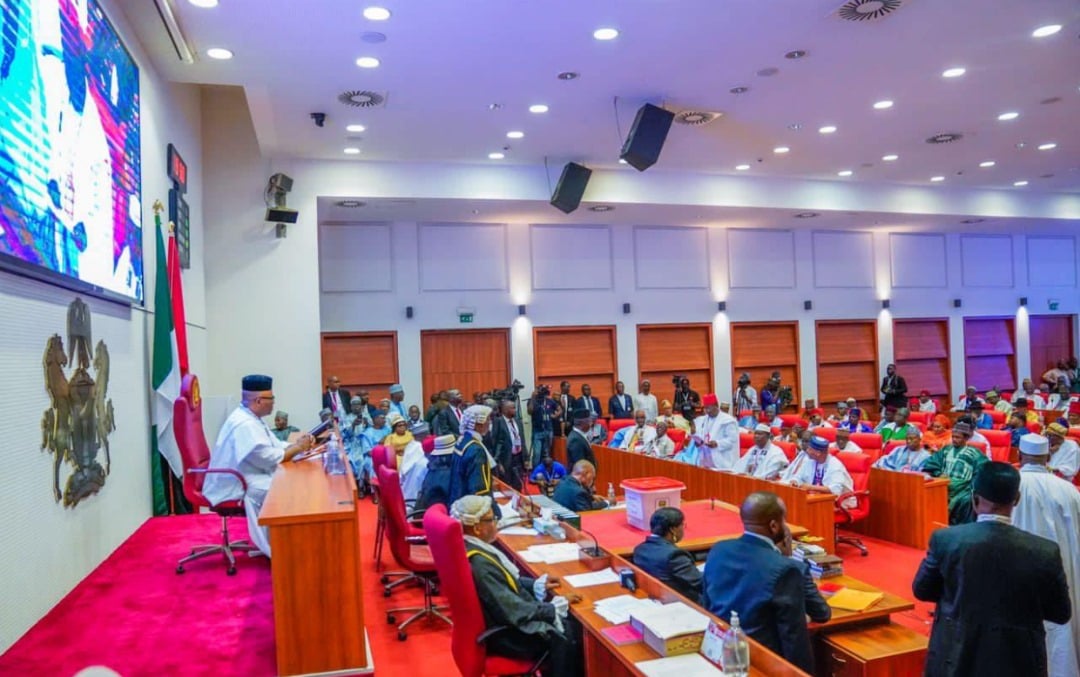
The public perception of judicial integrity has suffered from troubling political disclosures. At a valedictory session in the Senate in June 2023, former senator Adamu Bulkachuwa claimed that he had approached his wife, Justice Zainab Bulkachuwa, a former President of the Court of Appeal, to influence election petition cases involving his political colleagues. Although he subsequently recanted, the damage to public confidence was considerable.
Transparency International’s 2025 Corruption Perceptions Index and concerns raised by the Civil Society Legislative Advocacy Centre further underscore the damage corruption does to public trust in Nigerian institutions, including the judiciary. CISLAC has identified judicial corruption as a major weakness in the country’s anti-corruption campaign, noting that both the CJN and the Nigerian Bar Association have acknowledged its threat to public confidence.
The NJC should therefore move beyond occasional disciplinary interventions. It should strengthen its investigative capacity, impose firm and transparent sanctions on erring judicial officers and ensure that accountability extends to the highest courts. No judge should be considered too senior, influential or politically connected to face scrutiny.
If foreign governments are concerned about judicial integrity, Nigerian authorities should not dismiss their actions as interference. The US visa restrictions may be controversial, but they should serve as a wake-up call. Indeed, scrutiny should not stop at the Supreme Court. No level of the judiciary should be beyond examination where credible allegations of misconduct arise.
More fundamental, however, is the need for structural reforms that insulate judicial appointments from political patronage. The appointment of the Chief Justice of Nigeria, the President of the Court of Appeal and chief judges should not remain so vulnerable to the influence of the President and state governors.
An independent, transparent and broadly representative appointments commission should play a decisive role in identifying, screening and recommending judicial candidates on the basis of competence, integrity and professional merit.
There should be meaningful public participation in the appointment process, with appropriate safeguards to protect judicial independence. The objective is not to turn judges into political contestants or subject their decisions to popular approval, but to ensure that those entrusted with dispensing justice command public confidence from the outset.
Ultimately, the judiciary is too important to Nigeria’s democracy to be allowed to decay under the weight of political interference, corruption and questionable judgements.
As the country approaches the 2027 general elections, the Supreme Court and the wider judicial establishment must undertake a serious institutional soul-searching exercise. The credibility of the next elections will depend not only on INEC but also on the integrity of the courts that will adjudicate disputes arising from them.
A judiciary whose integrity is questioned at home and abroad is a liability to the country. It weakens democracy, emboldens impunity, discourages investment and erodes faith in the rule of law.
Investors are unlikely to repose confidence in a country where the impartiality of the courts is in doubt, and commercial disputes can be coloured by political connections.
The lesson from the US visa restrictions should, therefore, be unmistakable: judicial prestige cannot be sustained by constitutional status or the grand trappings of office. It must be earned through impartiality, courage, transparency and fidelity to the law. Nigeria cannot build a credible democracy on a compromised judiciary.
Source: punchng.com
FOLLOW US ON:
FACEBOOK
WHATSAPP CHANNEL
TWITTER
PINTEREST
TIKTOK
YOUTUBE
LINKEDIN
INSTAGRAM