Connect with us

News

Oyo abduction Update: Tinubu revealed why they tracked, arrested kidnappers’ families

Published

on

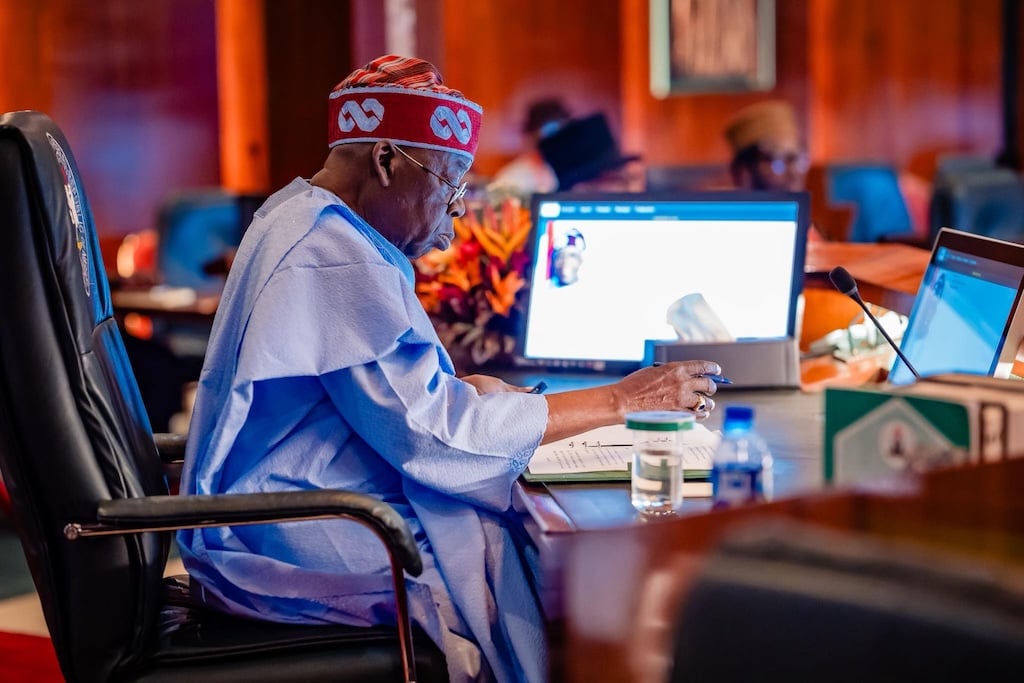
President Bola Tinubu on Thursday told a delegation of Oyo State traditional rulers in Abuja that his government refused to negotiate with or pay ransom to the militants who kidnapped schoolchildren and teachers in Oriire last May.

He said the abductors demanded both money and the release of jailed members of their gang, demands that were flatly rejected, and described the military-led rescue that freed the victims after 56 days as intelligence-driven and successful without ransom.

Tinubu said his recent order to expand the Army from eight to 12 divisions was a direct operational response to the crisis, aimed at shortening response times and giving security forces the numerical and geographic reach needed to defeat terrorism and banditry. He also announced plans to retrain and re-equip forest guards as frontline security assets and pushed for state police with safeguards against abuse.

Speaking after receiving the Olubadan of Ibadanland Oba Rashidi Ladoja and other Oyo chiefs, the President urged communities to strengthen local intelligence, thanked the armed forces for their role in the rescue, and called on state governments to invest federal allocations in road infrastructure to improve access for security agencies. The Oriire attack on May 15, 2026, saw roughly 39 pupils and seven teachers taken hostage; a teacher, Michael Oyedokun, was killed. The rescue, concluded on July 10, led to eight arrests and several neutralisations, the Presidency said.

He revealed his directive last week to expand the Army from eight to 12 divisions was a direct operational response to the Oriire school abductions in Oyo State, saying the increase was designed to shorten response times and give security forces the numerical and geographic capacity to defeat terrorism and banditry.

The President, who is speaking publicly about the incident since the rescue of the Oyo abductees on July 10, said, “We refuse to negotiate for ransom. These criminals wanted us to release from detention members of their criminal gangs that were already arrested. That was one of their conditions, outside of the money they were looking for.

“And we said no deal. We are not going to negotiate with criminals. They committed murder, and we were ready to finish with their families, members of their own communities. They grew up somewhere.

“I think we succeeded with your support and prayers. I agree that we should commend the men and women of the armed forces for their excellent performance.

See also  FG begins Primary Health Care rehab rollout to boost community care

“On behalf of them, I accept your message, and I will forward the same thing and the same message on,” the President added.

Tinubu said the rescue operation was only possible because the military had a geographical layout of the forest.

He noted that the security event taught the Federal Government new lessons and demanded structural adaptation, adding that the expansion of the army divisions from eight to 12 was a geographical and numerical answer to the Oriire abductions.

“As we emphasise the question of security, each event teaches us new methods, opens our eyes, challenges us to examine and re-examine our architecture, our strategy, our map and operations.

“And you would have seen we’ve given a geographical and numerical answer to the challenges. We refused to pay ransom. We have the geography of the forest.

“We know what it is, and in answer to it, you’ve seen that from eight divisions, we are now moving to 12 divisions, to shorten the response time, to give that response time the teeth that is needed for us to defeat terrorism and banditry,” he said.

He continued, “It is very necessary, and we are doing so. We have equally embarked upon what was missing; several decades of fears and uncertainty about what to do about security at the local level will be corrected.

“There will be state police, and that state police will have guardrails from abuses. We will protect it from abuses, and you traditional rulers too will have a role to play more.”

The President blamed the intensified kidnappings and terrorist attacks on the security collapse in Nigeria’s Sahel neighbours.

He argued, “Some of them (terrorists) are non-Nigerians. You see the problem of insecurity in Mali, Burkina Faso, Niger Republic is adding more fuel to our challenges.

“In fact, that is why we must enhance the capacity of the forest guards as well as create the state police.”

He said forest guards would no longer be limited to wildlife enforcement but would be retrained and re-equipped as a frontline security asset.

“We are equally enhancing the capacity and capability of the forest guards. They are not just to chase antelopes and animals. We are going to have them chase the criminals and deal with them in various forests,” he noted.

The President appealed to the traditional rulers to communicate with their communities, asking citizens to become active participants in the intelligence architecture.

See also  See what caused Abuja-Kaduna train derailment

“The mention of intelligence is very important, and I want you to take it to our people, to be extra vigilant, to look at things critically, know their neighbourhoods, know their areas, report strange people,” he said.

Referring to Ladoja’s days as governor, the President urged state executives to redirect their significantly enhanced federal allocation toward road infrastructure that would both improve living standards and give security agencies better access to remote areas.

“The economy of operation is high. But the money that I’m pushing to the states, if you had it during your own time, or during my time, it would have been different.

“They are taking four to five times their money. Nobody is borrowing money to pay salaries now. Pensioners are receiving their pay.

“They should do more; instead of flying over where there is no numerical traffic, build roads and artery networks to really enhance the quality of life and the accessibility of the security agencies to penetrate those areas,” he said.

The President pledged to convene broader consultations with traditional leaders across the country and asked the Oyo delegation to appreciate the armed forces in their communities.

“I will be calling meetings of so many of you traditional leaders to listen to you and offer some suggestions throughout the country. I’ll find time to listen to them.

“The immediate challenge is monumental. It’s not an easy job, but I asked for the job, and I got it. You gave me the support, and I got to do it.

“I accept the assets and liabilities of my predecessor, so that’s the challenge of today,” he said.

He added, “I’m glad you are here. I congratulate you on the peace and stability of the region and the state.

“The security challenge is getting better. We are getting the hang of it much better.

“Any time you come across some of our soldiers and police officers, please pat them on the back and say thank you. They are doing a good job,” the President said.

Speaking, Oba Ladoja, who is the current Chairman of the Oyo State Council of Obas and Chiefs, explained that the visit was aimed at thanking the President for his efforts and that of the Armed Forces in the recent release of Oriire kidnapped victims from captivity.

See also  Appeal Court reverses order deregistering ADC, four others

He said, “Even though they did not doubt the capacity of the Nigerian security operatives to deliver, there were fears over the possibility of the victims’ recovery at some point.

“We are here to thank you, Mr President, over the recent release of Oriire kidnapped victims from captivity.

“This is why we believe that the efforts of both President Tinubu and all stakeholders are commendable.”

He also said the delegation was at the Villa to appreciate Tinubu’s administration for its effort in tackling the deplorable condition of federal roads linking Ibadan in particular, and Oyo in general, with neighbouring states.

In a statement issued by his media aide, Adeola Oloko, in Ibadan, the state capital, Oba Ladoja listed some of the roads, such as the proposed dualisation of the Ibadan-Ijebu-Ode road, dualisation of Ogbomoso-Ilorin road, and Badagry-Sokoto road through Ibarapa and Oke-Ogun areas of the state.

Ladoja said he believed that when constructed, the roads would open up so many towns and villages along the corridor, adding that the benefits of a good road could not be overemphasised.

The council, therefore, pledged the unflinching support and cooperation of “our people at the grassroots level in ensuring smooth execution of the projects.”

At the Villa alongside Oba Ladoja were Olugbon of Orile-Igbon, Oba Francis Alao, the Aseyin of Iseyin, Oba Sefiu Oyebola, Balogun of Ibadanland, Oba Tajudeen Ajibola and Osi Olubadan, Oba Abiodun Kola-Daisi.

Others were Alajawa of Ajawa, Oba Adeyeye Oyetunji, the Soun of Ogbomoso, Oba Ghandi Olaoye and Onigbeti of Igbeti, Oba Abioye Olalekan, who represented Okere of Saki.

The Oriire abductions occurred on May 15, 2026, when gunmen attacked three schools, Community Grammar School, Baptist Nursery and Primary School and L.A. Primary School, in Esiele and Yawota communities in Oriire LGA, taking approximately 39 pupils and seven teachers hostage.

Mathematics teacher Michael Oyedokun was beheaded during the attack.

The rescue operation, which concluded on July 10, 2026, after 56 days in captivity, resulted in the arrest of eight abductors and the neutralisation of others.

The Presidency had described the operation as an intelligence-led, kinetic and non-kinetic operation that succeeded without paying any ransom.

punch.ng

FOLLOW US ON:

FACEBOOK

TWITTER

PINTEREST

TIKTOK

YOUTUBE

LINKEDIN

Continue Reading
Click to comment

Leave a Reply

Your email address will not be published. Required fields are marked *

News

Anthropic flags five Claude AI uses linked to biological weapons research

Published

on

Anthropic, the company behind Claude AI, says it identified five cases in which users employed its artificial intelligence models in ways that could support biological weapons development.

The company disclosed this in its latest threat intelligence report published on Thursday, saying the cases were among a range of malicious or potentially harmful activities detected and disrupted on its platform between December 2025 and August 2026.

Anthropic particularly flagged five Claude AI use cases that involved research into areas including chikungunya virus, highly pathogenic avian influenza, orthopoxviruses, venom peptides and toxins.

The company said it had banned the accounts involved and incorporated information from its investigations into its safeguards, enforcement and threat intelligence systems.

However, Anthropic stressed that it was not asserting that the scientists involved intended to cause harm.

“We do not assert that they intended harm, and identifying them or their labs could expose them to harm,” the company said, adding that it would withhold the names of the research institutions, countries and specific biological agents or techniques involved.

Anthropic said the cases demonstrated the difficulty of distinguishing between legitimate scientific research and activities that could be used for harmful purposes.

“Biological misuse is one of the most serious risks of frontier AI models,” the company said, warning that AI could potentially be used to make existing pathogens more dangerous or create new ones.

“The same information that can be used to develop a biological weapon could also be used to develop, for example, a vaccine or a cure for a disease,” the AI giant added.

See also  SEE FULL LIST: Trump’s tariffs on Nigeria, 59 other countries over forced labour claims

In the first case, Anthropic said its biological safety classifier blocked a request to help prepare a grant application involving gain-of-function research on chikungunya virus.

The company said its subsequent investigation found that a reseller platform was being used to provide access to Claude to researchers in regions where Anthropic does not offer its services.

The platform also allegedly routed requests rejected by Claude to other AI models with more permissive safeguards.

Anthropic said it banned the associated accounts, worked with partners to take down the relay networks and shared its findings with AI companies and government authorities.

In a second case, the company said a researcher outside the US used Claude over several weeks while planning research involving highly pathogenic avian influenza and its adaptation to mammals.

According to Anthropic, the researcher used Claude for study planning, data analysis, interpretation and prioritisation of experiments, as well as editorial assistance.

The company said its safeguards restricted the researcher to weaker Claude models and that the AI’s contribution was primarily limited to clerical assistance, study ideation and design.

Anthropic said the case nevertheless provided evidence of active research programmes involving pathogens with enhanced pandemic potential.

A third case involved a grant application for orthopoxvirus research at a state-associated infectious disease laboratory. Anthropic said a reseller relay serving more than a dozen customers used Claude to draft the application.

The company said the application involved research into how orthopoxviruses interact with the immune system and was produced using Claude Opus 5 in about an hour.

The fourth and fifth cases involved research into venoms and toxins.

See also  FRSC unveils safer road‑habits campaign in Anambra

Anthropic said one researcher used Claude to develop an atlas of venom toxin peptides and a generative system for optimising toxin characteristics, with the stated goal of developing therapeutic molecules.

In another case, a researcher used Claude in projects involving the computational redesign of toxins under a national public research programme. Anthropic said the researcher deliberately obscured the identities of some toxins and viral proteins in progress reports.

The company said both accounts were banned in May 2026 for violating its Supported Regions Policy.

Anthropic said the cases highlighted the challenge of regulating AI-assisted biological research because many applications are “dual use”, meaning they can have both beneficial and harmful applications.

Anthropic, however, cautioned against interpreting its findings as evidence that Claude was currently enabling imminent biological threats.

“We take these cases as evidence not of the imminence of biological threats currently uplifted by Claude, but rather as evidence that significant dual-use research efforts are associated with state actors of concern,” the company said.

The report is part of a wider disclosure by Anthropic on the misuse of its AI systems.

The company said its investigations over the past eight months also uncovered cyber operations, surveillance, influence operations, scams and fraud, conventional weapons development and attempts to illicitly distil its models.

The report comes shortly after concerns raised publicly by former Anthropic researcher Jacob Coxon about the risks posed by increasingly capable AI systems.

PUNCH Online previously reported that Coxon resigned from Anthropic and said “people building AI earnestly believe that it could kill us all by the end of the decade.”

See also  See what caused Abuja-Kaduna train derailment

Anthropic’s latest report also said it had identified a Russia-linked cyber espionage operation in which Claude was used to automate parts of attacks against organisations in Ukraine and Europe.

Source: punchng.com

FOLLOW US ON:

FACEBOOK

TWITTER

PINTEREST

TIKTOK

YOUTUBE

LINKEDIN

INSTAGRAM

Continue Reading

News

South Korea, Iran discuss Strait of Hormuz security

Published

on

The foreign ministers of South Korea and Iran discussed the Strait of Hormuz in a phone call on Friday, Seoul said, days after confirming it was weighing a “contribution” to the waterway’s security.

US President Donald Trump has repeatedly pressured ally South Korea to provide help for the war in the Middle East, saying Seoul rejected his request for assistance in securing the waterway that is crucial to global oil supplies.

South Korean Foreign Minister Cho Hyun spoke by phone with his Iranian counterpart Abbas Araghchi at Tehran’s request, “discussing the recent situation in the Middle East”, and the Strait of Hormuz, the foreign ministry in Seoul said in a statement.

The Friday announcement followed a warning from Tehran earlier this week that any South Korean military contribution to the conflict would have “serious consequences”.

South Korea sent a fact-finding team to assess the situation in the strait and has repeatedly said it has not decided whether to deploy its military to Hormuz.

Traffic through the vital shipping route has been virtually paralysed since the US-Iran war began on February 28, disrupting global energy markets.

Negotiations between Iran and the United States have stalled as they vied for control over Hormuz, which normally carries around a fifth of the world’s oil and liquefied natural gas exports.

AFP

Source: punchng.com

FOLLOW US ON:

FACEBOOK

TWITTER

PINTEREST

TIKTOK

YOUTUBE

LINKEDIN

INSTAGRAM

See also  SEE FULL LIST: Trump’s tariffs on Nigeria, 59 other countries over forced labour claims
Continue Reading

News

US arms NAF for terror war

Published

on

The United States has delivered military equipment to the Nigerian Air Force as part of efforts to strengthen the security partnership between both countries and support Nigeria’s counter-terrorism operations.

The United States Africa Command disclosed this in a post on its X handle on Thursday, along with pictures of a U.S. Air Force C-17 aircraft delivering the equipment.

AFRICOM said the equipment was supplied under a foreign military sales agreement between the two countries.

“PARTNERSHIP IN ACTION: A U.S. Air Force C-17 delivers equipment to the Nigerian Air Force this weekend. The equipment is part of a foreign military sales agreement that furthers the U.S.-Nigerian partnership and will aid in Nigeria’s efforts to counter terrorism in the region,” the command said.

The latest delivery comes against the backdrop of continued military cooperation between Nigeria and the United States, including training and capacity-building programmes.

On August 23, US forces began training Nigerian troops in unmanned aircraft systems, combat casualty care and other military skills at Operating Location Bauchi, as part of efforts to strengthen security cooperation between the two countries.

According to AFRICOM, the training covered combat lifesaver and tactical combat casualty care instruction, weapons familiarisation, camouflage, water treatment and testing, explosive ordnance disposal, small-unit tactics and unmanned aircraft systems.

The command said the training was developed based on the expertise available among US forces and areas identified by their Nigerian counterparts as beneficial.

It added that unmanned aircraft systems generated particular interest among Nigerian forces, with about 10 members of the Nigerian Air Force Special Forces Regiment receiving practical training on operating the systems.

See also  See what caused Abuja-Kaduna train derailment

The US personnel also trained the Nigerian troops on techniques for employing unmanned aircraft systems and incorporating information gathered by the systems into military operations.

The development followed AFRICOM’s disclosure in July that the United States had withdrawn most of its troops deployed to Nigeria for a specific counter-terrorism operation, while retaining an intelligence-sharing and security partnership with the country.

Despite the withdrawal, both countries have continued to engage in military cooperation through intelligence sharing, training and other capacity-building initiatives.

Source: punchng.com

FOLLOW US ON:

FACEBOOK

TWITTER

PINTEREST

TIKTOK

YOUTUBE

LINKEDIN

INSTAGRAM

Continue Reading

Trending