
Connect with us

News

GNI Fire Disaster: Three Brothers Buried Amidst Tears, Wailing

Published

on

OKECHUKWU OBETA, who covered the burial of three brothers who were consumed by the fire that ravaged the Great Nigeria Insurance House in Lagos, reports that tears flowed from sympathisers and relations as the remains of the three victims were buried in Anambra a few days ago

The atmosphere in Nze Omatu Ikwuamaeze family house in Uzoakwa village, Ihiala local government area of Anambra state, on Wednesday, 14 January 2026, was, indeed, pathetic as hundreds of mourners gathered to bid farewell to three brothers of the family who lost their lives in the 24 December 2025 fire disaster that ravaged the Great Nigeria Insurance House in Lagos.

The mood among those who thronged into the sprawling family compound in their hundreds, most of whom dressed in black attire, was, indeed, that of deep sorrow and heavy heart.

Some even wailed, bore swollen eyes with tears flowing down their cheeks like running taps as the three caskets bearing the remains of the three brothers were placed in the family compound for the requiem Mass.

Mourners became more grieved and emotional when the eldest son of the family, a priest of the Catholic Church, Minna Diocese, Niger state, Rev. Fr. William Ugonna Omatu, narrated the tragic story of the demise of his three brothers in the 25-storey building, Great Nigeria Insurance House fire disaster.

The deceased brothers were Steve, aged 40, Casmir, aged 39, and Collins, a twin, aged 37. He said that it was possible that his three brothers and even other victims might have been saved if the Lagos state government had intervened early to save the situation. The Catholic clergy insisted that the Lagos State government, particularly the state government’s fire service, did not intervene when the inferno engulfed the Great Nigeria Insurance House. So, he called for a thorough probe into the fire disaster, describing it as a “national tragedy”.

He notably dismissed the superstition rumoured among some traditional worshippers in the town that it was a “curse” that claimed his three brothers.

It was gathered that it was firmly believed by some traditional worshippers that their late father, Polycarp Omatu, a Knight of St John International, refused to make a sacrifice to a deity in the community, so they believe that the deity, popularly known as “Ogwugwu”, caused the untimely death of the three sons as revenge.

But, Rev. Fr. Williams dismissed the insinuation with a wave of the hand, saying that the superstition “does not hold any water”, arguing, “My three brothers were not the only ones who died; there were others who died”. He narrated the sad story of the death of his three brothers in an interview, saying, “It (the death of his three brothers) is a national tragedy. It is so unfortunate that the world is not aware of what happened to my three brothers, and not only my three brothers, but many other souls perished in the Great Nigeria Insurance House on the 24th of December, 2025.

See also  10th Senate passed over 90 bills, 52 signed into law — Akpabio’s aide

“I want the media to find out what happened. It is said that injustice done to one is to all. How must souls be there languishing on 24 December, and the Lagos state government could not provide fire service to rescue Nigerians who were there? It was too unfortunate. And it is my wish that this will never happen to anyone again.”

The clergy argued that the fire raged with the trapped victims for more than one week, from 24 December to 31 December, and the Lagos state government could not do anything to rescue the victims. “What kind of government do we have?” he asked. The clergy continued, “Let the whole world know what is going on in Ihiala, Anambra state, those three brothers: Steve, Casmir, and Collins Omatu – they were my younger brothers, they were victims of what happened on 24 December 2025.

“I am speaking for others who also lost their lives because nobody is speaking for them; I am a priest, and, by virtue of my ordination, I am bound to speak on justice for those who cannot speak for themselves. So, I want the media to find out what happened there. Let there be research, let there be a documentary on what happened on 24 December 2025. It shouldn’t be swept under the carpet”, Rev. Fr. Omatu advised.

An uncle to the deceased three brothers, who said that he was an eyewitness to the Great Nigeria Insurance House fire disaster, Chief Basil Bobity Ndedigwe alleged that it was the Lagos state government’s nonchalant disposition toward the fire disaster that made it impossible for some of the victims to be rescued.

He said that immediately after the state governor, Babajide Sanwo-Olu, visited the fire disaster site, government agents cordoned off the area.

Narrating the story of the fire incident in an interview on the sidelines, shortly after the three brothers were interred, Ndedigwe said, “I was there live. The most important thing that got me annoyed is that when the Lagos state governor, Babajide Sanwo-Olu, arrived, they did not allow us to go there to explain certain things.

“And the announcement is what baffled me most. He (Gov. Sanwo-Olu) said there were no casualties. And after two days, when they were bringing out some corpses, they (agents of the government) refused that the corpse be videoed.

See also  US defends Soyinka’s visa revocation

“They said, ‘If you video it (the corpses), what will you say when the governor has said that there was no casualty?’ So, if you are carrying it and the police stop you and ask you where you are carrying the corpse from, where will you say you are holding the corpse from?”

He expressed grave regret that when he was eventually allowed entry into the scene of the fire disaster, even the skeletons of his three nephews had turned into ashes. So, all he could do was to take the ashes for burial at home. He said that the government agents only allowed him access to the burnt building more than a week after.

Emotions deepened in the mourners at the sight of the children and widows of the deceased when they were being helped to the graveside to perform the burial rites of throwing sand into the grave. Their sights, indeed, provoked heavy hearts as many mourners wailed and rained curses on whosoever had a hand in the circumstance that caused the lives of the three brothers.

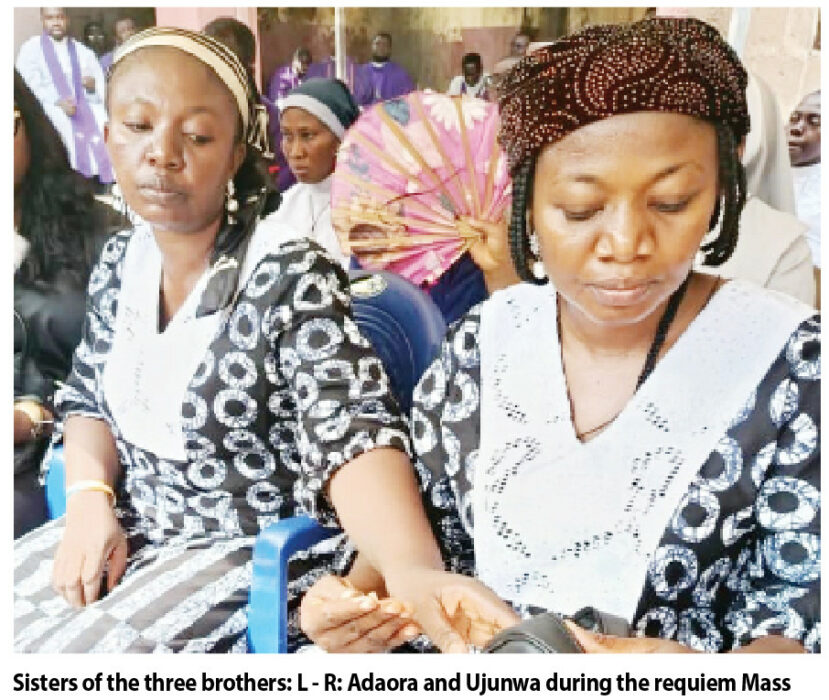
Steve left behind a widow and three children: first, two daughters, Ifunanya, aged 7, and Chukwunonyerem, aged 5, and the last child, a boy, Somtochukwu, aged 1. Casmir, according to one of their uncles, who also said that he lived in Lagos with the deceased’s three brothers, left a pregnant widow. Their third brother, Collins, a twin, has not been married. According to tradition, his twin brother, Ugochukwu, was absent from the burial ceremony. He was not allowed to see the remains of his twin, even as his casket was being lowered into the grave. Their parents, Sir Polycarp Omatu and his wife, Lady Juliana, have also already joined their ancestors some years ago. With the demise of their three children, those left in the family are the priest, Rev. Fr. William Omatu, who is, incidentally, the first male child, but second child, after Adaora (first child), Ujunwa (third child), and Ugochukwu, the last child. Adaora and Ujunwa are already married. So, Fr. William and Ugochukwu are left to care for the two widows and children of their deceased brothers.

However, a former Anambra State governor, Mr Peter Obi, who visited the bereaved family, consoled them and promised to maintain a close relationship with them. He told them that he shared in their pain over the tragic demise of their family members. The Chairman of Ihiala local government, Hon. Anayochukwu Ojiakor, said that he was mandated by the state governor, Prof. Chukwuma Soludo, to represent him at the funeral. He promised that his local government would do everything within its power to support the bereaved family of the three deceased brothers.

See also  Christmas: Travellers decry highway extortion by fake council officials

But as far as Fr. William and the homilist during the requiem Mass, spiritual director of Upper Room Ministry, Enugu, Rev. Fr. Anthony Nnaji, are concerned, “God does not abandon orphans”. They expressed strong faith that God will always cater for the widows and orphans. For instance, Fr. William, referencing the Bible passage, said, “In Job chapter 19:25, Job said ‘I know that my redeemer liveth’. And in Romans 8:37, it is said ‘in all these things we are more than conquerors’”. “What we have today is by the grace of God. The sustenance of the two widows, children, and my siblings is in the hands of God,” Fr. William said. Fr. Nnaji was emphatic that God knew about the tragedy that befell the three brothers. He particularly cautioned those making negative comments about their death to desist, warning that such statements could be a reason for such people to be condemned to hellfire on their last day. “God does not tell anyone when He will come for him or how He will come for him,” Fr. Nnaji admonished.

Similarly, the president of the Ihiala indigenous priests and religious, Rev. Fr. Desmond Ebulue, a Redemptorist priest, dismissed the superstition being alluded to as the cause of the tragic death of the three brothers. He said that though their death was a tragedy, as Christians, they were not subject to any deity. The Vicar-General of the Minna Diocese, Rev. Fr. Tadeus Umaru, represented the Bishop at the requiem Mass attended by 47 Catholic priests and over 20 Reverend Sisters.

Chinedu said that he got the worst beating of his life from soldiers and police personnel when he attempted to go to the scene of the fire disaster to see if he could rescue his three trapped nephews. Chibuzo Mbachi, a trader at the Balogun Market, dealing in ladies’ wear and T-shirts, said  that he lost goods worth over N70 million to vandals who invaded the market. He lamented that, even though security agencies and other agents of the Lagos state government prevented them from entering the market to retrieve their goods, the thieves still carted them away.

“I want to plead with the Lagos state government to come to our help. In such a market, we are supposed to have a functional fire service station. I lost between N70 million and N78 million. I deal in ladies’ wear and T-shirts. As we were running away, because security people were chasing us away, thieves were carting away our goods,” Mbachi lamented.

FOLLOW US ON:

FACEBOOK

TWITTER

PINTEREST

TIKTOK

YOUTUBE

LINKEDIN

TUMBLR

INSTAGRAM

Continue Reading
Click to comment

Leave a Reply

Your email address will not be published. Required fields are marked *

News

Labour to engage FG on minimum wage review

Published

on

The Nigeria Labour Congress and the Trade Union Congress said they will restart negotiations with the Federal Government over a new national minimum wage, warning that workers can no longer cope with rising living costs as inflation continues to erode real incomes.

The unions are pushing for what they described as a “genuine living wage” to replace the current framework, which they said no longer reflects Nigeria’s economic realities, particularly sharp increases in food, transport, housing, and healthcare costs.

The position was contained in a joint address delivered at the 114th International Labour Conference in Geneva on Monday, where the unions also rejected any proposal to tax the minimum wage or impose additional fiscal burdens on low-income earners.

Nigeria’s current minimum wage of N70,000 was signed into law on 18 July 2024, in an agreement between organised labour and the federal government. President Bola Tinubu formally announced the wage on 19 July 2024, and it took effect on 29 July 2024.

The agreement originally set a three-year review cycle, shifting from the previous five-year arrangement. However, in January 2025, the Federal Government adjusted the framework, announcing that the minimum wage would now be reviewed every two years, effectively setting 2026 as the next review point.

In light of this, labour leaders said they intend to formally open discussions with the federal government ahead of the July 2026 wage renegotiation deadline, in a bid to prevent the delays that have often hindered previous minimum wage reviews.

“The current Act expires early next year, and we have announced that renegotiation will commence by July 2026 to avoid the painful delays of the past. As soon as we leave here, we shall write again to the government demanding the commencement of the process for renegotiating the national minimum wage,” the unions said.

See also  ‘Not Registered For Sale’ – NAFDAC Addresses Indomie Recall Fears

The labour leaders said workers are already under severe pressure from inflation, currency depreciation, and rising costs across essential services, arguing that official economic indicators do not reflect the daily realities of most households.

They warned that taxing the minimum wage would worsen poverty and deepen economic hardship at a time when many citizens are struggling to meet basic needs.

“We demand nothing less than a genuine living wage that reflects today’s harsh economic realities. We also demand immediate relief measures by governments at all levels until a new minimum wage is signed into law. We reject outright any attempt to tax the minimum wage or impose further burdens on the poor,” the unions said in their communiqué.

The unions stressed that the upcoming negotiations must go beyond nominal wage adjustments and instead focus on protecting real incomes, which they said have been steadily eroded by inflation.

They also urged federal and state governments to introduce short-term relief measures pending the conclusion of negotiations, warning that delays could heighten industrial tensions across the country.

Beyond wage concerns, the labour movement used the Geneva platform to highlight broader economic and social challenges, including insecurity, unemployment, and rising poverty levels.

They said insecurity in several parts of the country has made commuting increasingly dangerous for workers, with killings, abductions, and displacement affecting productivity and livelihoods.

According to the unions, nearly 2,000 people were killed in the first quarter of the year, while millions have been displaced, with entire communities and economic activities disrupted by violence.

See also  Sultan-Led NSCIA Slams Southern Resistance To Sharia Panels Establishment

They warned that worsening insecurity could force workers to remain at home as a survival response, escalating tensions beyond traditional labour action if not urgently addressed.

The labour leaders also said about 65 per cent of Nigerians, estimated at roughly 150 million people, are currently living in multidimensional poverty, driven by inflation, job losses, and declining purchasing power.

They argued that while macroeconomic reforms are aimed at stabilisation, they have yet to translate into improved living standards for ordinary citizens.

As the 2027 general elections approach, the unions said they are developing a charter of demands to shape their engagement with political actors and inform their support for candidates, noting that  only political actors who commit to improved security, functional public services, wage reforms, and protection of labour rights would receive their backing.

The labour movement also raised concerns over alleged interference in union affairs in some states, accusing certain governments of undermining democratically elected labour leadership structures.

They emphasised that organised labour would resist any attempt to weaken union independence or impose external control on labour organisations.

As the current wage regime approaches its 2026 review window, the unions said their priority remains securing a wage structure that reflects economic realities and protects workers from further erosion of income.

They maintained that the outcome of the upcoming negotiations would determine whether Nigerian workers receive what they termed a “living wage” or continue to endure worsening economic hardship.

punch.ng

FOLLOW US ON:

FACEBOOK

TWITTER

PINTEREST

TIKTOK

YOUTUBE

LINKEDIN

INSTAGRAM

Continue Reading

News

Ribadu, Akpabio advocate tech-driven border control over Insecurity

Published

on

The National Security Adviser, Nuhu Ribadu, and President of the Senate, Godswill Akpabio, on Tuesday called for the deployment of modern technology and stronger regional cooperation to strengthen Nigeria’s border security architecture and address growing security threats across the country.

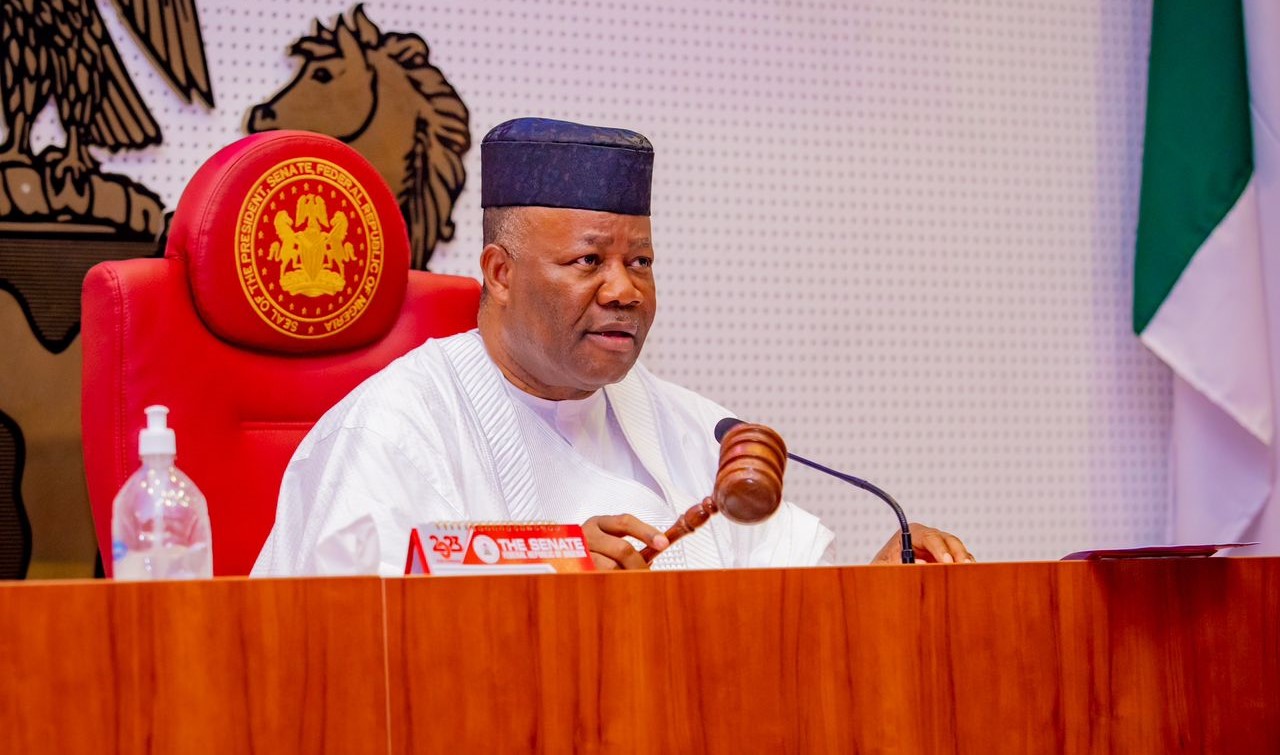
FILE: Akpabio

They made the call at the opening of the 15th National Security Seminar organised by the Alumni Association of the National Defence College in Abuja.

Represented by the Director of Policy and Strategy at the Office of the National Security Adviser, Yazid Gbemudu, the NSA said Nigeria’s territorial integrity and national stability were closely tied to the effectiveness of its border security framework.

He noted that while Nigeria’s extensive land and maritime borders facilitated trade, regional integration and socio-economic development, they also exposed the country to threats including terrorism, arms trafficking, smuggling, human trafficking, irregular migration and other forms of transnational organised crime.

According to him, weak border governance creates vulnerabilities that can be exploited by criminal and terrorist networks, thereby undermining national security and development efforts.

“A major pillar of Nigeria’s contemporary border security framework is the National Border Management Strategy, which promotes an integrated border management approach.

“The strategy seeks to enhance intelligence collaboration, strengthen border infrastructure, improve surveillance capabilities and modernise border management processes,” he said.

Ribadu said the deployment of Border Management Information Systems and other technological solutions at key entry and exit points had improved data collection, traveller screening and migration monitoring.

“These initiatives demonstrate Nigeria’s commitment to aligning its border management practices with international standards,” he added.

See also  Court bars Pat Utomi from establishing shadow government

The NSA stressed the need for the full implementation of an integrated border management system to improve coordination among security, intelligence and law enforcement agencies.

“Effective intelligence sharing, joint operations and harmonised border procedures are essential for addressing contemporary security threats,” he said.

He also advocated increased investment in technology-driven border security solutions.

“Expanding surveillance systems across land, maritime and coastal borders will significantly improve monitoring capabilities and reduce illegal cross-border activities.

“Modern challenges require modern solutions, including biometric identification systems, advanced border monitoring technologies and data-driven security frameworks,” Ribadu stated.

The NSA further emphasised the importance of regional and bilateral cooperation, noting that many of the security challenges confronting Nigeria’s borders were transnational in nature and required coordinated responses among neighbouring countries.

He also called for greater investment in border communities through sustainable development, improved infrastructure and economic opportunities to reduce their vulnerability to criminal exploitation.

“Strengthening Nigeria’s border security architecture is fundamental to ensuring national stability, protecting territorial integrity and promoting socio-economic development,” he said.

Ribadu, however, acknowledged challenges such as porous borders, inadequate infrastructure, limited technological capabilities and gaps in inter-agency coordination, saying they required urgent attention.

“Border security is a shared responsibility that requires the collective efforts of security agencies, government institutions, border communities and international partners,” he added.

Speaking at the event, Akpabio, who was represented by the Chairman of the Senate Committee on Defence, Ahmad Lawan, said Nigeria’s extensive land and maritime boundaries posed significant security challenges.

“As a country with extensive land and maritime boundaries, Nigeria faces significant challenges relating to border control, illegal migration, arms trafficking, smuggling and the infiltration of criminal and extremist elements.

See also  Autonomy battle: Local Governments demand direct funds as states receive N7.43tn

“It is, therefore, imperative that Nigeria prioritises the strengthening of its border security architecture through improved surveillance, enhanced infrastructure, better inter-agency coordination, technological innovation and stronger regional cooperation,” he said.

Akpabio noted that many of the security threats confronting Nigeria had transnational dimensions, making coordinated responses essential.

He stressed that peace and security remained prerequisites for meaningful national development.

“There can be no meaningful development without peace and security. Porous and poorly managed borders can become vulnerabilities that undermine national security efforts and national stability,” he said.

The Senate President also advocated a whole-of-government and whole-of-society approach to addressing insecurity.

According to him, government institutions, security agencies, civil society organisations, the private sector, traditional institutions, the media and academia all have critical roles to play in safeguarding the country.

Earlier, the Acting President of AANDEC, Commodore Amatare Kpou (retd.), described the seminar as a key platform for promoting informed discourse on national security challenges and opportunities.

Kpou said the theme of the seminar, “Strengthening Nigeria’s Border Security Architecture for National Stability,” was timely, given the growing threats of irregular migration, smuggling, trafficking and other cross-border crimes.

He expressed confidence that the deliberations would generate useful recommendations for policymakers and contribute to efforts aimed at building a safer and more secure Nigeria.

Nigeria shares over 4,000 kilometres of land borders with neighbouring countries and an extensive coastline, making border security a critical component of national security.

Authorities have repeatedly identified porous borders as channels for terrorism, arms smuggling, human trafficking and other transnational crimes.

The Federal Government has in recent years intensified efforts to strengthen border management through technology, intelligence sharing and regional cooperation.

See also  Christmas: Travellers decry highway extortion by fake council officials

punch.ng

FOLLOW US ON:

FACEBOOK

TWITTER

PINTEREST

TIKTOK

YOUTUBE

LINKEDIN

INSTAGRAM

Continue Reading

News

FG releases barely 5% of N54.93tn three-year roads budget

Published

on

The Federal Government has released about N2.68tn for the construction, rehabilitation and maintenance of roads and bridges across the country between 2023 and April 2026, findings by The PUNCH from the Open Treasury Portal have shown.

The analysis, however, revealed a significant disparity between approved budgets and actual releases, with the government making provisions totalling N54.93tn for road-related projects within the period under review.

The figures highlight both the growing emphasis on infrastructure development and the persistent financing constraints that continue to affect capital project execution in the country.

The development also comes amid the ongoing Renewed Hope Media Tour organised by the Presidential Communications Team, designed to showcase projects being implemented under President Bola Tinubu’s Renewed Hope Agenda.

Data obtained from the Open Treasury Portal on Tuesday showed that road projects attracted a combined budgetary allocation of N2.53tn in 2023, out of which N631.51bn was released, representing an implementation rate of 24.95 per cent.

The Treasury data, however, did not specify the road projects to which the funds were released and did not indicate whether the government’s four legacy highway projects formed part of the expenditure.

A year-by-year breakdown showed that road construction projects received N280.14bn from a budget of N1.09tn during the year, while rehabilitation and repair works attracted N345.93bn from an allocation of N1.42tn. Road and bridge maintenance projects also received N5.44bn out of a total provision of N14.68bn.

In 2024, the Federal Government increased its budgetary commitment to the sector, making provisions amounting to N9.39tn for road-related projects. However, actual releases stood at N784.60bn, representing 8.36 per cent of the approved amount.

See also  ‘Not Registered For Sale’ – NAFDAC Addresses Indomie Recall Fears

Road construction projects accounted for N383.74bn of the spending from an allocation of N5.05tn, while rehabilitation projects received N384.49bn from a budget of N4.32tn. The government also released N16.37bn for the maintenance of roads and bridges out of a total provision of N18.18bn.

The trend continued in 2025, with the government budgeting N7.22tn for road construction and rehabilitation projects. Treasury records showed that N670.68bn had been released during the period, translating to an implementation rate of 9.29 per cent.

Of the amount released, road construction projects received N269.75bn from an allocation of N3.42tn, while rehabilitation and repair projects attracted N400.94bn from a budget of N3.80tn.

The 2026 figures indicate a sharp rise in budgetary provisions. As of April 2026, the government had earmarked N35.79tn for road construction, rehabilitation and maintenance projects, the highest within the four-year period.

However, only N597.08bn had been released, representing 1.67 per cent of the approved budget. Specifically, road construction projects had a budgetary provision of N23.61tn, with releases amounting to N293.06bn.

Similarly, rehabilitation and repair projects received N300.80bn from a total allocation of N12.03tn. Road and bridge maintenance projects had an allocation of N144.64bn, but only N3.22bn had been released as of the end of April. Treasury records show that N26.54bn was released in April alone, leaving an outstanding budget balance of N23.32tn yet to be funded.

The data indicate that although substantial sums have been earmarked for road projects over the years, actual cash releases remain significantly lower than approved allocations, reflecting the financing constraints that often affect capital project implementation.

See also  Sultan-Led NSCIA Slams Southern Resistance To Sharia Panels Establishment

Further analysis showed that road construction consistently attracted the largest allocations. Budgetary provisions rose from N1.09tn in 2023 to N23.61tn in 2026, reflecting the Federal Government’s increasing focus on large-scale highway projects.

Road rehabilitation spending remained substantial throughout the period. Allocations increased from N1.42tn in 2023 to N12.03tn in 2026, suggesting a parallel effort to repair existing infrastructure.

Maintenance received the smallest allocations but recorded the highest execution rate. In 2024, road and bridge maintenance achieved a 90.05 per cent implementation rate, compared to less than 10 per cent for construction and rehabilitation.

Overall, the Federal Government budgeted N54.93tn for road-related projects between 2023 and April 2026 but released N2.68tn during the same period.

The data also showed that while budgetary provisions expanded significantly over the years, the percentage of funds released declined. In 2023, about 25 per cent of the approved budget was released. This fell to 8.36 per cent in 2024 and 9.29 per cent in 2025.

As of April 2026, only 1.67 per cent of the total budgetary provision had been released. The development comes amid the Federal Government’s renewed focus on infrastructure as a catalyst for economic growth.

Several major road projects are currently underway across the country, including the Lagos-Calabar Coastal Highway, the Abuja-Kaduna-Zaria-Kano Road, the Sokoto-Badagry Super Highway and other strategic federal highways aimed at improving connectivity across Nigeria’s six geopolitical zones and stimulating economic activities.

The Minister of Works, David Umahi, recently disclosed that the Federal Ministry of Works would prioritise the completion of major highways and the execution of four presidential legacy projects in its 2026 capital plan.

See also  Tinubu approves N10bn funding for emergency response to Ebola

According to the minister, the ministry inherited over 2,000 ongoing projects in 2023, many of which have been rolled over into subsequent budgets due to funding constraints.

Umahi also told lawmakers during the defence of the ministry’s 2026 budget proposal that the Federal Government owed contractors about N2.2tn for certified works executed between 2024 and 2025, underscoring the financing challenges facing the road sector despite rising budgetary allocations.

He added that only a fraction of expected capital releases had been made, forcing the ministry to re-scope and prioritise projects.

The Open Treasury Portal, which tracks government revenues and expenditures, provides a snapshot of how much of the approved budgets for capital projects has translated into actual spending.

Although the latest figures point to an unprecedented expansion in planned spending on road infrastructure, the challenge, analysts say, will be ensuring that budgetary commitments are backed by timely releases to deliver the intended benefits to Nigerians.

punch.ng

FOLLOW US ON:

FACEBOOK

TWITTER

PINTEREST

TIKTOK

YOUTUBE

LINKEDIN

INSTAGRAM

Continue Reading

Trending