Connect with us

Business

Asian stocks hit by fresh tech fears as gold retreats from peak

Published

on

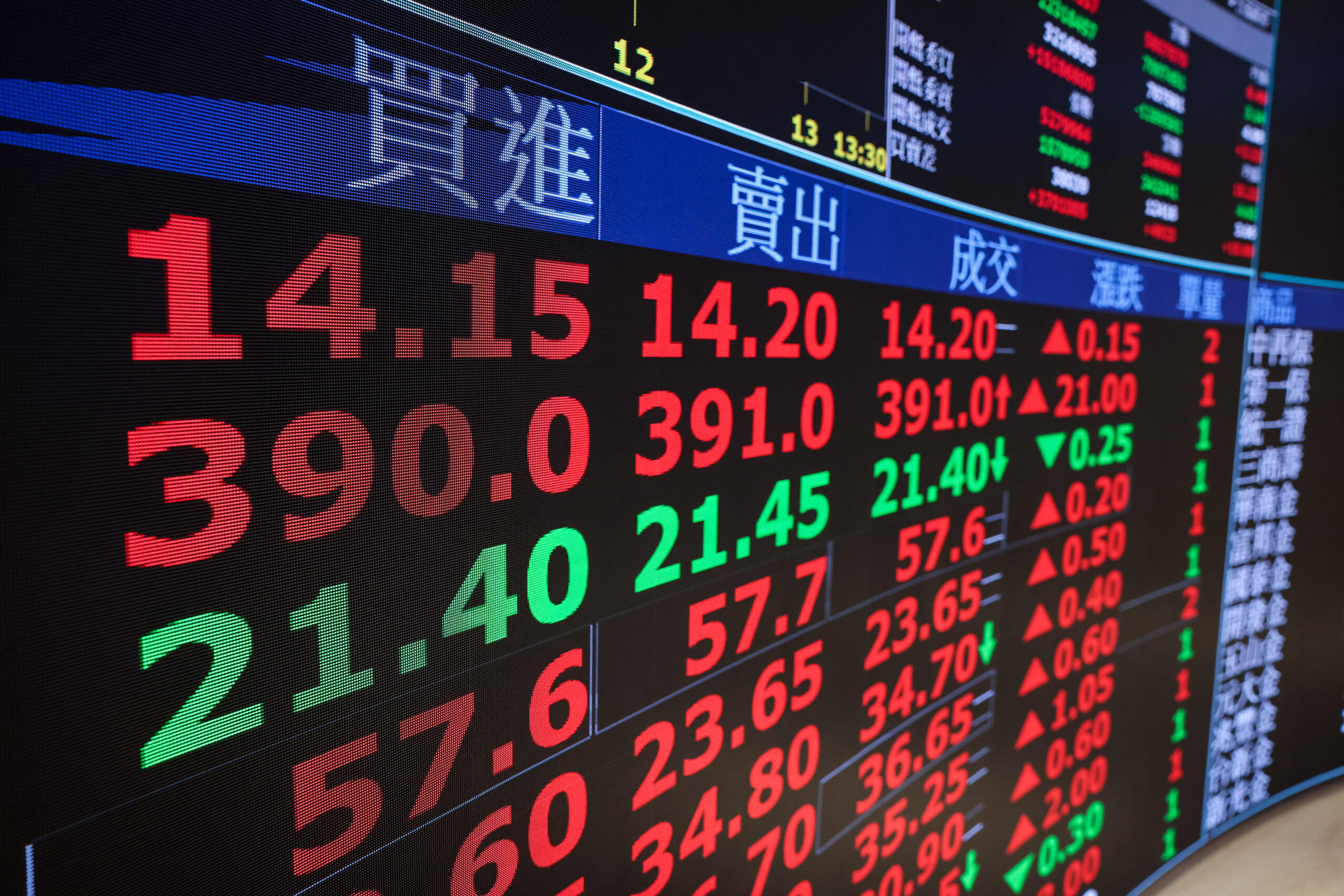
Asian stocks took a hit on Friday amid fresh worries over vast investments in artificial intelligence, gold and silver tumbled after hitting multiple record highs, and oil retreated on hopes for an easing of US-Iran tensions.

Markets have endured a rollercoaster ride this week as traders weathered a weaker dollar, Donald Trump’s threats against Tehran, a resumption of tariff warnings and a possible US government shutdown.

Fresh optimism in the tech sector about the future of AI has provided support, however, with healthy earnings from companies including Meta, Samsung and SK hynix providing much cheer.

However, the positivity took a hit on Thursday after Microsoft announced a surge in spending on AI infrastructure and revived concerns that companies could take some time before seeing a return on their investments.

There are also fears that firms’ valuations may be a little too stretched and markets could be in a bubble, having soared in recent years to record highs on the back of a tech-fuelled rally.

“Microsoft suffered its worst session since the COVID‑era crash, falling 12 percent and accounting for over two‑thirds of the S&P 500’s decline,” wrote National Australia Bank’s Rodrigo Catril.

“Concerns centred on rising investment spending, slower Azure (cloud service) growth, and a longer runway to monetising AI.”

– Trump Fed pick –

Wall Street ended mostly in the red, with Dow the only advancer.

Asia also struggled amid speculation Trump will pick Kevin Warsh, a former Fed governor and a man considered more hawkish on interest rates, as the next boss of the central bank. The president has said he will name a successor to Jerome Powell on Friday morning US time.

See also  Union Bank completes merger with Titan Trust Bank

Hong Kong, Shanghai, Tokyo, Sydney, Singapore, Taipei and Bangkok were all down. Seoul, Manila and Wellington rose.

Paris was flat as data showed France’s economy grew slower last year than 2024. London opened lower but Frankfurt rose.

Jakarta rose after a two-day rout sparked by index compiler MSCI calling on regulators to look into ownership concerns.

The compiler said: “If insufficient progress is made towards achieving necessary transparency enhancements by May 2026, MSCI will reassess Indonesia’s market accessibility status.”

It warned this could result in “a weighting reduction in MSCI Emerging Markets Indexes for all Indonesian securities and a potential reclassification of Indonesia from Emerging Market to Frontier Market status”.

Gold was also in retreat, sitting around $5,150 an ounce, a day after topping out above $5,595. Silver was at $106 from a peak of more than $121.

The precious metals were also weighed by a slight uptick in the dollar, having tumbled on Trump appearing to be happy to see the world’s reserve currency weaken despite the potential risk of pushing up US inflation.

Investors are keeping tabs on developments in the Middle East after the US president sent an “armada” to the region and warned Iran of possible strikes if it did not reach a fresh nuclear deal.

Both main contracts were down more than one percent, having spiked as much as five percent Thursday.

Still, concerns remain about a conflict in the crude-rich region, which would send prices soaring, also putting upward pressure on inflation.

In Washington, the US Senate edged closer to a vote on a funding deal to avert a government shutdown following a bitter standoff over Trump’s sweeping immigration crackdown.

See also  Dangote Refinery: Consumer Forum says PENGASSAN plotting to sabotage energy independence

Current government funding lapses at midnight on Friday.

– Key figures –

Tokyo – Nikkei 225: DOWN 0.1 percent at 53,322.85 (close)

Hong Kong – Hang Seng Index: DOWN 2.1 percent at 27,387.11 (close)

Shanghai – Composite: DOWN 1.0 percent at 4,117.95 (close)

London – FTSE 100: DOWN 0.2 percent at 10,150.97

West Texas Intermediate: DOWN 1.7 percent at $64.32 per barrel

Brent North Sea Crude: DOWN 1.6 percent at $68.50 per barrel

Euro/dollar: DOWN at $1.1940 from $1.1962 on Thursday

Pound/dollar: DOWN at $1.3781 from $1.3800

Dollar/yen: UP at 153.74 yen from 153.04 yen

Euro/pound: DOWN at 86.63 pence from 86.67 pence

New York – Dow: UP 0.1 percent at 49,071.56 (close)

AFP

punch.ng

FOLLOW US ON:

FACEBOOK

TWITTER

PINTEREST

TIKTOK

YOUTUBE

LINKEDIN

TUMBLR

INSTAGRAM

Continue Reading
Click to comment

Leave a Reply

Your email address will not be published. Required fields are marked *

Business

FAAN’s ride-booking app triggers airport taxi row

Published

on

A viral protest by airport cab drivers has shifted attention from disputed vehicle requirements to deeper concerns over Federal Airports Authority of Nigeria’s digital taxi reform, exposing tensions between transport modernisation, stakeholder inclusion and operational realities, writes OLASUNKANMI AKINLOTAN

A viral video of distressed airport cab drivers appealing to President Bola Tinubu over what they believed was a directive requiring them to acquire 2020 model vehicles has sparked broader debate over FAAN’s latest push to modernise airport ground transportation.

While the appeal centred on the cost of acquiring newer vehicles in an economy weighed down by inflation and dwindling purchasing power, findings by The PUNCH showed that the controversy extends beyond vehicle specifications. At the heart of the disagreement is the implementation of the Airport Car Hire Rank Management System, a digital platform introduced by FAAN to regulate airport taxi operations, improve security and streamline passenger movement.

For FAAN, ACHRAMS represents a major step towards modernising airport ground transportation and closing longstanding security and operational gaps. For the drivers, however, the unanswered questions are less about digitisation and more about participation and practicality, among other concerns.

For many of the drivers, however, the issue is not resistance to technology but the feeling that they are being excluded from a reform that will directly affect their daily operations and livelihoods.

In the video, one of the drivers, speaking in Yoruba, appealed to Nigerians to intervene, saying, “This is what we are facing. Nigerians should help us intervene. They said we should go and buy a vehicle from 2020 above. Vehicles that cost between N18 and N30m, with the way Nigeria is now.

“There are no jobs in the country, with what we are going through. Please pity us Nigerians. Let this go viral. Nigerians pity us, help us intervene.”

The video gained traction on social media, drawing mixed reactions. While many Nigerians sympathised with the operators, arguing that surviving businesses should not be burdened with additional costs during economic hardship, others insisted that airport transport services should reflect the standards expected of international gateways.

Behind the public debate lies ACHRAMS, a technology-driven initiative FAAN says is designed to improve passenger safety, eliminate touting, regulate airport taxi services and ensure transparent fare administration.

The authority insists the initiative has been widely misunderstood.

See also  Minority investors vital for capital market growth – Sola Oni

Responding to the controversy, FAAN’s Director of Commercial and Business Development, Ms Adebola Agunbiade, dismissed claims that the protest was triggered by any directive compelling drivers to procure 2020 model vehicles.

She said, “Regarding the video circulating online, the claim that the main cause of the drivers’ actions is not accurate. The footage shows planned resistance by car hire operators who refused to register on the ACHRAMS. Those drivers were working to prevent the soft and pilot launches of the system at the Murtala Muhammed International Airport. This incident is not related to any policy regarding vehicle model year.”

Agunbiade explained that the authority’s minimum vehicle requirement remains 2012 models and above, not 2020 as widely alleged.

She further said, “It is incorrect to say that FAAN asked drivers to change their vehicles to a minimum of the 2020 model because of the introduction of ACHRAMS. In fact, one of the conditions laid down by the Authority for registration on the app is that drivers must operate vehicles manufactured in 2012 or above.”

She also stated that the requirement was introduced as far back as 2024 and that FAAN had repeatedly extended compliance deadlines from January to June and now to 1 October 2026, to accommodate operators facing financial constraints.

The airport managers also rejected allegations that the new system was intended to reduce the number of airport cab operators.

Agunbiade stated, “It is important to note that FAAN is not planning to clear only 60 per cent of existing drivers to pave the way for ACHRAMS. The intention is to clear all drivers, provided they comply with the laid-down standards.”

She disclosed that nearly all existing airport taxi operators at the Murtala Muhammed International Airport had already been admitted into the pilot phase of the platform, except two companies whose union allegedly advised members against participating while pursuing separate digital solutions.

FAAN further revealed that discussions were ongoing with ride-hailing companies such as Bolt and Uber to integrate their operations into ACHRAMS, explaining that any temporary restriction on airport pickups was purely regulatory pending the conclusion of agreements.

FAAN says the application goes beyond regulating drivers, describing it as a platform that will reshape airport transport through digital tracking, stricter vehicle and driver screening, transparent fare systems, designated pick-up points and stronger passenger security.

The platform, which is being implemented under a ten-year concession managed by two companies, the agency said, will reduce congestion around airport terminals while introducing electronic booking and payment options for passengers.

See also  Dangote signs deal to distribute 65m litres petrol

FAAN maintains that consultations did not begin overnight, insisting stakeholder engagements commenced in 2024 before the project entered its pilot phase.

Despite those assurances, many airport cab operators maintain that the consultation process has not been as inclusive as it ought to have been.

The National President of the National Association of Airport Cab Drivers, Mr Adepegba Samuel, said the association’s demand is simple and not the suspension of the initiative, but genuine dialogue with them.

“You see, when you want to introduce something that you want people to align with, there should be serious briefing and enlightenment about the issue. The people introducing something are in the office, but we are the ones operating on the road. They should speak with us so that we can also tell them our views,” he said.

Samuel argued that airport drivers interact with passengers more than any other stakeholders after travellers leave the terminal buildings, making their practical experience invaluable in shaping the success of any operational reform.

He said, “We try to take the message to the public, but we need to sit together. We are the ones who will mostly speak to the public about this, but when we are not properly briefed or when you refuse to sit with us, how do we go forward from there?

“There are things they don’t know in the office that are happening, that we know because we deal with the public. We deal with the masses. We are at the finishing end of the job.

“They will bring the passenger from the plane down. We will take them to their respective areas. So we are dealing with them. If they want to ask questions about our operation, the public will not ask the government first; they will ask us. That is why we are saying let us have a round-table discussion.”

His concerns also extend to the practical application of the technology.

See also  PENGASSAN declares nationwide strike over ‘mass sack’ of 800 workers at Dangote refinery

According to him, the operational realities of Nigeria’s airports require a more flexible system than what has currently been proposed.

He reasoned, “The app they are talking about varies. The one that we work with in MM1 will not work at the international terminal. This one cannot even work for the public. The app should be made for the airport alone and be generalised.

“That is why we are seeking an audience with them, and they have refused to grant it. We are not fighting them. They are our bosses and principals, but they should please listen to us too.”

Samuel illustrated his concerns with a personal example, explaining that many airport drivers have built trusted relationships with customers over decades.

He explained, “For instance, I have a customer, an old customer of more than 25 years. Some of them have children in Babcock and other boarding schools. They don’t even come to pick their children themselves because they have confidence in me. They trust me.

“Imagine they are trying to reach me through the app from the international terminal while I am at the local airport; that will not be possible.

“They are our principals, but what we are saying is that let us come to a round table and debate the issue. That is all we seek.”

Attempts to obtain FAAN’s response on why the authority had yet to meet with the union were unsuccessful, as calls and text messages sent to its spokesperson, Henry Agbebire, went unanswered as of the time of filing this report.

Meanwhile, FAAN sources, who requested anonymity because they were not authorised to speak publicly, told our correspondent that the authority had no basis to meet directly with the drivers since it has no contractual relationship with them. They explained that FAAN had instead engaged with the concessionaires responsible for overseeing the airport cab operators.

One of the sources said, “FAAN could not have met with them because they work at the airport under different companies, yes, concessionaires, and these people are the ones FAAN met on several occasions. We couldn’t have met the drivers or unions.”

punch.ng

FOLLOW US ON:

FACEBOOK

TWITTER

PINTEREST

TIKTOK

YOUTUBE

LINKEDIN

Continue Reading

Business

FG offers land to investors for mass housing projects

Published

on

The Federal Government has expressed readiness to partner with credible investors to address Nigeria’s housing deficit, saying it is willing to provide land across the country for mass housing projects.

The Minister of Housing and Urban Development, Muttaqha Darma, disclosed this on Tuesday in a statement issued by the ministry’s Director of Press and Public Relations, Badamasi Haiba, after a Chinese delegation, led by its Chief Engineer, Lewis Chima, sought a partnership with the Federal Government to deliver large-scale affordable housing across the country.

Darma commended the company for its interest in investing in Nigeria’s housing sector, noting that the proposal aligns with President Bola Tinubu’s Renewed Hope Agenda, which prioritises expanding access to affordable and sustainable housing through public-private partnerships.

The minister said the ministry remained committed to creating an enabling environment for genuine investors by facilitating access to land and providing institutional support for successful project implementation.

“Our mandate is to ensure that more Nigerians have access to affordable and decent housing. We are therefore ready and willing to provide land in Abuja, across the states and in local government areas, subject to due process and the fulfilment of all statutory requirements. This proposal is encouraging because it aligns with the Renewed Hope Housing Programme and our determination to reduce the nation’s housing deficit,” Darma said.

Speaking during the presentation, Chima said the company was attracted to Nigeria because of its huge housing demand and economic potential.

He noted that Nigeria’s estimated housing deficit of about 17 million units underscored the need for large-scale interventions, adding that the proposed project would complement the Federal Government’s Renewed Hope Housing Programme by providing affordable, durable and rapidly deployable housing solutions across the country’s six geopolitical zones.

See also  Minority investors vital for capital market growth – Sola Oni

“The objective of this project is not merely to construct houses, but to develop sustainable communities through modern industrialised construction technology. We believe this initiative will make a significant contribution towards closing Nigeria’s housing gap while supporting the Federal Government’s vision of affordable housing for all,” he stated.

Chima explained that the company planned to deploy advanced prefabricated construction technology under the Engineering, Procurement, Construction and Financing model, integrating project design, financing, construction and delivery into a single framework.

According to him, the technology would enable the delivery of the proposed 10,000 housing units within 30 months while reducing construction costs, improving quality, shortening completion timelines, and strengthening project risk management through international financing support.

He also assured the ministry of the company’s commitment to establishing a long-term partnership with the Federal Government, expressing confidence that the project would help reduce the housing deficit, create jobs, promote technology transfer, and support sustainable urban development.

Following the presentation, the minister directed the constitution of a committee comprising relevant directors to undertake a comprehensive review of the proposal to guide the ministry’s next line of action.

The Permanent Secretary of the ministry, Dr Shuaib Belgore, also assured the delegation of the ministry’s commitment to promoting strategic partnerships that would advance the Renewed Hope Housing Agenda and accelerate the delivery of affordable, quality and sustainable housing across the country.

Nigeria is estimated to have a housing deficit of about 17 million units, a challenge the Federal Government has said it is tackling through the Renewed Hope Housing Programme.

The initiative is designed to expand access to affordable housing through a three-tier model comprising Renewed Hope Cities, Renewed Hope Estates and Renewed Hope Social Housing Estates, with the government relying on public-private partnerships to accelerate delivery.

See also  PENGASSAN declares nationwide strike over ‘mass sack’ of 800 workers at Dangote refinery

The ministry has said construction has commenced on more than 10,000 housing units across 14 states and the Federal Capital Territory under the programme. Key projects include the 3,112-unit Renewed Hope City in Karsana, Abuja; a 2,000-unit Renewed Hope City in Ibeju-Lekki, Lagos; and another in Kano, alongside 250-unit Renewed Hope Estates in several states as part of efforts to reduce the housing deficit and improve access to affordable homes.

punch.ng

FOLLOW US ON:

FACEBOOK

TWITTER

PINTEREST

TIKTOK

YOUTUBE

LINKEDIN

Continue Reading

Business

FG grants Shell $11.5/barrel tax credit to unlock $20bn investment

Published

on

The Federal Government has approved a special production-linked tax credit for Shell Plc’s Bonga Southwest Aparo deepwater oil project in a fresh move aimed at unlocking billions of dollars in investment and accelerating Nigeria’s crude oil production.

According to a Bloomberg report on Tuesday, President Bola Tinubu approved fiscal terms granting Shell and its partners a tax rebate of $11.50 for every barrel of crude oil produced from the project, more than double the standard incentive currently available under Nigeria’s fiscal framework.

The report, citing people familiar with the matter who spoke on condition of anonymity because the information is not yet public, said the incentive is expected to help move the long-delayed Bonga Southwest Aparo project towards a Final Investment Decision.

The sources also disclosed that the same production-linked tax credit would be extended to other international oil companies developing new deepwater projects in Nigeria and would remain in force until at least 2029.

The report read, “Nigeria granted Shell Plc a production-linked tax credit for a deepwater project, an incentive that will be offered to other oil majors as Africa’s biggest producer seeks to boost production, according to people familiar with the matter.

“Terms approved by President Bola Tinubu to push the Bonga Southwest Aparo project toward a final investment decision give Shell and its partners a rebate of $11.50 per barrel of crude produced, said the people who asked not to be identified because the information is not public. That’s more than double the standard amount.”

The development marks another step in the Federal Government’s efforts to restore investor confidence in Nigeria’s oil and gas industry after years of declining investment caused by oil theft, pipeline vandalism, insecurity, ageing infrastructure and regulatory uncertainty.

See also  Union Bank completes merger with Titan Trust Bank

The Bonga Southwest Aparo project is one of Nigeria’s largest undeveloped deepwater oil fields and is projected to attract about $20bn in foreign direct investment.

According to the Nigerian National Petroleum Company Limited, the project is expected to produce about 150,000 barrels of crude oil per day when it comes on stream, significantly boosting Nigeria’s oil production capacity.

Responding to enquiries, a spokesperson for Shell said the company was continuing work towards developing the project. The spokesperson said, “Shell continues to progress the Bonga Southwest Aparo project toward development and will communicate material updates through official channels.”

Officials of the Nigerian National Petroleum Company Limited and the Office of the President’s Special Adviser on Energy did not respond to requests for comment on the development, according to the report.

The latest incentive forms part of a broader package of reforms introduced by the Tinubu administration since assuming office in May 2023 to revive Nigeria’s struggling petroleum sector.

Over the past three years, the Federal Government has issued several executive orders designed to improve the country’s competitiveness, attract fresh investment, and unlock stalled oil and gas projects.

One of the earlier executive orders limited production tax credits to 20 per cent of a licence holder’s annual tax liability to offset operating costs, a level the government said compared favourably with global industry standards.

Stakeholders anticipate that the enhanced tax credit could improve the commercial viability of expensive deepwater developments, where production costs are significantly higher than those of onshore assets.

The report also noted that the government’s efforts to increase crude oil production are beginning to yield results.

See also  Dangote refinery, engineers on warpath over fresh redeployment

Figures released on Sunday by the Nigerian Upstream Petroleum Regulatory Commission showed that Nigeria’s crude oil production rose to an average of 1.56 million barrels per day in June, representing the country’s highest monthly output since April 2020.

The increase reflects improved security around critical oil infrastructure, renewed investment in upstream operations and government reforms aimed at restoring production levels.

However, the report said concerns remain among investors over the durability of the fiscal incentives because executive orders can be challenged in court or amended by future administrations.

To address those concerns, Shell reportedly requested that the Federal Government publish the tax-credit order in the Official Gazette, a move that would strengthen its legal standing and provide greater certainty for investors.

Internal government documents seen by Bloomberg indicated that officials have already begun the process of gazetting the order.

Nigeria has struggled for years to attract fresh investment into its upstream petroleum sector as multinational oil companies delayed or suspended major projects due to fiscal uncertainty, insecurity, and rising operating costs. Several deepwater developments have remained stalled despite the enactment of the Petroleum Industry Act in 2021.

The Tinubu administration has since prioritised reforms aimed at reversing the investment decline through executive orders, tax incentives and regulatory reforms.

The government hopes that unlocking projects such as Bonga Southwest Aparo will not only raise crude oil production but also generate billions of dollars in foreign investment, create jobs, and strengthen government revenues.

punch.ng

FOLLOW US ON:

FACEBOOK

TWITTER

PINTEREST

TIKTOK

YOUTUBE

LINKEDIN

Continue Reading

Trending