

Connect with us

Business

Nigeria Emerges Africa’s 2nd Largest Solar Energy Importer, Ahead Of Egypt

Published

on

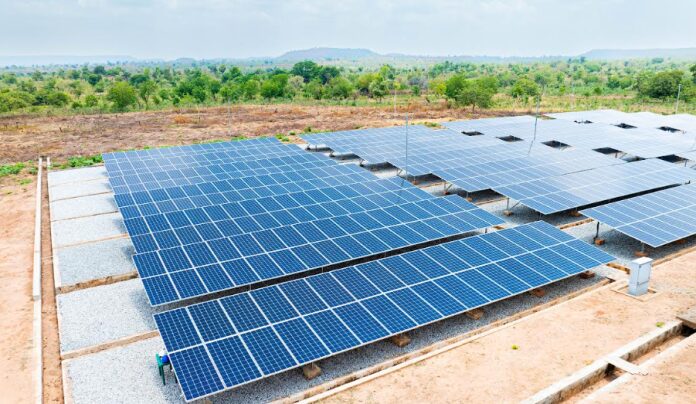
Nigeria has stepped up ahead of Egypt as Africa’s second-largest importer as solar energy and battery storage provide a practical and affordable alternative to diesel generators and unreliable grid power.

The gradual removal of diesel subsidies in Nigeria in the past two years also has helped accelerate adoption of solar energy. The policy was implemented sector by sector to cushion its impact, making diesel increasingly expensive and nudging businesses and households toward solar.

Last September, Nigeria announced plans for a 1 GW solar panel factory, the largest in West Africa. Similar facilities are under construction in Egypt, South Africa and Ethiopia.

Historically, South Africa dominated solar imports in Africa, at one point accounting for roughly half of all panels shipped to the continent. The latest data show its share has slipped below a third as demand surged elsewhere. Last year, 20 African nations set new annual records for solar imports, as 25 countries imported a total of at least 100 megawatts of capacity, according to report by the Africa Solar Industry Association.

In Algeria, solar imports soared more than 30-fold year-on-year. Imports also surged in Zambia and Botswana.

At least 23 African countries, including South Africa, Tunisia, Kenya, Chad and the Central African Republic, are now generating over 5 per cent of their electricity from solar energy, the report said.

Prices have fallen both for solar panels and batteries, mostly from China, enabling households and businesses to rely on solar plus batteries for round-the-clock electricity, the report said. Battery storage costs in Africa fell to $112 per kilowatt-hour in 2025 from an average of $144 per kilowatt-hour in 2023 as improved technology made storage systems more flexible and longer lasting.

See also  CBN targets N2.83tn cash in private hands ahead of 2027 polls

Africa was the world’s fastest-growing solar market in 2025, defying a global slowdown and reshaping where the momentum in renewable energy is concentrated, according to the report.

The continent’s solar installed capacity expanded 17 per cent in 2025, boosted by imports of Chinese-made solar panels. Global solar power capacity rose 23 per cent in 2025 to 618 GW, slowing from a 44 per cent increase in 2024.

“Chinese companies are the main drivers in Africa’s green transition,” said Cynthia Angweya-Muhati, acting CEO of the Kenya Renewable Energy Association. “They are aggressively investing in and building robust supply chains in Africa green energy ecosystem.”

Some of that capacity has yet to be rolled out. Africa has only 23.4 gigawatts peak (GWp) of working solar capacity even though nearly 64 GWp of solar equipment has been shipped to the continent since 2017. A gigawatt peak represents 1 billion watts of maximum, optimum power output under ideal conditions.

“Africa’s growth is driven by changing policies and enabling conditions in a number of countries, “said John Van Zuylen, CEO of the Africa Solar Industry Association.

“Solar energy has moved beyond a handful of early adopters to become a broader continental priority,” he said recently on the sidelines of the Inter Solar Africa summit in Nairobi. “What we are seeing is not temporary. It is policies aligning with market dynamics.”

“This ever-decreasing price of storage has game-changing implications for Africa, which has a dire need for stable and baseload power,” said Van Zuyken.

As Africa moves to build its own manufacturing capacity, the industry is looking to China to transfer knowhow to help alleviate Africa’s dependence on imported equipment and technology.

See also  Nigeria exports N707bn petrol in three months

“The solar jobs boom is occurring in services including installation, maintenance, distribution and financing, where thousands of small and medium enterprises are emerging to meet rising demand,” Van Zuylen said.

FOLLOW US ON:

FACEBOOK

TWITTER

PINTEREST

TIKTOK

YOUTUBE

LINKEDIN

TUMBLR

INSTAGRAM

Continue Reading
Click to comment

Leave a Reply

Your email address will not be published. Required fields are marked *

Business

US Government Warns American Business Executives About Investing In Nigeria

Published

on

A United States Department of State report has warned American business executives in Nigeria.

The department warned that insecurity, corruption, port inefficiencies, and regulatory uncertainty could significantly hinder investment in Nigeria.

It was reports that the department gave the warning in its 2026 Investment Climate Statements on Nigeria.

The report explained that those challenges continue to weigh on the country’s business environment despite signs of macroeconomic stability.

The department said the country’s investment landscape has been shaped by the outcomes of “painful but necessary” structural reforms introduced by the President Bola Tinubu administration.

The report said the removal of fuel subsidies and liberalisation of the foreign exchange market initially triggered significant economic volatility, although early 2026 indicators suggested some stabilisation.

However, it warned that security concerns, administrative bottlenecks and the social consequences of economic reforms remain significant considerations for foreign investors.

“The security environment is a primary variable which gives pause to potential investors,” the report said.

It noted that although attacks on oil infrastructure in the Niger Delta have decreased, oil theft and illegal bunkering persist.

In the North, the expansion of terrorist and ‘bandit’ groups continues to degrade the climate for agribusiness and mining,” the document added.

The report also raised concerns about how regulators treat foreign business executives in disputes, citing the detention of Tigran Gambaryan, a US citizen and Binance executive, for nearly eight months in 2024.

“Furthermore, the use of coercive exit bans and detentions, highlighted by the high-profile nearly eight-month detention in 2024 of U.S. citizen Binance employee Tigran Gambaryan, serves as a cautionary note for foreign executives regarding the risks of aggressive regulatory friction,” it said.

See also  CBN targets N2.83tn cash in private hands ahead of 2027 polls

The report said such cases could shape perceptions of Nigeria as a destination for foreign investment.

The department identified inefficiencies at Nigerian seaports as another major challenge for businesses, particularly those dependent on imports and exports.

“Port inefficiency remains a significant ‘hidden tax’ on investment,” the report said.

It noted that the Lekki Deep Seaport handled $9.6 billion in trade in 2025 and operated at 50 per cent capacity, helping to ease pressure on older facilities.

FOLLOW US ON:

FACEBOOK

TWITTER

PINTEREST

TIKTOK

YOUTUBE

LINKEDIN

INSTAGRAM

Continue Reading

Business

Nigerian states’ revenues rise 93%, but education spending drops — World Bank

Published

on

The World Bank says Nigeria’s 36 states recorded a 93 per cent increase in revenues between 2023 and 2025 but education received a declining share of the sector’s expenditure.

The bank disclosed this in its latest Nigeria Development Update, which examined how increased public revenues have influenced spending priorities across the federation.

The report was made available to the News Agency of Nigeria by the World Bank in Washington D.C.

According to the report, states’ aggregate revenues rose by approximately 93 per cent in real terms, while expenditure increased by 92 per cent during the period.

The report attributed the improvement partly to exchange-rate reforms, petrol subsidy removal, stronger revenue administration and increased allocations from the federation account.

It said states also benefited from refunds, settlement of longstanding federal obligations, intervention funds, and stronger Value Added Tax collections.

However, education’s share of total state expenditure declined from 14.9 per cent in 2021 to 12.1 per cent in 2025, according to the report.

Health expenditure remained broadly stable at approximately seven per cent, while social protection’s share increased from 1.4 per cent to 4.4 per cent.

The bank said capital expenditure increased significantly, accounting for 61 per cent of state spending, compared with 46 per cent previously.

Transport infrastructure recorded the largest increase, alongside substantial spending on housing, agriculture and other economic investments.

The report quoted Mathew Verghis, the World Bank Country Director for Nigeria, as saying that increased revenues provided the opportunity to improve infrastructure, education, healthcare, and water services.

See also  Consumers pay N1.13tn electricity bill despite blackouts

He said greater spending efficiency, accountability and improved service delivery were essential to ensuring that additional public resources benefited Nigerians.

The bank acknowledged improvements in states’ fiscal reporting, transparency and internally generated revenue.

It, however, stressed that stronger investment in human capital was necessary to translate economic reforms into sustainable employment and improved living standards.

The report also projected average economic growth of 4.4 per cent between 2026 and 2028, subject to sustained reforms and improved service delivery.

It urged federal and state authorities to ensure that increased public revenues translated into tangible improvements in Nigerians’ welfare.

NAN

Source: punchng.com

FOLLOW US ON:
FACEBOOK

TWITTER

PINTEREST

TIKTOK

YOUTUBE

LINKEDIN

INSTAGRAM

Continue Reading

Business

Nigeria promotes investment without building production capacity – UNILAG don

Published

on

A professor of Comparative Political Economy at the University of Lagos, Adelaja Odukoya, has asserted that Nigeria’s economic policies promote investment without sufficiently strengthening domestic production.

Odukoya argued that the contradiction had weakened the country’s productive foundations, with policies encouraging investment and entrepreneurship while failing to create the technological capacity, productive employment and processing industries needed to drive sustainable development.

Odukoya spoke at the maiden edition of the Adeleke University Toyin Falola Annual Lecture, held on Thursday at the Performing Arts Theatre, Adeleke University, Ede.

The lecture had as its theme, “History, Power and Accumulation: Reimagining Africa in the Globally Disorderly Order.”

Odukoya identified several contradictions in the way the Nigerian state manages economic activity.

He said, “The state promotes investment without creating conditions for technological transfer. It encourages entrepreneurship without generating sufficient productive employment.

“It expands primary-product exports while leaving processing capacity undeveloped. It constructs infrastructure without establishing strong linkages with domestic production.”

According to him, the contradictions explain why increased economic activity and accumulation do not necessarily translate into development.

“Accumulation is not synonymous with development,” Odukoya stated.

He argued that genuine development should be measured by the expansion of productive, technological, institutional and human capabilities.

“A country could attract investment, export minerals and agricultural commodities and record economic activity while still failing to build the domestic industries and technological capabilities required for long-term development,” he said.

His argument was echoed by Prof Toyin Falola, who said Africa’s vast natural resources would continue to reinforce dependency unless governments developed the industrial, technological and institutional capacity to transform them into productive power.

See also  220 oil blocks abandoned amid debt, crude crises

Falola said Africa’s resource problem was not simply one of historical exploitation, but also the continent’s failure to convert its resource endowments into power.

“The issue, however, is not just to repeat the history of exploitation. It is more important to know how Africa turns its great resources into power,” Falola said.

He argued that Africa could not afford to remain a spectator as global economic and geopolitical arrangements continued to change, stressing that resource ownership without the capacity to add value would not guarantee influence.

Falola said the continent required a combination of knowledge, government policy and industrial capacity to change its economic position.

“There must be universities that generate new knowledge; there must be governments that translate this knowledge into policies; there must be industries that add value to the continent’s natural resources,” he said.

He added that Africa needed more than improved infrastructure and stronger economies if it wanted to exercise greater influence in the global system.

“The future of the continent will require more than just better infrastructure, improved economies, and more effective political institutions,” Falola said.

Source: punchng.com

FOLLOW US ON:

FACEBOOK

TWITTER

PINTEREST

TIKTOK

YOUTUBE

LINKEDIN

INSTAGRAM

Continue Reading

Trending