Former Vice President Atiku Abubakar, the Obidient Movement, the Nigeria Democratic Congress and the presidential campaign organisation of Oyo State Governor Seyi Makinde have rejected the Federal Government’s proposed 30-day petrol discount, describing the intervention as inadequate and politically motivated.
The Federal Government, however, announced on Thursday that the Nigerian National Petroleum Company Limited would forgo its retail profit margin on petrol and sell the product to Nigerians at a discounted cost as part of measures to cushion households from global crude oil price shocks.
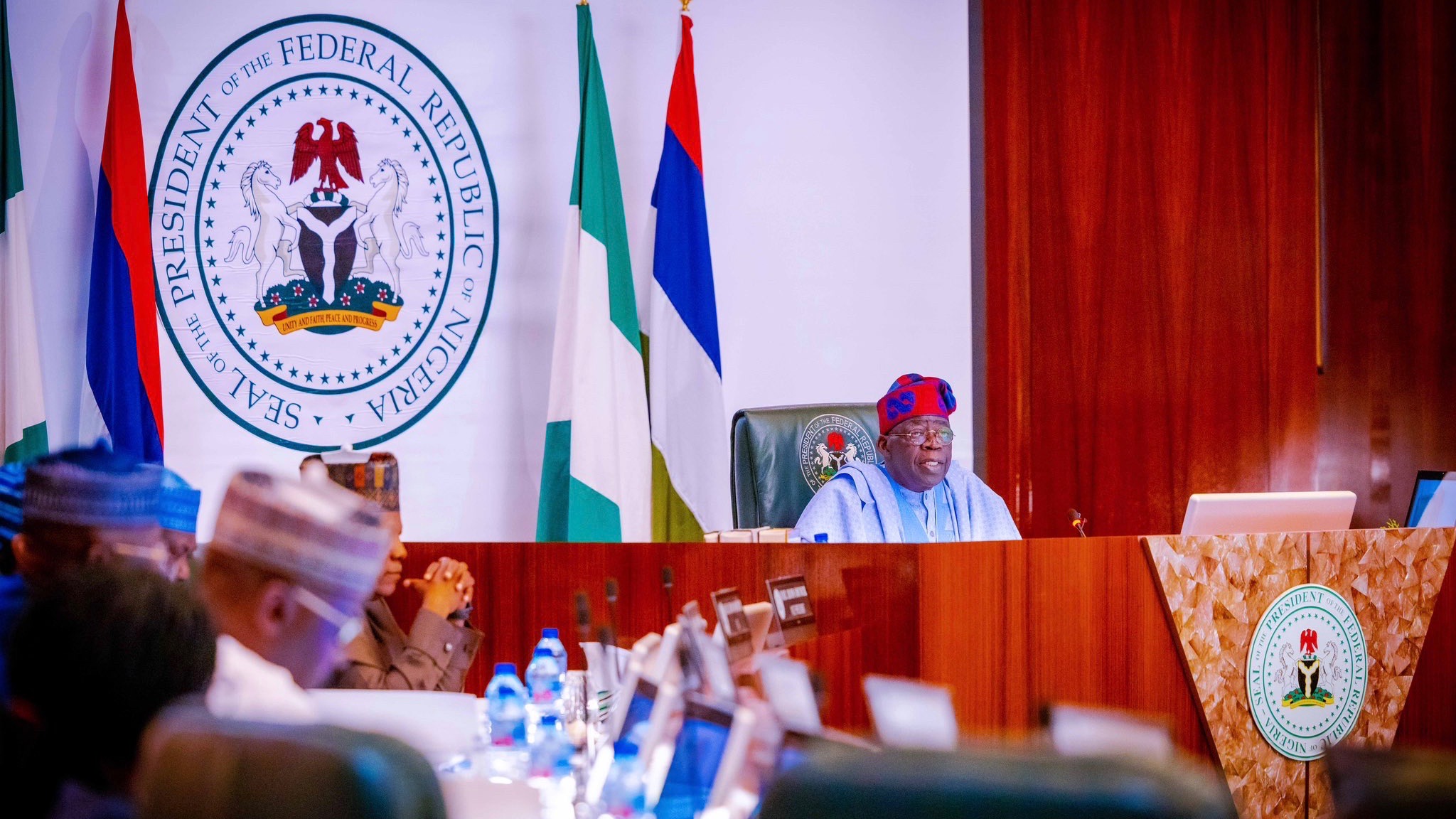
The Presidency said the arrangement, backed by President Bola Tinubu, did not signal a return to the petrol subsidy regime, which ended on May 29, 2023.
Energy experts, however, expressed mixed reactions, with some welcoming the temporary relief while others warned that the intervention could amount to another form of subsidy if its costs were not transparently managed.
Discounted fuel
The reactions followed Thursday’s announcement by the Minister of Finance and Coordinating Minister of the Economy, Taiwo Oyedele, that NNPC Limited would offer discounted petrol at its filling stations nationwide for 30 days, with priority given to public transport operators.
Oyedele said the intervention would enable NNPC to sell petrol at cost by temporarily forgoing its profit margins, rather than restoring the subsidy regime removed in May 2023.
“We are offering a discount on petrol dispensed by NNPC Limited for the next 30 days, with priority for public transporters nationwide,” he said.
Opposition reacts
In a statement issued by the Director of Strategic Communication of the African Democratic Congress Presidential Campaign Council, Phrank Shaibu, Atiku described the intervention as a “panic-driven publicity stunt”.
“Atiku totally rejects this calendar-scheduled, election-laced subsidy package. Nigerians are not fools to be offered a month of discounted fuel after years of punishing prices and then expected to forget the hardship when the discount expires. This is shameless and heartless,” the statement read.
The former Vice-President questioned the sustainability of the initiative and what would happen after the 30-day period.
“What happens on Day 31? Nigerians wake up to the same brutal prices, the same punishing transport fares and the same rising cost of food. The government cannot manufacture relief for one month and expect Nigerians to applaud while the hardship remains,” he said.
Atiku also questioned the restriction of the discount to NNPC stations, as well as the absence of a confirmed amount per litre and guarantees that transport operators would pass the savings on to passengers.
He maintained that the intervention vindicated his proposal for production support tied to locally refined petrol.
“This volte-face proves that the production-support proposal I have advanced is workable, achievable and not complicated. The Tinubu government and its spin doctors have tried to make it sound impossible, yet they are now reaching for a temporary subsidy-style intervention because the pain has become impossible to ignore,” Atiku said.
He reiterated his proposal for capped and budgeted production support for domestically refined petrol, with safeguards to ensure that consumers benefit.
“Nigerians need lasting relief, not a countdown to the return of hardship. Tinubu’s government cannot spend years telling Nigerians to endure, then offer 30 days of relief and call it a solution,” he said.
Atiku added, “Tinubu made life expensive. I will make life affordable again.”
Similarly, the Obidient Movement questioned the timing of the intervention, suggesting that it was linked to the approaching 2027 general elections.
In a statement by its Director of Media and Communications, Onyeka Dike, the movement questioned why the government had waited more than three years after subsidy removal before introducing measures to reduce petrol prices.
“For three years, Tinubu told Nigerians that the ‘baby steps of pain’ were necessary. Now, suddenly, a petrol discount is possible. So, what changed?” Dike asked.
He further queried, “Did subsidy suddenly become good because Peter Obi said he would restore it? Why the desperation as elections approach?”
Dike argued that Nigerians had endured high petrol prices, increased taxes, rising tuition fees and escalating food costs since the subsidy was removed.
“The pains were never necessary. They were policy choices,” he said.
The movement urged Nigerians not to be swayed by temporary relief measures, insisting that the country required sustainable access to affordable fuel, food and education.
“Three years of suffering cannot be erased by 30 days of petrol discount,” Dike added.
The NDC also rejected the intervention, describing it as “tokenism and a Greek gift from a government that whimsically removed fuel subsidy without proper consideration, consultation, or cushions for Nigerians.”
Its National Publicity Secretary, Osa Director, argued that the discount would not address the economic consequences of subsidy removal, including job losses and business closures.
“Nigerians cannot be deceived,” he said.
Director questioned whether NNPC filling stations could adequately serve the population, warning that the arrangement could create congestion and stampedes.
“The attempt to reintroduce petrol subsidy through the backdoor is not only mischievous but a sign of a government in free fall, ready to clutch at anything to survive,” he said.
The party urged Nigerians to support Peter Obi and other NDC candidates in the 2027 elections, declaring, “A New Nigeria is POssible with Obi.”
Also reacting, Makinde’s Allied Peoples Movement Presidential Campaign Organisation described the intervention as deceptive and inadequate.
In a statement issued by its Director of Strategic Communications, Richard Ihediwa, the campaign criticised what it described as a N60-per-litre discount, arguing that the amount was insignificant compared with previous increases in petrol prices.
“It is a slap in the face of the suffering citizens that at the time they expected an impactful reduction in the astronomically high pump price of petrol, the Tinubu government came out on national media to announce an infinitesimal and ‘microscopic’ discount of N60,” the statement read.
The organisation questioned why the government had introduced a marginal reduction after substantial increases in petrol prices.
“The question is, why is it that the Tinubu administration that is so quick in carrying out geometric increase in the price of petrol by up to 733% is now embarking on arithmetic ratio in decrease with a teeny N60 in a desperate attempt to score a cheap political point just because elections are around the corner,” it stated.
It further argued that limiting the intervention to NNPC filling stations for one month demonstrated the administration’s inability to address rising living costs.
“The fact that the minuscule reduction will only be on scantly located NNPC-owned retail filling stations and for a period of one month clearly shows that the Tinubu administration has come to its wits’ end and become bereft of solutions,” the campaign said.
It maintained that Nigerians would not be swayed by the announcement ahead of the elections.
“What Nigerians desired and deserve is an impactful reduction in fuel price and not this dishonest act to hoodwink citizens ahead of the 2027 general elections,” it added.
‘Discount not subsidy’
In a statement signed on Thursday by the Special Adviser to the President on Information and Strategy, Bayo Onanuga, the Presidency said NNPC Retail would roll out the new arrangement within 30 days.
The statement, titled ‘NNPC Retail forgoes petrol profit margin to offer some support to Nigerian households amid global petrol crisis; FG announces additional measures’, said NNPC would sell petrol to Nigerians, particularly commercial transport operators, at its landing cost.
“This means if NNPC’s landing cost is N1,300, it will sell fuel to Nigerians, especially commercial vehicles, at the same price,” the statement read.
The Presidency said the Federal Government was also negotiating a ceiling of N1,350 per litre on the ex-gantry or landing cost of petrol to help stabilise pump prices.
It said that where costs rose above the ceiling, refiners and importers would bear the shortfall and recover it later when crude oil prices or the exchange rate improved, without breaching the ceiling.
“This is neither a subsidy nor a price control: it is designed to smooth prices over time rather than suppressing them,” Oyedele was quoted as saying.
He added, “The reasoning is simple. N1,400 a litre today and N1,400 tomorrow is better than N1,500 today and N1,300 tomorrow, because volatility itself adds to uncertainty and cost. And when fares rise sharply, they rarely fall as fast. The ceiling will be reviewed monthly, reset as costs require, and the figures published for transparency.”
Oyedele said the Federal Government would also sell crude forward to domestic refineries. According to the statement, the measure was expected to shield pump prices from global volatility as production increased and previously committed crude was freed up.
The statement said that under the 2025 tax reform laws, the Federal Government, in collaboration with state governments and security agencies, was working to rein in the collection of road taxes and levies that inflate transport fares and logistics costs.
It added that the government was increasing funding for cash transfers to vulnerable households and subsidised credit for small businesses and consumers.
Other measures include the rollout of compressed natural gas, with the Federal Government scaling up CNG deployment in collaboration with state governments and expecting transport operators to pass the savings on to passengers through lower fares.
The Presidency said CNG was 60 to 70 per cent cheaper than petrol.
It added that an excess-profit tax could be considered for operators found to have taken undue advantage of consumers anywhere along the energy value chain.
Proceeds from such a measure, it said, would be used only to cushion fuel prices through transport support or vouchers for urban minimum-wage earners.
The government would also work with the National Assembly on enhanced tax relief for low-income earners under the 2027 Finance Bill, the statement said.
The Presidency maintained that the measures did not amount to a subsidy or price control, but were designed to secure supply and deter artificial scarcity and market manipulation.
It said traffic management agencies would improve traffic flow in major urban centres to reduce fuel consumption, while NIPOST’s newly launched address codes would make logistics more efficient and cheaper.
The Presidency said none of the measures restored a blanket subsidy, adding that doing so “would create longer-term harm for a short-term cure.”
It said, “Removing the fuel subsidy came at a price. But the alternative has been tried. Nigeria has already lived through that cycle: scarcity, smuggling, a collapsing currency and a fiscal crisis. We cannot afford to live through it again, least of all in response to a temporary disruption, and at the very moment the results of reform are gathering pace.
“Government is not out to reverse a necessary reform designed to set our country on the path towards sustained prosperity. It is to ensure its gains reach more Nigerians, faster and in more tangible ways. That is our work, and we are committed to doing it.”
The Presidency added that the Federal Government was working on a comprehensive package of fiscal measures aimed at sustainably bringing inflation down to single digits in the near term.
Positive move – NNPC
Also commenting, the Chief Executive Officer of PetroleumPrice.ng, Jeremiah Olatide, described the 30-day discount as a positive development that could help stabilise petrol prices and provide relief to Nigerians.
However, he argued that the proposed N1,350-per-litre benchmark for ex-gantry or landing costs was too high and urged the government to reduce it to N1,000.
“For me, I think this is a good development. But the price modulation at N1,350 is quite on the high side. What the Federal Government should be looking at is N1,000 per litre at the gantry price ceiling. I am expecting a reassessment or reevaluation of this policy downwards after several calls by citizens,” Olatide said.
He described the decision as a shift towards direct intervention in petrol pricing, arguing that it could benefit consumers more than previous initiatives.
“The government has now decided to start capping petrol prices. Other countries have done this months earlier. I have always called for direct intervention at the pump, and that is what they are doing. This is quite better, and it is going to have an influence on Nigerians. It is better than the CNG subsidy,” he said.
Olatide, however, maintained that the proposed benchmark remained unaffordable for many households.
“It will definitely bring stability. Hopefully, they would review the decision to N1,000 because this is what Nigerians are yearning for. The N1,350 price cap is quite outrageous for Nigerians,” he added.
Experts
Also commenting, Professor Emeritus of Petroleum Economics at the LAU Energy Institute, Executive Director of the Emmanuel Egbogah Foundation and Chairman of the NOGEP Forum, Wumi Iledare, said the intervention could be economically justified if it remained targeted and temporary.
Iledare said the objective should be to reduce transport costs and their impact on logistics, household expenses and consumer prices, rather than artificially keeping petrol prices low.
He supported prioritising public transport operators, provided the savings were passed on to passengers.
However, he warned that the intervention could effectively become another subsidy if NNPC sold petrol below its economic cost and was subsequently reimbursed by the government or incurred liabilities that were ultimately borne by taxpayers.
He said the arrangement would be different if NNPC transparently financed the discount from a clearly defined commercial margin without creating future financial obligations for the government.
Iledare urged the government to disclose the discount per litre, the volume of petrol covered, the source of financing, the maximum fiscal exposure, the mechanisms for transferring savings to passengers and the eventual financial implications for NNPC.
He said similar transparency was required for the proposed landing-cost benchmark, warning that subsidy risks would persist if the government ultimately absorbed losses arising from fluctuations in crude oil prices or exchange rates.
“Nigeria has already paid heavily for poorly targeted petroleum subsidies. Any new intervention must therefore be transparent, fiscally capped, independently auditable, explicitly temporary, and subject to a clear exit plan,” Iledare said.
He also cautioned against granting NNPC a permanent pricing advantage over other marketers, warning that such an arrangement could undermine competition in the downstream petroleum market.
According to him, the government’s objective should be affordable energy rather than artificially cheap petrol, with the credibility of the intervention determined by its targeting, financing, monitoring and exit arrangements.
Meanwhile, Oyedele clarified that the precise discount had yet to be determined, explaining that NNPC would calculate the amount based on its operating costs and margins.
“I’m not saying that this margin discount will be 66. It may be more. It may be less. They’ve sent me some calculations as to how much it will cost. But they will implement the instruction of the government in this regard,” he said.
The minister said the intervention would be reviewed after 30 days and expressed hope that other marketers would voluntarily reduce their margins.
He also announced plans to negotiate a N1,350-per-litre ceiling on the ex-gantry or landing cost of petrol to reduce frequent price fluctuations.
“This is neither a subsidy nor a price control: it is designed to smooth prices over time rather than suppressing them,” Oyedele said.
He attributed the increase in petrol prices from about N830 to an average of N1,400 per litre to the Middle East conflict and warned that restoring the petrol subsidy could cost more than N20tn annually.
The minister also disclosed that subsidy removal had released N15.8tn to the Federation Account between June 2023 and December 2025, while the government had waived more than N3.3tn in petrol taxes and duties between January and September 2026.
Oyedele maintained that the government would continue pursuing targeted interventions, including cash transfers, subsidised credit, accelerated CNG deployment and a proposed National Strategic Fuel Reserve, without restoring the blanket petrol subsidy.
The Group Chief Executive Officer of NNPC Limited, Bayo Ojulari, confirmed that the company had already commenced discounting petrol prices following approvals obtained around the October 1 Independence Day celebration.
He said NNPC was prepared to prioritise economic stability and consumer welfare over immediate profitability.
The Chairman of the Presidential Initiative on Compressed Natural Gas and Electric Vehicles, Ismael Ahmed, said approximately 120,000 vehicles had been converted to CNG, with conversion costs ranging between N230,000 and N580,000.
The Executive Secretary of the Joint Tax Board, Olusegun Adesokan, said 20 states had implemented the harmonised taxes and levies framework to address multiple taxation.
The Comptroller-General of Customs, Adewale Adeniyi, said import duties on new vehicles had been reduced from 20 to 10 per cent and those on used vehicles from 15 to five per cent, while highlighting efforts to combat petroleum smuggling.
The Minister of State for Petroleum Resources (Oil), Heineken Lokpobiri, defended subsidy removal, saying deregulation had encouraged private investment in domestic refining, including the Dangote Refinery.
He also warned that restoring the petrol subsidy would be illegal under the Petroleum Industry Act, arguing that the legislation requires petroleum products to be priced according to market forces.
“So anybody who is playing politics by saying I’m putting back subsidy knows that whatever he wants to do is already illegal. You know, anybody who is President will swear to uphold the laws of Nigeria,” he said.
The Minister of Information and National Orientation, Mohammed Idris, said the administration’s economic reforms were intended to strengthen public finances and improve living standards, although more work was required to ensure that Nigerians experienced the benefits.
Earlier, the Permanent Secretary of the Federal Ministry of Finance, Raymond Omachi, called for improved coordination among government agencies to eliminate overlapping responsibilities and unnecessary regulatory costs.
Source: punchng.com
FOLLOW US ON:
FACEBOOK
TWITTER
PINTEREST
TIKTOK
YOUTUBE
LINKEDIN
INSTAGRAM