Connect with us

Politics

11 opposition Reps defect to APC, ADC

Published

on

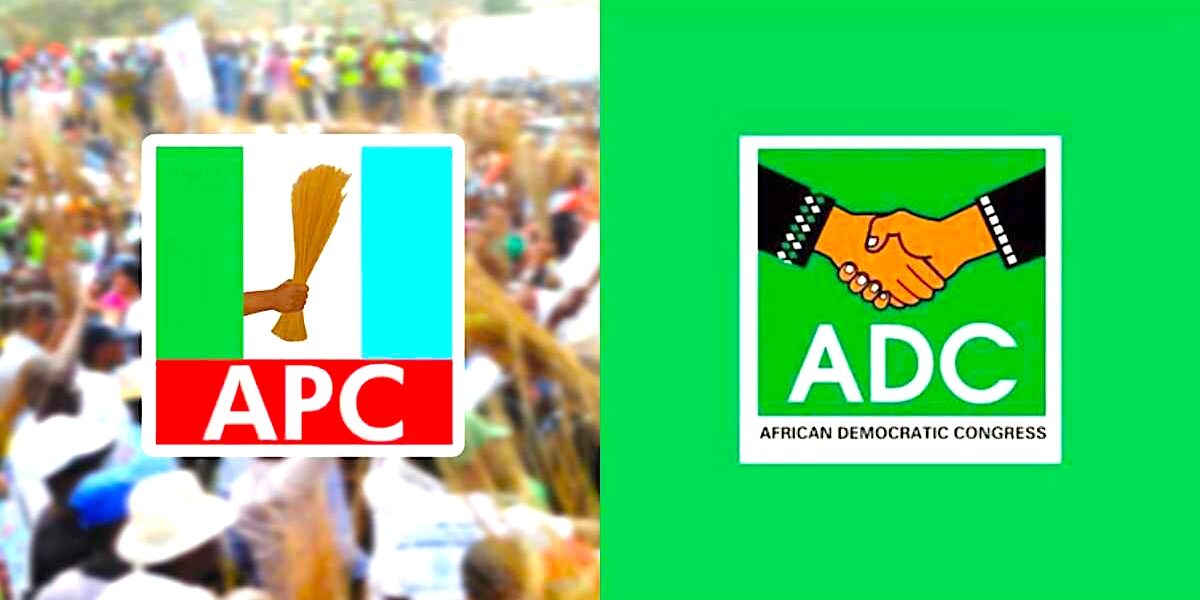
Twenty-four hours after losing four of its members in the House of Representatives to rival parties, the Peoples Democratic Party on Thursday suffered fresh losses in the Green Chamber, with six lawmakers defecting to the All Progressives Congress and the African Democratic Congress.

The Labour Party was also hit by the gale of defections, losing five members as political realignments intensified ahead of the next electoral cycle.

Announcing the defections during plenary, the Deputy Speaker of the House of Representatives, Benjamin Kalu, attributed the wave of cross-carpeting to lingering internal crises within the opposition parties.

Lawmakers who dumped the PDP for the APC include Bitrus Kwamoti, Zakaria Nyampa, James Barka and Kobis Thinmu, all from Adamawa State; Mohammed Bargaja (Sokoto) and Midala Balami (Borno).

The Labour Party lost Afam Ogene, Lilian Orogbu and Peter Aniekwe from Anambra State to the African Democratic Congress. Two other LP lawmakers — Jessy Onuakalusi from Lagos State and Osaro Omoruyi from Edo State — also defected to the ADC.

In addition, Peter Uzokwe, an Anambra lawmaker elected on the platform of the Young Progressives Party, joined the ADC.

Welcoming the defectors to the APC, Kalu described the ruling party as a broad platform open to all Nigerians, insisting that its growing membership reflects confidence in its leadership and programmes.

He said, “Some of our colleagues want to move to the APC. We have their letters here, but we cannot officially announce their defections in their absence.”

The latest defections come amid a broader wave of political realignments across the country, with major opposition figures exploring new alliances outside the traditional party structures.

See also  Council of State approves appointment of Prof. Amupitan as INEC Chairman

In recent months, prominent politicians, including former Vice-President Atiku Abubakar and the 2023 presidential candidate of the Labour Party, Peter Obi, have been linked to consultations aimed at forging a coalition platform ahead of the 2027 general election.

The African Democratic Congress has emerged as one of the parties reportedly being considered as a possible vehicle for such an alliance.

The moves have triggered renewed political calculations within the National Assembly, with lawmakers repositioning themselves in anticipation of possible shifts in the balance of power.

Analysts say the growing uncertainty within the opposition parties — particularly the prolonged leadership disputes in the PDP and factional struggles within the Labour Party — has created an environment that encourages defections.

For the ruling APC, the inflow of lawmakers further strengthens its numerical dominance in the House of Representatives, while the ADC appears to be positioning itself as an emerging platform for politicians seeking an alternative to both the APC and the traditional opposition parties.

With more defections reportedly imminent, the composition of the House may continue to shift in the coming weeks as political actors recalibrate their alliances ahead of the next electoral contest.

punch.ng

FOLLOW US ON:

FACEBOOK

TWITTER

PINTEREST

TIKTOK

YOUTUBE

LINKEDIN

Continue Reading
Click to comment

Leave a Reply

Your email address will not be published. Required fields are marked *

Politics

Peter Obi says he won 2023 election but has ‘no evidence’ to prove claim, read details

Published

on

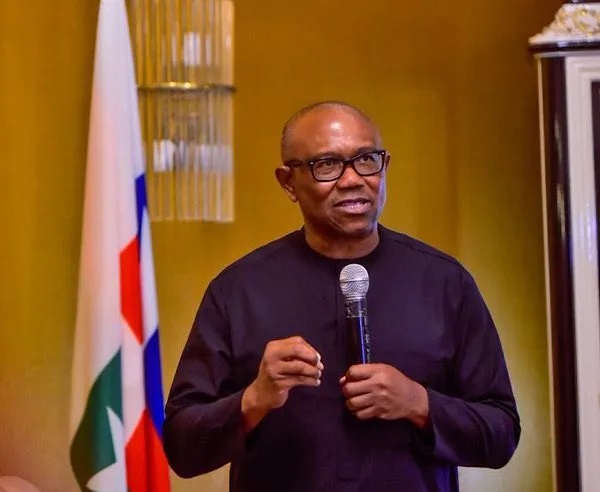
Presidential candidate of the Nigeria Democratic Congress (NDC), Peter Obi, has acknowledged that he has no evidence to substantiate his claim that he won the 2023 presidential election, while insisting that he remains convinced that he was the actual winner.

Obi made the remarks in a recent interview with BBC Africa while discussing his position on the disputed 2023 election and his plans to contest the 2027 presidential election.

Asked directly whether he had evidence to support his claim of victory in the 2023 election, Obi said, “There’s no evidence. Everything is not based on evidence.”

He nevertheless maintained that he won the election, adding, “I won the election and that’s where I will end. I don’t like going back to the past. I won the election (2023). Well, there’s no evidence but I won the election.”

Obi contested the February 25, 2023 presidential election under the Labour Party and was placed third in the results announced by the Independent National Electoral Commission (INEC).

The electoral commission declared Bola Tinubu of the All Progressives Congress (APC) the winner with 8,794,726 votes, while Peoples Democratic Party (PDP) candidate Atiku Abubakar came second with 6,984,520 votes. Obi recorded 6,101,533 votes.

Following the declaration, Obi and the Labour Party challenged the outcome at the Presidential Election Petitions Court, alleging electoral irregularities and non-compliance with electoral laws.

The five-member tribunal dismissed the petition on September 6, 2023, and upheld Tinubu’s victory.

Obi later took the case to the Supreme Court, but a seven-member panel of the apex court dismissed his appeal on October 26, 2023, ruling that it lacked merit and affirming the lower court’s decision.

See also  Tinubu, Atiku, Obi weigh ex-govs for campaign DG roles ahead of 2027 elections

Despite the court decisions, Obi has continued to reject the 2023 election outcome as a true reflection of the votes cast by Nigerians.

Source: tribuneonlineng.com

Follow Politics

FOLLOW US ON:

FACEBOOK

TWITTER

PINTEREST

TIKTOK

YOUTUBE

LINKEDIN

INSTAGRAM

Continue Reading

Politics

Presidency reveals key factor that gives Tinubu edge over opposition ahead of the 2027 elections, read details

Published

on

The Presidency has said the growing number of governors backing President Bola Tinubu gives him a stronger political structure and an advantage over opposition candidates ahead of the 2027 presidential election.

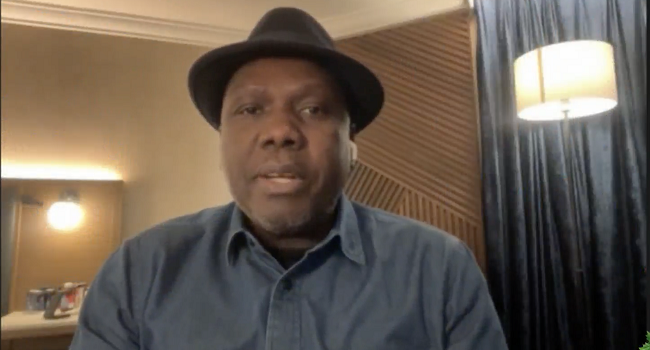
The Special Adviser to the President on Policy Communication, Daniel Bwala, said this on Channels Television’s Politics Today, arguing that the political landscape had changed considerably since the 2023 election.

Bwala said the support of governors was significant because they control political structures in their respective states and could translate their backing for Tinubu into grassroots mobilisation ahead of the election.

“Since then, President Bola Tinubu has got how many governors on his side? The governors are the Chief Executive Officers of their respective states. They coordinate the structures of the state. These people say, ‘We are putting our goodwill, our resources, our structure, and our support to the President,’” he said.

He said the President’s political position had also been strengthened by people who had benefited from his administration’s policies, including beneficiaries of the Nigerian Education Loan Fund (NELFUND), agricultural programmes, manufacturing incentives, CrediCorp and infrastructure projects.

Bwala said the developments constituted “facts, verifiable data” which, in his view, showed that Tinubu had made progress since assuming office in 2023.

He also dismissed suggestions that the administration’s confidence ahead of 2027 was based solely on divisions within the opposition, saying its record in office would form an important part of its campaign.

His comments came amid renewed debate over Tinubu’s popularity and the ability of the opposition to challenge his bid for a second term.

See also  Osun 2026: Ademola Adeleke may emerge Accord Party gov candidate today

Bwala dismissed an assessment by The Economist that Nigerians may re-elect Tinubu despite disapproval of his administration, arguing that claims about the President’s popularity should be backed by representative opinion surveys.

“When you make a claim that Nigerians don’t like him, without saying, also, that there are a lot of people… one million families that the children have benefited from NELFUND, you think they hate him?” he asked.

He similarly cited beneficiaries of agricultural interventions, support for manufacturers and CrediCorp, arguing that such groups should be considered when assessing public sentiment towards the administration.

On concerns over rising poverty and hunger, Bwala acknowledged that more Nigerians had fallen into poverty but attributed the hardship partly to the economic reforms undertaken by the Tinubu administration.

“More people went down to poverty, I acknowledge, I’m not doubting it. But there’s a but to it. Since when the reform started to today, we have made marked progress,” he said.

According to him, the reforms were necessary to address longstanding economic problems, despite the short-term discomfort experienced by Nigerians.

Bwala also defended Tinubu’s statement that Nigeria had moved from the “doldrums” towards prosperity, saying the President was not suggesting that Nigerians would suddenly begin experiencing prosperity from October 1.

He cited NELFUND beneficiaries, subsidised healthcare, infrastructure projects and support for small and medium-sized businesses as examples of what he described as prosperity already reaching Nigerians.

“One million families whose children have benefited from the NELFUND programme, what they are benefiting is called prosperity,” he said.

“If you go to an environment or a place where there have been no roads or any form of infrastructure, and we have established infrastructure there, what has come to them is prosperity.”

See also  2027: Atiku, Fayose clash over Makinde’s Minna visit

Bwala further claimed that the opposition had lost several influential political figures who played key roles in their 2023 campaigns.

He said former Vice President Atiku Abubakar no longer had the support of governors who worked for his 2023 campaign, while Peter Obi had also lost some critical political allies.

“In terms of the other candidates who say he will not win, Atiku Abubakar lost close to 25 per cent of key people that you know around him. All the governors that worked for him that time are no longer with him,” Bwala said.

“Peter Obi lost 55 per cent of the critical people that carried his campaign; they’ve all disappeared. And some of them went to Atiku, some of them went wherever they could go to.”

He consequently expressed confidence in Tinubu’s prospects in the 2027 contest, saying the political support around the President was considerably different from what existed before the 2023 election.

Source: tribuneonlineng.com

Follow Politics

FOLLOW US ON:

FACEBOOK

TWITTER

PINTEREST

TIKTOK

YOUTUBE

LINKEDIN

INSTAGRAM

Continue Reading

Politics

David Mark reveals ADC won’t accept rigging in 2027, read details

Published

on

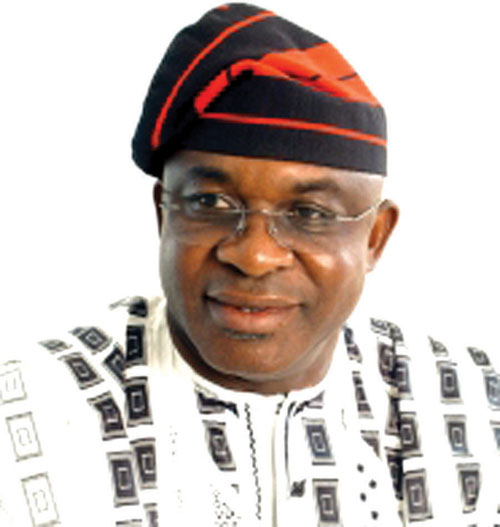
The National Chairman of the African Democratic Congress, David Mark, has warned that the party will comply with electoral rules but will resist any attempt to manipulate the 2027 general elections or rig it out of the contest.

Mark issued the warning on Wednesday in Abuja when he received the governing council of the Savannah Centre for Diplomacy, Democracy and Development, led by former Chief Justice of Nigeria, Justice Olukayode Ariwoola (retd.), at the ADC national headquarters.

Mark said the ADC was prepared to abide by the rules governing the elections and the party’s own code of conduct, but would not accept electoral manipulation.

“We hold ourselves to the highest standards of good conduct as a political party. We will play by the rules. But we will not accept rigging or allow ourselves to be rigged out.

“We are committed to playing politics in a manner that promotes public confidence in democracy,” he said.

He added that the party would comply with INEC’s guidelines as well as the provisions of its Orange Book, which sets out the party’s code of conduct and governance principles.

The former Senate President had previously warned against the use of state institutions to manipulate the 2027 elections, saying the credibility of the polls must be protected.

The Council of the Wise, as the governing council is known, was at the party secretariat as part of its ongoing engagement with political parties and other stakeholders ahead of the 2027 elections.

Speaking during the visit, Ariwoola said the centre was seeking the commitment of political parties and their candidates to peaceful, free, fair and credible elections.

See also  Abiodun, Osoba present Yayi to Tinubu as Ogun APC’s guber candidate

He also urged the ADC leadership to ensure that its candidates and supporters complied with the rules of the Independent National Electoral Commission and avoided conduct capable of triggering political violence.

The latest warning came as the Savannah Centre intensifies consultations with political actors and other stakeholders ahead of the elections.

The Council of the Wise, chaired by Ariwoola, was reconstituted in June with a mandate to promote peaceful, free and credible elections and engage key institutions and political actors.

The council’s recent engagements have included meetings with presidential candidates and other political stakeholders, with repeated calls for adherence to electoral rules, issue-based campaigns and the prevention of violence and hate speech.

Ariwoola’s delegation to the ADC included members of the Council of the Wise, among them Professors Abdullahi Shehu and Azeez Dankano, Executive Director of the Centre, Amb Sani Bala, Mr Tunji Lardner and Amb Godswill Ighali.

The centre had earlier said the Council of the Wise would engage President Bola Tinubu, INEC leadership, political parties, security agencies, traditional and religious leaders, civil society groups and other stakeholders ahead of the elections.

Source: punchng.com

FOLLOW US ON:

FACEBOOK

TWITTER

PINTEREST

TIKTOK

YOUTUBE

LINKEDIN

INSTAGRAM

Continue Reading

Trending