Connect with us

Business

Forum dismisses claims of N210tn missing in NNPC accounts

Published

on

A coalition of professionals under the Ajiyya Solidarity Forum has dismissed allegations that about N210tn is missing from the accounts of the Nigerian National Petroleum Company Limited (NNPC).

Addressing journalists on Thursday, ASF National Coordinator, Usman Hamza, described the claim as “mathematically impossible” and politically motivated.

The group’s position is in response to a recent claim by the Chairman of the Senate Public Accounts Committee, Ahmed Wadada, that the NNPC Limited could not account for about N210tn.
Hamza said such a figure was misleading.

“Senator Wadada’s claim of N210tn ‘unaccounted for’ funds is a mathematical impossibility designed to shock the public,” Hamza said.

He argued that the claim did not align with Nigeria’s fiscal reality, noting that the country’s entire 2024 national budget stood at about N28.7tn.

“To suggest that a single entity ‘lost’ nearly eight times the national budget is an insult to the intelligence of Nigerians,” he added.

The forum also condemned threats of arrest warrants against former officials of NNPCL, including former Chief Financial Officer, Umar Ajiya, describing the move as part of a coordinated campaign of political blackmail.

According to the group, the Senate committee may have misinterpreted financial figures by combining accrued expenses and receivables in a way that falsely suggests missing funds.

“We consider that the committee has erroneously ‘netted’ N103tn in accrued expenses, largely joint venture liabilities, with N107tn in receivables owed to NNPCL. Labelling money owed to a company as ‘missing funds’ is a professional travesty,” Hamza stated.

During the ongoing review of the financial records of Nigerian National Petroleum Company Limited, the Senate Public Accounts Committee, chaired by Wadada, had raised concerns over alleged discrepancies running into trillions of naira.

The ASF maintained that the allegations ignored the broader financial and structural reforms undertaken by the national oil company in recent years.

See also  CBN introduces overnight rate to deepen money market, read details

Furthermore, Hamza mentioned that the tenure of former CFO Ajiya coincided with the transition of the national oil firm into a commercial entity under the Petroleum Industry Act, a reform that ended decades of opaque financial reporting.

“Mr Ajiya’s tenure saw the transition of NNPC into a commercially driven entity and the publication of the first audited financial statements in 43 years,” the forum stated.

ASF defended the N5.9bn cost incurred during the transition process of NNPC to NNPC Limited, saying it covered complex legal and structural reforms required to transform the former state corporation into a limited liability company.

The forum warned that politicising the Senate’s oversight role could damage Nigeria’s credibility in the eyes of international investors.

“Using the Senate’s hallowed chambers to pursue personal vendettas damages Nigeria’s reputation with international investors,” Hamza said.

The forum further called on the leadership of the Senate to institute an independent ethics investigation into what it described as an alleged demand for bribes linked to the ongoing oversight process.

“We call on the Senate leadership and its Ethics Committee to investigate the alleged bribe demand connected to this oversight exercise,” he said.

He urged lawmakers to stop what he described as the harassment of officials who have already submitted several technical responses to the committee.

“Public accountability should be pursued through a sober forensic review of facts, not through sensational claims and phantom numbers,” he added.

punch.ng

FOLLOW US ON:

FACEBOOK

TWITTER

PINTEREST

TIKTOK

YOUTUBE

LINKEDIN

Continue Reading
Click to comment

Leave a Reply

Your email address will not be published. Required fields are marked *

Business

My customers taught me Yoruba – London trader, ‘Olakunle Oshodi’

Published

on

You are an Iraqi based in London, United Kingdom, how did you learn to speak Yoruba?

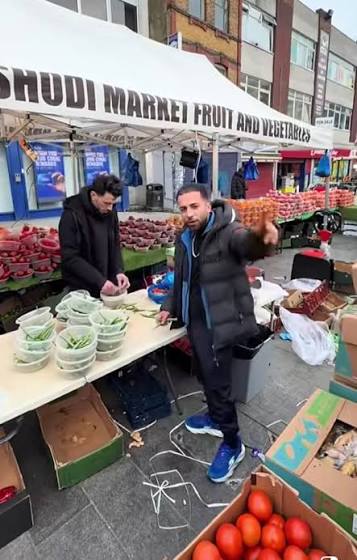
I trade at Woolwich Market. That is where I work and where I started meeting many Nigerian customers, especially Yoruba people.

Many of the Nigerians I met at the market spoke Yoruba when they came to buy things from me. At first, I did not understand what they were saying, so I became curious and started asking them to interpret the words they used. That was how I gradually started learning Yoruba from my customers.

What do you sell?

I used to sell pepper and fruit, but now I sell cosmetics and hair. My business has changed over time, but I have continued interacting with many Yoruba customers at the market. Through those interactions, I have also continued learning the language.

How did you first become interested in the Yoruba language?

About 95 per cent of my customers are Yoruba. Whenever they came to buy things, they would speak Yoruba to me. Instead of just listening to them, I started asking questions whenever I heard words I did not understand. I would ask them what the words meant, and that was how I learnt little by little.

The more I listened to them, the more interested I became. I started enjoying the language because I think Yoruba is a sweet language. That was what encouraged me to keep learning it.

What do you like about the Yoruba language?

I like the way the language sounds. For me, it is an interesting language, and because I hear my customers speak it regularly, it became easier for me to pick it up. I also like the way Yoruba people communicate with me when they come to the market.

How did you get the name “Olakunle Oshodi”?

Oh, one of my customers gave me the name. She is a lovely person, and she is Yoruba. She said the name was good for me, and that was how I got the name “Olakunle Oshodi.”

Do you have any family connection to Nigeria?

See also  Petrol imports crash by N2tn to N87bn; see why

No, I don’t have any family connection to Nigeria. I have never even been there. My connection with Yoruba came through my customers and the people I have met at the market.

How long have you been learning Yoruba?

It has been about three years. I can speak it because I really like the language, so it has not been that hard for me. I have been learning mainly through my customers and through everyday conversations at the market.

What made you decide to speak Yoruba with your customers?

Basically, I just wanted to learn. You know, Yoruba people joke with you and laugh with you. They want happiness, and they are not fake. That is why I love them.

When they come to the market, there is always a lot of interaction. They joke, laugh, and make you feel comfortable. So, for me, learning the language became a way of connecting with them better.

Yoruba people are lovely. Even when wahala comes sometimes, they are still just lovely. I enjoy the way they joke and laugh with you. They want happiness, and that is something I really like about them.

Being around them has also helped me learn more about the language because I speak Yoruba almost every day with my customers. The more I interact with them, the more I learn.

Has speaking Yoruba affected your business?

Yes, it has made the business grow. Speaking Yoruba has helped me connect with my customers better, and I believe that has been good for my business.

When customers realise that I can speak their language, it creates a different kind of relationship. We can joke together, laugh together, and communicate more easily.

How do customers react when they realise that you can speak Yoruba?

They are shocked, and they laugh. I see them happy, and I laugh with them. Sometimes, you can see that they did not expect a white man to speak Yoruba, so their reaction is usually one of surprise. Most of the time, they are not expecting it at all, especially when they first hear me respond to them in Yoruba.

See also  I know graduate akara seller who now has 12 employees — First Lady Remi Tinubu

I enjoy seeing their reaction because you can immediately see the happiness on their faces. Sometimes, they will look at me again as if they are trying to confirm whether I really understand what they are saying. It is always a funny and enjoyable moment for me.

Speaking Yoruba also makes the interaction more relaxed. Instead of just being a customer-and-trader relationship, we can joke together, laugh together, and have a better conversation. I enjoy that connection with them. I laugh with them because it makes the interaction more enjoyable, and I am happy when I see that they appreciate my effort to speak their language.

What goes through your mind when customers are surprised by your Yoruba?

I just enjoy the moment. They are shocked and laughing, and I see that they are happy. So, I laugh with them. For me, it is a nice experience because it shows that they appreciate the fact that I am trying to speak their language.

Has speaking Yoruba helped you gain your customers’ trust?

Yes, 100 per cent. I’m always with them. I spend a lot of time interacting with my customers at the market, so speaking Yoruba has helped me become closer to them. When I speak their language, they know that I am making an effort to understand them and communicate with them in a way that makes them comfortable.

I am not just there to sell something to them; I enjoy being around them and having conversations with them. That connection is important to me.

Have you ever had a funny experience while speaking Yoruba?

Yes, I have. They say, “Ah-ah!” when I speak. They are usually surprised when they hear me speaking Yoruba, and that reaction can be funny.

Sometimes, they cannot believe what they hear. They will react with “Ah-ah!” because they did not expect me to speak the language.

Even though sometimes wahala can come, it is still just lovely being around them. My experience with them has been positive, and they have also played an important role in helping me learn the language.

See also  Bank recapitalisation: Local investors provide 72% of N4.6tn

Do you think your customers have also enjoyed teaching you Yoruba?

Yes, because most of what I know came from interacting with them. When they speak Yoruba and I do not understand a word, I ask them what it means. That is how I learn.

It has been a gradual process. I listen, ask questions, and then try to use the words when I speak to them. I enjoy the learning process.

What are you looking forward to about visiting Nigeria?

As I said earlier, I have never been to Nigeria, but I have plans to go. I have not had the opportunity to visit yet, even though I have developed such a strong interest in the Yoruba language and culture.

I have a plan to go. I have never been there before, so I would like to experience the country and meet more people. I have learnt Yoruba mainly from people in London, so visiting Nigeria would allow me to experience the language and culture differently.

What does Yoruba culture mean to you?

I love the culture. I love Yoruba natives. My connection with Yoruba has grown through the people I meet and the language I have learnt from them. Even though I have never been to Nigeria, I have developed a love for the culture through my customers and the people around me.

What would you like Yoruba people to know about your connection with their language?

I want them to know that I love all of them, and I want to learn more of the language if I can. I speak well, but I only need time. One day, they will see. I want them to know that my interest in Yoruba is genuine. I did not learn it because somebody forced me to; I learnt it because I met Yoruba people, I enjoyed being around them, and I fell in love with the language.

Source: punchng.com

FOLLOW US ON:

FACEBOOK

TWITTER

PINTEREST

TIKTOK

YOUTUBE

LINKEDIN

INSTAGRAM

Continue Reading

Business

Tax reform has reduced burden on low-income earners — Revenue board

Published

on

The Joint Revenue Board has said Nigeria’s tax reform has reduced the burden on low-income earners and eliminated multiple nuisance taxes.

The Executive Secretary of the JRB, Olusegun Adesokan, stated this while giving an overview of the progress recorded one year into the implementation of the tax reform.

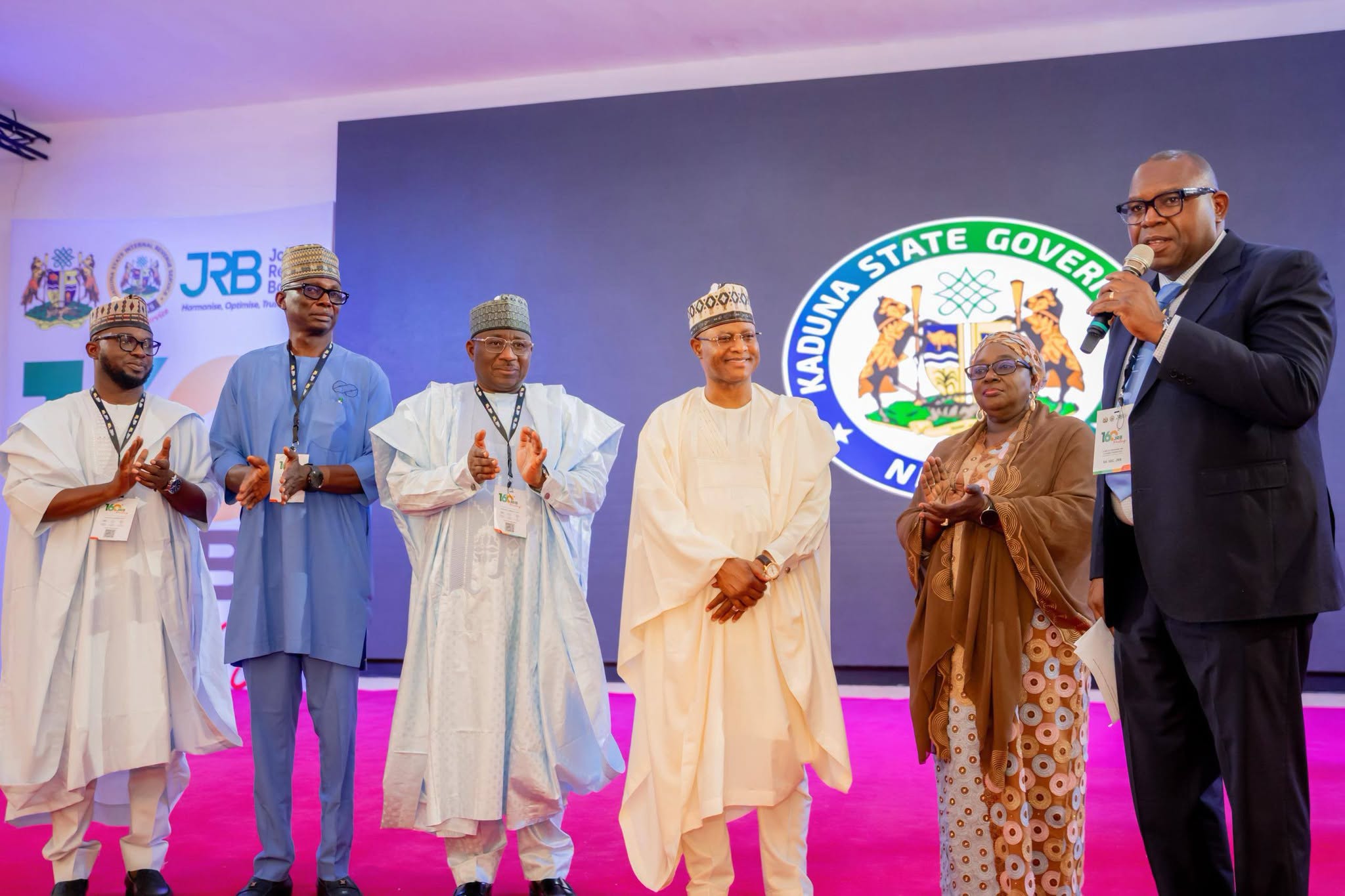
In a post obtained from the board’s X handle on Friday, Adesokan spoke at the 160th meeting of the JRB in Kaduna State, with the theme, “One Year of Reform: Assessing Progress and Addressing Challenges.”

He said the reform had also provided relief for low-income earners and micro-scale businesses, contrary to concerns that it had increased the tax burden.

“Addressing the misconception that the tax reform has increased taxes, the reform has rather reduced the tax burden on low-income earners, eliminated multiple nuisance taxes while providing reliefs for low-income earners and micro-scale businesses,” he said.

Adesokan said 18 state Houses of Assembly had domesticated the model harmonised taxes and levies law, which was designed to address overlapping and multiple taxation across the country.

According to him, the legislation had reduced more than 50 collection items previously administered by states and local government areas to nine sub-heads.

He added that the law had also abolished cash collection and the mounting of roadblocks for revenue collection.

The Executive Secretary said the measures had recorded significant progress in harmonising taxes and levies across the subnational governments.

The JRB, Nigeria’s apex body for revenue administration, convened the meeting to assess progress under the new revenue regime, identify gaps, and address emerging challenges.

The meeting was declared open by the Kaduna State Governor, Senator Uba Sani, who said the reform had expanded opportunities for domestic resource mobilisation and strengthened the country’s capacity to finance development.

See also  Stop exporting crude, OPEC tells Nigerian producers

Sani urged the JRB to identify bottlenecks affecting revenue collection, institutional weaknesses creating friction between revenue authorities and taxpayers, and opportunities for technology to improve efficiency in revenue administration.

He said, “The objective of the reform should not be simply to collect revenue; it should be to build a tax system in which compliance becomes easier, enforcement becomes more intelligent and voluntary compliance becomes a norm.”

The Executive Secretary appreciated Governor Uba Sani for hosting the 160th JRB meeting and for his consistent support of the tax reform initiative. He particularly commended the governor for nominating a member of the Board and outgoing Executive Chairman of Kaduna State Internal Revenue Service, Mr Jerry Adams, as his running mate for the 2027 gubernatorial election.

Sani expressed his delight with the tax reform, stressing that apart from eliminating duplication of taxation, it has enhanced revenue generation.

He observed that the national tax revenue has so far risen to N21.6 trillion since President Bola Tinubu introduced tax reform in 2026.

According to him, the nation’s revenue was  approximately ₦10.1 trillion in 2023,  ₦21.6 trillion in 2024, and about ₦36.8 trillion in 2025.

In his opening remarks, JRB Chairman, Dr Zacch Adedeji, represented by the Executive Director, Finance and Corporate Services, Nigeria Revenue Service, Muhammad Abubakar, said the meeting was a call for revenue authorities to take stock of the progress made, address identified gaps and confront emerging challenges.

He said the ultimate measure of the reform’s success must be improved revenue mobilisation, greater compliance, a better taxpayer experience, and stronger contributions to national development.

See also  CBN orders banks to freeze six terror suspects’ accounts

Source: punchng.com

FOLLOW US ON:

FACEBOOK

TWITTER

PINTEREST

TIKTOK

YOUTUBE

LINKEDIN

INSTAGRAM

Continue Reading

Business

Rivers oil tragedy: 37 die from toxic fumes

Published

on

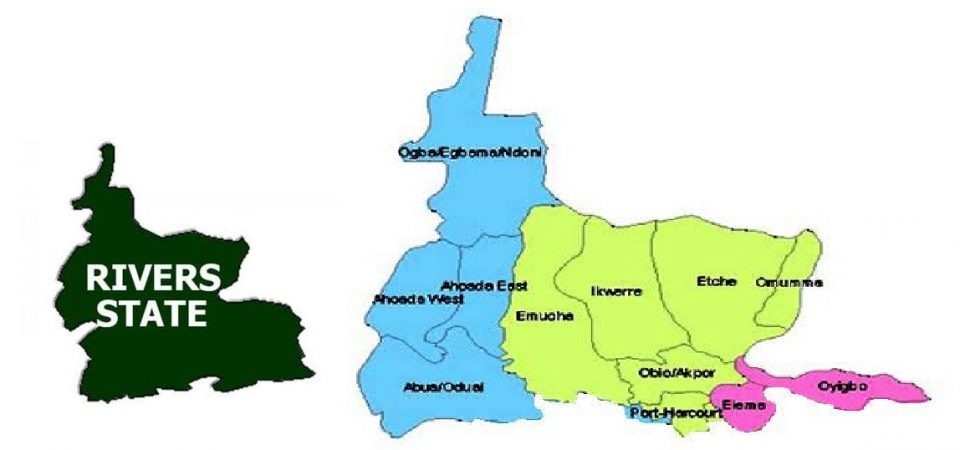
About 37 persons have reportedly died after inhaling fumes from a petroleum product at a jetty in Okrika Local Government Area of Rivers State.

The incident occurred on Thursday at the Okari Jetty in the Okrika Mainland area, where youths from Okrika and neighbouring communities had reportedly gathered to load a petroleum product from an illegal tapping point.

Many others were said to be missing following the incident, which occurred in the mainly coastal community.

A source in the community told our reporter that more than 100 persons had stormed the jetty with locally made boats while a vessel was anchored at the riverside to load petroleum products.

The source said trouble started while the youths were loading the product, as a strong smell suddenly saturated the air, causing several of them to collapse.

“Many of them collapsed into the river, while others who managed to escape the scene had serious respiratory disorders and were being treated at the hospital.

“As I speak to you, over 37 bodies were identified as Okrika people, while six others were yet to be identified and many are still missing,” the source, who pleaded anonymity, said.

The Youths and Environmental Advocacy Centre also confirmed the incident, saying its network of youth volunteers and human rights defenders in the Niger Delta had reported that no fewer than 37 persons suspected of involvement in illegal oil activities died after inhaling what was locally referred to as “Indorama fuel.”

The Executive Director of YEAC-Nigeria, Dr Fyneface Dumnamene, said in a statement that the incident occurred at about midnight on Thursday at the Okari Jetty.

See also  CBN introduces overnight rate to deepen money market, read details

“According to the report, no fewer than 37 persons suspected to be oil thieves died after inhaling what is locally called ‘Indorama Fuel.’

“Many others are still missing. The incident occurred during the illegal loading of the product into a ship at a tapping point,” he said.

Dumnamene said the victims had connected a pipe to a tapping point on a pipeline that transported petroleum products from the Indorama Eleme Petrochemical through the Port Harcourt Refinery to vessels that reportedly came every two weeks to load products for export.

He added that the youths inhaled the product while a vessel was loading and they were simultaneously loading it into their waiting boats from the illegal tapping point.

“This led to the death of not fewer than 37 persons. Many are still missing, and some corpses have been seen floating on the river but have not yet been recovered,” he stated.

Dumnamene called on the National Oil Spill Detection and Response Agency to immediately conduct a joint investigation visit to the site of the incident.

He also urged the company that owned the vandalised facilities to provide adequate security for its pipelines to prevent a recurrence.

The YEAC-Nigeria boss condemned the alleged sabotage, warning youths to stay away from oil and gas infrastructure because of the dangers associated with high-pressure pipelines.

He also called for alternative livelihood opportunities for youths in the Niger Delta, including the establishment of modular refineries and the legalisation of artisanal refining.

When contacted, the spokesperson for the Rivers State Police Command, Blessing Agabe, confirmed the incident and said the victims were reportedly attempting to steal crude oil.

See also  I know graduate akara seller who now has 12 employees — First Lady Remi Tinubu

Agabe, an Assistant Superintendent of Police, said no official complaint had been lodged with the command but added that an investigation had commenced.

“The suspects reportedly died in the process of attempting to steal crude oil. However, no official complaint has been received in connection with the incident at this time.

“Investigation is ongoing to establish the circumstances surrounding the incident and ascertain the facts,” the police spokesperson stated.

However, the Commander of the Civilian JTF in Okrika LGA, Igwe Godswill, gave a different account of the incident, saying the victims had gone to scoop petroleum products that had spilled into the river when they were allegedly overwhelmed by fumes from a vessel loading products at the jetty.

Godswill described the incident as tragic, saying most of the victims were youths searching for means of livelihood amid a lack of employment opportunities.

“It is so pathetic that this incident is happening in our community. These are young guys who have gone to search for their daily bread, only for the fumes from the fuel that was pumped to kill so many of our youths under the bridge.

“Many of them were choked to death. These are not criminals or anything, but they went out in search of their daily meal. I am advising the community, the leaders and every other person that we need legitimate jobs in the community.

“These things are risky, but when you cannot feed your children, most times, those risky jobs become the only option,” Godswill stated.

He explained that the victims had gone to scoop petroleum products floating on the water when they were overcome by fumes from a vessel loading petroleum products at the jetty.

See also  Bank recapitalisation: Local investors provide 72% of N4.6tn

Godswill, however, said about 10 bodies had been recovered, adding that only some of the victims could be identified because of the condition of their remains.

He said, “We saw about 10 of them. Four were still unrecognisable, while four persons were identified. The rest could not be identified because their bodies were badly damaged and their faces were severely affected.”

The Civilian JTF commander called on the Rivers State Government, community leaders and other relevant authorities to create employment opportunities for youths in the area to discourage them from engaging in dangerous activities.

“I am calling on the relevant authorities, community leaders, the chairman and every other person to look into this. It is not enough to stop them because, yes, it is a risky job, but they should create jobs for the youths so that everybody will have something to eat.

“Something that can put food on the tables of these young men, the youths and every other person. I can tell you for free that it will not just stop because when that source is the only livelihood, people will still go there.

“Even as of yesterday, people still went there, despite the fact that we had confirmed that people had died from the same activity. So, we are calling on the leaders to look into it and see how they can create job opportunities, especially for the youths,” Godswill added.

Source: punchng.com

FOLLOW US ON:

FACEBOOK

TWITTER

PINTEREST

TIKTOK

YOUTUBE

LINKEDIN

INSTAGRAM
Continue Reading

Trending