Connect with us

Business

Electricity tariff hike imminent as Gencos step up pressure

Published

on

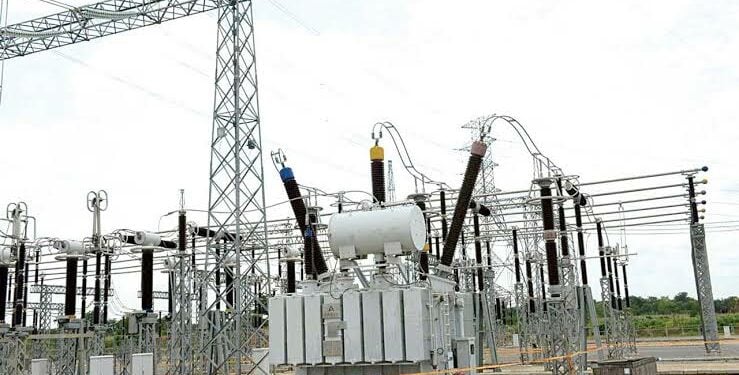
Electricity generation companies have called on the Nigerian Electricity Regulatory Commission to urgently review electricity tariffs following the Federal Government’s recent increase in the domestic base price of gas, warning that delays could worsen liquidity challenges and distortions across the power sector.

The Chief Executive Officer of the Association of Power Generation Companies, Joy Ogaji, said operators were less concerned about the increase in gas prices itself, but more worried about regulatory delays in adjusting tariffs to accommodate the new cost reality.

Ogaji, speaking in an interview with our correspondent on Monday, described gas as a “pass-through cost” that must be captured transparently in tariff computations.

She said, “Gas price, whether it is raised to $10, is not really our problem. Gas is a feedstock and a pass-through cost. So if the regulator in the power sector is comfortable with the increase, it is not a problem for us because whatever we are charged, we pass it down to consumers.

“All we want is for NERC to acknowledge the new base price and input it into tariff calculations. There is now a clear difference between what we used to pay and the new price, and that gap must be recognised.”

Despite the push for tariff adjustment, Ogaji stressed that the core challenge in the sector remained poor payment discipline rather than pricing. “For us, whether the price is high or low is not the issue. What matters is whether payments are made for what is supplied.

Even when the price was low, what percentage of invoices were settled? If you increase the price and payments are still not made, what difference does it make?” she queried.

She further called for the establishment of what she described as “bankable demand” in the electricity market, arguing that the absence of a clear and reliable payment structure continues to deter investment. “We need to define bankable demand in the market. Until we do that, we cannot determine whether investor confidence will improve or whether new investors can come in.

See also  Corruption goes beyond stealing money – ICPC boss

“Nigeria has over 200 million people, but how many are actually paying for electricity? And even among those who are paying, do we have transparency to verify those payments? There is no transparency anywhere,” she added.

Ogaji warned that without structural reforms, including stronger political will and enforcement, the sector risks stagnation. “If we are not careful and do not change the dynamics, we will still be discussing the same issues in two years. The President needs to take decisive action, possibly declare a state of emergency in the sector and give clear marching orders on what must be achieved,” she said.

Also speaking, the Executive Director of PowerUp Nigeria, Adetayo Adegbenle, said the increase in gas prices would inevitably translate to higher electricity tariffs and rising subsidy obligations. “Since the price of gas, which is the major fuel for Gencos, has increased, it is expected that electricity tariffs will also increase,” he said.

Adegbenle added that regardless of whether tariffs are immediately adjusted, the financial implications would still manifest in higher invoices from generation companies. “Whether electricity tariffs are reviewed or not, it is bound to affect invoices from Gencos. What we need to understand, however, is what the government’s plan is to absorb the shock of these expected changes.

“Subsidies, or market shortfalls, are expected to increase since invoice values will increase. I have no idea yet, but this is the point. I hope the government will encourage full market deregulation and implement a fully contract-based electricity market. I had planned to make this a national discourse at some point, because we cannot continue to pretend that the electricity market is not optimal,” he explained.

See also  OPay secures double honours at Tech Innovation Awards

He, however, questioned the Federal Government’s preparedness to absorb the fiscal impact of the changes. “We cannot continue to pretend that the electricity market is optimal. This situation also raises concerns about the sustainability of plans to raise bonds to offset debts owed to gas suppliers and Gencos. This is also another major argument against the bond being raised to pay off market exposure in terms of debt to gas suppliers and generating companies,” he added.

On his part, the President of the Nigeria Consumer Protection Network, Kunle Olubiyo, criticised the methodology behind the new gas pricing framework, describing it as inconsistent and lacking transparency. “The new base price is a bit confusing. The Nigerian Midstream and Downstream Petroleum Regulatory Authority had, from July last year, approved $1.13 as transport cost. So how do you now arrive at a figure that does not reflect the full pricing model?” he asked.

Olubiyo noted that when previous base prices are combined with transportation costs, the effective gas price should already be above $3 per unit. “It was around $2.15 last year, and when you add the $1.13 transport cost, it should be about $3.63. So whatever figure is being quoted now does not reflect the true cost,” he said.

He added that Nigeria’s power sector currently enjoys one of the lowest gas pricing regimes due to domestic supply obligations, despite global market pressures. “Gas is a commodity, just like petrol. In the international market, buyers are willing to pay up to $12 due to geopolitical tensions, especially in the Middle East. So why would any producer prefer to sell to Gencos locally, where they are often asked to be patriotic and even sell on credit?” he queried.

Olubiyo, however, argued that tariff increases alone would not resolve the sector’s deep-rooted inefficiencies. “Even before privatisation, we warned that tariff increases are not a silver bullet. There are fundamental issues affecting efficiency across the value chain,” he said.

See also  Trump urges Turkey to stop buying Russian oil as Erdogan chases deal on F-35s

He pointed to widespread technical and commercial losses, particularly in metering and energy accounting, as major drivers of inflated costs. “There are significant leakages in how electricity is measured and billed. Many meters are obsolete and lack integrity. If we fix these issues and ensure accurate measurement, most of the claims by Gencos could drop by 40 to 50 per cent. What consumers are paying for today includes inefficiency and systemic leakages,” he added.

The Federal Government, through the Nigerian Midstream and Downstream Petroleum Regulatory Authority, last week reviewed the domestic base price of natural gas, a benchmark used in pricing gas supplied to power plants under the Domestic Gas Delivery Obligation framework.

The domestic gas pricing regime was originally designed to ensure an affordable and reliable gas supply to the power sector, with prices historically set below international market rates to support electricity generation. However, persistent payment shortfalls, mounting debts to gas suppliers, and rising global gas prices have triggered calls for a cost-reflective pricing model.

Industry data shows that gas accounts for over 70 per cent of Nigeria’s electricity generation mix, making it the single largest cost component in power production. Under the current structure, any increase in gas prices directly impacts the cost of generation, which is expected to be reflected in electricity tariffs unless subsidised by the government.

The latest price adjustment is aimed at incentivising gas producers to prioritise domestic supply, but warns that without corresponding reforms in tariff setting, payment assurance, and market transparency, the policy may further strain an already fragile electricity market.

punch.ng

FOLLOW US ON:

FACEBOOK

TWITTER

PINTEREST

TIKTOK

YOUTUBE

LINKEDIN

Continue Reading
Click to comment

Leave a Reply

Your email address will not be published. Required fields are marked *

Business

Abia begins relocation of transport operators to new terminal

Published

on

The Abia State Government has commenced the enforcement of its new centralised transport system in Umuahia, with the phased relocation of transport operators to the Nnenna Otti Bus Terminal, Umuahia.

The Commissioner for Information, Okey Kanu, made this known at Government House, Umuahia, on Tuesday while briefing newsmen on the outcome of this week’s State Executive Council (EXCO) meeting presided over by Governor Alex Otti.

The commissioner disclosed that, in order to ensure compliance by transport operators, the state government took time to hold a series of meetings with transport stakeholders, during which their concerns were addressed.

Kanu added that, following the steps taken by the government, full operations had commenced at the terminal, with informal transport operators and unions already moved to the facility, despite the normal resistance that accompanies change.

“There appears to be some push backs among some of the operators and this is as a result of the fact that people are not easily giving in to change.

“What is happening is that all the parks in the state have been moved to the bus terminal.

“The Honourable Commissioner for Transport and his team have been holding a series of meetings with all the operators. They had one yesterday. And a few of their anxieties will be addressed very soon. Enforcement also will commence today to bring all the operators into the terminal.

“The first phase of operations involves the operations of the Abia Green Shuttle buses. The second phase involves informal transport operators, while the third phase will involve the formal transport operators,” Kanu stated.

See also  FG, NLC end pension fund dispute

Answering questions from newsmen, the Commissioner for Transport, Dr Chimezie Ukaegbu, said the state government had not taken away anybody’s means of livelihood but had instead introduced a more organised system to sanitise the transport sector and improve it.

He revealed that transport unions and operators were told to bring four of their workers each to the terminal, where they would be properly identified with reflective tags and carried along.

He further noted that the terminal operates a transparent system that allocates loading opportunities on a first-come, first-served basis irrespective of union affiliations, insisting that about 80 to 90 per cent of operators had embraced the initiative. He added that continuous engagements were being held with those yet to fully comply with the government’s transport policy.

He equally noted that the government provided a drivers’ lodge, fully air-conditioned and furnished with seats, while passengers sit in a conducive air-conditioned environment, adding, “what else will you need as a transporter or even as a passenger? I think everything good about transportation is embedded in that Nnenna Otti Bus Terminal,” Ukaegbu stated.

Contributing, the Special Adviser to the Governor on Media and Publicity, Mr Ferdinand Ekeoma, said that the centralisation of transport operations would reduce urban congestion, indiscriminate loading bays, expenses incurred by transport operators on their loading bays, and security challenges associated with the influx of unregulated transport operators, thereby enabling transport operators to make more gains.

He added that, over the years, “we have seen transport operators extort people, by coming up with this organised system, we are solving our problems,” Ekeoma stated.

See also  FG rallies private sector to bridge broadband gap

punch.ng

FOLLOW US ON:

FACEBOOK

TWITTER

PINTEREST

TIKTOK

YOUTUBE

LINKEDIN

INSTAGRAM

Continue Reading

Business

Court orders Virgin Atlantic to pay N13m for missed flight

Published

on

A Federal High Court in Lagos has ordered Virgin Atlantic Airways Limited to pay Mrs. Joy Ezetah the sum of $5,906.50 in damages after it failed to allow her board a scheduled Lagos-London flight, an incident that disrupted her onward trip to Canada and caused her financial loss.

Justice Ibrahim Kala in the judgement delivered on Monday, held that the airline was liable for the losses suffered by the claimant after she was denied boarding at the Murtala Muhammed International Airport on 6 April 2024.

The claimant had asked the court for N100m in general damages, arguing that she bought a business-class ticket through Air Canada for a four-leg trip from Lagos to Toronto and back, but was stopped from boarding the Virgin Atlantic flight “without justification.”

She told the court that she arrived early, completed check-in, and was issued a boarding pass for the Lagos-London leg.

According to her, airline officials later prevented her from boarding, stating they could not connect her ticket to her Air Canada connecting flight from London to Toronto.

Ezetah stated that the airline owed her a duty of care and should have resolved the issue with Air Canada or made other arrangements instead of denying her boarding.

She further maintained that when she later contacted Air Canada, the airline confirmed that her ticket was valid and that she was expected on the connecting flight.

Virgin Atlantic, however, denied liability. It said it was “not the issuing carrier” and insisted that the ticket had been purchased directly from Air Canada under a codeshare arrangement.

See also  Dangote-NNPC deal hits great turbulence, see details

The airline also argued that an error code in the reservation system prevented it from issuing a boarding pass for the connecting flight and that it acted professionally by advising the passenger to contact the ticket issuer.

It further contended that the claimant’s inability to complete online check-in before arriving at the airport showed that there was already a problem with the ticket.

After reviewing the evidence, submissions and legal authorities cited by both sides, Justice Kala held that the claimant’s case had merit.

The court awarded $5,906.50 in damages against Virgin Atlantic and ordered that the sum be paid using the prevailing exchange rate published by the Central Bank of Nigeria. Based on the highest official rate of N1,365.50 to a dollar, the award translates to about N8.07m.

Justice Kala also ordered the airline to pay 10 per cent interest per annum on the judgment sum until full liquidation of the debt.

Additionally, the court awarded N5m as costs against Virgin Atlantic, noting that the claimant had been forced to approach the court to enforce her rights.

punch.ng

FOLLOW US ON:

FACEBOOK

TWITTER

PINTEREST

TIKTOK

YOUTUBE

LINKEDIN

INSTAGRAM

Continue Reading

Business

States kick as Senate moves to amend Electricity Act; read details

Published

on

A fresh battle over the control of Nigeria’s electricity sector is brewing, as state electricity regulators have accused the National Assembly of attempting to claw back powers already devolved to states under the Constitution and the Electricity Act 2023.

In a strongly worded memorandum submitted to the Senate Committee on Power and obtained by our correspondent on Tuesday, electricity regulatory commissions and bureaus from 16 states warned that the proposed Electricity Act (Amendment) Bill 2026 could reverse one of the most significant reforms in Nigeria’s power sector.

The regulators argued that the amendment bill, rather than strengthening the electricity market, seeks to restore extensive federal oversight over matters they insist have constitutionally become the responsibility of states.

The concerns were contained in a letter dated May 26, 2026, addressed to the Chairman of the Senate Committee on Power and signed on behalf of the State Electricity Regulatory Commissions and Bureaus.

Signatories to the document included the chairmen and chief executives of electricity regulators in Abia, Anambra, Bayelsa, Edo, Ekiti, Enugu, Gombe, Imo, Kogi, Lagos, Nasarawa, Niger, Ogun, Ondo, Oyo and Plateau states.

The regulators said they had taken advantage of the Electricity Act 2023 to begin building sub-national electricity markets and had already engaged investors based on the framework created by the law.

They noted that they had earlier met with the Senate committee and were subsequently requested to consolidate their concerns into a single memorandum for the consideration of lawmakers, the Nigerian Electricity Regulatory Commission and other stakeholders.

The letter stated, “We represent State Regulatory Commissions/Bureaus that have taken advantage of the Electricity Act 2023 to commence the development of our sub-national electricity markets and sectors.

We are grateful for the audience you granted us to raise concerns on the ongoing consideration of the proposed Amendment Bill 2026 to the Electricity Act 2023.

“As agreed during our discussion, we have collated and consolidated the comments into one document which is hereby attached for the consideration of the Senate and House Committees on Power, NERC and other stakeholders.”

The state electricity regulators said they had identified 17 contentious provisions in the proposed amendments to the Electricity Act that they believed could undermine the constitutional powers already granted to states in the electricity sector.

According to the regulators, the areas of disagreement include the authorisation of State Houses of Assembly to legislate on electricity matters, the supremacy of state laws within state electricity markets, and provisions seeking to retain federal control over all activities connected to the national grid.

Other disputed clauses relate to restrictions on states’ participation in the wholesale electricity market, matters concerning the Nigerian Wholesale Electricity Market, the authority of states over independent transmission and distribution networks, and the establishment and administration of the Power Consumers Assistance Fund.

The regulators also raised concerns over the proposed expansion of the powers of the Nigerian Electricity Management Services Agency, the structure and decisions of the Forum of Electricity Regulators, and the provision granting the Nigerian Electricity Regulatory Commission final administrative appellate jurisdiction on certain issues arising within the forum.

See also  FG rallies private sector to bridge broadband gap

They further opposed provisions designating electricity generation, transmission, distribution and supply as essential services, as well as clauses dealing with government-owned enterprises as licensees and obligations to host communities.

Additional areas of contention include the regulation of intra-state electricity matters that may have implications for the national grid, the imposition of timelines and phased conditions for states transitioning into independent electricity markets, and proposed federal oversight on consumer protection, anti-trust measures and tariff design within state electricity jurisdictions.

The regulators argued that the disputed provisions require further consultation to ensure that the decentralisation objectives of the Electricity Act are not weakened by subsequent amendments.

“A review of the Bill suggests that the general intention is to reverse the devolution of legislative, governance and regulatory powers over electricity matters that occur solely within the respective states to the state governments, in favour of a reconsolidation of powers at the federal level, with the Nigerian Electricity Regulatory Commission retaining full supervisory powers over the market. Effectively, it appears that the intention of the Bill is that Nigeria should continue with the same regime that, for 20 years, has not led to any significant increase in power availability or per capita consumption for Nigerians, despite ever-increasing (and unsustainable) federal debt.”

At the centre of the dispute is the interpretation of the constitutional amendments that allowed states to legislate on electricity matters within their territories. The regulators argued that the proposed amendment bill wrongly assumes that state legislatures derive their powers from the National Assembly rather than directly from the Constitution.

According to them, any attempt by the National Assembly to grant, restrict or redefine those powers through ordinary legislation would amount to a constitutional violation.

The memorandum stated, “Section 2 of the Bill aims to amend Section 2(2)(a)-(e) of the Principal Act. By that section, the National Assembly reserves to itself the power to delegate legislative powers to States’ Houses of Assembly, suggesting that the Bill (or the Principal Act) is the source of the powers of a state to make laws on its electricity markets.

“This provision is based on a shocking miscomprehension of Nigerian constitutional law—it proceeds from the wrong assumption that the NASS, by ordinary legislation and not constitutional amendment, can confer (or restrict) the legislative power of states.

“The constitutional division of powers is fundamental to federalism, ensuring a balance between national unity and state autonomy. There is no legal framework for the NASS to ‘empower’ state governments to make law by ordinary legislation, as the language of the Bill attempts to do.

“The constitutional division of powers is fundamental to federalism, ensuring a balance between national unity and state autonomy. There is no legal framework for the NASS to ‘empower’ state governments to make law by ordinary legislation, as the language of the Bill attempts to do. Consequently, Section 2 of the Bill, seeking to amend Section 2 of the Act, is not consistent with the Constitution.”

See also  FG, NLC end pension fund dispute

The regulators described as “a shocking miscomprehension of Nigerian constitutional law” the provisions of the bill that appear to suggest that the National Assembly is the source of states’ authority over electricity matters.

They warned that the proposed law could undermine the principle of federalism by weakening state autonomy. Beyond constitutional concerns, the regulators said the bill could create uncertainty in the electricity market and discourage investors who had already committed resources based on the existing legal framework.

“The clear intention behind the new drafting is to reconsolidate in the Federal Government matters solely within the state electricity markets which had been devolved to the states,” the memorandum stated.

“This will defeat the key objectives of the Electricity Act and the various states’ electricity laws, even before the regime introduced by them has taken any root. It will introduce avoidable disruption in the industry as significant investment decisions have already been taken based on the Electricity Act 2023, and these investments are now put at risk by this proposed amendment.”

The state regulators specifically faulted provisions relating to federal oversight of activities connected to the national grid, restrictions on state authority over wholesale electricity transactions, the proposed expansion of NERC’s powers and changes affecting mini-grids and independent distribution systems.

They argued that allowing NERC to retain overriding authority over electricity activities merely because they have some connection to the national grid would effectively render state powers meaningless.

The memorandum stated, “What is required, in order to attain the full benefits of the decentralisation of the Nigerian Electricity Supply Industry that is the theme of the Fifth Alteration and provided for in the Principal Act, is proper coordination on transmission matters between NERC and state regulators, and not top-down federal legislation.”

The regulators also rejected provisions that would permit NERC to exercise final administrative appellate jurisdiction over disputes involving state electricity regulators. According to them, NERC and the SERCs are on equal standing within their respective constitutional spheres of authority.

“NERC and the SERCs are on equal standing within their respective constitutional spheres of authority,” the memorandum said. “The National Assembly cannot arrogate to NERC quasi-judicial authority over SERCs, especially where the dispute might be on a matter over which NERC has no authority.”

They further argued that the Constitution already vests judicial powers in the courts and that such responsibilities cannot be transferred to a regulatory agency. The proposed establishment of a Forum of Electricity Regulators also drew criticism.

Although the regulators acknowledged the importance of coordination among electricity regulators, they argued that participation in such arrangements should be voluntary rather than imposed through federal legislation.

See also  See Full List of Top 10 World’s Largest Economies in 2026

“The better approach would be a Memorandum of Understanding or similar instrument jointly negotiated by all relevant regulatory bodies in which the principles of coordination and harmonisation will be agreed,” they said.

The state regulators equally opposed provisions declaring generation, transmission, distribution and supply of electricity as essential services covering both federal and state electricity markets.

According to them, such provisions could inadvertently expand NERC’s jurisdiction into areas already devolved to states, including tariff regulation. “The provision is invidious, regressive and should be expunged,” the memorandum stated.

The regulators also faulted proposals empowering NERC to determine contributions to the Power Consumers Assistance Fund from electricity consumers. They argued that since electricity tariffs and retail supply have become matters for state regulation, decisions relating to subsidies and customer contributions should similarly reside with state authorities.

Other contentious areas identified by the regulators included host community obligations, the role of the Nigerian Electricity Management Services Agency, licensing arrangements involving government-owned electricity enterprises and timelines for states transitioning into independent electricity markets.

The dispute highlights the growing tension between the Federal Government and states over the future structure of Nigeria’s electricity industry. The Electricity Act 2023 was enacted following the Fifth Alteration to the 1999 Constitution, which removed electricity from the Exclusive Legislative List and empowered states to generate, transmit and distribute electricity within their territories.

Since then, several states have enacted electricity laws and established regulatory agencies to oversee emerging sub-national electricity markets. Lagos, Enugu, Ekiti, Ondo, Edo and other states have already commenced varying stages of implementation of their electricity reform programmes.

Energy experts have repeatedly described the decentralisation of the sector as a major opportunity to attract investment, improve efficiency and expand access to electricity. However, the latest amendment proposals appear to have reopened the debate over how regulatory powers should be shared between Abuja and the states.

As the National Assembly continues deliberations on the amendment bill, the position adopted by lawmakers could shape the future direction of Nigeria’s electricity reforms and determine whether the country deepens its experiment with decentralisation or returns to a more centralised regulatory model.

The Electricity Act 2023 was designed to operationalise the constitutional amendments that empowered states to participate directly in electricity generation, transmission and distribution within their boundaries. Since its enactment, several states have passed their own electricity laws and established regulatory commissions.

The proposed Electricity Act (Amendment) Bill 2026 seeks to amend several provisions of the principal legislation. However, state regulators contend that some of the proposed changes amount to an attempt to reverse the gains of decentralisation and restore broad federal control over the Nigerian Electricity Supply Industry.

punch.ng

FOLLOW US ON:

FACEBOOK

TWITTER

PINTEREST

TIKTOK

YOUTUBE

LINKEDIN

INSTAGRAM

Continue Reading

Trending