Connect with us

Business

FG unveils N54.43tn budget as debt service gulps N15.91tn

Published

on

The Federal Government has projected total revenue of N50.74 trillion for 2026, alongside a targeted economic growth rate of 4.68 per cent, while its proposed 2026 deficit has risen so sharply that it now exceeds the entire national budget of 2022 by N2.78tn.

This deficit likely means the government plans to borrow about 16.1 per cent more than what the entire country spent in 2022. The scale of the gap, combined with the high debt service bill, signals a more difficult fiscal year ahead.

Experts noted that Nigeria risks sliding into deeper fiscal stress if the government does not tighten its expenditure planning, boost efficiency and re-establish a credible budget calendar. They warned that rising deficits, unpredictable budget cycles and mounting debt obligations could undercut the fragile economic stability recorded in recent months and heighten pressure on households and businesses in 2026.

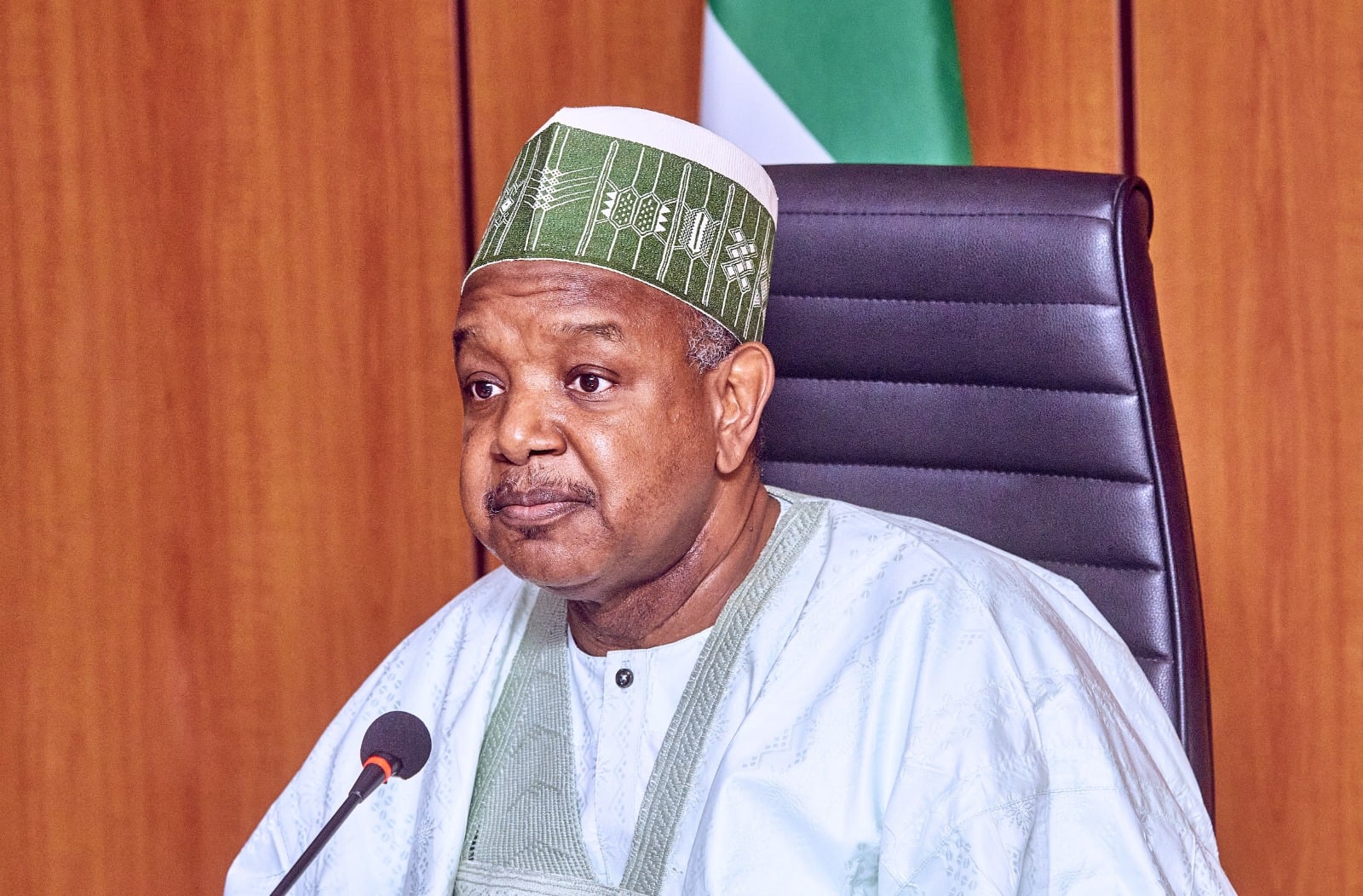
This comes after the Federal Executive Council approved the 2026 to 2028 Medium-Term Expenditure Framework and Fiscal Strategy Paper on Wednesday. The Minister of Budget and Economic Planning, Atiku Bagudu, briefed State House correspondents after the meeting and confirmed that the document would be forwarded to the National Assembly on Monday.

Bagudu said the draft was built on a cautious oil price benchmark of 64.85 dollars per barrel and an exchange rate estimate of N1,512 to one dollar for 2026. He explained that the assumptions followed consultations with ministries, private sector operators, civil society groups and development partners.

He revealed that the government adopted dual crude production figures for the first time. The oil industry has been tasked to deliver 2.06 million barrels per day, while a more conservative benchmark production of 1.8 million barrels per day will guide the budget.

The difference provides a safety buffer of 12.6 per cent in case of output disruptions. Bagudu said the benchmark price of $64.85 was lower than what Nigeria usually earns for Bonny Light crude but insisted that caution was necessary.

The minister projected a growth rate of 4.68 per cent for 2026 and warned that increased political spending in the run-up to the elections could heighten pressure on the exchange rate. He said, “Given that 2026 is a pre-election year, there is a lot of election activity spending that can typically affect the exchange rate.”

He listed the expected Federation revenue for 2026 as N50.74tn, with N22.60tn going to the Federal Government, N16.30tn to states, and N11.85tn to local governments. The Federal Government’s share of revenue from all sources is projected at N34.33tn, including N4.98tn expected from government-owned enterprises.

Bagudu said the figure is 16 per cent lower than the 2025 revenue estimate. He outlined key spending areas, including statutory transfers of about N3tn, non-debt recurrent expenditure of N15.27tn, and a debt service burden of N15.91tn.

See also  Nigeria’s Non-Oil Exports Hit $3.225bn In H1 2025

Based on the proposed spending envelope of N54.43tn, debt service alone will consume 29.2 per cent of the entire 2026 budget. This means that almost three out of every ten naira the government spends next year will go to servicing debt.

The projected deficit of N20.10tn accounts for 36.9 per cent of the entire spending plan. The size of the shortfall means Nigeria intends to borrow more than one-third of its planned expenditure for the year. The contrast with earlier budgets is striking. President Bola Tinubu signed the 2025 budget of N54.99tn into law.

Although slightly larger than the 2026 spending proposal, the 2025 plan carries a lower deficit of N9.22tn and a debt service provision of N14.32tn. The deficit planned for 2026 is more than double the current year’s level and reflects an increase of 118 per cent.

The amended 2022 budget under former President Muhammadu Buhari stood at N17.32tn. Debt service at the time was N3.98tn. The 2026 projection of N15.91tn is N11.93tn higher, representing an increase of about 299 per cent in four years.

Recurrent spending has also risen from N7.11tn in 2022 to N15.27tn proposed for 2026, an increase of 115 per cent, while capital spending has grown much more slowly. Bagudu said the new framework reviewed the performance of the 2025 budget and incorporated inputs from stakeholders across critical sectors.

He added that President Tinubu had secured support from the National Economic Council for closer alignment between fiscal and monetary policies. “[The President] called for more collaboration and coordination between fiscal and monetary policies and sought the approval of the National Economic Council to invest more in security spending, in particular, the rehabilitation of training institutions of security agencies,” Bagudu said.

He added that FEC endorsed increased “Federation vigilance to eliminate revenue loss from illegal activities in the oil and gas sectors as well as critical mineral sectors,” alongside a push for “critical minimum transformational investment for infrastructure” through the Renewed Hope infrastructure funding and measures to boost domestic production.

The minister also revealed that the memo to FEC was presented by the Director-General of the Budget Office, supported by his team and the Economic Management Team, after “technical discussions, bilateral engagement as well as expert consultations” with stakeholders to ensure the framework reflects “collective aspiration.”

The MTEF/FSP, a statutory three-year fiscal guide, sets the assumptions that will underpin the 2026 Appropriation Bill, including oil/output benchmarks, revenue profiles, deficit limits, and the spending mix.

Economists react

Economists have raised concerns over the Federal Government’s plan to run a N20.10tn deficit in 2026, saying the scale of borrowing, the timing of budget preparation, and the persistent breakdown of Nigeria’s fiscal calendar could undermine macroeconomic stability and worsen investor uncertainty.

See also  15% fuel tariff: PETROAN asks NNPC to reopen refineries before Dec

Speaking in separate interviews with The PUNCH on Wednesday, the experts said the deficit, which represents more than one-third of the proposed N54.43tn spending envelope, raises fresh questions about debt sustainability, fiscal discipline and the government’s ability to manage inflationary and exchange rate pressures in 2026.

The Chief Executive Officer of the Centre for the Promotion of Private Enterprise, Dr Muda Yusuf, said Nigeria must be cautious not to destroy the fragile stability achieved in recent months.

He warned that high deficits and rising debt levels pose a serious threat. Yusuf said he was worried about what he described as the risk of a debt trap, stating that “we need to worry about debt sustainability” because “high levels of deficits and high levels of debt… can choke the fiscal space and lead to a kind of vicious circle of debt.”

He explained that Nigeria has only recently regained some macroeconomic footing and that any disruption could quickly worsen inflation and exchange rate pressures.

According to him, “we already have a reasonable level of macroeconomic stability” and “once we lose that recovery… it will create even more problems because that is where the problem of inflationary pressure will come and that is where the pressure on the exchange rate will come.”

Yusuf said the government had claimed that revenue performance was improving and urged it to take advantage of the gains to cut the deficit rather than expand it. He argued that Nigeria must “leverage on the improved revenue situation to moderate the level of deficit and the level of debt exposure so that we don’t put at risk the macroeconomic stability that we have achieved.”

He added that the systemic effects of macro instability would be severe and urged the government to handle deficit planning with extreme caution.

Another economist and professor at the Olabisi Onabanjo University, Sheriffdeen Tella, faulted the basis of preparing the 2026 budget when implementation of the 2025 budget had barely begun. Tella questioned how the government arrived at a deficit of N20tn when, according to him, the 2025 budget started late and had not generated any performance indicators to justify new projections.

He said he found the 2026 deficit troubling because “the budget of 2026 is supposed to be premised on the implementation or performance of 2025,” yet “they have just started implementing the 2025 budget… in December 2025.”

Tella added that “there is no basis for any budget because what they had, they have not implemented” and argued that the government should have rolled over the 2025 plan into 2026 instead of preparing a fresh document.

The professor expressed concern that Nigeria risked operating multiple budgets in the same year, calling it a sign of fiscal disorder. According to him, “putting a deficit that is more than the budget of a year… means there is no basis for that. They just cook up figures and put them out to the public, which is wrong.” He described the situation as unfortunate and said the credibility of the budgeting process was being eroded.

See also  Recapitalised banks poised to drive Nigeria’s $1trn economy ambition

The National President of the Nigerian Economic Society, Professor Adeola Adenikinju, also criticised the government for drifting away from the January to December budget cycle. He said the timing of the MTEF FSP approval showed that Nigeria was again running behind schedule, which undermines predictability and complicates economic planning.

Adenikinju said, “The 2026 budget should have been in the National Assembly for consultation so that we can keep to this January 1st thing. That makes our fiscal system predictable.” He argued that the late budget presentation prevents the National Assembly from carrying out proper scrutiny.

The economist said the rush to approve budgets “does not allow for proper analysis” and prevents ministries and departments from fully defending their plans. He warned that the practice was creating a disorganised fiscal environment. According to him, “we are running two or three budgets in the same year,” and the pattern “makes the whole process very disorganised.”

Adenikinju expressed concern about the scale of the proposed 2026 deficit and questioned how the government planned to finance it. He reminded the government that the Fiscal Responsibility Act limits the deficit to three per cent of GDP.

He said, “Our budget deficit should stay below three per cent of GDP… so if you are going beyond that, really you are violating the law.” He added that borrowing heavily from domestic markets would crowd out the private sector and raise interest rates.

In his words, “if you borrow from the public… interest rates will go up” because government borrowing increases demand for credit and banks may prefer to lend to the government rather than to businesses. He said this would slow investment and worsen economic hardship.

Adenikinju also questioned the quality of government spending. He said debt was not necessarily bad if it funded productive projects, but Nigeria’s capital releases often come too late to deliver meaningful development outcomes.

He noted that “if for a whole year, you are releasing your capital budget two months to the end of the year… contractors are having a lot of issues”, yet the government insists that revenue projections are being met. He warned that persistent borrowing without a clear developmental impact would worsen inflation and currency instability.

Continue Reading
Click to comment

Leave a Reply

Your email address will not be published. Required fields are marked *

Business

Kwara strengthens partnership to boost mechanised farming

Published

on

The Kwara State Government has strengthened its partnership with the All Farmers Association of Nigeria and other agricultural stakeholders to advance mechanised farming, environmental sustainability and women inclusion across the state.

The renewed commitment was reaffirmed during a courtesy visit by the leadership of the Kwara State chapter of AFAN to the Kwara State Agro-Climatic Resilience in Semi-Arid Landscapes in Ilorin.

This was contained in a statement issued on Tuesday by the Communication Officer of KWACReSAL, Okanlawon Taiwo, a copy of which was made available to The PUNCH in Ilorin.

Speaking during the meeting, the State Project Coordinator of KWACReSAL, Shamsideen Aregbe, assured farmers of the state government’s continued support toward improving food production, mechanised agriculture and climate resilience.

He said, “Tractorisation remains a critical component of modern agriculture. Access to farming equipment is essential for increasing productivity and addressing food security challenges across the state.”

He explained that the tractor support initiative introduced last year followed a World Bank-backed intervention and presidential directive aimed at supporting farmers with mechanised farming equipment.

Aregbe acknowledged concerns raised about operational challenges affecting some tractors, assuring stakeholders that efforts were ongoing to determine the condition and operational status of the equipment to enable effective utilisation by farmers.

“We must sustain engagement with farming communities, particularly in addressing challenges relating to flooding, agricultural logistics and food security,” he added.

The project coordinator also stressed the need for gender equality and inclusion in agricultural interventions across the state.

“The inclusion of women is not negotiable. We must continue to encourage and support women to actively participate in agricultural programmes and leadership processes,” he stated.

See also  FG to disburse ₦6.3bn interest-free loans to 21,000 flood victims

Earlier, the Chairman of AFAN in Kwara State, Shuaib Ajibola, commended KWACReSAL for its interventions in the agricultural sector, reaffirming the association’s readiness to collaborate on programmes aimed at improving farmers’ welfare and environmental sustainability.

Ajibola disclosed that the association planned to commence an agricultural expo and stakeholder engagement programme across the state following its recent inauguration activities to reconnect with farmers and strengthen agricultural outreach.

“Previous editions of the interventions covered the 16 local government areas of the state and involved stakeholders from different agricultural sectors,” he said.

The AFAN chairman also raised concerns over land use disputes and other agrarian issues affecting farmlands, noting that the development had created anxiety among some farming communities regarding land ownership and rights.

“There is a need for sustained stakeholder dialogue and engagement to resolve disputes and ensure peaceful farming activities across communities,” Ajibola added.

Also speaking, the Project Coordinator of AFAM, AbdulRahman Babatunde, applauded KWACReSAL for its support to farmers, especially in the area of agricultural inputs and mechanised farming.

“ACReSAL provided 100 per cent agricultural inputs to participating farmers last year, and beneficiaries across communities can testify to the positive impact of the intervention,” Babatunde said.

He disclosed that farming activities for the current planting season had already commenced, with farmers actively registering, hiring tractors and preparing their farmlands.

In her remarks, the AFAM Women Leader, Sherifat Ibrahim, advocated increased empowerment and technical training for women in rural communities to enable them to actively participate in mechanised farming.

“There is a need for gender-friendly operational systems and practical training that will make tractor handling easier and more accessible for women and young learners involved in agricultural programmes,” she said.

See also  15% fuel tariff: PETROAN asks NNPC to reopen refineries before Dec

Meanwhile, the Environmental Safeguards Officer of KWACReSAL, Mr Abubakar Mohammed, reaffirmed the project’s commitment to gender equality, women’s inclusion and effective grievance management across all project activities.

The renewed collaboration comes amid growing efforts by the Kwara state government to improve food production and strengthen climate-smart agriculture through partnerships with farmer associations, development agencies and international organisations.

punch.ng

FOLLOW US ON:

FACEBOOK

TWITTER

PINTEREST

TIKTOK

YOUTUBE

LINKEDIN

INSTAGRAM

Continue Reading

Business

See Full List of Top 10 World’s Largest Economies in 2026

Published

on

The United States is projected to remain the world’s largest economy in 2026 with a gross domestic product estimated at $32.1 trillion, according to new global economic forecasts obtained from Focus Economics on Wednesday.

The U.S. continues to lead global output through dominance in technology, finance, healthcare, and advanced manufacturing. Growth in artificial intelligence, healthcare innovation, and high-value industries has further widened its lead over other major economies in recent years.

The top 10 world economies ranked in numbers

1. United States — $32.1 trillion
The United States remains the world’s largest economy, accounting for over a quarter of global output in nominal terms. Its economy is highly diversified, with Silicon Valley driving global leadership in AI, biotech, and software, while Wall Street anchors the financial sector.

2. China — $20.2 trillion
China is the world’s second-largest economy, driven by manufacturing, exports, and large-scale industrial production. It remains the leading global producer of electronics, machinery, and textiles, though it faces structural challenges, including a shrinking population and high debt levels.

3. Germany — $5.4 trillion
Germany remains Europe’s largest economy, supported by a strong industrial base and the Mittelstand network of medium-sized manufacturing firms that form the backbone of its export strength.

4. India — $4.5 trillion
India continues its rapid economic rise, driven largely by services and information technology. Its economy has more than doubled over the past decade, supported by a young population and expanding domestic demand.

5. Japan — $4.4 trillion
Japan remains a global manufacturing powerhouse in robotics, automobiles, and electronics, although long-term growth is constrained by an aging population and structural economic stagnation.

See also  Federal Govt Secures €21m German Funding For Clean Energy Transition

6. United Kingdom — $4.2 trillion
The United Kingdom is a major service-based economy, with strengths in finance, insurance, and real estate, anchored by the City of London.

7. France — $3.6 trillion
France has a diversified economy led by luxury goods, aerospace, agriculture, and manufacturing, with global brands such as Airbus and LVMH playing major roles.

8. Italy — $2.7 trillion
Italy combines a strong services sector with manufacturing strengths in fashion, machinery, and automobiles, driven largely by its industrial northern regions.

9. Russia — $2.5 trillion
Russia remains heavily dependent on oil and gas exports, with energy revenues playing a central role in its economy despite ongoing sanctions and geopolitical pressures.

10. Canada — $2.4 trillion
Canada rounds out the top 10, supported by natural resources such as oil, forestry, and mining, alongside a strong services and financial sector.

Economists say the global economy is increasingly being shaped by technology, demographics, energy transitions, and geopolitical tensions, all of which will influence how these rankings evolve in the coming years.

punch.ng

FOLLOW US ON:

FACEBOOK

TWITTER

PINTEREST

TIKTOK

YOUTUBE

LINKEDIN

INSTAGRAM

Continue Reading

Business

Nigeria misses OPEC oil production quota again

Published

on

Again, Nigeria has missed its crude oil production quota set by the Organisation of the Petroleum Exporting Countries after averaging 1.49 million barrels per day in April, below the 1.5 mbpd benchmark.

Figures from the Nigerian Upstream Petroleum Regulatory Commission showed that the country produced an average of 1,488,540 barrels of crude daily in April, representing about 99 per cent of the OPEC quota. When condensates were added, total daily production rose to 1.66mbpd

Last month, the NUPRC said oil production now averaged 1.8mbpd. However, data released on Tuesday was at variance with the report. The latest data mean Nigeria remained below its OPEC allocation for the ninth straight month since July 2025.

The NUPRC document showed that combined crude oil and condensate production peaked at 1.85 mbpd during the month, while the lowest output stood at 1.46 mbpd. The PUNCH reports that the April figures are an appreciable improvement compared to March, when oil output was 1.55mbpd.

Nigeria’s oil production has struggled for years due to crude theft, pipeline vandalism, ageing infrastructure, and underinvestment in the upstream sector. Although output improved marginally in April compared to March, it was still insufficient to meet the country’s OPEC target, underscoring persistent challenges in ramping up production despite government efforts to boost volumes.

The PUNCH reports that Nigeria’s crude production in March was 1.38 mbpd. While there was a 69,000 bpd increase from the 1.31 mbpd recorded in February, the figure is still 117,000 bpd below the OPEC quota.

The figures for February indicated a month-on-month decline of 146,000 barrels per day, widening the country’s shortfall from its OPEC production allocation. This is the eighth consecutive month the country has failed to meet the OPEC quota since July 2025.

See also  Otti seeks partnership with NAADI to grow Abia’s agriculture, economy

Recall that although Nigeria recorded a marginal improvement in January, when production rose from 1.422 mbpd in December 2025 to 1.46 mbpd, the rebound was short-lived as output fell significantly in February 2026.

Earlier data from NUPRC had also shown that crude oil production weakened at the end of 2025. Production declined from 1.436 mbpd in November 2025 to 1.422 mbpd in December, before recovering slightly in January.

In 2025, Nigeria’s crude oil production fell below its OPEC quota in nine months of the year, meeting or slightly exceeding the target only in January, June, and July.

Nigeria opened 2025 strongly, producing 1.54 mbpd in January, about 38,700 barrels per day above its OPEC allocation. However, production slipped below the quota in February at 1.47 mbpd and weakened further in March to 1.40 mbpd, marking one of the widest shortfalls during the year.

punch.ng

FOLLOW US ON:

FACEBOOK

TWITTER

PINTEREST

TIKTOK

YOUTUBE

LINKEDIN

INSTAGRAM

Continue Reading

Trending