Connect with us

Lifestyle

Medical practitioner links dehydration, painkiller abuse to kidney disease surge

Published

on

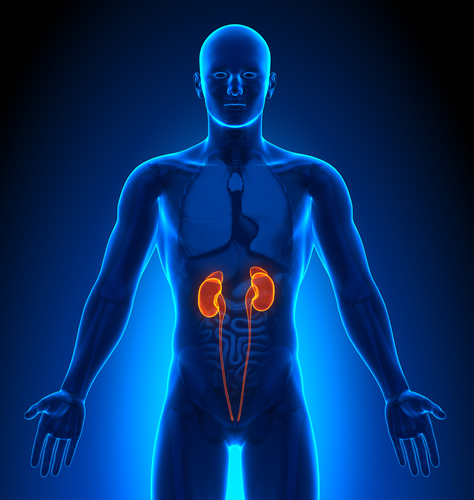
A medical practitioner, Dr Jonah Agwu, has raised the alarm over the increasing prevalence of kidney disease, attributing it to dehydration and abuse of painkillers.

Agwu spoke during an event organised by the National Association of Seadogs (Pyrates Confraternity), Saratoga X Deck, Festac, Lagos, on Wednesday to mark this year’s World Health Day.

The event, held at the Holy Family Health Centre, Festac, Lagos, was attended by pregnant women and other members of the public.

Speaking, the medical practitioner said kidney diseases were also on the rise due to uncontrolled hypertension, unmanaged diabetes, and the unchecked use of herbal mixtures, popularly known as agbo.

Agwu said, “I have encountered about 10 to 15 cases of kidney diseases in one week. That means there is an increased prevalence of kidney diseases. The predominant causes are uncontrolled hypertension, uncontrolled diabetes, abuse of diclofenac or ibuprofen, frequent use of agbo, and dehydration. Agbo contains ibuprofen. With these, you poison your kidneys.

“We need at least 2.5 litres to 3 litres of water daily, but not many people take up to one litre. Over time, dehydration can tilt someone to acute renal failure, and it is irreversible.”

Asked about the success rate of dialysis, Agwu said it was a “50-50 probability.”

“Dialysis is done at end-stage renal failure, when the kidneys have failed, and we are trying to use a machine to perform the function of the kidneys.

“At the dialysis stage, if done well, it is good; if not done well, it becomes a problem. There are people sent for dialysis whose condition has worsened. Dialysis is a two-way process. It may give you what you want, and it may make things worse. It is a machine taking care of what the kidney should do,” he said.

See also  Iyabo Ojo vows fresh legal action against Lizzy Anjorin over defamation

Speaking further, Agwu cautioned against consuming dongoyaro and zobo to manage diabetes, noting that they are not scientifically or clinically proven to lower blood sugar.

He stressed the need for adherence to science-based health practices rather than hearsay or myths.

Addressing the pregnant women, Agwu urged them to take routine antenatal check-ups seriously and abstain from alcohol.

He also cautioned against misconceptions about Caesarean Section, noting that both CS and vaginal delivery are medically acceptable methods of childbirth.

Agwu described as myths claims that ampicillin cures jaundice in children and that palm wine enhances lactation in nursing mothers.

In his remarks, the Leader of Saratoga X Deck, Emeka Achonu, said the sensitisation was aimed at debunking myths about childbirth and childcare, while encouraging pregnant women and nursing mothers to embrace science- and data-driven health practices.

Achonu also emphasised the importance of immunisation and urged women to accept Caesarean Section as a normal method of delivery when medically advised.

He said, “We targeted pregnant women and children, who are among the most vulnerable groups.

“There are several myths about childbirth and childcare that we need to debunk and let them know that science-based, data-driven health practices are what they should follow, not hearsay.

“There are dangers of over-information due to social media. People, even the unqualified, post all sorts of health advice. So, we believe they should hear from doctors with the expertise and stick to science-based practices.

“They should not take immunisation for granted. It is very important for children. Some parents feel they can administer agbo to their children, but they have been advised to ensure proper immunisation as and when due.

See also  Actress, Doris Ogala cries out after police officers stormed her house to arrest her

“Also, there is the notion that pregnant women should give birth like Hebrew women and avoid Caesarean Section. But if they are given medical advice to undergo CS, they should heed it rather than follow pressure from pastors, mothers, or in-laws insisting on vaginal delivery. They should listen to medical practitioners. If CS is the right option, they should go for it as long as it safeguards their lives and that of their children.”

World Health Day is observed every year on April 7 to draw attention to key health issues affecting people worldwide.

punch.ng

FOLLOW US ON:

FACEBOOK

TWITTER

PINTEREST

TIKTOK

YOUTUBE

LINKEDIN

Continue Reading
Click to comment

Leave a Reply

Your email address will not be published. Required fields are marked *

Lifestyle

‘I have cancer,’ Nollywood actress Cynthia Anijekwu cries, calls for support

Published

on

Nollywood actress Cynthia Anijekwu has made an emotional appeal to Nigerians for financial assistance after revealing that she is battling cancer for the second time.

In a video circulating on social media on Tuesday, the actress disclosed that she was first diagnosed with cancer in 2023, when she underwent surgery followed by chemotherapy in a bid to halt the disease.

She maintained that doctors initially managed the condition after the treatment, but the cancer later returned and has since spread to her bones, requiring more intensive care, including radiation therapy and another surgery.

According to Anijekwu, recent medical examinations revealed that the cancer has spread to her bones, significantly increasing the cost and complexity of her treatment up to N600,000 every month.

The actress said doctors have recommended radiation therapy and another surgery as part of her ongoing care.

“I have cancer in 2023 (sic). I did my surgery and took chemotherapy, but later it came back again. I’ve been in and out of the hospital. The doctor recently told me it has reached my bones, and the treatment is now much more expensive,” she said.

“I need to live. I need to survive. I’m asking Nigerians to please help me. Anyone that can help, please, I need help. Even my hands have swollen. The cancer has affected both breasts. I need to live. Please help me. I need to survive.

“Your one naira, your two naira can add up to something reasonable for me to get the proper treatment for this cancer. I’m begging you, please help me,” she pleaded.

See also  Ekei Eyo as Malvolio in Shakespeare’s Twelfth Night, Queen’s College for Girls, Lagos Circa 1940s

Before her health challenge became public, Anijekwu built her career in Nollywood, featuring in several English- and Igbo-language productions.

However, there is no publicly verifiable record identifying a major blockbuster film or comprehensive filmography associated with the actress, as public attention has largely shifted to her battle with cancer in recent years.

The actress said the financial burden has become overwhelming for her family, prompting her to seek help from members of the public.

punch.ng

FOLLOW US ON:

FACEBOOK

TWITTER

PINTEREST

TIKTOK

YOUTUBE

LINKEDIN

Continue Reading

Lifestyle

It’s not easy, surrogate mother shares emotional journey

Published

on

A masked Nigerian surrogate mother has opened up about how financial hardship and what she described as an irresponsible partner led her to become a surrogate, saying the decision came after the loss of her second child.

The woman disclosed this during a new episode on Cruise TV published on YouTube on Sunday, where she recounted the emotional, financial and psychological realities of carrying children for other families.

She said becoming a surrogate was one of the hardest decisions she had ever made, describing the emotional attachment that develops during pregnancy despite knowing the child does not belong to her.

“Emotionally it’s not easy. Even when I started the journey, when the pregnancy was three months, I called my nurse that I don’t think I can cope again because it’s not easy to carry what is not yours.

“When you start having the emotional attachment, you keep reminding yourself that this is not mine. I tell myself it is a job, and that helps me cope, but the emotions still come and go.”

The woman explained that she became a gestational surrogate through IVF, meaning she had no biological connection to the babies she carried.

Speaking on what pushed her into surrogacy, she said her partner failed to provide for the family despite her efforts to support them.

“I had my first child. Unfortunately, my husband is not the person that is hardworking and he doesn’t take responsibility. I do work. There is no work I cannot do.

“When I became pregnant the second time, I could no longer work. We couldn’t even afford hospital bills.”

See also  Lord Frederick Lugard and the Amalgamation of Nigeria.

She said complications during the pregnancy eventually led to the death of the baby, an experience that changed her outlook.

“That baby died, and that was the reason I made that decision. Instead of giving him another baby, I would rather help people who have the money to take care of me.

“If you don’t have the money to care for my health, I won’t do it for you.”

She disclosed that she initially declined financial compensation beyond medical care, accommodation and allowances, a decision she now regrets.

“I told them I didn’t want any compensation aside from the process, monthly allowance, wardrobe allowance and accommodation fee, but that was a mistake.

“I won’t do it again,” she said.

The surrogate mother also said she would not encourage her daughter to follow the same path because of the emotional and health risks involved.

“I cannot advise my daughter to be a surrogate.”

She added that she relocated during one of her pregnancies to avoid stigma and often told people the baby had died whenever they asked questions.

According to her, surrogate mothers also face psychological challenges after delivery despite undergoing counselling before and after childbirth.

While acknowledging that surrogacy has helped many couples struggling with infertility, she maintained that the process is far more demanding than many people realise.

“Surrogacy is not as simple as people think.”

She called for stronger regulation of the practice to protect surrogate mothers from exploitation and ensure adequate emotional and financial support.

punch.ng

FOLLOW US ON:

FACEBOOK

TWITTER

PINTEREST

TIKTOK

YOUTUBE

LINKEDIN

Continue Reading

Lifestyle

I waited 18 years before welcoming twins – Nollywood star Ricardo Agbor

Published

on

Veteran Nollywood actor, Ricardo Agbor, has opened up about his 18-year journey to parenthood, revealing that he and his wife waited nearly two decades before welcoming their twins.

The actor disclosed this during an interview with AfricanAList published on Sunday, where he reflected on his marriage, faith and the challenges he faced before becoming a father.

Agbor said he remained committed to his wife throughout the period, despite the long wait for children.

“I wanted to get married to a particular lady; I married her regardless of where she is from. She is not from my tribe. So ordinarily, we were supposed to have strife; no, it was very fair,” he said.

Speaking about the couple’s struggle with childlessness, the actor said he specifically prayed for twins and refused to give up despite waiting for 18 years.

“It took 18 years for me to have the twins. And I waited. God knows, 18 years and they are 14 now, so I told God I wanted twins.

“So while that wait was on, if it were someone else, he would cross. But at the end of the day, I have twins. I have a boy and a girl. I asked God what I wanted,” he added.

Agbor also recounted what he described as the most painful experience of his life — the death of his mother.

According to him, she had been receiving treatment for about three weeks without any improvement before doctors advised that she should be flown to South Africa for further medical care.

The actor said his mother requested to be moved to another private hospital in Surulere, but she died in his arms while he was helping her into the car.

See also  Toyosi Arigbabuwo: Veteran of Yoruba Cinema and Faithful Community Leader (PHOTOS)

“My mom died right in my arms. At the hospital, they were bringing almost 10 doctors to do tests… the sickness was not improving after almost three weeks.

“It was after three weeks that they told me to come and carry my mom and take her to South Africa. I took my mom away and took her to another private hospital within Surulere. It was my mom that told me to take her away from that place. As I was carrying her into the car, she gave up,” he said.

Agbor said the loss left him devastated, noting that it was the first time he had cried outside acting.

“I think that was the first time I cried in my life. I don’t cry. If I cry, maybe it is in a movie and it is a role. So I cried. It was painful,” he added.

punch.ng

FOLLOW US ON:

FACEBOOK

TWITTER

PINTEREST

TIKTOK

YOUTUBE

LINKEDIN

Continue Reading

Trending