Connect with us

News

Kwara APC, PDP spar as DPP report clears Bukola Saraki from Offa robbery case

Published

on

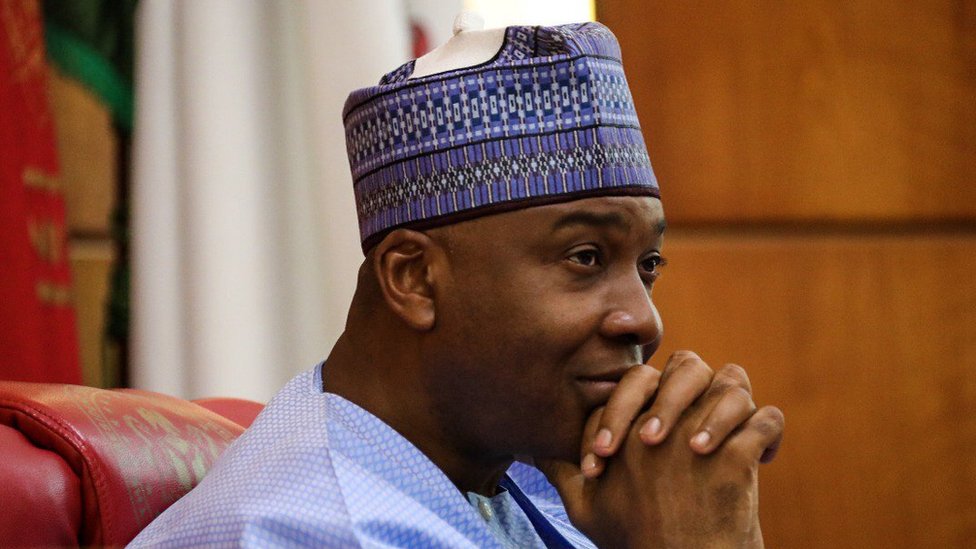
A fresh war of words has erupted between the Kwara State chapters of the All Progressives Congress and the Peoples Democratic Party over allegations linking former Senate President, Dr Bukola Saraki, with individuals convicted in the 2018 Offa bank robbery.

The situation has further heightened political tension ahead of the 2027 general elections in the state.

The APC had, on Saturday, accused Saraki of maintaining longstanding ties with some of the convicted offenders, describing the alleged relationship as widely known and politically motivated.

However, the PDP, in a statement on Sunday, swiftly dismissed the claims as baseless, politically driven, and a calculated attempt to blackmail its leader.

New facts have, however, emerged indicating that the Office of the Attorney-General of the Federation cleared Saraki of any link to the 2018 Offa bank robbery, despite new charges recently filed against him by the Kwara State Government.

The government, on Thursday, filed criminal charges against Saraki and his successor in office, Abdulfatah Ahmed, over the Offa robbery incident.

It filed a 20-count charge before the Kwara State High Court in Ilorin, accusing Saraki, Ahmed and two others of criminal conspiracy and culpable homicide in connection with the deadly incident.

The charge, filed under case number KWS/114C/26, alleged that the defendants were armed suspects involved in the robbery and played roles in the criminal conspiracy.

Also listed in the charge are Yusuf Abdulwahab and a former aide, Alabi Olalekan.

They are expected to be arraigned before Justice Haleemah Salman of the Kwara State High Court on June 4.

The April 5, 2018, robbery was a highly coordinated attack on several commercial banks and a police station in Offa, Kwara State, Nigeria, resulting in the deaths of over 30 persons, including police officers.

Speaking with journalists in Ilorin, the APC State Publicity Secretary, Alhaji Abdulwaheed Babatunde, alleged that testimonies by key individuals during investigations pointed to a connection between Saraki and members of the gang responsible for the deadly robbery.

“The attention of the Kwara State chapter of the APC has been drawn to the melodramatic press statement by the PDP and Senator Bukola Saraki, accusing Governor AbdulRahman AbdulRazaq of a ‘surreptitious plot’ over the charges rightly instituted against him and three others in connection with the tragic 2018 Offa robbery incident,” Babatunde said.

He insisted that the former Senate President had no reason to be alarmed if he had nothing to hide, noting that the matter was now before a competent court.

“Neither Saraki nor the PDP needs to lose sleep if their hands are clean. But they must come to terms with the fact that courts deal with evidence and facts, not dramatic press statements designed to rewrite history,” he added.

Babatunde further alleged that testimonies from a former Chief of Staff to the Kwara State Government, Yusuf Abdulwahab, and Ayo Akinnibosun, one of the convicted suspects, suggested a relationship between Saraki and the group.

According to him, Akinnibosun, who allegedly led a political group funded by Saraki, made disclosures during interrogation that contradicted the former Senate President’s denials.

“Senator Saraki’s denial of any link with the convicted offenders is not only laughable but also characteristically deceptive, given the volume of evidence already in the public domain.

See also  41 rescued, four dead in Sokoto boat accident – NEMA

“The testimonies of Yusuf Abdulwahab and Ayo Akinnibosun clearly do not support Saraki’s claims. However, we leave the court to do its work when the trial commences in June,” Babatunde said.

The APC spokesman also criticised what he described as Saraki’s reliance on media narratives, urging him to submit himself fully to the judicial process.

“Law does not answer to press statements. Now that the state government has rightly said Saraki and others have questions to answer, the proper place to provide explanations is in court, not on Facebook or through sponsored media narratives,” he stated.

He maintained that the prosecution was a lawful exercise and should not be misconstrued as political persecution.

“It is a sacred and lawful duty of the state government to pursue justice in this matter.

“The court will determine guilt or innocence, but no one should attempt to whip up sentiments to shield anyone from facing the law. No one is above the law,” he added.

The APC further linked the controversy to broader concerns about insecurity, alleging that political actors had historically enabled criminal elements in the state.

“This is a time when Nigerians are demanding that sponsors of criminality, whether banditry, terrorism, or armed robbery, be exposed and held accountable.

“The Offa robbery remains a painful memory for many families, and justice must be served without fear or favour,” Babatunde said.

He also took a swipe at Saraki’s political standing, claiming the former governor no longer commands widespread trust due to what he described as a “poor record of integrity.”

He said, “While the PDP is busy re-litigating the past, Governor AbdulRahman AbdulRazaq is focused on delivering dividends of democracy—building schools, constructing roads, upgrading healthcare facilities, and ensuring prompt payment of salaries and pensions.”

But in a swift rebuttal, the PDP described the APC’s allegations as “watery and pedestrian,” accusing the ruling party of attempting to resurrect a previously resolved matter for political gain.

In a statement signed by its State Publicity Secretary, Olusegun Adewara, the PDP said the APC’s reliance on threats and accusations reflected intellectual bankruptcy.

“The Kwara State chapter of the PDP has taken note of the watery and pedestrian response issued by the APC following our recent press conference, as well as our leader’s sharp and timely reaction to the unintelligent attempt by the Abdulrahman-led government to resurrect the Offa robbery case as an instrument of blackmail,” the statement read.

The opposition party insisted that Saraki had already been cleared of any wrongdoing by relevant authorities, including the Office of the Attorney-General of the Federation.

“For the sake of emphasis, we hereby state that there is absolutely nothing new in the documents that Governor AbdulRahman and his cohorts are currently parading in this renewed court process.

“These same claims have been previously investigated by the security agencies,” the PDP stated.

It added, “It is instructive to remind the public that on two separate occasions, the Director of Public Prosecution in the Office of the Attorney-General of the Federation, after thorough review of the police reports, not only absolved Dr Saraki of all allegations but explicitly stated that there was no link—direct or indirect—between him and the crime or the suspects involved in the Offa robbery.”

See also  Japan sets new record with almost 100,000 centenarians

The PDP challenged the APC-led government to explain why the case was being revisited years after the original prosecution of the convicted offenders.

“If this matter is genuinely about justice, why was this so-called trial not initiated alongside the original prosecution of the convicted offenders?” the party queried.

It also referenced claims by the convicts that their initial confessional statements implicating Saraki were made under duress.

“It is equally important to recall that the convicts, who initially made televised confessional statements, later told the court that they were coerced by police officials handling the case to implicate Dr Saraki.

“According to them, they were promised a visa to leave the country, money, removal from the trial list, and other rewards if they implicated Dr Saraki,” the statement added.

The PDP further accused the state government of using the case as a distraction from governance challenges, warning that such tactics would not sway public opinion.

“Rather than his obsession with bringing Saraki down and making the PDP the scapegoat for his failure, the governor would do well to engage in honest self-assessment and corrective action if it is not already too late,” the party said.

“No amount of propaganda against Dr Saraki or the poor laundering of the governor’s image can alter the inevitable verdict that awaits AbdulRahman in 2027,” the PDP declared.

Meanwhile, two separate legal opinions issued in 2018 by the Office of the Attorney-General of the Federation concluded that there was no evidence linking Saraki to the Offa robbery.

The legal advice, dated June 22 and August 23, 2018, and signed by the Director of Public Prosecutions of the Federation, Mohammed U.E., on behalf of the then Attorney-General and Minister of Justice, Abubakar Malami, stated that available evidence did not establish any connection between Saraki and the crime.

The legal advice followed a detailed review of a 16-page police report prepared by the Intelligence Response Team of the Nigeria Police Force, led at the time by Deputy Commissioner of Police Abba Kyari, which investigated the April 5, 2018, multiple bank robbery in Offa, Kwara State.

In a letter addressed to the Inspector-General of Police, the DPP stated that there was no nexus between Saraki and the alleged offences based on available evidence.

In the first legal advice dated June 22, 2018, and signed on behalf of the then Attorney-General of the Federation and Minister of Justice, Abubakar Malami, the DPP stated, “For the Senate President (Saraki) and the Kwara State Governor (Ahmed), this office is unable to establish from the evidence in the interim report a nexus between the alleged offence and the suspects. Hence, it is our advice that further and thorough investigation in this regard be carried out.”

Following the submission of a second police report on July 27, 2018, the DPP issued another legal opinion dated August 23, 2018, reaffirming the earlier conclusion.

The three-page document noted, “With regards to the Senate President, Senator Bukola Saraki, since there is no departure from the earlier findings in the interim report, this office is still unable to establish any prima facie case against him for any offences of criminal conspiracy, armed robbery, and culpable homicide punishable with death.”

See also  Ex-minister, Audu Ogbeh is dead

The legal advice recommended the prosecution of six individuals directly linked to the robbery.

They included Ayoade Akinnibosun, Ibikunle Ogunleye, Adeola Ibrahim, Salawudeen Azeez, Niyi Ogundiran, and Michael Adiukwu.

While Adiukwu later died in police custody, the remaining suspects were tried before the Kwara State High Court in Ilorin.

During the trial, the defendants reportedly recanted earlier confessional statements implicating Saraki, alleging that they were coerced by investigators.

According to court records, the suspects claimed they were offered inducements, including money and promises of foreign travel visas, in exchange for implicating the former Senate President.

The trial eventually led to the conviction of five defendants, who were sentenced to death by the Kwara State High Court in September 2024.

The verdict was subsequently upheld by the Court of Appeal sitting in Ilorin in January 2026.

The appellate panel, led by Justice Ridwan Abdullahi, alongside Justices Gabriel Kolawole and Abdul Dogo, ruled that the prosecution had proven its case beyond a reasonable doubt, affirming the convictions of Ayoade Akinnibosun, Niyi Ogundiran, Ibikunle Ogunleye, Adeola Abraham, and Salawu Azeez for armed robbery, illegal possession of firearms, and culpable homicide.

The case is currently pending before the Supreme Court.

Despite the earlier legal opinions and court rulings, the Kwara State Government has now instituted fresh charges against Saraki and others.

According to the state government, weapons and other exhibits linked to the robbery were recovered from the Government House and a state ministry in 2018 and were tendered during the trial of the principal suspects.

Prosecutors are also relying on confessional statements attributed to Akinnibosun, who allegedly claimed he led a group of armed operatives connected to political figures and received financial and logistical support.

The fresh charges have reignited debate over the Offa robbery case, which remains one of the most high-profile criminal incidents in Kwara State.

An Ilorin-based legal practitioner, Musa Andulraheem, said the new prosecution raised questions about the interplay between earlier federal legal advice and the powers of state governments to initiate criminal proceedings.

He noted that while the Attorney-General of the Federation’s opinion cleared Saraki based on available evidence at the time, the emergence of new evidence, if substantiated, could justify further legal action.

“Although the office of the Attorney General had cleared Saraki in 2018, if there are new facts, new charges can be filed,” he said.

Another legal practitioner, Saheed Imama, argued that the move risked being perceived as politically motivated, especially in the context of growing political realignments ahead of the 2027 elections.

“I don’t understand why the state government is bringing up this case again despite the advice of the DPP exonerating Saraki and the court convicting the suspects,” he said.

Continue Reading
Click to comment

Leave a Reply

Your email address will not be published. Required fields are marked *

News

Pentagon restores name of US Pacific Command

Published

on

The Pentagon is set to restore the name of the US Indo-Pacific Command to the US Pacific Command, it said on Tuesday, reversing a 2018 decision.

The renaming will not change the command’s area of responsibility, which stretches from the western part of India to America’s Pacific coastline, the Department of War said in a statement.

Its “fundamental mission and its unwavering commitment to maintaining a free and open theatre alongside regional allies and partners” also remain unchanged, it added.

The name change “honours the command’s deep historical roots, fostering a sense of pride and collective spirit among all who serve in the Pacific,” the department said, without giving additional details.

The US Pacific Command was established by former President Harry Truman after World War II.

It operated under that name for over 70 years before being renamed as the US Indo-Pacific Command in 2018, in a nod to the growing importance of the Indian Ocean in US strategic thinking.

The 2018 name change also came as part of broader efforts by Washington to counter China’s growing influence across the Asia-Pacific domain.

AFP

See also  PHOTOS: 37-year-old man rescued from well in Oyo
Continue Reading

News

Labour to engage FG on minimum wage review

Published

on

The Nigeria Labour Congress and the Trade Union Congress said they will restart negotiations with the Federal Government over a new national minimum wage, warning that workers can no longer cope with rising living costs as inflation continues to erode real incomes.

The unions are pushing for what they described as a “genuine living wage” to replace the current framework, which they said no longer reflects Nigeria’s economic realities, particularly sharp increases in food, transport, housing, and healthcare costs.

The position was contained in a joint address delivered at the 114th International Labour Conference in Geneva on Monday, where the unions also rejected any proposal to tax the minimum wage or impose additional fiscal burdens on low-income earners.

Nigeria’s current minimum wage of N70,000 was signed into law on 18 July 2024, in an agreement between organised labour and the federal government. President Bola Tinubu formally announced the wage on 19 July 2024, and it took effect on 29 July 2024.

The agreement originally set a three-year review cycle, shifting from the previous five-year arrangement. However, in January 2025, the Federal Government adjusted the framework, announcing that the minimum wage would now be reviewed every two years, effectively setting 2026 as the next review point.

In light of this, labour leaders said they intend to formally open discussions with the federal government ahead of the July 2026 wage renegotiation deadline, in a bid to prevent the delays that have often hindered previous minimum wage reviews.

“The current Act expires early next year, and we have announced that renegotiation will commence by July 2026 to avoid the painful delays of the past. As soon as we leave here, we shall write again to the government demanding the commencement of the process for renegotiating the national minimum wage,” the unions said.

See also  NAF kills over 400 bandits in Zamfara air assault

The labour leaders said workers are already under severe pressure from inflation, currency depreciation, and rising costs across essential services, arguing that official economic indicators do not reflect the daily realities of most households.

They warned that taxing the minimum wage would worsen poverty and deepen economic hardship at a time when many citizens are struggling to meet basic needs.

“We demand nothing less than a genuine living wage that reflects today’s harsh economic realities. We also demand immediate relief measures by governments at all levels until a new minimum wage is signed into law. We reject outright any attempt to tax the minimum wage or impose further burdens on the poor,” the unions said in their communiqué.

The unions stressed that the upcoming negotiations must go beyond nominal wage adjustments and instead focus on protecting real incomes, which they said have been steadily eroded by inflation.

They also urged federal and state governments to introduce short-term relief measures pending the conclusion of negotiations, warning that delays could heighten industrial tensions across the country.

Beyond wage concerns, the labour movement used the Geneva platform to highlight broader economic and social challenges, including insecurity, unemployment, and rising poverty levels.

They said insecurity in several parts of the country has made commuting increasingly dangerous for workers, with killings, abductions, and displacement affecting productivity and livelihoods.

According to the unions, nearly 2,000 people were killed in the first quarter of the year, while millions have been displaced, with entire communities and economic activities disrupted by violence.

See also  Japan sets new record with almost 100,000 centenarians

They warned that worsening insecurity could force workers to remain at home as a survival response, escalating tensions beyond traditional labour action if not urgently addressed.

The labour leaders also said about 65 per cent of Nigerians, estimated at roughly 150 million people, are currently living in multidimensional poverty, driven by inflation, job losses, and declining purchasing power.

They argued that while macroeconomic reforms are aimed at stabilisation, they have yet to translate into improved living standards for ordinary citizens.

As the 2027 general elections approach, the unions said they are developing a charter of demands to shape their engagement with political actors and inform their support for candidates, noting that  only political actors who commit to improved security, functional public services, wage reforms, and protection of labour rights would receive their backing.

The labour movement also raised concerns over alleged interference in union affairs in some states, accusing certain governments of undermining democratically elected labour leadership structures.

They emphasised that organised labour would resist any attempt to weaken union independence or impose external control on labour organisations.

As the current wage regime approaches its 2026 review window, the unions said their priority remains securing a wage structure that reflects economic realities and protects workers from further erosion of income.

They maintained that the outcome of the upcoming negotiations would determine whether Nigerian workers receive what they termed a “living wage” or continue to endure worsening economic hardship.

punch.ng

FOLLOW US ON:

FACEBOOK

TWITTER

PINTEREST

TIKTOK

YOUTUBE

LINKEDIN

INSTAGRAM

Continue Reading

News

Ribadu, Akpabio advocate tech-driven border control over Insecurity

Published

on

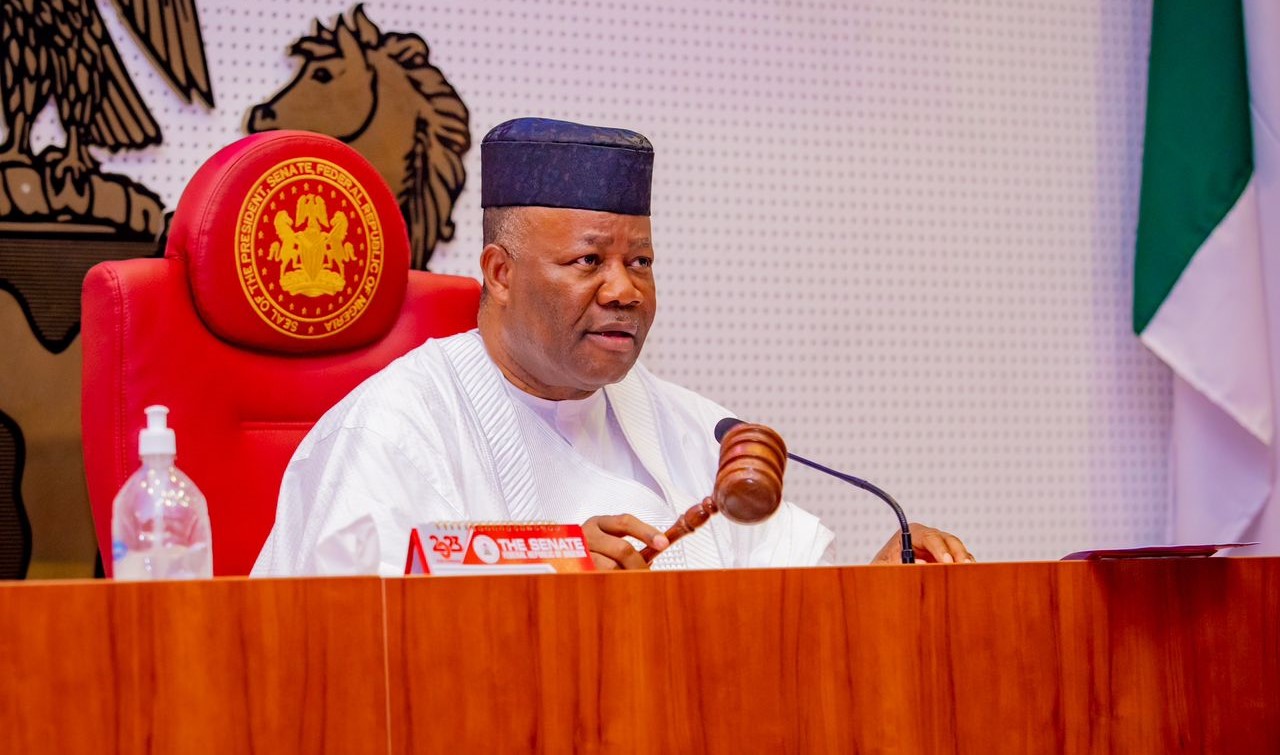
The National Security Adviser, Nuhu Ribadu, and President of the Senate, Godswill Akpabio, on Tuesday called for the deployment of modern technology and stronger regional cooperation to strengthen Nigeria’s border security architecture and address growing security threats across the country.

FILE: Akpabio

They made the call at the opening of the 15th National Security Seminar organised by the Alumni Association of the National Defence College in Abuja.

Represented by the Director of Policy and Strategy at the Office of the National Security Adviser, Yazid Gbemudu, the NSA said Nigeria’s territorial integrity and national stability were closely tied to the effectiveness of its border security framework.

He noted that while Nigeria’s extensive land and maritime borders facilitated trade, regional integration and socio-economic development, they also exposed the country to threats including terrorism, arms trafficking, smuggling, human trafficking, irregular migration and other forms of transnational organised crime.

According to him, weak border governance creates vulnerabilities that can be exploited by criminal and terrorist networks, thereby undermining national security and development efforts.

“A major pillar of Nigeria’s contemporary border security framework is the National Border Management Strategy, which promotes an integrated border management approach.

“The strategy seeks to enhance intelligence collaboration, strengthen border infrastructure, improve surveillance capabilities and modernise border management processes,” he said.

Ribadu said the deployment of Border Management Information Systems and other technological solutions at key entry and exit points had improved data collection, traveller screening and migration monitoring.

“These initiatives demonstrate Nigeria’s commitment to aligning its border management practices with international standards,” he added.

See also  41 rescued, four dead in Sokoto boat accident – NEMA

The NSA stressed the need for the full implementation of an integrated border management system to improve coordination among security, intelligence and law enforcement agencies.

“Effective intelligence sharing, joint operations and harmonised border procedures are essential for addressing contemporary security threats,” he said.
He also advocated increased investment in technology-driven border security solutions.

“Expanding surveillance systems across land, maritime and coastal borders will significantly improve monitoring capabilities and reduce illegal cross-border activities.

“Modern challenges require modern solutions, including biometric identification systems, advanced border monitoring technologies and data-driven security frameworks,” Ribadu stated.

The NSA further emphasised the importance of regional and bilateral cooperation, noting that many of the security challenges confronting Nigeria’s borders were transnational in nature and required coordinated responses among neighbouring countries.

He also called for greater investment in border communities through sustainable development, improved infrastructure and economic opportunities to reduce their vulnerability to criminal exploitation.

“Strengthening Nigeria’s border security architecture is fundamental to ensuring national stability, protecting territorial integrity and promoting socio-economic development,” he said.

Ribadu, however, acknowledged challenges such as porous borders, inadequate infrastructure, limited technological capabilities and gaps in inter-agency coordination, saying they required urgent attention.

“Border security is a shared responsibility that requires the collective efforts of security agencies, government institutions, border communities and international partners,” he added.

Speaking at the event, Akpabio, who was represented by the Chairman of the Senate Committee on Defence, Ahmad Lawan, said Nigeria’s extensive land and maritime boundaries posed significant security challenges.

“As a country with extensive land and maritime boundaries, Nigeria faces significant challenges relating to border control, illegal migration, arms trafficking, smuggling and the infiltration of criminal and extremist elements.

See also  Counter-terrorism campaign: FG moves to fast-track trial of 5,000 insurgents

“It is, therefore, imperative that Nigeria prioritises the strengthening of its border security architecture through improved surveillance, enhanced infrastructure, better inter-agency coordination, technological innovation and stronger regional cooperation,” he said.

Akpabio noted that many of the security threats confronting Nigeria had transnational dimensions, making coordinated responses essential.

He stressed that peace and security remained prerequisites for meaningful national development.

“There can be no meaningful development without peace and security. Porous and poorly managed borders can become vulnerabilities that undermine national security efforts and national stability,” he said.

The Senate President also advocated a whole-of-government and whole-of-society approach to addressing insecurity.

According to him, government institutions, security agencies, civil society organisations, the private sector, traditional institutions, the media and academia all have critical roles to play in safeguarding the country.

Earlier, the Acting President of AANDEC, Commodore Amatare Kpou (retd.), described the seminar as a key platform for promoting informed discourse on national security challenges and opportunities.

Kpou said the theme of the seminar, “Strengthening Nigeria’s Border Security Architecture for National Stability,” was timely, given the growing threats of irregular migration, smuggling, trafficking and other cross-border crimes.

He expressed confidence that the deliberations would generate useful recommendations for policymakers and contribute to efforts aimed at building a safer and more secure Nigeria.

Nigeria shares over 4,000 kilometres of land borders with neighbouring countries and an extensive coastline, making border security a critical component of national security.

Authorities have repeatedly identified porous borders as channels for terrorism, arms smuggling, human trafficking and other transnational crimes.

The Federal Government has in recent years intensified efforts to strengthen border management through technology, intelligence sharing and regional cooperation.

See also  NAF kills over 400 bandits in Zamfara air assault

punch.ng

FOLLOW US ON:

FACEBOOK

TWITTER

PINTEREST

TIKTOK

YOUTUBE

LINKEDIN

INSTAGRAM

Continue Reading

Trending