Connect with us

Education

SSANU rejects FG’s 30% pay rise offer

Published

on

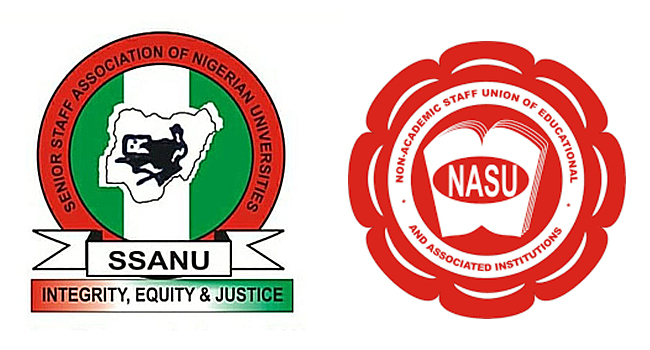
The Federal Government has approved a 30 per cent increase in the consolidated salary structure of SSANU – non-academic staff in federal universities, polytechnics and colleges of education under.

The move is aimed at easing long-standing labour tensions and boosting morale across Nigeria’s tertiary education system.

The approval comes after years of agitation by non-academic staff unions, particularly the Senior Staff Association of Nigerian Universities and the Non-Academic Staff Union, over salary disparities and unpaid allowances.

It also followed approval of a 40 per cent pay rise granted to the Academic Staff Union of Universities by the Federal Government.

However, the National Executive Council of the SSANU has insisted that no final agreement has been reached.

It threatened industrial action if talks were not concluded by the end of April.

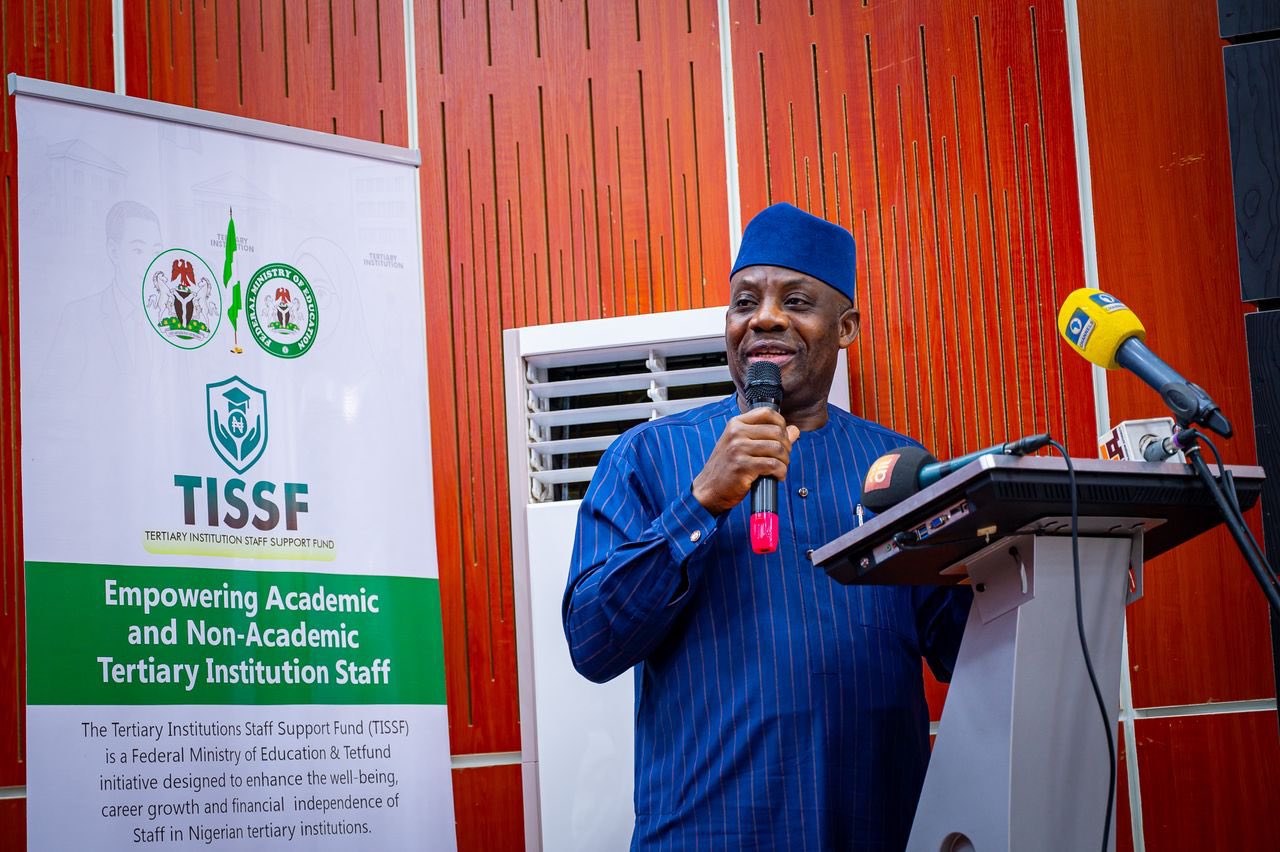
In a letter dated March 30, 2026, and signed by the Minister of Education, Dr Tunji Alausa, the government said the increment would be implemented as a Consolidated Non-Teaching Tools Allowance.

“I write to convey the approval of His Excellency… for a thirty per cent (30%) increase in the consolidated salary structures of non-academic staff of federal universities, polytechnics and colleges of education,” the minister stated.

The directive, addressed to the Executive Secretary of the National Commission for Colleges of Education, National Universities Commission and the  National Board for Technical Education, indicated that details of the implementation are contained in an attached memorandum.

Alausa said the decision reflected the government’s commitment to improving the welfare and productivity of non-academic staff, who play critical administrative and technical roles in higher institutions.

See also  International Day of Education: First Lady Advocates Investment In Inclusive Learning

“This approval underscores the Federal Government’s commitment to enhancing the welfare, motivation, and productivity of non-academic staff,” he said, adding that it would also strengthen “the quality, stability and global competitiveness of Nigeria’s tertiary education system.”

He further urged relevant agencies to ensure the smooth execution of the policy.

“We look forward to your usual cooperation and support for the seamless and timely implementation of this approval,” the minister added.

SSANU’s position rejecting the agreement was contained in a communiqué issued at the end of a special NEC meeting held on Saturday at the union’s National Secretariat in Abuja, where leaders reviewed developments in the negotiation process.

According to the communiqué signed by the National President of SSANU, Muhammad Ibrahim, and forwarded to the press on Sunday, the NEC reaffirmed that “the renegotiation process with the Federal Government is still ongoing and has not been concluded.”

The council also expressed concern over what it described as misleading reports in the public space, suggesting that the process had been concluded.

It specifically pointed to the circulation of a letter allegedly indicating approval of a 30 per cent increase in allowances, insisting that discussions were still ongoing and no binding agreement had been signed.

NEC stated that “SSANU will not accept any outcome that falls below the negotiated understanding reached in the course of the renegotiation process, and insists that fairness, due process, and collective bargaining principles must be respected.”

Reiterating its earlier stance under the Joint Action Committee of NASU and SSANU, the council maintained the ultimatum given to the Federal Government from April 1 to April 30, 2026, to conclude negotiations and sign agreements.

See also  Lagos seals Dowen College over indiscriminate waste disposal

It warned that failure to meet the deadline would leave the unions with no choice but to embark on industrial action.

The communiqué stated that SSANU “will have no alternative but to, along with NASU, commence an indefinite, comprehensive, and total industrial action.”

The council urged members across all branches to remain calm but vigilant, and to stay united in readiness to comply with any directives issued by the union leadership.

“NEC called on all members of the union across the branches to remain calm, vigilant, united, and prepared to fully comply with the decisions of the Union in defence of their welfare, dignity, and collective interest,” the communiqué read.

It further reiterated SSANU’s commitment to defending members’ rights and welfare, stating that the union “will continue to pursue justice with firmness, unity, and resolve.”

The latest warning follows an earlier communiqué issued after SSANU’s 54th National Executive Council meeting held at Ekiti State University, where the union expressed dissatisfaction with the slow pace of renegotiations and issued a final ultimatum to the Federal Government.

At the time, SSANU also raised concerns over salary delays, poor funding of universities, and deteriorating working conditions across the system.

Meanwhile, the National Commission for Colleges of Education has directed provosts of federal colleges of education to commence necessary processes for the implementation of the new payment plan.

The memo, issued on behalf of the Executive Secretary, Dr Angela Ajala, instructed bursars and institutional heads to take note of the development and align with the new salary structure.

See also  Joel Mokyr, Philippe Aghion, Peter Howitt win 2025 Nobel Economics Prize

“On behalf of the Executive Secretary… I write to respectfully bring to your attention the recent approval by the Federal Government… the thirty per cent (30%) increase in the consolidated salary structure of non-teaching staff,” the commission stated.

It added that the minister’s approval had been attached to guide execution, signalling the start of formal rollout across federal colleges of education.

Both unions have repeatedly embarked on industrial actions in recent years, protesting what they described as inequitable treatment compared to academic staff under the Academic Staff Union of Universities.

Strikes by SSANU and NASU have disrupted administrative operations across campuses, affecting student services, examination processing, and institutional governance.

Their demands have typically included improved remuneration, payment of earned allowances, and inclusion in government intervention funds.

Continue Reading
Click to comment

Leave a Reply

Your email address will not be published. Required fields are marked *

Education

NECO to begin computer-based exams this year — FG

Published

on

The Federal Government has announced that the National Examinations Council (NECO) will commence computer-based examinations this year as part of efforts to curb examination malpractice and modernise Nigeria’s assessment system.

The Minister of Education, Dr Tunji Alausa, disclosed this on Thursday during NECO’s 25th anniversary celebration held in Abuja.

Alausa said the transition to technology-driven examinations marked a major step towards strengthening the credibility of public examinations and improving Nigeria’s global education standards.

According to Alausa, the new examination model will enable authorities to “monitor candidates in real time, detect suspicious activities and reduce examination fraud.”

“We are at the threshold of a very important reform, which NECO is spearheading, and that is the Computer-Based Examination, which is to commence this year,” the minister said.

He described NECO as a key institution in safeguarding integrity and accountability in the education sector, noting that the council had evolved into a reliable examination body over the past 25 years.

Alausa stated that NECO’s growth reflected Nigeria’s determination to establish a credible national examination system capable of providing equal opportunities for students nationwide.

He added that the examination body had “improved examination security, enhanced scoring reliability and expanded access to examinations in underserved communities while embracing technological innovations that restored public confidence in its certificates.”

The minister also stated that the Federal Ministry of Education would continue to provide the necessary oversight to ensure NECO’s examinations aligned with national educational goals and curriculum standards.

He stressed the need for educational assessments to move beyond rote learning and focus on modern skills such as critical thinking, digital literacy and problem-solving.

See also  ASUU mobilises chapters for Oct 13 warning strike

“As we celebrate this Silver Jubilee, may NECO and the Ministry of Education continue to work in unison, fostering trust, driving reform, and ensuring that certification remains a passport to brighter futures for all students,” he added.

In his remarks, the Registrar and Chief Executive of NECO, Prof. Dantani Wushishi, said the council had expanded its operations beyond Nigeria and was now conducting examinations in eight countries.

Wushishi described the development as evidence of increasing international acceptance of NECO certificates.

“Today, NECO stands as a benchmark for credible examinations in the region and among international peers,” Wushishi stated.

He said the council had overcome early challenges, including public scepticism, infrastructure limitations and credibility concerns, to emerge as a globally recognised examination institution.

Wushishi noted that NECO had introduced several reforms, including digital verification systems, e-certificates, e-library services and data analytics platforms.

The registrar also revealed that the council had embarked on infrastructure expansion projects, including the construction of offices in 10 states and the creation of additional zonal directorates to improve service delivery.

According to him, NECO recently acquired operational vehicles to strengthen examination logistics across the country.

Wushishi further stated that the council planned to intensify measures against examination malpractice and strengthen digital services in line with its future development agenda.

He commended former Nigerian leaders, including Generals Ibrahim Babangida, Abdulsalami Abubakar and former President Olusegun Obasanjo, for their contributions to the establishment and growth of NECO.

Participants at the event described NECO’s growth over the last 25 years as a major achievement and expressed optimism that the introduction of computer-based examinations would improve transparency and efficiency in the country’s educational assessment system.

See also  FG shuts 22 illegal tertiary institutions

The introduction of computer-based examinations marks a significant shift in Nigeria’s public assessment system, which has faced persistent concerns over examination malpractice, including question leaks, impersonation and collusion at examination centres.

In recent years, examination bodies such as the Joint Admissions and Matriculation Board have adopted computer-based testing, with authorities citing improved security, faster result processing and reduced opportunities for fraud.

punch.ng

FOLLOW US ON:

FACEBOOK

TWITTER

PINTEREST

TIKTOK

YOUTUBE

LINKEDIN

INSTAGRAM

Continue Reading

Education

Abia varsity chancellor tasks new veterinary doctors on food safety, public health

Published

on

The Vice-Chancellor of Michael Okpara University of Agriculture, Umudike, Prof. Ursula Ngozi Akanwa, has charged new veterinary doctors of the University to uphold the ethics and values of their profession while ensuring food safety and safeguarding public health.

Prof. Akanwa gave the charge while addressing graduands of Doctor of Veterinary Medicine (DVM) during the 12th Induction and Oath-taking Ceremony organised by the University in collaboration with the Veterinary Council of Nigeria (VCN) on Wednesday.

The VC, represented by the Deputy Vice-Chancellor Academic, Prof. Nneoma Elechi Obasi, said the induction confers legal rights on the graduands to practice Veterinary Medicine and places on them the responsibility of safeguarding animal health, food systems and public health.

“Today is not merely ceremonial; it marks the transition of our graduands into professionals entrusted with the health of animals, the safety of our food systems and the protection of public health,” she said.

She stressed that the ceremony reflects the University’s mandate to produce professionals with competence, character and conscience, describing the new veterinarians as critical to agricultural growth and national food security.

The VC also commended the Veterinary Council of Nigeria for granting full accreditation to the University’s Veterinary programme and acknowledged the partnerships with industry operators that support practical training of MOUAU Vet. students.

On its part, the Veterinary Council of Nigeria, led by its President, Prof. Mathew Adamu and Ag. Registrar, Dr. Oladotun Fadipe, while issuing practising licenses to the graduands, congratulated the University for regularly churning out quality DVM Graduands, who are found worthy in learning and character.

See also  Nupe, Tiv Studies Set For Takeoff In Nigerian Varsities

A total of 48 DVM Graduands were inducted into the profession, with Dr Chimezie Amarachi Blessing emerging as the overall best graduating student, and Dr Aniorji Sandra Chinonso won the Farm Alert Award.

punch.ng

FOLLOW US ON:

FACEBOOK

TWITTER

PINTEREST

TIKTOK

YOUTUBE

LINKEDIN

INSTAGRAM

Continue Reading

Education

School closures threaten national stability, FG warns

Published

on

The Secretary to the Government of the Federation, Dr George Akume, on Wednesday warned against the continued closure of schools due to insecurity, saying it poses a serious threat to Nigeria’s education system and long-term national stability.

Akume said shutting down schools in unsafe areas not only disrupts learning but also deepens the country’s education crisis.

A statement by Akume’s media aide, Yomi Odunuga, said the SGF spoke in Abuja at the first triannual meeting of the Nigerian Inter-Religious Council, held under the theme, “Religious Literacy for National Cohesion.”

The SGF called for the strengthening of government policies on safe schools and violence-free learning environments.

“The SGF also raised concerns over insecurity in the education sector, warning that attacks on schools and prolonged closures in unsafe areas continue to worsen Nigeria’s education crisis.

“He said government policies on safe schools and violence-free learning environments must be strengthened to protect children and ensure uninterrupted learning,” the statement partly read.

According to him, it was impossible to encourage children to learn when schools were not secure.

“A child cannot learn fraternity in fear; a nation cannot preach literacy while schools are under threat,” he said.

Akume emphasised that while religious studies are already part of the school curriculum, priority must now be placed on improving teaching quality through better-trained educators, enhanced learning materials and value-based education that promotes tolerance and responsible citizenship.

Beyond education, the SGF urged religious and traditional leaders to play a more active role in preventing violence and fostering unity as the country prepares for the 2027 general elections.

See also  Joel Mokyr, Philippe Aghion, Peter Howitt win 2025 Nobel Economics Prize

He said faith-based and traditional institutions must lead efforts in grassroots mobilisation, youth education and peace-building to counter misinformation, stereotypes and identity-based divisions that often trigger conflict.

“The 2027 general elections are fast approaching, and religious and traditional leaders have a moral responsibility to strengthen collaboration, promote tolerance and ensure peaceful coexistence in their communities,” Akume said.

He warned against the manipulation of religion and identity for political or economic gains, noting that such actions often fuel violence and social unrest.

Akume also stressed the importance of combining religious literacy with media and information literacy to combat the spread of falsehoods and hate speech, referencing Nigeria’s collaboration with the United Nations Educational, Scientific and Cultural Organisation on promoting responsible information sharing.

He added that the Federal Government had put measures in place to support religious and traditional institutions in sustaining peace and security ahead of the elections.

The SGF expressed optimism that deliberations at the NIREC meeting would yield practical solutions to strengthen national cohesion, while urging stakeholders to prioritise education and literacy as key tools for peace-building and development.

punch.ng

FOLLOW US ON:

FACEBOOK

TWITTER

PINTEREST

TIKTOK

YOUTUBE

LINKEDIN

INSTAGRAM

Continue Reading

Trending