Connect with us

Politics

ADC predicts “earthquake” as Turaki PDP clears Jonathan ahead of 2027

Published

on

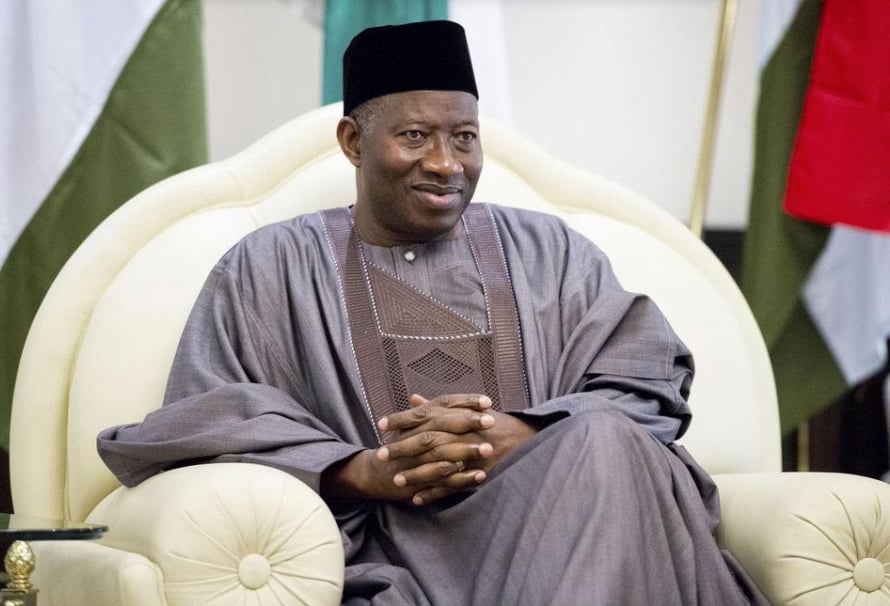
The Tanimu Turaki (SAN)-led interim factional National Working Committee of the Peoples Democratic Party, on Tuesday, screened 12 governorship aspirants ahead of the 2027 elections, while granting automatic clearance to former President Goodluck Jonathan as the party’s sole presidential aspirant.

Chairman of the PDP INWC screening committee and former Vice President, Namadi Sambo, represented by former Niger State Governor Babangida Aliyu, made the disclosure while answering questions from journalists after the screening exercise in Abuja on Tuesday.

Reacting, the African Democratic Congress, said Jonathan’s joining the presidential race will alter the country’s political calculations and trigger fresh strategic thinking across party lines.

Jonathan, who served as President between 2010 and 2015, was reportedly granted a waiver on Tuesday by a PDP screening panel headed by Aliyu, paving the way for a possible return to the presidential race.

Though the development is yet to receive formal confirmation from the national leadership of the PDP, it has already generated intense debate within political circles, with analysts suggesting that Jonathan’s re-emergence could reshape alignments ahead of the next general election.

Earlier, a former presidential aide and chieftain of the PDP, Umar Sani, alleged that Jonathan had already obtained a presidential nomination form ahead of the 2027 general elections.

Sani, who served as Senior Special Assistant on Media and Publicity to former Vice President Sambo, made the assertion during an appearance on Trust TV on Tuesday.

His comments come amid renewed political consultations involving Jonathan across various political blocs, sparking fresh speculation that the former president may be considering a return to active politics nearly 12 years after leaving office.

Although Jonathan has yet to officially declare his ambition or reveal the platform under which he may contest, Sani hinted that the lingering internal crisis within the PDP may be responsible for the former president’s cautious posture.

He also rejected claims that the party was merely attempting to exploit Jonathan’s popularity for political advantage.

Sani stated, “The issue is not about whether we will extract commitment from him. What is most important in politics is action.

“If your action suggests you are interested, there are certain actions to follow. One of which is the procurement of the nomination form.

See also  APC, ADC, LP, six others collect INEC access codes for 2027 nominations

“He has procured the nomination form. In fact, he is about to come and submit the forms publicly. So it is not an issue of whether we are trying to bring or use him for our face-saving grace, whatever. No.

“The fact of the matter is that we believe that Jonathan is the right choice at this moment. We are very confident that the matter will be thrown out because you cannot relitigate something that has already been decided upon,” Sani said.

According to him, only the Supreme Court could overturn earlier decisions on Jonathan’s eligibility, insisting that the pending matter before Justice Peter Lifu would likely be dismissed for lack of jurisdiction when it comes up on May 26.

The PDP chieftain also dismissed claims that Jonathan’s supporters were merely exploiting his name for political relevance, insisting that many Nigerians remained emotionally attached to the former president due to memories of his administration.

“Most Nigerians know him and are nostalgic about Jonathan. At the time he left office, many people felt the PDP was not performing, but now Nigerians have seen the difference clearly,” he added.

The chairman of the screening committee explained that the party had granted a screening waiver to a presidential aspirant due to his extensive political background, effectively clearing Jonathan as the PDP’s candidate.

He also noted that a similar waiver was given to former Oyo State Deputy Governor, Taofeek Arapaja, adding that while other aspirants were still being screened, Jonathan remained the only confirmed presidential aspirant of the party.

He stated, “The party had already given a presidential aspirant a waiver from screening. As I said in the beginning, he was deputy governor, became governor, became vice president, and became president, so we did not see anything that required screening.

“Therefore, the party granted him a waiver. In other words, he has been declared and cleared as the PDP candidate for the presidential election, and that is former President Goodluck Jonathan.

“The other waiver is for the former deputy governor, ambassador, and secretary of the party, Taofeek Arapaja, who, for many reasons, had to remain in Ibadan, Oyo State, to ensure that everything went well. So, we also declared that he had been granted a waiver by the party.

“The others, as I am sure you have interacted with many of them who came here, include two aspirants from Taraba, one from Adamawa, one from Kano, one from Akwa Ibom, one from Delta, and another from Kano.

See also  Tinubu reinstates Fubara after Emergency Rule

“Anytime the other aspirants come within the screening period, we will continue the screening exercise,” he said.

A Kebbi State Governorship aspirant, former Deputy National Publicity Secretary of the PDP, Ibrahim Manga, confirmed that he was successfully cleared after submitting his nomination form and undergoing screening to contest the governorship of Kebbi State.

Also, Delta governorship aspirant Benedict Etanabene said he joined the PDP after the Labour Party dissolved its state structures, questioning its viability in Delta State and criticising its reported support for the sitting president.

PDP governorship candidate in Yobe State, Sharif Abdullahi, said he is contesting again in 2027 after participating in the 2023 election, adding that if elected, he would focus on improving education, healthcare, and agriculture in the state.

Earlier, the Turaki faction had disclosed that a total of 2,122 aspirants are expected to be screened for state Houses of Assembly, 748 for the House of Representatives, 198 senatorial aspirants, 112 governorship aspirants, and one presidential aspirant.

On April 30, the Supreme Court, in a close 3–2 decision, invalidated the PDP national convention held in Ibadan on November 15 and 16.

The convention, which had the backing of Oyo State Governor Seyi Makinde, had produced a leadership headed by Turaki (SAN).

In response to the judgment, the Board of Trustees Chairman, aligned with the Makinde faction, Adolphus Wabara, argued that the Supreme Court’s position on the suspension of FCT Minister Nyesom Wike’s ally and PDP National Secretary, Senator Samuel Anyanwu, along with others, suggested that the party currently lacks a legally recognised leadership structure.

Following this development, the 103rd National Executive Committee meeting of the Makinde bloc of the PDP, held on Monday, approved a 13-member Caretaker Committee headed by Turaki (SAN) as chairman to oversee party affairs.

See also  APC chieftain accuses Kwankwaso of inciting North against Southern presidency

Reacting to Jonathan’s emergence in a statement posted on its verified X handle, @ADCVANGUARD, the ADC said Jonathan’s potential candidacy introduced a new layer of complexity for both the ruling All Progressives Congress and opposition parties preparing for 2027.

The party said, “Jonathan’s possible return will shake the PDP, disturb APC calculations, unsettle Labour Party sympathisers, and force every political camp to rethink strategy.

“Whether people like him or not, GEJ remains one of the few Nigerian politicians whose name still carries national emotion. Some remember him for peacefully conceding defeat. Others criticise his administration. But nobody can deny that his entrance into the race changes the conversation.”

The ADC further described the reported clearance as more than an internal PDP affair, arguing that it signalled the return of old political forces ahead of what could become one of Nigeria’s most fiercely contested elections since 1999.

“The PDP screening committee clearing former President Goodluck Jonathan on waiver to contest the 2027 presidential election is not just another party headline.

“It is a political signal. It means one thing clearly: the old forces are returning to the battlefield, and every major bloc is now preparing for a serious national contest,” the party stated.

Jonathan, who lost his re-election bid to former President Muhammadu Buhari in 2015, has remained an influential political figure on the continent, largely through diplomatic and peace-building engagements across Africa.

Over the years, there have been repeated calls from political groups urging him to return to active politics, particularly following growing public dissatisfaction with economic conditions and governance challenges.

The ADC argued that the former president’s perceived moderation and national appeal could pose a fresh challenge to President Bola Tinubu and the APC, especially amid rising public frustration over inflation, insecurity and the cost of living crisis.

“For APC, this is another headache. Tinubu is already battling public anger over hardship, insecurity, inflation, and broken expectations.

“Now imagine facing a former president with nostalgia value, a soft public image, and a familiar national network. That is not a small challenge,” the party added.

punch.ng

FOLLOW US ON:

FACEBOOK

TWITTER

PINTEREST

TIKTOK

YOUTUBE

LINKEDIN

INSTAGRAM

Continue Reading
Click to comment

Leave a Reply

Your email address will not be published. Required fields are marked *

Politics

Adelabu backs down, seeks APC reconciliation ahead of 2027 in Oyo

Published

on

The former Minister of Power and All Progressives Congress governorship aspirant in Oyo State, Bayo Adelabu, on Thursday backed down from pursuing legal action over the party’s governorship primary, urging the APC leadership to initiate a comprehensive reconciliation process ahead of the 2027 election.

Adelabu, in a statement released in Ibadan, the state capital, said his decision was not due to a lack of evidence, confidence or conviction, but was taken in the interest of the party’s progress ahead of the 2027 elections.

He explained that the decision followed a meeting with some party leaders and representatives of his loyalists and supporters from across the 33 local government areas and 351 wards in the state.

The PUNCH reports that some Oyo APC governorship aspirants have been at loggerheads with the state and national executive members of the party over the nomination of Sharafadeen Alli as the party’s governorship candidate for the 2027 election.

They alleged that Alli, who represents Oyo South Senatorial District in the National Assembly, was imposed on them.

Adelabu, in his statement, said that as a loyal and committed member of the APC, he had decided not to pursue an appeal within the party or institute legal proceedings over the process at this time.

The former minister said, “This decision is not because of a lack of evidence, confidence or conviction. Neither should it be interpreted as an act of surrender or an indication that my aspiration to serve as governor of Oyo State is a do-or-die affair.

See also  APC, ADC, LP, six others collect INEC access codes for 2027 nominations

“Rather, I have chosen, in the interest of peace, party stability and the larger future of the APC in the state, not to further escalate the matter through avenues that may deepen existing divisions and undermine the cohesion of our great party.

“More importantly, our respected national chairman, during his recent visit to Oyo, openly acknowledged that there were errors, unfairness and injustice associated with aspects of the primary election process.

“We believe that an acknowledgement or apology, though important, cannot and should not substitute for the necessary correction where the opportunity to address the grievances still exists.”

He expressed concern that many loyal members had invested years of their lives, enormous personal resources, time, energy and political capital in building the APC.

Many of them, according to him, now felt that their sacrifices, votes and preferences had been disregarded and that candidates who did not necessarily reflect the popular choices of party members had emerged without a transparent declaration of the primary results.

“Their grievances are genuine and must not be dismissed as merely the product of the influence or persuasion of any particular aspirant.

“Indeed, many party members are deeply convinced that their own votes, sacrifices and preferences were disregarded, and some may not readily accept appeals from the aspirants they supported.

“Rather, names of selected individuals were subsequently entered on the INEC electronic portal as the party’s candidates for the 2027 general elections.

“This development has effectively produced candidates without the transparent publication of the actual results upon which such nominations were supposedly based.

See also  Opposition behind SDP crisis, says ex-secretary

“The concerns arising from this process cut across the governorship, senatorial, House of Representatives and state House of Assembly nominations.

“We agreed that the absence of publicly declared and verifiable results has understandably generated serious concerns about the transparency, credibility and integrity of the nomination process.

“We also affirmed that substantial documentary materials, authenticated collation records and video evidence exist which, in our considered view, raise serious questions about aspects of the process and the eventual outcomes.”

He asked the national leadership of the party to restore confidence, rebuild trust and return cohesion and unity to the party.

“The national leadership of our party must therefore appreciate that the responsibility for reconciliation cannot simply be transferred to aspirants.

“The APC has important work to do to restore confidence, rebuild trust and return cohesion and unity to the party in the state,” he said.

The former minister urged the national leadership of the APC to urgently initiate a comprehensive, sincere and credible reconciliation process covering all categories of nominations and genuinely engaging all affected stakeholders.

“Members who feel wounded, betrayed or alienated must be deliberately engaged and reassured, not merely through appeals, but through concrete actions that demonstrate that their loyalty, sacrifices and contributions still matter.

“The implications of the present situation must not be underestimated. Electoral victory cannot be secured merely by entering names on an electronic portal or announcing candidates.

“Elections are won through the trust, enthusiasm, commitment and active participation of party members and supporters, particularly at the grassroots,” he added.

See also  FG, states shut schools as terrorists abduct 215 Niger pupils

Adelabu insisted that his aspiration to serve as the state governor was driven by a genuine desire to contribute more directly to the development, prosperity and progress of Oyo State and its people.

“My aspiration to serve as Governor of Oyo State has never been, and will never be, a do-or-die project. By the grace of Almighty God, I have been privileged to serve at the highest levels of both the private and public sectors, and for these opportunities, I remain profoundly grateful.

“However, as human beings, we may propose, but Almighty God ultimately disposes according to His divine will and perfect timing.

“While recent developments may have delayed the realisation of this aspiration, I remain firmly convinced that what may be delayed by human actions cannot be denied by Almighty God. God’s time, indeed, remains the best,” the former minister stressed.

Source: punchng.com

FOLLOW US ON:

FACEBOOK

TWITTER

PINTEREST

TIKTOK

YOUTUBE

LINKEDIN

INSTAGRAM

Continue Reading

Politics

APC, opposition clash over FG’s $1bn household palliative ahead of 2027

Published

on

The All Progressives Congress and opposition parties have clashed over the Federal Government’s $1bn Household Prosperity and Empowerment Social Protection Project, with the opposition alleging that the initiative is designed to influence voters ahead of the 2027 general elections.

The opposition parties, including the African Democratic Congress and National Democratic Congress, questioned the timing of the programme, which was launched in Abuja on Wednesday amid growing political activities ahead of the elections.

However, the APC rejected the allegations, insisting that the initiative was a genuine effort by the Bola Tinubu administration to tackle poverty and provide sustainable economic support for vulnerable Nigerians.

The Federal Government said the programme was designed to move Nigeria’s social protection system beyond short-term palliatives to sustainable economic empowerment and self-reliance.

Launched under the theme, “From Palliatives to Pathways,” the initiative targets vulnerable households by improving beneficiary identification, providing immediate support during economic shocks and creating pathways for households to graduate from poverty.

The programme was unveiled by the First Lady, Senator Oluremi Tinubu, who said the economic reforms of the Tinubu administration had made continued support for vulnerable Nigerians necessary.

“Under the leadership of His Excellency, President Bola Ahmed Tinubu, GCFR, our nation is implementing far-reaching reforms to strengthen the economy, lay a solid foundation for sustainable growth, and shared prosperity,” she said.

She added that many families continued to face difficulties despite the ongoing reforms, stressing that the HOPE-SP project would provide “immediate stabilisation assistance” while placing vulnerable households on a path to recovery, empowerment and self-reliance.

The Federal Government said the programme would target about 7.6m vulnerable households, with eligible beneficiaries expected to receive a one-off digital shock-response payment of N40,000. Beneficiaries are to be selected from the National Social Register and verified with their National Identification Numbers.

The launch also featured the unveiling of other components of the government’s new social protection architecture, including the One-Humanitarian-One Poverty Response System, the Emergency Cash Transfer Programme and a ministerial blueprint for humanitarian affairs and poverty reduction.

The Minister of Humanitarian Affairs and Poverty Reduction, Dr Bernard Doro, said the government was moving away from fragmented interventions and reactive palliatives towards a system that would identify vulnerable households, assess their needs and track their progress towards economic self-reliance.

He disclosed that more than N600bn had been disbursed in cash transfers to vulnerable Nigerians over the past three years, reaching slightly more than 10m households.

ADC raises concerns

However, opposition parties said the timing of the new intervention raised questions, particularly with the 2027 elections less than a year away.

The African Democratic Congress described the $1bn programme as a reaction to the economic hardship Nigerians had experienced under the Tinubu administration and linked its launch to the growing popularity of the party’s presidential candidate, Atiku Abubakar’s proposal for a targeted production subsidy.

In a statement by its National Publicity Secretary, Bolaji Abdullahi, on Thursday, the party questioned why the government was only now making a major financial commitment to social protection after years of complaints from Nigerians over rising food, transport and energy costs.

The party said the government had previously insisted that there was no money to adequately cushion the effects of its economic reforms but had now found $1bn for a new intervention as elections approached.

“Why did the poor only become visible when their votes become valuable?” the ADC asked.

The party also questioned the funding and administrative structure of the programme, particularly the role of the First Lady in unveiling a Federal Government intervention.

“Is this a Federal Government programme or a project of the First Lady?” the party asked, demanding clarification on the budget head or financing arrangement under which the money was approved, the institution responsible for accounting for the funds and who would ultimately answer to the Auditor-General and the National Assembly.

See also  Lawmakers protest as NASS okays e-transmission, manual backup ahead of 2027 elections

The ADC said it supported genuine efforts to protect vulnerable Nigerians but argued that palliatives could not substitute for policies that restored purchasing power and expanded economic opportunities.

It further accused the administration of attempting to address the consequences of its economic policies through what it described as a politically motivated intervention ahead of the 2027 elections.

Timing wrong — NDC

Also reacting, the Nigeria Democratic Congress said it welcomed any genuine intervention aimed at improving the welfare of Nigerians but questioned the timing of the HOPE-SP launch.

The party’s National Publicity Secretary, Osa Director, told our correspondent that the proximity of the elections made the development open to political interpretation.

“We welcome every move directed at addressing the challenges facing our people. However, with elections just a few months away, one may wonder why the government is just realising the need for this intervention.

“The timing will definitely elicit questions that the ruling party and the government in power may be unwilling to answer,” he said.

On its part, the Social Democratic Party was more direct in its assessment, describing the initiative as a voter-inducement strategy packaged as an empowerment programme.

The party’s spokesman, Rufus Aiyenigba, told The PUNCH that the intervention amounted to “a household votes prospecting outreach,” although he added that such an initiative could not guarantee electoral victory.

The opposition criticism comes against the backdrop of the administration’s wider social protection efforts since the removal of petrol subsidy and the unification of the foreign exchange market, policies which the government has repeatedly defended as necessary for economic recovery.

The government has maintained that its latest social protection framework is intended to ensure that vulnerable Nigerians are not left behind as economic reforms take effect.

APC defends project

However, the ruling All Progressives Congress dismissed the opposition’s allegations, arguing that the proximity of the 2027 elections did not mean the government should suspend its responsibilities to Nigerians.

APC Director of Publicity, Bala Ibrahim, said the Federal Government had a duty to continue implementing programmes designed to improve the welfare of citizens irrespective of the electoral calendar.

“Because an election is coming does not mean the government should fold its arms and shy away from its responsibilities. It is supposed to continue,” Ibrahim said.

According to him, the fact that an intervention would be delivered close to an election did not automatically make it an electoral inducement.

“Whether or not there is an election coming, the government is doing what it ought to continue doing. There is nothing wrong with extending the strategy in such a way that the dividends of democracy will come to the people as close as possible to the time of the election.

“That is strategic timing. It is not corruption. It is not anything that is done deliberately to change the hands of the clock,” he said.

Reacting to the opposition’s claim that the intervention was designed to woo voters, Ibrahim said there was nothing inherently wrong with government initiatives gaining public support, provided they were legitimate.

“If they say it is done with a view to wooing voters, what is wrong with wooing voters as long as what is done is legitimate?” he asked.

The APC spokesman said the Federal Government’s intervention programmes had been in development before the 2027 election season and that their implementation should not be interpreted solely through the political calendar.

“Democratic dividends going to the people are works in progress. They have been in the plan, and the timing has just come at this material time when the election is close by. I don’t see anything wrong with that,” he added.

See also  Venezuelan interim president announces proposal for mass amnesty

The controversy over the HOPE-SP places the Tinubu administration’s latest social protection initiative at the intersection of two competing narratives.

The government’s argument that it is strengthening social protection to shield vulnerable Nigerians from economic shocks, and the opposition’s contention that the intervention is coming at a politically convenient time.

For the government, the immediate challenge will be to demonstrate that the $1bn programme is transparently funded, fairly implemented and capable of producing measurable improvements in the lives of its intended beneficiaries.

The opposition parties, meanwhile, are likely to continue scrutinising the programme as the country moves closer to the 2027 elections.

Atiku challenges Tinubu

Meanwhile, former Vice President Atiku Abubakar challenged the government of President Bola Tinubu to reconcile conflicting figures on the number of households reached under its expanded cash-transfer programme.

Atiku said the contradiction between the government’s earlier claim that 15 million vulnerable households had been reached and a more recent figure of “slightly over 10 million households” raised serious questions about the programme’s implementation and the government’s management of public funds.

In a statement issued by his Senior Special Assistant on Public Communication, Phrank Shaibu, on Thursday, the ADC presidential candidate asked the Federal Government to explain what happened to the five million households missing from the latest figure.

“On July 16, 2026, the Presidency officially declared that expanded cash transfers had reached 15 million vulnerable households. It repeated essentially the same figure on August 2, 2026. Yet on August 26, 2026, the Minister of Humanitarian Affairs suddenly told Nigerians that only ‘slightly over 10 million households’ had been reached.

“So, where did five million households go? These are not opposition figures. They are Tinubu’s figures contradicting Tinubu’s figures,” the statement read in part.

The former Vice President also questioned the financial figures associated with the programme, saying the government’s reported expenditure did not appear to correspond with the number of beneficiaries and the amount each household was expected to receive.

According to him, qualifying households are to receive ₦25,000 monthly for three months, amounting to ₦75,000 per household.

He argued that if 10 million households received the full three-month payment, the total would amount to about ₦750bn, while payment to 15 million households would exceed ₦1.1tn.

Atiku said the Federal Government’s reported expenditure of just over ₦600bn requires further explanation.

“How many received one tranche, two tranches or all three? How many payments failed or were reversed? How many names were merely lifted from an existing social register and presented as evidence of actual payment?” he asked.

The ADC presidential candidate insisted that inclusion in a social register should not be treated as proof that beneficiaries actually received government funds.

“A name on a social register is not a bank alert. Counting people in a database is not the same thing as proving money reached them,” he stated.

Atiku called on the Federal Government to publish detailed records of the payments, including verified beneficiary households, payment tranches, state-by-state distribution figures, failed transactions and reversals.

He also demanded an independent audit of the programme, saying Nigerians should be able to verify how the reported hundreds of billions of naira were spent.

“If ₦600bn truly moved, then government must show the trail: unique verified households, payment tranches, state-by-state distribution, failed transactions, reversals and an independent audit,” he said.

The former vice president’s criticism comes against the backdrop of the Federal Government’s expanded social protection measures, which the Tinubu administration has presented as part of its response to the rising cost of living and the economic difficulties confronting vulnerable households.

The cash-transfer programme was expanded following the removal of the petrol subsidy and the resulting increase in transportation, food and other household costs.

See also  Police yet to receive court order on tinted-glass permits – FPRO

The government has repeatedly argued that targeted social interventions are necessary to cushion the effects of economic reforms on poor and vulnerable Nigerians.

Atiku, however, said government should focus more on reducing the underlying cost pressures driving households into poverty than on expanding the number of people receiving palliatives.

“Beyond the arithmetic lies a bigger indictment. A government boasting that tens of millions of households require emergency cash transfers should not be congratulating itself. It should be explaining why its economic policies pushed so many people into desperation,” he added.

He accused the government of worsening the financial pressure on households through higher fuel, transport, food and energy costs.

“Tinubu has turned poverty into a government programme: make fuel expensive, transport rises; transport rises, food rises; food rises, medicine becomes expensive; the family basket shrinks,” Atiku said.

He added that businesses were also facing higher energy and logistics costs, while workers had lost purchasing power.

“When millions become poorer, government registers them as ‘vulnerable,’ gives some of them cash and calls it reform.

“That is not prosperity. It is the industrial production of poverty followed by the bureaucratic management of the poor,” he argued.

The ADC chieftain contrasted the administration’s cash-transfer strategy with his proposed approach to reducing the cost of living, particularly through intervention in the domestic petroleum value chain.

He said his proposed policy would involve a targeted, capped and transparent intervention designed to lower fuel and transportation costs at source.

“This is precisely why Atiku proposes a targeted, capped and transparent intervention in the domestic petroleum value chain. It is designed to reduce fuel and transportation costs at source,” he said.

According to him, reducing fuel costs would have a wider impact across the economy by lowering transportation and logistics expenses for farmers, traders, manufacturers and households.

“When petrol becomes cheaper, the bus driver spends less, the farmer moves produce more cheaply, the trader pays less for haulage, businesses face lower logistics costs and the savings travel through the economy to the family kitchen,” he said.

He argued that the difference between his proposal and the Tinubu administration’s approach was that his plan would seek to tackle the causes of rising household expenses rather than compensate people after the damage had been done.

“Tinubu waits until poverty enters the home and arrives with a cash-transfer form. Atiku wants to reduce the cost pressures that drove the family into poverty in the first place,” he said.

The former vice president said a credible anti-poverty programme should ultimately reduce the number of people dependent on government assistance rather than expand the pool of beneficiaries.

“A serious anti-poverty policy should reduce the number of people needing palliatives, not celebrate how many millions have become vulnerable,” he said.

He also accused the Federal Government of applying a different standard of accountability to opposition proposals and its own expenditure.

“The same government that demands every kobo of Atiku’s proposed intervention cannot ask Nigerians to accept its own hundreds of billions on faith. That is not accountability. It is hypocrisy armed with a calculator,” Atiku said.

He called on the government to reconcile the conflicting beneficiary figures and provide verifiable evidence of the payments made.

“Until the Tinubu administration reconciles these figures and produces a verifiable payment trail, Nigerians are entitled to keep asking: where did the five million households disappear to?

“Did they graduate from poverty, vanish from the social register, or simply disappear because government propaganda ran ahead of the truth?,” he asked.

Source: punchng.com

FOLLOW US ON:

FACEBOOK

TWITTER

PINTEREST

TIKTOK

YOUTUBE

LINKEDIN

INSTAGRAM

Continue Reading

Politics

Suspected thugs disrupt Ondo Speaker’s impeachment bid

Published

on

Members of the Ondo State House of Assembly on Thursday held a parliamentary meeting as part of moves to impeach the Speaker, Olamide Oladiji.

However, the lawmakers’ plan to carry out the impeachment on the floor of the House was unsuccessful following the appearance of three unknown men, alleged to be political thugs, at the Assembly complex.

It was gathered that it took the intervention of policemen from the state command to drive the men out of the complex.

The legislators, however, continued with a parliamentary meeting on the premises of the Assembly complex.

One of the legislators, who spoke on condition of anonymity, said the meeting was strategic and centred on the removal of the Speaker, adding that “the man is gone already.”

He alleged that the unknown men were thugs sent to prevent the plenary from holding.

“He (the embattled Speaker) sent thugs to the Assembly to attack us, but he was disappointed. We sent them out, but we did not hold plenary again. But we will still meet to impeach him,” he stated.

The Assembly has been engulfed in crisis for the past few weeks, with 21 of its 26 members reportedly signing a notice for the Speaker’s impeachment over allegations of financial misconduct.

The Speaker was accused of diverting N44m meant for the reordering of the budget of the Ondo State Oil Producing Areas Development Commission.

Consequently, the aggrieved lawmakers gave the Speaker a deadline to resign or face impeachment on the floor of the House.

See also  June 12: Disagree, criticize me, but don’t stop believing in Nigeria – Tinubu

However, the impeachment move was stalled following interventions by Governor Lucky Aiyedatiwa and the leadership of the All Progressives Congress.

Oladiji has denied the allegations, insisting that nothing of such happened.

Speaking with our correspondent on the telephone shortly before the meeting, the Chairman of the House Committee on Information, Olatunji Fabiyi, said the impeachment would be carried out “definitely.”

He said, “We have been hearing news that we have abandoned the process. This is a lie and misinformation. We are still on it; he can’t be our Speaker again.

“Although the governor has been speaking with some of us, that does not stop the impeachment. There is no going back.”

Reacting, the embattled Speaker denied sending thugs to the Assembly, saying the men were members of his constituency who came to the complex for another purpose and had no intention of disrupting the lawmakers’ activities.

Oladiji also insisted that the matter had been resolved and that there was no longer any impeachment process.

He said, “There’s nothing like an impeachment process because the issue has been resolved and there is no impeachment.

“The governor and other leaders of the party have already intervened, and today we were supposed to have our parliamentary meeting.

“I have about three of my youth leaders whom I invited to come and pick up forms for recruitment, but, unknowingly to them, they did not know what was going on in the House of Assembly.

“Some of the members approached them and asked them why they were at the House of Assembly. They are not new and have been coming to the House of Assembly, but they insisted that they did not want to see them on the premises.

See also  Terrorists kill Nigerian brigadier general – AFP report

“I came out of my office and tried to pacify the members, telling them that they were my people who had been coming to the House of Assembly and had not harassed any member. But they said they did not want them and asked them to leave.

“So, there is nothing like an impeachment notice. There is nothing like an impeachment process, and we were able to resolve the whole matter.”

Source: punchng.com

FOLLOW US ON:

FACEBOOK

TWITTER

PINTEREST

TIKTOK

YOUTUBE

LINKEDIN

INSTAGRAM

Continue Reading

Trending