Connect with us

News

FG pumps N5tn into military operations, read details

Published

on

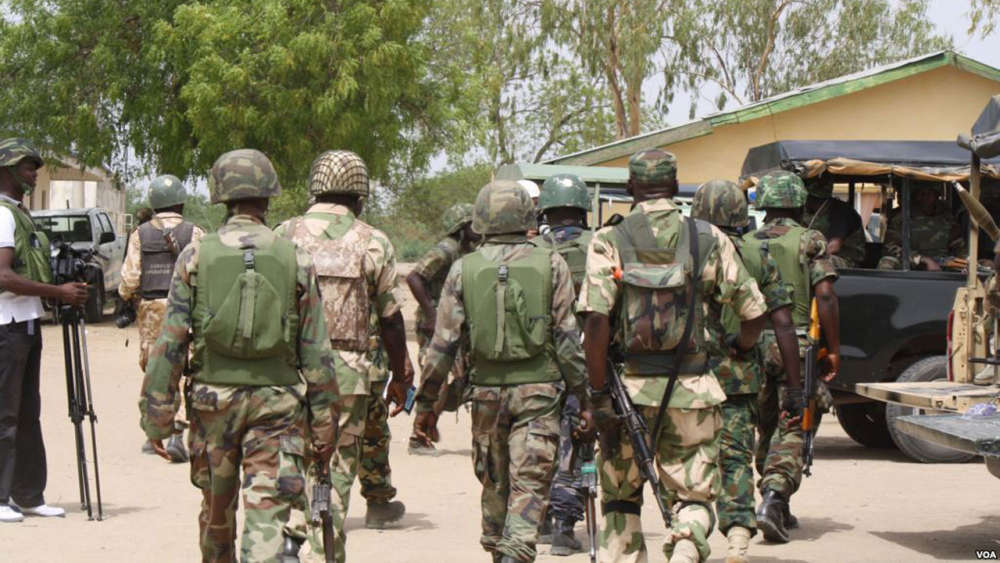
The Federal Government has disbursed N5.15tn in special intervention funds to the Nigerian military and related security agencies between November 2023 and September 2026, amid persistent insecurity, including terrorism, banditry, kidnapping and other violent crimes across the country.

An analysis by The PUNCH of documents from the Federation Account Allocation Committee, obtained on Thursday, revealed that the government received N5.65tn into a dedicated special intervention account over the period, out of which N5.15tn had been disbursed, representing 91.15 per cent of the total funds.

The records showed that the intervention was financed through allocations from the Federation Account and other government revenue sources, including non-oil revenue and funds transferred from a FAAC withholding account.

The document, titled ‘Ledger of Special Intervention Programme for Nigerian Military September, 2026”, was prepared by the Federation Account Department of the Office of the Accountant-General of the Federation and formed part of the records presented to the Technical Sub-Committee of FAAC at its meeting in Abuja on October 14, 2026.

According to the ledger, the N5.15tn was released through 30 payment transactions between November 8, 2023, and September 23, 2026, while the total receipts were recorded across 33 funding transactions.

The disbursements were separate from the regular annual budgetary allocations to the Ministry of Defence and other security institutions, indicating the scale of additional financial resources channelled towards security operations.

However, the records did not provide a breakdown of the specific military operations, equipment purchases, personnel costs or security projects financed with the money.

A breakdown of the transactions showed that the intervention programme commenced with a N100bn transfer on October 19, 2023, described as the September 2023 allocation.

The first payment of N100bn was made to the military on November 8, 2023, while another N100bn was received on November 20, 2023, and subsequently disbursed on December 20.

By the end of December 2023, the account had received N300bn and disbursed N300bn, leaving no outstanding balance.

The funding arrangement continued throughout 2024, with regular transfers of N100bn and corresponding payments to military and paramilitary agencies.

Between January and December 2024, the account received N1.2tn and disbursed the same amount, bringing cumulative receipts and payments to N1.5tn.

See also  Build Nigeria from grassroots, not just Abuja, Lagos – Ex-presidential candidate

The transactions were largely recorded as monthly allocations under the special intervention programme, although the payment dates did not always correspond with the months for which the funds were allocated.

For instance, the January 2024 allocation was transferred on February 27, while the corresponding payment was made on March 1.

Similarly, the ledger showed that the programme entered a second phase in July 2024, beginning with a N100bn transfer on July 27.

The second phase continued into 2025, with the government maintaining the N100bn monthly funding pattern.

During the first nine months of 2025, the account received N900bn and disbursed N900bn, bringing cumulative payments to N2.4tn by September 1, 2025.

An analysis of the transactions, therefore, showed that N2.4tn was disbursed between November 2023 and September 2025, before the government significantly increased the scale of the intervention in 2026.

The records indicated that the funding arrangement changed considerably in 2026, with individual transfers rising from the previous N100bn monthly pattern to between N200bn and N500bn.

On March 18, 2026, the government transferred N200bn from the FAAC Withheld Account, described in the ledger as savings for March 2026.

The amount was followed by a N100bn payment to security agencies on March 16, although the payment preceded the recorded transfer by two days.

Another N250bn was transferred from non-oil revenue on May 18, 2026, while N130bn was paid to security agencies from the FAAC Withheld Account on May 25.

The ledger also recorded a N120bn payment to the Consolidated Pool Account II TSA on June 3, 2026.

This particular transaction differed from the other payments because it was not expressly described as a transfer to military or paramilitary agencies.

On June 16, 2026, the government transferred N400bn from non-oil revenue for May, which was reversed the same day.

The reversal was followed by a fresh transfer of N500bn from non-oil revenue, indicating that the earlier transaction was cancelled and replaced.

The same day, N500bn was paid to military and paramilitary agencies, marking one of the largest individual disbursements recorded under the programme.

See also  PDP firestorm: Wike camp rejects expulsion as four states challenge Makinde

Another N500bn was transferred from non-oil revenue on July 15, followed by a corresponding payment to military and paramilitary agencies on July 22.

The pattern continued in August, when N500bn was transferred on August 19 and paid out on the same date.

On September 16, another N500bn was transferred from non-oil revenue, while the corresponding payment was recorded on September 23.

The final entry in the ledger showed a further N500bn transfer from non-oil revenue on October 14, 2026, described as the September 2026 allocation.

Although the ledger was titled September 2026, the inclusion of the October 14 transaction indicated that its financial position incorporated the latest transfer recorded at the FAAC technical meeting.

The figures showed that the intervention account received N3.25tn in 2026 up to October 14, compared with N1.2tn throughout 2024.

This represented an increase of about 170.83 per cent over the entire amount received in 2024, despite the 2026 records covering only part of the year.

Payments recorded in 2026 amounted to N2.75tn, compared with N1.2tn in 2024, representing an increase of approximately 129.17 per cent.

The N2.75tn disbursed in 2026 also accounted for 53.40 per cent of the N5.15tn paid out under the programme since its commencement.

The analysis further showed that the government disbursed more under the special intervention programme in 2026 than the combined N2.4tn released between November 2023 and September 2025.

It also revealed that the programme had an outstanding balance of N500bn as of October 14, 2026, representing 8.85 per cent of the total N5.65tn received.

The balance arose after the latest N500bn transfer was recorded without a corresponding payment in the ledger.

Consequently, the outstanding amount represented funds available in the intervention account rather than money already disbursed to security agencies.

Despite the significant increase in funding, the country continues to grapple with security challenges across several regions.

In the North-East, the military has continued operations against Boko Haram and the Islamic State West Africa Province, while banditry and mass kidnappings remain major security concerns in parts of the North-West and North-Central regions.

Communities in several states have also experienced attacks by armed groups, resulting in deaths, displacement and disruption of farming and other economic activities.

See also  ICPC defends El-Rufai detention as group hires US lobbyists

The security challenges have placed pressure on government finances, as authorities continue to allocate substantial resources to military operations, intelligence gathering, logistics and the protection of vulnerable communities.

FG reviews strategy

Ina related development, the Federal Government has begun a review of the 2019 National Security Strategy to develop a new framework that addresses emerging threats, including terrorism, banditry, kidnapping, cybercrime, food insecurity and climate change.

The National Security Adviser, Nuhu Ribadu, disclosed this on Thursday during the inauguration of a committee to review the existing strategy and formulate the National Security Strategy 2026.

Ribadu, who was represented by Major General Sarkin Bello (retd.), said Nigeria’s security environment had changed significantly since the last review in 2019, requiring a comprehensive reassessment of the country’s security priorities.

“Our national security landscape is undergoing rapid and profound transformations. Since the last review of our strategy in 2019, the domestic, regional and global security environments have changed dramatically, with intensity,” he said.

He noted that the country was confronted with multiple security challenges that required a broader strategic response.

“As you are aware, these problems range from terrorism, banditry and kidnapping to sophisticated cyber threats, misinformation, economic problems, food insecurity and environmental challenges, among others,” Ribadu said.

He said the new strategy would serve as a framework for coordinating national security, resilience and sustainable development, adding that it must reflect current realities while anticipating future threats.

Also, the Deputy Chairman of the committee, Major General Evi Onumajuru (retd.), said the changing nature of security threats made a strategic realignment imperative.

He said traditional security challenges, including terrorism, insurgency and banditry, had become intertwined with non-kinetic threats such as cybercrime, economic vulnerabilities, food insecurity and climate change.

He added that the strategy must integrate the priorities of the Renewed Hope Agenda by linking economic prosperity and good governance with human security and national defence.

Source: punchng.com

FOLLOW US ON:

FACEBOOK

WHATSAPP CHANNEL

TWITTER

PINTEREST

TIKTOK

YOUTUBE

LINKEDIN

INSTAGRAM

Continue Reading
Click to comment

Leave a Reply

Your email address will not be published. Required fields are marked *

News

South Africa summons Fani-Kayode over diplomatic protocol, read details

Published

on

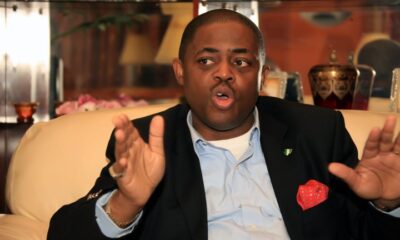
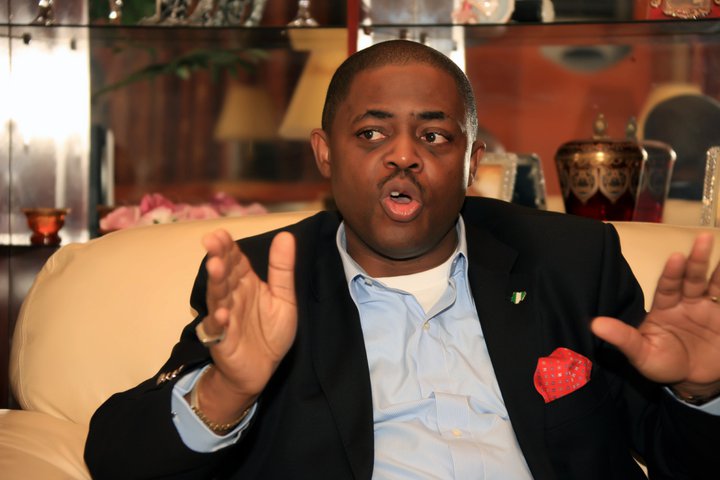
South Africa has summoned Nigeria’s High Commissioner to the country, Femi Fani-Kayode, over concerns about events surrounding the presentation of his Letters of Credence to President Cyril Ramaphosa and subsequent comments he made on social media.

The Director-General of South Africa’s Department of International Relations and Cooperation (DIRCO), Zane Dangor, met with the Nigerian envoy on Tuesday, November 17, 2026, to convey the South African government’s concerns.

The statement, which was issued on Tuesday by South Africa’s Department of International Relations and Cooperation, stated that during the meeting, Dangor expressed concern over developments following the presentation of Fani-Kayode’s Letters of Credence to Ramaphosa, as well as remarks subsequently made by the Nigerian diplomat on social media.

The South African official also reminded the Nigerian High Commissioner of the provisions of Article 41 of the Vienna Convention on Diplomatic Relations (1961), which requires diplomatic agents to conduct official business with the receiving country through its Ministry of Foreign Affairs.

He stressed the need for all official communications to follow established diplomatic channels, including DIRCO.

Dangor, however, reaffirmed South Africa’s commitment to preserving its longstanding bilateral relationship with Nigeria, founded on mutual respect, friendship and cooperation.

The department said South Africa remained committed to strengthening its strategic partnership with Nigeria and sustaining constructive diplomatic engagement in the spirit of African solidarity and mutual respect.

Source: tribuneonlineng.com

FOLLOW US ON:

FACEBOOK

WHATSAPP CHANNEL

TWITTER

PINTEREST

TIKTOK

YOUTUBE

LINKEDIN

INSTAGRAM

See also  See what made Imisi win Big Brother Naija
Continue Reading

News

New Enugu CP pledges people-centred policing, warns against extortion

Published

on

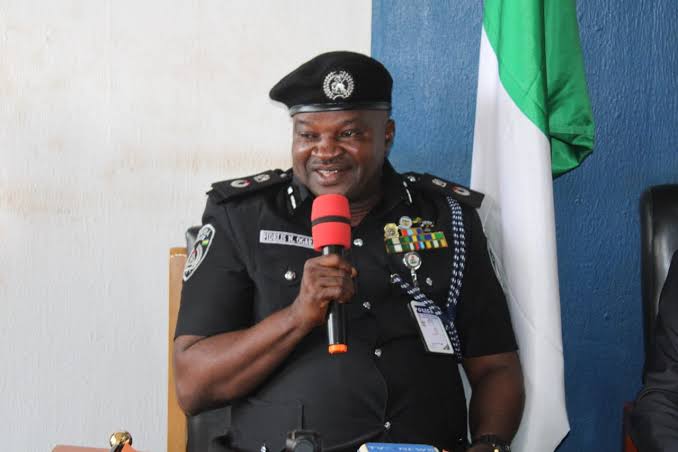
The newly appointed Commissioner of Police in Enugu State, CP Fidelis Ogarabe, has given officers a three-hour ultimatum to report political and election-related incidents across the state.

Ogarabe issued the directive while unveiling his policing priorities during his maiden address to officers at the State Command Headquarters, GRA, Enugu, on November 17, 2026.

The new CP also pledged to strengthen professional, intelligence-led and people-centred policing in the state.

He took over from CP Mamman Bitrus Giwa, who has been redeployed to the Force Criminal Investigation Department, Abuja, to head the Special Enquiry Bureau.

According to a statement issued by the Police Public Relations Officer, SP Daniel Ndukwe, Ogarabe pledged “to build a professional, disciplined, intelligence-led, technology-driven and people-oriented Command focused on crime prevention, protection of lives and property, and effective response to security threats.”

Outlining his priorities, the commissioner listed intelligence-led policing, decisive action against violent crimes, police visibility, professional investigation, community partnership, respect for human rights, personnel welfare and accountability as key focus areas.

He warned officers against “partisanship, corruption, extortion, abuse of power and other forms of unprofessional conduct,” insisting that personnel must “respect citizens’ rights, constituted authorities and traditional institutions, remain politically neutral and strictly comply with the law and court orders.”

Ogarabe charged officers to take responsibility for security within their respective areas of jurisdiction and adopt proactive policing. He also directed them to “promptly report political and election-related incidents to him within three hours of occurrence.”

He further directed the reinvigoration of the command’s X-Squad and other discipline-enforcing units to strengthen oversight and address misconduct, declaring zero tolerance for extortion and all forms of corruption.

See also  NNPC boosts Dangote refinery crude supply to seven cargoes – Sources

A native of Ohaji/Egbema Local Government Area of Imo State, Ogarabe holds a Bachelor of Science degree in Political Science from the University of Nigeria, Nsukka, and a Master of Science degree in International Law and Diplomacy from Enugu State University of Science and Technology.

The new CP joined the Nigeria Police Force as a Cadet Assistant Superintendent of Police and was commissioned in 1994, beginning his career in Enugu State Command, where he served as Divisional Police Officer of the then Trade Fair Police Station.

He subsequently served as Officer in Charge of General Investigation, State CID, Abia State Command, before returning to Enugu, where he served as Chief Security Officer to two successive governors of the state.

He also served as Assistant Commissioner of Police and Deputy Commissioner of Police in charge of the command’s Criminal Investigation Department, as well as Deputy Commissioner of Police, Force CID Annex, Enugu, and Deputy Commissioner of Police in charge of Finance and Administration, Anambra State Command.

Following his promotion to the rank of Commissioner of Police, he served at the Office of the National Security Adviser, Abuja, and subsequently as Commissioner of Police, Independent National Electoral Commission, Abuja. Before his present posting, he was Commissioner of Police, INTERPOL Annex, Lagos.

Ogarabe is a professional member of the National Institute of Police Studies, where he attended the Institute Strategic Leadership and Command Course. He has also attended other professional courses, including the Chief Security Officers’ Course, Junior Command Course and Advanced Detective Course.

With over 30 years of policing experience spanning operations, criminal investigation and administration, the new CP assured residents of his commitment to “professional, disciplined, intelligence-led, preventive and people-centred policing, with emphasis on community partnership.”

See also  PDP firestorm: Wike camp rejects expulsion as four states challenge Makinde

He pledged to align the command’s policing strategies with the vision and mission of the Inspector-General of Police, IGP Olatunji Rilwan Disu, and “solicits the cooperation and support of residents and other stakeholders in maintaining peace, security and public order across the State.”

Ogarabe assured residents of “professional, impartial and people-oriented policing,” while calling on officers to embrace “discipline, integrity, courage and teamwork in the collective pursuit of a safer Enugu State and a Police Command worthy of public trust.”

He is married with children. His interests include football, physical exercise and philanthropy.

Source: punchng.com

FOLLOW US ON:

FACEBOOK

WHATSAPP CHANNEL

TWITTER

PINTEREST

TIKTOK

YOUTUBE

LINKEDIN

INSTAGRAM

Continue Reading

News

SEE PICTURES: Tinubu grants interview to American political strategist Diana London

Published

on

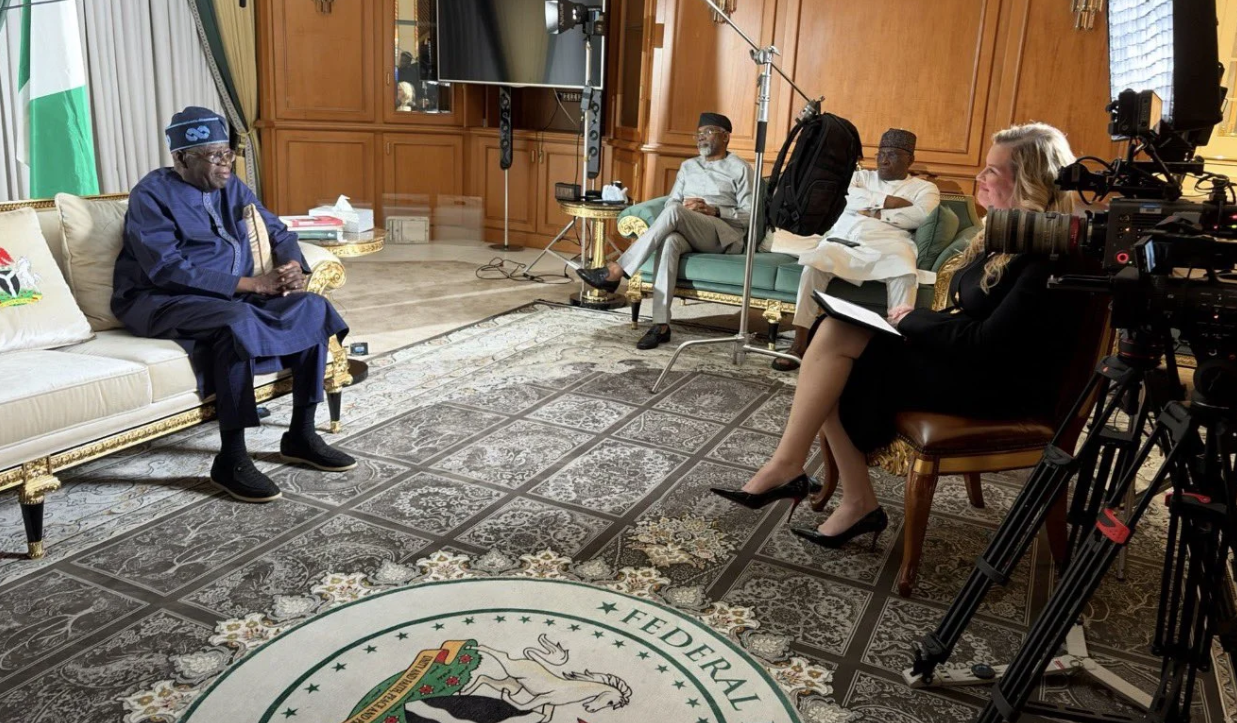
President Bola Tinubu has granted an exclusive interview to American political strategist and media personality, Diana London, with the interview expected to be released soon.

The Senior Special Assistant on New Media to the All Progressives Congress National Chairman, Prof Nentawe Yilwatda, Imran Muhammad, disclosed this in a post on X on Tuesday.

“President Tinubu has held an exclusive interview with Dianna London, a prominent American media personality. The interview is anticipated to be released soon,” Muhammad wrote.

PHOTOS: Tinubu grants interview to American political strategist Diana London

President Bola Tinubu and Diana London. Photo credit: Diana London | X

London also shared photographs of herself at the Presidential Villa in Abuja, where she was seen alongside Tinubu and his Chief of Staff, Femi Gbajabiamila. 

Cameras were also visible in the photographs.

In a separate post, London described the security partnership between Nigeria and the United States as one that was “delivering results”.

“The U.S-Nigeria security partnership is delivering results. Peace through strength. None of this happens without the ongoing partnership between President Trump and President Tinubu, their steadfast commitment to eliminating terrorists, and Nigeria’s willingness to work closely with the U.S. government,” she wrote.


She added that the partnership could create more economic and trade opportunities between both countries.

“Because of the success of their partnership and relationship, the economic and trade opportunities are endless. The best is yet to come. Nigeria is the United States’ greatest ally in Africa,” London stated.


In another post, she said it had been an honour to work with the team representing Nigeria and supporting efforts to protect religious groups and strengthen relations between the Trump administration and the Nigerian government.

See also  ICPC defends El-Rufai detention as group hires US lobbyists

“It has been an honour to work on the team of people representing Nigeria and helping to protect religious groups and further the relationship between the Trump administration and the Nigerian government,” she wrote.

Source: punchng.com

FOLLOW US ON:

FACEBOOK

WHATSAPP CHANNEL

TWITTER

PINTEREST

TIKTOK

YOUTUBE

LINKEDIN

INSTAGRAM

Continue Reading

Trending