Connect with us

News

State Police Update: National Assembly collates reports from 30 state assemblies

Published

on

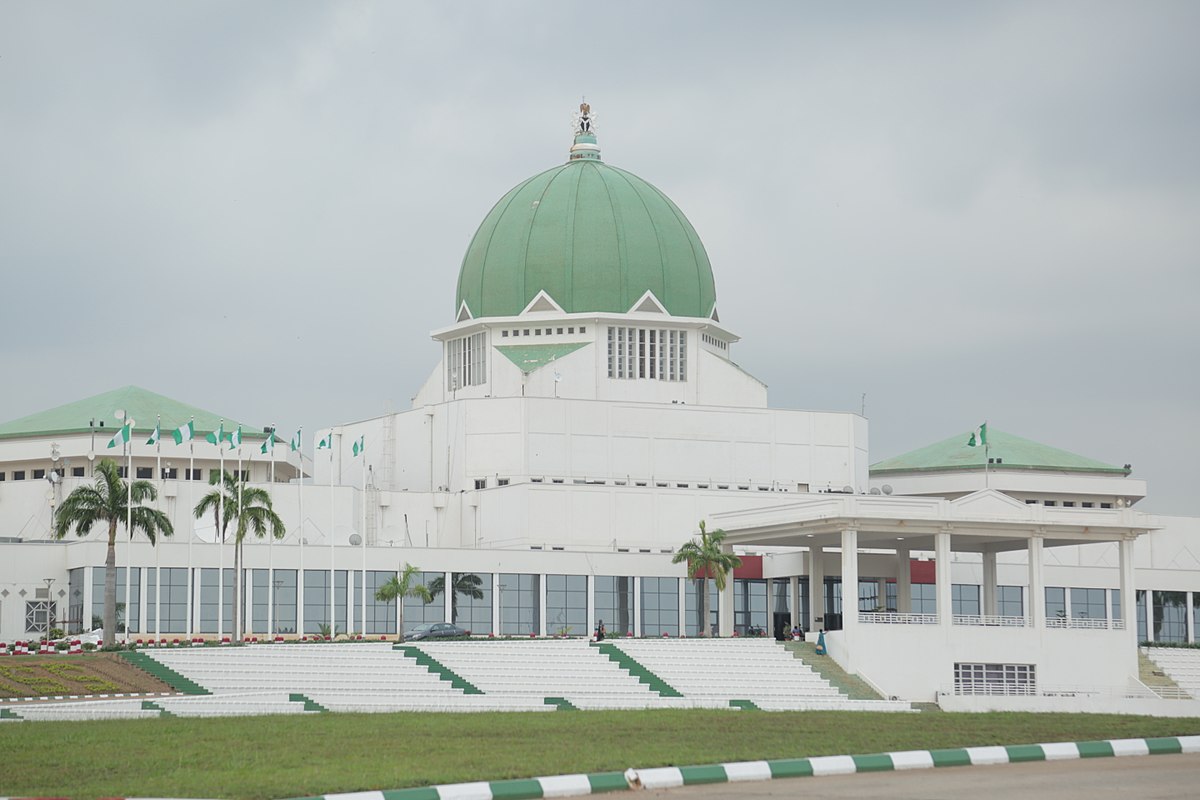
The National Assembly has commenced collation of reports from state Houses of Assembly on the proposed establishment of state police, with the Senate Leader, Opeyemi Bamidele, saying the constitutional requirement for the reform had been met.

Bamidele disclosed this on Thursday while delivering a lecture to participants of Senior Executive Course 48 at the National Institute for Policy and Strategic Studies, Kuru, Plateau State.

He said at least 30 state legislatures had approved the State Police Constitution Alteration Bill, 2026, surpassing the constitutional requirement of two-thirds of the 36 State Houses of Assembly.

According to him, the National Assembly will collate the reports, consider the positions of the state legislatures and pass a resolution by a simple majority in both chambers before transmitting the bill to President Bola Tinubu for assent.

The Senate Leader, who is also Vice Chairman of the Senate Committee on the Review of the 1999 Constitution, said the National Assembly intended to complete the remaining legislative processes by December 2026.

He said, “We are pleased to inform our constituents across the federation that state police has moved from rhetoric to reality. We have already received formal reports from the state Houses of Assembly and, as of today, no fewer than 30 states have approved the State Police Constitution Alteration Bill, 2026.

“By the provision of Section 9(2) of the 1999 Constitution (as amended), which requires the concurrence of not less than two-thirds of all state Houses of Assembly, the constitutional requirement for the alteration has been duly met. This is a historic milestone in our collective quest to re-engineer our security architecture and make it more responsive, more local, and more effective.

See also  Why Military Alone Can’t Solve Nigeria’s Insecurity Problem – Buratai

“What happens next is procedural, but critical. The National Assembly is now constitutionally obligated to consider the reports transmitted by the state Houses of Assembly, collate those reports, and pass a resolution by simple majority of members in both chambers. Once this resolution is passed, the Alteration Bill will be transmitted to the President and Commander-in-Chief for assent.

“We have set a clear timeline for ourselves. We intend to conclude all these legislative stages — consideration of reports, passage of resolution, and transmission for presidential assent — on or before December 2026,” the Senate Leader emphasised.

The proposed state police system is part of wider efforts to decentralise Nigeria’s security architecture amid persistent killings, kidnappings and other violent crimes across the country.

Under the existing policing structure, the Nigeria Police Force operates primarily as a centrally administered institution.

Proponents of state police argue that allowing states to establish their own police services would improve local intelligence gathering, response times and accountability.

However, concerns have been raised about the potential abuse of state police by governors and other political office holders, particularly against political opponents.

Bamidele said the proposed reform would operate within constitutional safeguards, oversight mechanisms and human rights protections.

He described the development as a significant breakthrough after more than 15 years of unsuccessful attempts to establish state police through constitutional reform.

“What this means is that state police is no longer a campaign promise or a subject of endless debate. It is now a constitutional reality. It means that the security of lives, private property and public assets occupies a prime place in the legislative agenda of the 10th National Assembly,” he said.

Bamidele said the proposed system would enable states to develop policing structures better suited to their local conditions.

See also  JUST IN: Court discharges Ibom Air passenger

He added that the reform was not intended to weaken the Federal Government but to strengthen Nigeria’s federal system by making security more responsive to local communities.

According to him, the objective was not to create state armies but state-led, community-anchored policing arrangements operating under clearly defined constitutional and operational standards.

The Ekiti lawmaker also credited the leadership of the Senate President, Godswill Akpabio, with supporting the reform, assuring Nigerians that the National Assembly would see the process through.

He said the National Assembly, under the leadership of Akpabio, “remains committed to delivering on the establishment of state police. We will not falter until every Nigerian, whether in Kuru, in Iyin-Ekiti, in Gusau or in Yenagoa, can sleep with both eyes closed.”

Beyond state police, Bamidele said the 10th National Assembly had prioritised legislation intended to address citizens’ welfare, economic development and institutional reforms.

He argued that the performance of the legislature should be assessed by the practical effects of its laws and interventions rather than the number of bills passed.

Bamidele listed the Student Loans (Access to Higher Education) Act, 2024; the Minimum Wage (Amendment) Act, 2024; the four Tax Reform Acts of 2025; and the National Social Investment Programme Act among the measures passed by the current Assembly.

The Senate Leader also cited the Electoral Act, 2026, the Cybercrimes (Amendment) Act, the Investments and Securities Act, 2025, the Nigerian Insurance Industry Reform Act, 2024, and the Regional Development Commissions Acts.

He said the laws reflected a deliberate effort to use legislation to anticipate emerging challenges, strengthen public institutions and improve governance.

See also  Sokoto extends recruitment deadline to October 12

Bamidele said the impact of proactive lawmaking extended to national security, economic transformation, public financial management, electoral credibility, education, healthcare, technological innovation, environmental sustainability and relations among the different tiers of government.

On the relationship between the National Assembly and NIPSS, he called for stronger institutional collaboration to improve legislative foresight and policy development.

He maintained that the passage of laws alone was insufficient to guarantee good governance, stressing the need for effective implementation, funding and monitoring.

The senator said good laws must be relevant to citizens’ needs and capable of producing measurable improvements in their lives.

He, thus, observed that good governance “requires good laws. But good laws alone do not guarantee good governance.

“We require laws that are relevant, evidence-based, implementable, adequately funded, properly administered, effectively monitored, periodically reviewed and ultimately measured by their impact on citizens,” Bamidele stated.

Source: punchng.com

FOLLOW US ON:

FACEBOOK

WHATSAPP CHANNEL

TWITTER

PINTEREST

TIKTOK

YOUTUBE

LINKEDIN

INSTAGRAM

Continue Reading
Click to comment

Leave a Reply

Your email address will not be published. Required fields are marked *

News

See full list of fake documents that could earn applicants five-year Canada ban

Published

on

Canadian authorities have warned prospective visa applicants against the falsification of required documents to gain entry into the country.

According to a tweet via the X handle of the Immigration, Refugees and Citizenship Canada on Thursday, it noted that submitting falsified or altered documents during visa applications can stop an applicant from entering Canada for a minimum of five years.

Such documents range from marriage certificates to language results, entry and exit stamps, visas, transcripts and divorce documents, among others.

The IRCC also warned that one could face legal consequences in their home country if found guilty of any related criminal activity.

Information obtained from the IRCC website noted that providing false information about one’s medical conditions to the panel physician during a person’s medical exam is also considered fraud.

Below is the full list of documents whose falsification is considered fraud in Canada:

1. Passports and travel documents

2. Visas, exit and entry stamps

3. Language results

4. Proof of employment or job offers

5. Letters of acceptance from learning institutions, tuition receipts and transcripts

6. Diplomas, degrees and apprenticeship or trade papers

7. Proof of relationship, including certificates of birth, adoption, marriage, final divorce, annulment, separation, death or custodianship

8. Police certificates or court documents

9. DNA testing

The IRCC noted that while it’s not bent on punishing people affected by fraud, it’s determined to identify “those who are responsible for fraud.”

“Lying about how long you or someone else has been physically present in Canada while applying for a permanent residency (PR) renewal or citizenship is also considered fraud. Learn more about PR card residency obligations and physical presence,” the information added.

See also  Caine Prize finds no evidence of AI use in Zimbabwean’s £10,000-winning story

It highlighted consequences of immigration and citizenship fraud to include application refusal, a minimum of a five-year ban from Canada, a permanent fraud record with the IRCC, and the removal of one’s temporary or permanent residency status, or Canadian citizenship.

Others include a five-year ban from citizenship application and an outright expulsion from Canada.

The IRCC further warned that Canadian citizens or permanent residents who are in a relationship of convenience for immigration reasons may be charged with a crime.

A relationship of convenience is a marriage, a common-law or conjugal relationship whose main goal is to immigrate to another country.

The IRCC warned that its officers are well-trained to detect false marriages and common-law or conjugal relationships, via document checks, visits to people’s homes, and interviews with both sponsors and applicants.

“Our officers are trained to recognise genuine immigration applications. They know how to detect false marriages and common-law or conjugal relationships.

“They have many ways to spot marriage fraud, including document checks, visits to people’s homes and interviews with both sponsors and applicants,” the information read partly.

Authorities also warned that in the case of credit card payment reversals, it could cause one’s visa application to be cancelled or delayed.

This, it said, could also attract a 10-year entry ban.

“If the fee paid with a credit card is reversed, your visa application could be cancelled or delayed. Your visa application could also be denied and you could potentially be banned from travelling to Canada for up to 10 years. Applications you submit in the future can also be impacted,” it added.

See also  Why Military Alone Can’t Solve Nigeria’s Insecurity Problem – Buratai

Source: punchng.com

FOLLOW US ON:

FACEBOOK

WHATSAPP CHANNEL

TWITTER

PINTEREST

TIKTOK

YOUTUBE

LINKEDIN

INSTAGRAM

Continue Reading

News

I would rejoin British Army to fight Russia if needed – Prince Harry reveals

Published

on

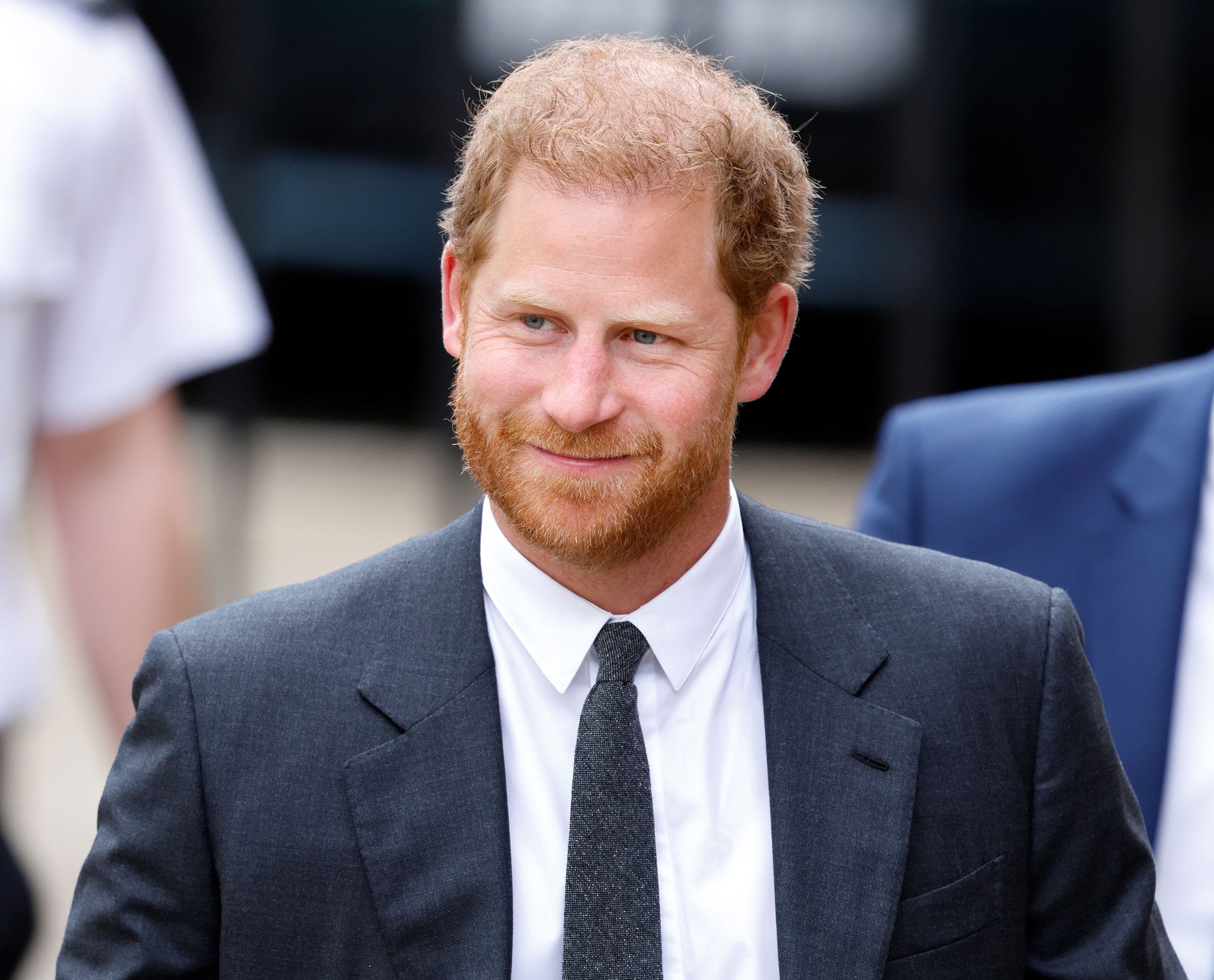
Prince Harry, the Duke of Sussex, has said he would return to the British Army to fight Russia if called upon, declaring his readiness to serve alongside other veterans and military personnel amid the ongoing war in Ukraine.

The former British Army officer made the remarks during a visit to Lviv, western Ukraine, where he said Europe had become more aware of the threat posed by Russian President Vladimir Putin. He also argued that the United Kingdom and Russia had effectively been in conflict for the past decade, despite the absence of direct military attacks on British soil.

“Just because there’s not drones, bullets and rockets flying at us, it doesn’t mean that we’re not at war,” he said.

Harry stressed that countries should draw lessons from Ukraine’s resistance to Russian aggression, saying the experience had valuable lessons for the international community.

“If asked to sign up again, if the need is there, then I will 100 per cent be there to serve my country alongside my fellow veterans and service personnel.”

“There is a lot that we can learn from Ukraine. I think there’s a lot that the whole world can learn from Ukraine,” he told The Telegraph.

He also expressed concern about the current international security situation, urging people who had previously served in the military to remain prepared for another call to duty.

“I think we should all be nervous, absolutely. And I think we should be prepared, and I think that those of us that have served should be ready to serve again.”

See also  Kaduna-Kano rail project hits 90%, inauguration set for December

The Duke’s comments come against the backdrop of his military background, having completed two operational tours in Afghanistan as an Apache helicopter pilot with the British Army. His first deployment lasted from December 2007 to February 2008, while the second ran from September 2012 to January 2013. He ended his military career in 2015.

During the visit, Harry also criticised the approach of US President Donald Trump’s administration towards the war, suggesting that its position did not reflect the level of support for Ukraine among Americans.

“I think there’s been a big separation between what American society feels regarding support for Ukraine, which I think is incredibly high and always has been, compared to a certain group – or in this case an administration that was perhaps thinking about it differently,” he told the podcast.

He expressed optimism about the expected political changes in the United States following the midterm elections, particularly the Democrats’ forthcoming takeover of the House of Representatives and the Senate.

“As of January, things are going to change, so I think we should all be looking forward to that.

“Europe has a united front, and it would be fantastic to have more American support for that as well.”

Harry, who has developed a professional relationship with Ukrainian President Volodymyr Zelensky, said he believed Ukraine was gaining ground against Russia. He based his assessment on four visits to the country and regular briefings from political and military officials.

However, he argued that the conflict would require a possible way out for Moscow, adding: “There needs to be some form of exit strategy for Russia.”

See also  Sokoto extends recruitment deadline to October 12

He described the number of Russian soldiers being killed by Ukrainian forces as “insane” and warned against reducing military and humanitarian assistance to Kyiv at a critical stage of the conflict.

According to Harry, Ukraine’s battlefield position suggested that Russia was struggling to make further advances, while its continued attacks on civilian facilities reflected growing desperation.

“There is no version of where Russia is making any more advances.

“It’s quite the opposite. What I’m told is the more strikes from rockets from Russia and and drone strikes into civilian infrastructure is just a sign of desperation, a sign that they are losing.”

He further described the reported monthly losses of 30,000 or more Russian and North Korean soldiers as unsustainable, arguing that international support for Ukraine should increase rather than diminish.

Harry also condemned attacks on medical facilities and humanitarian centres, calling for stronger international action to protect civilians and uphold international law.

“I think it’s appalling that civilian infrastructure, especially hospitals and medical centres, are being targeted. Humanitarian aid centres are being targeted as well.

“International law must mean something. So I think the rest of the world could and should do more in that regard.”

He described the conflict as a psychological campaign aimed at exhausting Ukrainians through repeated overnight attacks and constant bombardment.

Drawing a connection between Ukraine’s resilience and his work supporting injured military personnel through the Invictus Games, Harry praised the determination of the people he had encountered during his visits.

“The Invictus spirit lives in every single Ukrainian person, not just veterans, that I’ve met.”

See also  JUST IN: Court discharges Ibom Air passenger

Harry and his wife, Meghan, returned to the UK in August with their two children after spending six years in the United States. The couple stepped down as senior members of the British royal family in 2020.

(The Independent)

Source: tribuneonlineng.com

FOLLOW US ON:

FACEBOOK

WHATSAPP CHANNEL

TWITTER

PINTEREST

TIKTOK

YOUTUBE

LINKEDIN

INSTAGRAM

Continue Reading

News

IG urged to curb election-related violence, read details

Published

on

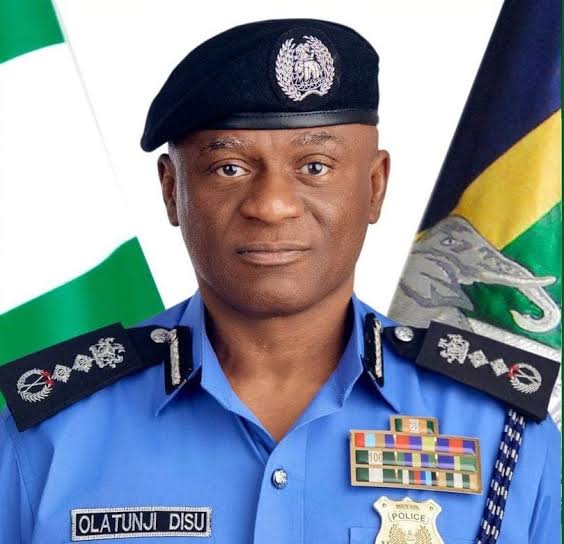
A Lagos-based lawyer, Emmanuel Umohinyang, has urged the Inspector-General of Police, Olatunji Disu, to strengthen security measures and prevent political violence ahead of the forthcoming general election.

Umohinyang, in a letter dated November 16, 2026, addressed to the IG at the Force Headquarters, Abuja, and obtained by The PUNCH on Wednesday, expressed concern over reported attacks on political campaign convoys, rallies, supporters and other legitimate political activities across the country.

He warned that the growing tendency for political disagreements to degenerate into physical attacks, intimidation and destruction of property posed a serious threat to Nigeria’s democratic process.

The lawyer urged the police not to wait until violence erupted before responding, but to identify potential flashpoints, assess security threats and take preventive measures.

He described the forthcoming election as an opportunity for Disu to demonstrate purposeful leadership and the capacity of the police to protect Nigerians irrespective of their political affiliations.

Umohinyang noted that it would be the first general election to be conducted under Disu’s leadership as IGP, adding that the police’s handling of election-related security would shape public confidence in the Force.

He said, “The security of lives and property and the protection of citizens’ constitutional rights must not be compromised by the desperation and intolerance that appears to accompany the struggle for political power.

“The responsibility of the police, therefore, is not merely to restore order after violence has occurred but, more importantly, to anticipate threats, identify potential flashpoints and prevent foreseeable violence.”

The lawyer called for professional reorientation, institutional sanitisation and operational mobilisation of police personnel across the country.

He also cautioned the police against allowing themselves to be used as instruments of political intimidation or manipulated into compromising citizens’ rights.

See also  Abductions: US demands action, FG vows to track bandits

Umohinyang stressed the need for equal protection for supporters of the ruling and opposition parties, insisting that police protection should not be determined by political affiliation, ethnicity, religion or other considerations.

He urged the IGP to issue clear directives to commissioners of police in the 36 states and the Federal Capital Territory to strengthen security arrangements and adopt intelligence-driven policing.

He said, “They must not adopt a complacent or reactive posture while political tensions build up around them. Rather, they must be proactive and intelligence-driven. They must identify emerging threats, monitor potential flashpoints, assess credible security information and take timely preventive measures.”

The lawyer further called for prompt investigation of attacks on political activities and the prosecution of perpetrators, sponsors and accomplices where credible evidence established their involvement.

He also urged the police chief to ensure that officers found guilty of negligence, dereliction of duty or complicity in political violence faced appropriate disciplinary and legal consequences.

Umohinyang said the President’s position against political violence should be reflected in police operations, stressing that those responsible for sponsoring or perpetrating attacks should not escape justice because of their political influence.

He said, “The forthcoming election should be an opportunity for Nigerians to exercise their democratic rights peacefully, not a period of apprehension in which citizens fear attending rallies, joining campaign processions or expressing their political preferences.

“The safety of Nigerians must never be negotiable, and no political ambition is worth the loss of a single innocent life.”

Source: punchng.com

FOLLOW US ON:

FACEBOOK

WHATSAPP CHANNEL

TWITTER

PINTEREST

TIKTOK

YOUTUBE

LINKEDIN

INSTAGRAM

Continue Reading

Trending