Connect with us

Business

Chinese investors may acquire 51% stake in PH, Warri refineries; read details

Published

on

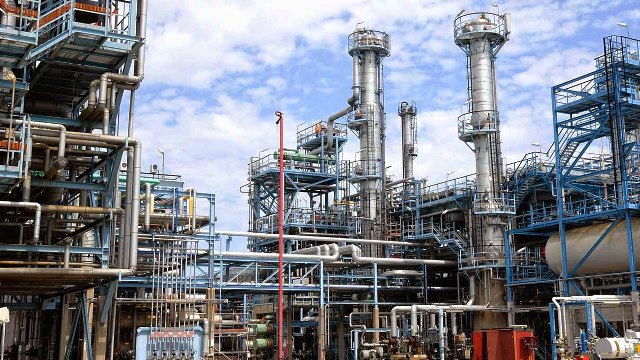
The Nigerian National Petroleum Company Limited is considering an NLNG-style equity partnership that could hand Chinese investors a majority stake of about 51 per cent in the Port Harcourt and Warri refineries as part of a broader plan to rehabilitate and commercially reposition the facilities.

Details of the arrangement emerged after NNPC signed a Memorandum of Understanding with Chinese firms Sanjiang Chemical Company Limited and Xinganchen (Fuzhou) Industrial Park Operation and Management Co., Ltd. for what the national oil company described as a “potential technical equity partnership”.

The MoU was signed in Jiaxing City, China, on April 30, 2026, by the Group Chief Executive Officer of NNPC Ltd, Bayo Ojulari; Chairman of Sanjiang Chemical Company, Guan Jianzhong; and Chairman of Xinganchen Industrial Park Operation and Management Co. Ltd, Bill Bi.

Findings by The PUNCH on Thursday showed that the proposed framework goes beyond conventional refinery rehabilitation contracts and may involve long-term equity participation by the Chinese partners in both refining assets.

Sources at the national oil firm privy to the MoU told our correspondent that the proposed partnership is being structured around an “NLNG-type model” featuring equity participation, joint governance arrangements, and long-term operational involvement.

They disclosed that the structure may be similar to NLNG’s, where investors own 51 per cent equity, participate in governance, and share operational responsibilities over the long term. Under the proposed collaboration, the Chinese firms are expected to support the completion of outstanding work at the Port Harcourt and Warri refineries.

The agreement also covers operations and maintenance services aimed at achieving what NNPC described as “best-in-class, sustainable performance”. According to findings, the planned upgrades would also expand refinery capacity, improve profitability, and raise fuel production standards to cleaner specifications.

See also  NDC chairman rejects alleged move to cede Kano party structure to Kwankwaso

The parties are equally exploring expansion into petrochemicals and gas-based industrial projects through the development of co-located industrial hubs around the refinery complexes.

“The scope includes capacity expansion, yield optimisation, petrochemical integration, and compliance with clean fuel standards and exploration of gas-based industrial projects in Nigeria,” an NNPC official said, pleading anonymity because he was not authorised to speak to the press.

Speaking after the signing ceremony, Ojulari described the agreement as a major milestone after more than six months of engagement between NNPC and the Chinese firms. “All parties recognise mutually beneficial opportunities for the development and long-term sustainable profitability of NNPC’s refining assets in Nigeria and the collective weight required for success,” he said.

Ojulari added that the agreement marked an important stage in identifying technical equity partners capable of restarting and expanding the refineries. “The MoU is a significant step on the journey towards identifying potential technical equity partner(s) to restart and expand NNPC’s refineries and to explore opportunities in co-located petrochemical and gas-based industries,” he stated.

Our correspondent gathered that the MoU reflects only the parties’ intention to continue discussions in good faith, with definitive agreements still subject to regulatory and customary approvals.

Further findings showed that the implementation process would begin with technical, operational, financial, commercial, and legal due diligence before binding agreements are executed.

“The agreement is a non-binding framework, meaning it is not yet a final commercial contract. Instead, it establishes a basis for cooperation and creates a pathway toward future definitive agreements. The partnership is expected to cover four major operational areas: Sanjiang/Xinqianchen would participate in completing outstanding engineering, procurement, and construction work at the two facilities. The focus is on improving refinery reliability, safety, and efficiency to ‘best-in-class’ standards.

See also  APC’s gov candidate slams Otti’s ‘harsh’ tax hike on Aba traders

“Instead of a conventional contractor arrangement, the MoU suggests possible equity participation using an NLNG-type model of joint governance arrangements and a long-term partnership framework. This implies Sanjiang/Xinqianchen may take ownership or operational participation rather than acting solely as an EPC contractor. However, everything is subject to agreement.

“Also, there is a possible transformation of the refineries into commercially driven industrial assets like petrochemical and gas,” the source said.

Analysts said the shift towards an equity partnership structure may signal growing concerns within NNPC over the sustainability of previous refinery rehabilitation arrangements.

Speaking in an interview with our correspondent about the MoU, the Executive Secretary of the Major Energies Marketers Association of Nigeria, Clement Isong, said bringing in technically competent partners with equity stakes would ensure efficiency and sustainability.

On the structure of the deal, Isong stressed that the key difference is that the Chinese partners are taking equity in the assets as part owners and would want the refinery to work so they get returns on their investments.

“This is an innovative way of getting the assets to work in an efficient and sustainable way. The challenge we knew was that NNPC did not have the internal competence or capacity to run those refineries efficiently. Now, they have brought a third party, and the key difference is that the third party they have brought is taking equity. He’s a part-owner of the refinery and so would want the refinery to work so he can get returns on his investment,” Isong said.

He described the model as innovative, adding that every Nigerian would be happy if the facilities worked again. He said the NNPC did not have the internal competence and capacity to run the refineries without a technical partner.

See also  Why Tinubu sacked service chiefs — Presidency

The Port Harcourt refinery rehabilitation project was earlier awarded to Italian engineering firm Maire Tecnimont, while separate rehabilitation efforts had also commenced at the Warri refinery.

The proposed arrangement could also deepen Chinese participation in Nigeria’s downstream petroleum and gas industries if discussions progress into binding commercial agreements.

punch.ng

FOLLOW US ON:

FACEBOOK

TWITTER

PINTEREST

TIKTOK

YOUTUBE

LINKEDIN

INSTAGRAM

Continue Reading
Click to comment

Leave a Reply

Your email address will not be published. Required fields are marked *

Business

Dangote beats US, ships N757bn jet fuel to Europe – Report reveals

Published

on

Dangote Petroleum Refinery exported about 466,000 metric tonnes of jet fuel to Europe in June, valued at an estimated N757bn, overtaking shipments from the United States and others.

This is as Nigerian jet fuel exports to the continent reached their highest level since the country became a net exporter of aviation fuel in 2024.

According to a market report by S&P Global Commodity Insights, the refinery’s exports came as the European jet fuel market turned increasingly bearish following a sharp decline in prices from the highs recorded during the Middle East conflict.

The report stated that flows of jet fuel from Nigeria to Europe rose from 232,000 metric tonnes in May to 466,000 metric tonnes in June, the highest volume exported from the country to Europe since Nigeria became a net exporter of jet fuel in 2024, when the Dangote Refinery commenced aviation fuel production.

The June export volume is equivalent to about 582.5 million litres of jet fuel. At an estimated domestic value of N1,300 per litre, the shipment is worth about N757.25bn.

On the other hand, aviation fuel exports from the United States fell sharply in the past months. The report showed that jet fuel exports from the United States to Europe declined steadily over the same period, falling from a record 818,000 metric tonnes in April to 560,000 metric tonnes in May and further to 399,000 metric tonnes in June, leaving Nigeria as a bigger supplier to Europe during the month.

Commenting on the market, a trader attributed the oversupply partly to increased shipments from Dangote and the United States. “Jet is oversupplied because of high local refinery production; refineries pushed back maintenance to make the most of the high prices.

See also  Nigerians To Experience Blackout As PENGASSAN’s Strike Cripples Thermal Plants

“The US and Dangote also shipped large volumes. Now there are some flows resuming through the Suez, too, from the UAE, but let’s see how it goes,” the trader was quoted as saying.

The report noted that the European jet fuel forward curve had weakened significantly after reaching record highs during the Middle East war, as traders now anticipate an oversupplied summer market amid weaker-than-expected aviation demand.

According to Platts, part of S&P Global Commodity Insights, the Northwest Europe jet CIF cargo financial assessment for July dropped to $981.75 per metric tonne on June 30, down sharply from the all-time high of $1,694.25 per metric tonne recorded on March 30.

Similarly, the August contract declined from $1,507.50 per metric tonne on March 30 to $968.25 per metric tonne by June 30.

The report added that Europe could receive even more jet fuel supplies in the coming months as the East-West arbitrage remains attractive, encouraging exporters in the Middle East and India to ship cargoes westward.

While flows from the United Arab Emirates and Kuwait were absent in June, shipments from Saudi Arabia increased to about 106,000 metric tonnes, up from 7,000 metric tonnes in May, while exports from India rose from 129,000 metric tonnes to 197,000 metric tonnes over the same period.

Despite the current oversupply, two European jet fuel traders reportedly told Platts that market conditions would depend largely on developments in the Strait of Hormuz and the pace at which Middle Eastern refineries recover from disruptions caused by the recent conflict.

See also  Lagos enforce okada ban statewide

They also noted that stronger summer travel demand and refiners’ growing preference to maximise diesel production over jet fuel could gradually help rebalance the aviation fuel market.

Data from the Nigerian Midstream and Downstream Petroleum Regulatory Authority showed that the Dangote refinery exported an estimated 1.66 billion litres of refined petroleum products in April 2026.

This was during the mounting tensions in the Middle East that caused disruption to global fuel supply routes.

An analysis of the NMDPRA’s April 2026 fact sheet showed that the country exported about 513 million litres of premium motor spirit, popularly called ‘petrol’; 534 million litres of automotive gas oil, also known as diesel; and 615 million litres of aviation fuel within the month in April.

The Dangote refinery is the only major functional refinery in Nigeria that currently produces enough refined petroleum products for both local consumption and export.

Nigeria has become a net petrol exporter for the first time in decades due to rising output from the Dangote refinery. The refinery had earlier exported about 434 million litres of petrol in March after domestic production exceeded local consumption levels.

The latest figures underscore Nigeria’s gradual transition from a major importer of refined petroleum products to an export hub within Africa. It was observed that jet fuel exports may rise further with the instability caused by the Middle East crisis, which disrupted traditional supply chains serving Europe and other regions.

punch.ng

FOLLOW US ON:
FACEBOOK

TWITTER

PINTEREST

TIKTOK

YOUTUBE

LINKEDIN

Continue Reading

Business

Shell, banks launch $3bn financing for oil contractors

Published

on

Shell Nigeria Exploration and Production Company Limited has partnered with nine Nigerian banks to launch a $3bn contract finance facility aimed at improving access to credit for indigenous oil and gas contractors executing projects for the company.

According to a statement, the financing scheme, unveiled on Thursday, is designed to provide credit support to local contractors handling projects for SNEPCo and will be available in both naira and United States dollars.

The participating banks are First Bank, Guaranty Trust Bank, Zenith Bank, Access Bank, United Bank for Africa, Stanbic IBTC, Standard Chartered Bank, First City Monument Bank, and Fidelity Bank.

Speaking at the signing of the Memorandum of Understanding in Lagos, the Managing Director of SNEPCo, Ronald Adams, said the initiative aligns with the objectives of the Nigerian Oil and Gas Industry Content Development Act by promoting greater in-country value retention.

“The initiative reflects the spirit of the Nigerian Oil and Gas Industry Content Development Act, which is aimed at in-country value retention. Our partner banks offer capital and discipline.

“SNEPCo brings contracts and domiciliation of payments that de-risk lending.

On their part, the contractors provide performance. Each is accountable to the others, and the mutual accountability gives the arrangement its strength,” he said.

The Vice President, Finance, Shell Nigeria, CJ Akwaeze, said the financing scheme demonstrates Shell’s commitment to supporting the growth of oil and gas operations in Nigeria.

The Chairman of the Petroleum Technology Association of Nigeria, Wole Ogunsanya, who was represented by Dr Joan Faluyi, described the facility as a major boost for indigenous contractors.

See also  Mass movement: Peter Obi, Kwankwaso exit rocks ADC, 18 lawmakers join NDC

Ogunsanya lauded the initiative as a “gateway to unlocking contractor financing issues, which will also drive efficiency in contract execution.”

Representatives of the participating banks also commended SNEPCo for introducing the financing arrangement, saying the partnership would strengthen local contractors, and pledged their continued support for the initiative.

SNEPCo said Nigerian companies have continued to play significant roles in its operations and project delivery. It noted that earlier this year, 43 wholly Nigerian companies participated in the turnaround maintenance exercise at the Bonga Floating Production Storage and Offloading vessel out of the 53 companies involved in the exercise.

According to the company, the Contract Finance Facility is expected to further strengthen the capacity of Nigerian companies and enhance value delivery in the operations of Nigeria’s premier deepwater producer.

punch.ng

FOLLOW US ON:

FACEBOOK

TWITTER

PINTEREST

TIKTOK

YOUTUBE

LINKEDIN

Continue Reading

Business

Nigeria faces lubricant squeeze as imports tighten globally

Published

on

Nigeria may face a lubricant supply squeeze in the coming months as tightening global base oil supplies and rising prices limit imports into West Africa, according to a report by global energy and commodity intelligence firm Argus.

The report, based on insights from Argus’ Head of Base Oil Pricing, Gabriella Twinning, said lower availability of base oils and rising global prices linked to disruptions caused by the US-Iran conflict are reducing offers into the West African market despite the announcement of a peace deal.

It noted that West Africa remains heavily dependent on imported base oils, with average annual imports standing at about 135,752 tonnes over the past five years. According to the report, the Dangote refinery expansion includes a base oil production unit, but the facility has yet to commence operations, leaving the region dependent on imports.

“Lower availability of base oils and rising global prices due to the continued disruption associated with the US-Iran war are curbing offers into the West African market despite a peace deal announcement,” Twinning stated.

On the region’s dependence on imports, Twinning said West Africa is a net importer of base oils, with average imports of around 135,752 tonnes annually over the past five years.

The report disclosed that the last major shipments arrived in March, warning that replacement cargoes are unlikely to be available from exporting countries throughout the summer. “The last large shipments arrived in March, and replenishment cargoes look unavailable from exporting nations over the summer,” she stated.

Explaining the supply constraints, Twinning said, “Bulk European Group I volumes, usually used for engine, marine and industrial oil lubricants and greases, are unavailable following PK Orlen’s five-week maintenance shutdown and restart at the end of May.

See also  Xenophobic attacks and the ‘balance of madness’

“Bulk volumes out of the US are also limited as refiners service domestic demand and stockpile volumes for hurricane season. Crude changeovers at some Group I US refineries are also hampering output.”

The report noted that Nigerian buyers could switch to alternative grades where product formulations permit. “Nigerian buyers could purchase Group II heavy grades as alternatives to Group I where formulations allow. These are more readily available outside Asia. However, Asian sellers are prioritising higher prices from blenders in South America,” Twinning said.

She further stated that volumes from Russia had also declined as several refineries undergo repair works. According to her, higher spot prices are also discouraging purchases into the region.

“Rising spot prices to record highs in June since the start of the conflict will also make any cargo unattractive to West African buyers given the complicated payment process,” Twinning said.

Warning of the implications for the local market, she added that West African blenders would need to increase ex-tank prices and bid levels to compete with buyers in other regions.

“Demand is rising despite the rainy season, when transport and logistics typically slow. This is because no replenishment cargoes have arrived since March and tanks are running dry,” she noted.

punch.ng

FOLLOW US ON:

FACEBOOK

TWITTER

PINTEREST

TIKTOK

YOUTUBE

LINKEDIN

Continue Reading

Trending