Connect with us

Business

FG weighs policy tweaks as Middle East war lingers

Published

on

The Federal Government has said it is prepared to recalibrate economic policies if necessary, as geopolitical tensions in the Middle East continue to intensify, warning that the situation could transmit fresh shocks to Nigeria through energy prices, capital flows, and global supply chains.

“The Federal Government will continue to monitor the situation closely and adjust policy measures where necessary to minimise disruptions, sustain investor confidence, and protect the welfare of Nigerians,” the government said in a statement on Tuesday.

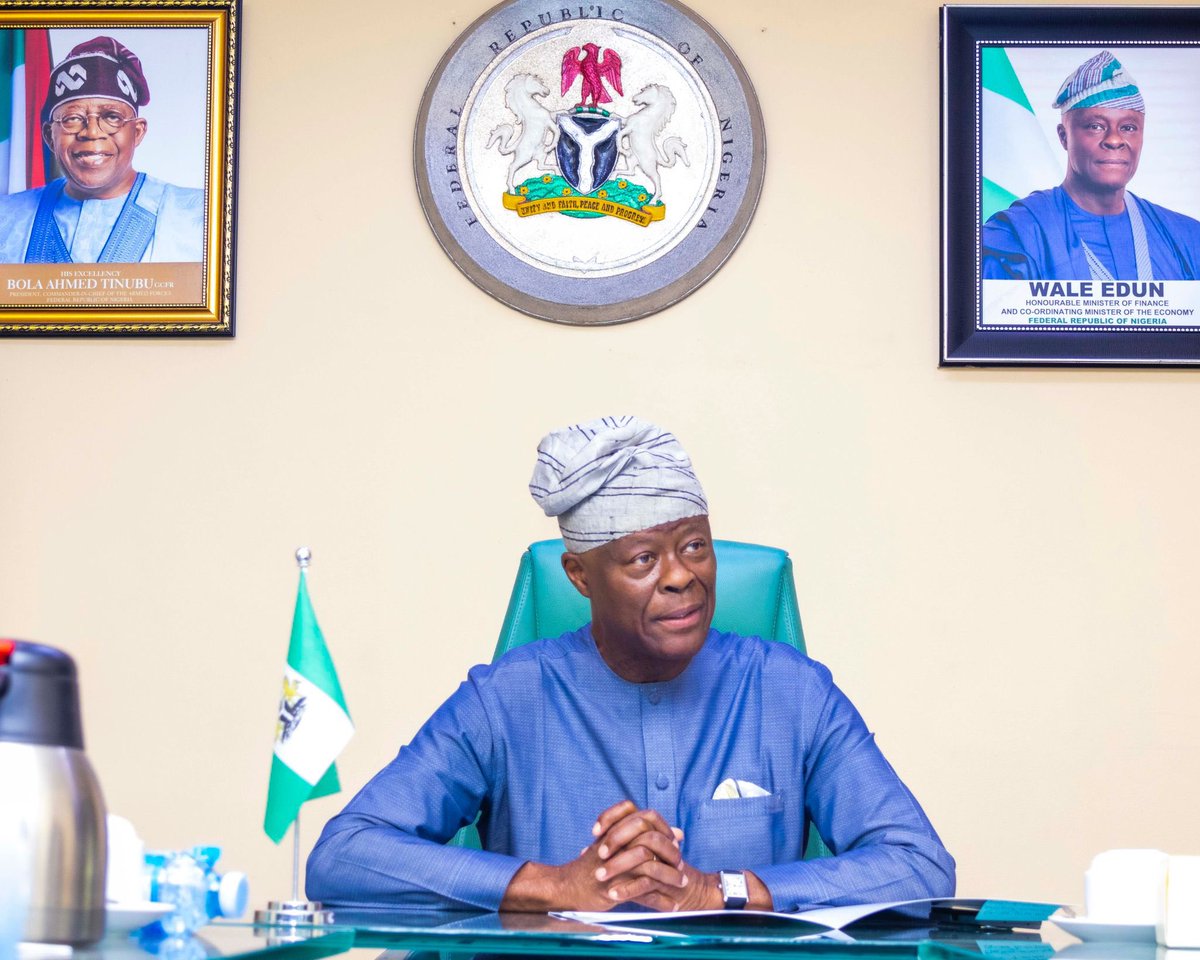
The statement, signed by the Assistant Director of Information and Public Relations at the Federal Ministry of Finance, Mrs Uloma Amadi, said the Economic Management Team, chaired by the Minister of Finance and Coordinating Minister of the Economy, Mr Wale Edun, had begun reviewing the possible economic consequences of the crisis.

According to the ministry, the EMT recently met to assess the potential implications of escalating tensions involving the United States, Israel, and Iran. The minister also chaired a Naira-for-Crude policy coordination meeting where developments in global energy markets and their domestic implications were discussed.

The statement noted that global uncertainty had increased as fears of disruptions to major energy supply routes, particularly the Strait of Hormuz, fuel volatility in crude oil prices and financial markets.

“The Federal Government of Nigeria is closely monitoring escalating geopolitical tensions in the Middle East involving the United States, Israel, and Iran, and remains committed to safeguarding Nigeria’s economic stability,” the statement said.

Officials identified three key channels through which the crisis could affect Nigeria. The first is volatility in crude oil and gas markets, with rising global energy prices translating into higher domestic costs for petroleum products and other energy-related inputs.

See also  PDP governors warn Wike camp, says party won’t bow to impunity

“Volatility in global energy markets is already driving increases in domestic prices, including fuel, diesel, cooking gas, and fertiliser,” the statement added.

The second channel involves financial markets and capital flows, with heightened geopolitical risks potentially reducing investment inflows into emerging markets such as Nigeria. The third concerns global logistics and supply chains, where disruptions to major shipping routes or energy corridors could increase freight costs and domestic prices.

Beyond these channels, the government cautioned that prolonged instability could deepen inflationary pressures and increase the cost of living if global commodity prices remain elevated.

“The Honourable Minister noted that beyond these immediate effects, sustained instability could drive increases in the cost of goods and services, placing further upward pressure on inflation and the cost of living,” the statement said.

Ministers across key economic sectors provided updates on how developments in global markets could affect Nigeria’s fiscal and macroeconomic outlook. The extent of the impact, officials said, would largely depend on the duration of the conflict and the degree to which it disrupts global oil supply.

The government said the EMT is closely monitoring macroeconomic indicators, including global crude oil prices, exchange rate movements, capital flow trends, financial market conditions, and potential effects on domestic inflation and fiscal reserves.

Despite the uncertainty, the statement highlighted that Nigeria enters the period of heightened global risk with stronger macroeconomic fundamentals. Real GDP growth in Q4 2025 was 4.07 per cent, one of the strongest quarterly performances in over a decade, reflecting ongoing economic reforms and improved macroeconomic coordination.

See also  Multi-Trex gets NGX nod to fix shareholding shortfall

The government stressed that careful policy calibration remains central to its response to external shocks, aimed at protecting recent progress in macroeconomic stabilisation, revenue mobilisation, and economic growth.

“The Federal Government assures the public that it remains vigilant and proactive, and will take all necessary steps to preserve Nigeria’s economic stability and sustain its growth trajectory,” the statement added.

The report noted that rising petrol prices to about N1,300 per litre in various parts of Nigeria have already prompted businesses to prepare for higher operational costs, a development economists and the Organised Private Sector warn could fuel inflationary pressures and affect goods and services nationwide.

punch.ng

FOLLOW US ON:

FACEBOOK

TWITTER

PINTEREST

TIKTOK

YOUTUBE

LINKEDIN

TUMBLR

INSTAGRAM

Continue Reading
Click to comment

Leave a Reply

Your email address will not be published. Required fields are marked *

Business

Nigeria crude output misses OPEC quota eighth straight month

Published

on

Nigeria’s average daily crude production is still below the 1.5-million-barrel quota set for the country by the Organisation of the Petroleum Exporting Countries.

According to the OPEC Monthly Oil Market Report released in April, Nigeria’s crude production in March was 1.38 mbpd. While there was a 69,000 bpd increase from the 1.31 mbpd recorded in February, the figure is still 117,000 bpd below the OPEC quota.

The figures for February indicate a month-on-month decline of 146,000 barrels per day, widening the country’s shortfall from its OPEC production allocation. This is the eighth consecutive month the country has failed to meet the OPEC quota since July 2025.

It could be recalled that although Nigeria recorded a marginal improvement in January, when production rose from 1.422 mbpd in December 2025 to 1.459 mbpd, the rebound was short-lived as output fell significantly in February.

Earlier data from the Nigerian Upstream Petroleum Regulatory Commission had also shown that crude oil production weakened at the end of 2025. Production declined from 1.436 mbpd in November 2025 to 1.422 mbpd in December, before recovering slightly in January.

In 2025, Nigeria’s crude oil production fell below its OPEC quota in nine months of the year, meeting or slightly exceeding the target only in January, June, and July. Nigeria opened 2025 strongly, producing 1.54 mbpd in January, about 38,700 barrels per day above its OPEC allocation.

However, production slipped below the quota in February at 1.47 mbpd and weakened further in March to 1.40 mbpd, marking one of the widest shortfalls during the year.

See also  NNPC boosts Dangote refinery crude supply to seven cargoes – Sources

Although output recovered modestly in April (1.49 mbpd) and May (1.45 mbpd), Nigeria remained below its OPEC ceiling until June, when production edged up to 1.51 mbpd, slightly exceeding the quota.

The country sustained the momentum in July with 1.51 mbpd before falling below the benchmark again in subsequent months.

Our correspondent reports that the figures recorded in the first quarter of 2026 are below the government’s budget benchmark.

Recently, the Chief Executive Officer of the Nigerian Upstream Petroleum Regulatory Commission said oil production (crude and condensate) reached 1.8 mbpd in March.

However, an official of the commission told The PUNCH that the recovery started in mid-March after all assets on turnaround maintenance resumed operations. The official expressed optimism that crude production would meet the OPEC quota in April.

The PUNCH reports that Nigeria’s inability to meet its OPEC production quota is not only affecting its oil export earnings but also adversely impacting domestic refineries that are starved of feedstock for their operations.

Recall that The PUNCH exclusively reported on March 9, 2026, that the Federal Government, through the Nigerian National Petroleum Company Limited, had begun moves to secure crude oil supply for the Dangote Petroleum Refinery through third-party international traders in a bid to sustain domestic refining operations.

“Leveraging our global crude trading network, we are sourcing third-party crude for the refinery at prices that are competitive with prevailing international market rates,” a senior official at NNPC, who spoke in confidence due to the lack of authorisation to speak on the matter, had told The PUNCH.

See also  Lagos enforce okada ban statewide

The report showed that several heavyweight OPEC producers implemented sharp cuts. Saudi Arabia’s output plunged by 2.35 mbpd to 7.76 mbpd, while Iraq slashed production by 2.23 mbpd to 1.9 mbpd.

The United Arab Emirates and Kuwait also posted steep declines of 1.48 mbpd and 1.380 mbpd, respectively.

Venezuela increased production by 75,000 bpd to 1.1 mbpd, Congo added 16,000 bpd to reach 307,000 bpd, and Libya gained 15,000 bpd to 1.3 mbpd. Algeria recorded a marginal drop of 2,000 bpd.

The report noted that totals for the entire OPEC group were not available due to independent rounding and incomplete data for some members. It also clarified that Saudi Arabia’s supply to the market in March stood at 7.76 mbpd, while its actual production was 6.97 mbpd. Nothing was recorded for Gabon and the crisis-ridden Iran.

punch.ng

FOLLOW US ON:
FACEBOOK

TWITTER

PINTEREST

TIKTOK

YOUTUBE

LINKEDIN

Continue Reading

Business

Dangote plans pan-African IPO for $20bn refinery

Published

on

The President of Dangote Industries Limited, Aliko Dangote, is planning a landmark cross-border public offering of his $20bn oil refinery, in a move that could reshape capital markets across Africa and deepen regional investor participation, a new report by Bloomberg revealed on Monday.

The proposed listing, which will see shares of the Dangote Petroleum Refinery and Petrochemicals floated on multiple African stock exchanges, is being positioned as the first pan-African initial public offering of its scale.

Details of the plan emerged following a high-level meeting in Lagos, which involved Dangote and the chief executives of several African bourses under the umbrella of the African Securities Exchanges Association.

Chief Executive Officer of the Nairobi Securities Exchange, Frank Mwiti, who attended the meeting, disclosed that discussions centred on structuring a cross-border listing framework that would allow investors across the continent to participate in the refinery’s ownership.

“The plan is to structure a pan-African IPO,” Mwiti said after the meeting, noting that the initiative would require coordination among exchanges to ease regulatory barriers and facilitate seamless trading across jurisdictions.

A spokesman for the Dangote Group confirmed that the meeting took place but declined to provide further details on the structure and timeline of the proposed offering.

The development comes months after Dangote unveiled plans to list about 10 per cent of the refinery on the Nigerian Exchange Group in 2026, a move widely seen as part of efforts to unlock value and broaden the company’s investor base.

To drive the offering, Dangote has appointed a consortium of financial advisers, including Stanbic IBTC Capital Limited, Vetiva Advisory Services Limited, and FirstCap Limited.

See also  Blackouts cost Nigeria N40tn yearly – Report

Chief Executive Officer of FirstCap, Ukandu Ukandu, confirmed the appointments, stating that the advisers were already working on the transaction structure.

The report noted that multi-exchange listing could significantly deepen liquidity in African capital markets, while positioning Nigeria as a major hub for cross-border investments, especially as the country eyes a return to the FTSE Russell Frontier Markets Index.

They added that the offering could also provide much-needed capital to support Dangote’s aggressive expansion strategy.

Currently, the refinery, the largest single-train facility in the world, has a processing capacity of 650,000 barrels per day. However, Dangote plans to more than double this to 1.4 million barrels per day within the next three years, a scale that would rival global refining giants, including facilities owned by Indian billionaire Mukesh Ambani.

To fund this expansion, the company recently secured backing from the African Export-Import Bank, which underwrote $2.5bn out of a $4bn syndicated financing facility.

The refinery expansion forms part of a broader $40bn investment programme outlined by Dangote over the next five years, covering petrochemicals, fertiliser production, and energy infrastructure.

The pan-African IPO is also being driven by rising demand for refined petroleum products across the continent, as several African countries continue to face supply challenges exacerbated by global geopolitical tensions.

Since commencing operations, the Lagos-based refinery has begun exporting refined fuel to multiple African markets, helping to reduce reliance on imports from Europe and the Middle East.

Further discussions on the proposed listing were also held between Dangote and officials of the Nigerian Exchange Group, alongside representatives of member exchanges of the African Securities Exchanges Association, focusing on frameworks that would allow investors from different jurisdictions to seamlessly access the IPO.

See also  CBN delists non-compliant BDCs

The deal could mark a turning point for Africa’s financial markets by fostering greater integration, improving capital mobilisation, and offering retail and institutional investors across the continent a rare opportunity to own a stake in one of Africa’s most strategic industrial assets.

punch.ng

FOLLOW US ON:

FACEBOOK

TWITTER

PINTEREST

TIKTOK

YOUTUBE

LINKEDIN

Continue Reading

Business

Electricity Power subsidy hits N418bn, losses exceed N300bn

Published

on

The Nigerian Electricity Regulatory Commission has disclosed that the Federal Government incurred a subsidy obligation of N418.79bn in the fourth quarter of 2025, even as inefficiencies across the electricity value chain led to losses exceeding N300bn during the period.

This was contained in the commission’s 2025 fourth-quarter report, which also highlighted declining remittances, high distribution losses, grid instability, and a marginal drop in available generation capacity.

According to the report, total invoices issued by generation companies for electricity produced in the quarter amounted to N804.93bn. However, due to non-cost-reflective tariffs, the government absorbed 52.30 per cent of the cost.

The commission stated, “It is important to note that due to the absence of cost-reflective tariffs across all DisCos, the government incurred a subsidy obligation of N418.79bn; this represents a N39.96bn (-8.71 per cent) reduction in FGN subsidy compared to 2025/Q3.”

The report added that the subsidy covered more than half of generation costs, leaving distribution companies to pay only N386.13bn. “The government subsidy accounted for 52.30 per cent of the total GenCo invoice, which is a 6.60pp decrease compared to 2025/Q3,” the commission noted.

Despite the intervention, the sector recorded significant commercial losses. While the total value of electricity supplied to distribution companies stood at N969.19bn, only N795.06bn was billed to customers.

“The naira value of the total energy offtake by all DisCos in 2025/Q4 was N969.19bn, and the total energy billed was N795.06bn, which translates to a billing efficiency of 82.03 per cent.

The billing efficiency of 82.03 per cent recorded during the quarter represents a decrease of 0.66pp compared to 2025/Q3 (82.69 per cent). At an aggregate level, DisCos cumulatively recorded billing losses of N174.12bn in 2025/Q4,” the report said.

See also  Lagos Unveils N214.8bn Bond Offers To Fund Infrastructure, Climate Projects

In addition, high aggregate technical, commercial, and collection losses further weakened sector finances. “The weighted average ATC&C loss across all DisCos in 2025/Q4 was 34.9 per cent, translating to a cumulative revenue loss of N139.19bn across all DisCos,” the report noted.

Combined, the billing losses of N174.12bn and ATC&C revenue losses of N139.19bn indicate inefficiency-driven losses of over N300bn during the quarter. The report also showed that distribution companies received 7,991.22GWh of electricity but billed customers for only 6,614.57GWh, indicating persistent energy accounting inefficiencies.

“Although the total energy received by all DisCos in 2025/Q4 was 7,991.22GWh, the energy billed to end-use customers was only 6,614.57GWh,” it stated.

Collection performance also declined compared to the previous quarter. Market remittances to upstream participants also weakened. DisCos were required to remit N471.66bn but paid only N437.27bn, leaving an outstanding balance of N34.39bn.

This translates to a remittance performance of 92.71 per cent in 2025/Q4 compared to the 95.21 per cent recorded in 2025/Q3.

On operational performance, the commission said available generation capacity averaged 5,400.38 megawatts, representing a slight decline from the third quarter, with several plants recording reduced output.

Seventeen power plants recorded decreases in available generation capacities in 2025/Q4 relative to 2025/Q3, it said.

However, energy generation improved during the quarter. Average hourly generation increased to 4,452.71MWh/h, resulting in total generation of 9,831.58GWh. “The average hourly generation of the grid-connected power plants increased by 273.56MWh/h (+6.55 per cent),” the report stated.

Grid stability concerns also persisted. System frequency and voltage levels fell outside prescribed operating limits. “In 2025/Q4, the average lower daily (49.38Hz) and average upper daily (50.65Hz) system frequencies were outside the normal operating limits,” the commission said.

See also  Blackouts cost Nigeria N40tn yearly – Report

The report stated that there was one incident of system disturbance on the national grid in 2025/Q4. A partial collapse of the grid occurred on December 29. The commission warned that the current subsidy regime exposes government finances to uncertainty.

“The current open-ended subsidy regime leaves the FGN exposed to indeterminate subsidy obligation,” it stated, citing generation cost variations and supply mix as key drivers.

The report added that the Q4 subsidy declined partly due to increased energy allocation to premium customers on Band A feeders. “The key driver of this reduction is the increase in energy allocated to Band A customers from 40 per cent to 45 per cent,” the commission said.

punch.ng

FOLLOW US ON:

FACEBOOK

TWITTER

PINTEREST

TIKTOK

YOUTUBE

LINKEDIN

Continue Reading

Trending