Connect with us

News

NASS sends state police bill to 36 states’ assemblies

Published

on

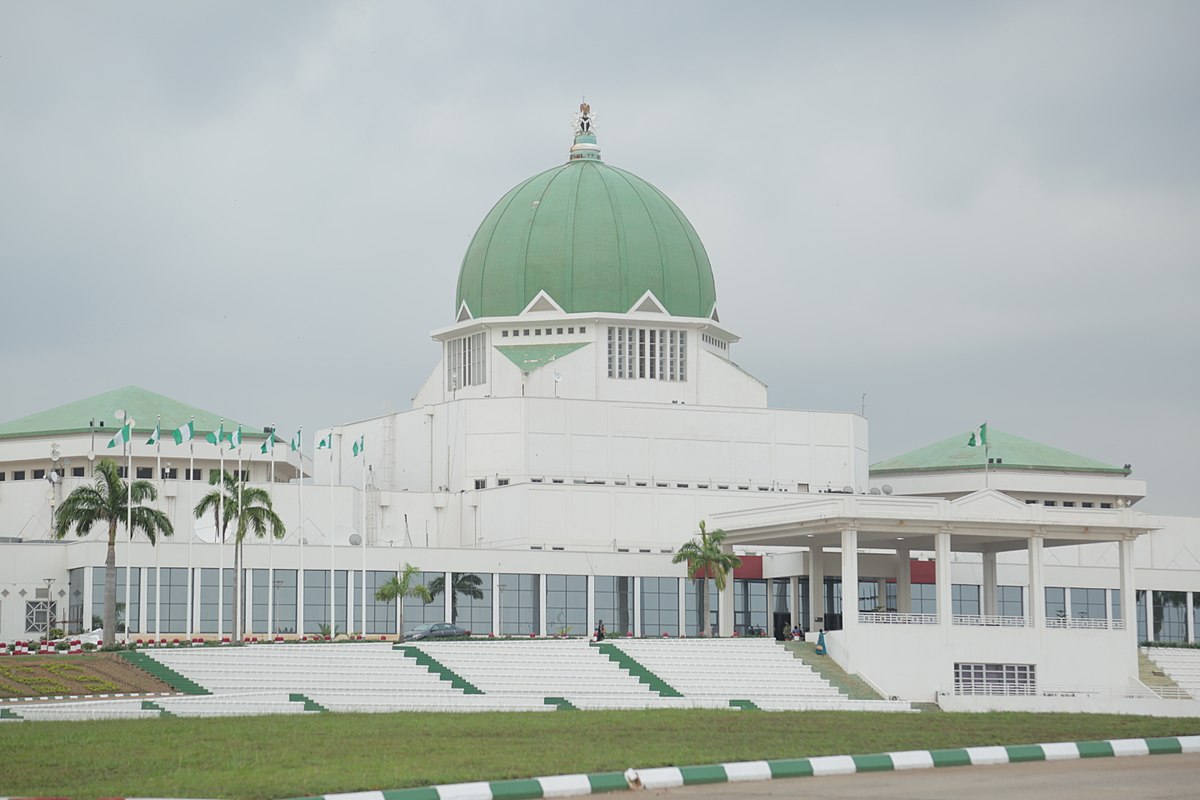
The National Assembly is set to transmit the Constitution Alteration Bill seeking the establishment of state police to the 36 state Houses of Assembly this week, marking the next critical stage of one of Nigeria’s most far-reaching security reforms.

The development comes days after the Senate passed the landmark constitutional amendment, with lawmakers now racing to secure the approval of at least 24 state legislatures before the bill can be transmitted to President Bola Tinubu for assent.

Chairman of the Senate Committee on Media and Publicity, Yemi Adaramodu, disclosed the development in an exclusive interview with The PUNCH on Sunday, saying all the necessary arrangements had been concluded for the transmission.

According to him, the state legislatures and governors were already awaiting the bill following consultations held ahead of its passage by the National Assembly.

“The bill for the creation of state police will get to the states this week. The states’ speakers have met and are awaiting the bill from the National Assembly.

“The state governors are expecting it too, even with their presence in the Senate chamber when the bill was being considered and passed,” Adaramodu said.

The planned transmission signals the beginning of the final constitutional hurdle for the proposed amendment, which requires endorsement by not less than two-thirds of the 36 state Houses of Assembly in line with Section 9 of the 1999 Constitution before it can become law.

Momentum has continued to build behind the proposal since the Senate approved the amendment after a clause-by-clause consideration of the report presented by the Senate Committee on the Review of the Constitution, chaired by Deputy Senate President Barau Jibrin.

The legislation seeks to establish a dual policing structure that will empower state governments to establish and maintain police services within their jurisdictions while preserving the constitutional responsibilities of the Nigeria Police Force over national security matters such as terrorism, border security, cybercrime, arms trafficking and other federal offences.

To address longstanding concerns over possible abuse by state governments, lawmakers incorporated several safeguards into the bill, including provisions prohibiting state police authorities from targeting individuals or groups for criticising governments and empowering the Federal Government to intervene in cases involving threats to national security, breakdown of public order or violations of fundamental human rights.

See also  UPDATED: NCAA stops Fuji star K1 de Ultimate from flying for six months

The proposed reform has received unprecedented backing from governors, speakers of state legislatures and major political stakeholders across the country.

The Conference of Speakers of State Legislatures in Nigeria had earlier endorsed the bill, with its Chairman and Speaker of the Delta State House of Assembly, Emomotimi Guwor, assuring Nigerians that all state houses of assembly would give the proposal diligent consideration.

Several governors have also welcomed the amendment, describing it as a timely response to worsening insecurity across the federation.

Among them, Benue State Governor, Hyacinth Alia, described the Senate’s passage of the bill as a landmark step towards strengthening Nigeria’s security architecture, arguing that state police would possess a better understanding of local terrain and community dynamics, thereby improving intelligence gathering and response to criminal activities.

Similarly, the Forum of Progressive Speakers of State Legislatures under the All Progressives Congress pledged to facilitate speedy ratification in APC-controlled houses of assembly while promising robust oversight mechanisms to ensure professionalism and respect for human rights.

The Labour Party also threw its weight behind the proposal, describing the Senate’s action as a significant milestone in the quest to strengthen internal security through community-based policing.

Though it acknowledged concerns over possible abuse by governors, the party expressed confidence in the constitutional safeguards embedded in the amendment.

The proposal also attracted opposition from the Peoples Redemption Party, which questioned the timing of the initiative and urged Nigerians to reject it, arguing that the current administration lacks the credibility to oversee such a fundamental restructuring of the country’s policing system.

Despite the reservations expressed by critics, the planned transmission of the bill to the states this week is expected to trigger deliberations across the 36 Houses of Assembly, where lawmakers will conduct public hearings, stakeholder engagements and legislative scrutiny before voting on the constitutional amendment.

If at least 24 state assemblies endorse the proposal, it will pave the way for President Bola Tinubu’s assent, potentially ending decades of debate over the decentralisation of policing and ushering in what many stakeholders believe could be the most significant reform of Nigeria’s internal security architecture since the return to democratic rule in 1999.

See also  US places $10m reward for information on Iran’s Supreme Leader Khamenei, others

Meanwhile, the Senate on Sunday defended the passage of the state police bill, insisting that its passage, which 84 senators supported, is a response to Nigeria’s worsening security challenges.

The upper chamber said the bill emerged from years of consultations, public engagements, and broad national consensus, stressing that it would be wrong to delay the proposal for political calculations ahead of the 2027 general election.

The position comes amid growing debate over the constitutional amendment bill, with supporters arguing that decentralising policing will improve security at the grassroots, while critics fear that state police could be abused by governors to intimidate political opponents.

Defending the Senate’s decision in a statement issued by his media office on Sunday, the Leader of the Senate, Opeyemi Bamidele, said the proposal was “purely a child of necessity and not of political expediency as well as a product of national consensus and not of cynicism.”

He maintained that the establishment of state police had become a matter of urgent national importance that should not be sacrificed because of anyone’s political ambition.

According to him, the process leading to the passage of the bill did not begin recently but evolved through extensive constitutional review engagements involving key stakeholders across the country.

Despite some dissenting views, Bamidele said observations had shown that Nigerians largely welcomed the passage of the bill with the belief that it would significantly improve security at the sub-national level.

He said, “The state police proposal was part of memoranda submitted to the Senate Ad hoc Committee on the Review of the 1999 Constitution. The memorandum had been subjected to a rigorous process and multi-tiered consultation across the federation due to its sensitive nature.

“During this process, the National Assembly broadly consulted the executive, the Nigeria Governors’ Forum, the Conference of Speakers of the State Legislatures of Nigeria and the leadership of the Nigeria Police, among others.

“In July 2025, the National Assembly conducted public hearings in all geopolitical zones, and the participants overwhelmingly approved it.

“At each level of our consultation, nearly all stakeholders embraced the State Police Bill in the light of stark realities we are facing today.”

The Senate Leader said the Nigerian Police actively contributed to the drafting of the constitutional amendment by offering recommendations that helped lawmakers build safeguards against potential abuse of state police by political actors.

See also  Presidential panel on State police begin their work

According to him, those recommendations formed part of accountability and oversight mechanisms embedded in the legislation to ensure that state police operate within constitutional limits.

He added that the willingness of the Nigerian Police to support the proposal underscored its strategic importance in addressing insecurity at the local and state levels.

Beyond the contributions of the police hierarchy, Bamidele said the bill was subjected to extensive debates in both chambers of the National Assembly before its eventual passage.

He noted that support for the legislation cut across party lines.

He said: “Even though the APC is the majority, there are members of opposition parties – PDP, ADC, NDC and Labour Party – that exercised their discretion in favour of the Bill, mainly in the national interest and not on a parochial basis.

“In the Senate, for instance, 84 out of 109 members voted clause by clause in support of the Bill. This accounted for 77.06 per cent approval at the Senate alone.”

Bamidele argued that security should transcend political affiliations, noting that countries facing security threats often unite behind reforms aimed at strengthening national safety.

Globally, he said, security “is a collective public good that benefits citizenry across ethnic, political and religious divides.

“Political actors elsewhere always throw off their togas of partisanship and parochialism to support initiatives that will boost and reinforce national security.”

He, therefore, urged opposition parties to contribute constructive ideas that would strengthen peace and stability across the federation rather than oppose initiatives solely on political grounds.

Bamidele also challenged opposition parties and leaders to come forward with ideas that would deepen the peace and stability of the federation.

“Even when they disagree on some grounds, they are under obligations to provide credible and useful ideas that can make our nation better and greater. Unfortunately, they have not passed this critical test of opposition democracy,” Bamidele said.

punch.ng

FOLLOW US ON:

FACEBOOK

TWITTER

PINTEREST

TIKTOK

YOUTUBE

LINKEDIN

Continue Reading
Click to comment

Leave a Reply

Your email address will not be published. Required fields are marked *

News

PFIPC scandal: Gbajabiamila invited, not arrested – ICPC

Published

on

The Independent Corrupt Practices and Other Related Offences Commission has dismissed reports suggesting that the Chief of Staff to the President, Femi Gbajabiamila, was arrested over the Presidential Foreign Investment Promotion Council scandal, insisting that he only honoured an invitation from investigators.

The anti-graft agency clarified this in a statement posted on its Facebook page on Tuesday, following reports that Gbajabiamila visited the commission’s headquarters in Abuja on Monday in connection with the ongoing investigation into the purported PFIPC.

In the statement, the ICPC said the Chief of Staff voluntarily appeared before investigators and was not arrested.

“The Commission confirms that the Chief of Staff’s visit was on the invitation of its investigators and consistent with its ongoing efforts to gather all relevant facts in the matter.

“He was not arrested; he simply willingly honoured an invitation,” the statement read.

The commission said President Bola Tinubu had directed it to investigate how the PFIPC allegedly operated from the Federal Secretariat in Abuja for about two years under Adeniyi Adeyemi, who presented himself as the council’s Director-General.

According to the ICPC, Gbajabiamila arrived at its headquarters on Monday afternoon, responded to investigators’ enquiries and left after giving his statement.

“The Independent Corrupt Practices and Other Related Offences Commission (ICPC) confirms that the Chief of Staff to the President, Mr Femi Gbajabiamila, was at the Commission’s headquarters in Abuja on Monday, 20th July, 2026, to give a statement in connection with the ongoing investigation into the circumstances surrounding the purported Presidential Foreign Investment Promotion Council (PFIPC),” the statement said.

See also  US, Canada issue travel warnings for Mexico after drug kingpin killing

It added that investigations into the alleged fake agency were ongoing and that further updates would be provided as necessary.

PUNCH Online had earlier reported that Gbajabiamila appeared before the ICPC on Monday after Tinubu directed the commission to investigate the circumstances surrounding the PFIPC, an entity the Presidency has disowned as fraudulent.

The controversy has prompted parallel investigations by the House of Representatives, with several government agencies and officials appearing before lawmakers over how the purported council allegedly secured office space, budgetary allocation and other official documentation.

At a public hearing convened at the National Assembly Complex by the House of Representatives on Monday, the Central Bank of Nigeria admitted that it had opened two foreign-currency domiciliary accounts for the phantom agency.

Speaking before the House’s Ad-hoc Committee investigating the matter, chaired by Yusuf Gagdi and inaugurated by Speaker Tajudeen Abbas, the Director of CBN Banking Services Department, Hamisu Ibrahim, said the accounts, one in US dollars, the other in British pounds sterling, were opened following a mandate received from the Office of the Accountant-General of the Federation.

“On July 30, 2025, we received a mandate dated July 29, 2025 from the Office of the Accountant-General. We received the mandate to authorise two accounts, one a US dollar domiciliary account, the other a pound domiciliary account, for the Presidential Economic Advisory Council/Presidential Foreign Investment Promotion Council,” Ibrahim told the committee.

He explained the CBN’s verification process, saying, “The process of opening an account requires a mandate from the Office of the Accountant-General of the Federation.

See also  Judge backs NIN verification for NBA elections, seeks electoral reforms

“Once we receive that mandate, we perform all the necessary verifications to confirm that this mandate is actually coming from that office.

“The department that handles the mandate is different from the department that actually does the account opening,” he said.

He, however, noted that no one came to activate the accounts after they were opened.

Adeyemi was arrested and is facing prosecution over the matter.

punch.ng

FOLLOW US ON:

FACEBOOK

TWITTER

PINTEREST

TIKTOK

YOUTUBE

LINKEDIN

Continue Reading

News

Uzodimma approves N25bn judges’ quarters, N1.9bn CBT centres for Imo

Published

on

Imo State Governor, Hope Uzodimma, has approved the construction of judges’ quarters valued at N25bn as part of efforts to improve the welfare of judicial officers in the state.

The governor also approved N1.9bn for the establishment of four computer-based test centres in Orlu Zone and the creation of a smart digital signage system to modernise the state’s infrastructure.

The approvals were announced on Tuesday by the Commissioner for Information, Public Orientation and Strategy, Declan Emelumba, while briefing journalists after the State Executive Council meeting presided over by the governor in Owerri.

Emelumba said the council approved N25bn for the construction of 40 duplexes for judges, alongside recreational facilities.

He said, “The Council approved N25 billion for the construction of 40 duplexes as judges’ quarters, complete with recreational facilities. The project is designed to provide a conducive living environment for judicial officers.”

The commissioner added that the council also approved the establishment of new computer-based test centres and a smart digital signage initiative.

“Also approved are the new computer-based test (CBT) centres and a smart digital signage initiative aimed at modernising infrastructure across the state,” he said.

According to him, the council approved N1.9bn for the establishment of four CBT centres in Orlu Zone to improve access to the Joint Admissions and Matriculation Board examinations and other computer-based tests.

He said N900m would be released immediately to commence work at two pilot centres located at Bishop Shanahan Okoye Secondary School and Community Secondary School, Omuma.

Emelumba further disclosed that the council approved the establishment of Imo Signage Asset Management Limited to regulate and deploy smart digital billboards through a public-private partnership.

See also  PHOTOS: Nigerian Army Attack, Burn Terrorist Camps In Kogi State

Speaking on the digital initiatives, the Commissioner for Digital Economy and E-Government, Chimezie Amadi, said the projects would be financed by private investors without financial commitment from the state government.

According to him, the initiative would be funded “at no cost to the Imo State Government,” adding that Internet of Things-enabled infrastructure would support a modern, digitally managed signage ecosystem.

punch.ng

FOLLOW US ON:

FACEBOOK

TWITTER

PINTEREST

TIKTOK

YOUTUBE

LINKEDIN

Continue Reading

News

You’re too big for REA chairmanship, Fayose ’s brother tells ex-governor

Published

on

Isaac Fayose has told his elder brother, Ayo Fayose, to hand off his newly announced Rural Electrification Agency chairmanship to his son. He said the former Ekiti State governor was too politically significant for such a role.

The younger Fayose made the remark in a video on his Instagram page on Monday, reacting to the Presidency’s announcement that his brother had been appointed chairman of the REA board alongside 25 others named into the leadership of 10 federal agencies and commissions.

According to a statement by the President’s Special Adviser on Information and Strategy, Bayo Onanuga, Fayose would chair the board alongside Ahmadu Abubakar and Ilyasu Ibrahim Makinta as non-executive directors, with the agency’s incumbent Director-General, Abba Abubakar Aliyu, and three executive directors retained.

Isaac opened his post by contrasting the chairmanship with more senior positions he believed his brother deserved, saying, “They said they gave my brother a DG, DG, not a minister, not ambassador.”

He argued that the appointment fell short of his brother’s stature, adding, “They said they gave him DG, head of parastatal, chairman of a committee. They no see give him minister, they no give him ambassador.”

Drawing a comparison with a government critic-turned-appointee, he said, “Even Reno Omokri sef, they gave him ambassador. They couldn’t give my brother ambassador,” and later pressed the point further, asking, “So why just chairman of a parastatal?”

Isaac linked the timing of the appointment to a weekend visit by former Labour Party presidential candidate, Peter Obi.

Prince Isaac Fayose. Credit: Facebook

He said, “They gave my brother DG because Obi came on Saturday to visit me. So they said, no, we must enter that family.”

See also  AFUED set for 24/7 power as FG launches solar project

PUNCH Online had reported that Isaac hailed Obi as Nigeria’s “incoming president” when the NDC candidate visited his home on Saturday, days after threatening to withdraw his backing, with Obi responding that many of those criticising Isaac online were not genuine supporters of the movement.

He said his brother had long maintained that he had no interest in government positions after leaving office, quoting him as having vowed that whenever he left government house, he would not become a minister, a director-general or a senator, and would return instead to face his private business.

He said, “But my brother told me, Ayodele Peter Fayose, told me, ‘Isaac, when I’m leaving this government house, whenever I leave this government house, I will not be a minister, I will not be DG, I will not be senator, I will not be anything. I will face my business.’”

Isaac noted that his brother had been financially independent long before holding public office, stating that he had been a billionaire from “when I was a baby, and had continued to do well in private business.”

He described the appointment as a “Greek gift” and questioned the timing directly, asking, “Why didn’t they give you appointment since? Why did they wait till Obi come?”

Addressing his brother, he said, “I know you will not take this. But if you take it, who am I? Who am I? Omo Oba.”

He then offered congratulations while telling him to pass the position on instead.

He said, “Congrats on your appointment. You better give your son. Please, don’t use that kind of appointment. You are too big for that. Afobaje ni e,” loosely translated as “you are a kingmaker.”

See also  Judge backs NIN verification for NBA elections, seeks electoral reforms

Beyond the appointment, Isaac used the post to restate his confidence in the opposition’s chances in the 2027 general election.

He said, “I am ready to see it through. And I know what we have on ground in Nigeria today. Election, we have 62 per cent, total vote cast, free and fair, credible.”

He dismissed suggestions that the vote would be manipulated, adding, “I’m not scared… They are scared of what they don’t know.”

punch.ng

FOLLOW US ON:

FACEBOOK

TWITTER

PINTEREST

TIKTOK

YOUTUBE

LINKEDIN

Continue Reading

Trending