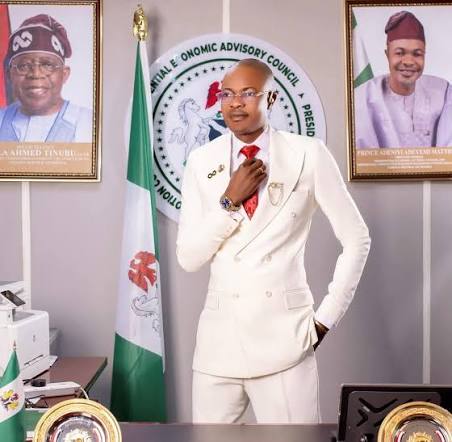
The controversy surrounding the alleged N1.3bn Presidential Foreign Intervention Promotion Council (PFIPC) scandal deepened on Monday as the Nigeria Police Force reportedly arrested the father of the council’s embattled promoter, Prince Adeniyi Adeyemi, amid ongoing investigations into the alleged “ghost agency” linked to the Presidency.
Adeyemi, who claims to be the council’s Director-General, is currently standing trial before the Federal High Court in Abuja on charges of conspiracy, forgery and impersonation, while the Federal Government listed Chief of Staff to the President, Femi Gbajabiamila, and 10 others as prosecution witnesses in the case.
One of our correspondents learnt that Adeyemi’s father, alongside a family friend, who visited him on Monday morning, was arrested by the police, leaving Adeniyi’s aged mother in shock.
Senior lawyer Femi Falana (SAN) and a couple of eyewitnesses confirmed the arrest to The PUNCH in a telephone interview on Monday.
“Police stormed the house of the parents of Prince Adeyemi Adeniyi on Plot 3, Adeniyi Dynasty, behind Technical College, Road Safety Area, Ogbomoso,” Falana said.
“The father has been arrested. There is no legal basis for substituted arrests. The young man has promised to show up in court, so why arrest his father?”
A neigbour of the Adeyemis also told The PUNCH that police officers arrived at the premises in four vehicles before allegedly taking the father away.
The source said, “They came with four vehicles, and they started harassing them and eventually took the father away. They didn’t allow the neighbours to intervene before they took him away. At the moment, there is a man in blue clothes patrolling the area.”
Another neighbour, who also spoke on condition of anonymity, confirmed the development.
“Baba was taken away to Agbomire police station with someone who came to visit them this morning. They left the mother, who is currently in shock, but we have moved her away,” the eyewitness said in Yoruba.
NBA, SANs react
Adeyemi’s father’s arrest triggered fresh legal and human rights concerns, with the President of the Nigerian Bar Association, Mazi Afam Osigwe (SAN), and other Senior Advocates of Nigeria warning that Nigerian law does not permit the arrest of relatives merely to compel a suspect to surrender or assist investigators.
The senior lawyers, however, maintained that the arrest would be lawful if Adeyemi’s father was himself a suspect or a person of interest in the investigation.
The reactions followed reports that operatives of the NPF arrested Adeyemi’s father at his residence on Plot 3, Adeniyi Dynasty, behind Technical College, Road Safety Area, Ogbomoso, Oyo State, on Monday, in connection with the investigation into the alleged N1.3bn “ghost agency” scandal involving the Chief of Staff to the President, Femi Gbajabiamila, which has piled fresh pressure on the Presidency following revelations that the council appeared in the 2026 Appropriation Act despite earlier being disowned by the Federal Government.
NBA president Osigwe condemned the reported arrest of the father of Adeyemi, saying Nigerian law does not permit the arrest of relatives merely to compel a suspect to surrender or assist an investigation.
Other senior lawyers also maintained that if the suspect’s father is implicated in the alleged offence or is a person of interest in the investigation, the police would be acting within the law by arresting him.
Their reactions followed reports that the Nigeria Police Force arrested Adeyemi’s father in Ibadan on Monday amid the ongoing investigation into the alleged N1.3bn “ghost agency” scandal.
In a telephone interview on Monday, Osigwe, cautioned against rushing to conclusions because the circumstances surrounding the arrest remain unclear.
“I’m careful about saying such things because I don’t know why his father was arrested,” Osigwe said, adding that the law does not permit the arrest of one person in place of another.
“If a person is arrested for the purpose of putting pressure on a suspect who cannot be found, or to compel a person who is being investigated to surrender, then it is unlawful,” he said.
Osigwe, however, explained that the position would be different if the father was arrested in his own right.
“But if the person is being arrested in the person’s own right as a suspect or a person of interest in any investigation, then the law would permit that.”
He added that the public should seek clarification from the police rather than speculate on the motive behind the arrest.
“We don’t know the reason for the arrest. People may simply assume that because the son is involved in a criminal case, the father was arrested for that reason. We need to enquire from the police. It’s not too difficult.”
Also reacting, another Senior Advocate of Nigeria, Prof. Sam Erugo, said arresting a father for an offence allegedly committed by his son was unlawful under the Nigerian law.
“It is unlawful to arrest a father for an offence allegedly committed by the son,” Erugo said.
According to him, Section 7 of the Administration of Criminal Justice Act (ACJA), 2015, expressly prohibits arrest by proxy or in lieu.
Erugo, however, called on the police to clarify the circumstances surrounding the arrest.
“The Nigerian public deserves more information from the arresting authority,” he added.
Another Senior Advocate of Nigeria, Isiaka Olagunju, also maintained that criminal responsibility is personal and cannot be transferred to relatives.
“It is unlawful to arrest a suspect’s father or relatives in a criminal case,” Olagunju said.
He, however, noted that law enforcement authorities may lawfully arrest a relative if there is evidence linking that person to the alleged offence.
“Except if the father is also involved in the case, then the police can arrest,” he said.
Similarly, Senior Advocate of Nigeria, Wolemi Esan, described the practice of “arrest in lieu” as having no place in Nigeria’s legal system.
He said the practice is expressly prohibited under Section 7 of the Administration of Criminal Justice Act, 2015, and Section 20 of the Nigeria Police Act, 2020, both of which forbid the arrest or detention of any person as a substitute for a suspect.
“Arrest in lieu has no place in Nigeria’s legal system,” Esan said.
“The Supreme Court has consistently denounced the practice as unconstitutional and a clear violation of the fundamental rights of those unlawfully arrested.”
He further cited Section 35(6) of the 1999 Constitution (as amended), which guarantees redress for victims of unlawful arrest or detention.
“Any law enforcement agency that engages in arrest in lieu acts in defiance of both statutory and constitutional safeguards,” he added.
Senior Advocate of Nigeria, Dr. Wahab Shittu, has said the Nigeria Police Force cannot lawfully arrest the father or any other relative of a criminal suspect merely to compel the suspect to surrender or cooperate with investigators, describing the practice as “substitutional arrest” expressly prohibited under Nigerian law.
Shittu stated this in a legal opinion on Monday while reacting to the reported arrest of the father of Prince Adeniyi Adeyemi Matthew in connection with the alleged N1.3bn “ghost agency” controversy.
According to him, the police power of arrest is not absolute but is regulated by the Constitution of the Federal Republic of Nigeria and the Administration of Criminal Justice Act (ACJA), 2015.
“The power of the Nigerian Police Force to arrest is neither unlimited nor unconditional,” he said, adding that law enforcement agencies must operate strictly within constitutional and statutory limits.
He explained that Section 35(1) of the Constitution guarantees the right to personal liberty, while Section 36(8) provides that criminal liability is personal and cannot be transferred to another person.
Shittu also cited Section 7 of the ACJA, 2015, which expressly provides that “a person shall not be arrested in place of a suspect,” noting that the provision was introduced to end the long-standing practice of arresting relatives to compel suspects to surrender.
He further referenced Sections 6 and 8 of the ACJA, which require police officers to inform suspects of the reasons for arrest, ensure humane treatment, and limit arrest powers to persons reasonably suspected of committing an offence.
According to him, the law leaves no room for the arrest of parents, spouses or other relatives merely on the basis of their relationship with a suspect.
Citing judicial precedents, Shittu said Nigerian courts had consistently condemned substitutional arrests even before the enactment of the ACJA.
He referenced ACB Ltd v. Okonkwo, Akpan v. State, and Ahamba v. State, where appellate courts affirmed that criminal responsibility is personal and that law enforcement agencies cannot lawfully arrest relatives for offences allegedly committed by another person.
“The gravity of an allegation, whether ordinary theft or alleged multi-billion-naira public fraud, does not alter the personal nature of criminal responsibility or expand the statutory and constitutional limits on the power of arrest,” he said.
Applying these principles to the reported arrest of Adeyemi’s father, Shittu noted that Prince Adeniyi Adeyemi Matthew is already standing trial before the Federal High Court and is reportedly on bail, indicating that he is not a fugitive from justice.
He further observed that there was no public indication that Adeyemi’s father was independently suspected of forgery, impersonation or any related offence.
In such circumstances, he said, there would be no legal basis for arresting a relative to compel the suspect’s appearance.
Shittu reiterated that both the Constitution and the ACJA require reasonable suspicion based on an individual’s own conduct, not family association.
He added that if the arrest was intended to pressure Adeyemi in connection with his pending trial or public allegations against the Chief of Staff to the President, it would amount to an unlawful substitutional arrest prohibited by Section 7 of the ACJA.
“If the true purpose of the operation was to pressure Adeyemi in connection with his pending prosecution or public allegations, that would amount to the very substitutional arrest prohibited by Section 7 of the ACJA and condemned by the courts,” he said.
Shittu, however, cautioned that his opinion was based on publicly available information and noted that the legal position would differ if the police could establish independent evidence linking the suspect’s father to the alleged offences.
“Should the police demonstrate that the father was arrested on the basis of an independent, particularised reasonable suspicion of his own complicity, the arrest would be assessed as an ordinary arrest of a suspect and not as a substitutional arrest,” he said, adding that the burden of proof rests on the police.
The senior advocate also outlined remedies available to victims of unlawful arrest, noting that they may approach the court under the Fundamental Rights (Enforcement Procedure) Rules, 2009, seeking declarations, release where applicable, and damages.
He further cited Section 35(6) of the Constitution, which provides that anyone unlawfully arrested or detained is entitled to compensation and a public apology from the appropriate authority.
Shittu urged the Nigeria Police Force to publicly disclose the legal basis for any arrest of a suspect’s relative, stressing that “a bare family relationship is not a legal basis for arrest.”
Police mum
However, Force Headquarters spokesman, Anietie Iniedu, despite being told that operatives from the FCID carried out the arrest, asked one of our correspondents to get the exact unit.
He said, “I have not been briefed on the arrest. Who picked him up? Which section? Which section in FCID? The police force is large. Tell me the section, so, I can find out from them.”
Efforts to reach him subsequently proved abortive.
Several messages sent to his telephone to comment on the matter, and also on whether the forensic examination had been done on Gbajabiamila’s signature, were not replied as of the time of filing this report.
Also, the Oyo State Police Public Relations Officer, Olayinka Ayanlade, in Ibadan, the state capital, said, “The case involving Prince Adeniyi Adeyemi Matthew is a matter of national interest and is currently under investigation by the Force Criminal Investigation Department, Force Headquarters, Abuja.
“As such, it falls outside my jurisdiction. Consequently, anyone seeking updates regarding the alleged arrest of his parents in Ogbomoso or any other developments in the case is kindly advised to contact the Force Public Relations Officer, Force Headquarters, Abuja, or the FCID Liaison Public Relations Officer for accurate and official information.”
‘No funds released’
The Office of the Accountant-General of the Federation has said no public funds were released to the controversial Presidential Foreign Intervention Promotion Council, insisting that the body never operated a functional government account despite applying to open one.
The Director of Press and Public Relations in the Office of the Accountant-General of the Federation, Bawa Mokwa, said this in a telephone interview with The PUNCH on Monday while responding to questions over reports linking the council to a budget allocation and an alleged Treasury account.
Mokwa explained that although an application was initiated to open an account for the council, the process was never completed because the applicant failed to provide the required signatories needed to activate the account.
He said, “An account that is not concluded and does not become operational is not an account. They actually applied, but when it got to the stage where they would provide the signatories, they couldn’t provide.”
According to him, organisations seeking to open government accounts are required to complete the prescribed process, including nominating authorised signatories who would operate the account.
He added, “Usually, organisations that are duly established will bring the necessary documents. They started the process, but when it got to the stage of providing the signatories, he couldn’t provide those people. So, there was no operational account.”
Addressing reports that the council had received funds following its inclusion in the 2026 Appropriation Act, Mokwa dismissed the claims, saying implementation of the budget only commenced on July 1 after the controversy surrounding the council had already begun.
“On the issue of the budget allocation, yes, it has been mentioned as if the Budget Department gave him a budget, but it is just July 1 that we started the implementation of the 2026 budget. By that time, his case had already started,” he said.
He maintained that no money was released to the council because there was no operational account into which such funds could be paid.
“If he doesn’t have an operational account, where would they put the money? There wasn’t any money given,” Mokwa said.
His clarification comes amid growing scrutiny over the appearance of the Presidential Foreign Intervention Promotion Council in the 2026 federal budget despite an earlier disclaimer by the Presidency that the body was not recognised by the Federal Government.
Efforts to obtain the reaction of the Central Bank of Nigeria on the matter were unsuccessful as of the time of filing this report. An enquiry sent to the Acting Director of Corporate Communications, Mrs Hakama Sidi-Ali, had yet to receive a response.
Senate defends Akpabio
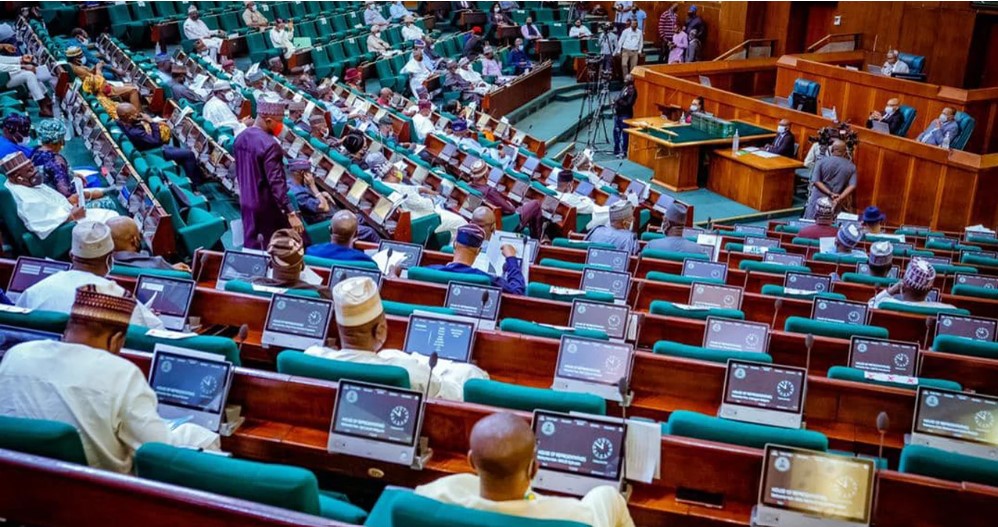
Meanwhile, lawmakers cautioned against blaming the Senate and its President, Godswill Akpabio, over the controversial N1.3bn allocation to the PFIPC, insisting that the legislature neither created the agency nor originated its budget.
The defence comes amid mounting public outrage over the discovery of the allocation for an agency the Presidency repeatedly described as non-existent amid allegations that the National Assembly failed in its oversight responsibilities.
The PUNCH had reported that the controversial allocation was approved without the alleged agency’s Director-General, Prince Adeniyi Adeyemi, or any official of the council appearing before the Senate Committee on Establishment and Public Service to defend the budget.
The revelation has heightened scrutiny of the scandal surrounding the council and allegations linking the Chief of Staff to the President, Femi Gbajabiamila, to the matter, with many Nigerians questioning how the allocation found its way into the 2026 budget.
Efforts to obtain the reaction of the Chairman of the Senate Committee on Media and Publicity, Senator Yemi Adaramodu, were unsuccessful.
As of the time of filing this report, he could not be reached, while a text message sent to him had yet to receive a response.
However, when contacted by The PUNCH, the Chairman of the Senate Committee on Establishment and Public Service, Senator Cyril Fasuyi, distanced his committee from the controversial agency, insisting it was not under its oversight.
He said, “I am not sure I have heard of that PFIPC before. Every MDA falls within the oversight of its relevant Senate committee. But I honestly don’t know the committee in charge of this PFIPC. It is not under the Senate Committee on Establishment and Public Service where I serve as chairman.
“Those that fall within oversight are training centres in Nigeria, Office of the Head of Service of the Federation, Civil Service commission, National Assembly Service Commission, Salaries and Wages Commission and PENCOM. These are the relevant agencies under my committee.”
A chairman of another Senate committee, who spoke on condition of anonymity because he was not authorised to speak on the matter, also defended the legislature, warning against what he described as attempts to drag Akpabio and lawmakers into the controversy without evidence.
He said, “I’m not the right person to ask. But before anybody can talk, you must know the actual committee responsible for that agency. Akpabio has nothing to do with the creation of any agency, especially when it has something to do with ‘presidential council or anything’ as the name implies.
“You see, I have listened and also have seen comments on what people write or say about the said agency. Many went out of their way to ask why the Senate approved its budget. This is to tell you we are following all the drama.”
The senator argued that the media and some commentators had wrongly assumed the Committee on Establishment and Public Service supervised the agency.
“What you said Senator Fasuyi told you is quite correct. This so-called agency is not under the Committee of Establishment and Public Service.”
A principal officer of the Senate, who also preferred not to be mentioned, also exonerated the legislature, saying the development was unfortunate.
Explaining the legislative process, the lawmaker maintained that agencies were established by either legislative or executive action or that budget proposals originate from the Executive, not the National Assembly.
“For anybody to fully understand how the Senate works, he needs to look at the process. First, I am a legislator not the executive. Now, let me talk on that agency. There are two creations of any establishment in Nigeria. It is either by legislative or executive. For instance, the majority of these commissions or agencies are creation of executive act.
So, by looking at this particular agency’s name, Presidential Foreign Intervention Promotion Council, you can tell easily tell that it is not the creation of the legislature. Secondly, there is the need to find out its mandate. Again, the FG also has a duty to refer such an agency to the National Assembly after it is created for ratification,” he stated,
The senator explained that the budgeting process begins with the Executive, not the National Assembly.
According to him, the Budget Office invites ministries, departments and agencies to submit their budget proposals, which are then subjected to multiple layers of scrutiny by the Ministry of Budget and Economic Planning, the Budget Office and the Ministry of Finance before they are transmitted to the National Assembly.
The northern senator said the proposals were vetted under the government’s envelope budgeting system to ensure they align with policy priorities and projected national revenue.
“Again, when we are talking of vetting, we will also consider allocation of funds because what we use here in Nigeria is the envelope system. This implies that when you submit your request, the ministry and other bodies would have looked at it vis-à-vis the policy alignment of the government. How much are we planning to spend and what will be the national revenue?
“This is because if MDAs are allowed to do as they wish, we may not be able to fund all. It may exceed what the entirety is able to rake in as revenue. This is why both the budget office and the economic planning ministry play a key role with finance ministry.”
The lawmaker insisted that the National Assembly only considers budget estimates forwarded by the Executive.
He also argued that lawmakers rely on the Executive’s vetting process, maintaining that it was unfair to blame Senate President Godswill Akpabio or the National Assembly for the controversial N1.3bn allocation to the PFIPC, insisting that the legislature neither inserted the provision nor approved the agency’s bank accounts.
“It is not the job of the Senate or the National Assembly to determine what the budget should be for a particular year. That is why it is sometimes laughable when the media bring on guests who don’t really understand legislative functions to discuss.
“Is it Akpabio that earmarked the PFIPC budget or included it in the budget? Are we the ones who gave the agency CBN-approved accounts? Honestly, I am not bothered about the Executive as far as this is concerned. But it is wrong to keep harassing and dragging the legislature into what it knows nothing about,” he said.
Responding to questions on why the Senate did not go further to scrutinise the agency before approving its budget, the senator said lawmakers only examine figures contained in appropriation bills and not the legality or creation of agencies already captured in the budget.
“Hold on, let me explain. There is little or nothing we can do once a budget finds its way into an appropriation bill for a particular year. As lawmakers, we vet only budgets, not the creation of MDAs. That is not our job. The exercise is budget defence. During budget defence, you only look at figures; nobody examines establishment details because that is not the mandate,” he said.
He added that lawmakers assume that the Executive has already conducted due diligence before transmitting appropriation bills to the National Assembly.
“This is because for any figure to find its way into the budget, you would assume the Executive has done its own part. As a member of the APC, I am not condemning the Executive for what happened. But if you want to investigate this matter, know where to focus. Don’t drag the legislature into issues like this,” he said.
Drawing a comparison with ministerial screening, the senator argued that security agencies bear responsibility for vetting nominees and agencies, not the National Assembly.
He cited the screening of former Kaduna State Governor, Nasir El-Rufai, for a ministerial appointment, saying security agencies, not the Senate, were responsible for verifying nominees’ credentials.
“For instance, when you screen a minister, the documents submitted are forwarded to the DSS, police and other agencies for vetting. It is not the function of the Senate to verify documents, because it is assumed the Executive and relevant agencies have done their due diligence.
“I hope you still remember the controversy surrounding former Kaduna State Governor, Mallam Nasir El-Rufai’s ministerial nomination. Where did it start? It was from the national security apparatus and the DSS. Our job is to work on verified documents transmitted to us and then proceed to budget defence as long as the MDAs are captured in the appropriation,” he said.
He further maintained that the Senate cannot anticipate irregularities once an appropriation bill is submitted by the President.
“Secondly, the Senate cannot anticipate problems, especially when the appropriation bill has been presented by Mr President for the National Assembly to consider. The role of the Senate is appropriation, oversight and lawmaking,” he said.
He added that criticism of Senate President Akpabio and the National Assembly over the PFIPC controversy was misplaced.
“I believe you can now understand why I am livid at those calling out Akpabio and blaming the National Assembly for not knowing that the PFIPC is a fake agency,” he stated.
The latest defence by lawmakers comes as the Senate is expected to address the controversy surrounding the N1.3bn allocation when plenary resumes on Tuesday.
The debate follows a Freedom of Information request by the Socio-Economic Rights and Accountability Project, which asked the leadership of the National Assembly to disclose documents relating to the approval of the allocation and to investigate how funds were appropriated for a council the Presidency has publicly disowned.
The controversy also follows The PUNCH’s exclusive revelations that the Office of the Secretary to the Government of the Federation received and processed official correspondence from the PFIPC months before the Presidency insisted the body did not exist.
CDHR condemns arrest
Also, the Committee for the Defence of Human Rights on Monday called on the Inspector-General of Police, Olatunji Disu, to order the immediate and unconditional release of Adeyemi’s father, describing his continued detention as unlawful and unconstitutional.
The group said the arrest amounted to a “flagrant violation” of the 1999 Constitution (as amended), the Administration of Criminal Justice Act, the African Charter on Human and Peoples’ Rights, and other international human rights instruments binding on Nigeria.
In a statement jointly signed by its National President, Yinka Folarin, and National Secretary, Idris Afees, the CDHR condemned what it described as a case of substitute arrest, insisting the practice is “unlawful, unconstitutional, arbitrary and incompatible with every known principle of justice and the rule of law.”
“The Nigeria Police Force is a professional institution established to enforce the law, not to circumvent it,” the group said.
“The powers of arrest vested in the police must be exercised strictly within constitutional and statutory limits. Any deviation erodes public confidence and undermines the integrity of the criminal justice system.”
The organisation urged the Inspector-General of Police to ensure the immediate release of Adeyemi’s father and any other person allegedly detained in connection with the matter, unless there is credible evidence linking them personally to a criminal offence.
“Accordingly, the CDHR calls on the Inspector-General of Police to order the immediate and unconditional release of Adeyemi’s father and any other person who may have been unlawfully detained in connection with this matter, unless there exists credible evidence linking them personally to the commission of a recognisable criminal offence,” the statement added.
The group also cautioned against using the police as an instrument of coercion, urging the force to uphold professionalism, impartiality and respect for human rights.
“We equally urge the Inspector-General of Police to resist every temptation to allow the Nigeria Police Force to become a manipulative instrument in matters capable of undermining public confidence in the institution,” it said.
“The office of the Inspector-General carries enormous constitutional responsibility, and the nation expects its occupant to preserve the hard-earned reputation of the Force by demonstrating unwavering commitment to professionalism, impartiality, respect for human rights and strict adherence to the rule of law.”
The CDHR cited Section 35(1) of the 1999 Constitution, which guarantees the right to personal liberty, and Section 36(5), which presumes every accused person innocent until proven guilty.
It further argued that Section 7 of the Administration of Criminal Justice Act, 2015, expressly prohibits substitute arrest.
“Criminal liability is personal; no citizen may be punished, intimidated or detained for the alleged conduct of another,” the group said.
“Section 7 of the Administration of Criminal Justice Act, 2015, expressly provides that a person shall not be arrested in place of a suspect. This provision leaves no room for ambiguity.”
The organisation also cited international human rights instruments, including Article 6 of the African Charter on Human and Peoples’ Rights, Article 9 of the International Covenant on Civil and Political Rights, and Articles 3 and 9 of the Universal Declaration of Human Rights, all of which prohibit arbitrary arrest and guarantee the right to personal liberty.
The CDHR noted that reports indicated Adeyemi had expressed willingness to present himself to the authorities, arguing that there was no legal justification for arresting his father or any other family member.
“Law enforcement must never descend into intimidation, coercion or collective punishment. No one should lose his liberty because of another person’s alleged offence. The law is clear, and it must be obeyed by all, especially those entrusted with enforcing it,” the statement read.
The group added that it would continue to monitor developments and would not hesitate to pursue all available constitutional, judicial and international human rights mechanisms if the alleged unlawful detention persists.