Connect with us

Business

Report reveals that Dangote sourced 22% of June crude from overseas, 78% from indigenous producers

Published

on

The Dangote Petroleum Refinery sourced about 78 per cent of its crude oil feedstock from the Nigerian National Petroleum Company Limited and other indigenous producers between May and June 2026, The PUNCH reports.

Data from the refinery’s official May and June cargo discharge and pricing records, analysed on Thursday, showed that Nigerian grades supplied nearly four out of every five barrels processed by the refinery, accounting for about 78 per cent of its total crude intake, while imported barrels from Angola, Libya, Guyana, Ghana and other international trading blends made up the remaining 22 per cent.

The data was released by the refinery to dispel rumours that its pricing moves in line with daily international crude oil prices. It said crude is purchased weeks or months in advance under contracts linked to monthly average pricing rather than spot market rates.

The crude inflow also reinforced the country’s position as the refinery’s dominant supplier despite increased imports from Angola, Libya, Guyana, and Ghana.

An analysis of crude cargoes delivered to the 650,000-barrels-per-day refinery showed that it received a total of 40.40 million barrels of crude during the two-month period, of which 31.43 million barrels came from Nigerian fields.

The remaining 8.97 million barrels, representing about 22 per cent of total supply, were imported from foreign producers and international trading blends. The cargo records further showed that the refinery took delivery of 21.47 million barrels in May and 18.93 million barrels in June.

In May alone, Nigerian crude grades accounted for 16.74 million barrels, or 77.97 per cent of total deliveries, while foreign barrels stood at 4.73 million barrels, representing 22.03 per cent.

Similarly, in June, local crude supply amounted to 14.69 million barrels, equivalent to 77.58 per cent of total feedstock, while imports accounted for 4.24 million barrels, or 22.42 per cent.

The domestic grades supplied to the refinery included Bonny Light, Qua Iboe, Forcados, Amenam, Bonga, Escravos, Agbami, Cawthorne, Okwori, and Utapate.

See also  Funke Akindele makes history with ‘Behind The Scenes’ see details

The imported barrels comprised Angola’s Cabinda crude, Libya’s El Sharara grade, Guyana’s Payara crude, Ghana’s Jubilee crude, and other internationally traded blends.

Among foreign suppliers, Libya emerged as the largest source country, supplying 2.10 million barrels, representing 5.2 per cent of the refinery’s feedstock. International trading blends, comprising CJ Blend and EA Blend cargoes, contributed a combined 2.95 million barrels, or 7.3 per cent of total deliveries.

Guyana supplied 1.02 million barrels of its Payara crude, accounting for 2.5 per cent of total intake, while Angola delivered 996,349 barrels, also representing about 2.5 per cent of the refinery’s crude slate. Ghana’s Jubilee grade contributed 956,001 barrels, equivalent to 2.4 per cent of total supplies.

In addition, cargoes delivered under the Chile Prosperity trading designation amounted to 948,917 barrels, accounting for approximately 2.3 per cent of the refinery’s total feedstock during the two-month period.

A breakdown of individual crude grades supplied to the Lekki-based 700,000-barrels-per-day refinery showed that Bonny Light emerged as the single largest feedstock during the May-June period, with total deliveries of 5.90 million barrels.

Qua Iboe ranked second with 4.80 million barrels, followed closely by Amenam, which supplied 4.00 million barrels. Forcados crude accounted for another 3.89 million barrels, further underscoring the dominance of Nigerian grades in the refinery’s crude slate.

Among other domestic streams, Escravos contributed 1.99 million barrels, while Utapate and Cawthorne supplied 1.90 million barrels and 1.89 million barrels, respectively. Bonga and Agbami deepwater grades added 1.03 million barrels and 1.00 million barrels, while Okwori contributed 418,462 barrels. Another Nigerian deepwater grade, ABO, accounted for 697,403 barrels.

The refinery also relied on several foreign crude grades to supplement domestic supplies. Libya’s El Sharara emerged as the largest foreign contributor, supplying 2.10 million barrels during the two-month period.

International trading blends also featured prominently in the refinery’s feedstock basket, with CJ Blend accounting for 1.95 million barrels and EA Blend contributing 997,377 barrels.

Guyana’s Payara crude supplied 1.02 million barrels, while Angola’s Cabinda grade contributed 996,349 barrels. Ghana’s Jubilee crude added another 956,001 barrels to the refinery’s intake. In addition, cargoes delivered under the Chile Prosperity trading designation amounted to 948,917 barrels during the review period.

See also  Presidency downplays Tinubu’s stumble, says Türkiye visit on course

The figures highlight the refinery’s preference for Nigerian crude grades, particularly Bonny Light, Qua Iboe, Amenam and Forcados, which together supplied more than 18.5 million barrels, accounting for nearly half of the refinery’s total crude intake over the two months.

The data further revealed a sharp decline in crude prices between May and June. In May, the refinery paid as much as $134.37 per barrel for some cargoes of Qua Iboe crude and $134.24 per barrel for Bonga, with the total value of crude deliveries for the month standing at approximately $2.68bn.

However, by June, prices had dropped significantly, with most cargoes trading between $90 and $97 per barrel, although Angola’s Cabinda crude was delivered at $123.30 per barrel. Total spending on crude purchases in June declined to about $1.80bn.

The reduction in prices came amid a retreat in international oil prices following concerns over slowing global demand, easing geopolitical tensions and increased production from some major oil-producing countries.

The lower prices have provided some relief to the refinery by reducing feedstock costs and potentially improving refining margins.

The latest data come amid renewed efforts by the Federal Government and industry regulators to improve the implementation of the domestic crude supply obligation framework and ensure a steady feedstock supply to local refineries.

The Dangote refinery had previously raised concerns over difficulties in securing sufficient volumes of local crude, prompting it to increasingly source barrels from international markets.

The government repeatedly expressed concerns over the inability of local refiners to secure adequate feedstock despite Nigeria’s status as Africa’s largest crude oil producer.

However, the latest cargo records indicate that Nigerian crude remains the backbone of the refinery’s operations, accounting for almost 78 per cent of total feedstock during the review period.

The refinery, which commenced petrol production in 2024, has become a major player in Nigeria’s downstream sector, significantly reducing the country’s dependence on imported refined petroleum products and increasingly exporting fuel to African and international markets.

See also  IMPORTANT NOTICE REGARDING MONEY TRANSFERS IN NIGERIA (2026)

Energy experts said maintaining adequate domestic crude supply and taking advantage of lower global oil prices could further strengthen the refinery’s competitiveness, support lower fuel costs and enhance Nigeria’s ambition of becoming a major refining hub for Africa.

Commenting on the development, the Chief Executive Officer of Petroleumprice.ng, Olatide Jeremiah, described the increase in domestic crude supply to the Dangote refinery as a positive sign for Nigeria’s refining sector and an indication that the government was paying greater attention to local refineries.

Jeremiah said, “For me, it is quite impressive that the crude feedstock from indigenous producers has increased significantly to over 70 per cent. It shows that the government is quite concerned about local refineries and the inflow of Nigerian crude to the Dangote refinery.”

According to him, the growing supply of local crude should eventually translate into lower fuel prices for consumers, particularly as the refinery has begun receiving cheaper cargoes amid the recent decline in global crude prices.

He added, “This should reflect in pricing, and I believe it would reflect this month of July. Part of the statement put out by the refinery has shown that they have started receiving a lot of cheaper crude. With that arrangement, the freight and logistics costs will reduce, and Nigerians should expect lower prices in the month of July.”

Jeremiah noted that increased access to domestically produced crude would reduce the refinery’s exposure to expensive imported feedstock and lower transportation costs associated with sourcing crude from foreign markets.

He said the combination of lower crude prices and higher domestic supply could give the refinery enough room to cut ex-depot prices further, a development that could trigger another round of petrol price reductions across the country.

punch.ng

FOLLOW US ON:

FACEBOOK

TWITTER

PINTEREST

TIKTOK

YOUTUBE

LINKEDIN

Continue Reading
Click to comment

Leave a Reply

Your email address will not be published. Required fields are marked *

Business

Jide Kosoko laments debt following N300m movie cinema loss

Published

on

Veteran Nollywood actor and filmmaker Jide Kosoko has said he is in debt after his film, Eleko: Oba Esugbayi, failed to recoup its production cost of over N300m in cinemas.

Kosoko disclosed this in a now trending clip from his interview on African A-List published on October 17, where he explained that the money used to produce the film came from investors who expected returns on their investment.

According to him, the film which premiered in the cinemas in March, failed to generate enough revenue to recover its production cost, while the little money earned was shared among those involved.

“My film ‘Eleko: Oba Esugbayi’ that recently came out and we took to the cinemas, cost us over N300 million. Do I have 300 million? You should know that some people gave it to me and it was not that they dashed me, they invested in it and we took the film to the cinemas,” he said.

He added, “Different things happened and we did not earn our money back. The little that was earned was split. As I am, if you hear someone with debt dancing around their neck, it is me.”

PUNCH Online had earlier reported that Kosoko revealed he had been living with diabetes since 1996, saying his decades-long experience with the condition had given him a better understanding of his health.

The actor made this known in an interview on African A-List, uploaded to YouTube on Saturday.

“I became diabetic in 1996; I understand my health better than some doctors do. Do not misquote me. I am not saying I know how to do everything, I just do not want to die,” Kosoko said.

See also  Nigeria must cut dependence on debt – Wale Edun

He also spoke about his personal life, disclosing that he had lost three wives, including the mother of his daughter, Bidemi Kosoko, who died during childbirth.

“I lost my wife during childbirth; that’s Bidemi’s mother. I have lost three wives,” he said.

Continue Reading

Business

Airline extends Saudi flights suspension after Houthi strikes

Published

on

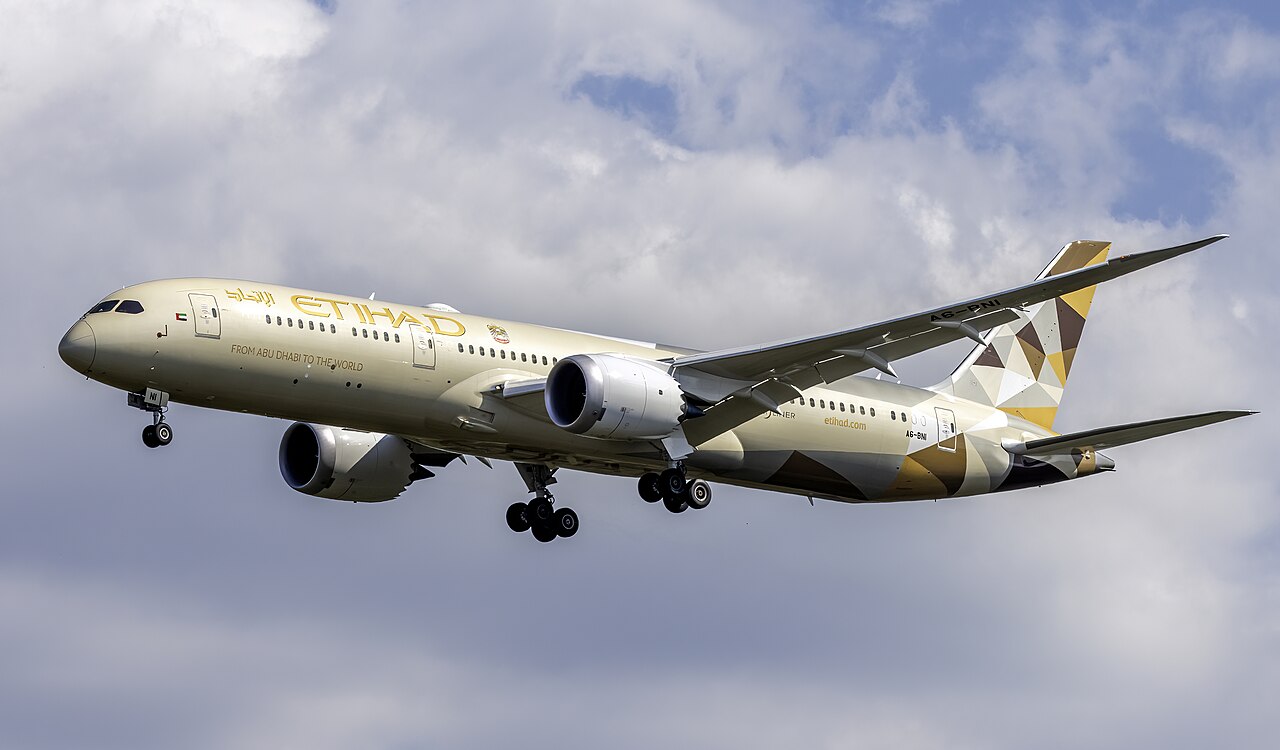
UAE national airline Etihad has extended until November 5 its suspension of flights to Riyadh and Dammam in Saudi Arabia, targeted by strikes from Yemen’s Houthis.

Etihad had suspended its service to Riyadh on October 12, two days after a deadly attack on a passenger terminal killed 13 people.

In a statement on Thursday, Etihad specified that flights to and from Riyadh and Dammam would remain suspended due to “operational disruptions”.

On Wednesday evening, two people were killed and eight others wounded in an attack on Dammam airport.

The airport, however, reopened the following day, while the capital’s airport remains closed.

Etihad added that it would operate only daytime flights to the western city of Jeddah, with night flights cancelled until November 5.

In recent weeks, Houthi attacks on Saudi civilian infrastructure including oil facilities and airports have reached a scale unprecedented since the start of the conflict in Yemen in 2014.

AFP

See also  Abia compresses six years primary education into three, read details
Continue Reading

Business

States push for suspension of Paris Club deductions

Published

on

State governors have rejected deductions from allocations due to the states from the Federation Account in the September 2026 revenue-sharing cycle, arguing that the deductions would further squeeze their finances, The PUNCH reports.

The states also called for the suspension of deductions linked to the Paris Club refund to local government councils, alleging that the payments were resumed without prior communication and reconciliation with affected states.

Their opposition comes after the three tiers of government shared N668.4bn less of August 2026 revenue distributed in September, heightening concerns over the impact of lower revenue receipts on states’ ability to meet their financial obligations.

The governors also demanded the redistribution of the proposed N240bn savings, insisting that the funds should be shared among the federal, state and local governments rather than deducted or retained under the proposed arrangement.

The complaints were raised by several state Accountants-General during the technical session of the Federation Account Allocation Committee meeting, according to a report by the committee’s technical sub-committee, dated 14 October, 2026, obtained by The PUNCH on Thursday.

The meeting, held at the Federal Ministry of Finance headquarters in Abuja, considered revenue accounts for August and the amounts available for distribution in September.

The report showed that the total amount recommended for distribution to the federal, state and local governments stood at N2.339tn, compared with N3.007tn shared in the previous month, representing a decline of N668.4bn.

The statutory revenue available for distribution dropped more sharply, falling from N2.283tn in the previous month to N1.566tn in August, a decrease of N717.08bn.

See also  Uber reports N6.1bn annual driver earnings amid Lagos strike

However, revenue from Value Added Tax increased to N773.23bn from N724.46bn, providing some relief amid the decline in statutory revenue.

The Director of the Federation Account Department, Okolie Rita, who presented the accounts, told the committee that the statutory revenue available for distribution was calculated after deducting N85.71bn and N36.83bn as four per cent costs of collection for the Nigeria Revenue Service and the Nigerian Upstream Petroleum Regulatory Commission, respectively.

The revenue decline triggered calls from state representatives for the Federal Government to release additional funds and reconsider deductions that they said were putting pressure on state finances.

The Accountant-General of Akwa Ibom State, Andrew Essien, observed that August revenue had dropped considerably compared with July and appealed for the proposed N240bn savings to be returned to the distributable pool.

The Accountant-General of Jigawa State, Abdullahi Shehu, recalled an earlier proposal to augment the previous month’s revenue with N250bn, which he said had not been implemented. He urged the committee to combine the promised N250bn with the proposed N240bn savings and redistribute the funds to the three tiers of government.

The Accountant-General of Bayelsa State, Tokoni Ifidi, supported the demands and raised concerns about deductions for the Paris Club refund to local government councils.

She said the deductions were introduced without prior communication to the states, despite what she described as an earlier commitment in 2025 concerning the deductions, which began in February that year and were stopped by a court order in April 2026.

The document read, “AG Akwa Ibom observed a considerable drop in the revenue of August, 2026 compared to July, 2026 and appealed for the proposed savings of N240bn to, instead, be redistributed. AG Jigawa recalled that there was a proposal to augment the previous month’s revenue with the sum of N250bn but it had not been done. He suggested that the N250bn promised in the previous month should be added to the proposed savings of N240bn and be redistributed.”

See also  Presidency downplays Tinubu’s stumble, says Türkiye visit on course

The Director of the Federation Account Department explained that the Paris Club deductions were not new, noting that they had previously been suspended following a court order.

The Bayelsa representative, however, maintained that the deductions should continue to be suspended pending reconciliation. She said the Economic and Financial Crimes Commission had held reconciliation sessions with local government councils and was awaiting feedback from the Office of the Accountant-General of the Federation on the commencement and continuation of the deductions.

The Accountant-General of Niger State, Saidu Abdullahi, criticised the handling of the deductions, arguing that the ministry had made a mistake from the beginning by distributing funds without adequate planning and proper communication.

He insisted that previous agreements should be honoured, particularly the proposed N250bn augmentation, while supporting calls for the redistribution of the N240bn savings.

The Accountant-General of Cross River State, Glory Effiong, also backed the demand for the savings to be redistributed, observing that deductions had consumed a substantial portion of the earnings of many states.

She said she had not been invited to any reconciliation meeting on the Paris Club debt since joining the committee and urged the Office of the Accountant-General of the Federation to improve its communication with state representatives.

The Accountant-General of Jigawa State further questioned the amount deducted under security-related expenditure, describing the quantum of deductions as alarming and calling for a review.

The Accountant-General of Nasarawa State, Musa Mohammed, stressed that states should be properly informed and invited to reconciliation meetings before decisions affecting their allocations were implemented.

See also  Funke Akindele makes history with ‘Behind The Scenes’ see details

Source: punchng.com

FOLLOW US ON:

FACEBOOK

WHATSAPP CHANNEL

TWITTER

PINTEREST

TIKTOK

YOUTUBE

LINKEDIN

INSTAGRAM

Continue Reading

Trending