Connect with us

News

FG targets eradication of sheep, goat disease by 2030

Published

on

The Federal Government has reaffirmed its commitment to eradicating Peste des Petits Ruminants, a highly contagious viral disease affecting sheep and goats, by 2030, saying intensified surveillance, vaccination and cross-border collaboration remain central to achieving the target.

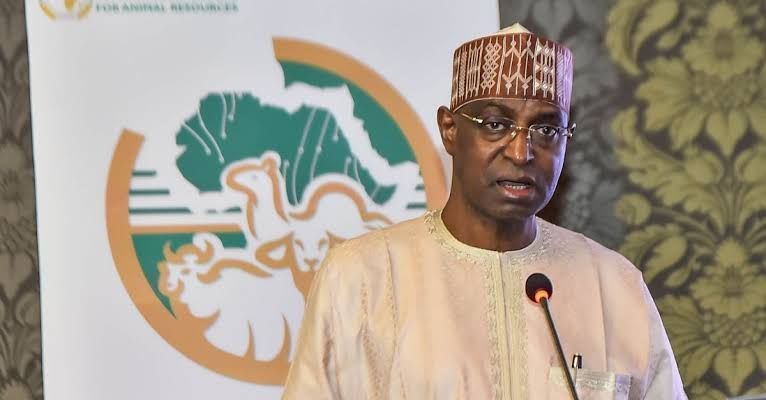
The assurance was given by the Permanent Secretary of the Federal Ministry of Livestock Development, Chinyere Akujobi, at the opening of a two-day Stakeholders’ Workshop on the Review and Update of Nigeria’s National Strategic Plan for the Control and Eradication of Peste des Petits Ruminants in Abuja.

The Deputy Director of Information and Public Relations at the ministry, Henrietta Okokon, disclosed this in a statement on Friday.

Akujobi described the eradication of PPR as both an animal health priority and a national development goal, noting that eliminating the disease would reduce poverty, improve rural livelihoods, increase livestock productivity and expand trade opportunities.

According to her, “Nigeria has remained fully committed to the global goal, under the leadership of the Food and Agriculture Organisation and the World Organisation for Animal Health, to eradicate PPR by 2030.

“We have implemented a range of interventions, including disease surveillance, laboratory strengthening, outbreak investigations, targeted vaccination campaigns, stakeholder engagement, and capacity-building programmes aimed at reducing the burden of PPR while improving disease reporting and response systems.”

She said small ruminants serve as the primary economic safety net for millions of households, making their protection critical to the Federal Government’s agricultural transformation agenda.

Akujobi noted that PPR remains one of the most economically devastating transboundary diseases affecting sheep and goats across Africa, Asia and parts of the Middle East.

See also  Bamidele refutes Kalu’s claims of impeachment plots against Akpabio, urges unity

“This disease continues to threaten livelihoods, reduce household incomes and constrain the growth of the livestock sector. Given that Nigeria has Africa’s largest population of small ruminants, estimated at over 200 million sheep and goats, and shares major transboundary trade corridors with Niger, Benin, Cameroon and Chad, strengthening our control measures is imperative,” she said.

She explained that the workshop was convened to develop an evidence-based National Strategic Plan for 2026–2030 that would integrate veterinary services with cross-border trade standards and risk mitigation policies.

Akujobi also commended development partners, regional technical organisations and national experts for supporting efforts to eliminate the disease, adding that the ministry would prioritise a fully costed implementation plan backed by a sustainable resource mobilisation strategy.

The statement also quoted the Chief Veterinary Officer of Nigeria, Samuel Anzaku, as saying the country had made significant progress in animal disease control but needed to update its National Strategic Plan to align with the Global PPR Eradication Programme, the Performance Monitoring and Assessment Tool roadmap benchmarks and ECOWAS regional coordination mechanisms.

According to him, the revised strategy should incorporate recent epidemiological and laboratory data, refine disease hotspot mapping, adopt risk-based vaccination strategies and strengthen laboratory-epidemiology linkages.

“This structural update is vital to advancing Nigeria into PMAT Stage 2 and beyond, ensuring that every public and private investment delivers measurable scientific progress towards achieving a PPR-free nation,” he said.

Also speaking, the representative of the African Union Inter-African Bureau for Animal Resources, Dr Perdita Hilary Lopes, described the eradication of PPR as a strategic investment in resilient livestock systems, poverty reduction, women’s economic empowerment, youth employment, sustainable rural development and improved food systems across Africa.

See also  PHOTOS: At least 2 k!lled after explosion at Pennsylvania nursing home sparked fire and trapped elderly residents

She added that achieving a PPR-free Africa by 2040 would contribute significantly to the aspirations of Agenda 2063, the Comprehensive Africa Agriculture Development Programme and the Sustainable Development Goals.

The renewed push follows earlier efforts by the Federal Ministry of Livestock Development to strengthen Nigeria’s campaign against PPR. In January, the ministry inaugurated a 33-member National Technical Working Group on the control and eradication of the disease to coordinate national response efforts.

At the time, the Minister of Livestock Development, Idi Maiha, described PPR as one of the most devastating transboundary animal diseases affecting sheep and goats, warning that it threatens the livelihoods of pastoralists and smallholder farmers, undermines food security and limits livestock trade.

Nigeria’s eradication drive aligns with the global campaign led by the Food and Agriculture Organisation and the World Organisation for Animal Health to eliminate PPR by 2030. As part of the regional effort, Abuja hosted a West African surveillance workshop in December 2025, where veterinary authorities and technical experts reviewed risk-based surveillance and cross-border coordination strategies aimed at accelerating progress towards the eradication target.

punch.ng

FOLLOW US ON:

FACEBOOK

TWITTER

PINTEREST

TIKTOK

YOUTUBE

LINKEDIN

Continue Reading
Click to comment

Leave a Reply

Your email address will not be published. Required fields are marked *

News

Charge me to court, VeryDarkMan challenges police over checkpoint kidnapping claims

Published

on

Social media activist Martins Otse, popularly known as VeryDarkMan, has said he will not submit to the police the evidence backing his allegation that some security personnel aid kidnapping and banditry in Nigeria.

Otse, who reacted on Thursday to the invitation extended to him by the Nigeria Police Force, said he was prepared to honour the invitation but would prefer to present his evidence in court.

“I’m not going to be giving the police my evidence. Why would I do that? I would be charged to court, and I would turn down the evidence in court,” he said in a video posted on his Instagram page.

The police had earlier invited Otse to provide evidence backing his allegation that police officers manning checkpoints identify wealthy travellers and pass information about them to kidnappers to facilitate their abduction.

The Force described the allegation as serious, unsubstantiated and damaging to the institution, while saying any evidence presented by the activist would be treated with urgency and thoroughly investigated.

Reacting to the invitation, Otse said his lawyers were ready and challenged the police to charge him to court if they believed he had committed an offence.

“So when I get to your office, you charge me to court. I can go to court on that same day. My lawyers are on ground,” he said.

The activist maintained his earlier allegation that security agencies were aiding insecurity in the country, saying the police, military, immigration and customs knew what was happening.

“It is the police people that aid insecurity. It is the military men that benefit from insecurity. That’s why it can never stop,” he alleged.

See also  Benue teenager found hanging from roof

Otse also questioned the continued prevalence of banditry, terrorism and kidnapping despite government spending on security.

“How much is your budget to battle insecurity? How much is your budget? Go and look at your budget and tell me why we still have bandits and terrorists kidnapping people,” he said.

He said he was ready to face the police and military in court over his allegations, adding that he would continue speaking out on issues affecting the country.

“But like I said, why would I want to give you my evidence? I wouldn’t do that. Who would take you to court? You understand? When you’re ready, I’m ready. Face the love, don’t play,” he said.

Otse also accused Nigerians of defending security agencies after his allegations, despite routinely criticising the police and military over insecurity.

He said his comments were aimed at holding public institutions accountable and maintained that he stood by his allegations.

“I’m proud of myself that right in their faces I said what I had to say and to tell them that the insecurity going on in Nigeria, it is aided by them. I stand by my words,” he said.

The activist, however, acknowledged the poor welfare of police officers, saying the government needed to improve their working conditions to strengthen security in the country.

He said, “There is no welfare for the Nigerian police. If you want Nigeria’s security to be tightened, you have to take care of our policemen. Take care of them.”

Otse’s latest comments came weeks after he accused the Assistant Inspector-General of Police in charge of Zone 2 Command, Moshood Jimoh, of corruption in connection with the investigation of the case involving businessman Ahmed Tajudeen Akanbi.

See also  Full list of 29 Schengen countries offering 5-Year Multiple-Entry Visas to Nigerians

The police subsequently confirmed that Jimoh had been invited for questioning as part of an internal administrative review and also invited Otse to substantiate his allegations.

The Force said the criminal matter linked to the claims was already before a court following advice from the Directorate of Public Prosecutions.

Otse said the police had initially taken weeks to respond to his allegations against Jimoh but moved quickly to issue a statement over his recent comments on checkpoint kidnappings.

He alleged that he had released evidence relating to the case, including claims of torture of suspects, but that the police did not initially respond until he released additional material.

The activist also repeated his controversial claim that politicians use cattle to launder money, arguing that Fulani herders were victims of political manipulation.

He concluded by saying he was ready to face the police whenever they chose to proceed against him.

“For the police, I’m very, very ready for you guys. 100 per cent. I’m ready to show you that you people aid insecurity. You people aid banditry and terrorism in this country,” he said.

“Let’s meet in court. The evidence will be tendered there.”

Source: punchng.com

FOLLOW US ON:

FACEBOOK

TWITTER

PINTEREST

TIKTOK

YOUTUBE

LINKEDIN

INSTAGRAM

Continue Reading

News

Kwara CP begins inspection of police formations

Published

on

The Kwara State Commissioner of Police, Ojo Adekimi, has commenced an unannounced operational inspection of police divisions and formations across the state to assess officers’ readiness, discipline and working conditions.

The exercise, which began on Wednesday, saw the commissioner inspect the Area Command, Metro, Ilorin, and 12 police divisional headquarters within the Ilorin metropolis.

The state Police Public Relations Officer, Adetoun Ejire-Adeyemi, disclosed this in a statement issued on Thursday.

According to the statement, the inspection was designed to enable the commissioner to personally assess the professional disposition and commitment of officers, identify operational challenges and capability gaps, and obtain a first-hand assessment of the realities confronting personnel across the command.

During the visits, the CP interacted with officers, assessed their level of preparedness and reviewed security arrangements at the various formations.

He subsequently directed personnel to strengthen operational effectiveness and public safety, with particular emphasis on heightened vigilance and adequate security around police facilities.

“Station guards must remain alert, observant and responsive at all times because they constitute the first line of defence and security for every police facility,” Adekimi said.

The commissioner also charged officers to embrace proactive and intelligence-driven approaches to crime prevention, stressing that professionalism, accountability and community policing would remain central to his operational strategy.

“Our approach to policing must be proactive and intelligence-driven. Every officer must remain professionally committed, disciplined, vigilant and responsive to the security needs of the communities we serve,” he said.

Adekimi added that officers must maintain the highest standards of conduct in their interactions with members of the public.

See also  FRSC records 10,446 crashes, 5,289 deaths in 2025

He warned that the command would not tolerate misconduct, corruption, extortion or other unethical practices among its personnel.

“We have zero tolerance for misconduct, corruption, extortion and every other unethical practice. Any officer found culpable, as well as any beneficiary or end-user of such corrupt practices, will face appropriate disciplinary and legal action in accordance with extant laws and regulations,” the CP said.

Adekimi said the inspection would continue across police divisions, formations and other operational locations in the state without prior notice.

“The unannounced nature of this exercise is deliberate. It will enable us to objectively assess operational readiness, discipline, personnel conduct and compliance with established standards,” he said.

He directed officers and other personnel across the command to remain at their duty posts and sustain constant operational readiness.

“Every officer must remain at his or her duty post, maintain constant operational readiness and uphold the core values of the Nigeria Police Force,” Adekimi said.

The commissioner assured residents that the command would continue to pursue proactive policing and effective crime prevention to protect lives and property across the state.

Source: punchng.com

FOLLOW US ON:

FACEBOOK

TWITTER

PINTEREST

TIKTOK

YOUTUBE

LINKEDIN

INSTAGRAM

Continue Reading

News

Army, immigration strengthen border security in Yobe

Published

on

The Nigerian Army and the Nigerian Immigration Service have pledged to strengthen their collaboration on border security, migration management and responses to emerging threats in Yobe State.

The commitment was made on Wednesday, when the Commander, Headquarters Sector 2, Joint Task Force North East, Operation HADIN KAI, Brigadier General Edet Effiong, received the newly posted Comptroller of the NIS Yobe State Command, Comptroller IZ Abubakar, during a courtesy visit to the Sector Headquarters in Damaturu.

Speaking during the meeting, Effiong stressed the importance of sustained cooperation between security agencies in maintaining security along Nigeria’s borders.

He said, “Effective information sharing, coordinated border surveillance and closer engagement with border communities” were necessary to disrupt terrorism, human trafficking, smuggling and irregular migration.

The Sector Commander said a well-coordinated security architecture remained essential to preventing criminal and terrorist elements from exploiting gaps across the border environment.

He added that Operation HADIN KAI was ready to support stronger collaboration with the Immigration Service and other security stakeholders.

According to Effiong, “enhanced coordination, professionalism and appropriate use of technology” would contribute significantly to improving border monitoring, strengthening operational effectiveness and advancing Nigeria’s broader national security objectives.

He also emphasised the importance of working closely with communities in border areas to identify threats and strengthen security measures.

Responding, Comptroller Abubakar commended the Nigerian Army for its continued support and cooperation with the Immigration Service.

He said the NIS would work to “deepen the existing synergy, enhance personnel capacity and operational readiness” to improve border security operations across Yobe.

See also  Full list of 29 Schengen countries offering 5-Year Multiple-Entry Visas to Nigerians

Abubakar also pledged to strengthen border surveillance and migration control, saying the agency remained committed to working with the military and other security stakeholders to achieve shared security objectives.

The two officials agreed on the need for closer coordination, improved information sharing and collective action to secure Nigeria’s borders and protect border communities.

The visit concluded with the signing of the visitors’ book, presentation of souvenirs and a group photograph.

The engagement reaffirmed the commitment of Operation HADIN KAI and the Immigration Service to closer cooperation in securing Nigeria’s borders and sustaining peace and stability across Yobe State and the wider Northeast.

Source: punchng.com

FOLLOW US ON:

FACEBOOK

TWITTER

PINTEREST

TIKTOK

YOUTUBE

LINKEDIN

INSTAGRAM

Continue Reading

Trending