Connect with us

News

Minister meets South African envoy after Tinubu snub on Xenophobia

Published

on

The Federal Government on Monday strongly condemned the recurring xenophobic attacks against Nigerians and other African nationals in South Africa, urging Pretoria to take urgent and concrete steps to end the violence.

The condemnation comes as President Bola Tinubu declined to personally receive a special envoy from South African President Cyril Ramaphosa.

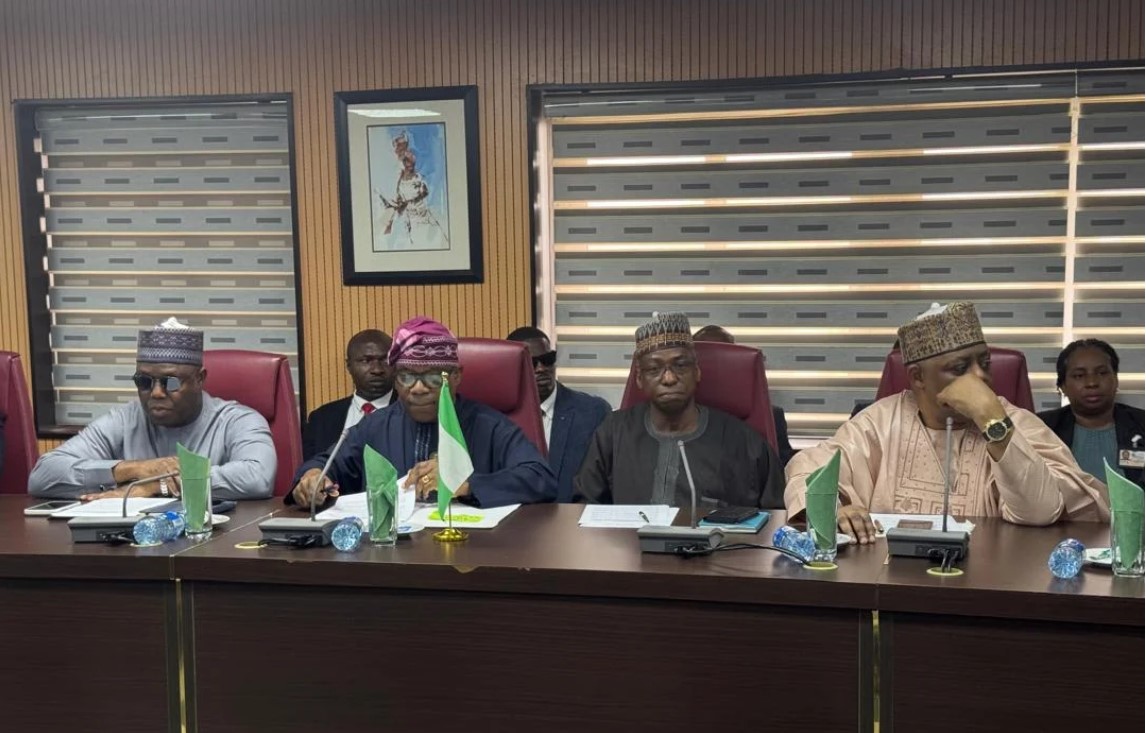
Instead, the President directed the delegation, led by South Africa’s Minister of International Relations and Cooperation, Ronald Lamola, to meet with the Minister of State for Foreign Affairs, Amb Sola Enikanolaiye, who is expected to brief the President on the outcome of the talks.

Multiple Presidency sources told The PUNCH that although the South African delegation arrived in Abuja on Friday with a message from President Ramaphosa, Tinubu opted against meeting them amid the diplomatic tension generated by the recent attacks on Nigerians in South Africa.

One Presidency source said, “They actually came here on Friday wanting to see the President. But there was no prior notice.

“We said we couldn’t just allow them to see the President without first asking if he was available. When Monday came, the President directed that they should meet the Minister of State for Foreign Affairs, Ambassador Enikanolaiye, who would brief him afterwards.”

Another source confirmed that Tinubu had no meeting scheduled with the delegation, while a third said Foreign Affairs Minister, Bianca Odumegwu-Ojukwu, who is currently in Addis Ababa, Ethiopia, advised that it was not the appropriate time for the President to receive the envoy because attacks on Nigerians and their businesses were still ongoing.

See also  Female soldier, children, others injured in Nasarawa grenade explosion — Report

Speaking while receiving the delegation in Abuja, Amb Enikanolaiye said the President directed the meeting to exchange views on resolving the attacks, stressing that the long-standing strategic relationship between both countries should not be undermined by violence against African migrants.

While expressing disappointment at the acts of the South Africans towards Nigerians in their country, Enikanolaiye recalled Nigeria’s support for South Africa’s liberation from apartheid and the strategic partnership both countries later forged through the African Union and the New Partnership for Africa’s Development.

“It is with profound pleasure that I welcome our brothers from South Africa. President Bola Ahmed Tinubu had actually asked us to meet with you and exchange views and perspectives on how to address and resolve the ongoing Afrophobic attacks in South Africa, of which Nigerians and other citizens of Africa have been victims,” he said.

The minister expressed disappointment over what he described as a persistent pattern of attacks dating back more than three decades.

“We have seen a pattern emerge as early as 1995, 1998, 2006, 2015, 2016, 2019, 2021, 2024 and 2026.

“From 2022 alone, 98 Nigerians have died in mob actions and hate-related attacks that we have described as Afrophobia because Africans, particularly Nigerians, are the predominant victims,” he said.

Enikanolaiye stressed that while Nigeria does not condone criminality, anyone accused of an offence should be prosecuted in accordance with the law rather than subjected to mob justice.

“The Nigerian government will not support drug peddlers, but what we are saying is that anyone accused of an offence should be treated in accordance with your constitution, international human rights instruments and the minimum requirements of humanity,” he said.

He added that many Nigerians legally residing in South Africa had also become victims of attacks, expressing concern over instances where security agencies allegedly failed to intervene.

See also  NCDC launches contact tracing after Cross River COVID-19 case

“If someone is, quote-unquote, a criminal for drug trafficking, there are rules, there are regulations for when they are arrested, prosecuted, and jailed.

“The Nigerian government will not support drug peddlers, but please, what we’re saying is that treat them in accordance with your constitution, in accordance with international human rights instruments, in accordance with the minimum requirement of humanity.

“But what we have found is that this xenophobic act has gone beyond the attack on criminals. We have records of Nigerians who have a legitimate purpose to remain in South Africa, yet they have been attacked.

“We could see some mob actions, where we saw the police watching, as if they are helpless to address this situation, which to us raises issues of state responsibility. It raises issues of complicity. If the state authorities are not able or unwilling to tackle these challenges,” he said.

The minister also recalled the humanitarian consequences of previous attacks, saying Nigeria had evacuated nearly 1,500 citizens from South Africa.

“I shed tears in the plane when I saw children, women and the elderly returning home with almost nothing. Some had their properties looted and destroyed,” he said.

The meeting comes weeks after a fresh wave of xenophobic violence that erupted in April prompted Nigeria to approve evacuation flights for stranded citizens, with more than 1,000 Nigerians registering for voluntary repatriation.

Responding, Lamola said Ramaphosa sent him to Abuja to reaffirm South Africa’s opposition to xenophobia and other forms of intolerance.

“We have been outspoken against any intolerance, including xenophobia, racism, homophobia, violence and discrimination directed at individuals within our borders,” he said.

See also  177 abducted Kaduna worshippers, bandits sighted in transit — Village Head

He, however, maintained that South Africa would continue to enforce its immigration laws and tackle criminal activities.

“President Ramaphosa has also been very firm on South Africa’s sovereign right to enforce immigration laws, including dealing decisively with irregular migration, undocumented immigrants and acts of criminality committed within our borders,” Lamola added.

He described migration as a continental challenge requiring joint action by African countries and expressed optimism that continued dialogue between Abuja and Pretoria would help ease the current diplomatic tension.

Relations between both countries have deteriorated sharply following repeated attacks on Nigerians and other foreign nationals in South Africa.

In recent weeks, the House of Representatives recommended the suspension of business permits for South African companies operating in Nigeria, while the Senate dispatched a delegation to Pretoria to formally register Nigeria’s displeasure over the attacks.

punch.ng

FOLLOW US ON:

FACEBOOK

TWITTER

PINTEREST

TIKTOK

YOUTUBE

LINKEDIN

Continue Reading
Click to comment

Leave a Reply

Your email address will not be published. Required fields are marked *

News

Justice ministry lawyers’ robe allowance rises 233% to N1m

Published

on

The Federal Government has increased the annual robe allowance for state counsel and legal officers in the Federal Ministry of Justice and the Legal Aid Council of Nigeria from the previously reported N300,000 to N1m.

The National Salaries, Incomes and Wages Commission disclosed this in a circular dated July 14, 2026, signed by its Acting Secretary, Adighiogu A. Chiadi, and addressed to ministers, permanent secretaries, heads of federal commissions, agencies and government-owned companies, among others.

The commission said the review was approved by the Federal Government as part of a new allowance structure for State Counsel and Legal Officers in the Federal Public Service.

The circular, titled “Review of Robe Allowance for State Counsel and Legal Officers in the Federal Public Service,” stated, “The Federal Government of Nigeria has approved the review of Robe Allowance for State Counsel and Legal Officers in the Federal Public Service.”

Under the new arrangement, State Counsel and legal officers employed in the Federal Ministry of Justice and the Legal Aid Council of Nigeria will receive N1m per annum.

The commission also approved N600,000 annually for lawyers employed as legal officers in other ministries, departments and agencies who perform strictly legal functions.

The circular stated, “N1,000,000.00 per annum for both the state counsel and legal officers employed in the Federal Ministry of Justice and the Legal Aid Council of Nigeria; and N600,000.00 per annum for lawyers employed as legal officers in other ministries, departments and agencies who perform strictly legal functions.”

See also  Female soldier, children, others injured in Nasarawa grenade explosion — Report

The revised rates will take effect from January 1, 2027, with the commission directing the affected MDAs to fund the payments from their overhead allocations.

According to the circular, “The revised rates take effect from 1st January 2027, and will be funded from the overhead cost of the Ministries, Departments and Agencies.”

The new N1m rate represents an increase of N700,000, or about 233 per cent, over the N300,000 robe allowance previously reported for lawyers in the ministry.

The N600,000 approved for legal officers in other MDAs also represents a 100 per cent increase over the N300,000 previously reported for lawyers in the justice ministry.

The earlier N300,000 rate was disclosed in 2021 by the then Attorney-General of the Federation and Minister of Justice, Abubakar Malami (SAN), during the ministry’s budget defence before the Senate Committee on Judiciary and Human Rights and Legal Matters.

Malami had disclosed that about 860 lawyers in the ministry were entitled to N300,000 each annually as robe allowance, putting the total expenditure at about N258m.

However, the latest NSIWC circular does not expressly state the previous allowance applicable to each category of legal officer covered by the new review.

The N300,000 figure is therefore the previously reported rate for lawyers in the Justice Ministry and should not be interpreted as a confirmed former rate for every category listed in the new circular.

Robe allowance is intended to support lawyers who are required to appear in court in the prescribed professional attire while representing the Federal Government or its agencies.

See also  FG demands protection after two Nigerians killed in South Africa

The latest review comes amid broader adjustments to public-sector remuneration and allowances as the Federal Government continues to review compensation arrangements across the public service.

The commission directed that all enquiries concerning the implementation of the new rates be forwarded to it.

The circular stated, “All enquiries concerning this circular should be directed to the National Salaries, Incomes and Wages Commission.”

Source: punchng.com

FOLLOW US ON:

FACEBOOK

TWITTER

PINTEREST

TIKTOK

YOUTUBE

LINKEDIN

INSTAGRAM

Continue Reading

News

Amosun hits back at Abiodun on Buhari Estate row

Published

on

Former Ogun State Governor, Ibikunle Amosun, has challenged Governor Dapo Abiodun’s claim of having “rescued” the President Muhammadu Buhari Estate in Abeokuta from forfeiture, following legal action instituted by the project’s contractor over non-payment.

Amosun described the claim as a distortion of the estate’s history, insisting that the project was already substantially completed before the present administration assumed office in 2019.

In a statement titled, “The Rescue of PMB Estate by Gov Dapo Abiodun: The Limit of Falsehood,” issued on Monday by his media office and made available to journalists, Amosun said the claim “could not be farther from the truth.”

He said the estate’s infrastructure contract, valued at about N3.5bn, had been fully mobilised and was approximately 95 per cent complete before the end of his administration.

According to the statement, the estate was developed on approximately 500 hectares of acquired land along the Abeokuta-Sagamu Expressway.

About 170 hectares constituted the master-planned first phase, while approximately 50 hectares were developed as the pilot scheme.

It said the estate was conceived as a Three Arms residential zone for members of the executive, legislature and judiciary.

The statement added that the new Ogun State Judicial Complex, located opposite the estate, was designed to complement the judges’ quarters, while members of the executive and legislature were expected to reside within the estate.

Amosun’s media office said it had refrained from responding to what it described as repeated attempts by the Abiodun administration to rewrite the history of projects executed by his predecessor.

However, it said the latest claims about the PMB Estate warranted a response because they allegedly went beyond political disagreement to an attack on Amosun’s personal integrity.

“We did not respond, not because the allegations possessed merit, nor because their authors had uncovered anything capable of unsettling our record.

“We remained silent because we considered the continuing peace, dignity and stability of our dear state more important than exchanging words with those who appear to require our name as an explanation for their own stewardship,” the statement said.

See also  Life jail for Nnamdi Kanu: S’East leaders rally for political solution

It argued that “governance cannot remain a perpetual press conference about one’s predecessor,” adding that every administration must eventually be judged by its own record.

“At some point, excuses expire, propaganda becomes threadbare, and every administration must stand before the people on the strength—or weakness—of its own record,” it said.

According to the media office, virtually all the infrastructure listed by the Abiodun administration had been completed under the Amosun administration and inaugurated as part of Ogun State’s 40th anniversary celebrations by former President Muhammadu Buhari on February 3, 2016.

“These included a network of 43 roads, already named after some of the founding fathers of the state, with street lighting, electricity grid, water distribution network, drainage networks, central sewage system, gas supply lines and fibre optic cable ducts.

“In addition, there was a fully developed master plan with commercial, multi-residential, school districts and other locations properly delineated in the 170-hectare layout,” the statement said.

It added that, contrary to the suggestion that the estate was largely undeveloped, infrastructure within the pilot area had reached approximately 95 per cent completion by May 2019.

“This is not conjecture. It is verifiable and documented in the formal handover notes of the supervising ministry,” it said.

The media office said the infrastructure contract was valued at approximately N3.5bn and that the contractor, ZCC, had been fully mobilised.

“More importantly, sufficient funding was available against the outstanding works to enable the contractor to complete the project,” it said.

Questioning the governor’s claim that the project had almost stalled and faced forfeiture through litigation, Amosun asked: “If the contractor had been fully mobilised, the infrastructure was already approximately 95 per cent complete, and sufficient funds remained available for the outstanding work, who then took the government to court and threatened seizure/forfeiture, and for what reason?”

The former governor said the question was particularly important because the current narrative referred to a legal dispute arising from unpaid obligations to the contractor and an alleged threat of forfeiture.

See also  Lagos clarifies sanitation modalities, warns defaulters ahead of April 25

He said the government should explain when and how the dispute arose, the sums allegedly outstanding and how a contractor that had been adequately mobilised became the basis of an existential threat to the estate.

Amosun also cited the estate’s commissioning in 2016 as evidence that substantial infrastructure had already been completed before he left office.

“In 2016, when Ogun State marked the 40th anniversary of its creation, activities were held at the estate. President Muhammadu Buhari commissioned the estate and drove round the tarred roads with all the street lights on.

“He was also hosted to a state banquet at the so-called abandoned estate. A location without roads, electricity, drainage, access, central water and sewage system and substantial infrastructure could hardly have hosted such major events,” he said.

The media office also raised concerns about subscribers to the estate, particularly Nigerians in the diaspora, who it said had certificates of occupancy, development approvals and other relevant documents but could no longer access their land.

“A significant proportion of these purchasers were reportedly Nigerians in the diaspora. What has happened to them? Some lawful allottees now face difficulties accessing, possessing or developing plots they legitimately acquired.

“The government must explain to the public what new services it added to the project that had not been done before. Is it the road network, electricity, drainage, access, sewage system or what precisely?”

It also called for a comprehensive account of the status of the entire 500-hectare estate.

“If the estate has genuinely been ‘rescued,’ the public deserves a comprehensive account of the condition of the entire 500 hectares.

“How much of the land remains intact? How much has been allocated? How much has been developed? How much has been redesignated? How much, if any, has been encroached upon or become the subject of dispute?

“These questions are essential because rescuing a public asset must mean securing and protecting it in its entirety, not merely developing one portion, commissioning a cluster of houses and proclaiming victory while leaving the fate of hundreds of hectares unexplained.”

See also  Borno insists on ban as Tinubu unveils 3,000 electric bikes

The statement further alleged that the 108-unit housing project being celebrated by Abiodun, “good as it is,” occupies less than one hectare of the 50 hectares for which infrastructure had been provided under the Amosun administration.

It also alleged that the project sits on land originally designated for a primary school.

The statement added that the Access Bank Training School, conceived under the Amosun administration and for which the bank had already been allocated and paid for land at the Abeokuta City Centre beside the GTBank Training School building, was now being constructed in a zone designated for the executive arm of government, including commissioners’ quarters.

The statement said this “clearly has made nonsense of the Three Arms Zone and indeed the entire master plan.”

Concluding, Amosun’s media office said, “The record is clear: the President Muhammadu Buhari Estate had already been conceived, acquired, master-planned, funded, substantially developed and inaugurated before the present administration assumed office.

“What is the status of the existing allottees whose plots and titles predated the present administration? And what has become of the remaining hundreds of hectares that constitute the greater part of the estate?

“Until these questions are answered fully, factually and transparently, the claim that Governor Dapo Abiodun ‘rescued’ the President Muhammadu Buhari Estate will remain less a faithful account of history than a political narrative deliberately constructed upon a false premise.”

Recall that Abiodun, according to a statement issued by his Special Adviser on Information and Strategy, Kayode Akinmade, was said to have rescued the PMB Estate from possible forfeiture and transformed the reportedly stalled project into a 108-unit modern residential community.

The statement added that the estate is scheduled for inauguration today, Tuesday, August 18, by the First Lady, Oluremi Tinubu.

Source: punchng.com

FOLLOW US ON:

FACEBOOK

TWITTER

PINTEREST

TIKTOK

YOUTUBE

LINKEDIN

INSTAGRAM

Continue Reading

News

Pension arrears: Ex-soldiers set to protest at Defence ministry

Published

on

Retired military officers under the aegis of their association are set to protest at the Ministry of Defence on Wednesday over the non-implementation of the consequential adjustment to their pensions, following salary increases for serving military personnel.

One of the leaders of the retirees, Col Innocent Azubike (retd.), disclosed this in an interview on Monday, saying the protest was aimed at demanding what he described as the constitutional pension rights of military retirees.

Azubike said President Bola Tinubu approved a salary increase for military personnel in November 2025, which, according to him, should have resulted in a corresponding adjustment to the pensions of retired personnel.

He, however, lamented that the adjustment had yet to be implemented despite repeated acknowledgements by military authorities of the President’s approval.

He said, “We have a protest on Wednesday at the Ministry of Defence to demand our constitutional pension rights.

“In November last year, the President approved a new pay increase for the military, and it came with a consequential adjustment for retirees and pensioners.

“It was in the news throughout that November, and the high military authorities repeatedly thanked the President for the gesture.

“But suddenly, in July and August, it was not implemented, and they started changing their stories, as if it should be forgotten.”

According to him, the situation was further complicated by another salary increase announced for military personnel in August 2026, which is expected to take effect from September.

Azubike alleged that while funds had been computed for the implementation of the latest salary increase, the consequential adjustment for military pensioners was excluded.

He said the exclusion was the main reason for the planned protest, adding that the retirees were not opposed to the latest salary increase but demanded that pensioners be included in the consequential adjustment.

See also  Southern Leaders, Others Oppose US Military Intervention In Nigeria

He said, “Another military salary increase was announced this August, totally ignoring that of last year. The new announcement is supposed to start implementation in September.

“They have computed the fund requirement for implementing this second announcement of pay increase. In their computation, they excluded pensioners and the consequential adjustment of pensioners’ pensions. That is the main issue we are protesting.”

Azubike warned that the exclusion of existing pensioners could create disparities between military personnel of the same rank and with similar years of service who retired at different times.

He explained that newly retired officers could earn substantially higher pensions because they would retire on the new salary structure, while officers of the same rank who retired earlier would continue to receive lower pensions.

“The implication is that when they raise the salary of serving personnel, those who will be retiring from the new salary scale, their pension will be far higher than their contemporaries of the same rank and equal number of years of service who had earlier retired.

“You could now have a situation where a recently retired captain, for example, could be receiving N500,000, while an older captain who had retired earlier could be receiving N250,000, and the same thing affects all the ranks.

“So, in demand of that consequential adjustment for pension, we are coming for the protest at the Ministry of Defence,” he said.

When contacted, the spokesperson for the Minister of Defence, Leah Katung-Babatunde, declined to comment.

Source: punchng.com

FOLLOW US ON:
FACEBOOK

TWITTER

PINTEREST

TIKTOK

YOUTUBE

LINKEDIN

INSTAGRAM

Continue Reading

Trending