Connect with us

Politics

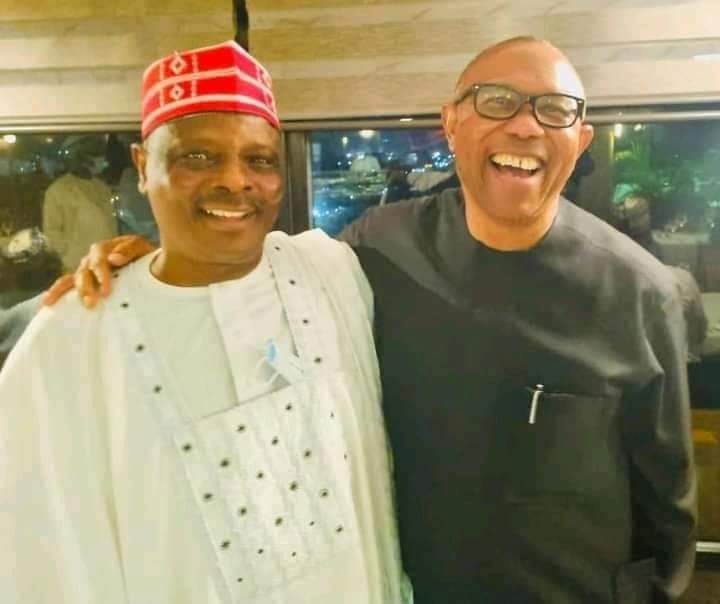
Power tussle rocks Obi, Kwankwaso campaign teams

Published

on

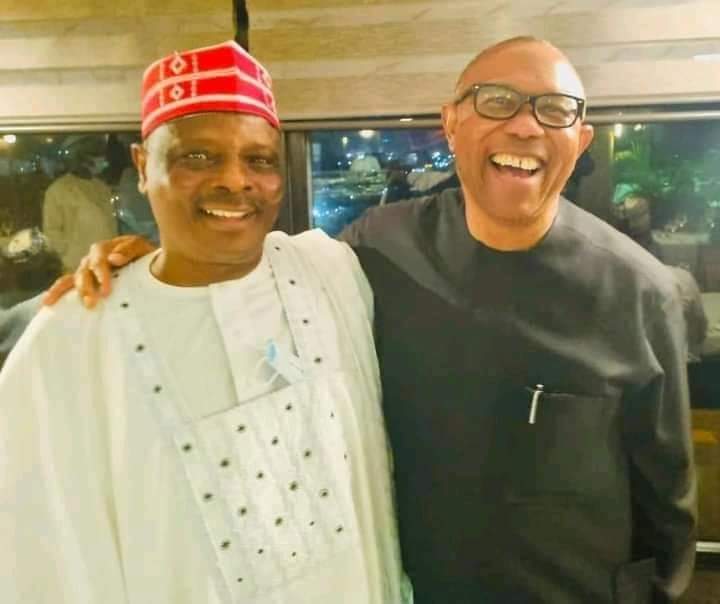
Fresh cracks have emerged within the OK Movement, a political support platform established to mobilise backing for the joint ticket of the presidential candidate of the Nigeria Democratic Congress, Peter Obi, and former Kano Governor Rabiu Kwankwaso, following a bitter leadership tussle that has triggered accusations, counter-accusations and competing claims to the group’s leadership.

The crisis escalated after the movement announced the appointment of former Inter-Party Advisory Council Chairman, Peter Ameh, as its National Director-General in a statement signed by Jackie Wayas.

Wayas, who identified herself as the National Convener of the movement, said the decision followed a meeting of its steering committee.

The former Deputy National Publicity Secretary of the African Democratic Congress added that Ameh’s appointment was unanimously approved because of his political experience and commitment to the ideals of the movement.

However, within hours of the announcement, the statement generated controversy after several members questioned Wayas’ authority to describe herself as the national convener of the movement.

Repeated efforts by The PUNCH to obtain clarification from Wayas on when and how she assumed the position were unsuccessful, as calls and messages sent to her were not returned as of the time of filing this report.

The controversy soon exposed a wider leadership dispute within the movement.

Speaking with our correspondent, the immediate past National Publicity Secretary of the movement, Justin Ijeh, acknowledged that disagreements existed but insisted they should be resolved internally rather than through the media.

He said, “There’s a reason I have not spoken up on this issue. I believe some things should be resolved behind the scenes. The primary target for me is that we must achieve our aim at the polls. I spoke to all the parties concerned about my concerns.

“It’s okay to fight. If you’re not fighting, you’re probably lying to yourselves. It’s not the worst thing that there are differences, but to let them come out into the public space is a big no-no for me.

“My principle on it is that we should not be discussing this thing in the public domain. People will always speculate and talk.

“As I said, these are issues that we need to go behind the scenes and resolve. We cannot be fighting a civil war when we have external aggression to deal with.

“The fact that this matter has come out makes it look larger than what it is because people are now talking about it.

“The truth is that it’s an internal dispute over how things are being done. People have different opinions, and then it goes into the mix. It’s not so much about secrecy.

“It’s about not allowing it to be detrimental to the larger cause. For me, the mission is to win elections.”

Continuing, Ijeh said differences were inevitable in political organisations and warned that allowing them to play out publicly could undermine the movement’s broader objective of winning elections.

According to him, he had stepped aside as spokesman pending the resolution of the dispute, noting that competing claims to the office of the Director-General had complicated the situation.

See also  Ekiti guber: Nothing to show after 3 years – Isaac Fayose warns against Oyebanji’s re-election (VIDEO)

“I have told all parties that I cannot be the spokesperson anymore until they resolve issues. Tell me, when two persons declared themselves DG of an organisation, what do you do?

“I cannot even deny the fact that I know the Jackie Wayas you are talking about. She is also one of us,” he noted.

The movement’s Director-General, John Ughulu, however, dismissed Ijeh as a sacked official and accused the rival faction of attempting to hijack the organisation.

Ughulu maintained that the former spokesman no longer had the authority to speak for the organisation, adding that he had long been relieved of his position.

He said, “No, Justin has been sacked long ago. He belongs to the other group. I had relieved all of them of their responsibility for us to move forward.

“Their ideology is different from what I brought on board. Look, I want everybody to focus beyond the 2027 election, if by God’s grace, Peter Obi wins.”

Ughulu traced the origin of the movement to discussions aimed at creating a broader coalition capable of bringing together supporters of Obi and Kwankwaso under one umbrella without dissolving their existing political identities.

He disclosed that the arrangement was conceived as a long-term political platform rather than one that would automatically dissolve after the next election cycle.

“There was an initial agreement between the two candidates, Obi and Kwankwaso, that this OK Movement would not be relinquished. It would still have to campaign for him in 2031 if he decides to come out for the presidential position. I was a signatory to that.

“So when this latest internal conflict came up, Obi pleaded with me. He said, John, please, I beg you. Do not go to press. Do not say anything,” he said.

Ughulu accused rival members of attempting to take over the movement.

He also defended his decision to separate the leadership of the Obidients from that of the OK Movement, saying overlapping structures would create conflicts.

“The mistake I made was that when they were appointing leaders for me, I was in America, trying to establish the OK Movement in London. Then Justin was brought in as our publicity secretary. I knew he worked for the Obidient Movement.

“Obi himself had given the warning not to mix the two,” he said.

Ughulu further claimed that Obi had previously expressed concern over the absence of a formal leadership structure within the Obidient Movement.

He alleged that he had proposed different leadership arrangements before Yunusa Tanko eventually emerged in an acting capacity.

The Ok Movement DG also narrated disagreements involving prominent members of the movement and defended his role in building the coalition.

According to him, attempts had been made to portray him as someone working against Obi’s political interests.

Ughulu insisted that the OK Movement was conceived to broaden Obi’s support base beyond the Obidient Movement.

In his analysis, the movement was inspired by consultations with several political leaders, including former President Olusegun Obasanjo, the Secretary General of Afenifere and former DG of Obi-Datti Presidential Campaign Council, Akin Osuntokun.

See also  2027: ‘It took Buhari to sack him as SEC Chairman’ – Omojuwa on why Obi will never be President

He added that the name “OK Movement” was deliberately chosen to attract supporters outside the traditional Obidient base.

“There are people who so much love and want to support Peter Obi who are not Obidient members. If we decide to stick only to that, other associations and political parties will not want to associate with you.

“So, that was how we settled for the name, OK Movement,” he said.

He also defended his decision to disengage Ijeh.

“In the case of Justin, I had to sack him because of his partisanship. He was going beyond his responsibility as a publicist for the OK Movement and also aiding the narrative that I am against members of the Obidient Movement,” he said.

Similarly, Ughulu opened up on how he fell out with Jackie Wayas, the alleged national convener of the same movement.

He said, “The same Jackie they are parading now used to work for me. At a point, she was in the ADC as the National Deputy Publicity Secretary.

“By that time, the OK Movement had been established. What was the problem? People were bringing in illegal money. And I said, no, it’s not going to happen because you don’t know where the money is coming from.

“So I suggested we raise the funds from the streets by encouraging Nigerians to contribute N1,000 or N500 to take care of posters, T-shirts and logistics.

“Again, we agreed that we are not going to pay any of my coordinators.

“I made that clear right from the outset because I know that every coordinator I appointed has capacity. They are well-to-do on their own. But Jackie flared up and said no.”

Meanwhile, another layer of the controversy emerged following widespread social media reports alleging that Obi had dismissed the National Coordinator of the Obidient Movement Worldwide, Dr Tanko, over alleged financial impropriety, an allegation Tanko and Obi’s media office separately dismissed as false.

The reports further claimed that a replacement would soon be announced.

When contacted by The PUNCH, Tanko categorically denied the allegation.

He said, “No, it is not true. It is somebody out there just flying a kite. In fact, we are having a programme in the office tomorrow. I am using the opportunity to invite you to attend.

“Look, I don’t have a separate account. I’m not even a signatory to the account of the Obidient Movement. So, why should I even have a money-related matter?”

Reacting to claims of tension between the Obidient Movement and the OK Movement, Tanko insisted there was no conflict.

When asked to also clarify the tension between the Obidients and the OK Movement, Tanko dismissed it, stressing that there is no crisis or internal conflict with the camp of their principal.

See also  Gov. Adeleke Wins His Polling Unit For Accord Party

“There is really no tension between us. We are just trying to work together. That’s all.

“We are just trying to make sure that we work together as a team,” he stated.

Shortly after Tanko’s defence, Obi’s media aide, Idris Zekeri, released a statement dismissing the reports as false.

“The Peter Obi Media Office acknowledges recent, coordinated efforts by political adversaries and disruptive individuals to create division, misrepresent our leader’s objectives, and foster artificial rifts within our movement dedicated to improving Nigeria.

“They dubiously try to ascribe their imagined words to our principal, aiming to create division in his fold. We feel it is imperative to directly and unequivocally address these manoeuvres.

“Let us be clear: our endeavour is, and always has been, driven by a commitment to national progress, not personal ambition, ethnic appeals, or petty partisan squabbles.”

The statement accused unnamed political opponents of manufacturing distractions while Nigerians continued to grapple with economic hardship, insecurity and unemployment.

“We implore our devoted supporters, including the Obidients and Kwankwasiyya movements, and all Nigerians of good conscience, to disregard rumours, fabricated stories, and deliberate provocations, including the purported sack of the Obidient Movement National Coordinator, Dr Yunusa Tanko,” it stated.

Adding another dimension to the unfolding crisis, former spokesman of the New Nigeria People’s Party, Ladipo Johnson, admitted that disagreements existed within the OK Movement but maintained that they would not derail preparations for the 2027 elections.

Johnson, who featured as a guest on Arise Television, on Friday described the dispute as a distraction rather than an existential threat.

“Yes, we have- may I call it a distraction at the moment? It is not such, in my own humble opinion, that would lead you to take unilateral actions that could scuttle or bring bad blood within the support base of the person you purportedly want to become the president of the country,” he said.

He urged members to focus on strengthening the movement instead of allowing personal disagreements to undermine its broader political objectives.

Johnson also disclosed that Obi had been briefed on the development and was unhappy with the situation.

“I saw the presidential candidate last night (Thursday) along with the DG. He’s not happy about the whole situation,” he said.

The internal wrangling comes at a critical period for the opposition as political groups continue consultations aimed at forging a united front capable of challenging the ruling All Progressives Congress in the 2027 presidential election.

Although leaders of the Obidient Movement and the OK Movement have continued to insist that their disagreements are internal and resolvable, the public exchange of accusations and rival claims to leadership has raised fresh questions about cohesion within one of the emerging support platforms expected to play a significant role in opposition mobilisation ahead of the polls.

punch.ng

FOLLOW US ON:

FACEBOOK

TWITTER

PINTEREST

TIKTOK

YOUTUBE

LINKEDIN

Continue Reading
Click to comment

Leave a Reply

Your email address will not be published. Required fields are marked *

Politics

INEC unveils gov, Assembly candidates Saturday ahead of 2027 polls

Published

on

The Independent National Electoral Commission will on Saturday, August 29, display the list of candidates nominated by political parties for the February 6, 2027, governorship and state Houses of Assembly elections.

The governorship election will be conducted in 28 states, while state Houses of Assembly elections will be held in all 36 states of the federation.

According to the electoral timetable, the governorship poll will take place in Lagos, Ogun, Oyo, Delta, Rivers, Akwa Ibom, Cross River, Enugu, Ebonyi, Abia, Kwara, Benue, Plateau, Niger and Nasarawa states.

Other states where governorship elections are scheduled are Borno, Yobe, Adamawa, Taraba, Bauchi, Gombe, Jigawa, Kano, Kaduna, Katsina, Zamfara, Kebbi and Sokoto.

The elections will not be held in Ondo, Osun, Ekiti, Edo, Bayelsa, Anambra, Imo and Kogi states, where governorship polls were held at different times because of the staggered electoral cycle.

INEC had said the publication of the candidate lists was part of its preparations for the 2027 general election and would enable political parties, candidates and the public to verify the information submitted to the commission.

The 22 registered political parties are expected to field new candidates in Lagos, Ogun, Oyo, Yobe, Borno, Adamawa, Bauchi, Gombe, Kwara and Nasarawa, where the tenure of the incumbent governors will expire in 2027.

The commission is also expecting political parties contesting the presidential and National Assembly elections to submit their final lists of candidates by Saturday, August 29.

The deadline follows the August 22 deadline for candidates seeking to withdraw from the 2027 elections.

See also  Presidency waves off Atiku threat as ex-VP woos Amaechi ahead of 2027; Read details

Under Section 31 of the Electoral Act 2026, a candidate seeking to withdraw from an election is required to submit a written notice, signed by the candidate and accompanied by an affidavit, personally to the political party that nominated the candidate.

The provision is intended to establish a formal process for candidates who decide to withdraw after being nominated by their political parties.

INEC is expected to publish the final list of presidential and National Assembly candidates on Saturday, September 12.

The list will include candidates for the Senate and House of Representatives, alongside those contesting the presidential election.

With the August 29 deadline approaching, political parties are expected to conclude their candidate nomination and substitution processes ahead of the commission’s publication of the final lists.

The February 6, 2027 governorship and state Houses of Assembly elections will form part of the wider electoral programme for the 2027 general elections.

Source: punchng.com

FOLLOW US ON:

FACEBOOK

TWITTER

PINTEREST

TIKTOK

YOUTUBE

LINKEDIN

INSTAGRAM

Continue Reading

Politics

Atiku-Tinubu faceoff widens over subsidy, $16bn power projects ahead of 2027

Published

on

Former Vice President Atiku Abubakar has challenged the Federal Government to investigate and prosecute him if it has evidence linking him to the alleged $16bn power expenditure while in office.

Atiku, the presidential candidate of the African DemocraticCongress, accused the President Bola Tinubu-led government of recycling old allegations to divert attention from questions over the use of revenues saved from petrol subsidy removal.

Atiku, in a statement on Wednesday, issued by his SeniorSpecial Assistant on Public Communication, Phrank Shaibu, said the resurfacing of allegations surrounding power-sector projects, privatisation and public assets was an attempt to shift public attention from the economic hardship confronting Nigerians.

The Olusegun Obasanjo administration’s power sector spending and commitments, commonly cited at about $16bn, became the subject of a House of Representatives probe after his exit from office in 2007.

In 2008, the Umaru Yar’Adua administration raised questions about expenditure on the power sector, with the allegation initially reported as about $11bn, before the figure became commonly cited as $16bn.

In his defence, Obasanjo cited an EFCC investigation and a presidential review process, arguing that these had undermined the allegation that $16bn had simply been squandered.

A report claimed only about $3.7bn of the $10bn budgeted amount had actually been disbursed, with the balance retained in an account at the Central Bank of Nigeria.

Also, an EFCC report published in 2018 reportedly revealed that about N1.2tn had been allocated to NIPP, but only approximately N360.7bn was paid to contractors by the time Obasanjo left office in 2007.

It also reported about N273.65bn spent on PHCN between 1999 and 2007.

Atiku challenged the Tinubu government to account for the resources it had gained since the removal of petrol subsidy, asking, “Where is the people’s money?”

He said the allegations against him had been repeatedly raised over the years without resulting in any prosecution, despite successive governments having access to the investigative machinery of the state.

“The National Assembly investigated the power projects. I was never invited to answer any allegation of wrongdoing.

“Yes, I chaired the National Council on Privatisation as Vice President. But on the power project, I disagreed with its concept and did not preside over its implementation. The responsible minister did. The same applies to the Aluminium Smelter matter.

“I have repeatedly asked to be investigated. I left office in 2007 and have spent much of the period since then opposing governments in power. If there is evidence that I stole public money, why has no government produced it before a court?

“It is still not too late. Investigate me. Invite me. Produce the evidence. Prosecute me if you have a case. But propaganda cannot substitute for evidence,” the statement read in part.

The ADC chieftain’s latest challenge comes amid an intensifying political confrontation between the opposition and the Federal Government over the state of the economy and the impact of the government’s reforms. Atiku has made the economic consequences of subsidy removal a central part of his criticism of the administration, arguing that Nigerians have endured substantial increases in the cost of petrol, transportation, food and other basic necessities without seeing commensurate benefits from the additional government revenues.

He noted that the controversy over the power projects was being revived because his demand for greater transparency over the proceeds of subsidy removal had become politically uncomfortable for the administration.

“They removed subsidy from the poor and promised that the sacrifice would free resources for development. Nigerians accepted extraordinary pain on that promise.“Today, petrol is more expensive, transportation is more expensive, food is more expensive, and the purchasing power of the Nigerian worker has been devastated,” he added.

See also  2027: ‘It took Buhari to sack him as SEC Chairman’ – Omojuwa on why Obi will never be President

He further questioned the government’s fiscal priorities, alleging that while ordinary Nigerians were being asked to endure the consequences of subsidy removal, powerful economic interests continued to benefit from fiscal incentives, waivers and concessions.“Meanwhile, government revenues have increased, while fiscal incentives, waivers, tax credits and concessions continue to be available to powerful economic interests. So, our question remains brutally simple: where is the people’s money?”

Atiku argued that the government could not justify removing a major form of relief from Nigerians because the resulting savings would be redirected to development while simultaneously describing economic interventions targeted at powerful interests as incentives.

“You cannot take relief away from the poor, celebrate the resulting revenue and then tell the same impoverished citizens that government intervention on their behalf is economically irresponsible while interventions benefiting powerful interests are called incentives. That hypocrisy is precisely what we are challenging,” he stressed.

Tinubu announced the removal of fuel subsidy shortly after his inauguration in May 2023, ending a long-standing system under which the Federal Government subsidised the cost of the product.The government defended the decision as necessary to reduce pressure on public finances and redirect resources towards infrastructure and social programmes.

The policy, however, triggered a sharp increase in petrol prices and contributed to higher transportation and living costs, making subsidy removal one of the most politically contentious issues of the Tinubu presidency. The government has since introduced various measures to cushion the effects of the reforms, while maintaining that the previous subsidy regime was financially unsustainable.

However, Atiku proposed alternative economic measures and has increasingly positioned accountability, cost-of-living pressures and the management of public resources at the centre of his campaign. His latest statement also comes against the backdrop of growing political activities ahead of the 2027 presidential election, with the ADC and other opposition forces mounting increasingly direct attacks on the Tinubu administration.

Atiku dismissed what he described as “sponsored social-media mud slinging”, insisting that such attacks would not deter him from demanding accountability.

“The people who removed subsidy from the poor cannot frighten us into silence by resurrecting allegations that governments with all the investigative machinery of the Nigerian state have had nearly two decades to establish,” he said.

“If you have evidence against Atiku, bring it. If you have a case, prosecute it. But if you have neither, stop manufacturing distractions and answer Nigerians. You removed the subsidy. You collected the savings. Where is the money?”

Presidency slams Atiku

However, the Presidency criticised Atiku over what it described as conflicting positions on petrol subsidy, saying the different explanations coming from him and his aides within one week showed a lack of clarity in his policy proposal.

The Special Adviser to the President on Information and Strategy, Bayo Onanuga, stated this in a statement released on Wednesday titled, ‘Atiku confused on petrol subsidy; third U-turn in one week shows he is simply playing politics.’

Onanuga said Atiku’s position had changed or been explained differently three times within a week, beginning with a statement by his spokesperson, Paul Ibe, that the former Vice President would restore petrol subsidy if elected and later phase it out.

He said another aide, Phrank Shaibu, subsequently described Ibe’s position as an “unauthorised and misleading characterisation” of Atiku’s stance, arguing that the subsidy would instead remain until domestic refining increased, supply stabilised and market competition deepened.

See also  2027: PDP, APC upload gov candidates on INEC portal

According to Onanuga, Atiku later intervened and reaffirmed that his position had not changed, saying he would restore what he described as a targeted subsidy.

He quoted Atiku as saying, “I will restore targeted subsidy and put purchasing power back in the hands of Nigerians.”

The Presidency questioned the different explanations, asking why an aide would describe the subsidy as temporary and subject to a phase-out while another disowned that position before Atiku himself reaffirmed the original proposal.

Onanuga said, “This is not merely a matter of semantics. It is a serious policy contradiction.”

He also challenged Atiku to explain how his proposed subsidy would work, including its cost, beneficiaries, funding mechanism and conditions for its eventual removal.

“We therefore urge Atiku to stop shifting positions and explain precisely what he means by ‘targeted subsidy’: how much will it cost, who will benefit, how will beneficiaries be identified, how will it be funded and what objective economic conditions will determine its eventual termination?” he asked.

The presidential aide also rejected what he described as an over simplification of the relationship between petrol prices and cost of living, arguing that several other factors, including insecurity, exchange rates, logistics, storage, flooding and agricultural input costs influenced food inflation.

He further questioned the ADC candidate’s proposal to link subsidy to the price of crude oil, noting that refining crude produces several other petroleum products apart from petrol. Onanuga cited diesel, aviation fuel and kerosene among the products derived from crude oil, and asked whether Atiku’s proposed subsidy would extend to those products as well.

“Jet fuel and kerosene make up about nine per cent of the barrel. Kerosene and jet fuel were deregulated in 2009, and subsidies removed in 2016,” Onanuga stated.

On the other petroleum by-products, he added, “About 10 to 15 per cent of the barrel creates base ingredients for synthetic rubber, nylon, polyester, and plastics used in everyday goods like toothbrushes, cups, and packaging.

“Asphalt makes up about two to four per cent of the barrel. Hydrocarbon Gas Liquids, like propane and butane, make up about four per cent.

“Lubricants and waxes constitute about one to two per cent. Petroleum coke and sulfur form the solid residue left from refining.”

He specifically recalled that diesel was deregulated in 2004 under the administration in which Atiku served as Vice-President, while kerosene and aviation fuel were deregulated at different times.

The statement also accused Atiku of focusing excessively on petrol while overlooking other products obtained from crude oil. The Presidency maintained that a comprehensive economic policy should address the wider factors driving inflation and the cost of living rather than focus solely on petrol prices.

Onanuga concluded that the economy was too important to be subjected to what he described as “policy somersaults, incoherence, destructive populism and election gimmicks.”

He questioned the consistency of subsidising only petrol while ignoring other by-products used by equally vulnerable Nigerians.

“Will Atiku subsidise all these by-products of the barrel as well, since kerosene is used by the underprivileged to cook, and many homes and factories use diesel to power generators and delivery trucks?

“And will he allow the refineries to supply discounted crude oil to profit from 55 per cent of the by-products, while focusing subsidy only on petrol, his obsession?”

The Presidency further argued that the former Vice President was “definitely suffering from a lack of basic understanding of his newfound policy prescription.”

See also  Tension mounts as APC panels disqualify over 150 aspirants in the Pre-primary screening

‘Go to court’

In a related development, the All Progressives Congress challenged Atiku to go to court and provide evidence to substantiate his claim that “thieves” were responsible for the country’s political and economic problems ahead of the2027 general elections.

The ruling party’s reaction followed remarks attributed to the ADC presidential candidate in which he said the 2027 presidential contest was a race against individuals whom he described as thieves.

Daily Trust, citing a video posted on Atiku’s social media handles on Tuesday night, reported that the former Vice President made the remarks while addressing supporters at his residence in Abuja.

“We are competing with thieves. They stole the election. Now, they have stolen the economy. They have stolen everything,” Atiku was quoted as saying.

Responding to the development, the APC Director of Publicity, Bala Ibrahim, urged Atiku to seek legal redress if he had evidence to support his allegations.

Speaking with The PUNCH, Ibrahim questioned whether Atiku had lost confidence in the judiciary.

“As a former Vice President of the country and as someone who has contested elections and lost before, I don’t know if Atiku is passing a vote of no confidence on the judiciary. If he is, then he has no business contesting again. ‘’But if he has confidence in the judiciary and he is making these allegations, I think he knows the right place to go, to prove his point. He should go to court, present facts to support his claims that he is competing against thieves. It is for the court to take a decision and those thieves will certainly be made to have their day in court,” he said.

NANS tackles Atiku

Meanwhile, the National Association of Nigerian Students criticised the former VP’s proposal to restore fuel subsidy if elected President in 2027, describing the promise as a political response to economic hardship rather than a sustainable solution to Nigeria’s fiscal challenges.

NANS president, Akinteye Babatunde, stated this in a statement on Wednesday, arguing that returning to the old subsidy system without a clear structural framework would recreate the problems that made the policy unsustainable.

“Every sane and patriotic citizen who is conversant with our nation’s economy will agree with me that the removal of the fuel subsidy was a difficult but necessary economic reform aimed at ending an increasingly unsustainable system that consumed trillions of naira, benefited higher fuel consumers disproportionately, encouraged smuggling, and constrained the government’s ability to invest in critical sectors.”

The student leader stressed that the real test of the reform was not simply the amount of money saved but how the government deployed the resources.

“However, the real measure of the reform should not be the savings alone, but what the government does with those savings,” he said.

“Clearly, we have seen the government increase state subventions and redirect resources into education, healthcare, infrastructure and agriculture.

Realistically, the Nigerian people have made a productive sacrifice that must ultimately translate into a stronger and more sustainable economy,” he said.

The NANS president argued that an outright return to subsidy without addressing the structural weaknesses of the previous arrangement would only recreate the problems that necessitated its removal.

“This is why calls or promises for the outright return ofsubsidy, without a clear structural framework for addressing the fundamental weaknesses that made the policy unsustainable in the first place, amount to little more than a political response to a genuine economic challenge.”

Source: punchng.com

FOLLOW US ON:
FACEBOOK

TWITTER

PINTEREST

TIKTOK

YOUTUBE

LINKEDIN

INSTAGRAM

Continue Reading

Politics

Atiku disowns aide, insists ‘I will restore subsidy’

Published

on

Presidential candidate of the African Democratic Congress, Atiku Abubakar, has insisted that his position on subsidy has not changed, adding that he will restore it.

Speaking on Tuesday when he received the Osun State leadership of the ADC in Abuja, Atiku disowned comments made by one of his media aides, Paul Ibe, during an interview on AIT, stating that he was not speaking on his authority.

“Earlier, one of my press aides contradicted me in a policy statement as far as subsidy is concerned.

“I want to repeat categorically that when I said I would return to subsidy, I will! Nigeria is rich enough to look after the welfare of its citizens. Let it be clearly stated that he was not speaking on my own authority,” Atiku said.

Ibe had earlier in his interview said his principal would restore petrol subsidy if elected president in 2027, but would gradually phase out the intervention after the economy recovers.

But Atiku, in a statement posted on his X, countered, saying, “On the question of subsidy, my position has not changed and will not change: I will restore it! A nation as blessed as ours has no business abandoning its citizens to hardship. Nigeria is rich enough to look after her own.

“I believe the wealth of a nation is not measured by how much government collects, but by how much the money in the pockets of its people can buy.

“I want wages to have value again. I want farmers to move produce without transport swallowing their profits. I want families to fill their baskets without emptying their pockets. I want businesses to produce, employ and prosper.

“That is why I will restore targeted subsidy and put purchasing power back in the hands of Nigerians.

“When fuel rises, transport rises. When transport rises, food rises. When food rises, families suffer. I will break that wretched chain that has defined our national life in the nearly four years of Tinubu’s presidency.

“I will support Nigerian production, reduce energy costs and restore purchasing power. I will not restore the import racket; I will restore relief.

See also  Political Parties warn INEC rules could skew 2027 polls

“I restated this commitment when I received the Osun State leadership of the ADC in Abuja on Tuesday. I will make the naira in your pocket worth more, make daily living affordable again, and secure our people. That is the Nigeria I intend to build.”

Atiku also drew a clear line between his proposed petroleum intervention and Nigeria’s former fuel import subsidy regime, saying any support under his administration would be targeted at domestic production and tied to measurable performance.

In a statement issued on Tuesday by his Senior Special Assistant on Public Communication, Phrank Shaibu, the former vice president’s camp said Atiku had not proposed bringing back the old system under which government subsidised imported petrol, but rather a capped and transparent intervention designed to support local refining, increase supply and ultimately bring down energy costs.

“For the avoidance of doubt, policy belongs to the candidate, not the spokesperson.

“Our responsibility as communicators is to explain Atiku’s position accurately, not create formulations capable of confusing Nigerians or handing opponents convenient talking points,” Shaibu said.

According to him, Atiku’s proposal would involve a “targeted, capped, transparently budgeted and independently audited subsidy,” for domestic refining and production.

The intervention, he added, would not operate according to an arbitrary withdrawal date.

Instead, it would be phased out as domestic refining capacity expands, fuel supply becomes more stable, and competition improves.

“There is no arbitrary withdrawal date. As domestic refining expands, supply stabilises, competition deepens, and the market becomes capable of delivering affordable prices without government support, the intervention progressively becomes unnecessary,” he added.

He likened the proposed arrangement to temporary scaffolding used during construction.

“You do not remove scaffolding because the calendar says so. You remove it when the building can stand securely on its own,” he said.

The clarification comes as the fuel subsidy debate has returned to the centre of the 2027 presidential contest.

President Bola Tinubu abolished the petrol subsidy at his inauguration on May 29, 2023, a decision that triggered a sharp increase in petrol prices and fed into a broader cost-of-living crisis.

The reform, alongside the liberalisation of the foreign exchange market, has also been defended by the Federal Government as necessary to strengthen public finances and attract investment.

The subsidy question has nevertheless remained politically sensitive because of its direct impact on transport, food prices, household expenses and the operating costs of businesses.

See also  Tension mounts as APC panels disqualify over 150 aspirants in the Pre-primary screening

Atiku reignited the debate last week when he said he would bring back the petroleum subsidy if elected, arguing that Nigerians had not benefited sufficiently from the savings associated with its removal.

His latest clarification seeks to redefine that position as a production-support mechanism rather than a return to the old import-driven arrangement.

The ADC presidential candidate said any intervention would be subject to controls intended to prevent the leakages associated with the former subsidy regime.

Rather than focusing on when government support would end, Shaibu said the emphasis should be on whether the intervention achieves its intended economic objectives.

“The real question is simple: Why has everything become so expensive, and what will Atiku do to make life affordable again?” he asked.

He accused the Tinubu administration of transferring the burden of its economic reforms to households and businesses, arguing that an Atiku government would instead focus on reducing production and transportation costs, strengthening domestic refining and rebuilding purchasing power.

“Tinubu transferred the shock of his reforms to Nigerian families.

“Atiku will reduce production and transportation costs, strengthen domestic refining, and restore purchasing power.

“The choice is not removal of subsidy versus restoration of subsidy. It is Expensive Nigeria versus Affordable Nigeria,” Shaibu said.

Ibe, speaking on AIT, also said the proposed subsidy would differ from the former regime, as government support would be tied to crude oil production and domestic refining.

He said the policy would provide temporary relief to Nigerians and businesses, stimulate economic activity and improve productivity.

“What he’s simply saying is that the subsidy that he is advocating will be tied to the barrel, the crude oil barrel. This is perhaps the only thing that we have in so much abundance that Nigerians have not yet benefited from,” Ibe said.

According to him, crude oil would be supplied to local refiners at a discounted price, enabling them to produce petrol and diesel at lower costs, which would translate into reduced pump prices for consumers.

See also  2027: PDP, APC upload gov candidates on INEC portal

“The crude oil will be sold at a discounted price, subsidised to refiners, and that will enable refiners to be able to produce fuel and diesel at a cheap cost. And when they produce cheaply, they will sell at the real pump price,” he said.

Ibe said an independent committee would determine the appropriate price of crude oil supplied to refiners, taking prevailing market conditions into account.

He added that despite the deregulation of the downstream petroleum sector, government could monitor prices to ensure refiners and marketers operated within the framework of the policy.

“There’ll be a window because, of course, we deregulated. You may not fix the price, but you can have price monitoring to ensure that everybody aligns with what government hopes to achieve,” he said.

Ibe said the intervention would be temporary and aimed at reviving economic activity and increasing productivity.

“It is not something that is… It is for a time, and it is essentially to ensure that we jumpstart this economy,” he said.

The former vice-president’s spokesman also criticised the administration of President Tinubu for removing petrol subsidy alongside other major economic reforms without allowing the economy sufficient time to adjust.

“No surgeon, no doctor would carry out two or more serious major surgeries, one after the other. They would do one, allow the patient to recuperate, and then undertake the second, or the third.

“But what has this administration done? The issue of subsidy, flippant. No cabinet. No advisers. Just in the heat of the moment, it has been removed. No shock absorbers. Nothing. No palliatives. Absolutely nothing,” Ibe said.

He argued that the simultaneous removal of petrol subsidy, deregulation of the foreign exchange market and electricity subsidy had worsened the economic hardship faced by Nigerians.

Source: punchng.com

FOLLOW US ON:

FACEBOOK

TWITTER

PINTEREST

TIKTOK

YOUTUBE

LINKEDIN

INSTAGRAM

Continue Reading

Trending