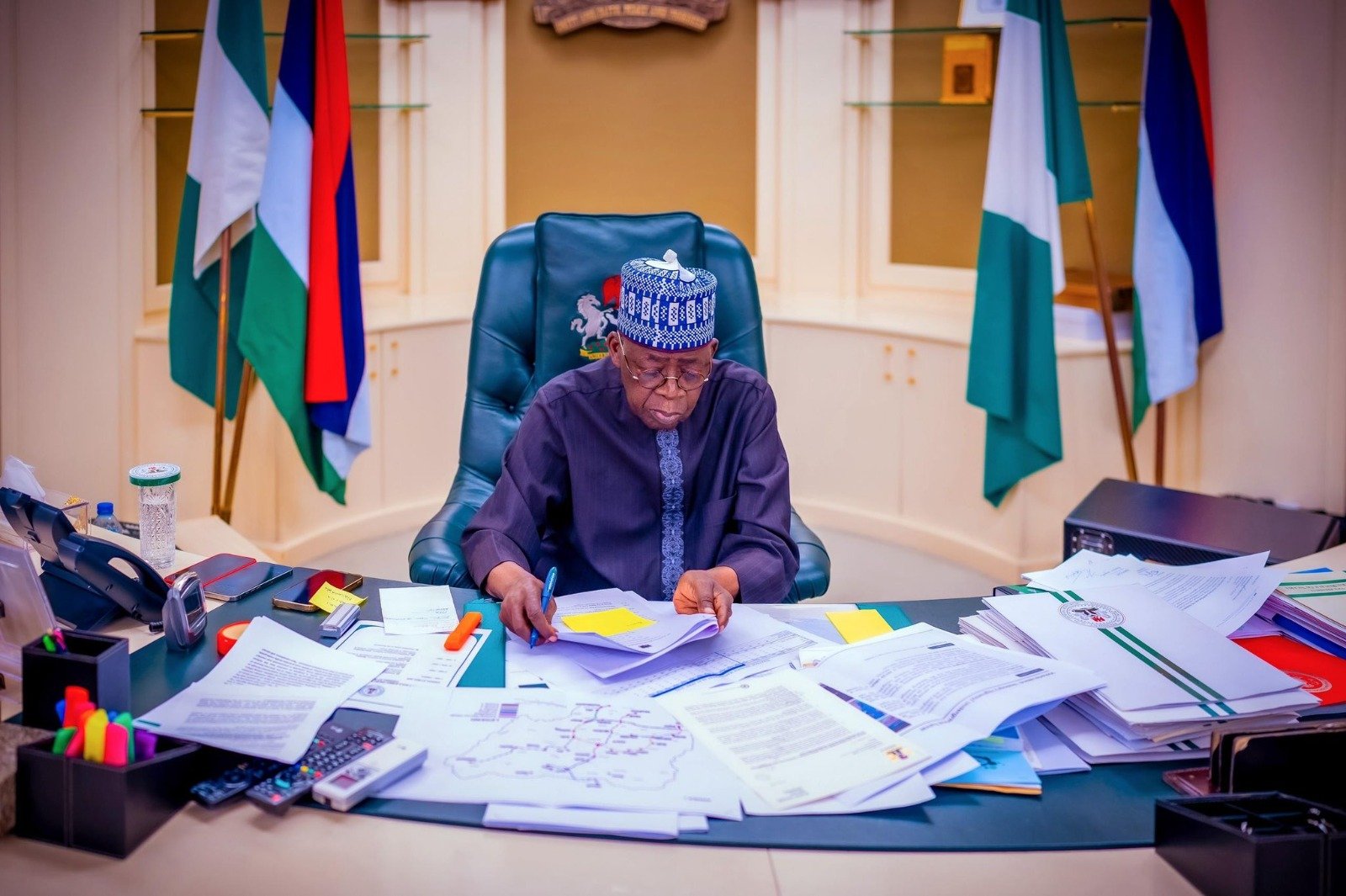
President Bola Tinubu has approved a salary increase of between 30 and 80 per cent for about 250,000 personnel of the Armed Forces, raising the military’s annual wage bill from N660bn to N924bn in what is the biggest upward review of military salaries under his administration.
The new pay structure, which takes effect from September 1, 2026, grants the highest increases to junior personnel, with soldiers from the rank of private to staff sergeant receiving an 80 per cent salary increase, warrant officers to colonels getting 50 per cent, while brigadier-generals to generals will earn 30 per cent more.
Announcing the package on Tuesday, the Presidency said the salary review was in recognition of the sacrifices military personnel continue to make in the fight against terrorism, banditry and kidnapping, adding that the administration would continue to prioritise troop welfare and modernise the Armed Forces with advanced weapons and technology.
The announcement drew widespread commendation from retired senior military officers, who described the pay rise as a major morale booster capable of improving troop commitment, recruitment and operational effectiveness. They, however, urged the Federal Government to ensure prompt implementation and complement the salary review with modern weapons, improved logistics, accommodation, healthcare and other welfare packages.
Serving military personnel also welcomed the development but said they would reserve judgment until the new salaries are reflected in their bank accounts, stressing that effective implementation would be the true measure of the government’s commitment to troop welfare.
Special Adviser to the President on Information and Strategy, Bayo Onanuga, in a statement on Tuesday, said the graduated structure of the increase scales inversely with rank, with the highest percentage increases going to the most junior personnel.
The pay package will raise the annual salary bill for the armed forces from N660bn to N924bn, an increase of N264 billion.
The President linked the pay rise directly to the sacrifices personnel continue to make in the fight against banditry, kidnapping and terrorism across parts of the country.
He said, “The men and women who help to keep us safe in our homes must be supported and appreciated in the course of their duties to our nation.”
Tinubu said troop welfare and military modernisation would remain a standing priority of his administration.
“Our administration will continue to prioritise troop welfare and modernise the armed forces by providing the weapons and technological tools needed to discharge their duties,” he stated.
Tinubu argued that the salary increase is tied to his broader philosophy on national security.
According to him, “Our administration believes that no nation can achieve greatness without security. We therefore remain resolute in mobilising all military and law enforcement assets to eliminate security threats and protect the lives and property of all Nigerians.”
To the benefiting personnel, he said, “I urge our servicemen to take our gesture as a sign of our deep appreciation of the services they render to our fatherland.”
“Together we shall prevail over the enemies intent on destroying the fabric of our nation,” the President added.
The pay increase, the most significant upward revision of military salaries under the current administration, comes barely two weeks after Tinubu restructured the Nigerian Army into four additional divisions aimed at improving response times to regional security threats.
Military morale boost
The Minister of Defence, Gen. Christopher Musa (retd.), commended the President for approving a new salary structure for members of the Armed Forces, describing the move as a major boost to troop welfare and operational effectiveness.
In a statement issued on Tuesday by his Special Assistant on Media, Leah Katung-Babatunde, Musa said the approval reflected Tinubu’s commitment to improving the welfare of military personnel and strengthening Nigeria’s security architecture, adding that the new package would increase the annual personnel cost of the Armed Forces from N660bn to N924bn.
“The President has once again demonstrated unwavering leadership and empathy for the brave men and women who put their lives on the line daily to preserve the peace and territorial integrity of our nation,” Musa said.
He said the salary review would help reduce financial pressures on troops and boost morale among personnel deployed in various theatres of operation, including the North-East, where they are battling insurgency, as well as other areas affected by banditry, kidnapping and crude oil theft.
Musa assured the President that the military would reciprocate the gesture through greater dedication, discipline and improved operational performance.
He urged officers and soldiers to view the enhanced remuneration as a renewed call to duty, charging them to intensify efforts to tackle security threats, protect lives and restore stability across the country.
The minister also reaffirmed the commitment of the Defence Ministry to supporting ongoing efforts to modernise military equipment, strengthen technological capabilities and improve the welfare of personnel and their families.
Ex-military chiefs react
Retired senior military officers have welcomed President Bola Tinubu’s approval of a 30 to 80 per cent salary increase for Armed Forces personnel, describing it as a major morale booster while urging the Federal Government to complement the package with better equipment, logistics and improved welfare.
A former Director of Army Public Relations, retired Brig. Gen. Sani Usman, described the decision as timely, saying no amount of money could adequately compensate soldiers for the risks they take in defending the country.
According to him, military personnel deserve to be among the best-paid public servants because of the hazardous nature of their duties and the sacrifices they make in combating insurgency, terrorism and other security threats.
“The issue is not whether it is adequate or not. How much do you think you can pay a soldier that is enough? I don’t think the sacrifices or the life of a soldier can be quantified. Because of the nature of their work and the sacrifices they make, soldiers are supposed to be among the best-paid public servants in Nigeria.
“When you look at their involvement in counter-insurgency, counter-terrorism and other internal security operations, as well as the level of deprivation they endure, you will understand why. We really need to commend the President for this move. An 80 per cent increment will go a long way, especially considering the inflationary trend in the country.”
Usman noted that the Minister of Defence had earlier hinted at an upward salary review, adding that the approval showed the government was matching its promises with action.
“The Minister of Defence hinted at this some time ago, and it is good that actions are now matching words. It gives troops a sense of belonging and reassurance that the government is listening and responding to their welfare concerns,” he said.
Retired Commodore Omatseye Nesiama described the salary increase as a welcome development, noting that the move would help address existing disparities in military remuneration.
He, however, stressed that further adjustments were needed to bridge gaps across the various ranks, particularly among senior officers.
“It is a welcome development. The gap-bridging strategy is long overdue. However, when closely examined, there has always been a disproportionate gap even among senior officers’ ranks, and that also needs to be addressed. In my opinion, the increase should extend to all security agencies in the country, as they are all exposed to similar risks in terms of security and economic challenges,” he said.
Also reacting, retired Brig. Gen. Bashir Adewinbi said the salary increase would significantly boost troop morale, improve commitment and make military service more attractive to young Nigerians.
“It will boost the morale of the recipients. Soldiers will be encouraged to do more, put in their best and remain committed to whatever assignments they are given. It will also encourage able-bodied Nigerians who are still undecided about joining the military because we need more recruits.
“This is a welcome development and we must commend President Bola Tinubu for the political will to do this. Although the demand for money is insatiable and inflation has reduced the purchasing power of salaries, this is a good beginning. It shows the President has goodwill towards members of the Armed Forces.”
Adewinbi, however, stressed that higher salaries alone would not solve the military’s operational challenges, urging the government to provide modern weapons, improved accommodation, quality uniforms and adequate logistics.
“The government should not stop at salaries. The troops need more protection and technology to support their operations. They need sophisticated weapons, accommodation, uniforms and the logistics required to perform their duties effectively,” he said.
However, retired Brig. Gen. George Emdin urged caution, noting that previous welfare improvements had often been undermined by poor implementation.
“It is not a new development. It has been pronounced for a long time, but there is no cash backing.
“Until we see the implementation, one cannot say much. Naturally, it will improve morale and earning power, which we appreciate, but implementation has always been the issue,” he said.
Similarly, retired Rear Admiral Othiniel Filafa said improved salaries, strong political will and the effective deployment of military equipment were all essential to enhancing the operational effectiveness of the Armed Forces.
Speaking with one of our correspondents, Filafa said decisions taken at the strategic level directly influenced the performance of troops on the battlefield.
“The salary increase is in order. Most of the challenges troops face stem from the political will of those making decisions at the strategic level. Whatever happens there ultimately trickles down to personnel on the field.
“As for equipment, especially in the Air Force, the Federal Government has made commendable efforts by procuring platforms to sustain combat operations. However, commanders must ensure that the equipment provided is properly utilised.
“The salary increase is important because it will boost troop morale, reduce resignations and improve combat effectiveness.”
Also reacting, the Special Adviser to the Sokoto State Governor on Security Matters, retired Col. Ahmed Usman, commended President Bola Tinubu for approving the salary review, describing it as a significant step towards strengthening Nigeria’s security architecture.
In a statement, Usman said the improved welfare package would boost the morale, commitment and operational effectiveness of military personnel, who continue to make enormous sacrifices to protect lives and property across the country.
He noted that security personnel often operate under difficult and life-threatening conditions, arguing that improving their welfare was not only a recognition of their patriotism but also a strategic investment in national peace and stability.
According to him, a well-motivated security workforce is critical to effective intelligence gathering, swift responses to emerging threats and sustained operations against banditry, terrorism, kidnapping and other criminal activities.
“The decision by President Bola Ahmed Tinubu to improve the salaries and welfare of our security personnel is highly commendable. It will undoubtedly inspire greater dedication, professionalism and commitment among those at the forefront of safeguarding our nation,” he said.
Usman, however, stressed that improved remuneration alone would not resolve the country’s security challenges, urging the Federal Government to complement the salary review with modern operational equipment, continuous training and retraining, comprehensive insurance, quality healthcare and decent housing for military personnel and their families.
He also urged security personnel to justify the government’s confidence by maintaining discipline, professionalism, integrity and respect for human rights in the discharge of their duties.
The retired military officer further appealed to Nigerians to support security agencies by providing timely and credible intelligence, noting that community participation remains indispensable in tackling insecurity.
He reaffirmed the commitment of the Sokoto State Government to supporting security agencies through sustained collaboration with federal security institutions to protect lives, secure communities and restore lasting peace.
“Security is a shared responsibility. While government will continue to provide the necessary leadership and support, citizens also have a vital role to play by cooperating with security agencies. Together, we can build a safer Sokoto State and a more secure Nigeria,” he added.
Serving personnel respond
Serving military personnel welcomed President Bola Tinubu’s approval of a new salary structure for members of the Armed Forces but said they would withhold celebrations until the increases are reflected in their bank accounts.
A military officer, who spoke on condition of anonymity because he was not authorised to comment publicly, said the salary review was a step in the right direction and could improve recruitment by making military service more attractive to young Nigerians.
“Until we start receiving it, we are not celebrating. Of course, it is the right move because poor welfare has been affecting recruitment. This is a good start, but the government can still do better, especially for junior officers and soldiers because of the current economic situation. Better welfare will make military service more rewarding and encourage more Nigerians to serve,” he said.
Another serving senior officer shared a breakdown of how the 50 per cent salary increase would affect his earnings, revealing that his monthly salary would rise from ₦362,405.67 to ₦543,608.51.
According to the calculation, the increment adds ₦181,202.84 to his current salary, bringing his monthly pay to ₦543,608.51.
“Fifty per cent of ₦362,405.67 is ₦181,202.84. Adding it to my current salary brings it to ₦543,608.51. It still does not compare with what many of my contemporaries outside the military earn, but we thank the President,” he said.
Another serving personnel said the announcement was encouraging but stressed that implementation remained the real test.
“It’s good news, but it doesn’t call for jubilation yet. It is when the money starts hitting our bank accounts that we can celebrate. For now, fingers crossed.”
A third soldier expressed appreciation for the salary increase but questioned whether it would be sufficient to offset the impact of the country’s economic challenges.
“I thank the President for the increment, but with the current economic situation, I doubt if it will make much difference. Hopefully, this will be the beginning of better welfare for the troops. We put our lives on the line to protect the nation and deserve better.”
The latest salary review comes amid growing calls for improved welfare for military personnel.
Recently, The PUNCH exclusively reported that retired military personnel gave the Chief of Defence Staff, Gen. Christopher Musa, a seven-day ultimatum to facilitate an increase in soldiers’ salaries to at least ₦250,000.
The demand followed an earlier disclosure by the Minister of Defence, Mohammed Badaru, that the monthly salary of the lowest-ranked soldier had been increased from ₦50,000 to ₦100,000.
Under the new salary structure announced by the Presidency, the Armed Forces’ annual wage bill will rise from ₦660bn to ₦924bn, representing an additional ₦264bn.
President Tinubu said the pay rise was in recognition of the sacrifices troops continue to make in the fight against terrorism, banditry and kidnapping, adding that his administration would continue to prioritise troop welfare while equipping the Armed Forces with modern weapons and technology to tackle emerging security threats.
Senators commend Tinubu
The Chairman of the Northern Senators Forum, Senator Abdulaziz Yar’Adua, and Chairman of the Senate Committee on Defence, Senator Ahmad Lawan, praised President Bola Tinubu’s approval of a 30 to 80 per cent salary increase for Armed Forces personnel, describing it as a timely intervention that would boost troop morale.
The lawmakers said the new pay structure would strengthen the commitment of military personnel involved in operations against terrorism, banditry, kidnapping and other security threats.
Yar’Adua, in a statement on Tuesday, thanked the President for recognising the sacrifices of troops and said the increase, which affects about 250,000 personnel from September 1, 2026, demonstrated the administration’s commitment to troop welfare.
He said the rise in the military’s annual personnel wage bill from N660bn to N924bn reflected the government’s determination to improve the welfare and modernisation of the Armed Forces.
The senator, who chairs the Senate Committee on Army, linked the salary review to recent efforts to expand Army divisions, saying both measures would strengthen operational effectiveness and national security.
He added that the Senate would continue to work with the executive to ensure full implementation of the package, improved equipment and better conditions of service for personnel.
Also reacting, Lawan described the salary review as a “compassionate and strategic intervention” that showed the government’s commitment to the welfare of troops.
The former Senate President said the graduated structure of the increase was fair as it gave greater incentives to junior personnel who bear much of the burden of frontline operations.
He, however, urged the Armed Forces to reciprocate the gesture through professionalism, operational efficiency and stronger cooperation among the Army, Navy and Air Force.
Lawan stressed that improved funding and welfare should be matched with greater coordination and intelligence sharing among security services to effectively tackle the country’s security challenges.
punch.ng
FOLLOW US ON: