Connect with us

News

Spiritual journey turns deadly as Nepal-Tibet floods hit pilgrims

Published

on

They came to the Himalayas seeking spiritual renewal, drawn by Tibet’s sacred, snow-capped Mount Kailash.

Instead, many pilgrims were caught in deadly floods that tore through the Nepal-Tibet region, wiping out entire villages.

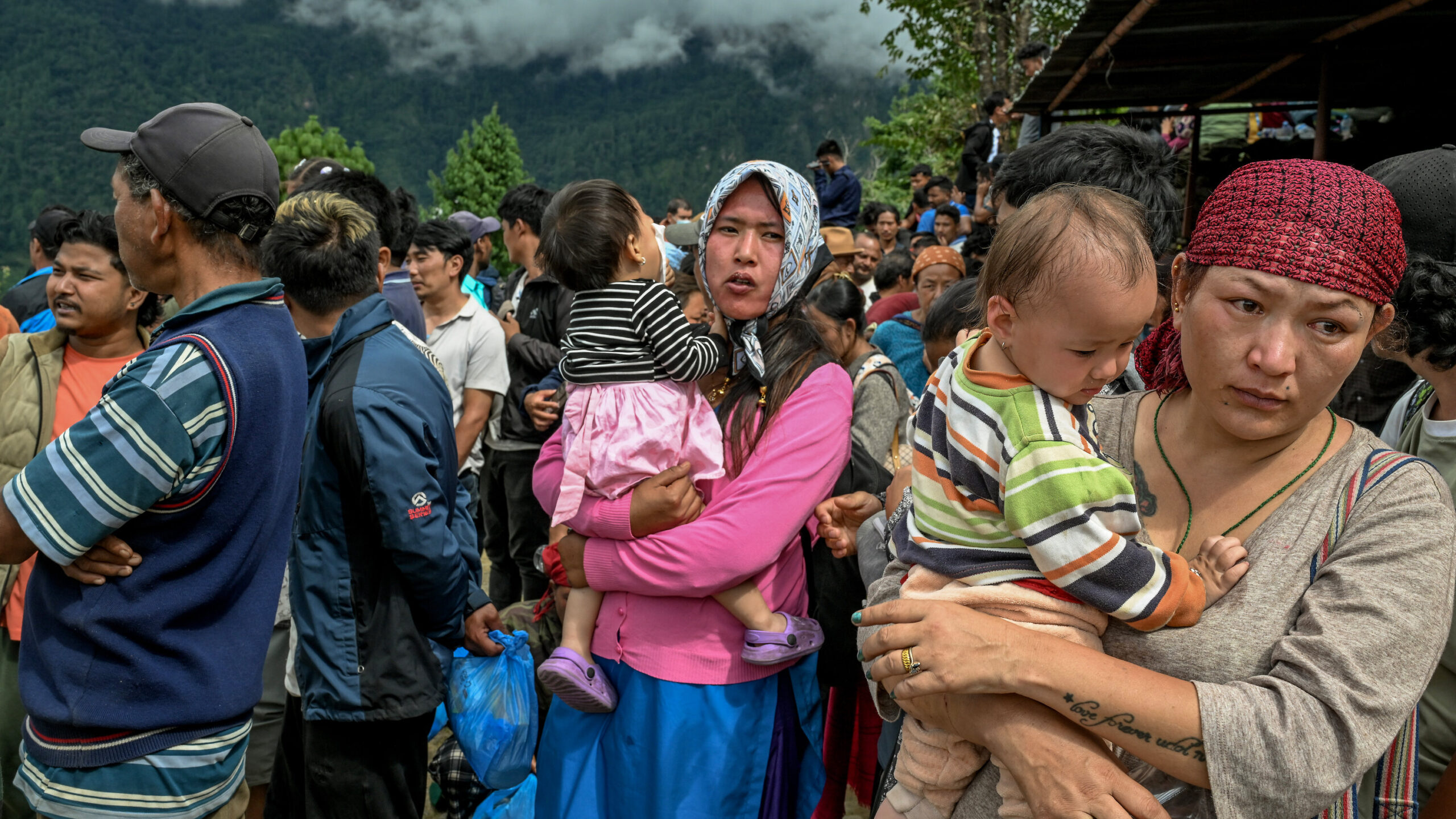
“I saw two buses carrying Indian pilgrims to Kailash Mansarovar,” said 27-year-old Laloma, a Nepali mother.

She was rescued on Thursday from Nepal’s devastated area of Syabrubesi, along with her infant son and husband, after sheltering for a freezing night in a school. The buses were swept away, she said.

“They are all gone,” she told AFP.

Mount Kailash is sacred to Hindus, Buddhists and Jains.

Hindus regard Kailash as the abode of deities Shiva and Parvati, while Tibetan Buddhists associate it with Mount Meru, which they say is the centre of the universe.

It is forbidden to climb the 6,638-metre-high (21,778-foot) mountain.

Instead, pilgrims undertake a roughly 52-kilometre (32-mile) contemplative circuit around its base, taking most walkers about three days.

For those en route or returning from the isolated, pyramid-shaped peak and bathing in the frigid ice waters of nearby Lake Mansarovar, across China’s frontier with Nepal, it was meant to be a healing journey of peace.

But climate change is causing glaciers to melt worldwide, increasing the risks of glacial lake floods and glacial collapses.

On Wednesday morning, a tsunami-like wall of water and mud powered down, caused by a glacial collapse that sent a torrent of debris downstream, burying homes and sweeping away bridges.

More than 470 people are dead and upwards of 1,400 others are missing in both China and Nepal.

See also  Osigwe, Akangbe call for justice reforms

‘Share your pain’

Indian spiritual leader Sadhguru this year led devotees to Kailash, an annual pilgrimage growing in popularity, especially among Indians.

Thousands of Indians are reported to have undertaken the pilgrimage this year, as well as Hindus from other nations.

Sadhguru’s “sacred walks”, organised by his Isha Foundation, promised a journey to a place “of divine connection, where the veil between the physical and spiritual is thin”.

On Thursday, he wept as he described his frantic calls to missing devotees, in a video message posted from Tibet to his several million followers.

Some 77 pilgrims were at the Nepal-China border office when floodwaters swept through the centre on Wednesday, he said in a post, alongside a terrifying video from the Chinese side of the frontier, when a wall of mud and debris crashed over the building.

“Literally, the entire group was there in the building, this is a terrible and extraordinary event,” he said, as anguished wails from other pilgrims with him are heard over the video.

“All of us, including the volunteers and support teams are deeply anguished,” the Hindu guru, whose real name is Jagdish Vasudev, added.

“To the families and loved ones of those in our group and hundreds of others who are affected in the region, I share your pain,” he added.

“All phones are off, telecommunications are down, roads are blocked, we are unable to go there,” he said, tears in his eyes.

For Indians, the pilgrimage to Kailash and Lake Mansarovar is organised annually by New Delhi’s foreign ministry, in coordination with Chinese authorities.

See also  PHOTOS & VIDEO: Notorious bandit kingpin Bello Turji releases 100 captives in fresh peace deal

It restarted in 2025 for Indians for the first time since a 2020 border clash.

‘Pure intention’

Logadarrsiny Raman, 26, from Malaysia, said four members of her family were among 17 Malaysians travelling with a Nepali travel operator.

Her parents, aunt and uncle had spent months planning the pilgrimage, which they regarded as a spiritual journey and fulfilment.

“They felt like this was the right time for them to go for this pilgrimage,” Raman said, speaking to AFP in Kuala Lumpur.

“It was a very pure intention, and that’s why they wanted to go together as a family.”

She last exchanged WhatsApp messages with her father just after dawn in Nepal on Wednesday.

After that, the family heard nothing.

Raman said the travel agency told her its last contact with the group was at 8:18 am Nepal time, when they were travelling towards the Nepal-China border.

The flood crashed into the area where they last were soon after.

“I’m very anxious,” she said. “My only hope is to hear back from them that they are safe.”

She appealed for help locating her parents and the other Malaysian pilgrims.

“There’s nothing else that we all want as a family,” she said.

AFP

Source: punchng.com

FOLLOW US ON:

FACEBOOK

TWITTER

PINTEREST

TIKTOK

YOUTUBE

LINKEDIN

INSTAGRAM

Continue Reading
Click to comment

Leave a Reply

Your email address will not be published. Required fields are marked *

News

State Police Update: National Assembly collates reports from 30 state assemblies

Published

on

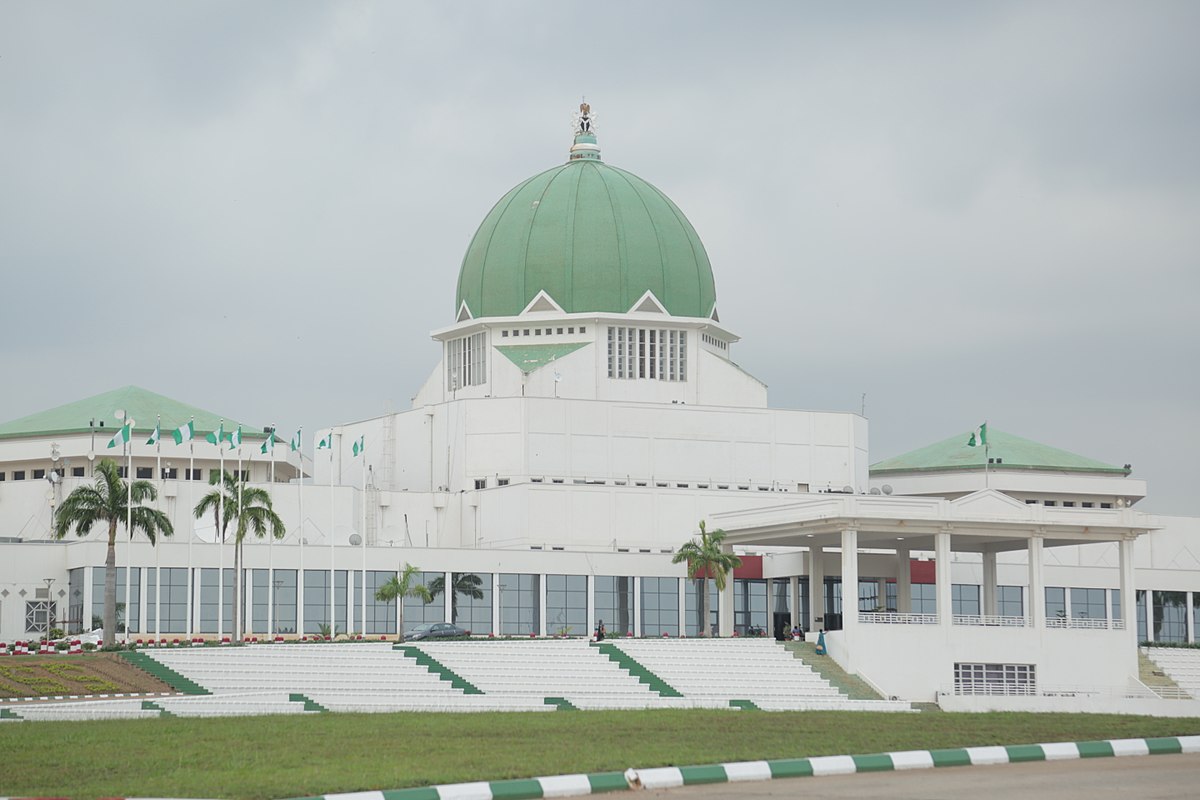
The National Assembly has commenced collation of reports from state Houses of Assembly on the proposed establishment of state police, with the Senate Leader, Opeyemi Bamidele, saying the constitutional requirement for the reform had been met.

Bamidele disclosed this on Thursday while delivering a lecture to participants of Senior Executive Course 48 at the National Institute for Policy and Strategic Studies, Kuru, Plateau State.

He said at least 30 state legislatures had approved the State Police Constitution Alteration Bill, 2026, surpassing the constitutional requirement of two-thirds of the 36 State Houses of Assembly.

According to him, the National Assembly will collate the reports, consider the positions of the state legislatures and pass a resolution by a simple majority in both chambers before transmitting the bill to President Bola Tinubu for assent.

The Senate Leader, who is also Vice Chairman of the Senate Committee on the Review of the 1999 Constitution, said the National Assembly intended to complete the remaining legislative processes by December 2026.

He said, “We are pleased to inform our constituents across the federation that state police has moved from rhetoric to reality. We have already received formal reports from the state Houses of Assembly and, as of today, no fewer than 30 states have approved the State Police Constitution Alteration Bill, 2026.

“By the provision of Section 9(2) of the 1999 Constitution (as amended), which requires the concurrence of not less than two-thirds of all state Houses of Assembly, the constitutional requirement for the alteration has been duly met. This is a historic milestone in our collective quest to re-engineer our security architecture and make it more responsive, more local, and more effective.

See also  Iran: Protest erupts in Nigeria over killing of Ali Khamenei (PHOTOS)

“What happens next is procedural, but critical. The National Assembly is now constitutionally obligated to consider the reports transmitted by the state Houses of Assembly, collate those reports, and pass a resolution by simple majority of members in both chambers. Once this resolution is passed, the Alteration Bill will be transmitted to the President and Commander-in-Chief for assent.

“We have set a clear timeline for ourselves. We intend to conclude all these legislative stages — consideration of reports, passage of resolution, and transmission for presidential assent — on or before December 2026,” the Senate Leader emphasised.

The proposed state police system is part of wider efforts to decentralise Nigeria’s security architecture amid persistent killings, kidnappings and other violent crimes across the country.

Under the existing policing structure, the Nigeria Police Force operates primarily as a centrally administered institution.

Proponents of state police argue that allowing states to establish their own police services would improve local intelligence gathering, response times and accountability.

However, concerns have been raised about the potential abuse of state police by governors and other political office holders, particularly against political opponents.

Bamidele said the proposed reform would operate within constitutional safeguards, oversight mechanisms and human rights protections.

He described the development as a significant breakthrough after more than 15 years of unsuccessful attempts to establish state police through constitutional reform.

“What this means is that state police is no longer a campaign promise or a subject of endless debate. It is now a constitutional reality. It means that the security of lives, private property and public assets occupies a prime place in the legislative agenda of the 10th National Assembly,” he said.

Bamidele said the proposed system would enable states to develop policing structures better suited to their local conditions.

See also  Tinubu appoints Olumode as new Controller-General of Fire Service

He added that the reform was not intended to weaken the Federal Government but to strengthen Nigeria’s federal system by making security more responsive to local communities.

According to him, the objective was not to create state armies but state-led, community-anchored policing arrangements operating under clearly defined constitutional and operational standards.

The Ekiti lawmaker also credited the leadership of the Senate President, Godswill Akpabio, with supporting the reform, assuring Nigerians that the National Assembly would see the process through.

He said the National Assembly, under the leadership of Akpabio, “remains committed to delivering on the establishment of state police. We will not falter until every Nigerian, whether in Kuru, in Iyin-Ekiti, in Gusau or in Yenagoa, can sleep with both eyes closed.”

Beyond state police, Bamidele said the 10th National Assembly had prioritised legislation intended to address citizens’ welfare, economic development and institutional reforms.

He argued that the performance of the legislature should be assessed by the practical effects of its laws and interventions rather than the number of bills passed.

Bamidele listed the Student Loans (Access to Higher Education) Act, 2024; the Minimum Wage (Amendment) Act, 2024; the four Tax Reform Acts of 2025; and the National Social Investment Programme Act among the measures passed by the current Assembly.

The Senate Leader also cited the Electoral Act, 2026, the Cybercrimes (Amendment) Act, the Investments and Securities Act, 2025, the Nigerian Insurance Industry Reform Act, 2024, and the Regional Development Commissions Acts.

He said the laws reflected a deliberate effort to use legislation to anticipate emerging challenges, strengthen public institutions and improve governance.

See also  Osigwe, Akangbe call for justice reforms

Bamidele said the impact of proactive lawmaking extended to national security, economic transformation, public financial management, electoral credibility, education, healthcare, technological innovation, environmental sustainability and relations among the different tiers of government.

On the relationship between the National Assembly and NIPSS, he called for stronger institutional collaboration to improve legislative foresight and policy development.

He maintained that the passage of laws alone was insufficient to guarantee good governance, stressing the need for effective implementation, funding and monitoring.

The senator said good laws must be relevant to citizens’ needs and capable of producing measurable improvements in their lives.

He, thus, observed that good governance “requires good laws. But good laws alone do not guarantee good governance.

“We require laws that are relevant, evidence-based, implementable, adequately funded, properly administered, effectively monitored, periodically reviewed and ultimately measured by their impact on citizens,” Bamidele stated.

Source: punchng.com

FOLLOW US ON:

FACEBOOK

WHATSAPP CHANNEL

TWITTER

PINTEREST

TIKTOK

YOUTUBE

LINKEDIN

INSTAGRAM

Continue Reading

News

FG pumps N5tn into military operations, read details

Published

on

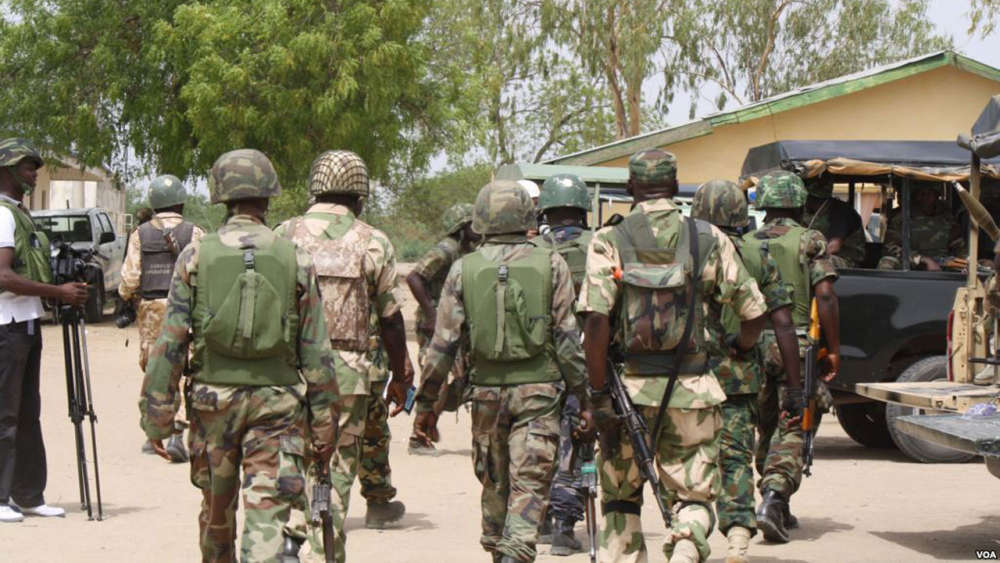
The Federal Government has disbursed N5.15tn in special intervention funds to the Nigerian military and related security agencies between November 2023 and September 2026, amid persistent insecurity, including terrorism, banditry, kidnapping and other violent crimes across the country.

An analysis by The PUNCH of documents from the Federation Account Allocation Committee, obtained on Thursday, revealed that the government received N5.65tn into a dedicated special intervention account over the period, out of which N5.15tn had been disbursed, representing 91.15 per cent of the total funds.

The records showed that the intervention was financed through allocations from the Federation Account and other government revenue sources, including non-oil revenue and funds transferred from a FAAC withholding account.

The document, titled ‘Ledger of Special Intervention Programme for Nigerian Military September, 2026”, was prepared by the Federation Account Department of the Office of the Accountant-General of the Federation and formed part of the records presented to the Technical Sub-Committee of FAAC at its meeting in Abuja on October 14, 2026.

According to the ledger, the N5.15tn was released through 30 payment transactions between November 8, 2023, and September 23, 2026, while the total receipts were recorded across 33 funding transactions.

The disbursements were separate from the regular annual budgetary allocations to the Ministry of Defence and other security institutions, indicating the scale of additional financial resources channelled towards security operations.

However, the records did not provide a breakdown of the specific military operations, equipment purchases, personnel costs or security projects financed with the money.

A breakdown of the transactions showed that the intervention programme commenced with a N100bn transfer on October 19, 2023, described as the September 2023 allocation.

The first payment of N100bn was made to the military on November 8, 2023, while another N100bn was received on November 20, 2023, and subsequently disbursed on December 20.

By the end of December 2023, the account had received N300bn and disbursed N300bn, leaving no outstanding balance.

The funding arrangement continued throughout 2024, with regular transfers of N100bn and corresponding payments to military and paramilitary agencies.

Between January and December 2024, the account received N1.2tn and disbursed the same amount, bringing cumulative receipts and payments to N1.5tn.

See also  Buhari was an angel in human flesh - Bisi Akande

The transactions were largely recorded as monthly allocations under the special intervention programme, although the payment dates did not always correspond with the months for which the funds were allocated.

For instance, the January 2024 allocation was transferred on February 27, while the corresponding payment was made on March 1.

Similarly, the ledger showed that the programme entered a second phase in July 2024, beginning with a N100bn transfer on July 27.

The second phase continued into 2025, with the government maintaining the N100bn monthly funding pattern.

During the first nine months of 2025, the account received N900bn and disbursed N900bn, bringing cumulative payments to N2.4tn by September 1, 2025.

An analysis of the transactions, therefore, showed that N2.4tn was disbursed between November 2023 and September 2025, before the government significantly increased the scale of the intervention in 2026.

The records indicated that the funding arrangement changed considerably in 2026, with individual transfers rising from the previous N100bn monthly pattern to between N200bn and N500bn.

On March 18, 2026, the government transferred N200bn from the FAAC Withheld Account, described in the ledger as savings for March 2026.

The amount was followed by a N100bn payment to security agencies on March 16, although the payment preceded the recorded transfer by two days.

Another N250bn was transferred from non-oil revenue on May 18, 2026, while N130bn was paid to security agencies from the FAAC Withheld Account on May 25.

The ledger also recorded a N120bn payment to the Consolidated Pool Account II TSA on June 3, 2026.

This particular transaction differed from the other payments because it was not expressly described as a transfer to military or paramilitary agencies.

On June 16, 2026, the government transferred N400bn from non-oil revenue for May, which was reversed the same day.

The reversal was followed by a fresh transfer of N500bn from non-oil revenue, indicating that the earlier transaction was cancelled and replaced.

The same day, N500bn was paid to military and paramilitary agencies, marking one of the largest individual disbursements recorded under the programme.

See also  Trump Says He Is Naming Projects After Himself Because ‘Nobody Will’ After He Leaves Office

Another N500bn was transferred from non-oil revenue on July 15, followed by a corresponding payment to military and paramilitary agencies on July 22.

The pattern continued in August, when N500bn was transferred on August 19 and paid out on the same date.

On September 16, another N500bn was transferred from non-oil revenue, while the corresponding payment was recorded on September 23.

The final entry in the ledger showed a further N500bn transfer from non-oil revenue on October 14, 2026, described as the September 2026 allocation.

Although the ledger was titled September 2026, the inclusion of the October 14 transaction indicated that its financial position incorporated the latest transfer recorded at the FAAC technical meeting.

The figures showed that the intervention account received N3.25tn in 2026 up to October 14, compared with N1.2tn throughout 2024.

This represented an increase of about 170.83 per cent over the entire amount received in 2024, despite the 2026 records covering only part of the year.

Payments recorded in 2026 amounted to N2.75tn, compared with N1.2tn in 2024, representing an increase of approximately 129.17 per cent.

The N2.75tn disbursed in 2026 also accounted for 53.40 per cent of the N5.15tn paid out under the programme since its commencement.

The analysis further showed that the government disbursed more under the special intervention programme in 2026 than the combined N2.4tn released between November 2023 and September 2025.

It also revealed that the programme had an outstanding balance of N500bn as of October 14, 2026, representing 8.85 per cent of the total N5.65tn received.

The balance arose after the latest N500bn transfer was recorded without a corresponding payment in the ledger.

Consequently, the outstanding amount represented funds available in the intervention account rather than money already disbursed to security agencies.

Despite the significant increase in funding, the country continues to grapple with security challenges across several regions.

In the North-East, the military has continued operations against Boko Haram and the Islamic State West Africa Province, while banditry and mass kidnappings remain major security concerns in parts of the North-West and North-Central regions.

Communities in several states have also experienced attacks by armed groups, resulting in deaths, displacement and disruption of farming and other economic activities.

See also  Osigwe, Akangbe call for justice reforms

The security challenges have placed pressure on government finances, as authorities continue to allocate substantial resources to military operations, intelligence gathering, logistics and the protection of vulnerable communities.

FG reviews strategy

Ina related development, the Federal Government has begun a review of the 2019 National Security Strategy to develop a new framework that addresses emerging threats, including terrorism, banditry, kidnapping, cybercrime, food insecurity and climate change.

The National Security Adviser, Nuhu Ribadu, disclosed this on Thursday during the inauguration of a committee to review the existing strategy and formulate the National Security Strategy 2026.

Ribadu, who was represented by Major General Sarkin Bello (retd.), said Nigeria’s security environment had changed significantly since the last review in 2019, requiring a comprehensive reassessment of the country’s security priorities.

“Our national security landscape is undergoing rapid and profound transformations. Since the last review of our strategy in 2019, the domestic, regional and global security environments have changed dramatically, with intensity,” he said.

He noted that the country was confronted with multiple security challenges that required a broader strategic response.

“As you are aware, these problems range from terrorism, banditry and kidnapping to sophisticated cyber threats, misinformation, economic problems, food insecurity and environmental challenges, among others,” Ribadu said.

He said the new strategy would serve as a framework for coordinating national security, resilience and sustainable development, adding that it must reflect current realities while anticipating future threats.

Also, the Deputy Chairman of the committee, Major General Evi Onumajuru (retd.), said the changing nature of security threats made a strategic realignment imperative.

He said traditional security challenges, including terrorism, insurgency and banditry, had become intertwined with non-kinetic threats such as cybercrime, economic vulnerabilities, food insecurity and climate change.

He added that the strategy must integrate the priorities of the Renewed Hope Agenda by linking economic prosperity and good governance with human security and national defence.

Source: punchng.com

FOLLOW US ON:

FACEBOOK

WHATSAPP CHANNEL

TWITTER

PINTEREST

TIKTOK

YOUTUBE

LINKEDIN

INSTAGRAM

Continue Reading

News

10 things to know about applying for 2027 SAN rank

Published

on

The Legal Practitioners’ Privileges Committee has invited applications for the 2027 award of the rank of Senior Advocate of Nigeria, with private legal practitioners required to pay a non-refundable processing fee of N5m and government-employed lawyers N2.5m.

The committee said the application portal would open on November 1, 2026, directing all candidates to complete the application process online and comply with its document submission requirements and deadlines.

PUNCH Online had reported Wednesday that Legal Practitioners’ Privileges Committee invited applications for the 2027 conferment of the rank of Senior Advocate of Nigeria.

Here are 10 things prospective applicants need to know about the exercise.

1. Applications open on November 11

The LPPC said its application portal would open to the public at 12am on November 1, 2026.

Applications are to be processed through its official portal, www.lppconline.com.

2. Private legal practitioners will pay N5m

The committee fixed the non-refundable processing fee for private legal practitioners at N5m.

3. Government-employed lawyers will pay N2.5m

Legal practitioners employed by the government are required to pay a non-refundable fee of N2.5m.

4. Payment must be made into designated bank accounts

Applicants are required to pay directly into either of the committee’s designated accounts:

– Zenith Bank: 1014103141

– Guaranty Trust Bank: 0213662834

5. Proof of payment must be uploaded

Candidates must upload evidence of payment to the online portal for verification.

According to the notice, the LPPC Secretariat will send a confirmation email after verification, allowing applicants to continue with the process.

See also  Katsina unveils hybrid buses to boost eco-friendly transport

6. All supporting documents must be uploaded online

Applicants seeking the rank through advocacy or academia must upload clear and legible scanned copies of all mandatory and supporting documents through the portal.

7. Academic applicants have additional requirements

Candidates applying through the academic category must submit seven physical photocopies each of their curriculum vitae and impact statement, in addition to the required flash drives.

8. Every applicant must submit five flash drives

The committee directed all applicants to provide five flash drives containing copies of their completed application forms downloaded from the portal and all mandatory and supporting documents uploaded during the application process.

9. Online applications close on January 31, 2027

The deadline for completing online applications is midnight on January 31, 2027. Applicants are advised to complete their submissions before the deadline to avoid technical or procedural complications.

10. Flash drives must arrive by February 1, 2027

The five flash drives must be delivered to the LPPC Secretariat before 4pm on February 1, 2027.

The committee warned that applications that do not comply with its guidelines or are submitted after the prescribed deadlines will be rejected and treated as non-submissions.

The notice was signed by the Chief Registrar of the Supreme Court of Nigeria and Secretary of the LPPC, Kabir Eniola Akanbi.

Applicants seeking clarification may contact the secretariat through lppcsecretariat@courts.gov.ng.

Source: punchng.com

FOLLOW US ON:

FACEBOOK

WHATSAPP CHANNEL

TWITTER

PINTEREST

TIKTOK

YOUTUBE

LINKEDIN

INSTAGRAM
Continue Reading

Trending