Connect with us

Business

Petrol near N1,400 as Dangote defends price hikes

Published

on

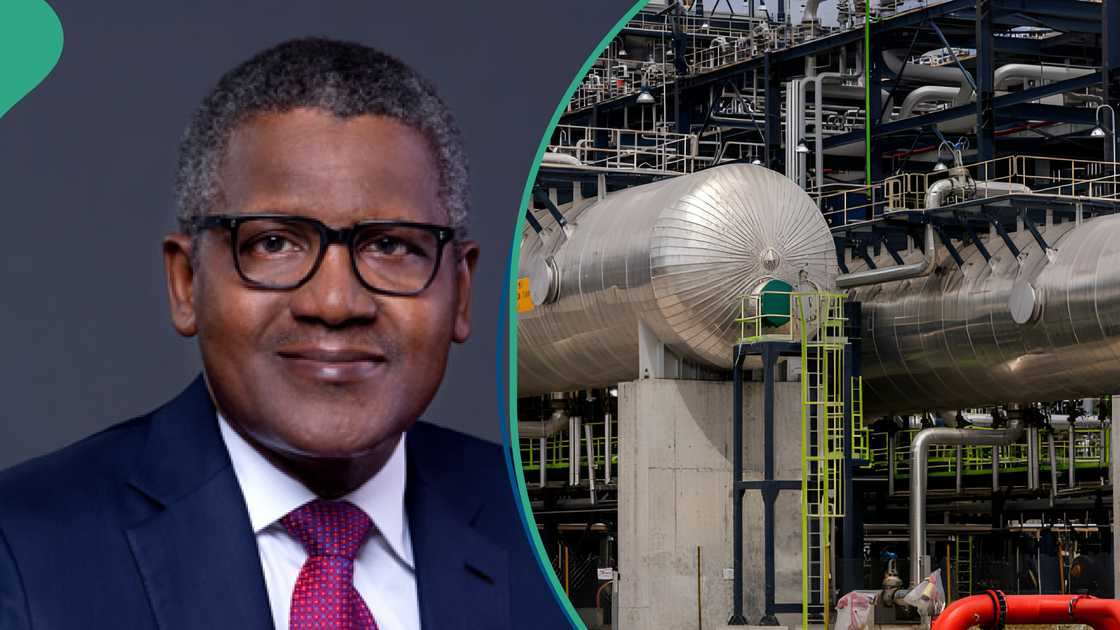
The Dangote Petroleum Refinery has defended its latest fuel price increases, attributing the upward adjustments to the cost of crude oil purchased earlier and the lengthy process involved in securing, shipping and delivering crude to the refinery.

The explanation came as the price of Premium Motor Spirit (petrol) climbed further across the country, with the product now selling between N1,310 and N1,400 per litre, depending on location.

Petrol is currently selling for about N1,310 per litre in Lagos and Ogun states, while the price has risen to N1,350 or more in northern states and other locations farther from the refinery.

The latest increase followed the Dangote refinery’s decision to raise its PMS gantry price by N65 per litre, from N1,200 to N1,265, effective August 29. It was the third increase announced by the refinery in eight days.

It was observed that the price hikes occurred even as global crude prices were declining, despite the US-Iran tensions.

However, a senior executive of the Dangote refinery, who spoke with The PUNCH on condition of anonymity because he was not authorised to speak publicly on the matter, said the prevailing international crude price could not be used as the sole basis for determining the cost of petrol being produced from crude already purchased by the refinery.

The executive explained that there was a significant time lag between when crude was purchased and when it eventually arrived at the refinery for processing.

Raising a series of questions, he said, “If you want to buy crude at today’s price, when do you think you will complete the actual transaction to purchase the crude? When will you get a laycan? When can you get a ship chartered and a charter party agreement signed? When will the ship go to load the crude and secure the laycan for discharge? When is the sailing time before the crude eventually gets into your tank?”

He also questioned how the refinery would account for large volumes of crude purchased earlier when prices were higher. “And what will happen to the huge quantities of expensive crude that you bought long ago and stored in the tanks? These are the factors determining the change in prices, not an immediate crude price change,” the source stated.

See also  FCT: Water supply project will create 1,600 jobs – Wike

The explanation provides Dangote’s defence against criticism that its repeated petrol price increases have come despite a decline in international crude benchmarks.

The refinery first increased its gantry price from N1,165 to N1,185 per litre on August 21. Five days later, it raised the price by another N15 to N1,200 per litre, effective August 26. On Saturday, August 29, it announced another N65 increase, taking the price to N1,265 per litre.

The three adjustments have therefore raised Dangote’s gantry price by N100 per litre in eight days, representing an increase of about 8.6 per cent. The latest increase also moved the refinery’s coastal PMS price from N1,582,380 to N1,669,545 per metric tonne.

In its price communication, the refinery directed customers to return their existing Authorisations to Collect for repricing, stating that a new volume contract would be issued for immediate loading resumption.

The PUNCH reports that the impact of the latest adjustment is already being felt in the retail market, with petrol now selling at about N1,310 per litre in Lagos and Ogun and N1,350 or more in parts of the North and other distant markets.

In some locations, the product is approaching N1,400 per litre, it was gathered. The difference in pump prices across locations is partly linked to the cost of moving petrol from the coastal refinery and depots to distant markets, with transportation and other distribution expenses adding to the cost of the product.

This is one of the reasons the Dangote refinery plans to extend its free distribution scheme across the country.

The latest increase has also raised questions over the relationship between international crude prices, the cost of refined products and the pricing decisions of domestic refiners.

Data contained in the Major Energies Marketers Association of Nigeria’s Energy Bulletin for August 27 showed Dangote Refinery’s PMS gantry price at N1,200 per litre on August 27.

See also  Marketers push N800/litre petrol, seek import licences

More importantly, the estimated spot import-parity price of petrol into tanks stood at N1,222.32 per litre, while the NPSC-NOJ spot estimate was N1,221.32 per litre. This meant that, as of August 27, Dangote’s N1,200 gantry price was N22.32 below the spot import-parity estimate of N1,222.32 per litre.

However, two days later, the refinery raised its gantry price to N1,265 per litre, putting the new price N42.68 above the August 27 spot import-parity estimate. It is yet to be confirmed whether or not the import parity is still at the August 27 rate.

The crude market has remained volatile amid geopolitical tensions involving Iran and the United States and uncertainty over crude flows through the Strait of Hormuz.

According to Oilprice.com, Brent crude closed at $88 per barrel, while WTI closed at $83 on Friday, indicating a 5 per cent drop. But the Dangote executive argues that such daily movements do not necessarily correspond with the cost of crude already acquired by a refinery.

Crude procurement, according to him, involves negotiating and completing the transaction, securing a loading window, chartering a vessel, loading the cargo, sailing to Nigeria and securing a berth before the crude can be discharged into the refinery’s storage tanks.

Therefore, crude being processed at a particular time may have been purchased when the international price was substantially different from the prevailing benchmark.

The executive also pointed to the refinery’s existing inventory, arguing that large quantities of crude purchased at higher prices remain in storage. The refinery’s position is that reducing the price of petrol immediately whenever the international crude benchmark falls could mean selling products made from expensive inventory at a price based on cheaper replacement crude.

The issue is particularly significant for Dangote because the refinery does not rely entirely on Nigerian crude. Reuters reported on August 26 that between 30 and 40 per cent of the refinery’s crude feedstock was being imported.

The latest price hikes have, nevertheless, heightened concerns among petroleum marketers, who have warned that the volatility is making it difficult to plan their businesses.

See also  Asian stocks hit by fresh tech fears as gold retreats from peak

The National Publicity Secretary of the Independent Petroleum Marketers Association of Nigeria, Chinedu Ukadike, said marketers were dealing with several factors that could push up the cost of petrol.

“We are facing the challenges of the volatility in the market. There are policies of the government, policies of the international market, and exchange rates. These are inherent dispositions to the increase in pump prices. We are not refiners to be able to determine the price of petroleum products.”

He, however, acknowledged that Dangote had previously reduced its petrol price in response to movements in the international market. “But, I also believe that Dangote has been consistent in terms of reducing its price in line with the international market rate. With this situation now, we cannot, at this particular point in time, structure our business. It’s going to be too difficult for us to structure our business,” he stated.

Ukadike also warned that continued tensions between Iran and the United States could worsen price irregularities. “The more the Iran and United States crisis continues to persist, the more we’ll be having these irregularities in price,” he added.

The IPMAN official said the price fluctuations were already being reflected in the cost of petrol across the country. “Also, bear in mind that the price of crude oil is determined by the international market. So, for all the independent marketers, we will continue to strive. Prices have been fluctuating, and we are still loading. The price of petrol will continue to be volatile as long as the price of crude is not stable and other factors relating to the financial situation,” Ukadike noted.

Ukadike said marketers and consumers were ultimately bearing the consequences of the price movements. This is coming at a time when the presidential candidate of the African Democratic Congress, former Vice President Atiku Abubakar, said he would reintroduce fuel subsidies to reduce hardship and the cost of living.

Source: punchng.com

FOLLOW US ON:

FACEBOOK

TWITTER

PINTEREST

TIKTOK

YOUTUBE

LINKEDIN

INSTAGRAM

Continue Reading
Click to comment

Leave a Reply

Your email address will not be published. Required fields are marked *

Business

Ajah-Lekki markets, facilities face waste compliance enforcement

Published

on

The Lagos Waste Management Authority has identified a number of markets, commercial and institutional facilities across the Ajah-Lekki Axis for compliance enforcement over persistent violations of waste management requirements and other environmental regulations.

The Director of Public Affairs at LAWMA, Mukaila Sanusi, disclosed this in a recent statement obtained by The PUNCH.

Speaking on the development, the Managing Director/Chief Executive Officer of LAWMA, Dr Muyiwa Gbadegesin, disclosed that the identified facilities include Kodak Moment, Bayrock Lifestyle, Caelum Nigeria Ltd, Alpha Pharmacy, Amazon Farm, Ramayaa Mall, Simply Africa Place, Aries Safia, Wolly Mall, Delightful Toy Shop and New Creation Church.

“Others include The Logic Church, Dow Eye Clinic, Time Oak Hotel, L OMP, Furniture House, Fashion Design Factory, De Phantom Hotel, Elizade Motors, Trinity, Living Faith Church, Premium Rentals, Christ Chapel Church and QMB Mart,” Gbadegesin said.

He added that the facilities had been identified for compliance enforcement following observed violations.

“We have continued to engage and monitor facilities to secure compliance, but where establishments continue to default after being given the opportunity to comply, we will take the necessary enforcement measures. Our responsibility is to ensure that commercial activities do not compromise proper waste management or the right of residents to a clean and orderly environment,” he stressed.

Gbadegesin said that LAWMA would continue to combine engagement and improved waste management services with firm compliance enforcement.

He stressed that operators within the corridor were expected to meet their waste management obligations.

He urged businesses, markets, institutions and residents to comply with approved waste management requirements and cooperate with LAWMA’s enforcement teams.

See also  The Rise and Fall of Volkswagen in Nigeria’s Auto Industry

The LAWMA boss noted that sustained compliance was essential to preventing indiscriminate dumping, protecting public spaces and maintaining a cleaner environment.

He reaffirmed LAWMA’s commitment to sustained monitoring, enforcement and stakeholder engagement to promote proper waste management and environmental compliance across Lagos State.

The development followed a monitoring and enforcement exercise conducted on Tuesday, 25 August 2026, by the LAWMA Project WISE team in collaboration with officials of the Kick Against Indiscipline, military personnel and the Nigeria Police at the Eleganza and Issa Imamu Market areas of Ajah.

At Eleganza, the enforcement team dislodged illegal structures erected along road corridors and pedestrian walkways by traders, which had obstructed the movement of motorists and pedestrians, while Issa Imamu Market was sealed following persistent indiscriminate disposal of waste along the roadside.

Source: punchng.com

FOLLOW US ON:

FACEBOOK

TWITTER

PINTEREST

TIKTOK

YOUTUBE

LINKEDIN

INSTAGRAM

Continue Reading

Business

Ajaokuta Steel risks power cut over N5.46bn debt

Published

on

The moribund Ajaokuta Steel Company Limited and its host community risk being disconnected from electricity supply over unpaid obligations totalling N5.46bn, the Nigerian Electricity Regulatory Commission has disclosed.

The NERC, in its just-released 2025 Annual Report, said the steel company and the host community failed to make any payment towards energy invoices and service charges issued by the Nigerian Bulk Electricity Trading Plc and the Market Operator during the year.

According to the report, Ajaokuta received an energy invoice of N4.96bn from NBET in 2025 but made no payment. It also failed to pay the N500m service charge invoice issued by the Market Operator, bringing the total outstanding obligation to N5.46bn.

“Ajaokuta Steel Co. Ltd and the host community did not make any payment for the N4.96bn and N0.50bn energy invoices and service charges received from NBET and MO, respectively, in 2025,” the commission said.

NERC said the continued non-payment had become a matter of concern, prompting it to escalate the issue to relevant Federal Government ministries for intervention.

It warned that failure by Ajaokuta to settle its electricity obligations could put the complex at risk of being disconnected by its service providers. “The commission has escalated the issue of continual non-payment of electricity bills by Ajaokuta to the relevant federal ministries to find a lasting solution.

“Failure to settle the obligations may put the Ajaokuta complex at risk of being disconnected from its service providers (NBET and MO) on the grounds of gross indebtedness,” NERC stated.

See also  Electricity Power subsidy hits N418bn, losses exceed N300bn

The disclosure comes amid the Federal Government’s renewed efforts to revive the Ajaokuta Steel Complex, which has remained largely inactive decades after its construction began.

The electricity debt highlights the financial challenges confronting the complex and the wider difficulties surrounding the payment of electricity bills by some government-linked institutions and other large power consumers.

NERC also disclosed that international bilateral electricity customers recorded a lower remittance performance in 2025 compared with their local counterparts.

The international customers – Société Nigérienne d’Électricité, Société Béninoise d’Énergie Électrique and Compagnie Énergie Électrique du Togo – received a combined invoice of $73.91m for ancillary services provided by the Market Operator.

The three international customers paid $62.75m, representing an 84.90 per cent remittance performance.

For local bilateral customers, NERC said invoices for ancillary services provided by the Market Operator amounted to N13.20bn, while payments totalled N12.75bn. This represented a remittance performance of 96.60 per cent.

The commission’s report underscores the growing pressure on electricity market participants to meet their financial obligations, as unpaid bills continue to affect the liquidity and sustainability of the Nigerian Electricity Supply Industry.

NBET is responsible for bulk electricity trading and serves as an intermediary between electricity generators and distribution companies, while the Market Operator administers the commercial operations of the electricity market.

For Ajaokuta, however, it could be recalled that NERC had issued similar threats in the past without corresponding actions.

Source: punchng.com

FOLLOW US ON:

FACEBOOK

TWITTER

PINTEREST

TIKTOK

YOUTUBE

LINKEDIN

INSTAGRAM

Continue Reading

Business

Fuel Subsidy Is The Biggest Scam – Donald Duke

Published

on

Former governor of Cross River State, Donald Duke has described fuel subsidy as the biggest scam.

It was reports that Duke made the claim in a recent interview.

The Peoples Redemption Party (PRP) presidential candidate argued that Nigeria’s crude oil resources could support significantly lower domestic fuel prices if properly managed.

“Look, I don’t believe there’s any subsidy in fuel.

“For a barrel of crude oil, there are about seven by-products. The two consequential ones are diesel and petrol, PMS and AGO, and kerosene, aviation fuel and all those things.

“You sell them at commercial rates, okay? Work it out. You can almost sell petrol today at ₦200 a litre, not the ₦1,000-plus.

“So that thing about subsidy, I think, is the biggest scam that has been perpetrated, maybe globally,” Duke said.

The former governor also described Nigeria as an energy-rich country that has failed to translate its vast resources into affordable and reliable energy for its citizens.

“You’re an energy-blessed country. You have all known forms of energy existing in Nigeria, from the crudest, which is human labour, to hydrocarbons, solar, hydro, uranium and now lithium.

“You have all those things. Why are we still energy-poor? Because the political will is not there. But even beyond the political will, we’re not thinking through this,” Duke said.

Duke said the continued flaring of natural gas, despite the country’s energy challenges, was another indication of what he described as poor management of Nigeria’s resources.

“We easily flare two billion cubic feet of gas a day. That is equivalent to 20 million litres of diesel.

See also  Asian stocks hit by fresh tech fears as gold retreats from peak

“If you had a turbine to power all of Africa, it would not consume 20 million litres of diesel daily.

“So, it’s akin to the abundance of water while the fish is thirsty,” he said.

He also rejected arguments that domestic fuel prices should be benchmarked against international prices, saying countries should leverage their natural resources to improve the welfare of their citizens.

“When I hear excuses like, ‘Oh, it’s cheaper in America,’ or, ‘We’re cheaper than it is in America,’ every country has its own endowments.

“You’ve got to use what you’ve got to get what you want. We are an energy-blessed country. The people should feel their blessings,” he said.

FOLLOW US ON:

FACEBOOK

TWITTER

PINTEREST

TIKTOK

YOUTUBE

LINKEDIN

INSTAGRAM

Continue Reading

Trending