Connect with us

Politics

Borno commissioner who threatened to flog opposition apologises

Published

on

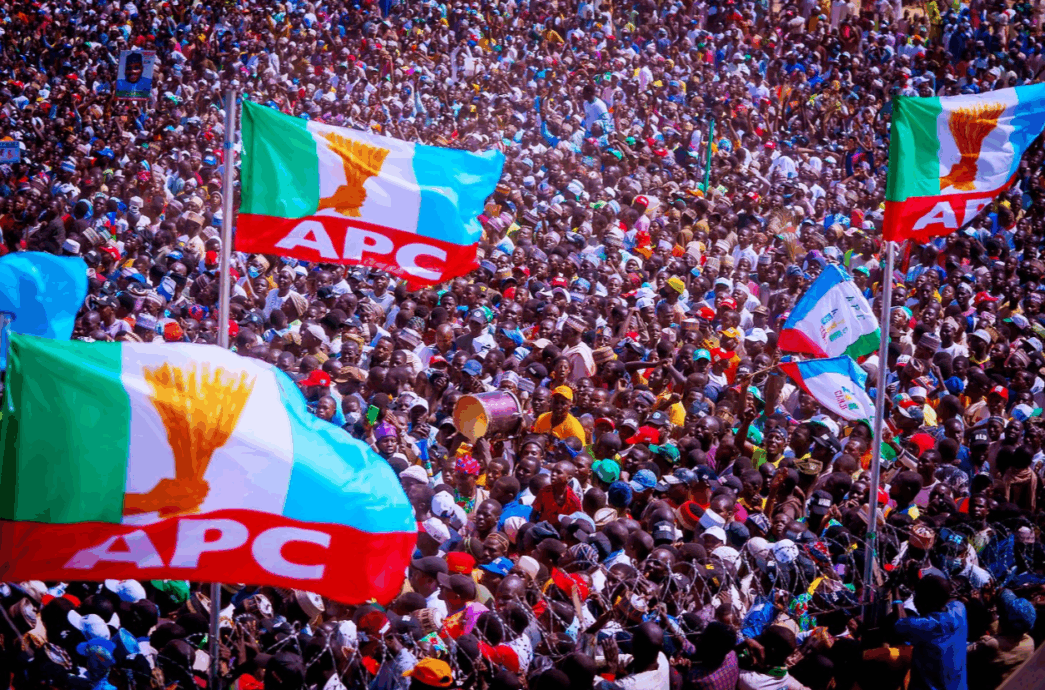
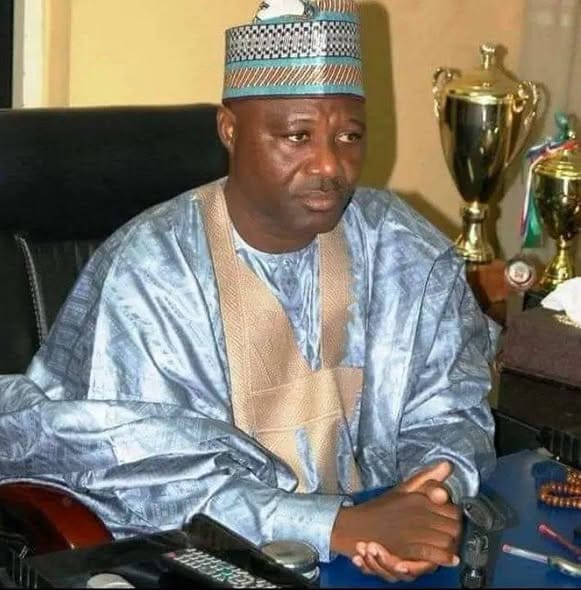
The Borno State Commissioner for Poverty Alleviation, Youth and Sports Development, Sainna Buba, who threatened to “flog” opposition members who do not support the All Progressives Congress, has tendered an apology and retracted the comments.

PUNCH Online had earlier reported that Buba, in a now-circulating video, said, “The government is our government,” adding that whoever follows it will enjoy “the honey.”

He said, “We are now playing politics. Whoever shows us a finger, we will show him a finger. Whoever dares to show us a finger again, we will break his finger.”

“The government is our government. Those who follow us will enjoy the honey; if you refuse, then you will be flogged,” he added.

However, addressing journalists in Maiduguri on Wednesday, the commissioner said the remark was never intended to harm or violate the fundamental rights of the people to freedom of choice and association.

He said, “In recent days, a comment I made during the empowerment programme organised by the City Boy Movement in Maiduguri has generated considerable concern within the public space.

“I wish to state, unequivocally, that my remark was never intended to harm or violate the fundamental rights of the people of our dear state to freedom of choice and association, as enshrined in the Constitution of the Federal Republic of Nigeria (as amended),” he noted.

He said he had earlier provided clarification that the comment was not intended to be taken in its literal sense.

“However, in view of the concern it has continued to generate, I am using this medium to retract my earlier statement formally and to apologise to the entire people of Borno State and beyond for any offence it may have caused,” Buba added.

See also  SDP crisis: Gabam faction dissolves NWC, expels Adebayo, 12 others

“Let me state in categorical terms that my comment does not in any way represent the ideals of the All Progressives Congress (APC) and the administration of His Excellency, Governor Professor Babagana Umara Zulum,” he stressed.

He further noted that the administration does not in any way undermine the rights of the citizenry.

“Rather, the party and the administration continue to uphold and respect every segment of our society, particularly our youth, who have remained steadfast supporters of both the party and the Zulum administration,” he maintained.

Zulum, he said, and the APC have consistently demonstrated a true democratic spirit over the past seven years, assuring that the commitment will remain unwavering to the very end of his tenure.

Source: punchng.com

FOLLOW US ON:

FACEBOOK

TWITTER

PINTEREST

TIKTOK

YOUTUBE

LINKEDIN

INSTAGRAM

Continue Reading
Click to comment

Leave a Reply

Your email address will not be published. Required fields are marked *

Politics

Wike reveals that a prisoner, person under EFCC probe can canvass votes

Published

on

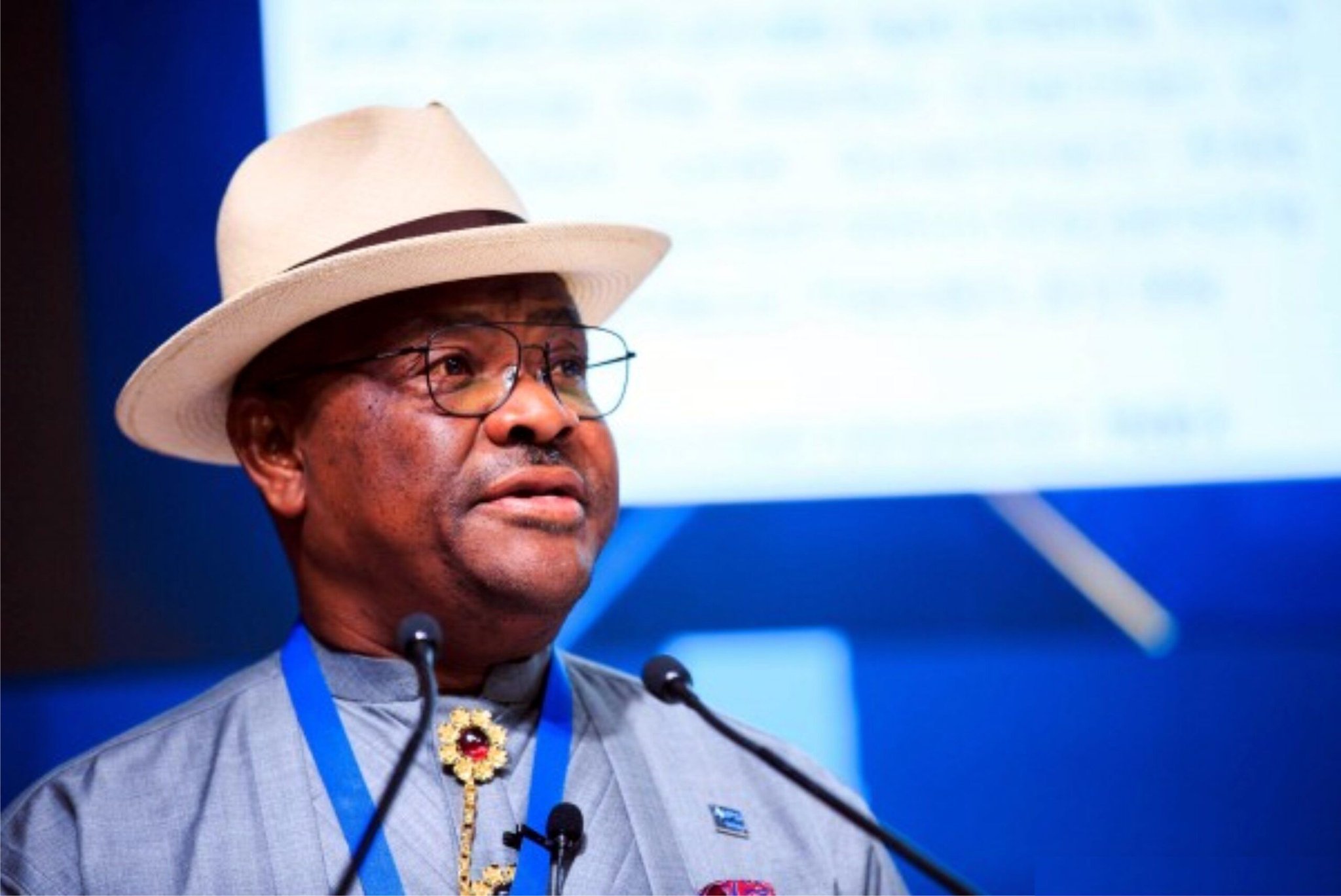
Federal Capital Territory Minister, Nyesom Wike has defended the inclusion of an individual under Economic and Financial Crimes Commission investigation on President Bola Tinubu’s presidential campaign team.

Wike argued that being probed does not prevent a person from canvassing votes

He stated this during a media parley he hosted on Wednesday, which was aired on Channels Television.

The former Rivers State governor questioned what he described as a double standard in scrutinising people involved in political campaigns, noting that a person facing an EFCC investigation but not charged to court could still participate in political activities.

“You (media) were asking the moral justification of putting someone who has an EFCC case to be in a campaign council. And I was just watching the lady. The lady doesn’t even know what to say,” Wike said.

He added, “Now, somebody cannot be in a campaign to canvass for votes for a particular person, but somebody who has an EFCC case can contest an election and win an election?”

Wike said there had been instances where people facing criminal allegations had contested elections and won.

“This person had an EFCC case in court, charged to court. He contested an election and became a Governor,” he said without mentioning any name.

Wike further argued that even a person serving a prison sentence could canvass votes for a candidate.

“Listen. Even a prisoner… maybe they have somebody in prison. I go and visit the person. The person can tell me, ‘My brother, I want you to support so-and-so candidate.’ A prisoner has canvassed for vote.”

See also  Donald Trump refuses to rule out third term as President

He also referred to an unnamed person who he said had been alleged to be involved in a coup in Nigeria, saying the person had also canvassed votes for a candidate.

“I was watching, when Channels, when Sunrise, who came up to say, ‘Ah, how can somebody who’s being looked for as a coup plotter is now canvassing for votes for so-and-so government?’ Somebody EFCC is looking for is now canvassing for votes for so-and-so person.

“But… a party, or a candidate cannot, simply because EFCC is investigating the person, cannot be a member of the campaign council to campaign for votes.”

Wike’s comments followed controversy over the inclusion of Edu in the campaign structure for Tinubu’s 2027 re-election bid.

Edu was listed as Director of Women Mobilisation in the APC Presidential Campaign Council. She was suspended by Tinubu in January 2024 following allegations of financial impropriety and was subsequently investigated by the EFCC.

An APC campaign council spokesperson, Kemi Asekun-Shittu, had defended Edu’s inclusion during an interview on Channels Television’s Morning Brief on Monday, saying the former minister had not been found guilty of any offence.

“I’d like to say that for Betta Edu, for example, she has not been found guilty. And it will be unfair to ask that she leaves her life or refuses to live her life until the EFCC declares her. We believe that there is very likely the issue that she may not be found guilty.

“But besides that, we also know that with politics, every Nigerian is allowed to be a politician if they choose to. And we do not believe that we should then hold her life still or keep her stagnant until the case is decided. It’s been almost two years of that case.

See also  Poor communication making APC achievements invisible, says party chair

“She does deserve an opportunity to present herself again for the party,” she said.

Asekun-Shittu also said the campaign committee was an internal party affair and that the APC could decide who would work for it, while noting that the list was not final and could still be reviewed.

Edu has not been publicly declared guilty of any offence in relation to the EFCC investigation.

Source: punchng.com

FOLLOW US ON:
FACEBOOK

TWITTER

PINTEREST

TIKTOK

YOUTUBE

LINKEDIN

INSTAGRAM

Continue Reading

Politics

INEC denies altering NDC list, says candidates were party submissions

Published

on

The Independent National Electoral Commission has rejected allegations by the Nigeria Democratic Congress that it removed the party’s nominated candidates from some State House of Assembly constituencies in Anambra and Benue states and replaced them with unauthorised names.

INEC said its records showed that the disputed candidates were listed on Form EC9E submitted to the commission and duly signed by the NDC National Chairman and National Secretary.

Earlier, INEC’s Chief Press Secretary and Media Adviser to the INEC Chairman, Adedayo Oketola, had said the commission would rely on its electronic and documentary records to establish what happened, stressing that “It is, therefore, possible to establish objectively the history and source of entries relating to any candidate whose name appears on the portal,” Oketola said.

Reaffirming its position on, the commission made the clarification in a statement issued on Tuesday by the Chairman of its Information and Voter Education Committee, Mohammed Kudu Haruna.

“As a matter of fact, the Commission has in its possession, Form EC9E where these candidates were listed and submitted to the Commission duly signed by the National Chairman and the National Secretary of the party,” the statement said.

INEC said candidate nomination was the responsibility of political parties and that it had no legal authority to choose, insert or substitute candidates for any party.

“Candidate nomination is, by law, the exclusive responsibility of political parties. INEC has no legal authority to select, insert, or substitute a candidate for any party,” it said.

The commission also distinguished its statutory role of monitoring party primaries from the nomination of candidates, saying oversight of a primary did not give it the power to impose a candidate on a political party.

See also  Donald Trump refuses to rule out third term as President

“Monitoring a party’s primary is a statutory oversight function only and confers no power on INEC to choose or impose a candidate,” INEC said.

The commission said that ahead of the 2027 general elections, all 22 registered political parties had designated two technically trained officers to handle their candidate nomination processes following training organised by INEC.

It said portal access codes were thereafter issued directly and in person to the national chairmen of the parties.

“Ahead of the 2027 election, all 22 registered parties designated two technically trained officers to handle their nomination process, following training organised by the Commission. Thereafter, the portal access codes were issued directly and in person to each party’s National Chairman, and not by proxy,” the statement said.

According to INEC, candidate lists were generated from submissions made by the parties and jointly signed by their national chairmen and national secretaries in the Form EC9 series.

“List of candidates were generated for each party as submitted by the party jointly signed by the National Chairmen and National Secretaries of the party, making the submission in Form EC9 series (A-G),” it said.

The commission consequently rejected the allegation that it independently uploaded or altered the NDC’s candidate information.

“Therefore any claim that the Commission independently uploaded or altered candidate information is unfounded and untrue,” INEC said.

The development followed allegations by the NDC that names of candidates it neither nominated nor authorised had been uploaded and published as its candidates for some State House of Assembly constituencies.

In a report published earlier on, the NDC alleged that INEC had removed candidates nominated by the party and replaced them with names unknown to it.

See also  Adamawa gov Fintiri defects to APC

The party identified several constituencies in Anambra State and said it had observed a similar pattern in other states.

The party’s National Chairman, Moses Cleopas, had called on the INEC chairman to investigate how the disputed names appeared on its candidate list.

“We call on the INEC chairman to urgently and immediately cause an investigation into the matter and unravel how this came to be,” the NDC said.

The party also alleged that the issue extended beyond Anambra to constituencies in Benue and Imo states.

INEC said it remained committed to transparency and accountability in the electoral process.

“The Commission remains committed to transparency, accountability and providing a level playing field for all stakeholders in the electoral process,” the statement said.

Source: punchng.com

FOLLOW US ON:

FACEBOOK

TWITTER

PINTEREST

TIKTOK

YOUTUBE

LINKEDIN

INSTAGRAM

Continue Reading

Politics

Tinubu defends reforms as Atiku faults economic policies

Published

on

President Bola Tinubu on Tuesday defended his administration’s economic reforms as necessary steps towards building a $1tn economy by 2030, as former Vice President Atiku Abubakar challenged the policies, asking why Nigerians had to endure years of hardship before the government began promising relief.

Tinubu, represented by the National Chairman of the All Progressives Congress, Prof Nentawe Yilwatda, at the second edition of the Asiwaju Scorecard Series and Policy Roundtable in Abuja, said the reforms had strengthened the foundation for economic stability and growth, citing improved foreign reserves, revenue mobilisation, trade and gross domestic product.

Atiku, however, said the administration’s recent promises of cheaper transportation, increased food production and relief for vulnerable Nigerians amounted to a belated response to a cost-of-living crisis it had allowed to persist for more than three years.

Atiku, the presidential candidate of the African Democratic Congress, has continued to oppose the policies of the Tinubu administration as the 2027 general elections draw nearer, particularly its economic reforms and their impact on the cost of living.

Speaking at the event, Tinubu, represented by Yilwatda, said the economic reforms introduced by his administration had placed Nigeria on the path to achieving a $1tn economy by 2030.

He said the reforms had strengthened the foundation for economic stability, growth and prosperity.

The President said the removal of fuel subsidy and reforms in the foreign exchange market, alongside increased revenue mobilisation and investments in critical infrastructure, were necessary to move the country away from years of economic uncertainty and towards sustainable growth.

“When President Bola Ahmed Tinubu assumed office on 29 May 2023, Nigeria faced a difficult economic inheritance. We had fuel subsidy distortions, multiple exchange-rate windows, weak revenue mobilisation, foreign-exchange shortages, rising debt-service pressures and years of inadequate investment in critical infrastructure.

“The President understood that Nigeria could not continue on that trajectory and therefore took difficult decisions, including the removal of the fuel subsidy and the reform of the foreign-exchange market.

“The evidence increasingly shows that the foundation is strengthening. Nigeria’s gross external reserves have risen to about $52.7bn by August 2026.

“Consolidated non-oil revenue increased from approximately N13.63tn in 2023 to N16.4tn in the first two quarters of 2026, demonstrating the growing contribution of non-oil sources to government revenue.

“Our trade position has also improved dramatically: from a merchandise trade surplus of only about N44.8bn for the whole of 2023 to approximately N7.54tn in the first quarter of 2026 alone.

“Real GDP grew by 4.43 per cent in Q2 2026, while inflation has fallen significantly from its earlier peak to about 15.4 per cent.

“These figures do not mean that our economic challenges have disappeared, but they demonstrate that the direction of travel has changed.

“And let me emphasise: macroeconomic stability is not the destination; it is the foundation. The ultimate test is when stability translates into cheaper food, more jobs, affordable credit, reliable electricity and greater purchasing power for Nigerians,” Yilwatda said on Tinubu’s behalf.

Speaking on the $1tn economy, Tinubu said: “It is not merely a number, but a national mission: a Nigeria that produces more, exports more, attracts more investment, creates more jobs and gives its young people a greater stake in the future.”

He said Nigeria’s $1tn economy ambition requires adequate infrastructure, stressing that the Renewed Hope Agenda prioritises roads, rail, ports, energy and digital connectivity.

See also  SDP crisis: Gabam faction dissolves NWC, expels Adebayo, 12 others

The President added, “Nigeria must now take full advantage of its enormous maritime opportunity by developing an integrated five-port maritime and logistics corridor.

“Our strategic ambition should be to develop and connect five major deep-sea ports at Lagos, Ondo, Ibom, Port Harcourt and Calabar, linking them by modern rail and road infrastructure, with the Lagos-Calabar Coastal Super Highway serving as the principal coastal road spine. But the vision does not stop at the coastline.

“The Western Corridor will connect the maritime gateways to the interior through the Lagos–Abuja–Kaduna–Kano rail corridor, complemented by the Sokoto–Badagry Super Highway, thereby opening a direct trade route from the Atlantic coast to the markets of the Northwest and the Sahel.

“The Eastern Corridor will similarly connect the eastern maritime gateways through the Port Harcourt–Abuja–Kaduna–Kano rail corridor, complemented by the proposed Calabar–Maiduguri Trans-Sahara Super Highway, creating a second major east-to-north trade route.

“In this way, Nigeria can create an integrated national transport system in which our five deep-sea ports are connected, connected to our major cities and production centres, and connected ultimately to the landlocked markets of Niger, Chad, Burkina Faso, Sudan and the Central African Republic.”

He further stated, “This is how Nigeria can move beyond being simply a coastal trading nation to becoming the maritime gateway and logistics hub of West and Central Africa, capturing a much larger share of the continent’s trade, logistics, manufacturing and distribution value chain.

“That is more than transportation infrastructure, but a trade architecture. It would generate opportunities in logistics, warehousing, freight forwarding, customs, banking, insurance, manufacturing, distribution and agro-processing. It would create jobs, generate foreign exchange and strengthen Nigeria’s position as a regional commercial hub.”

Tinubu said Nigeria must develop industrial parks, export-processing zones, logistics hubs, agro-processing clusters and manufacturing centres along major transport corridors.

He said linking rail lines to agricultural and mineral-producing areas would attract processing and manufacturing industries, turning infrastructure into an engine of economic growth.

He added that Nigeria’s ambition must go beyond individual ports to developing an integrated maritime economy covering shipping, logistics, ship repair, marine services, finance, fisheries, offshore energy, tourism and marine technology.

“Every container through a Nigerian port is an economic opportunity. Every Nigerian agricultural product exported is an opportunity. Every factory established along a transport corridor is an opportunity. Every international company that chooses Nigeria as its African distribution base is an opportunity. That is how we grow GDP, create jobs, earn foreign exchange and build the foundation of a $1tn economy,” he said.

He listed Nigeria’s abundant gas and the Ajaokuta-Kaduna-Kano gas pipeline as strategically important in connecting gas resources to major population and industrial centres in Northern Nigeria to generate energy.

“It is about electricity, fertiliser, manufacturing, transportation, energising homes and industrialisation,” he said.

On investment in youths, Tinubu said, “We are investing in the future of our young people because they are the greatest asset of the Nigerian economy.

“Through NELFUND, we are expanding access to higher education so that financial circumstances do not prevent young Nigerians from acquiring the knowledge they need to succeed.

“We are also supporting young people in technical and vocational education through grants and skills-development opportunities, while programmes to train young Nigerians in digital technologies are equipping a new generation with the skills required for the global digital economy.

See also  Osun Rep denies involvement in murder of Accord party member

“At the same time, through initiatives such as CREDICORP, we are expanding access to responsible credit so that workers, entrepreneurs and businesses can acquire productive assets, grow their enterprises and create jobs.

“This is not simply social investment; it is an investment in the productive capacity of Nigeria and in the young Nigerians who will ultimately build and drive our $1 trillion economy.”

Earlier in his remarks, the Chairman of the APC Professionals Forum’s Board of Trustees, Dr Isa Yuguda, said the 2027 presidential election should focus on achievements, policies and realistic solutions.

Yuguda described fuel subsidy removal as a difficult but necessary reform, saying his experience as chairman of the 2009 Fuel Subsidy Task Force exposed widespread fraud and financial leakages in the system.

He said the reform had reportedly saved over N15tn, providing more resources for education, security, agriculture and infrastructure.

Yuguda also warned that restoring subsidy could reverse the gains recorded.

“As we approach the 2027 election, Nigerians must carefully evaluate political promises, particularly those relating to the return of fuel subsidy.

“The proposal by former Vice President Alhaji Atiku Abubakar to restore subsidy may appear attractive to citizens seeking immediate relief, but it must be examined against our national experience.

“The old subsidy regime was associated with massive leakages, fraudulent claims, inefficiency, and a significant drain on public finances.

“Presenting a return to that system without clearly addressing these problems risks misleading Nigerians for short-term political gain and could reverse the fiscal space now supporting critical national investments,” he added.

Atiku, however, hit back at Tinubu over his criticism of proposals to reduce energy costs, accusing the administration of making Nigerians endure years of economic hardship while promising relief only as the 2027 elections approach.

Atiku, through his Senior Special Assistant on Public Communication, Phrank Shaibu, said the central issue was not a personal contest between him and Tinubu but the inability of millions of Nigerians to afford necessities.

Shaibu, in a statement on Tuesday titled, “Tinubu, the issue is not Atiku — it is why Nigerians can no longer afford to live,” said Atiku would not engage the President in a personal exchange but would continue to defend policies aimed at reducing the cost of living.

He said, “Atiku has more important people to engage directly: the mother struggling to feed her children; the civil servant whose salary disappears into transportation; the farmer paying more to move produce to market; the student being pushed into debt simply to remain in school; and millions of Nigerians whose daily reality bears no resemblance to the prosperity advertised in your tweets.”

The statement was a response to Tinubu’s recent remarks on economic policy, in which the President criticised Atiku’s proposals to reduce the cost of energy and dismissed the possibility of returning to the era of fuel subsidy.

Shaibu questioned why the administration was now promising cheaper transportation, increased food production and relief for vulnerable Nigerians after more than three years of hardship.

“Why did Nigerians have to suffer for more than three years before your government discovered that economic growth must reach ‘the dining table and the pocket’?

“Why is intervention backwards when Atiku proposes it, but progressive when you announce it?” he asked.

See also  North not neglected under Tinubu, Presidency counters Kwankwaso

Atiku’s camp argued that reducing the cost of energy would have a wider impact on the economy by lowering transportation and production costs and ultimately reducing prices of food and other essential goods.

The statement noted that the Atiku Economic Recovery Plan would provide targeted support for Nigerian crude supplied for domestic refining under a capped and transparently budgeted framework.

According to him, the proposal would include tracking of crude supplied, monitoring of refined products and a consumer pass-through mechanism to ensure that the benefit of the intervention reaches consumers.

“The economics is straightforward. Reduce fuel costs, and you reduce pressure on transportation. Reduce transportation costs, and you reduce the cost of moving tomatoes, rice, yam, livestock and manufactured goods,” he said.

He added that the objective was to provide “structural relief” rather than allow living costs to rise before introducing temporary palliatives.

The Atiku camp also aimed the administration’s student loan programme, accusing the government of increasing the cost of education and subsequently presenting student loans as the solution.

Atiku described the argument that cheaper fuel would threaten the Nigerian Education Loan Fund, workers’ salaries or the minimum wage as ‘fearmongering dressed up as economics.’

“Celebrating NELFUND as proof that education has become affordable under your government is like setting school fees on fire and then boasting that you lent students a bucket of water,” he said.

The statement stressed that Atiku had reviewed the student loan policy and would seek to reduce the underlying cost of education while considering forgiveness for qualifying student debts.

“A student loan is not a scholarship. It is a liability,” Atiku said, arguing that education policy should enable young Nigerians to acquire education without being pushed into unsustainable debt.

The former vice president also demanded explanations over the financial gains from the removal of petrol subsidy.

According to him, the Federal Government had stated that subsidy removal mobilised about N15.8tn between June 2023 and December 2025, asking what measurable benefits had accrued to ordinary Nigerians in return for the sacrifice.

“Atiku wants to offer Nigerians more than empty figures. He has a plan that respects the dignity and protects the survival of the Nigerian people,” he said.

The statement further renewed demands for a reconciliation of figures involving about N30tn in Federation Account revenues, deductions, savings, transfers and related entries.

It also questioned Import Duty Exemption Certificate approvals covering about N34tn worth of imports in 2025, asking the government to disclose the beneficiaries, values, legal basis and public benefits of the exemptions.

“So when you suddenly announce that relief is coming ‘in the next few weeks,’ Nigerians are entitled to ask: Why now?” the statement added.

The ADC presidential candidate alleged that the promised relief could amount to “a temporary dose of political anaesthesia as 2027 approaches,” but said Nigerians should distinguish election-season measures from sustainable economic recovery.

The statement comes as political parties and opposition figures intensify preparations for the 2027 general elections, with economic hardship, fuel prices, food inflation, wages and social protection expected to feature prominently in the emerging political contest.

Source: punchng.com

FOLLOW US ON:

FACEBOOK

TWITTER

PINTEREST

TIKTOK

YOUTUBE

LINKEDIN

INSTAGRAM

Continue Reading

Trending