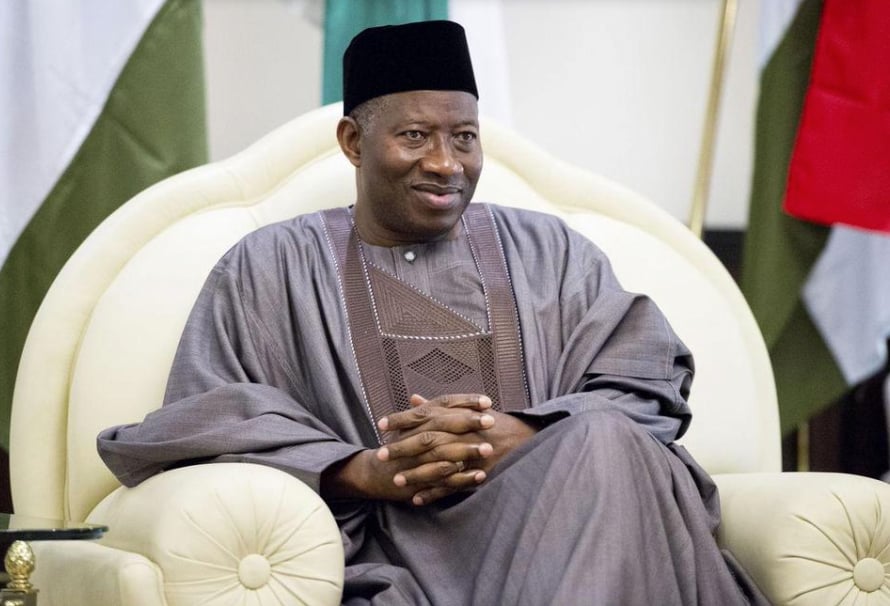
Former President Goodluck Jonathan has expressed concern over growing political intolerance ahead of the 2027 general elections, noting that incendiary rhetoric could trigger a post-election crisis.
Jonathan, the founder and chairman of the Goodluck Jonathan Foundation, gave the warning on Tuesday at the 2027 Peace and Security Conference in Abuja, themed ‘Safeguarding Peace and Strengthening Social Cohesion in a Competitive Political Environment.’
Political attacks on candidates and supporters of major parties have intensified as Nigeria prepares for the 2027 general elections.
The convoy of President Bola Tinubu, the All Progressives Congress presidential candidate, came under attack on November 13, 2026, shortly after he observed Jumu’ah prayers in Garki, Abuja, with some individuals reportedly throwing stones and other objects at it.
On November 15, 2026, suspected thugs attacked the campaign convoy of Nigeria Democratic Congress vice-presidential candidate, Senator Rabiu Kwankwaso, and its Kano governorship candidate, Aminu Gwarzo, in Bichi Local Government Area, leaving several vehicles damaged and supporters injured.
Earlier in November, the convoy of Nigeria Democratic Congress presidential candidate, Peter Obi, was attacked in Calabar, Cross River State, while some of his supporters were reportedly assaulted at a Lagos town hall meeting last week.
Supporters of the African Democratic Congress presidential hopeful, Atiku Abubakar, have also reportedly faced attacks in Edo, Kaduna, and Cross River states.
Similarly, the African Action Congress presidential candidate, Omoyele Sowore, and his entourage were attacked on October 30, 2026, at a restaurant in Ado-Ekiti, Ekiti State. The Allied Peoples Movement and other parties have also reported attacks on their supporters.
The ex-President also raised concerns about conflicting judicial pronouncements, particularly decisions by courts of coordinate jurisdiction, warning they could undermine public confidence in the judiciary and push citizens toward self-help.
He stated, “As we gradually approach the 2027 general elections, certain developments in our political environment are becoming increasingly worrisome. As a former President, I receive calls from Nigerians and friends of our country across the world who express concern about the direction Nigeria is heading. Rather than the confidence and optimism we should be inspiring, there is growing apprehension about the likelihood of crises that may follow the elections. We must not ignore these concerns.
“Among the issues demanding urgent attention is the growing culture of political intolerance. There appears to be an increasing unwillingness among political actors to accommodate opposing views or recognise the legitimate right of others to compete for political power.’’
“This is compounded by political thuggery, the exploitation of our young people as instruments of violence, and acts of political brigandage. Equally disturbing are controversies surrounding some judicial pronouncements, particularly those involving courts of coordinate jurisdiction.
“While the judiciary has the constitutional responsibility to interpret the law and adjudicate disputes, conflicting decisions on similar matters can undermine public confidence in the institution and create unnecessary tension. We must protect the integrity and independence of our judiciary,” he further said.
Jonathan warned that declining public confidence in the judiciary could lead to citizens taking the law into their own hands, with potentially disastrous consequences for the country’s stability.
He also cautioned against the use of ethnic sentiments in the 2027 elections, warning that political rivalry could deepen divisions and threaten national unity.
The former President added, “These are precisely the concerns that inform this conference. We seek to hold a mirror before our political leaders and citizens, encourage reflection and promote a change in conduct that respects our laws, democratic values and shared responsibilities.
“As I observed a few days ago in Lagos, if Nigeria must make meaningful progress, we must review our political recruitment process. Our present system remains vulnerable to ethnic, religious and other primordial considerations, which often prevent competent and credible individuals from emerging as leaders.
“As we approach the 2027 elections, Nigerians will be choosing leaders at both national and sub-national levels. We must therefore be deliberate about the quality of people we recruit into public office at both the state and federal levels. The future of our country depends on the choices we make. Leadership is very critical in the growth of any nation.
“Let us choose competence over prejudice, service over personal ambition, and national interest over narrow considerations. Our democracy must produce leaders capable of uniting our people and advancing our collective development.”
Earlier in his remarks, former Vice-President Namadi Sambo, who is the Chairman of the occasion, urged the political leaders to view political differences as opportunities for constructive engagement rather than sources of division.
Sambo called for inclusive governance, responsible leadership and respect for the rule of law, stressing the need to build bridges across ethnic, religious and political differences to strengthen national cohesion.
“As a nation, we must continually remind ourselves that political differences should be viewed as opportunities for constructive engagement rather than sources of division. Our collective responsibility is to promote tolerance, inclusive governance, responsible political leadership and respect for the rule of law.
“Having had the privilege of serving our country at the highest level of government, I strongly believe that national cohesion must transcend political affiliation and personal interest. We must deliberately build bridges across our ethnic, religious and political differences and create an environment where every Nigerian feels valued, protected and represented.”
The former leader expressed optimism that the discussions and recommendations at the conference would strengthen public trust, democratic institutions and national unity, stressing that “Our democracy must be competitive, but our nation must remain united.”
In his goodwill message, the Minister of Defence, Gen Christopher Musa (retd.), cautioned political leaders against allowing political competition to fuel national disunity, violence and insecurity, urging them to prioritise peace and national unity.
The minister, represented by his Special Adviser on Strategic Communications, Mercy Bala, stated that, “Political competition is a fundamental feature of democracy. It provides citizens with the opportunity to make choices, express their opinions and hold those entrusted with public responsibilities accountable. However, political competition must never be allowed to become a source of national disunity or insecurity.
“We must understand that political parties and their candidates may have different ambitions, ideologies and programmes, but the peace and unity of Nigeria must remain a common priority for all. The language of political engagement matters. The conduct of political leaders matters. The responsibility of the media matters.
“Above all, the choices we make as citizens matter. We must discourage the use of inflammatory language, hate speech, misinformation and divisive narratives that exploit our ethnic, religious and political differences. Our political leaders must demonstrate restraint, maturity and statesmanship, particularly in moments of heightened political tension.
“Democracy should provide a platform for healthy competition and constructive disagreement, not an avenue for violence, intimidation or the breakdown of mutual respect. Ultimately, no political ambition is worth the loss of innocent lives, the destruction of property or the destabilisation of our country.”
The Chairman of the Independent National Electoral Commission, Prof. Joash Amupitan, cautioned political actors, sponsors and supporters against violence, intimidation and attacks on campaign convoys ahead of the 2027 elections, warning that those responsible would face prosecution.
Amupitan, represented by INEC National Commissioner, May Agbamuche-Mbu, said, “The Commission condemns in the strongest and most unequivocal terms the widespread incidents of political violence, intimidation, and attacks on campaign convoys and party supporters recorded across parts of the country in recent weeks. Democracy cannot flourish in an atmosphere of fear and bloodshed.
“Let me issue a clear and unambiguous warning to all political actors, sponsors, and their foot soldiers: the law will take its full course, and security agencies working alongside the commission will go after the promoters and perpetrators of violent campaigns without fear or favour.
“Equally, I must sound a stern warning against any form of harassment, intimidation, or physical attack directed at the leadership, staff, or ad hoc workers of INEC by supporters of any political party — whether within Nigeria or abroad. Election officials are public servants discharging a sacred constitutional duty; assaulting or threatening them is an assault on the Nigerian state and will be met with decisive legal consequences.
“Let me remind all political parties, candidates, and their supporters that the Electoral Act 2026 speaks with unmistakable clarity on campaign conduct. Sections 96 and 97 of the Act prohibit the use of abusive, intemperate, or slanderous language designed to provoke violent reactions, ban the deployment of private guards, thugs, or masquerades at political rallies, and criminalise any threat or use of force to intimidate voters or opponents.”
The INEC chairman noted that the Electoral Act 2026 increased penalties for electoral offences fivefold, prescribing fines of up to N5m or 12 months’ imprisonment for individuals and up to N10m for political parties.
He added that the law also empowers the commission to prosecute electoral offenders upon receiving investigation reports from the police.
The INEC chairman declared, “Peaceful campaigns are not a favour granted to the commission; they are a constitutional obligation owed to the Nigerian people. I urge party leaders present here today to hold their candidates and supporters, particularly the youth wings, to the highest standards of discipline, and to utilise the Inter-Party Advisory Council as a genuine platform for dialogue rather than a theatre of brinkmanship.”
In a related development, a former President of the ECOWAS Commission, Omar Touray, has identified public trust in democratic institutions and electoral processes as essential to sustaining stable democracies.
Touray added that public confidence in electoral and judicial institutions would help societies manage political disagreements and accept election outcomes, warning that a lack of trust could trigger political tension and instability even after credible elections.
Ahead of the Nigeria 2027 polls, he recommended that, “Political parties and candidates must exercise restraint and responsibility. Electoral complaints must be supported by evidence and pursued through established constitutional and legal mechanisms rather than through intimidation, incitement or extra-constitutional actions.
“The judiciary must be independent, accessible and capable of delivering timely and credible justice. Its decisions must command respect because they are grounded in law, impartiality and due process.
“Security institutions must remain professional and politically neutral, protecting citizens and democratic processes without fear, favour or discrimination.
“The media, in turn, must uphold the highest standards of accuracy, impartiality and professional responsibility, recognising that the irresponsible dissemination of unverified information can deepen political divisions and undermine public confidence.”
The Executive Director, Goodluck Jonathan Foundation, Ann Iyonu, warned that insecurity, economic pressures and declining public trust could heighten political tensions ahead of the 2027 elections.
She cited an Afrobarometer survey showing that fewer than four in 10 Nigerians believe the 2027 polls will be free and fair, warning that electoral violence could threaten regional stability.
Iyonu noted, “As Nigeria approaches the 2027 general elections, our nation faces a complex and evolving political landscape. Political realignments, persistent insecurity, economic pressures, and declining public trust in institutions are converging to create a fragile environment in which political contestation, if not responsibly managed, could deepen divisions and heighten social tensions.
“The central issue before us today is not political competition itself. Indeed, healthy political competition is a defining feature of every vibrant democracy. The challenge lies in ensuring that competition is conducted responsibly, inclusively, and within the framework of democratic norms, and that political differences are managed in ways that strengthen rather than undermine national cohesion.
“At a time when West Africa is grappling with democratic pressures, violent extremism, unconstitutional changes of government, and growing public distrust in institutions, this conference could not be timelier.
“Across the region, governments, political actors, and citizens are confronted with the shared responsibility of ensuring that contests for political power contribute to national stability and democratic consolidation rather than fuel division, polarisation, and insecurity. Political competition must therefore be conducted in ways that strengthen, rather than weaken, social cohesion, peace, and regional security.”
She added that the survey found that many Nigerians fear vote buying, electoral violence, violation of electoral laws and manipulation of results during the 2027 elections.
Iyonu observed that most respondents still intend to vote, stressing that public confidence in the electoral process is vital to national unity, peace and democratic stability.
“Your Excellencies, distinguished guests, ladies and gentlemen, the implications extend far beyond Nigeria’s borders. As West Africa’s biggest democracy and economy, and a critical anchor of regional security, Nigeria’s ability to conduct peaceful, credible, and transparent elections is central to the stability of the sub-region.
“During its October 2026 pre-election fact-finding mission to Abuja, ECOWAS underscored that Nigeria’s management of the 2027 elections will serve as a barometer for the sub-region’s democratic and security trajectory. At a time when parts of West Africa continue to grapple with democratic backsliding, unconstitutional changes of government, a disputed or violence-marred election in Nigeria could have far-reaching consequences.
“It could further erode confidence in democratic governance across the sub-region, strain ongoing counterterrorism and border security efforts, trigger humanitarian pressures through population displacement, and disrupt trade and economic stability. For these reasons, safeguarding the integrity of our electoral process is not only a national priority but also a regional peace and security imperative.”
Source: punchng.com
FOLLOW US ON:
FACEBOOK
WHATSAPP CHANNEL
TWITTER
PINTEREST
TIKTOK
YOUTUBE
LINKEDIN
INSTAGRAM