Connect with us

Business

Manufacturers invest N6.8tn as weak customer demand bites

Published

on

Investors pumped about N6.8tn into Nigeria’s manufacturing sector over the past decade, but the increase in capital coincided with an erosion in consumers’ purchasing power, limiting demand for locally produced goods.

Exclusive data obtained from the Manufacturers Association of Nigeria showed that annual manufacturing investment rose from N489.6bn in 2015 to N1.33tn in 2025, reflecting increased capital commitments to the sector despite a challenging operating environment.

The data showed that investors put N489.44bn into manufacturing in 2016, N508.98bn in 2017, N552.64bn in 2018 and N496.11bn in 2019. Investment dropped dramatically to N118.52bn in 2020 as the COVID-19 pandemic disrupted economic activities, supply chains and business operations. The sector recovered to N217.22bn in 2021 before rising to N427.18bn in 2022.

The recovery gathered pace in 2023, with manufacturing investment climbing to N658.81bn as economic activities strengthened. By 2025, annual investment had more than doubled from the 2023 level to N1.33tn.

However, the increase in investment has not translated into a corresponding expansion in consumer demand, as high inflation, currency depreciation and rising production costs have squeezed household incomes.

Inflation rose from 13.22 per cent in 2020 to 28.92 per cent in 2023 following the removal of the petrol subsidy and foreign exchange reforms. Headline inflation subsequently reached a 28-year high of 34.19 per cent in June 2024 and remained above 30 per cent for much of the year before easing to 15.15 per cent by December 2025.

Despite the decline in inflation, manufacturers continued to face weak consumer demand and elevated operating costs. Manufacturers’ inventory increased to N1.07tn in the second half of 2025 from N1.04tn in the first half, suggesting that businesses continued to contend with the challenge of converting production into sales.

See also  Yuletide: Dangote assures Nigerians of stable fuel supply

Inventory in manufacturing represents finished goods, raw materials and other items held by companies for production or future sales.

The Chief Executive Officer of the Centre for the Promotion of Private Enterprise, Muda Yusuf, said Nigeria’s industrialisation drive remained critical to economic transformation but warned that the country had yet to achieve the level of industrial development required to significantly reduce its dependence on primary commodities and imports.

“Industrialisation is the engine room of economic transformation. It creates quality jobs, deepens value addition, strengthens export competitiveness and reduces vulnerability to external shocks,” Yusuf said.

He, however, noted that Nigeria had delivered only modest industrial outcomes despite years of investment.

Although the N6.8tn invested in Nigerian manufacturing over 10 years appears substantial in naira terms, currency depreciation significantly reduces its value when measured in dollars.

The total investment is equivalent to roughly $5.2bn at the current exchange rate, highlighting the relatively small scale of capital formation in Nigeria’s manufacturing sector compared with larger industrial economies.

For instance, South African manufacturers recorded about $59.3bn in capital formation in 2025 alone, according to data from the South African Reserve Bank.

Rising costs

More than 100 manufacturing companies have shut down over the past decade, with firms such as Surest Foam Limited, Mufex, Framan Industries, MZM Continental, Nipol Industries, Moak Industries and Stone Industries among those that have ceased operations.

Manufacturers have blamed a combination of unreliable electricity, limited access to credit, poor infrastructure, weak consumer demand, high production costs and frequent policy changes. For some investors, energy costs have proved particularly damaging.

The General Manager of Louis Carter Industries, a plastics manufacturing company that has since become moribund, Ndubuisi Okoli, said inadequate electricity supply contributed significantly to the company’s collapse.

See also  FG borrows N2.69tn from bond market in three months

“The Enugu Electricity Distribution Company was not providing us with adequate power. That was our major reason for going under,” he said.

Similarly, the Chief Executive Officer of Moak Enterprises, Olatunde Akintunde, said the high raw material costs contributed to the closure of his bottled-water business in 2021. According to him, the cost of raw materials increased fourfold, pushing production costs beyond sustainable levels.

“It was difficult for us because the cost of our raw materials increased fourfold, leading to high cost of production. The business was no longer sustainable, so we had to go,” Akintunde said.

Credit squeeze

Despite improvements in the foreign exchange market following reforms by the Central Bank of Nigeria, manufacturers continue to grapple with other structural constraints.

MAN data showed that manufacturers’ bank loans fell by 23 per cent to N6.6tn in 2025, limiting access to the long-term financing required to expand productive capacity.

At the same time, manufacturers spent N1.34tn on alternative electricity in 2025, up from N1.1tn a year earlier.

The Director-General of MAN, Segun Ajayi-Kadir, also identified taxation as an emerging concern for manufacturers, particularly following the implementation of four new tax laws from January 2026.

He said the reforms had intensified discussions between the government and private sector over whether taxation should support productivity or add to the burden on businesses.

Ajayi-Kadir had previously highlighted high energy costs, poor access to credit and infrastructure deficiencies as major constraints on manufacturing.

What investors need

Yusuf said Nigeria must move beyond attracting capital into manufacturing and create conditions that allow investors to operate profitably and competitively.

See also  Iran strikes Israel, Gulf nations as oil prices fluctuate

He called for power sector reforms capable of delivering reliable and affordable electricity, alongside faster investment in rail infrastructure to reduce logistics costs.

He also urged the government to strengthen development finance institutions so they can provide long-term industrial financing at concessionary rates.

According to him, government procurement should give greater priority to locally manufactured goods, while executive orders on local content should be backed by enforceable measures.

He further called for urgent action on insecurity, warning that attacks and disruptions were limiting access to raw materials, restricting market expansion and undermining investors’ confidence across manufacturing value chains.

Source: punchng.com

FOLLOW US ON:

FACEBOOK

TWITTER

PINTEREST

TIKTOK

YOUTUBE

LINKEDIN

INSTAGRAM

Continue Reading
Click to comment

Leave a Reply

Your email address will not be published. Required fields are marked *

Business

NAFDAC destroys N8bn products, targets sachet alcohol in N’Central

Published

on

The National Agency for Food and Drug Administration and Control (NAFDAC) has confiscated and destroyed unwholesome, banned, fake and adulterated products worth more than N8 billion in the North-Central states.

Speaking during the destruction ceremony on Thursday in Lafia, the Nasarawa State capital, the Director-General of NAFDAC, Prof. Mojisola Adeyeye, said the products were seized from manufacturing outfits, sales outlets, markets and motor parks across the zone.

The DG, who was represented by a Deputy Director of NAFDAC in the zone, Joseph Edor, said most of the confiscated products were banned alcoholic beverages in small volumes of less than 200 ml (20 cl).

According to her, NAFDAC was established by Decree No. 19 of 1993, as amended, with the mandate to protect and promote public health by ensuring that only quality, efficacious and regulated products are manufactured, imported, distributed and sold in Nigeria.

She explained that the agency banned alcoholic beverages in sachets and glass bottles of less than 200ml due to their availability, affordability and portability, which have made them easily abused by youths and underage schoolchildren.

“Research has shown that early exposure to alcohol affects the brain and other vital organs such as the liver and kidneys.

“It stymies the brain, resulting in mental retardation, brain damage, poor performance of pupils in school, low productivity and several types of illnesses,” she said.

The DG said the ban and subsequent raids were based on these abuses, addiction and adverse health effects, while other seized items included expired, fake and unwholesome food, drugs and cosmetics.

“It is in the course of carrying out these activities that this heap of unwholesome, banned, fake and adulterated products worth about eight billion naira was confiscated from manufacturing outfits, sales outlets, markets and motor parks.

See also  Iran strikes Israel, Gulf nations as oil prices fluctuate

“The bulk of the products in that pile are predominantly banned alcoholic beverages in low volumes of less than 200ml (20cl),” she emphasised.

The Director-General further commended other law enforcement agencies, sister agencies and stakeholders for their continuous collaboration, especially in intelligence sharing and security cover during operations.

Also speaking at the event, the Nasarawa State Coordinator of NAFDAC, Dr Gyani Stephen, explained that the exercise was not targeted at hurting people but was intended to save lives.

He advised those in the habit of selling fake and banned products to desist or be ready to face the full wrath of the law, warning that the agency would come after them if they did not change their ways.

In his goodwill message, the Nasarawa State Commander of the National Drug Law Enforcement Agency, Daniel Saidu, represented by Yakubu Awoh, commended NAFDAC for saving lives through the regular seizure and destruction of expired and fake drugs.

He explained that if these dangerous products were allowed into the markets, they could have destroyed millions of lives and affected the mental health of many others.

Source: punchng.com

FOLLOW US ON:
FACEBOOK

WHATSAPP CHANNEL

TWITTER

PINTEREST

TIKTOK

YOUTUBE

LINKEDIN

INSTAGRAM

Continue Reading

Business

Seven modular refineries to begin operations in 2027, read details

Published

on

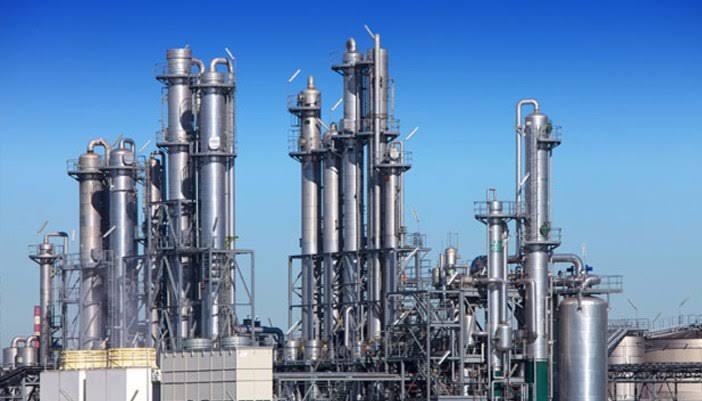
Nigeria’s modular refining sector is expected to expand next year, with seven new refineries projected to commence operations with a combined capacity of 83,000 barrels per day, according to Argus Media’s George Maher-Bonnett.

Maher-Bonnett disclosed this in Lagos on Wednesday during a presentation at the OTL Africa Downstream conference, where he highlighted the changing dynamics of Nigeria’s petroleum products market amid rising local refining capacity and declining fuel demand.

In his presentation, titled ‘African Energy Outlook’, Maher-Bonnett said four modular refineries operated in Nigeria in September, with a combined capacity of 32,000 barrels per day.

“Four modular refineries operating in September, total 32,000 b/d capacity,” he said.

He added, “Seven new modular refineries to start next year“ with a total of 83,000 barrels per capacity.

The projected additions would represent more than two and a half times the combined capacity of the four modular refineries operating in September, potentially increasing the contribution of smaller refining facilities to Nigeria’s domestic petroleum products supply.

However, the presentation did not identify the seven proposed refineries, their owners or locations, or provide individual capacity figures and commissioning schedules.

Maher-Bonnett also highlighted the growing role of the Dangote Petroleum Refinery in improving Nigeria’s self-sufficiency in petroleum products, despite a decline in fuel demand during the year.

“Nigerian fuels demand is down this year,” the presentation stated, attributing the development to “higher flat prices.”

He added self-sufficiency is improving with Dangote ramp-up, projecting that modular refineries would play a growing role.

The presentation linked the decline in demand to higher prices and noted that the only government intervention during the period covered was an NNPC price reduction.

See also  Yuletide: Dangote assures Nigerians of stable fuel supply

“No government interventions, besides NNPC price cut this month,” it stated.

The expected expansion of modular refining capacity comes as Nigeria’s petroleum products market adjusts to increased domestic production and changing international trade flows.

Maher-Bonnett said the Dangote refinery is operating at a high rate, with steady petrol output, reducing the attractiveness of importing some petroleum products from Europe into West Africa.

“Dangote’s 700,000 bpd Lekki refinery is running hard, gasoline output is steady,” the presentation stated.

It also highlighted Ghana’s growing refining capacity, noting that the 45,000-barrel-per-day Tema refinery is ramping up production and improving the country’s self-sufficiency.

According to the presentation, the economics of shipping petroleum products from Europe to West Africa and from Europe to the United States has weakened, with freight costs further affecting the competitiveness of the routes.

Source: punchng.com

FOLLOW US ON:

FACEBOOK

WHATSAPP CHANNEL

TWITTER

PINTEREST

TIKTOK

YOUTUBE

LINKEDIN

INSTAGRAM

Continue Reading

Business

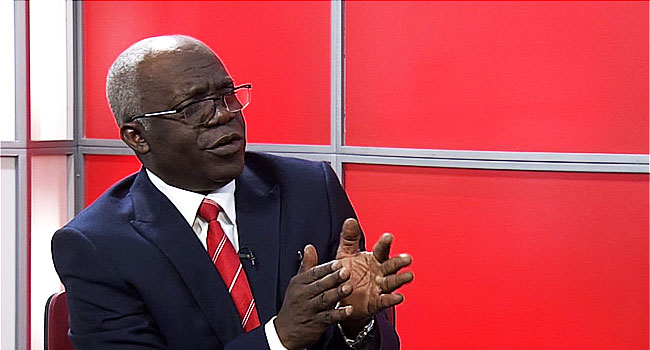
Falana tasks Senate on recovery of $123bn, N66bn oil funds, read details

Published

on

Human rights lawyer, Femi Falana, has asked the National Assembly to compel the recovery of $123.17bn in alleged outstanding oil royalties, taxes and dividends, alongside N66.4bn, from the Nigerian National Petroleum Company Limited and other oil and gas companies.

In a letter dated 28 October, 2026, and titled ‘Request to Recover Dividends, Taxes and Royalties Worth $123.17bn and N66.4bn from NNPC and Other Companies and Remit Same to the Federation Account’, Falana urged the National Assembly to ensure that the alleged outstanding revenues were recovered and remitted to the federation account.

He warned that he would institute legal proceedings at the Federal High Court if the authorities failed to initiate measures to recover the funds within 14 days of receiving the letter.

In an acknowledged copy of the letter made available to The PUNCH on Thursday, the senior advocate said the outstanding revenues covered several categories, including $62bn in unpaid oil royalties, $23.1bn in alleged unremitted dividends from Nigeria LNG Limited, $6.071bn in outstanding industry revenues, and claims relating to stolen crude oil and refinery rehabilitation contracts.

The letter also cited a Supreme Court consent judgment delivered on 20 October, 2018, which it said directed the Federal Government to collect outstanding royalties accrued over 18 years under the Deep Offshore and Inland Basin Production Sharing Contracts Act.

According to Falana, the governments of Akwa Ibom, Bayelsa and Rivers states had approached the Supreme Court to compel the Federal Government to enforce the law, which provided for an upward review of royalties when international crude oil prices exceeded $20 per barrel.

He said a committee constituted by the Office of the Attorney-General of the Federation subsequently determined that $62bn in royalties had not been collected from international oil companies.

Falana added that Akwa Ibom and Rivers states later obtained a Federal High Court judgment for a combined $3.3bn, while Bayelsa State secured a separate judgment for $951m over their alleged entitlements from the outstanding royalties.

See also  Dangote CNG trucks - Tanker drivers to stop fuel loading Monday

He said the Federal Government had yet to comply with the judgments.

The lawyer also called for the recovery of $29bn linked to alleged crude oil theft and undeclared exports, citing investigations by the Nigerian Maritime Administration and Safety Agency and the House of Representatives.

He said lawyers engaged by NIMASA discovered that about 60.2 million barrels of crude oil, valued at $12.7bn, allegedly stolen from Nigeria, were discharged at the Port of Philadelphia in the United States between 2011 and 2014.

According to the letter, the lawyers submitted their findings to the Office of the Attorney-General after which they filed nine civil cases at the Federal High Court in Abuja and Lagos to recover the value of the alleged stolen crude oil and liquefied gas.

Falana further cited a 2016 House of Representatives ad hoc committee investigation, which he said found that $17bn worth of crude oil and liquefied natural gas had been exported from Nigeria without proper records.

He said the committee found that the crude oil was discharged at the ports of Houston and Lake Charles in the United States.

He urged the National Assembly to direct the Economic and Financial Crimes Commission to pursue the recovery of the funds from the companies allegedly involved.

On the NLNG dividends, Falana alleged that NNPC had failed to remit $23.1bn due to the Federal Government from its 49 per cent shareholding in NLNG.

He explained that NLNG, established in 1989, had paid more than $47bn in dividends to its shareholders over 26 years, with the Federal Government’s share paid through NNPC.

The other shareholders listed in the letter are Shell, with 25.6 per cent; TotalEnergies, 15 per cent; and Eni International, 10.4 per cent.

Falana argued that the dividends received by NNPC on behalf of the Federal Government should have been transferred to the Federation Account in accordance with Section 162 of the 1999 Constitution, as amended.

See also  UK bans over 100 jobs from foreign recruitment to curb migration

He added that resolutions of the Senate and the House of Representatives calling for the remittance of the funds had allegedly been ignored.

The senior advocate also called for the recovery of $6.071bn and N66.4bn in outstanding revenues owed by oil and gas companies, citing the Nigerian Extractive Industries Transparency Initiative’s 2022/2023 Independent Oil and Gas Industry Report.

According to him, NEITI disclosed on 27 September, 2024, that the outstanding collectible revenues due to the Federal Government as of June 2024 stood at the stated amounts.

He said copies of the report were forwarded to both chambers of the National Assembly in November 2024 in line with the provisions of the NEITI Act.

Falana urged lawmakers to support NEITI in recovering the outstanding revenues without further delay.

The letter also questioned the outcome of the rehabilitation of the Port Harcourt, Warri and Kaduna refineries, for which the Federal Executive Council approved contracts totalling about $2.98bn in 2021.

It said the government approved $1.5bn for the rehabilitation of the Port Harcourt refineries in April 2021 and another $1.48bn for the Warri and Kaduna refineries in August of the same year.

Falana argued that NNPC announced in December 2024 that the Port Harcourt and Warri refineries had been substantially completed, while work on the Kaduna refinery was almost finished.

However, he cited NNPC’s subsequent announcement that the Warri refinery ceased operations on 25 January, 2025, following safety issues involving its crude distillation unit main heater. He also referred to the shutdown of the Port Harcourt refineries for planned maintenance in May 2025.

See also  Counterfeit empire: Lagos electronics market where fake products sustain luxury

He argued that the contractors had breached the terms of the rehabilitation agreements and called for the recovery of the contract sums.

“In view of the foregoing, we are compelled to request the Office of the Attorney-General to recover the total sum of $123.17bn and N66.4bn owed the Government of the Federation by the Nigerian National Petroleum Corporation Limited, and some oil and gas companies operating in Nigeria,” the letter stated.

Falana said recovering the funds would reduce the Federal Government’s dependence on external borrowing and provide additional revenue for the federation and the states.

He warned that failure to begin recovery measures within 14 days would prompt legal action.

“If you fail to initiate legal measures for the recovery of the aforesaid huge funds belonging to the Government of the Federation within 14 days of the receipt of this letter, we shall not hesitate to file the necessary processes in the Federal High Court with a view to compelling you to discharge the duty of your office,” he wrote.

Falana also defended his firm’s standing to pursue the matter, citing its involvement in drafting and submitting a bill to amend the Deep Offshore and Inland Basin Production Sharing Contracts Act in 2017.

He noted that the bill was adopted and sponsored by a senator, subsequently passing first reading in the Senate before the dissolution of the Eighth National Assembly. According to him, the Ninth National Assembly subsequently adopted and passed the amendment.

He recalled that the then President of the Senate, Ahmad Lawan, had said the amendment would increase the country’s revenue by at least $1.5bn annually.

Source: punchng.com

FOLLOW US ON:

FACEBOOK

WHATSAPP CHANNEL

TWITTER

PINTEREST

TIKTOK

YOUTUBE

LINKEDIN

INSTAGRAM

Continue Reading

Trending